





Can painting andAI interact in the creation of a work of art? Concrete proof of this are the new works by David Salle (Oklahoma, 1952), which arise from the encounter between painting and artificial intelligence, in an unprecedented dialogue that redefines the relationship between human gesture and technological process. In fact, the artist uses an AI model developed and trained on the materials of his own visual archive, transforming the machine not into a substitute for the author, but into a creative interlocutor capable of destabilizing, amplifying and questioning the very language of painting. In these works, the artist’s past is reworked through generative algorithms and then returned to the painter’s hand, which intervenes directly on the surface. The result is a layered, simultaneous painting, where painting and technology coexist in a continuous tension between human and artificial.
David Salle’s new works are thus presented as aradical investigation into the nature of painting, born of the artist’s desire to introduce a “destabilizing force” into his own creative process in order to succeed, as he himself declares, in “coming out of himself.” This body of work, made between 2022 and 2026, marks a fundamental methodological turning point: Salle has begun to develop a personalized artificial intelligence model, trained almost exclusively on the content of his own past work. The goal is not to delegate artistic thinking to the machine, but to use AI as a tool to “unravel and recalibrate the logic of painting.” In this context, the machine acts as a “junior creative partner” or “double agent” that moves between past and present, remixing the artist’s visual elements in unexpected, surprising, and sometimes subversive ways.
The process of making these works is a complex interweaving of digital technology and painterly craftsmanship. Salle has equipped AI with digital equivalents of the fundamental values of painting, teaching it, for example, how a brushstroke can define an edge and simultaneously act as an autonomous expressive element. The conceptual starting point is her celebrated Tapestry Paintings from 1989-1991, a series based on 18th-century Russian imperial tapestries that were, in turn, reinterpretations of 16th- and 17th-century Italian paintings. Through AI, these images, already historically layered, are deconstructed and reassembled into “all-over phantasmagorical abstractions.” Once these new synthetic assemblages are generated, the drawings are printed on linen canvas by archival UV printing. It is on this technological basis that Salle intervenes manually: he “corrects, attaches or amplifies each printed pixel with his own brush, at the same time introducing an additional layer of images painted in high-contrast, high-brightness colors.” The end result is a visual field in which simulated and painted realities collide and coexist, generating fluid juxtapositions: nudes, courtiers, monarchs and knights in armor emerge alongside fragments of fashion advertisements, stacks of teacups and still life objects. These interweavings allow Salle to create works that transcend time and place, as each element exists in a simultaneous presence in the present. “Everything in painting exists in the present,” Salle states. “Past times in art history resonate through the painting even though they are enclosed within it.”
These works are currently featured in the exhibition Painting in the Present Tense, at the Palazzo Cini Gallery in Venice, through Sept. 27, 2026. On the occasion of the opening of the exhibition, I had the opportunity to ask some questions to David Salle, who was present in Venice for the opening of his exhibition.
IB. How do you use artificial intelligence in your work?
DS. This is a complex question; I cannot give you a simple answer. The most immediate explanation is that I train artificial intelligence on my own work, on my visual archive. Then I ask it to do something different, to take those images to unexpected territories.
Artificial intelligence generates images very quickly, while painting takes time. Could it be said that the real value of painting nowadays is slowness?
Yes, it could also be said that way. That’s fine as an interpretation. But for me AI is not painting: AI produces images, while painting is something else. Of course, painting also produces images, but it is not simply reduced to the creation of images. This is where the fundamental difference lies.
If AI learns only from the past-in its case from its previous works-how can it help it create something new and relevant in the present?
Because what AI does is deconstruct the image. And the act of deconstruction is something very general. There is a deconstructivist architecture, there is a deconstructivist literature. Artificial intelligence, in my work, becomes a machine capable of deconstructing images. And that is really the central point.
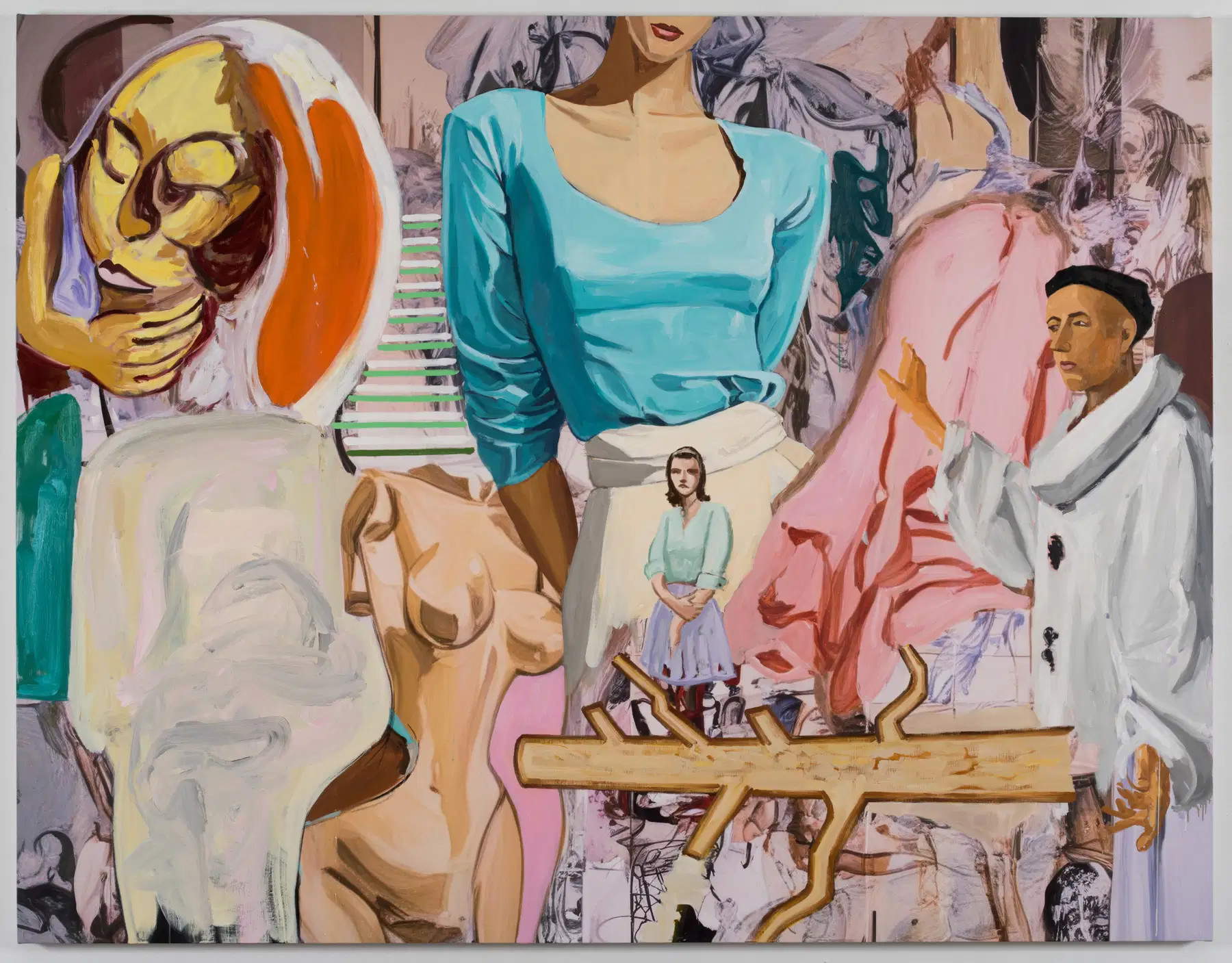
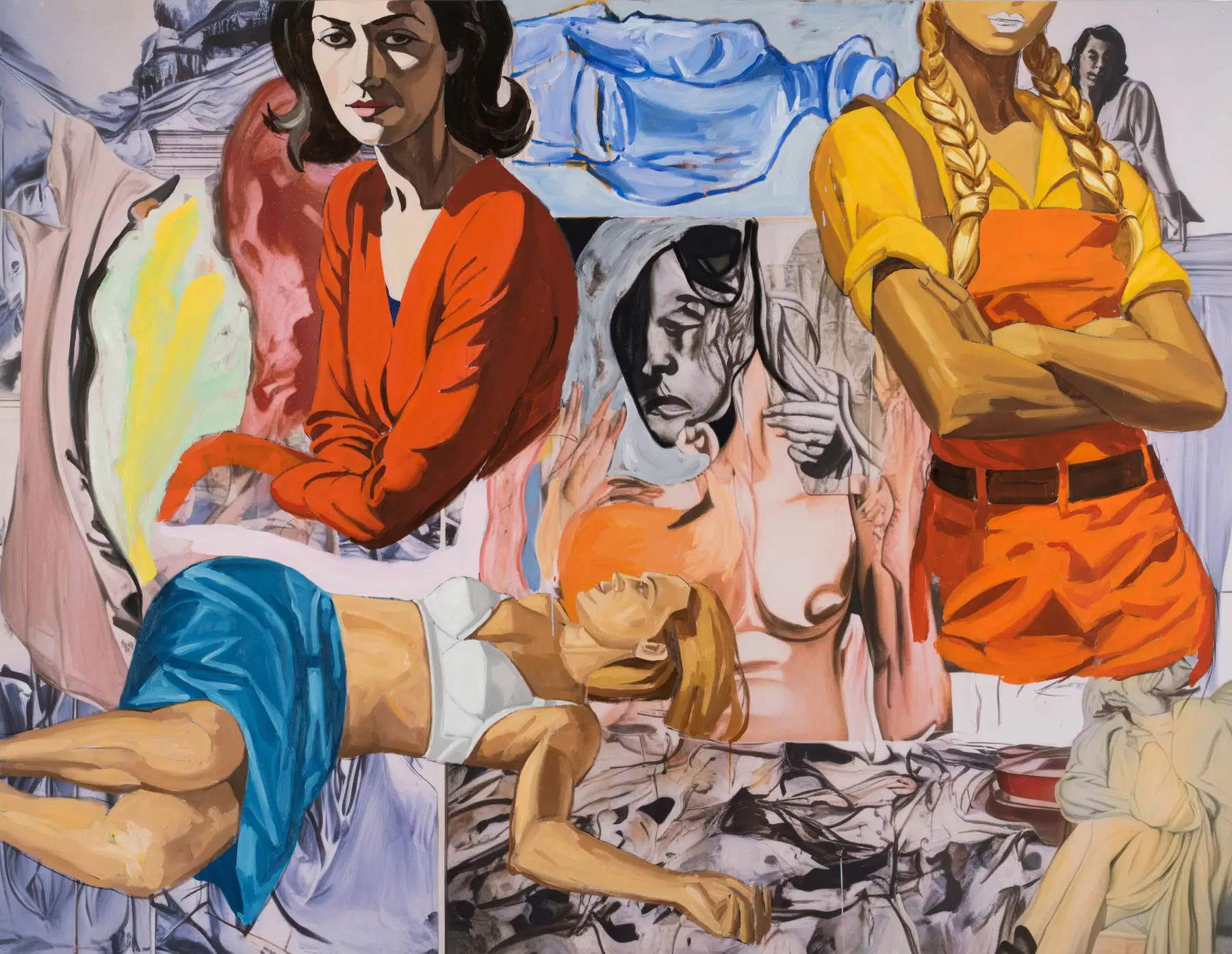
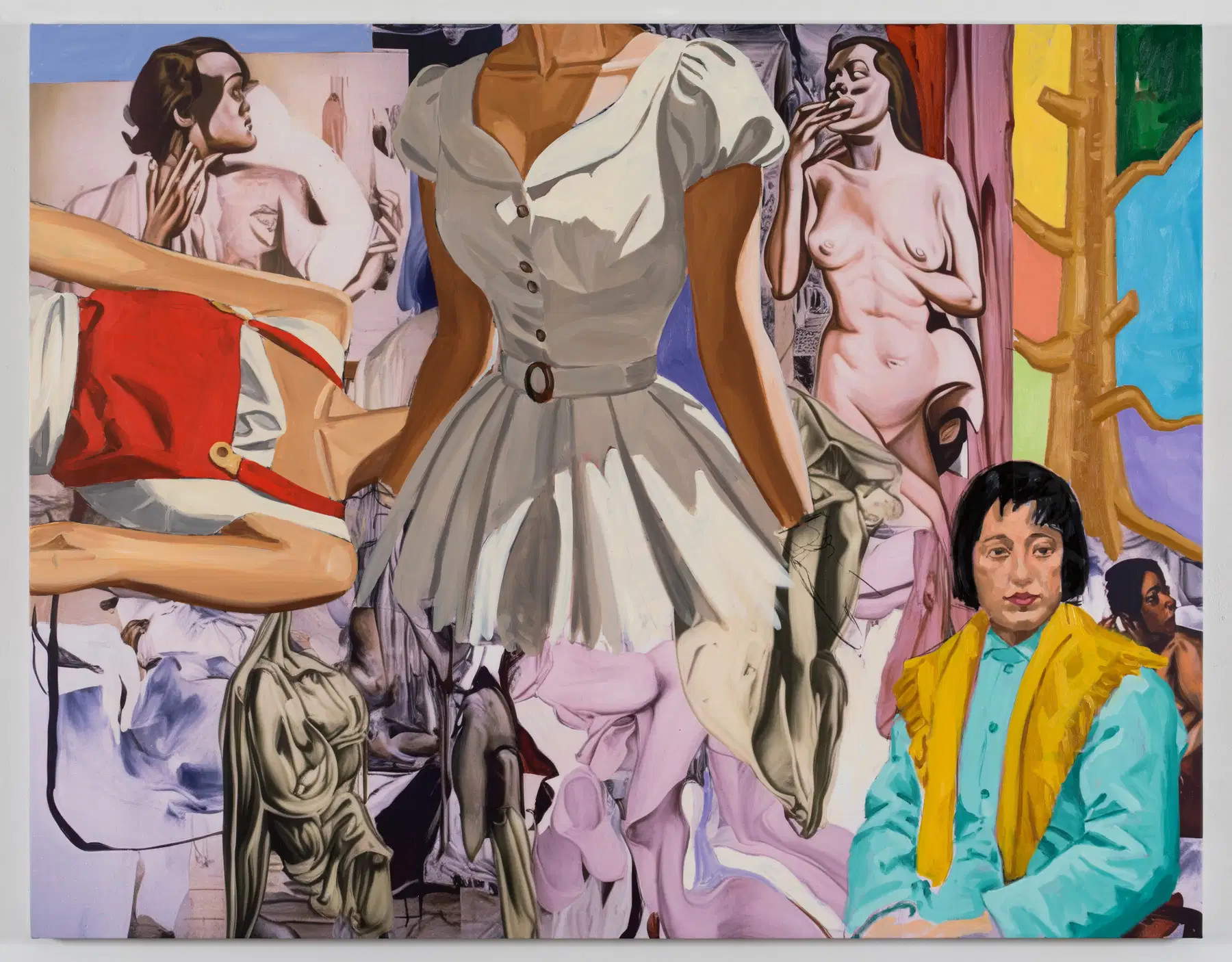
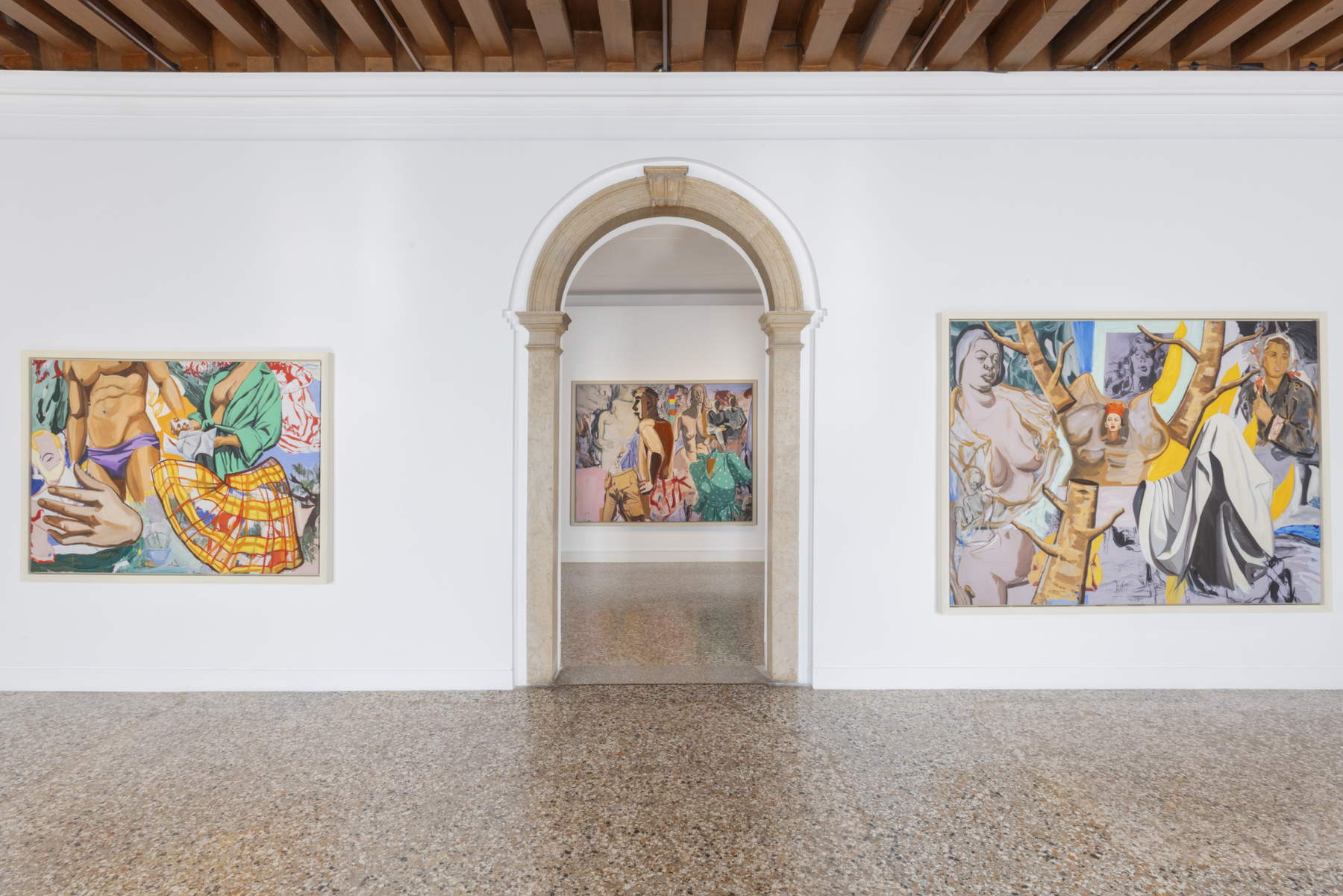
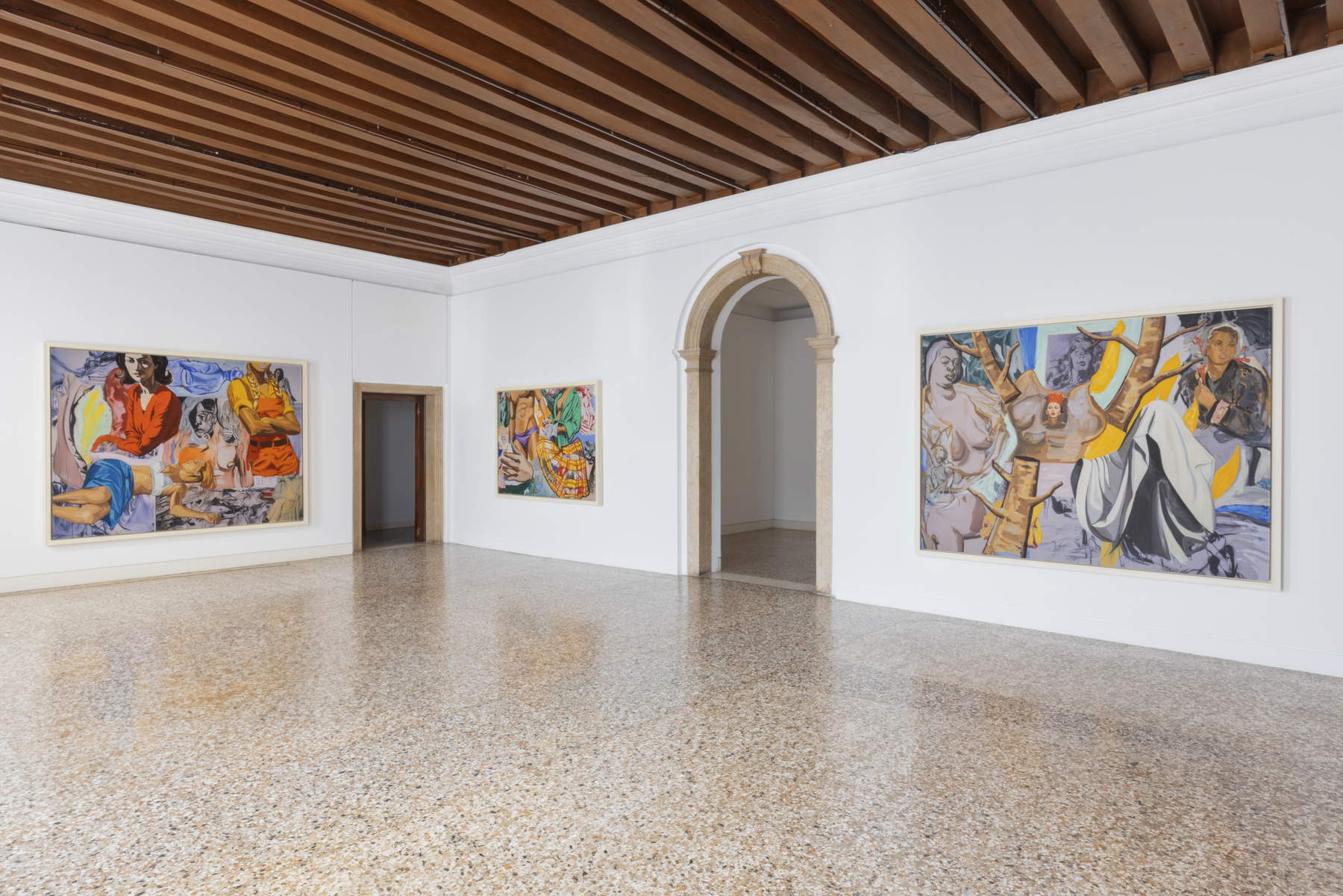
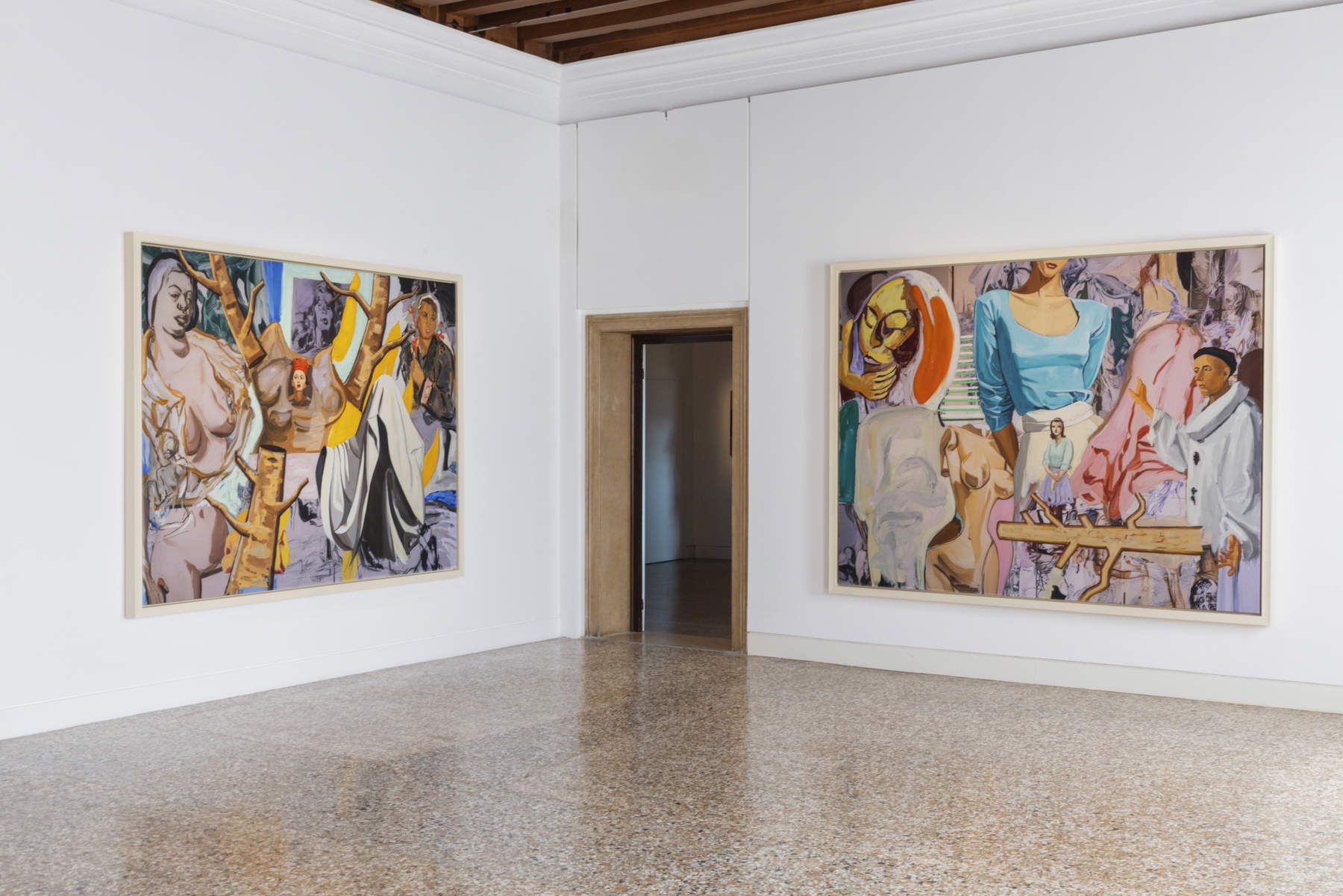
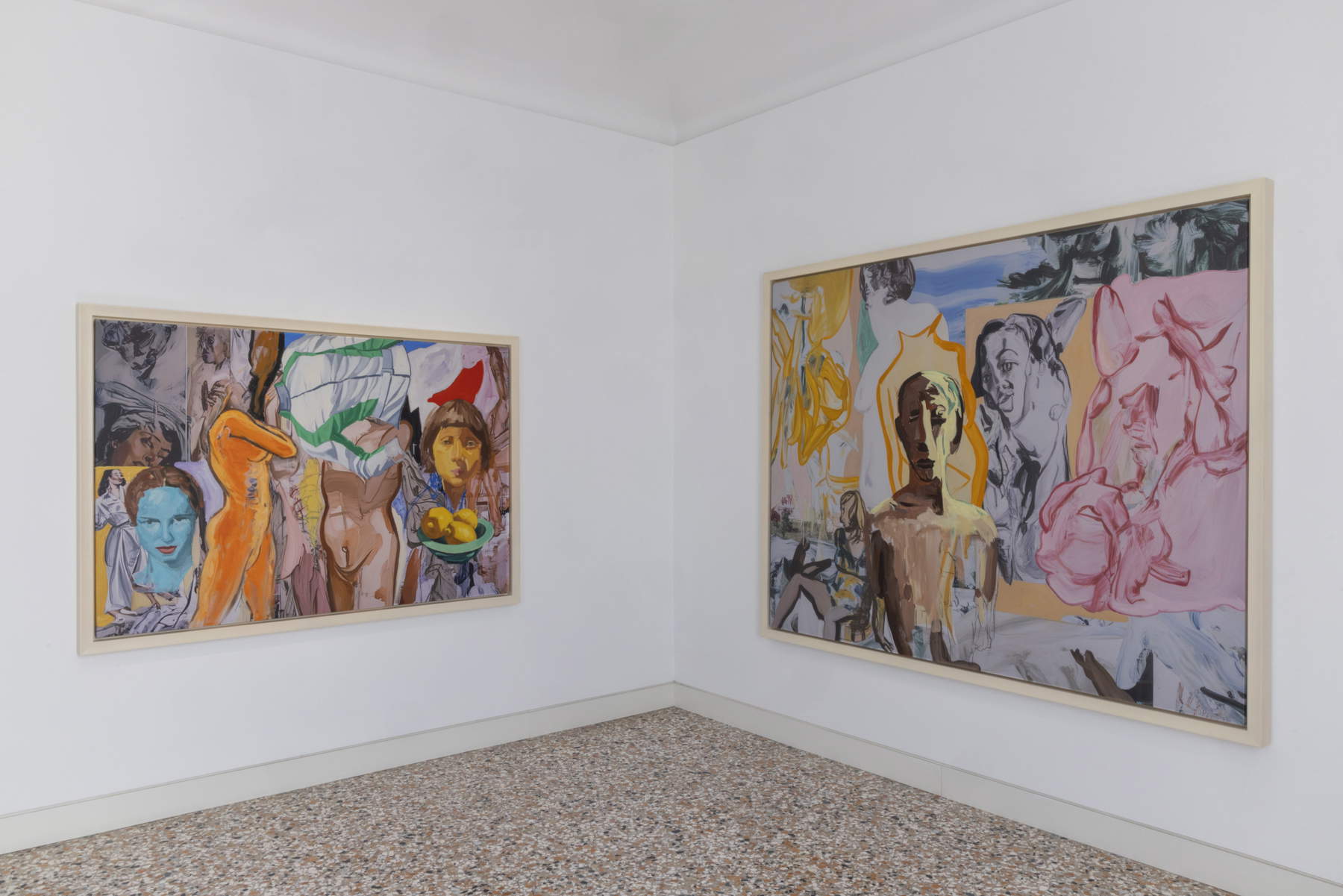
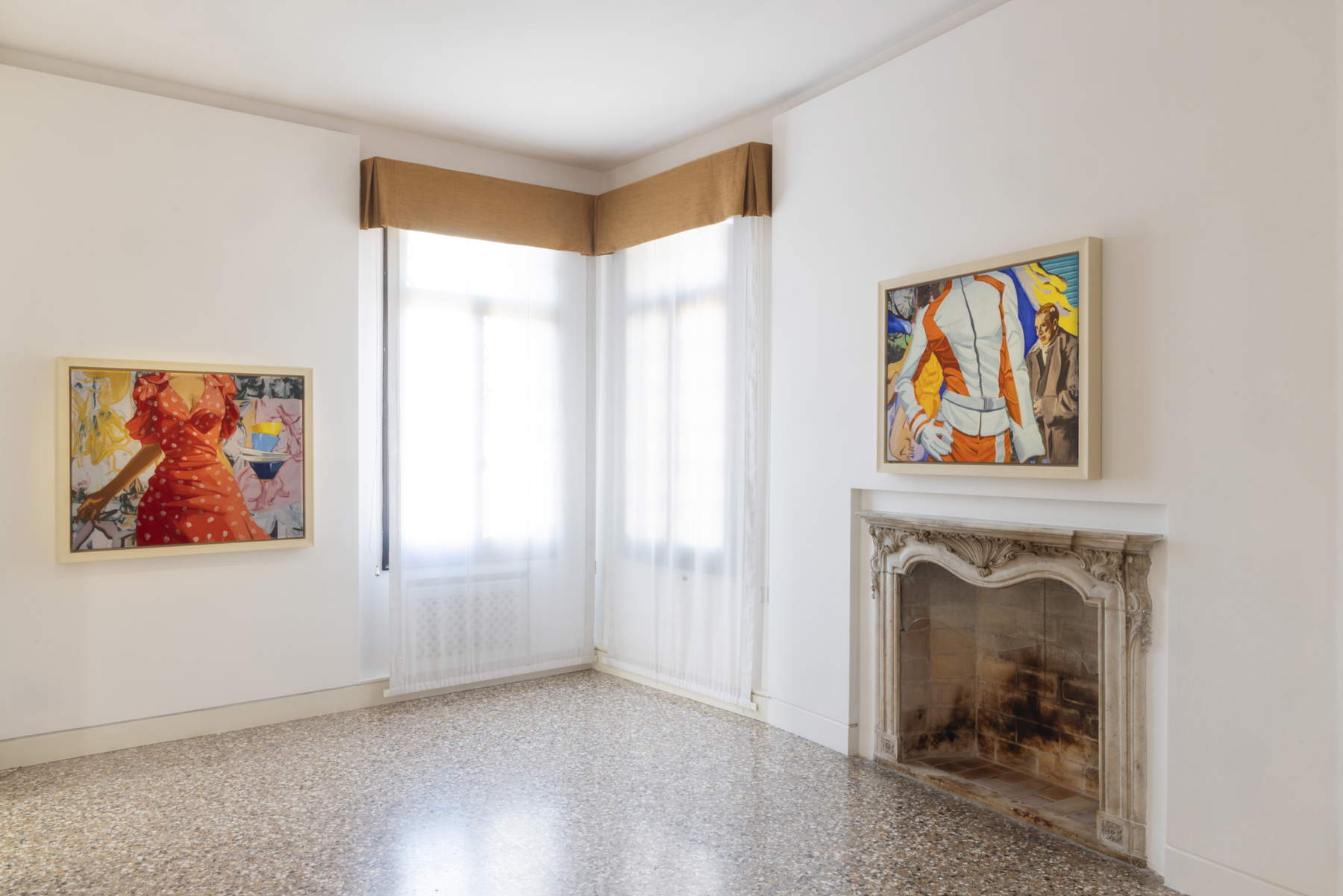
Curated by Luca Massimo Barbero and supported by Thaddaeus Ropac Gallery, Painting in the Present Tense represents David Salle’s first solo exhibition in the lagoon city and was conceived in conjunction with the Biennale Arte 2026. The exhibition also addresses one of the great anxieties of our time: the fate of human expressive capacity in the face of advancing artificial intelligence. Salle proposes painting as a truly malleable space, a kind of act of resistance against the proliferation of inauthentic images produced by AI. Co-opting a “hegemonic technology” such as AI becomes a way for the artist to subvert it, seeking, as the artist himself puts it, to “wrest meaning from the direction in which artificial intelligence is leading it, bringing it back into human hands.”
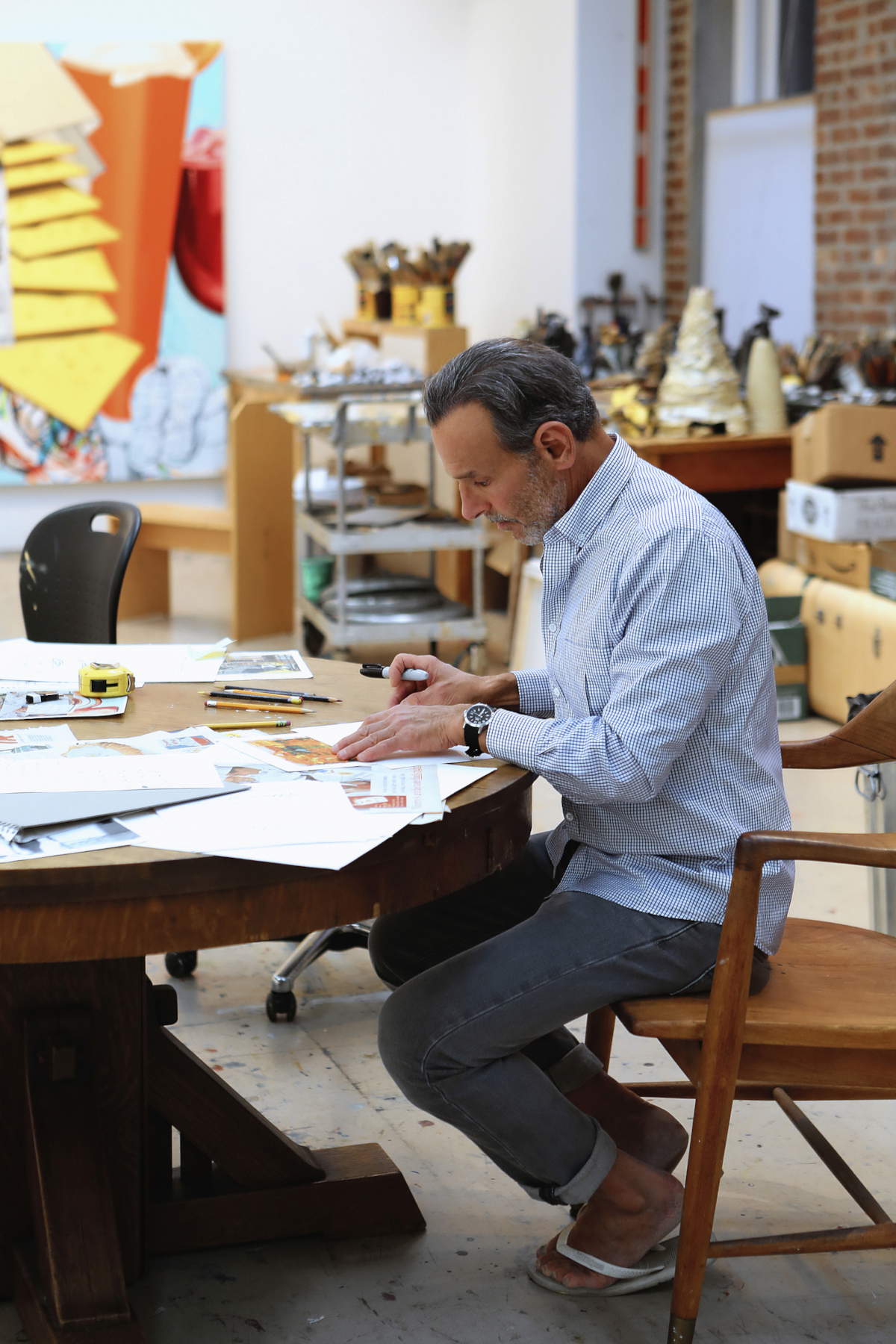
Born in 1952 in Oklahoma, David Salle is one of the most influential figures in international contemporary art today. Trained at the California Institute of the Arts in the 1970s, he was a student of conceptual master John Baldessari. Often associated with Postmodernism, Salle rose to fame in the 1980s as a leading exponent of the Pictures Generation. His career has been marked by recognition: his first solo exhibition was held in Rotterdam in 1983, followed only four years later by a major retrospective at the Whitney Museum of American Art. Over the decades, Salle’s work has been celebrated by some of the world’s most important museums, from the Stedelijk Museum Amsterdam to the Guggenheim Museum Bilbao and the Castello di Rivoli. In parallel, his research has also extended to the performing arts: Salle has collaborated with choreographer Karole Armitage in the creation of sets and costumes presented at such prestigious institutions as the Metropolitan Opera in New York and the Opéra national de Paris. In 1995 he also explored the language of film by directing the film Search and Destroy, produced by Martin Scorsese. Alongside his visual activity, Salle is also a prolific writer and art critic. His texts have appeared in prestigious magazines and newspapers. Famous is his collection of critical essays How to See: Looking, Talking, and Thinking about Art. A member of the National Academy of Design, David Salle continues to live and work in Brooklyn, confirming himself, with this Venetian exhibition, as an artist capable of projecting the pictorial tradition into new technological frontiers.
|
| David Salle on display in Venice: "I train artificial intelligence on my visual archive" |


The author of this article: Ilaria Baratta
Giornalista, è co-fondatrice di Finestre sull'Arte con Federico Giannini. È nata a Carrara nel 1987 e si è laureata a Pisa. È responsabile della redazione di Finestre sull'Arte.
Warning: the translation into English of the original Italian article was created using automatic tools. We undertake to review all articles, but we do not guarantee the total absence of inaccuracies in the translation due to the program. You can find the original by clicking on the ITA button. If you find any mistake,please contact us.




























 IT
IT FR
FR DE
DE ES
ES CN
CN


