





From next July 11, 2026 until January 10, 2027, the city of Macerata will host the collective exhibition project entitled EXPOSITIO MUNDI Space as a Medium. The exhibition, curated by Lorenzo Benedetti together with Giuliana Pascucci, will be developed through a diffuse itinerary involving three important city venues: the Civic Museums of Palazzo Buonaccorsi, the Sferisterio and the Mozzi Borgetti Library. The initiative is promoted and organized by the City of Macerata, the Macerata Academy of Fine Arts and the University of Macerata through the “G. Leopardi” School of Advanced Studies.
The scientific objective of the project is to investigate the history of exhibitions and the mechanisms of showing, analyzing how the exhibition has evolved over time as a cultural language, public practice and civic device of relationship. The theoretical focus of the investigation is related to the figure of Giuseppe Ghezzi, a painter, curator and scholar who lived between 1634 and 1721.
In 1676, Ghezzi organized in the cloister of San Salvatore in Lauro in Rome an exhibition of Renaissance paintings from private collections, effectively inaugurating the modern concept of the public exhibition as an instrument of cultural dissemination and shared knowledge accessible to the community. Three hundred and fifty years after that event, the Macerata project questions the changing targets, budgets and democratic dynamics associated with the exit of artworks from private palaces, establishing an ideal parallel between Ghezzi’s historical work and subsequent contemporary curatorial practices.
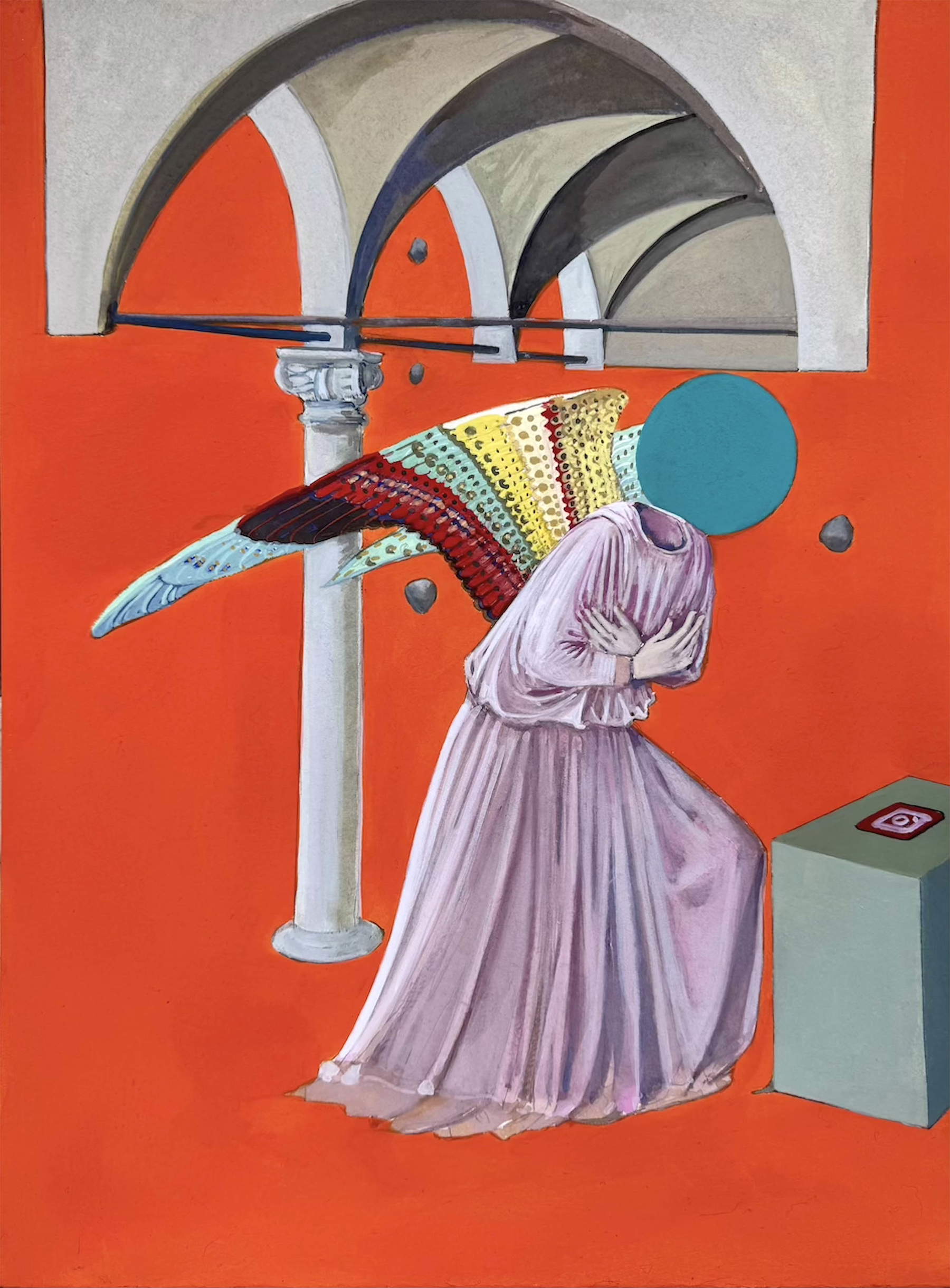
The documentary and exhibition itinerary benefits from the presence of Ghezzi’s original manuscripts, which include the earliest known documents related to the organization of an exhibition, complete with management details, operating methods and insurance values of the time. Alongside archival documentation and paintings by Ghezzi himself, placed within a structure conceived by artist Adelaide Cioni, the exhibition features works and interventions by nineteen authors who have redefined the exhibition as an autonomous language and critical practice.
The artistic selection unites different generations and expressive methodologies. Giulio Paolini is present with the work Ipotesi per una mostra, while Felix Gonzalez-Torres proposes a work based on the necessary interaction with the public. Michele Ciacciofera offers a reinterpretation of ancient painting, which dialogues with Maurizio Nannucci’s neon installation and the olfactory experience developed by Jonathan Monk. The critique of institutional conventions and the figure of the artist is entrusted to Nedko Solakov’s ironic narration, which is countered by Laura Paoletti’s silent and introspective dimension and Fabrizio Cotognini’s investigation, which transforms the exhibition space into a theater of memory.
Artists also include Ed Atkins, Joseph Beuys, Catherine Biocca, Paolo Chiasera, Jason Hirata, Oliver Laric, Dimitar Solakov, Veit Stratmann and Agnès Thurnauer, who contribute to transforming the urban space into a laboratory on the act of showing through sculptures, installations, videos and site-specific devices.
 |
| Who invented exhibitions? A review spread across the city of Macerata tells the tale |

Warning: the translation into English of the original Italian article was created using automatic tools. We undertake to review all articles, but we do not guarantee the total absence of inaccuracies in the translation due to the program. You can find the original by clicking on the ITA button. If you find any mistake,please contact us.


























 IT
IT FR
FR DE
DE ES
ES CN
CN


