





Until forty, fifty years ago, anyone who wanted to set up a chamber of Risorgimento horrors, a museum of the kitsch of post-unification Italy, would not have hesitated before the possibility of ’slip into the album of patriotic rhetoric also the works of Luigi Norfini, at the time a painter of mixed fortunes but of some success, partly because he was for a long time close to the Savoy family, and then almost forgotten like most of the artists involved in the construction of the public image of a new Italy, which was intended to be bold and belligerent, an Italy capable of winning its independence by defeating the Austrians on the battlefields of the Po Valley plain, amid cultivated expanses, crumbling farmhouses, and country villages torn apart by cannon shots. An Italy that percolated from the halls of public palaces, from the flood of paintings commissioned for museum galleries, from the roar of monuments celebrating the viri illustres of the country’s history, and thus an Italy faithfully devoted to memory, perpetually enraptured by memories. Today that sensibilities have changed, it may happen that the blanket of dust that lies on some of the neglected inhabitants of that museum of rhetoric is blown away, and that the lucky person therefore knows a moment of redemption: it has now happened to Luigi Norfini, to whom the National Museums of Lucca are dedicating an exhibition whose main nucleus is at the barracks of Villa Guinigi and which extends, however, also to Pescia, the painter of battles’ hometown. The exhibition’s very apt title, The King’s Painter, helps to understand why oblivion has descended on Norfini.
Among the mists of the war squares assembled for the exhibition, it will be worth noting a familiar presence, yet always at a safe distance from the piles of human and animal flesh, the garble of struggling bodies and corpses, the drips of blood and the glitter of bayonets: central enough to stand out against the tangle of soldiers, but at the same time distant enough to avoid the melee, here is the face of Victor Emmanuel II, always imperious and with his chin up, as if he were immune to what goes on around him, as if the battle did not concern him, more like a holy man, a ghost, more like a statue than the general of an army corps. A metaphysical king. One senses, in the paintings of this painter of the king, a kind of confused restlessness, an attempt to hold the pieces together, to bring together the memory of those battles in which Norfini himself had participated (he had been, after all, among the young men who had enlisted for Curtatone and Montanara, and then later would return to the battlefields to study the soldiers when hehe had already become an altogether good painter, something more than a sincere tradesman) and the need to dip his brushes in the broth of piousness in order to build, brick by brick, at the same time a solid career and an idea of Italy that would not alienate him from the favor of commissions, politics, and juries.
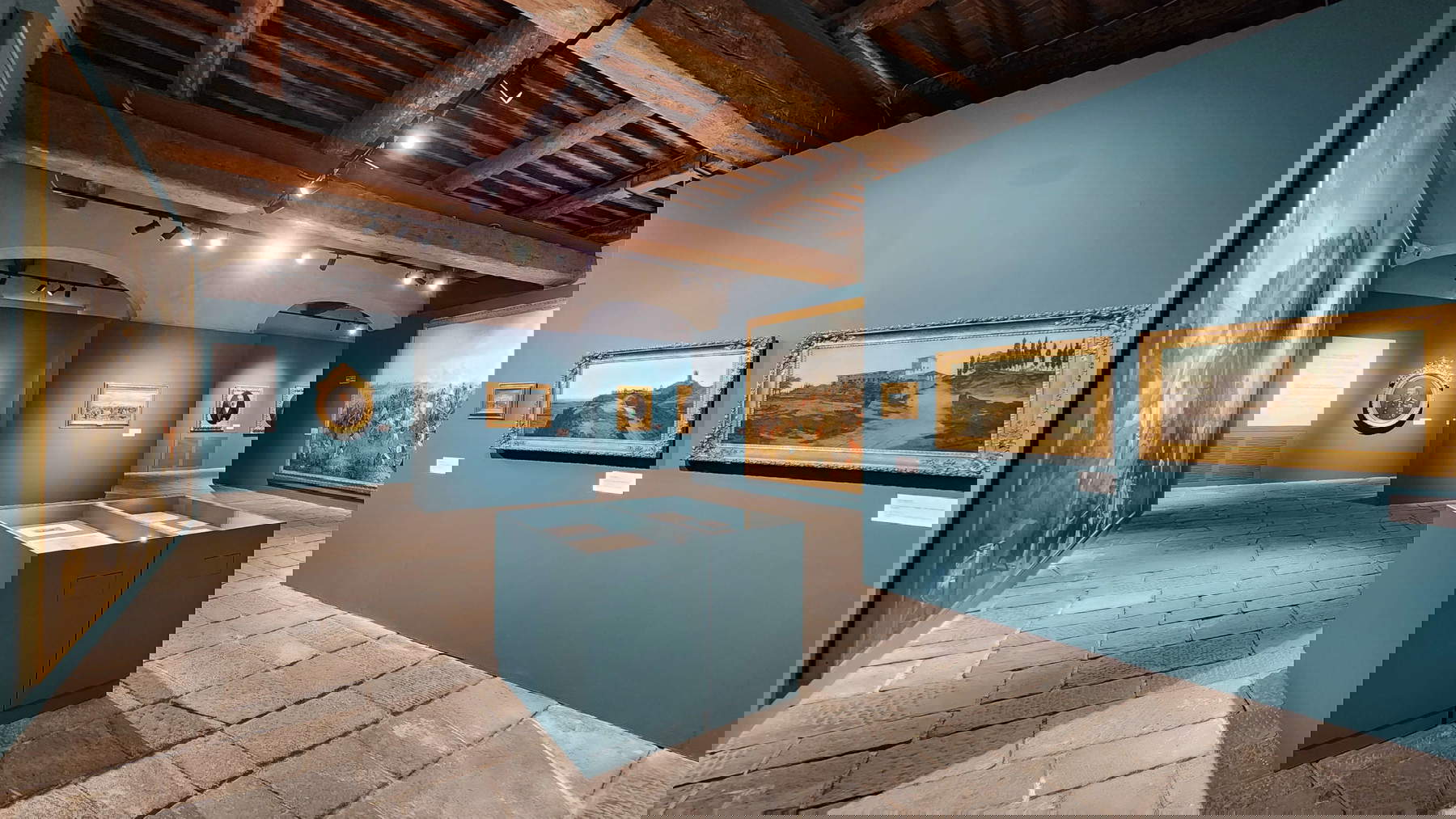
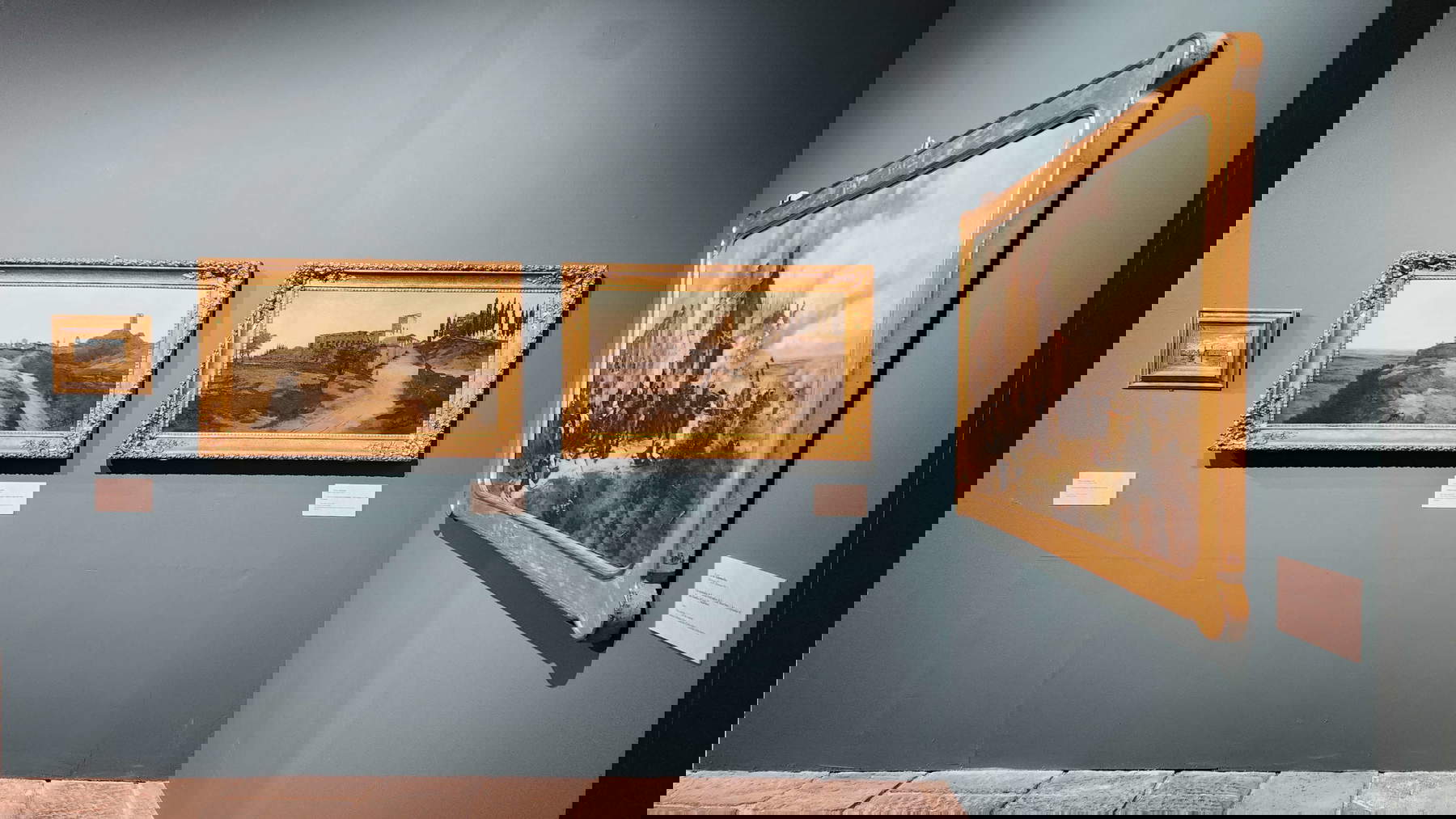
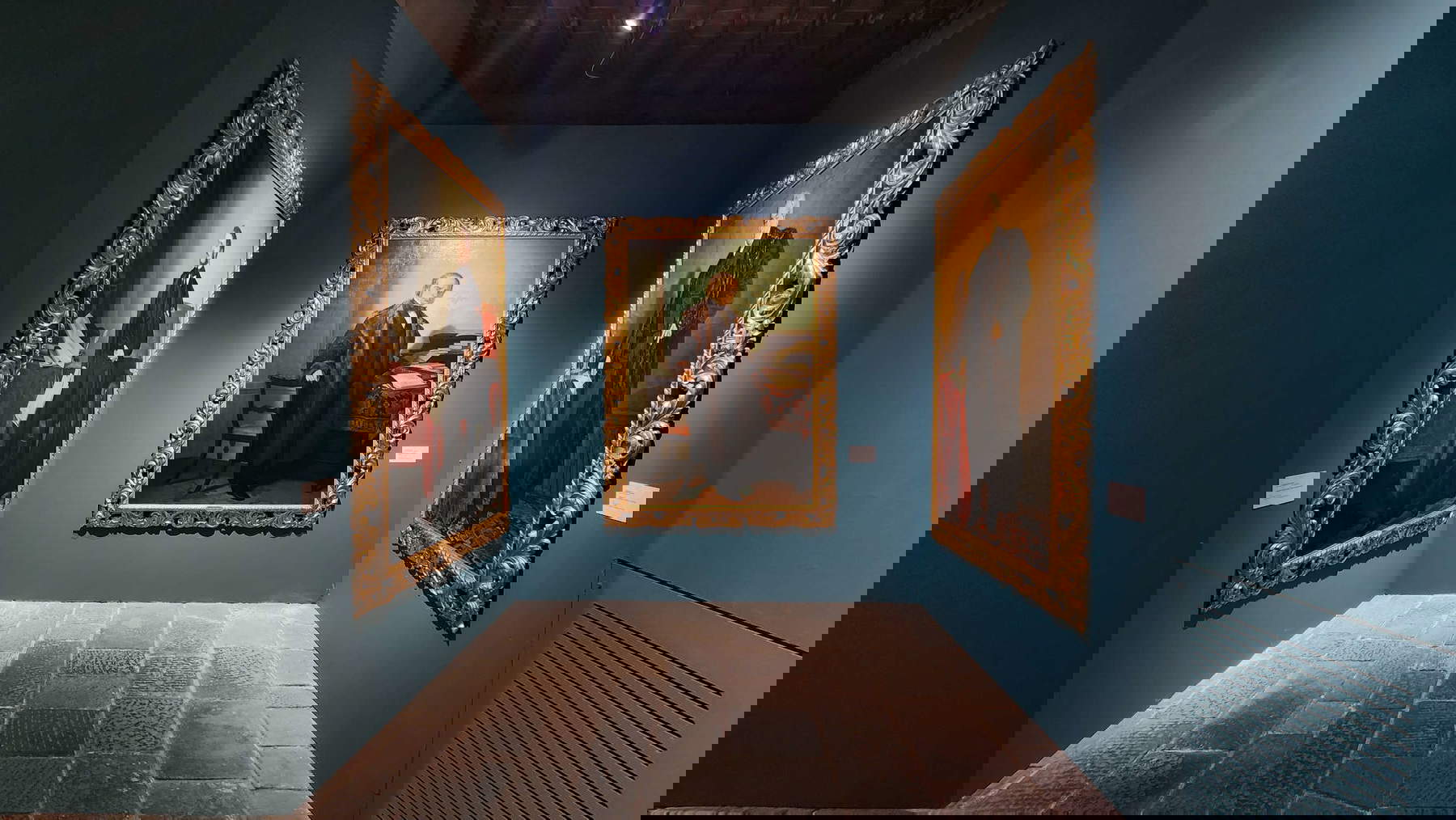
Of course, the three curators of the exhibition (Luisa Berretti, Emanuele Pellegrini and Ettore Spalletti) know, by their explicit and frank admission, that there is little to sanctify and that it is not possible to attribute to Luigi Norfini the historical importance that he can never have, not even after a complete revision of his production (as was done for the exhibition in Lucca and Pescia). Nonetheless, even beyond the idea of art as historical testimony, and beyond the unquestionable benefits that our interpretive horizons on the art of the Risorgimento can draw from an exhibition that undoubtedly achieves its stated goal of “add knowledge to the history of nineteenth-century Italian painting and all its complex hooks to the sudden evolution of the political and cultural framework” (so the curators), there is something in Norfini, as probably in anyone, to escape shipwrecks and pointed judgments. Beginning with the drawings that a barely 23-year-old Norfini traced on his papers while fighting at Curtatone and Montanara, and which Roberto Balzani recognizes as sheets that overcome the “documentary rigidity” of war painting that in the midnineteenth century was still swimming amidst the legacies of Romanticism (and this recognition is all the more valuable when one considers that it comes from an essay in which the author reconstructs not Norfini’s events, but those of battle paintings in the late eighteenth and early twentieth centuries). On display are a couple of sheets, two pen sketches that document the freshness and intelligence of his hand, his youthful inclination toward a nervous, convulsive, feverish art, toward the idea that war was all about dust, smoke, ruins, confusion, torn limbs, torn flesh strewn across the gravel.
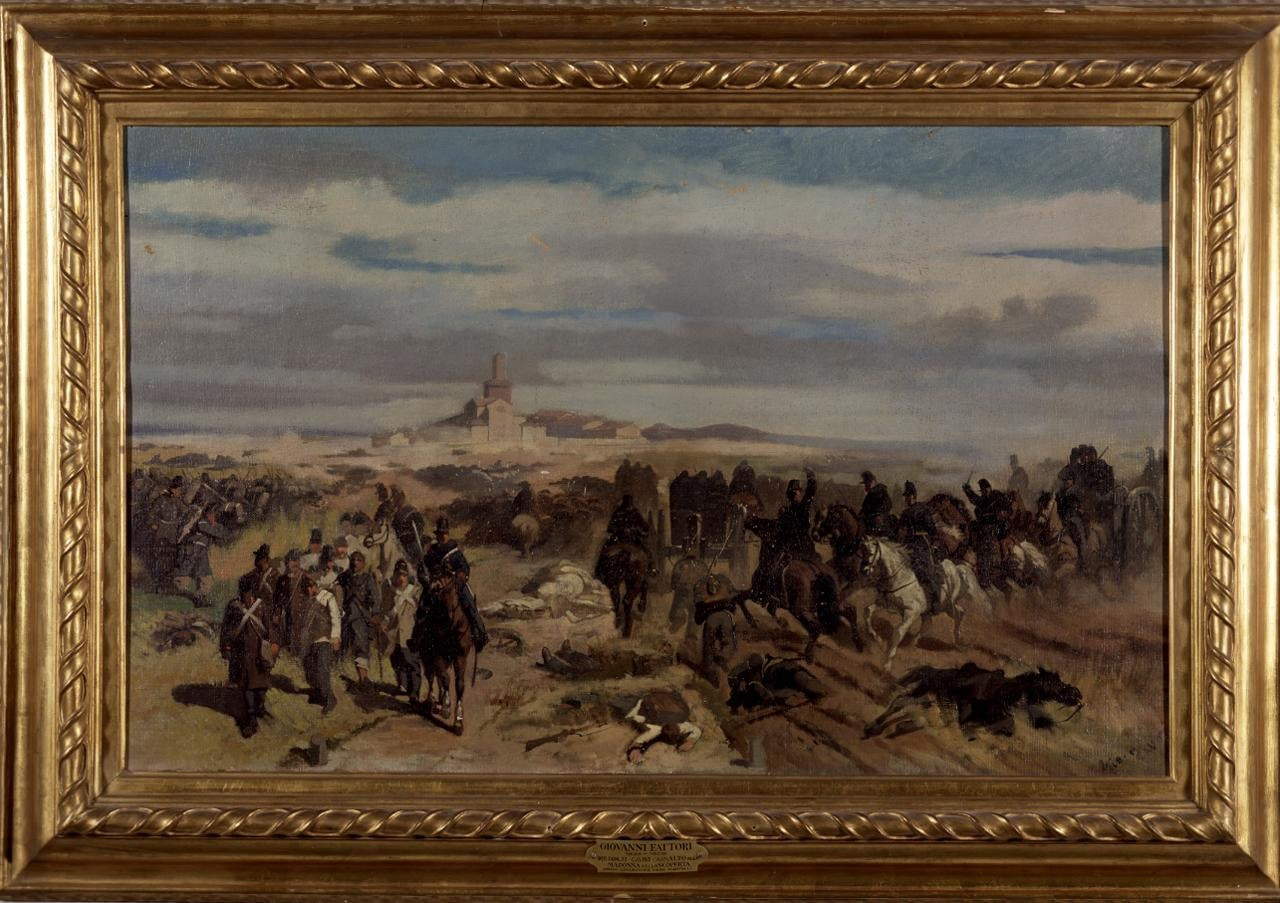
There was, then, a time when Norfini was also in the vanguard. And then, however, something must have happened if, even though he was Fattori’s contemporary and even though he had the same masters, the same references (the Bezzuoli, the Pollastrini, those painters of history who at least at first had oriented the researches of both), his painting arrived at such different outcomes. Paradoxically, it may be that Fattori became a revolutionary, as opposed to Norfini, because he was a latecomer: when the Leghorn artist, past the age of thirty or so, had just begun to frequent the Caffè Michelangelo without having done much before approaching those of his colleagues, all five, six, ten years younger, who were shaping macchia painting, the other was already a stoned painter. A made painter and well aware of opening himself up to patrons who mattered. Norfini, with all evidence, had found his formula, which could be well summed up in the words of Ettore Spalletti: “linking the heroism of actions with the realism of the wartime episode, partly documented by a series of drawings caught in the field.” And so those paintings that so happily suited the wishes of a clientele that demanded nothing more than epic feats, intrepid commanders, sabers and bayonets waving, soldiers willing to fight without surrendering a fingernail of earth or a grain of stone to the enemy. Nothing to do with Fattori’s Risorgimento in minor keys , epic yes but of a popular epic, and therefore more restrained and more ecumenical, little to be shared with that more landscape-oriented Signorini, more chaotic and truer, but few tangents even with the fanfares of a Raffaele Pontremoli, more rhetorical and more meticulous. Norfini invented his own Risorgimento, which was in the middle.
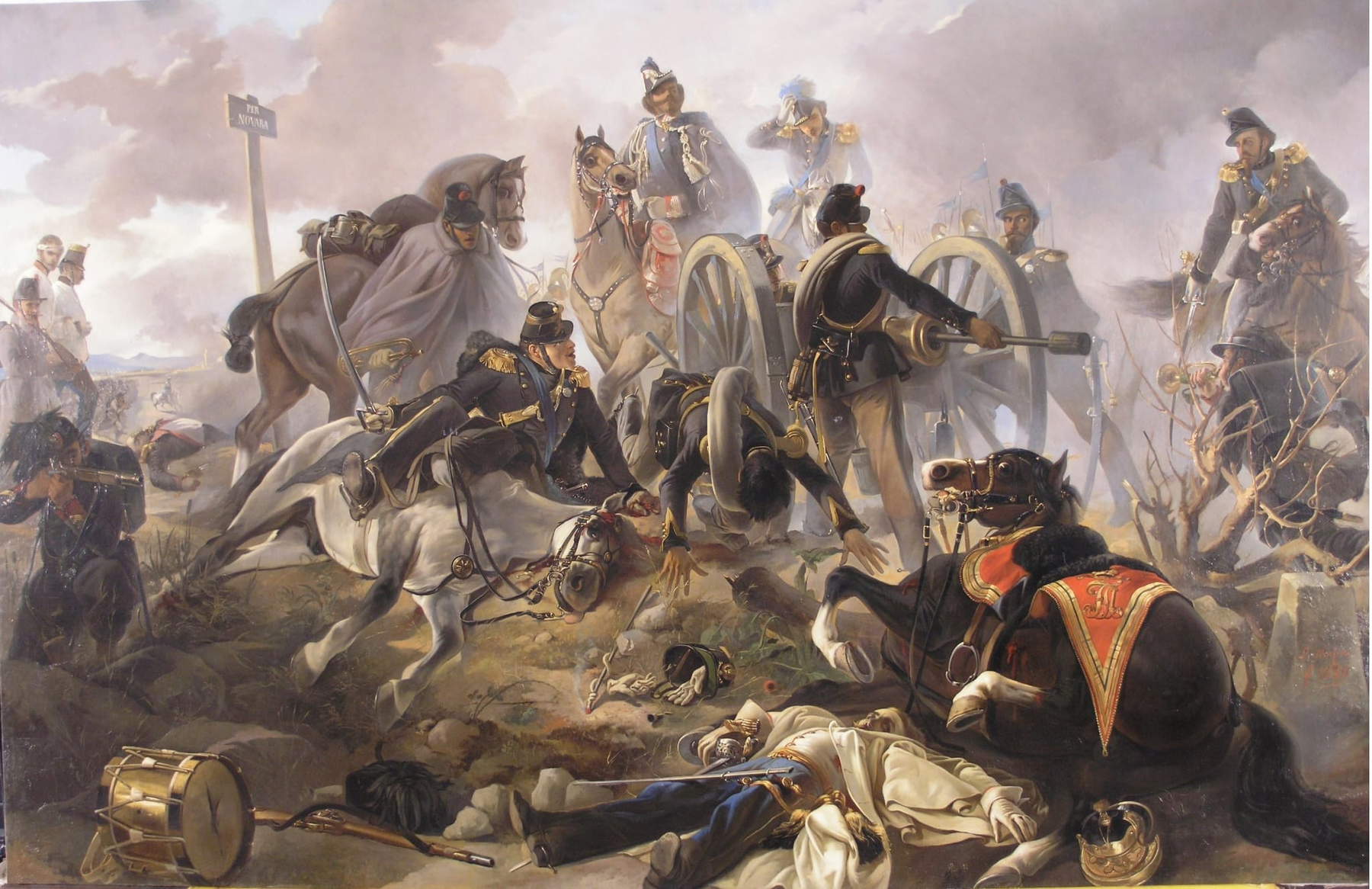
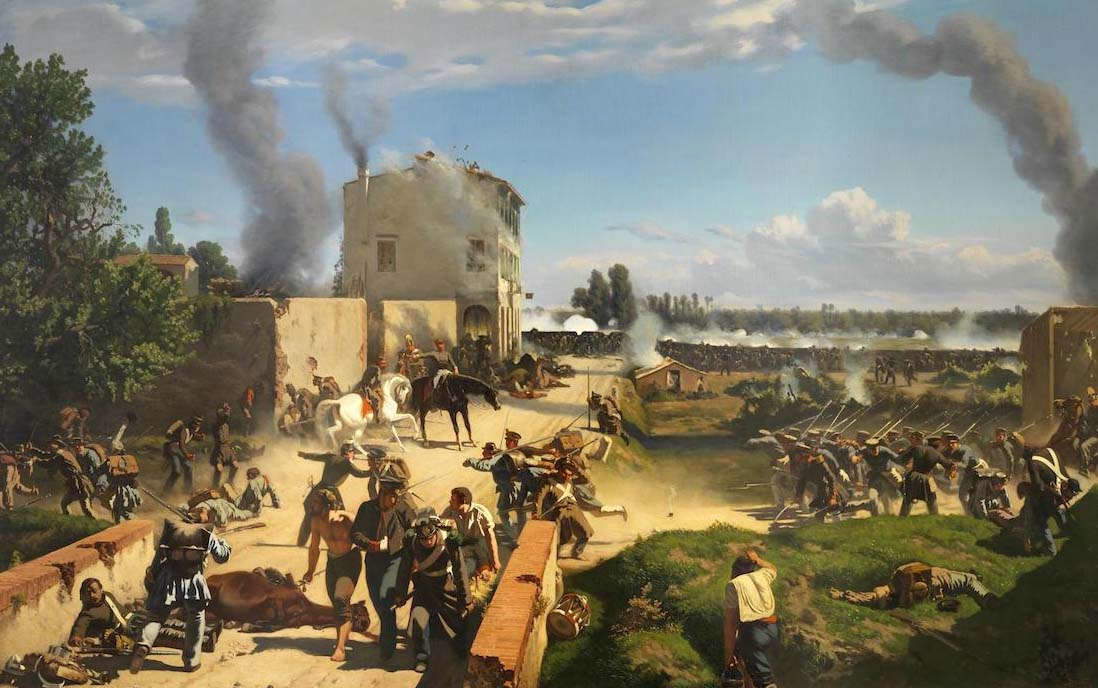
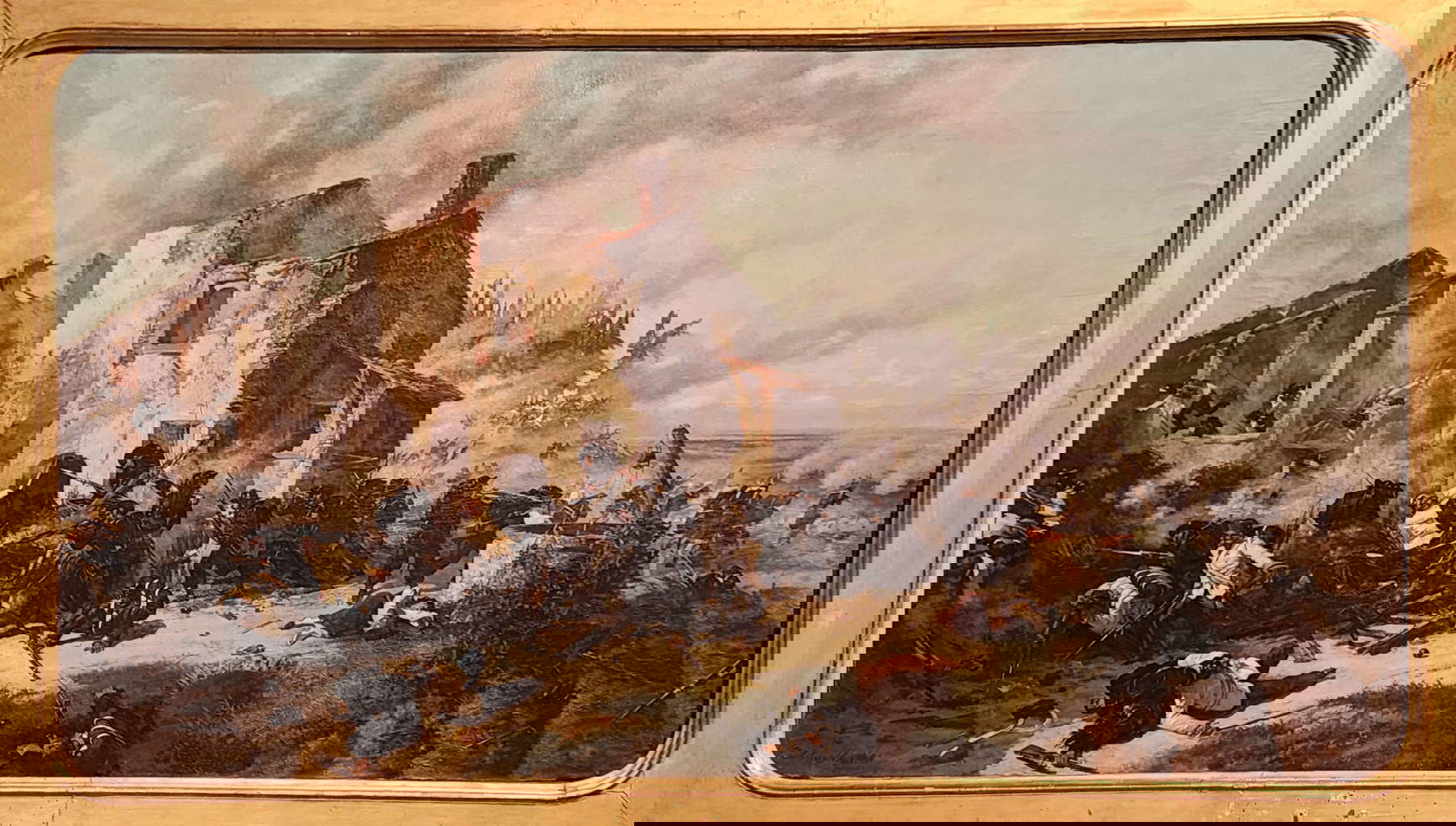
One looks then at the trajectory of Norfini’s war painting. In the sketch for The Battle of Curtatone , which is kept at Palazzo Mansi and is among his earliest works, the emphasis is still eighteenth-century, with General De Laugier stretching out his arm to give the charge, but the speech is new, a deep intimacy emerges with the landscape, and particularly with an insubstantial landscape, a landscape that is made of fog and vapor, a burned-out ruin acting as a backdrop, soldiers who are not human beings and are shadows, the stubborn sun of the mid Mantuan in late May that is obscured by the fumes of a war that seems to be fought within a perpetual autumn. It is a sketch, of course, and we do not know the finished result, but it is clear that the young Norfini’s intentions lead him to the attempt to escape from any cantorial emphasis of national glories. The sketch does not appear in the main exhibition nucleus, it is at Palazzo Mansi, but to get an idea of the more widespread sensibility one can look at the coeval paintings of Carlo Ademollo and Pietro Senno exhibited there, animated by a precise spirit of truth supported by a strong moral conviction: “not patriotic epic,” summarizes Silvestra Bietoletti, “but laconic but profoundly human representation of the aspects of pain, toil, death, and individual heroism inexorably connected to war.” A minute truth, then, a truth unceasingly sought by those young painters still convinced, at those heights, while the Second War of Independence was still being fought or just after, that the Risorgimento was still a people’s thing, that it was everyone’s thing. Norfini, however, must have already sensed the direction of events if in 1859 he could paint a Battle of Novara presided over by the specter of the king and all devoted to extolling the gesture of the Count of Robilant, wounded in one hand and fallen from his horse, yet still with saber drawn and seriously intent on fighting. Here, then, is the rhetoric of Norfini. That is, of a painter who, certainly, knows war well, having frequented and practiced it for a long time. And Norfini’s war is in the foam that drips from the horses’ jaws, it is in the clots of congealed blood that foul the snow-white coats of the Austrian soldiers, in their livid corpses, in their glassy eyes completely turned upside down, it is in the bandages of the wounded, it is in the flowers crashed by the clattering of horses’ hooves, it is in the constellations of objects scattered on the ground, lost by the slain or escaped soldiers. Norfini’s paintings never stop smelling of gunpowder. Yet already in this Battle of Novara one senses that Norfini is not sincere to the core. Those exaggerated figures, that mannered attention to gestures and expressions, those poses that seem more appropriate for a theater play than for a battlefield, even that road sign, “for Novara,” thrown into the fray not out of a need for truth but as a useful prop to place the fragment of legend that is consummated before the observers... one feels that the lezzo of earth and blood permeates the drapes of public mythography, even before the Kingdom of Italy was proclaimed. And even a year before Italy became united, Norfini was already scheming to get his Battaglia di Novara to Victor Emmanuel II, who was willing to get it to Turin even if he had been forced to give it as a gift (it turned out better for him, since it was bought by the Tuscan government, which then made a gift of it to the King of Sardinia).
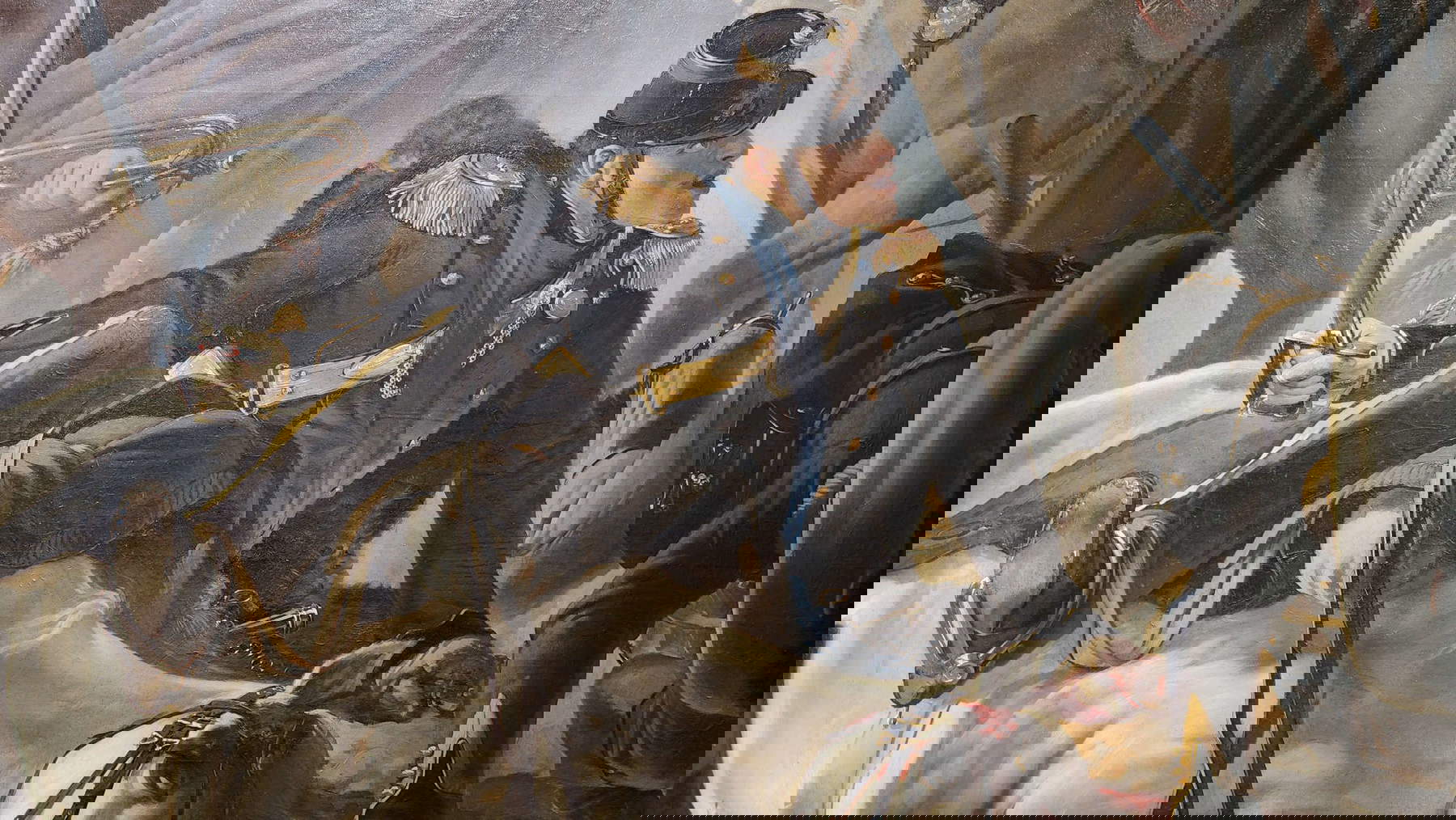
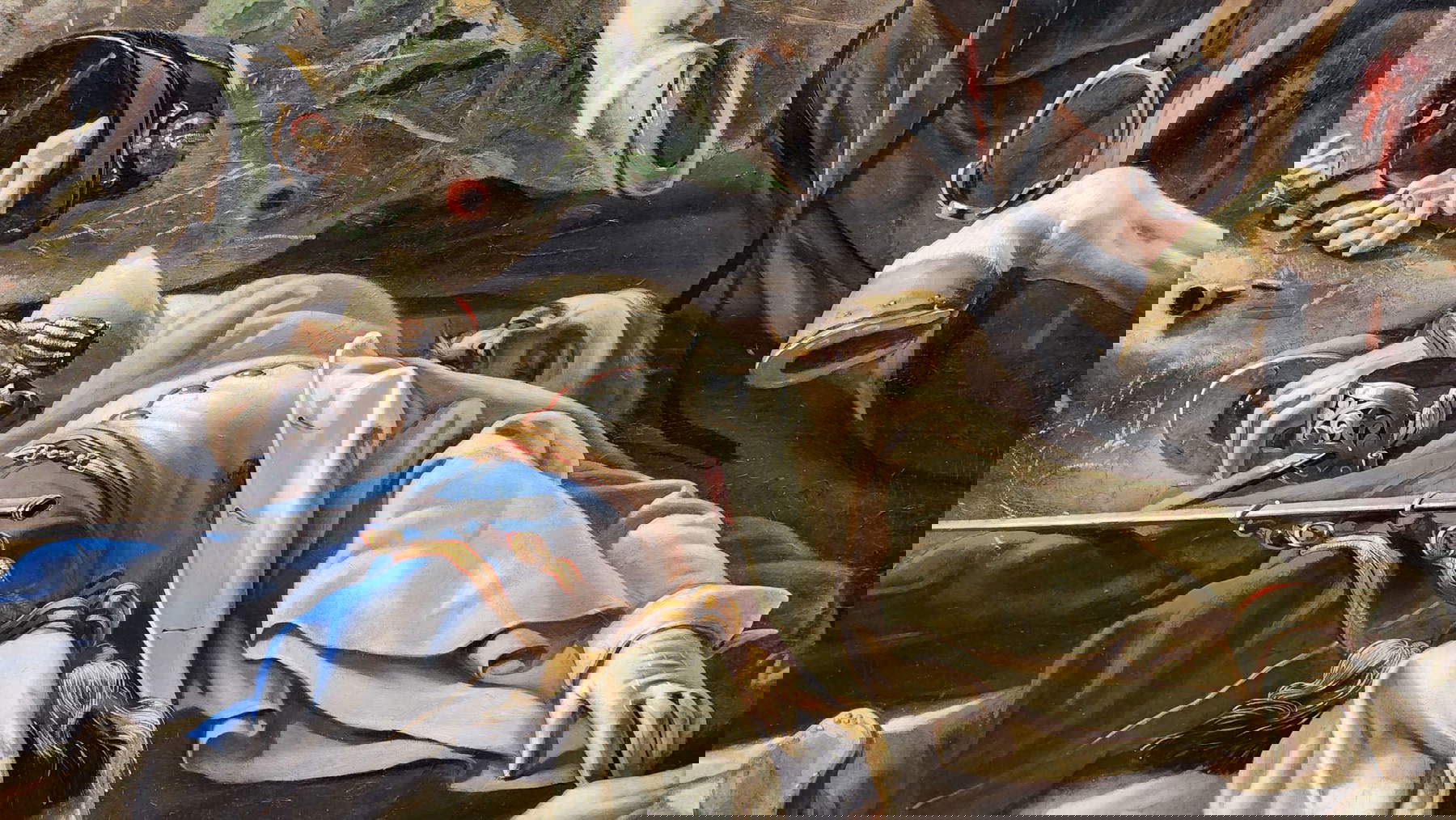
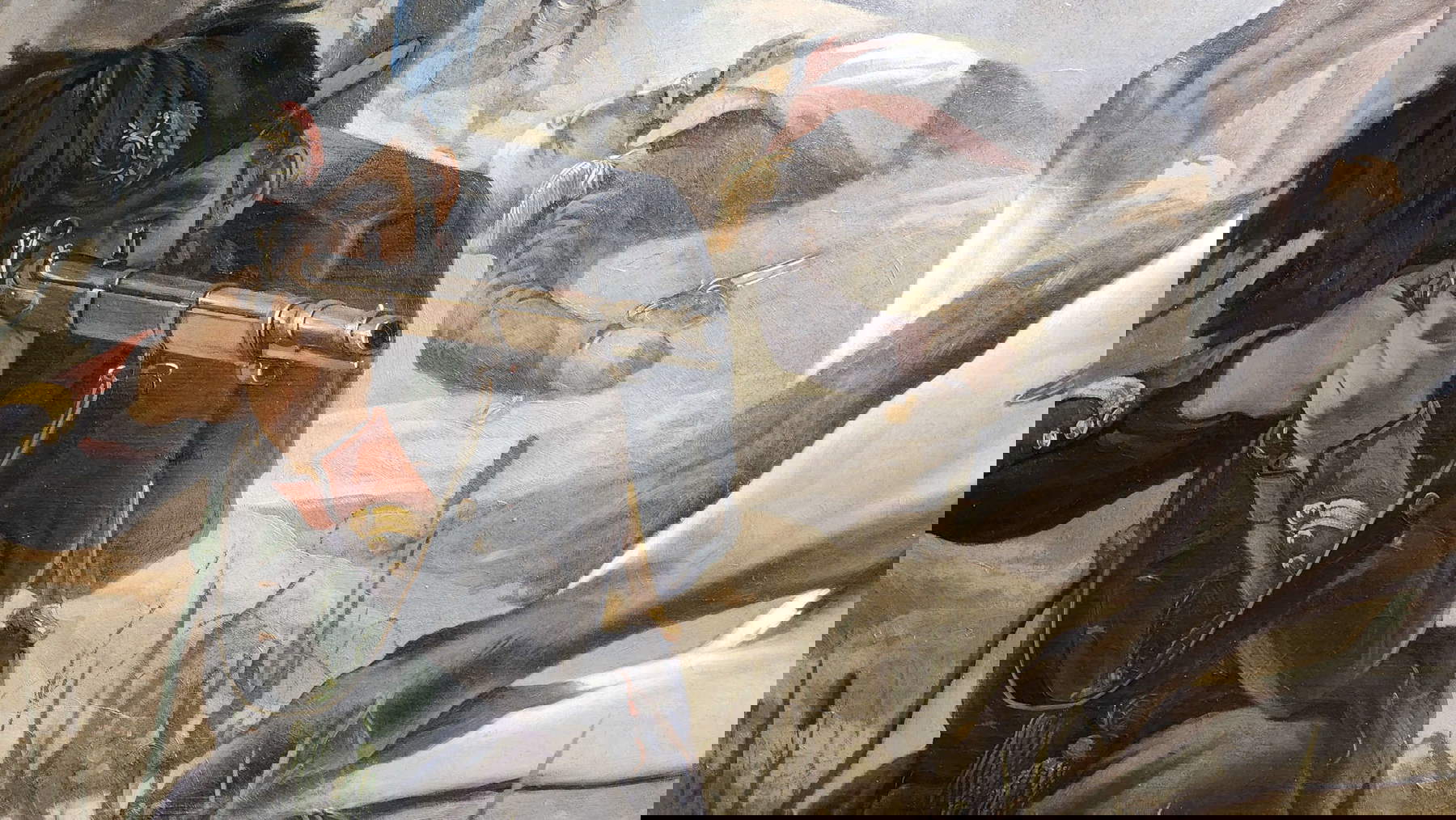
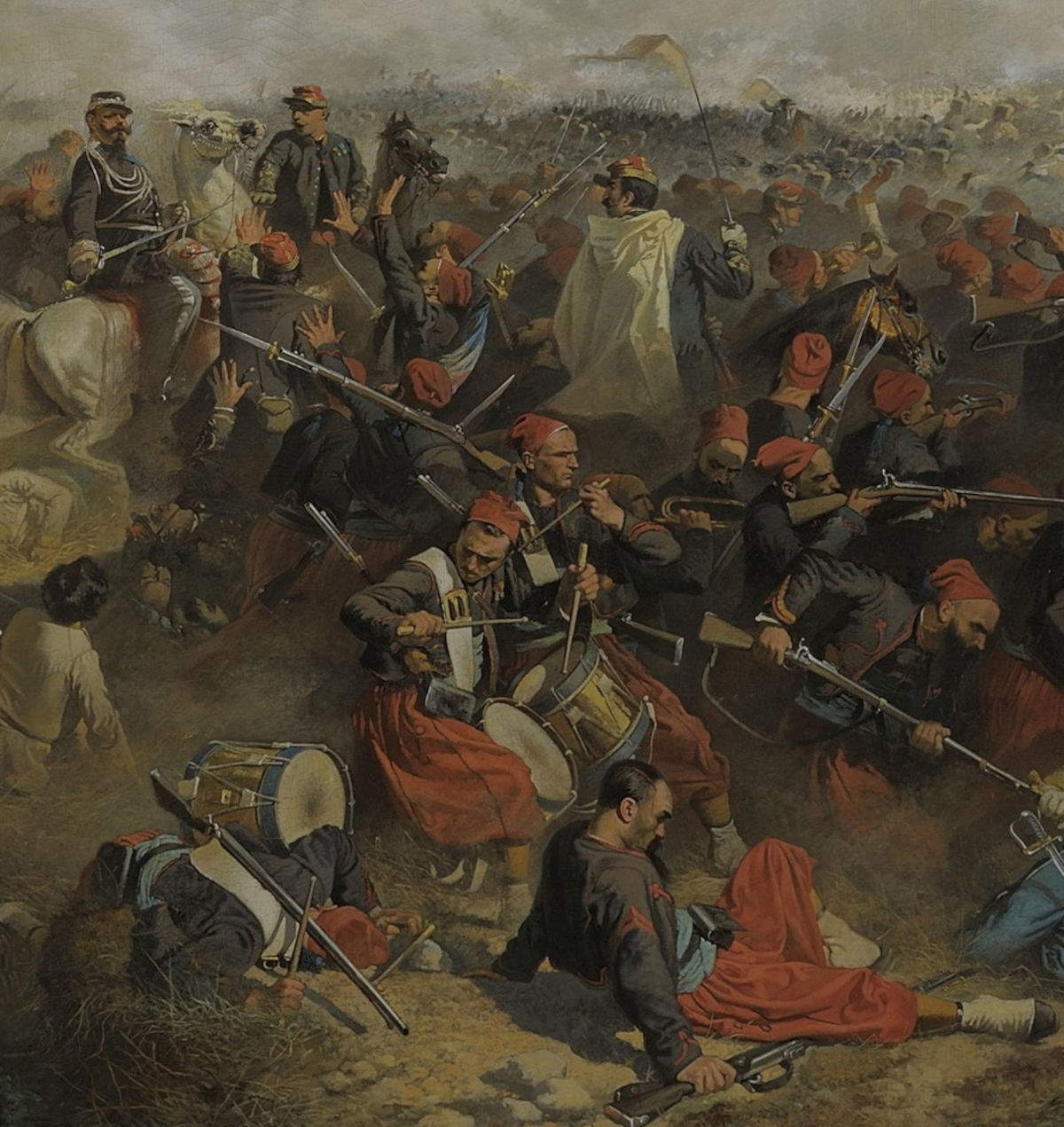
Painter of the king by calculation, then, even at the cost of handing over to others what he felt was his, even at the cost of renouncing a register that was perhaps more congenial to him, even at the cost of reducing himself to following, he who had been one of the first. So much so that already in 1863 he was at work for Eugene Emmanuel of Savoy’s Victor Emmanuel II and the Zouaves at Palestro, a work that was less artificial and less pompous than that of four years earlier, and yet all hinged on the figure of the king who towers at the exact center of the composition, the visual hinge toward which the eyes of those about him converge and even the geometric fulcrum of the whole composition. The soul remained that of the painter who had drawn his figures from life: the studies remain to testify to the laborious conception of this great battle scene. The soldiers torn apart on the battlefield, the comrades caught in the fury of the fray, the bursts of rifles served as guardians of truth, but perhaps it was no longer love of truth so much as, if anything, a need for credibility: the soldiers did not serve to vindicate, they served to justify.
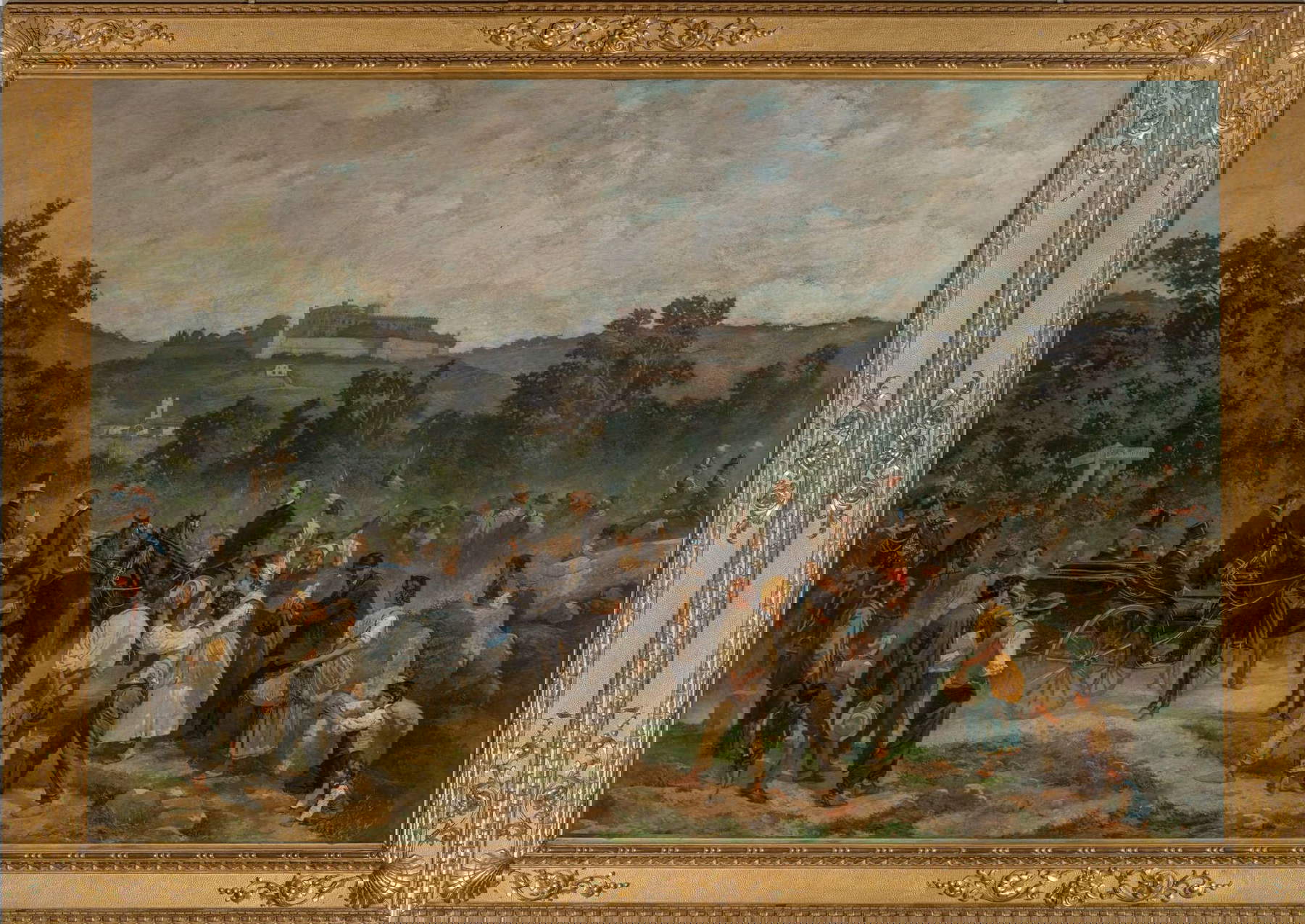
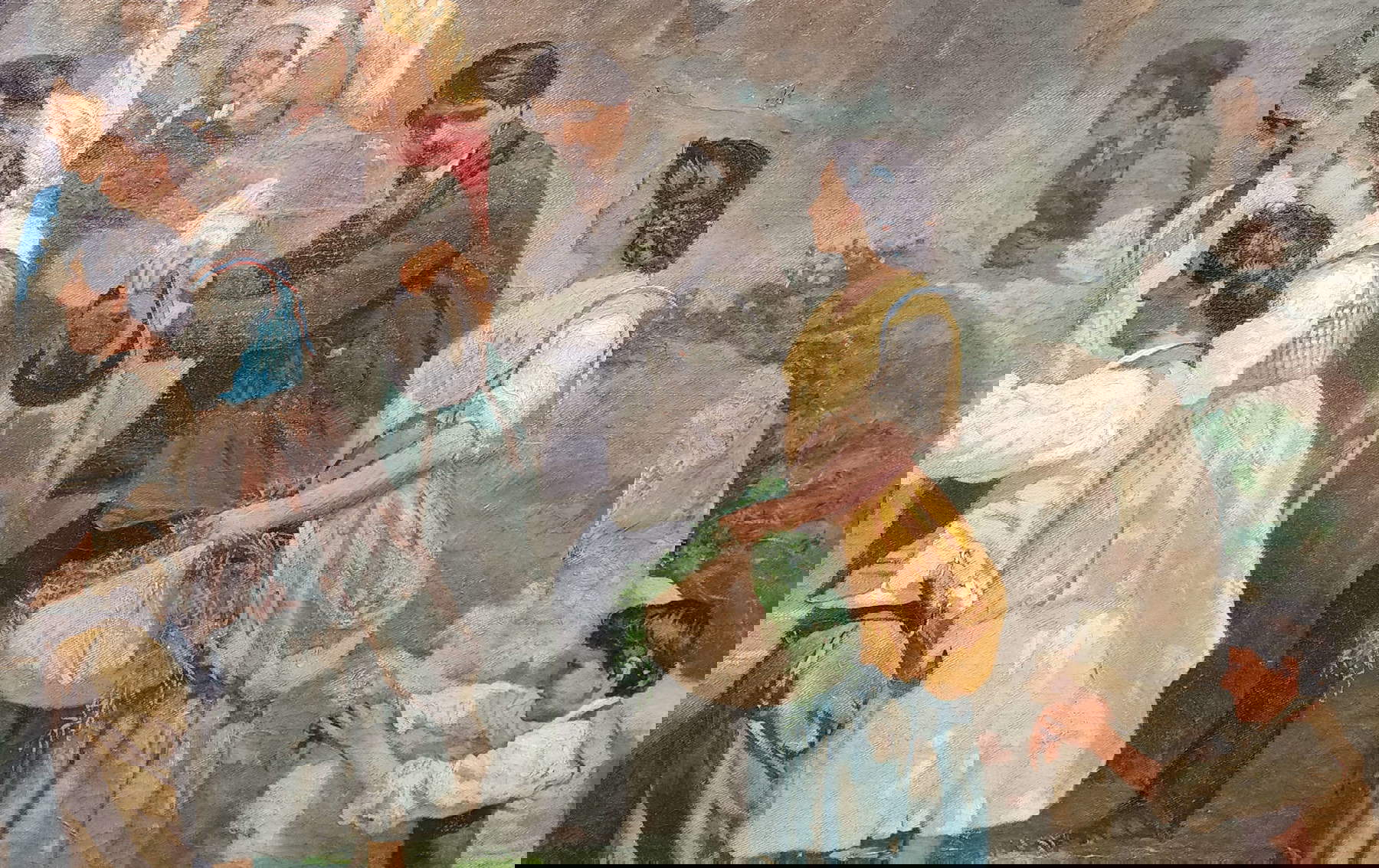
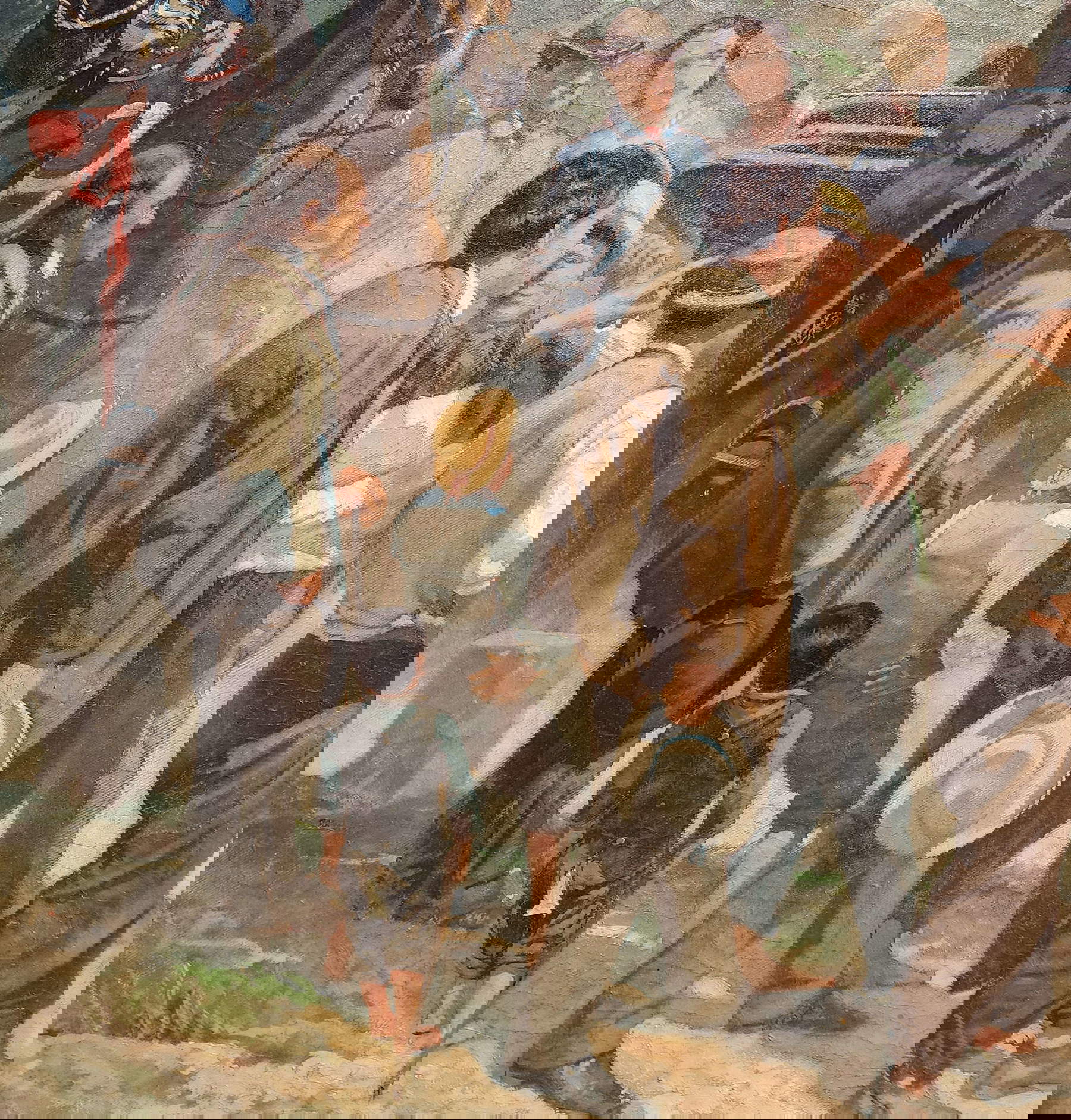
No wonder then that already by the late 1960s many of those who had also so convincingly painted battle scenes had given up, had left their works unfinished, or had passed a coat of paint over them to move on to painting a landscape or genre scene. Signorini, whom it is possible to count among the disillusioned (like Fattori, who, however, would vent his bitterness by continuing to paint battles, but exasperating his anti-heroic tones), had gone so far as to write publicly that, seeing the works of some of his colleagues, it seemed to him that that’art had been reduced to “courting everyone like public women, whereas if art has a purpose, it is certainly to precede and not to follow the times.” Signorini’s article came at a time when Norfini had by then become acquainted with Baron Ricasoli, who had become his patron, and more or less while he was awaiting the execution of King Victor Emmanuel II’s Visit to the Castle of Brolio (a work, moreover, that had always remained in the properties of the Ricasoli family), which, even with its taste for the anecdotal, even with all the vividness of the characters, even with all the amiability of the tasteful bucolic setting, even with all the attention to the landscape, always remains a work with blatantly celebratory tones. And even the inclusion of the Castello di Brolio, the family residence that the baron had had restored at his own expense, in an attempt to restore those ruins to their medieval facies , responded to that intent.
Norfini’s fates and those of painting would then begin to diverge: toward the finale, the exhibition ferries the visitor into the rhetorical swamps of that Umbertine Italy that bent the Risorgimento, almost irrevocably, to a kind of design of celebration and exaltation of the Savoy monarchy. Alongside Amos Cassioli’s sketches for the cycle on Victor Emmanuel II destined for Siena’s Palazzo Pubblico (sketches that provoked inevitable friction between a judging commission that did not fail to reprimand artists often if they proved insufficiently emphatic and a painter who had his own ideas) parade some of the most bubbly by Norfini, beginning with portraits of the ruling house, conventional portraits by a painter who also touched certain lows in the genre that the critics of the time would not forgive him (indeed, the exhibition recalls Yorick’s scathing critique of the portrait of Silvio Pellico that Norfini presented at the 1859 Ricasoli competition: poor Pellico, after political persecution, after the sufferings of the Spielberg, was to suffer even in death with Norfini’s portraits), and all arrived at a time when he had little to say as an artist by then, taken as he was by other assignments in Lucca: that as director of the Institute of Fine Arts, that as director of the Pinacoteca, and then the numerous appearances in the commissions formed within the Ministry of Education, on which the public artistic heritage depended at the time, called upon to express an opinion on restorations, protection, and the preservation of ruins and monuments that Norfini, with his work well summarized by Luisa Berretti in the catalog, helped to pull out of degradation.
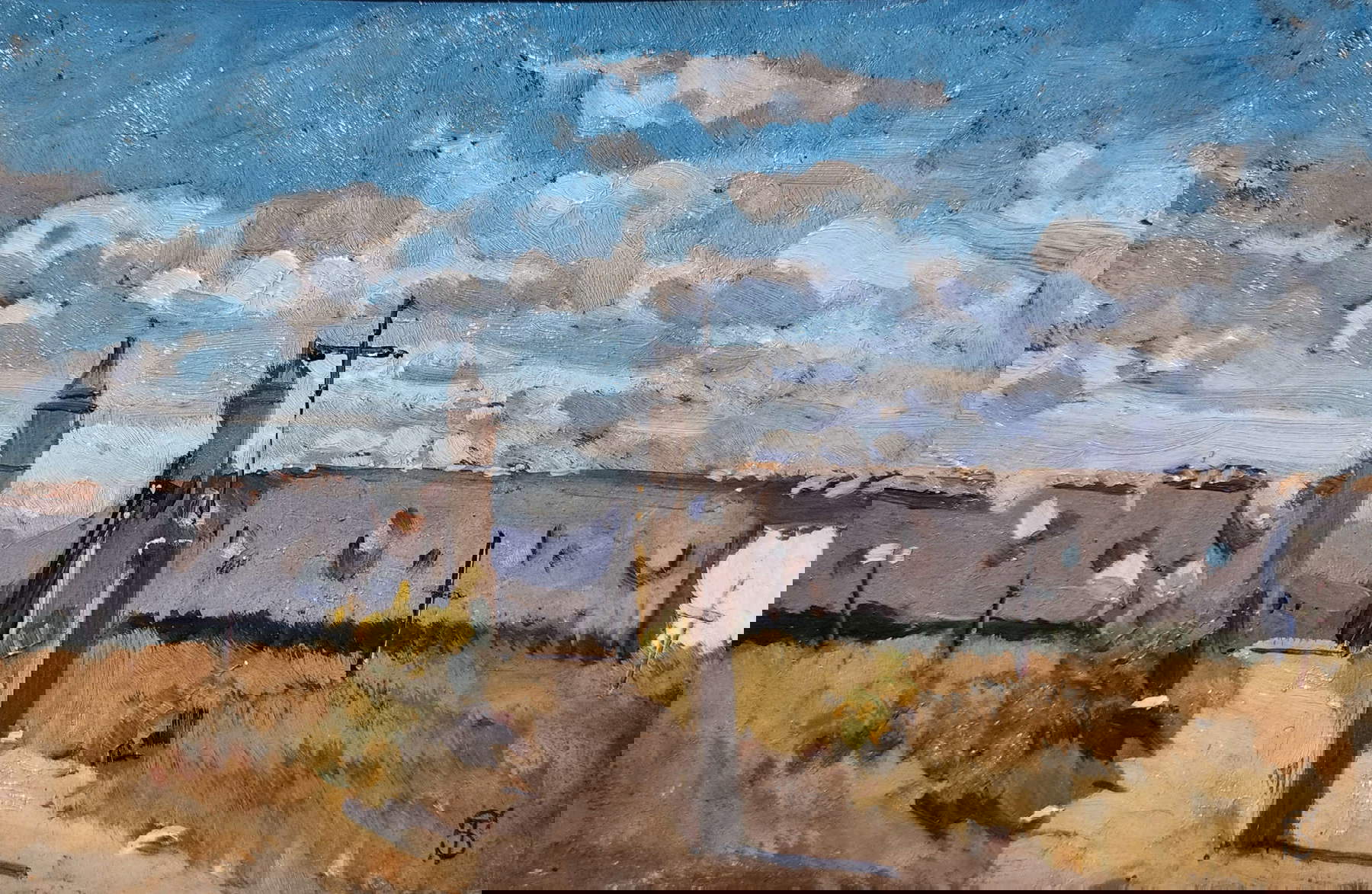
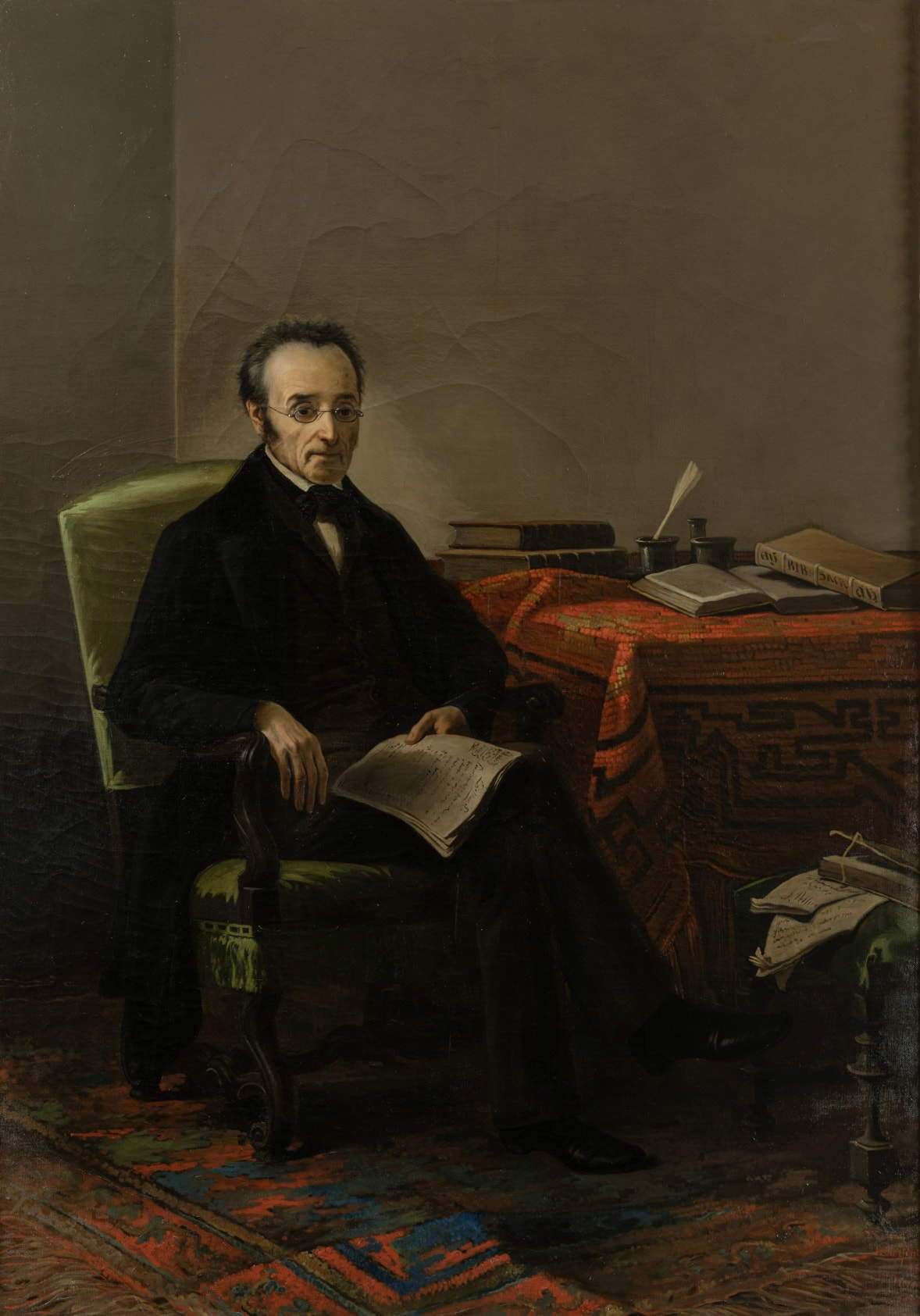
On the Norfini painter there remain, Emanuele Pellegrini recalls instead, some knots still to be unraveled given, he explains, “the still immature knowledge we have of his catalog.” One of these is just portraiture: although it was probably not his genre, when he was inspired, especially between the 1960s and 1970s, and when he could free himself from the schemes of official portraiture, he knew how to keep up with the best of his time (certain of his works exhibited in Pescia show this). And then, there remains the knot of the landscape: he was not an innovator but he had some interest in this genre, however little we may know about it, since the rare certainties we have about it focus on the settings of his battle portraits and on very little evidence, starting with a painting that passed on the market a few years ago (at a ridiculous price, moreover), which Pellegrini thinks he can make coincide with a Marsh that Norfini presented in an exhibition in Lucca in 1875. Little else is known.
What is the purpose, then, of an exhibition on Luigi Norfini, an exhibition on a painter who estranged himself, perhaps even consciously, from the front lines of his time to become a telamon of the Savoy royal palaces, even with all the intelligence of a painter who knew how to see and who never lacked the respect of his colleagues who, on his contrary, chose not to fight a rearguard battle, Fattori above all? The most spontaneous answer lies in the intrinsic importance, in the reconstruction of an event that helps to understand more deeply what the art of the Risorgimento was, and this is one of the motivations that supported the exhibition, organized a year after the centenary of the artist’s birth. On the other hand, it is also true that Norfini was a child of his time, and it is also true that it does not seem legitimate to level reproaches at an artist who, with deliberate adherence, with the evidence of paradox but without ambiguity whatsoever, decided to preside over the rear, to preserve the forms and instances of what was already destined to become legacy and cascade, of what had already moved the spirits of the deluded to new research, often even opposed to that which the Norfini, the Cassioli, and the Pontremoli continued to beat out at the end of the nineteenth century. And precisely by virtue of this garrison of his, far from being considered a sign of weakness, Luigi Norfini is a present artist, alive and contemporary on a par with the rebels, from whose works alone it is impossible to understand a historical period, he is worthy witness of his era no less than Fattori, Signorini, or Lega, he is worthy interpreter of the cultural horizons of his time no less than those who had chosen, unlike him, an art that struggled in the chaos of the trenches.

The author of this article: Federico Giannini
Nato a Massa nel 1986, si è laureato nel 2010 in Informatica Umanistica all’Università di Pisa. Nel 2009 ha iniziato a lavorare nel settore della comunicazione su web, con particolare riferimento alla comunicazione per i beni culturali. Nel 2017 ha fondato con Ilaria Baratta la rivista Finestre sull’Arte. Dalla fondazione è direttore responsabile della rivista. Nel 2025 ha scritto il libro Vero, Falso, Fake. Credenze, errori e falsità nel mondo dell'arte (Giunti editore). Collabora e ha collaborato con diverse riviste, tra cui Art e Dossier e Left, e per la televisione è stato autore del documentario Le mani dell’arte (Rai 5) ed è stato tra i presentatori del programma Dorian – L’arte non invecchia (Rai 5). Al suo attivo anche docenze in materia di giornalismo culturale all'Università di Genova e all'Ordine dei Giornalisti, inoltre partecipa regolarmente come relatore e moderatore su temi di arte e cultura a numerosi convegni (tra gli altri: Lu.Bec. Lucca Beni Culturali, Ro.Me Exhibition, Con-Vivere Festival, TTG Travel Experience).
Warning: the translation into English of the original Italian article was created using automatic tools. We undertake to review all articles, but we do not guarantee the total absence of inaccuracies in the translation due to the program. You can find the original by clicking on the ITA button. If you find any mistake,please contact us.





















 IT
IT FR
FR DE
DE ES
ES CN
CN


