





The major exhibition that Palazzo Strozzi in Florence is dedicating to Mark Rothko (March 14-Aug. 23, 2026), curated by Christopher Rothko and Elena Geuna, offers itself as an occasion that allows not only to confront one of the absolute protagonists of twentieth-century art, but to do so through a less celebratory and more human, more exposed, more real gaze. It is precisely in this space, suspended between expectation and surprise, that the dialogue between Gabriele Landi and Gianluca Sgherri takes place: two artists, who went through the exhibition not as passive spectators, but as direct interlocutors, involved in an intimate confrontation with the work and the process that generates it. This conversation, born after the visit to the exhibition, takes shape as a double movement: on the one hand, the disarmament of expectations, those built over time by the reproduction and rhetoric of the masterpiece; on the other hand, the rediscovery of an unexpected Rothko, also made of hesitations, attempts, fragility. What emerges is a tale in two voices that restores a profound dimension to the exhibition, in which seeing is transformed into an exercise of attention and availability, and the work of art once again becomes a living ground for research, rather than a definitive image to be contemplated.
Gabriele Landi. Every time you go to see an exhibition you should be in a state of grace: your mind totally cleared, free of preconceived ideas and able to put into oblivion all those useless notions that inexorably resurface when you are in the presence of a work of art. These are coincidences that, I must say, fortunately happen to me quite frequently in recent times. So, accompanied by this benevolent spirit, today I entered Palazzo Strozzi in Florence and visited the Mark Rothko exhibition. I won’t hide from you that I was biased; almost every contemporary art exhibition I have seen there has left me very puzzled. Based all of them on what Nanni Moretti calls “the wow effect,” I found them to be superficial selfie shacks and, for that reason, capable only of being caressed by the gaze of an audience distracted by the monumental spectacularity of some meaningless interventions. They were, therefore, completely incapable of bringing the audience closer to the vertigo of the disarming relationship with the work of art. This time things were different, and I want to talk about it with you from a point of view that is mine, and yours as well: that of an artist visiting another artist’s exhibition. Let’s face it: the strength of this exhibition lies in the fact that it presents Rothko’s work not only from the point of view of unattainable masterpieces...
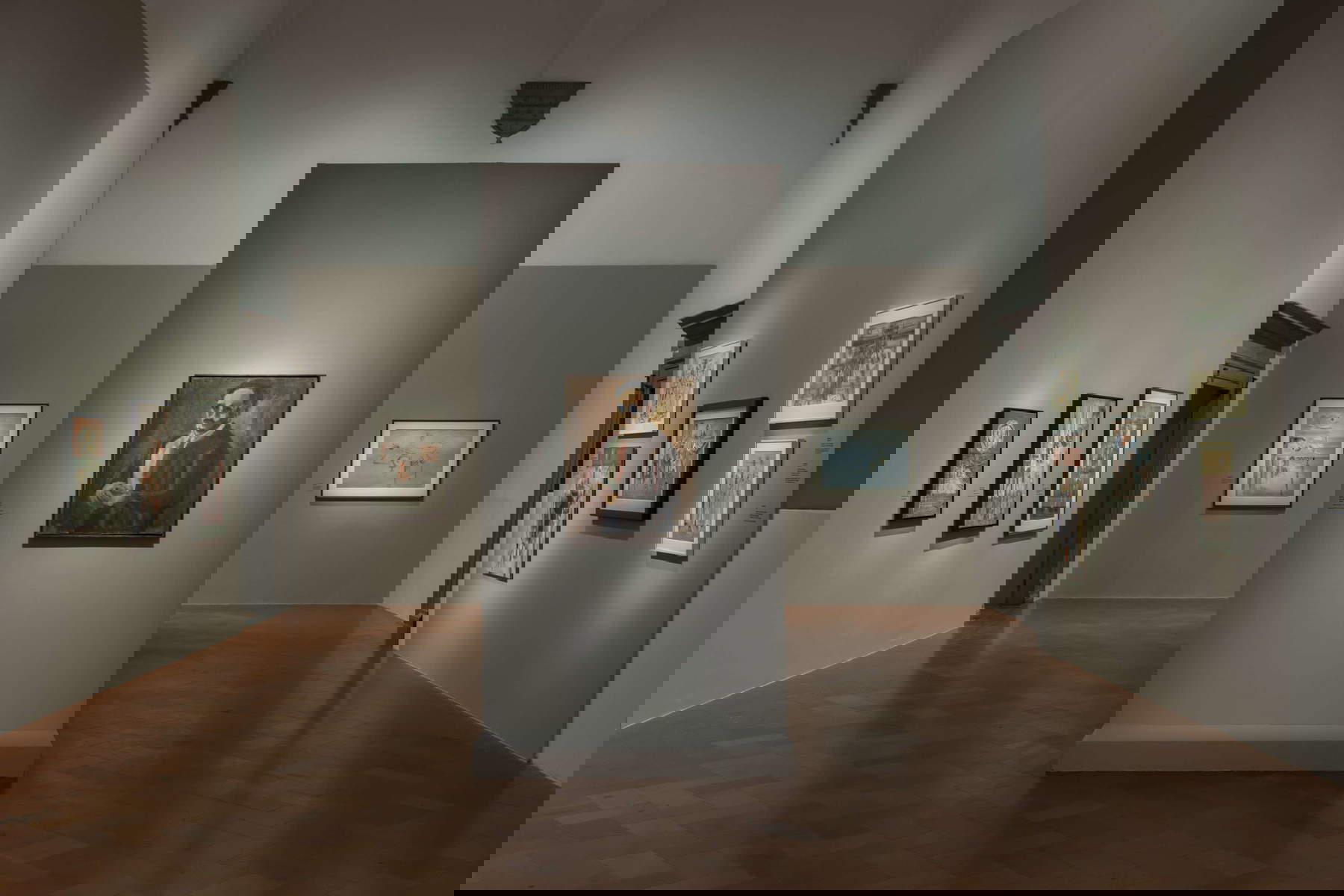
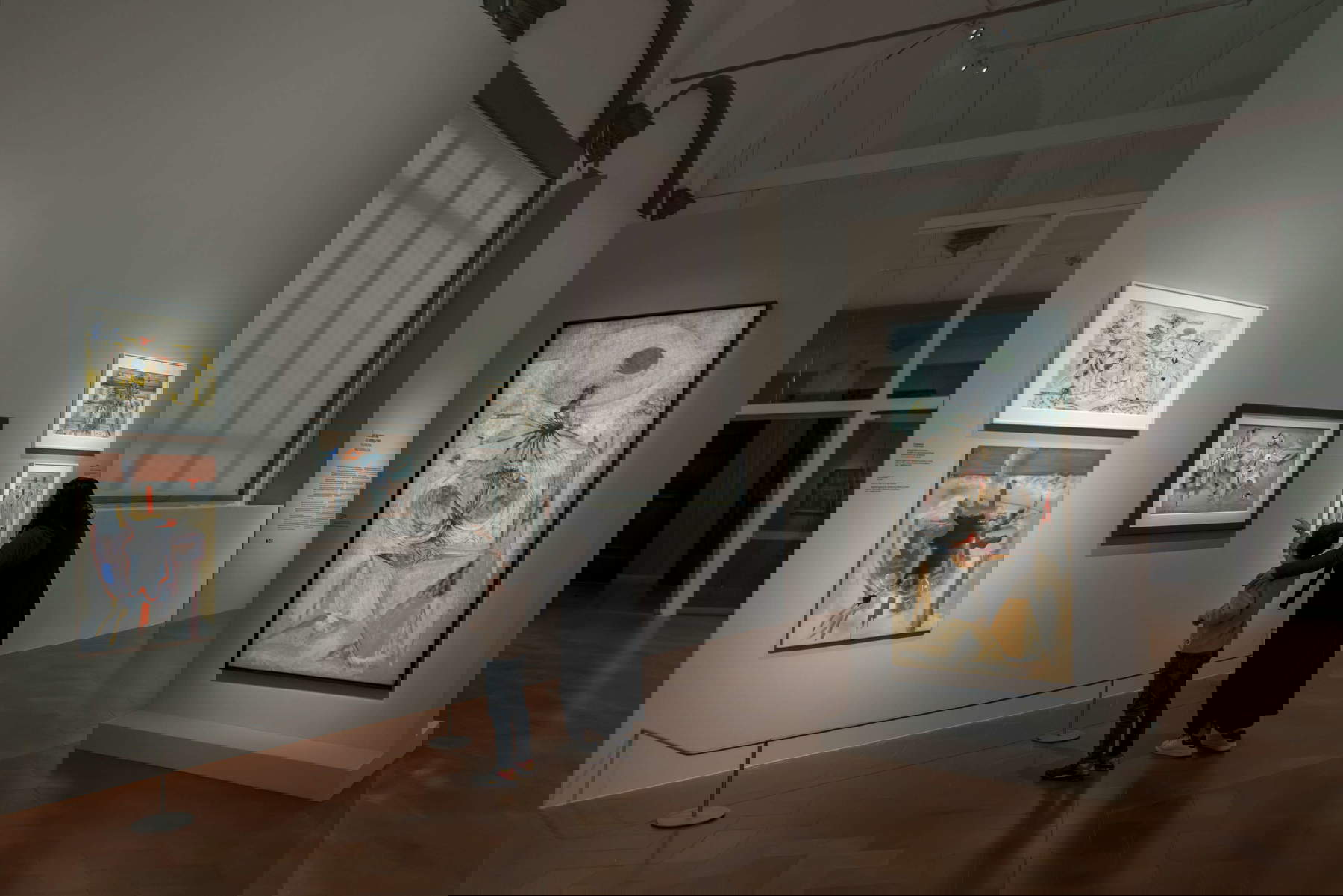
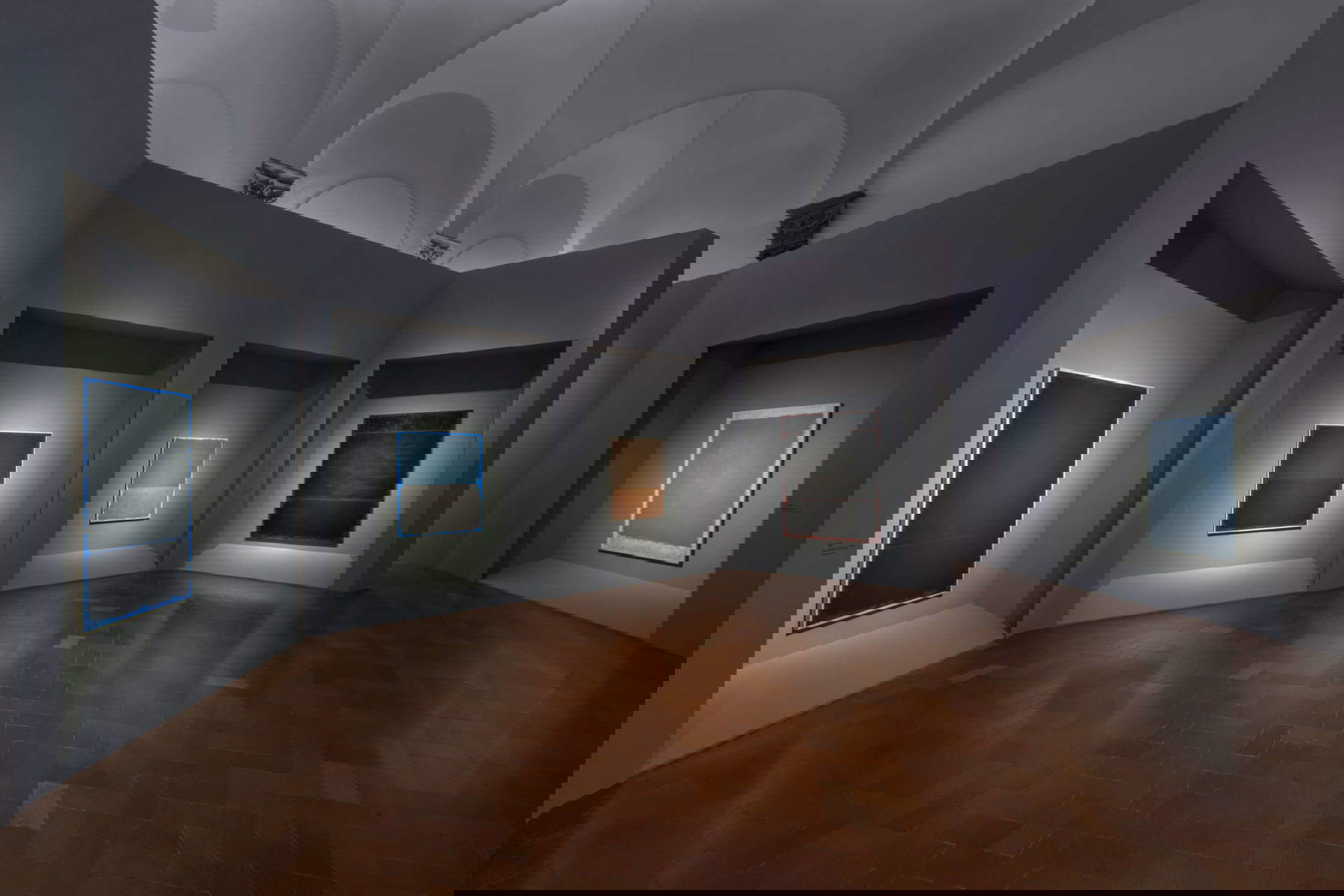
Gianluca Sgherri. Being used to seeing Mark Rothko’s works through publicized and media channels, when we finally happen to be in front of one of his exhibitions - like the one hosted at Palazzo Strozzi - we almost naturally expect a sequence of masterpieces, one after the other. A perfect itinerary, composed only of the most celebrated and advertised images that we have come to recognize in books, documentaries or online. The surprise, however, was different. Among the rooms of the exhibition also appear less successful works: at least a dozen paintings that, without much ado, could be described as uncertain, unfinished or even a bit ugly. Yet it is precisely this unexpected presence that makes the experience all the more interesting. The uncertainty that surfaces in some of the works, through overlapping layers of color, sometimes reworked or erased, makes for a particularly intense and exciting viewing experience. It is a direct experience, almost a face-to-face confrontation, which reveals the artist’s frailties and insecurities, but also his courage and perseverance in pursuing an intimate and deeply felt goal, which nevertheless does not yet appear fully defined.
Gabriele Landi. Yes, you are right. The presence of these second-rate paintings weighed down by conspicuous adjustments, retouches, drains and sometimes by resounding total repainting that deprive the paintings of composure, luminosity and freshness has the merit of making the exhibition less absolute, less unattainable. It thus unexpectedly gives the most attentive viewers a truly unprecedented chance to access the work of this lone giant of last century’s art.
Gianluca Sgherri. Innovation is not only born from great visions and insights: it also takes shape from mistakes and repeated attempts, just as it happens in life. It is also the less successful steps that make any artistic expression more authentic and accessible, whether small or large. So is the Rothko exhibition in Florence, at once uncertain and beautiful, collected and immense.
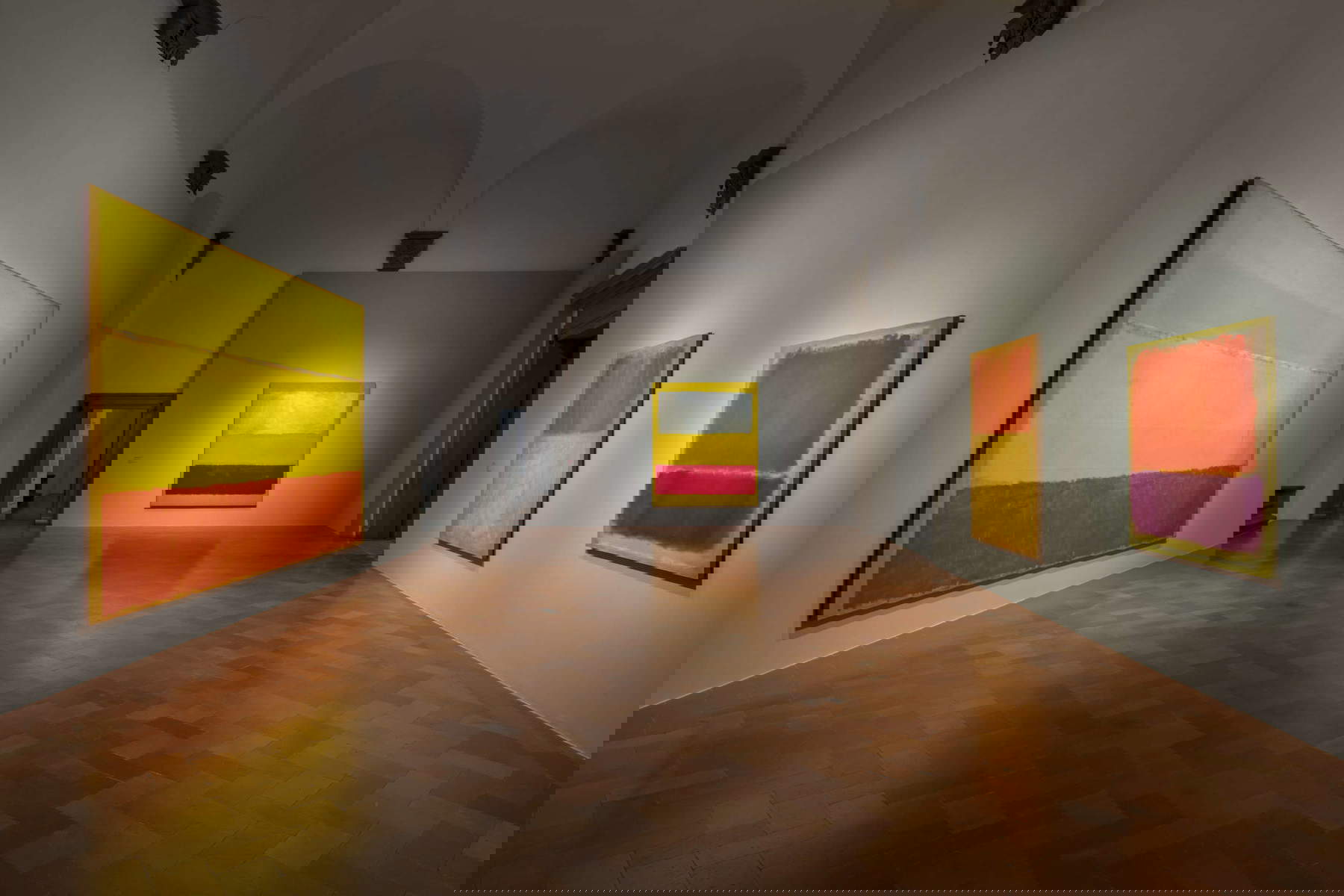
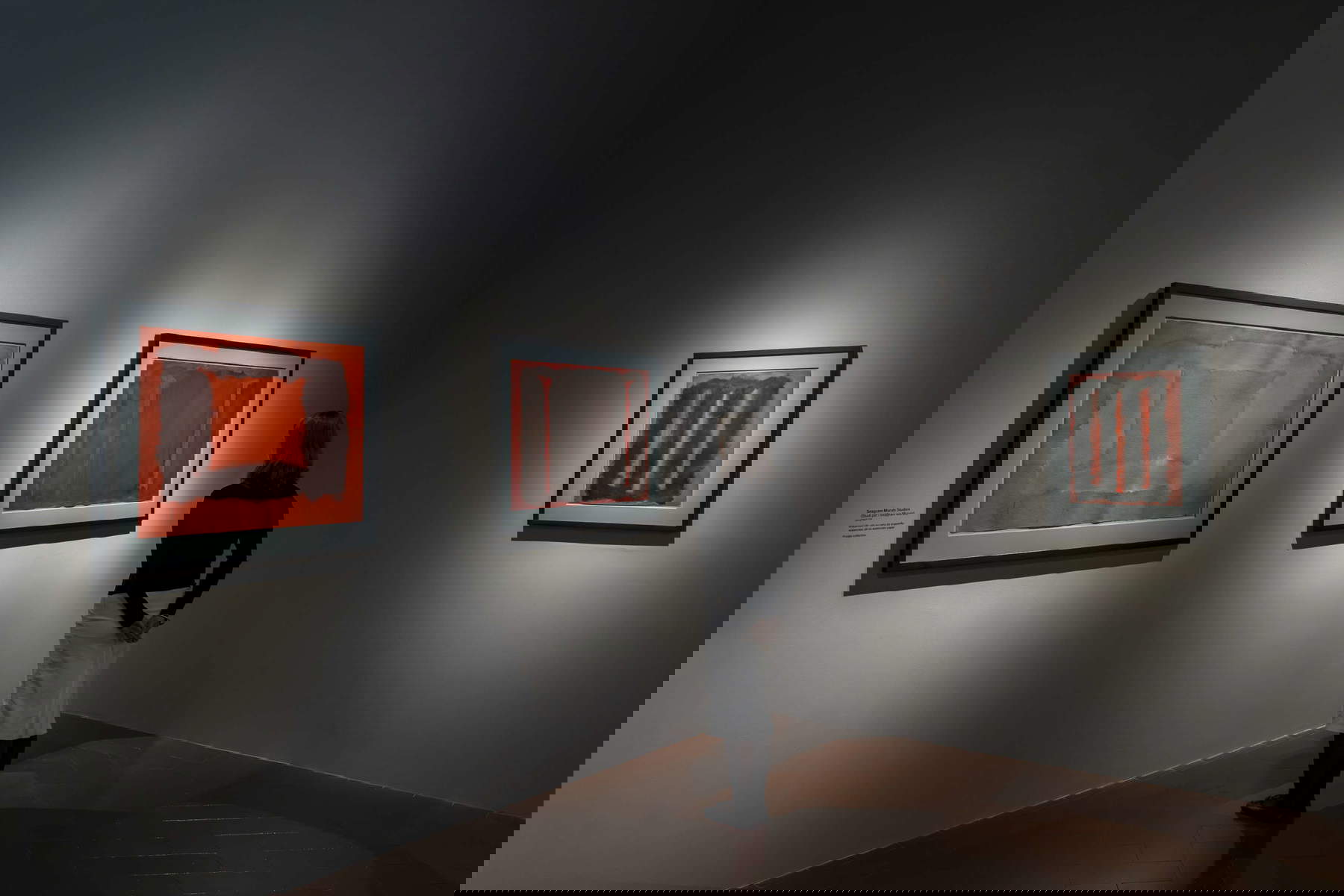
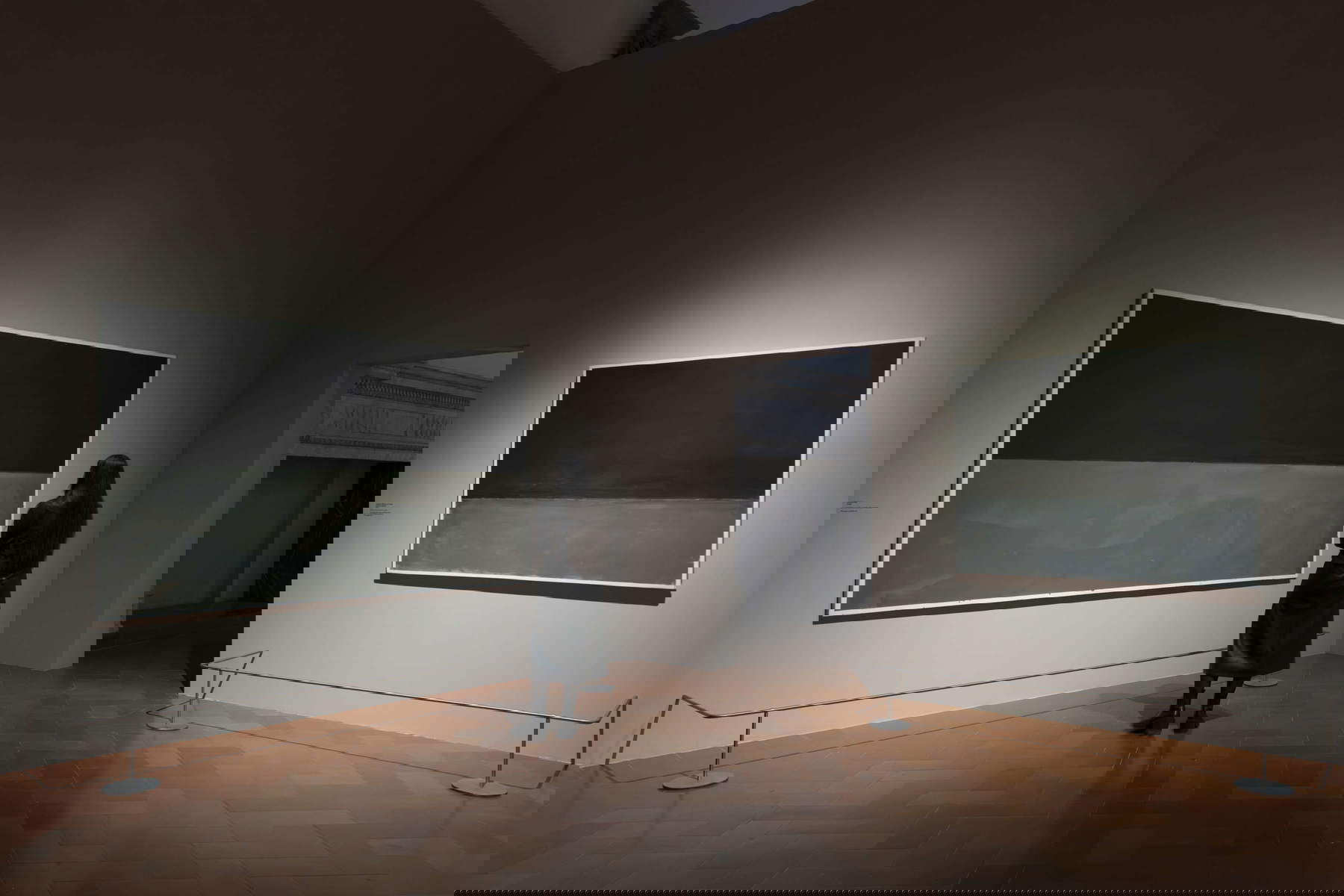
Gabriele Landi. I know, it sounds like a paradox, yet that’s just the way it is: it is easier to understand the mechanisms of an artist’s work in his less successful attempts; to grasp the way he moves the brush across the surface of the painting, the way he handles the color impasto, the texture of the material, the transparency of certain glazes and tonal transitions... All of these are things that in the most successful paintings, where everything is resolved in the name of simplicity, are uncatchable precisely by virtue of what Rothko himself, in one of his well-known writings, defines in this way: “We are for the simple expression of complex thought.” Thus the exhibition alternates, in a well-concerted succession, dry, forceful pieces, where color becomes floating space, with others that are more uncertain and heavily reworked. The latter, elbow to elbow with the masterpieces, in addition to what has already been said, make the viewer’s gaze bounce from one room to another in a well-timed succession of images that is true music to the eyes.
Gianluca Sgherri. Note the first figurative painting in the exhibition: seemingly distant and almost unrecognizable compared to the great works of the 1960s, it already reveals in nuce the germ of future research. One can read in it a stylistic tension, a chromatic and compositional sensibility that, although not yet accomplished, already contain the echo of what is to come. It is precisely in these initial traces that we recognize the truth of a path and, perhaps, also its inevitable solitude.
Gabriele Landi. I will not hide from you that I was very impressed by the works on paper that I had so far only seen in books, especially those collected in the last room. The color in these works has a chalky texture and density, as if it were drained, exsanguinated, which makes this body of works very intense. It does not matter if the colors in these last works on paper are pastel it is their density the way the color takes over these spaces that renders with increasing effectiveness all the drama of a life lived with great intensity. The exhibition recommends a double visit to the San Marco Museum and the Laurentian Library, two places in Florence dear to Mark Rothko. I venture to add in closing a “off-centered” note, based more on suggestion than philology: after leaving the exhibition, cross the Arno and go to Santa Felicita to see or revisit the Capponi Chapel with Pontormo’s Transporting the Body of Christ; then go up to Poggio Imperiale to see Ottone Rosai’s Crucifixion. You will easily find it, past the neoclassical villa along the road, in one of those tabernacles the town is full of near the astronomical observatory. You will, I think, find something in this celebration of anti-painting that will resonate powerfully with what you have seen in the rooms of Palazzo Strozzi.

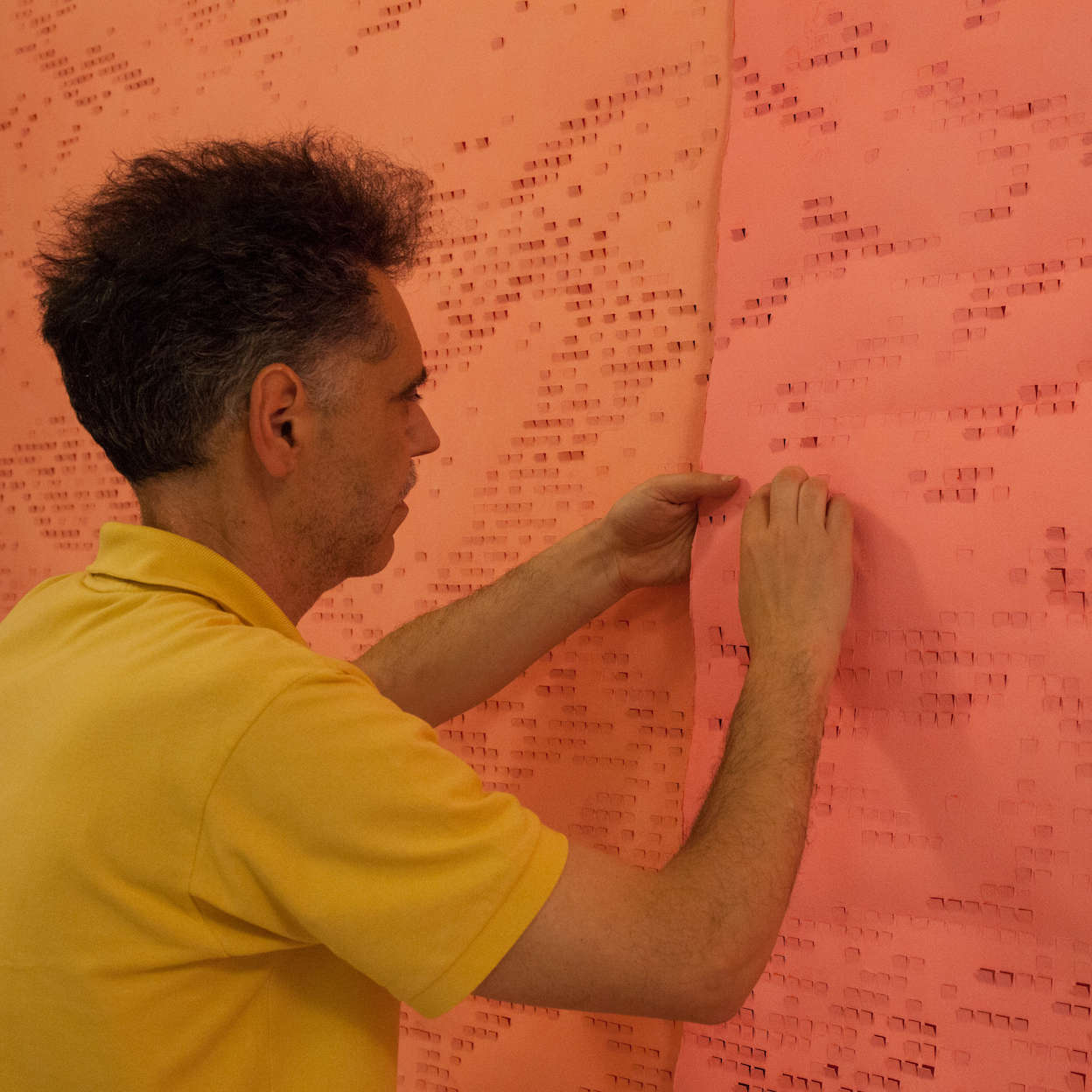
The author of this article: Gabriele Landi
Gabriele Landi (Schaerbeek, Belgio, 1971), è un artista che lavora da tempo su una raffinata ricerca che indaga le forme dell'astrazione geometrica, sempre però con richiami alla realtà che lo circonda. Si occupa inoltre di didattica dell'arte moderna e contemporanea. Ha creato un format, Parola d'Artista, attraverso il quale approfondisce, con interviste e focus, il lavoro di suoi colleghi artisti e di critici. Diplomato all'Accademia di Belle Arti di Milano, vive e lavora in provincia di La Spezia.Warning: the translation into English of the original Italian article was created using automatic tools. We undertake to review all articles, but we do not guarantee the total absence of inaccuracies in the translation due to the program. You can find the original by clicking on the ITA button. If you find any mistake,please contact us.


















 IT
IT FR
FR DE
DE ES
ES CN
CN


