




by
Federico Giannini  @federicogiannini1
07/06/2026
@federicogiannini1
07/06/2026



Categories: Exhibition reviews / Disclaimer
At the MART in Rovereto, the exhibition curated by Beatrice Avanzi and Luca Baroni relaunches Anselmo Bucci as an eclectic and European artist, continuing the rediscovery of this great painter of the Italian 20th century. It is the largest exhibition ever dedicated to him. Here's what the exhibition is like: a review by Federico Giannini.


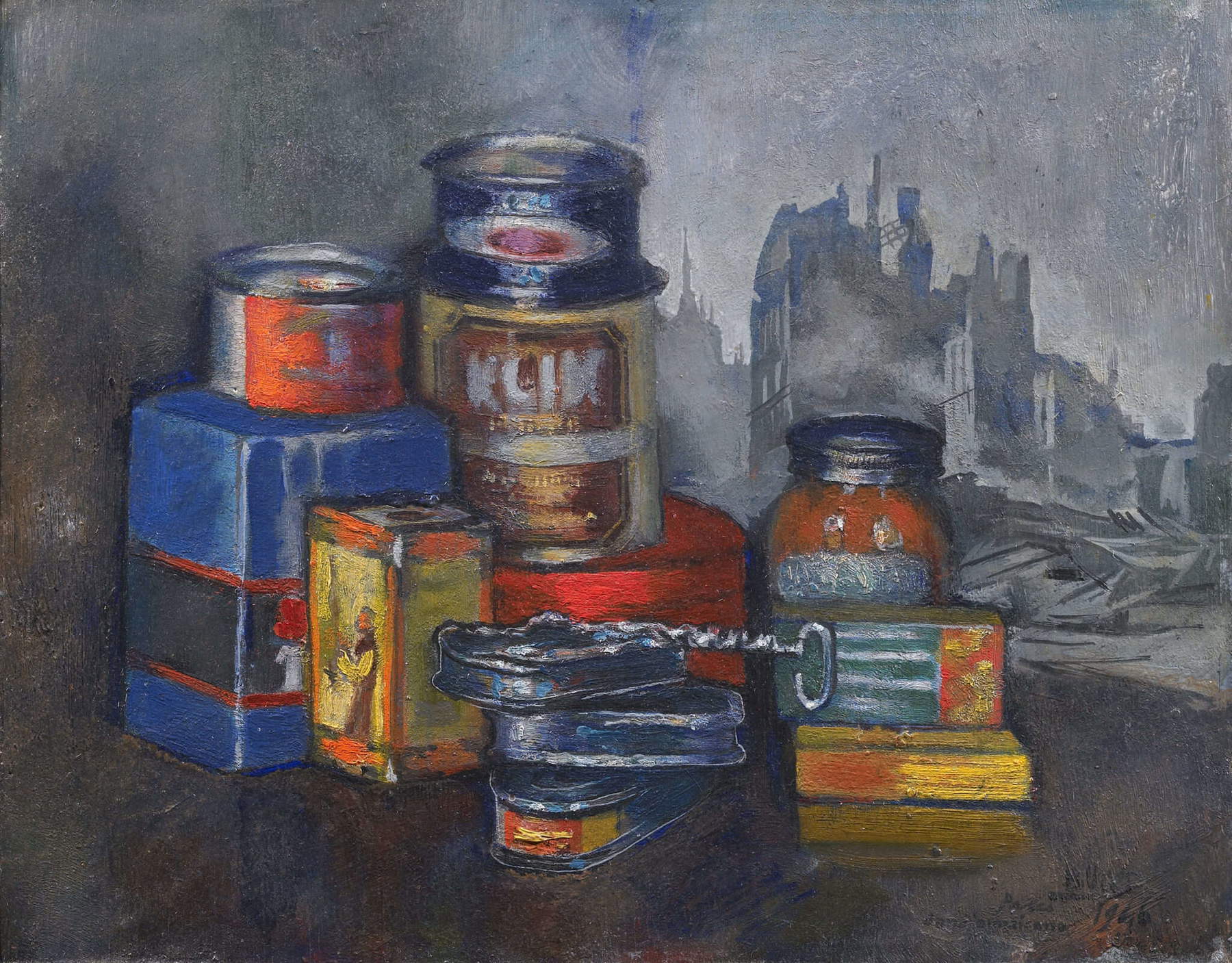
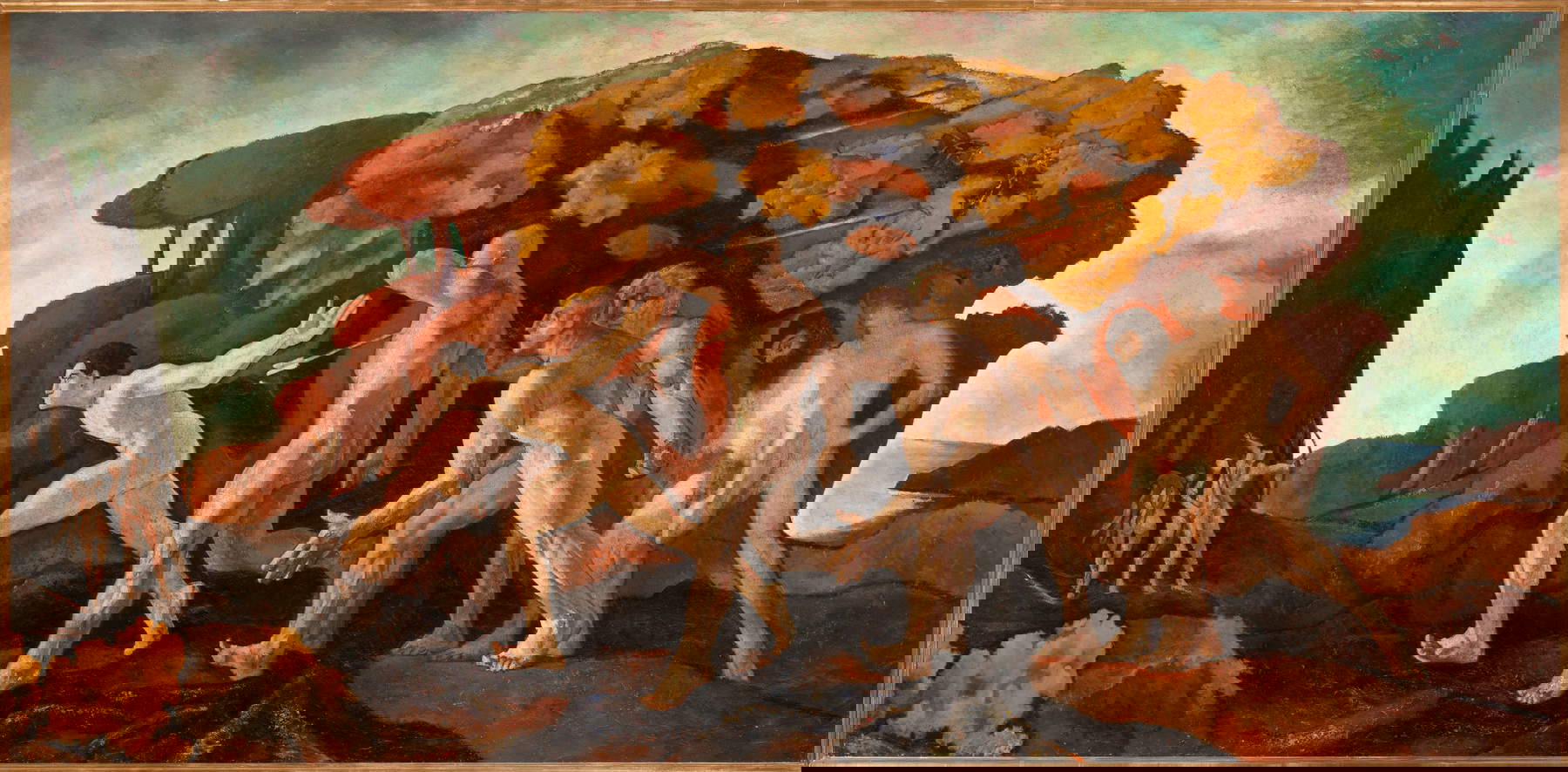
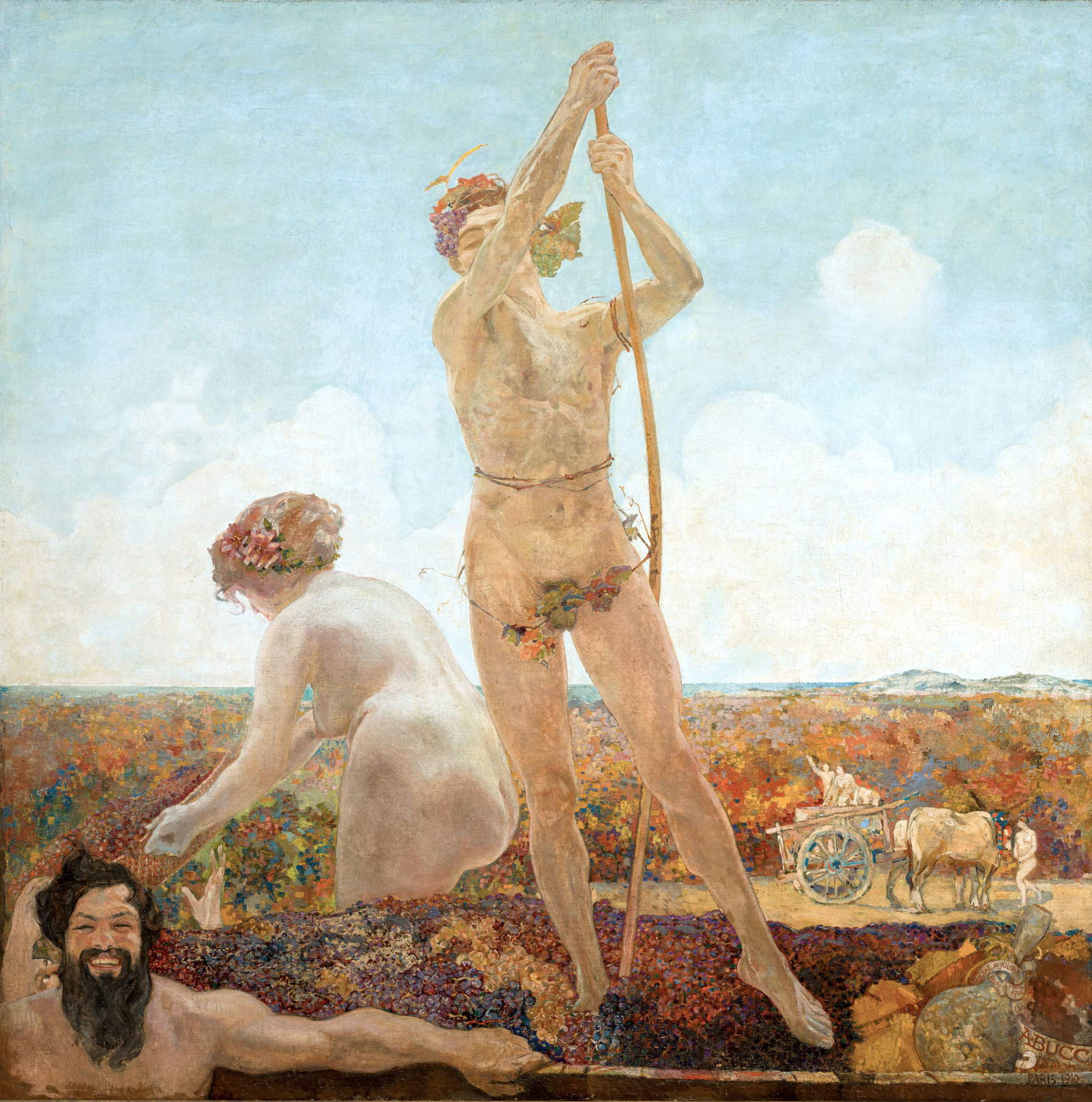
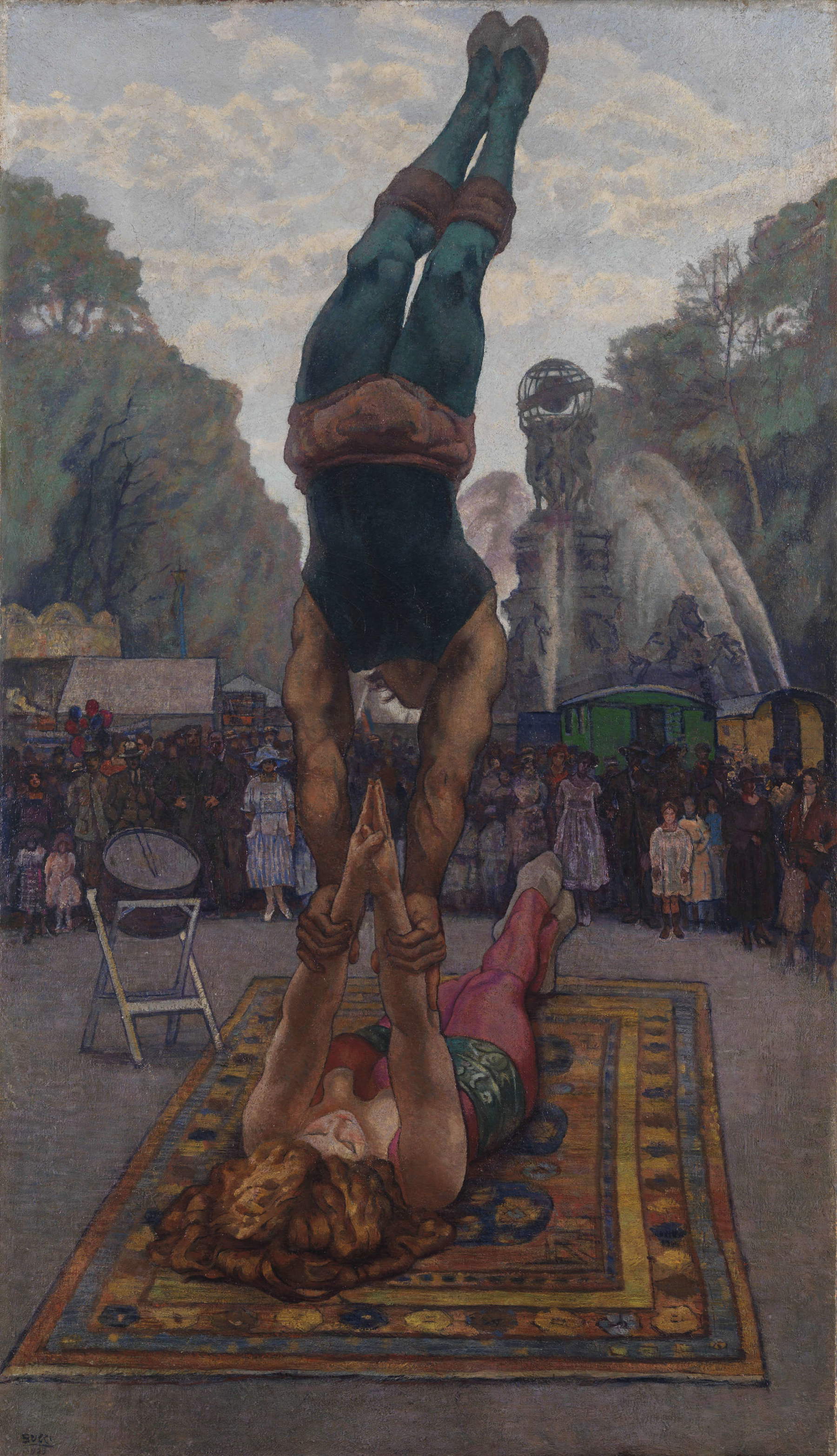
Anselmo Bucci has always been firmly intent on the apostasy of himself, throughout his career. One room, the last, of the major exhibition that the Mart in Rovereto dedicates to him throughout the summer, expertly curated by Beatrice Avanzi and Luca Baroni, may be enough, and two works may suffice. One meets coming out of the exhibition The American Gift, a still life of canned goods, cans of sardines, cans of tomatoes and condensed milk that mock with color the bleakness of a ruined Milan, devastated by Allied bombing: an exercise in satirical grayness masquerading, however, as a metaphysical composition, steadfast in its defiance of Morandi’s bottles and De Chirico’s trinkets, unconscious in its deadly tension that seems a couple of decades ahead of pop art. The temperament of the flying painter, of that formidable aedo of instability, may be sought in the midst of those cans. Or, even better, in the work that faces them, The Males, and which is a sort of rediscovery by the curators of the exhibition, who are to be credited with having brought this enigma on canvas out of the Council Hall of Fossombrone, where for who knows how long the giant painting has languished (the only noteworthy moment of attention was for the exhibition that, in 2003, Elena Pontiggia curated in Bucci’s hometown: Fossombrone, after all, is the custodian of more than eighty of his works, and every revision, every resuscitation, every rediscovery, every revival of Anselmo Bucci must of necessity start from the Marche), and to have brought it back to Trentino, after restoring it for the first time in its history, to restudy it and to try to understand it.

A work of supreme interest, then, because it spans all the most fruitful and most brilliant seasons of Anselmo Bucci’s story, and which alone might be worth something more than a gloss, a note in the margin: it would not be risky to say that The Males could, by itself, almost serve as an introduction to Bucci’s entire painting. It is, curiously enough, one of the earliest and most advanced works in his catalog: begun when Bucci was still in Paris frolicking amid the masquerades of the Bal des Quat’z’Arts (the “great collective rite that fused art, carnival, theater, eroticism and provocation” from the “history studded with scandals, arrests, censure and controversy.” so Matteo Maria Mapelli in the catalog, and enough would be enough to give an idea of who and what Bucci frequented in Paris, and especially how much fun he had), ended after he had already “resigned,” so he had written in a letter to Lino Pesaro, from the Novecento group (the Mart exhibition insists quite a bit on the political differences that had led Bucci to abandon the movement to which he, moreover, had named “Novecento.” an artist far from the ideology of fascism, he would work without ever taking a party card, but neither could he be said to be openly anti-fascist). The first sketches of the Males, on display in the exhibition, from 1910-1911, manifest a surprising closeness to Puvis de Chavannes’ earthly paradises, to that Eden of virile bodies in perpetual movement but also in a perpetual state of grace: here, however, Bucci introduces tension, conflict, struggle. It is as if in that paradise had arrived, out of the blue, a red, fiery, incendiary violence, justified by a war between the males running naked in the middle of a forest and the Amazons who, at the bottom, are already hurling their darts. Then, for some reason, Bucci interrupted the work, and he would return to it some ten years later, turning it inside out from top to bottom: that furious chaos is as if attenuated by a grip of air and sea, the horizon widens, the forest disappears and becomes a bald patch, the figures acquire that monumentality that will be of the Novecentisti. It is as if Anselmo Bucci wanted to repudiate the French years. What has remained unchanged, however, is his inconsistent taste for the antique, one of the few constants of his life: one looks at The Males, and one seems to see a revived Piero di Cosimo, a Renaissance artist (and as such Bucci probably perceived himself, one does not know whether out of coyness or because he really believed in it), a fifteenth-century painter who knows how he ended up in the wrong era. Inside The Males is perhaps all there is to know about Bucci.


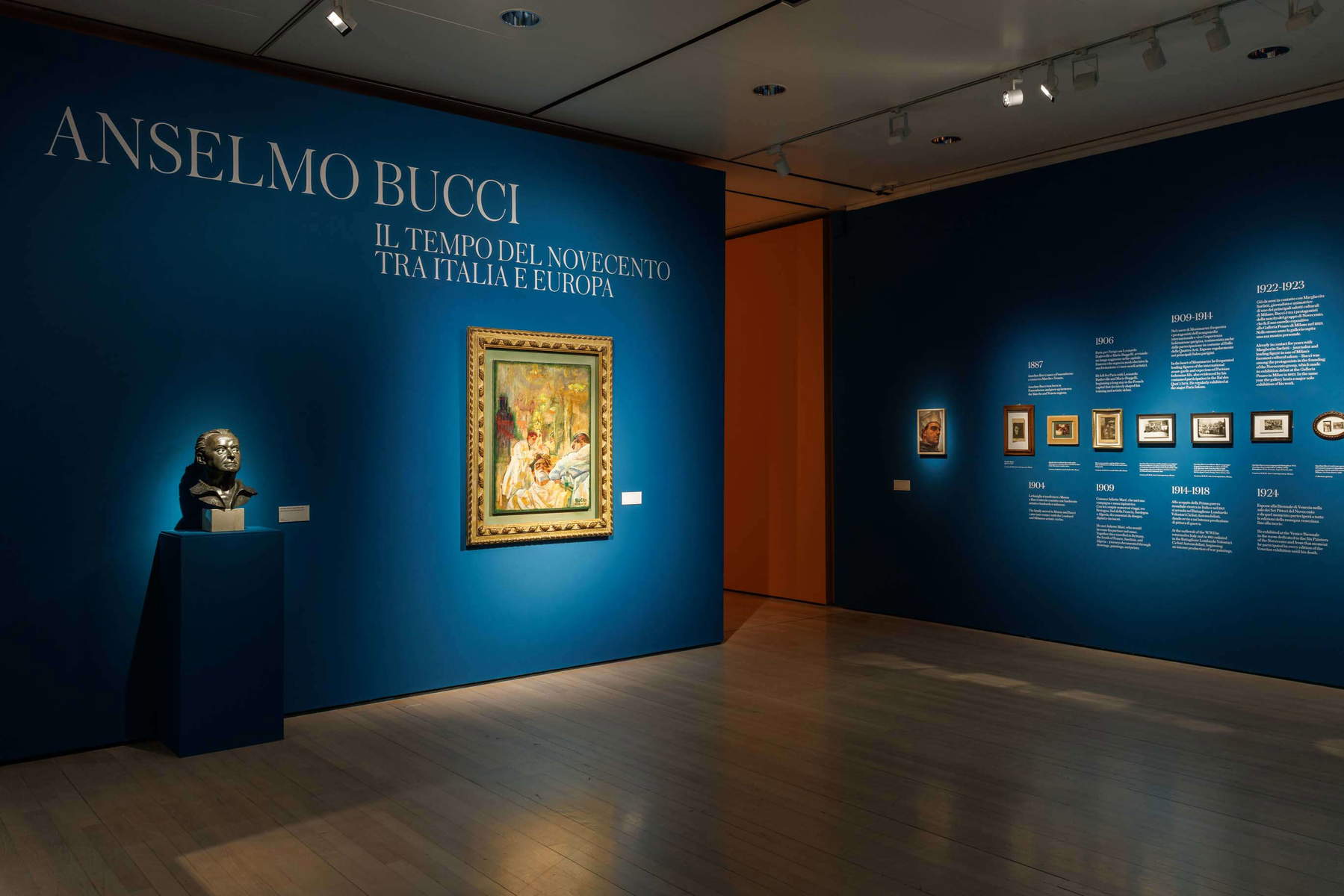
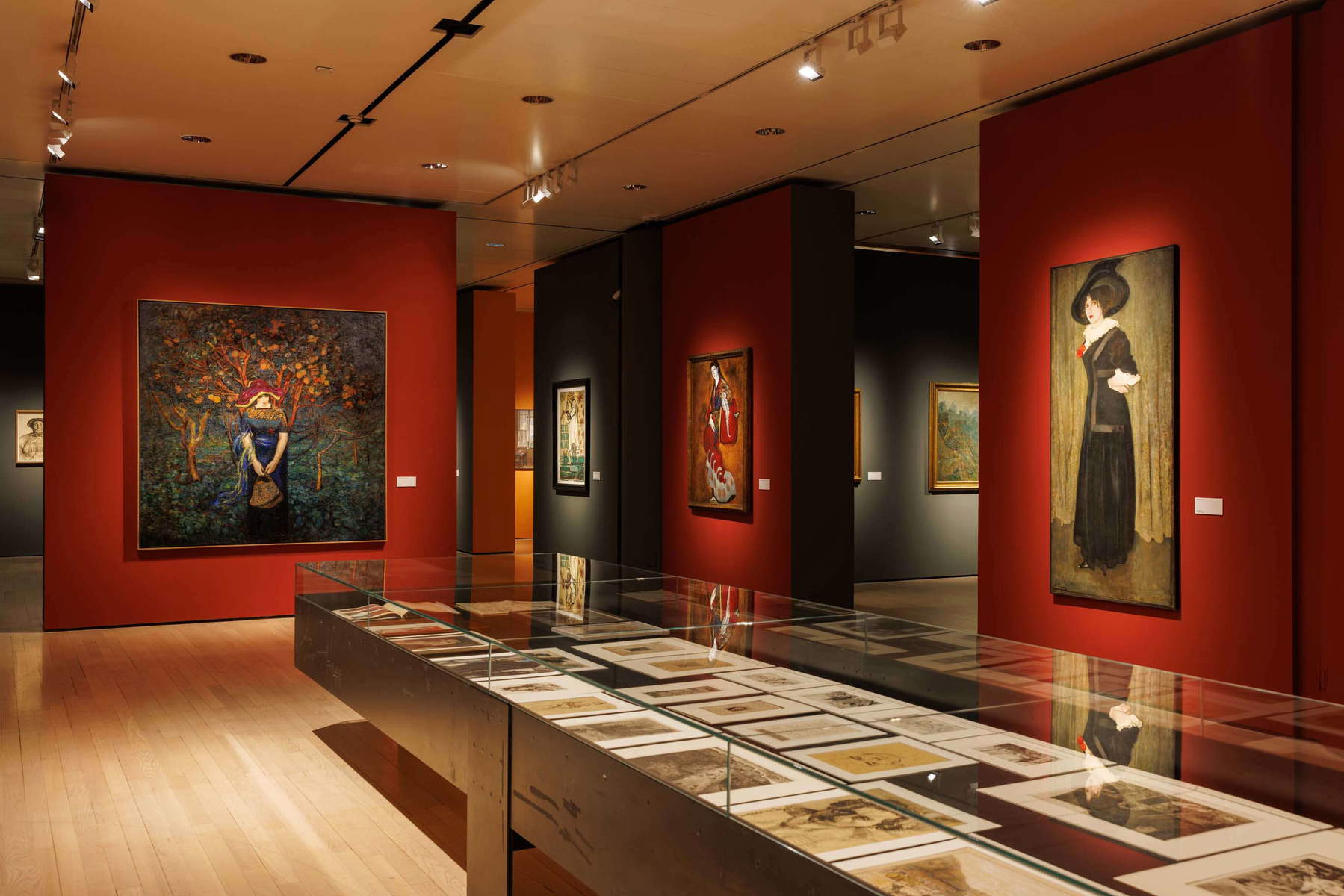
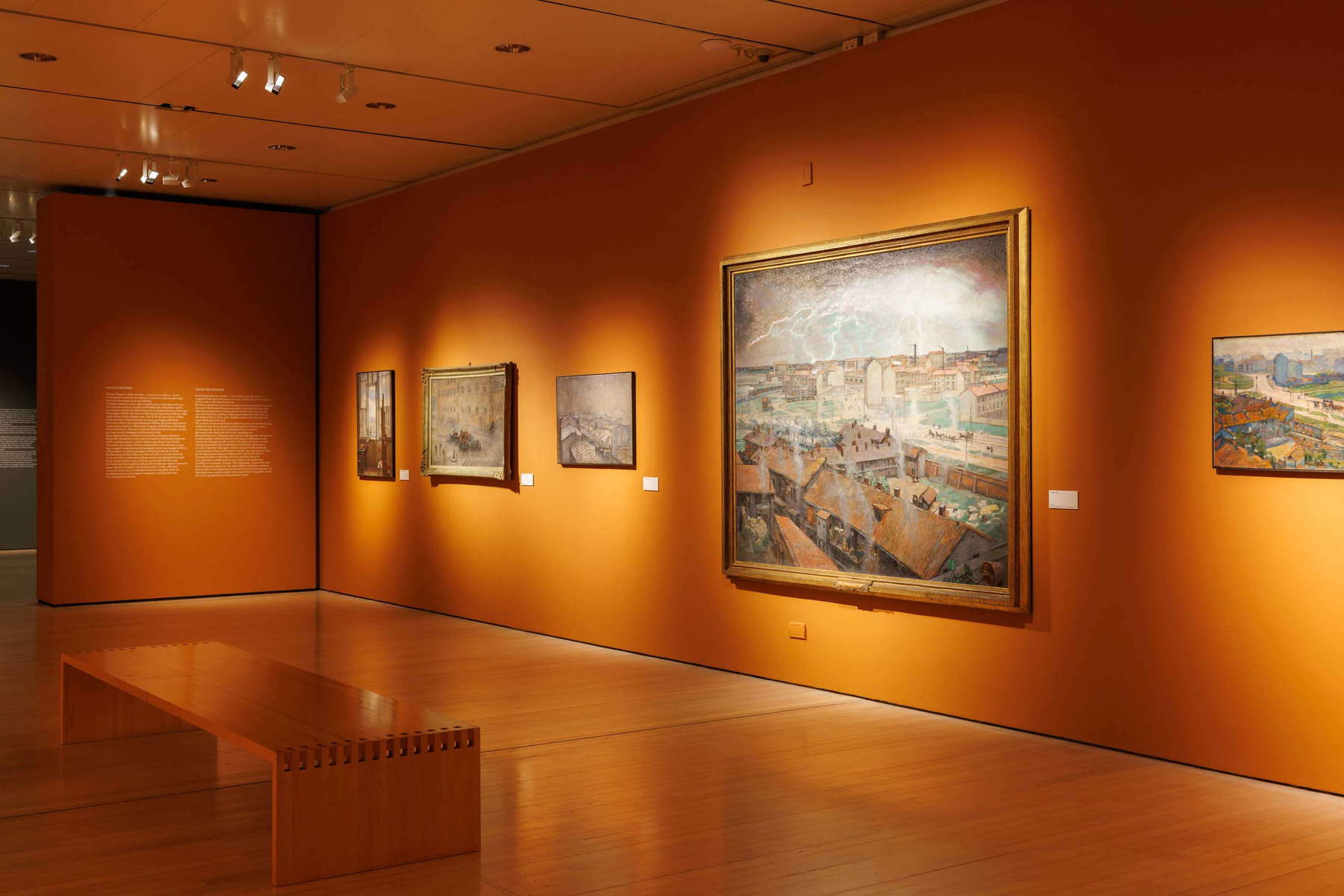
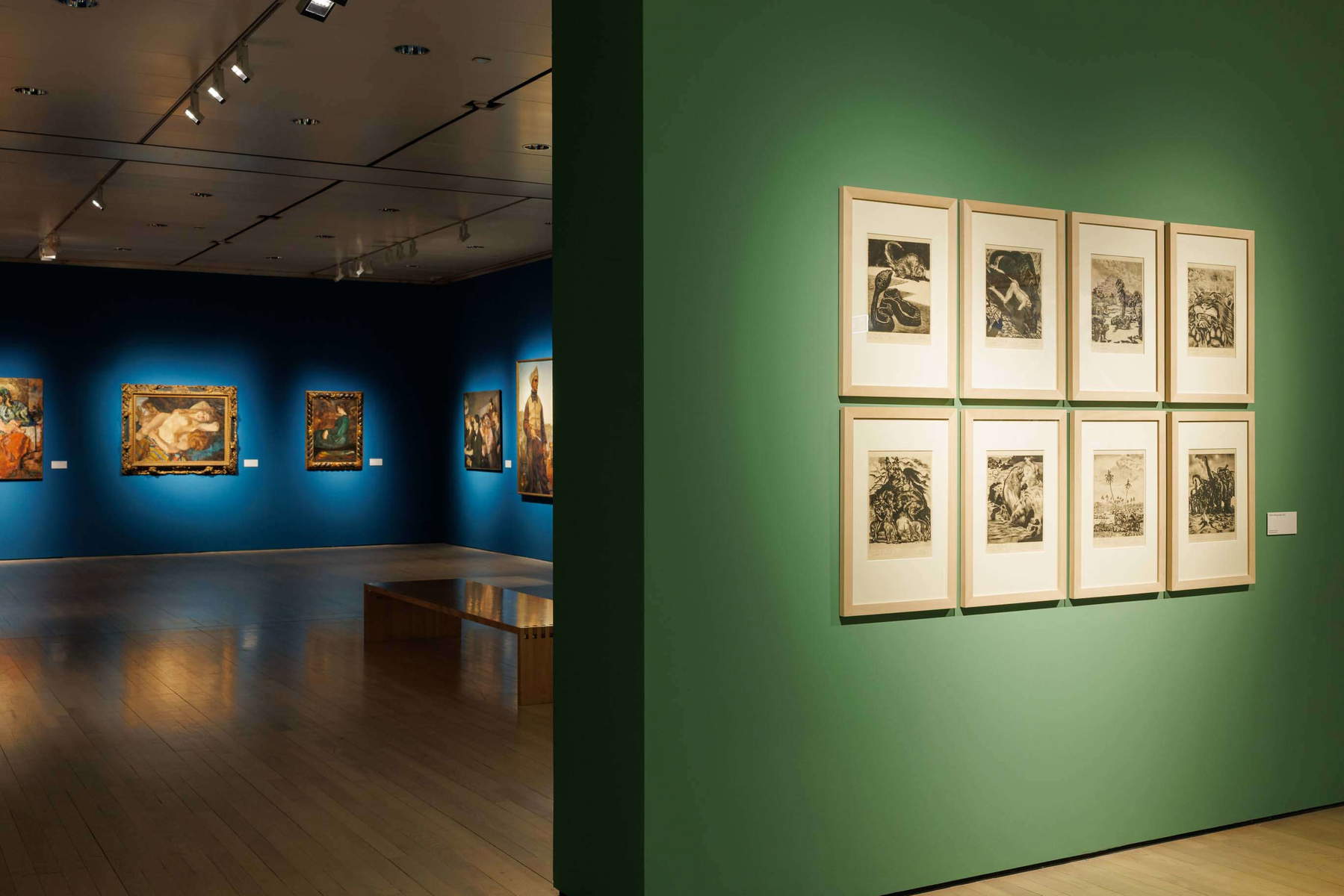
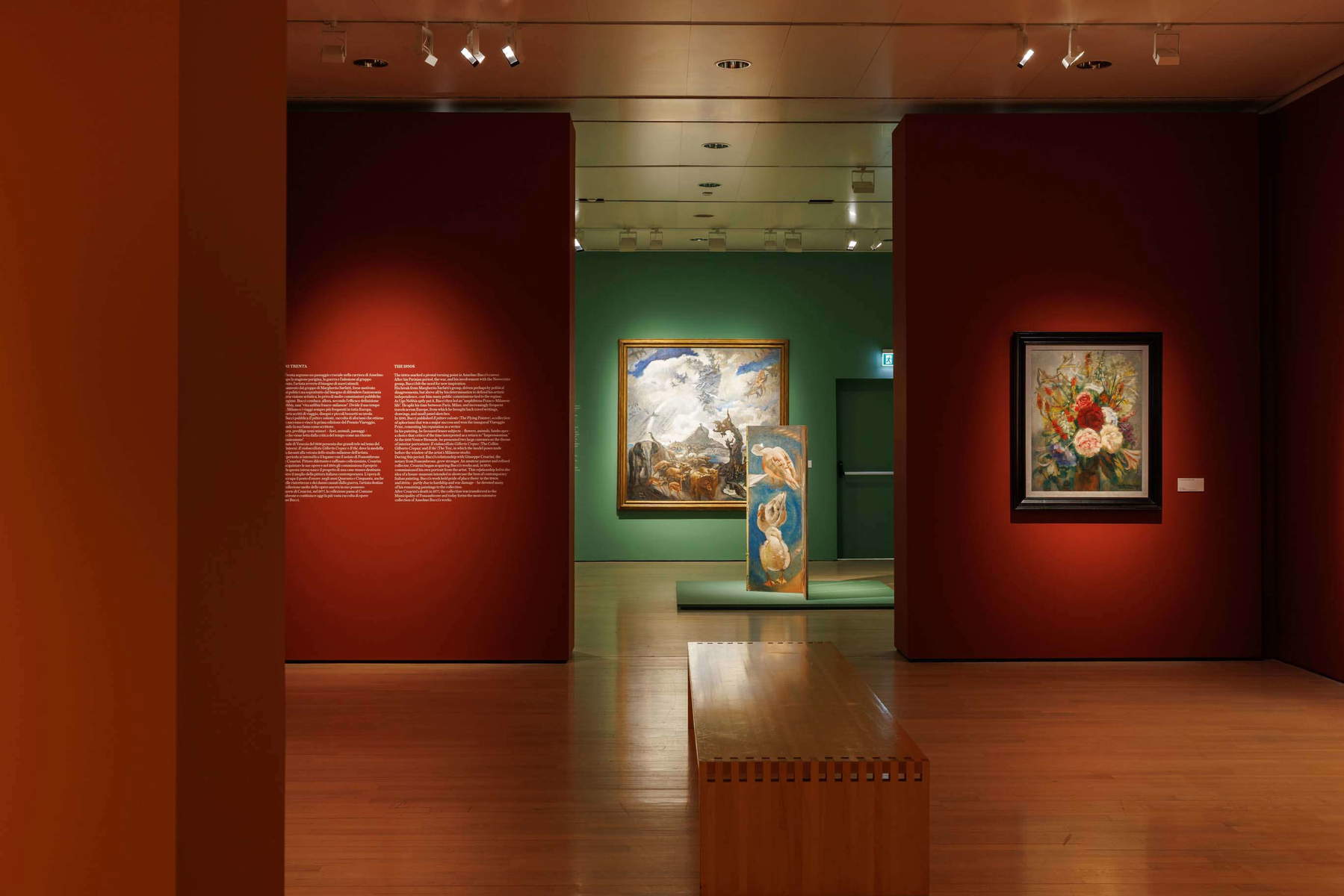
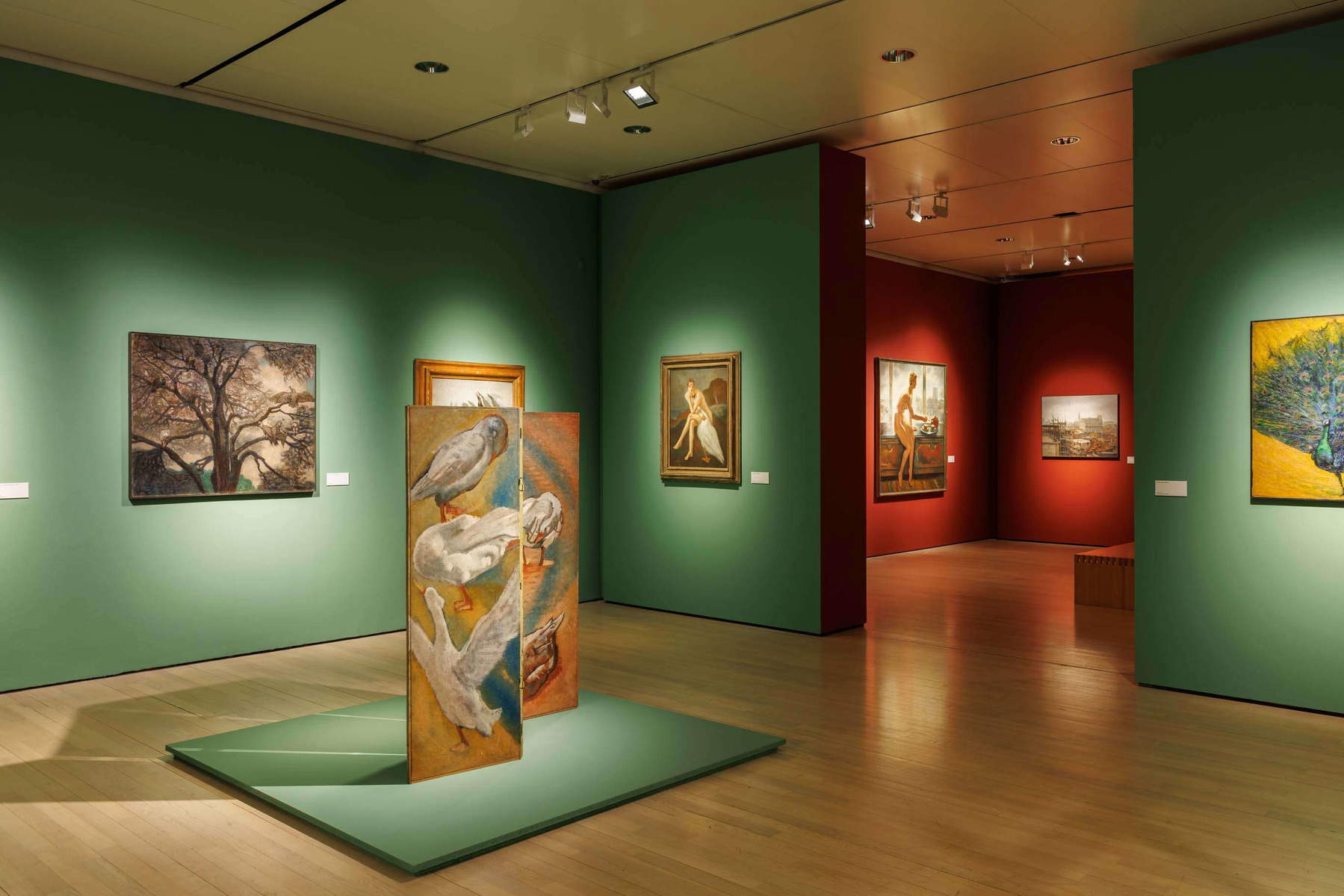
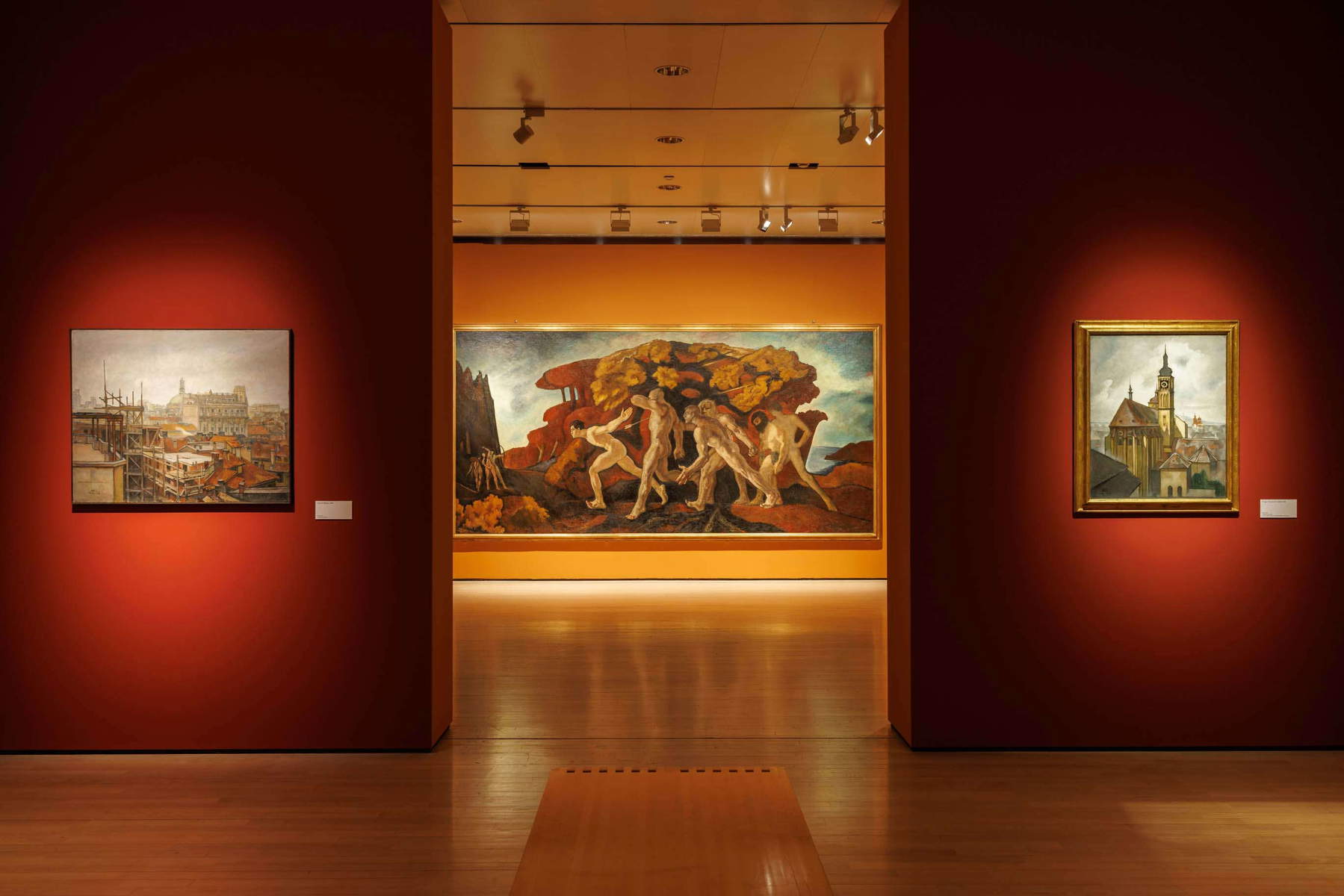
One would run the risk, however, of giving a grand overpowering and unifying reading, and it will then be convenient to recognize that nothing is set in stone, and that one must arrive at I Malchi in stages. Not to mention that one might legitimately be seized by the curiosity to plumb the genealogy of this gigantic, solemn manifesto transposed on canvas, all the more so since the visitor lands on these shores only at the end of the visitor’s itinerary, with the eye consumed by this intelligent compendium with which the Mart continues the reemergence of Anselmo Bucci, in part with several works that already had animated the smaller but no less valuable exhibition at the Vittoriale in 2022, curated by Giordano Bruno Guerri, Elena Pontiggia and Matteo Maria Mapelli, another stage in the critical reinterpretation of this great artist who perhaps, with this Trentino occasion, can be finally brought out of the ranks of the forgotten. The idea that guides the Mart exhibition is, in effect, to dilute a little the association between Bucci and the Novecento group, and to demonstrate that he was an eclectic artist by disposition, European by research: these are the intentions declared right from the opening, from the very first room.


In recent times, much has been studied and written about Bucci, and even more has been written about him, so it will be useful to concentrate on the novelties and reinterpretations of the Rovereto exhibition, which is already a considerable effort. Meanwhile, that Bucci nurtured for the self-portrait a particular vocation, if not an insistent mania, bordering on narcissism, was an acquired fact: it will be surprising, however, to note that his obsession with his own image had led him to paint himself while at the barber’s to have his hair smoothed, and even to portray himself in a seventeenth-century canvas at the time attributed to Padovanino(Self-portrait on antique canvas by Padovanino, 1909-1910 work), now considered a more modest work by the circle. One could read this gesture of his as a challenge: Bucci, an iconoclastic painter! A painter who has no qualms about daubing an ancient painting, over which, moreover, hovers the suspicion that it is the work of no secondary artist. Were he living today, and had the audacity to claim the stunt, he would be tried on summary judgment by the moral courts of social. However, what, Baroni imagines, was perhaps intended as a boutade to attract attention, may in fact conceal something more serious, namely a “symbolic link to the art of the past that Bucci wants to emphasize.”
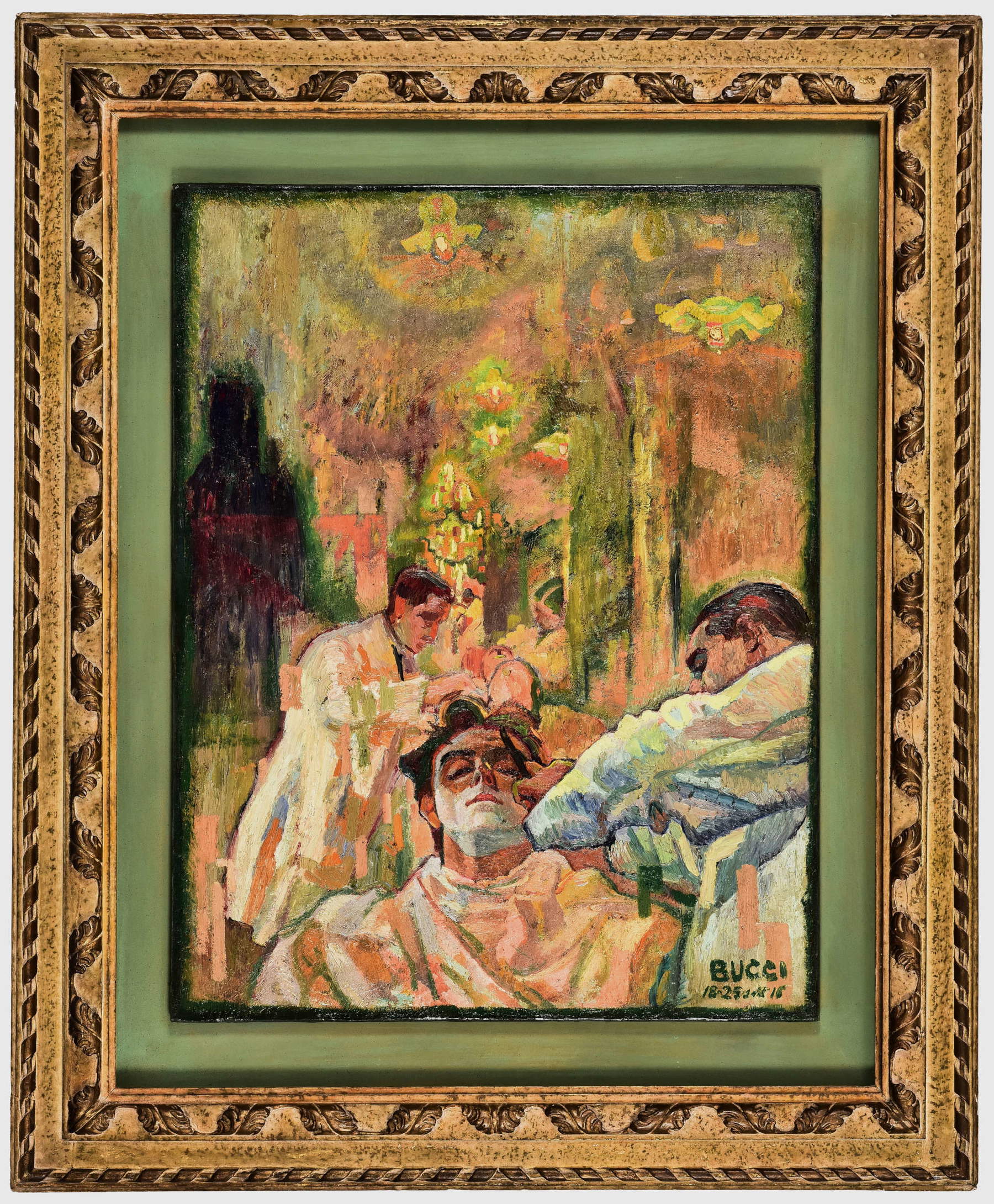
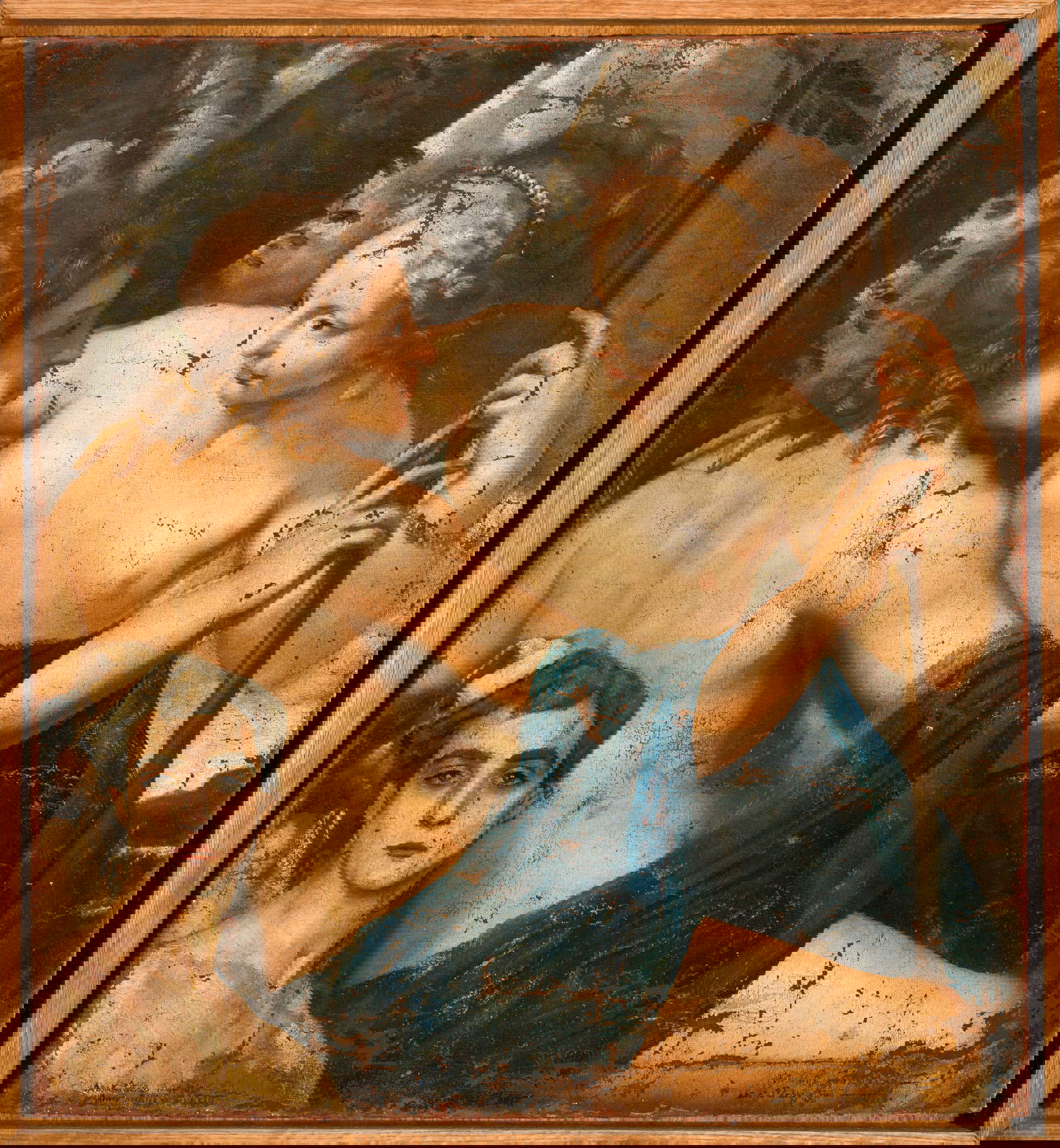
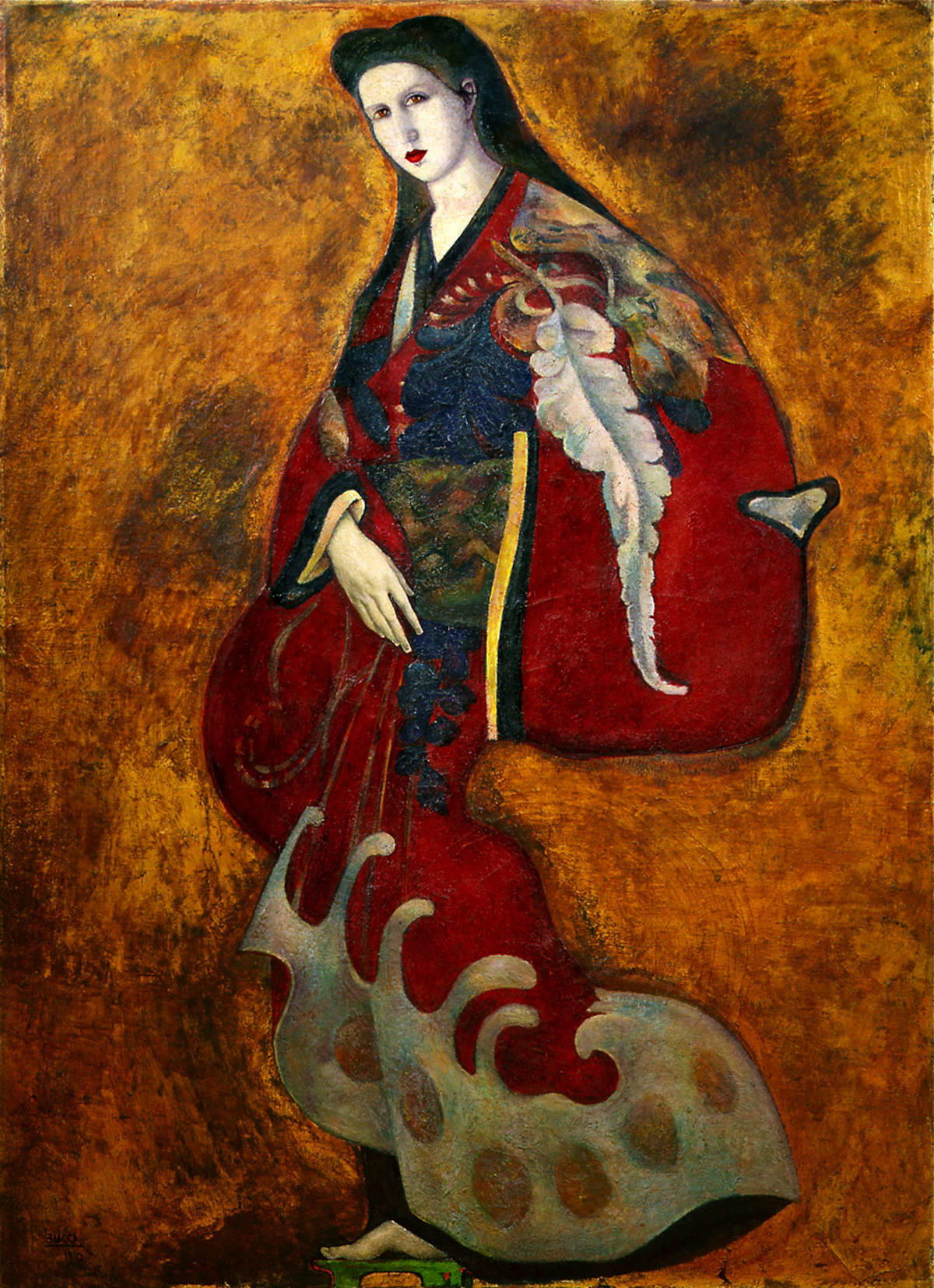
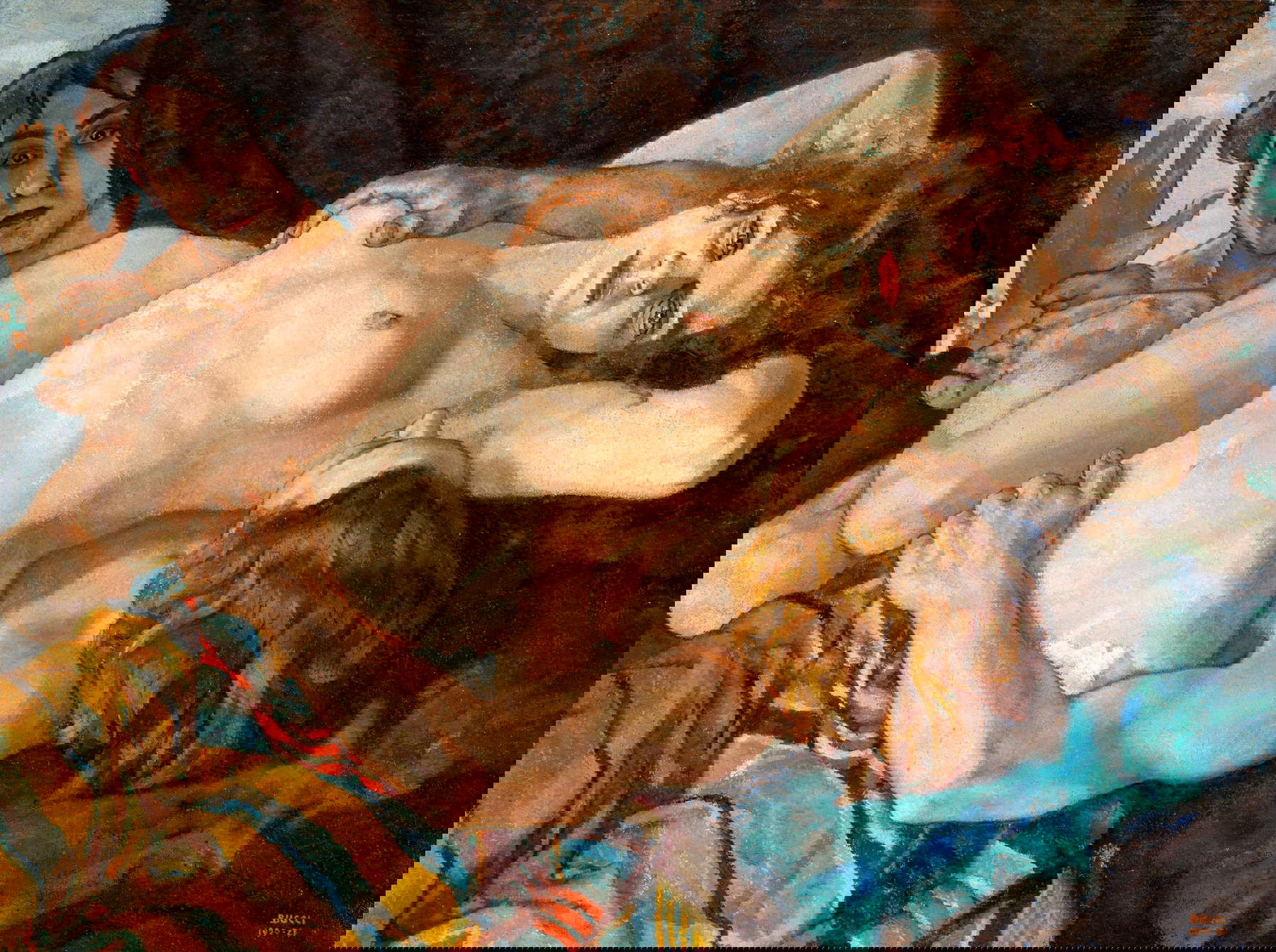
And indeed, each of Bucci’s images betrays this continuous study of the past, this incessant recourse to the art of the Fifteenth, Sixteenth, and Eighteenth centuries: each of Bucci’s pages, one might say, holds a trace of the ancient, and this presence of the ancient in Bucci’s art is also one of the subjects on which the exhibition most tries to persevere and persuade, though not always explicitly. One could play a game: look at a Bucci image at random and find a reference to the ancient in it. And perhaps in levels: one starts with simpler things, like The Japanese, which is a gold background where the sacred subject is replaced by a girl in a kimono, or like The Autumn, where the intention to resort to myth to talk about grape harvest is uncovered (thework, by the way, was restored three years ago, and the intervention allowed it to recover its original chromatic values), not to mention the modern Leda that revives an obsolete fable in the time of electricity. At other times the reference is recognizable: the tangle of bodily softness that envelops a work such as The Surprised Lovers harbors echoes of Rubensian flesh, or again the parapet on which the Bella, one of the best-known images in Bucci’s repertoire, leans is a literal quotation of Titian’s Slave Girl , or the Maternity which suggests some cue drawn from Orazio Gentileschi’s Madonna and Child in the Corsini Gallery in Rome, or the Jugglers, where the pose of the two acrobats echoes, not literally but almost, the pose of the Carpeaux statue seen in the distance in the painting. And then there are the works where the cue is less immediate: in the Profane Madonna we seem to see some suggestion of Parmigianino, there is a Peacock where Baroni finds a reminder of a Rembrandt seen at the Rijksmuseum (Bucci had written that he was struck by the Still Life with Dead Peacocks), there’there is a curious painting, The School, where even now the people of Fossombrone recognize a grandmother or great-aunt, which lines up a group of portraits as they did in seventeenth-century Dutch painting. “This circular path of the Bucciano gaze and brush, which moves from the suggestion of ancient art to constantly rejoin that of his contemporaries and his own,” Baroni writes, “constitutes one of the most distinctive elements of his way of understanding painting. Precisely for this reason, during the 1920s, Bucci felt the need to claim this position as autonomous and personal, leveraging a broader and more stratified knowledge of extra-Italian art to indicate an alternative path to the twentieth-century paths theorized by Margherita Sarfatti.”
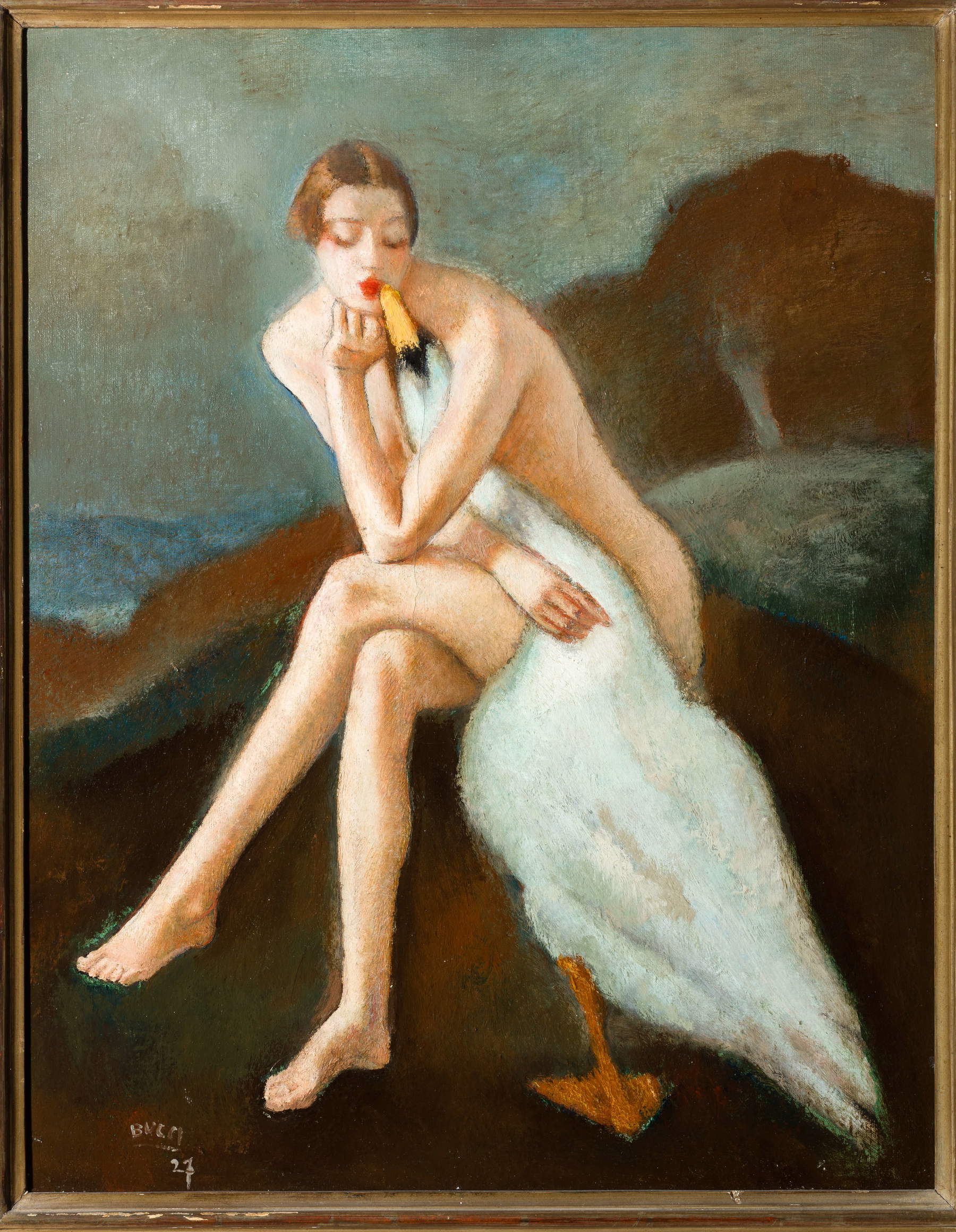
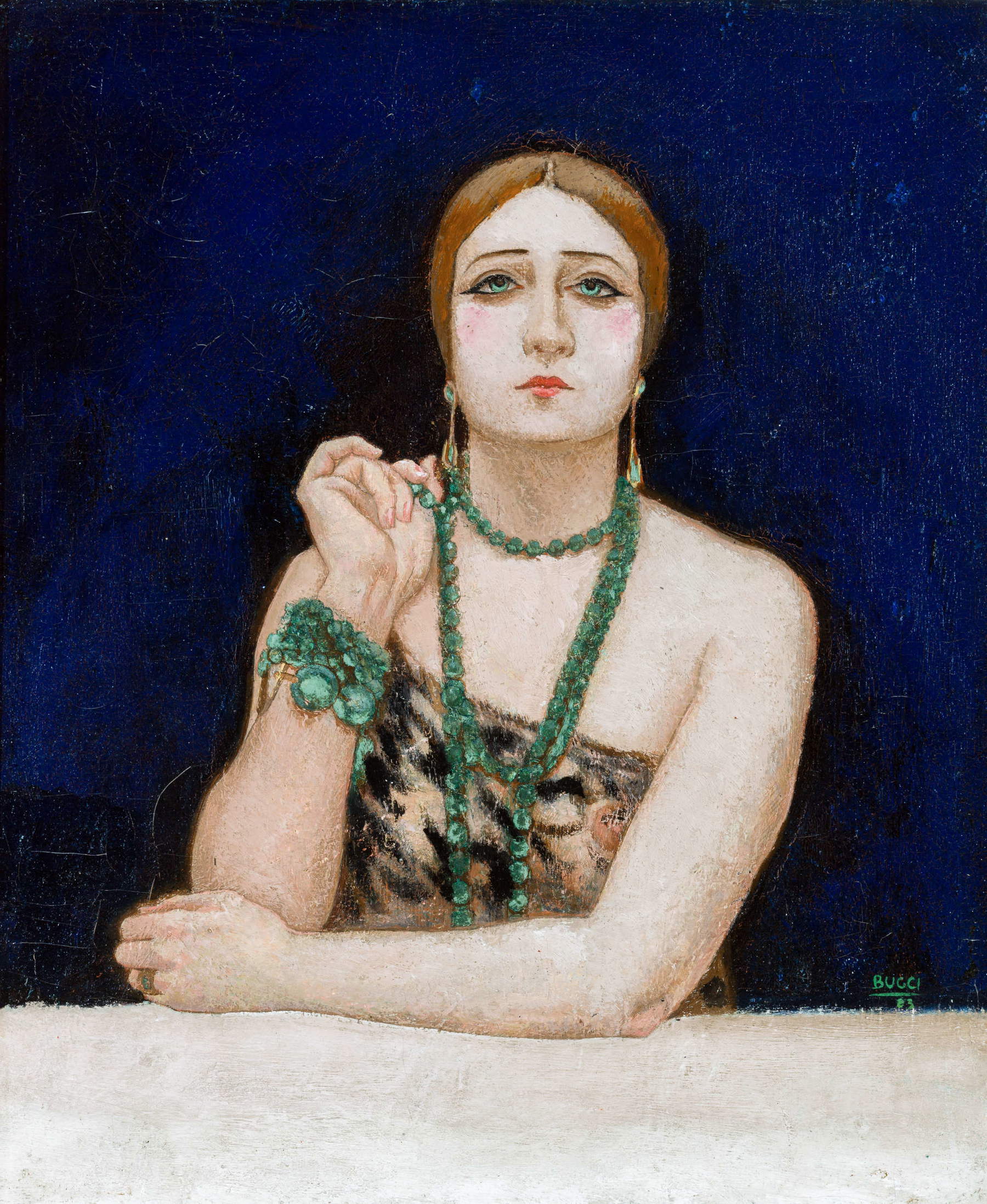
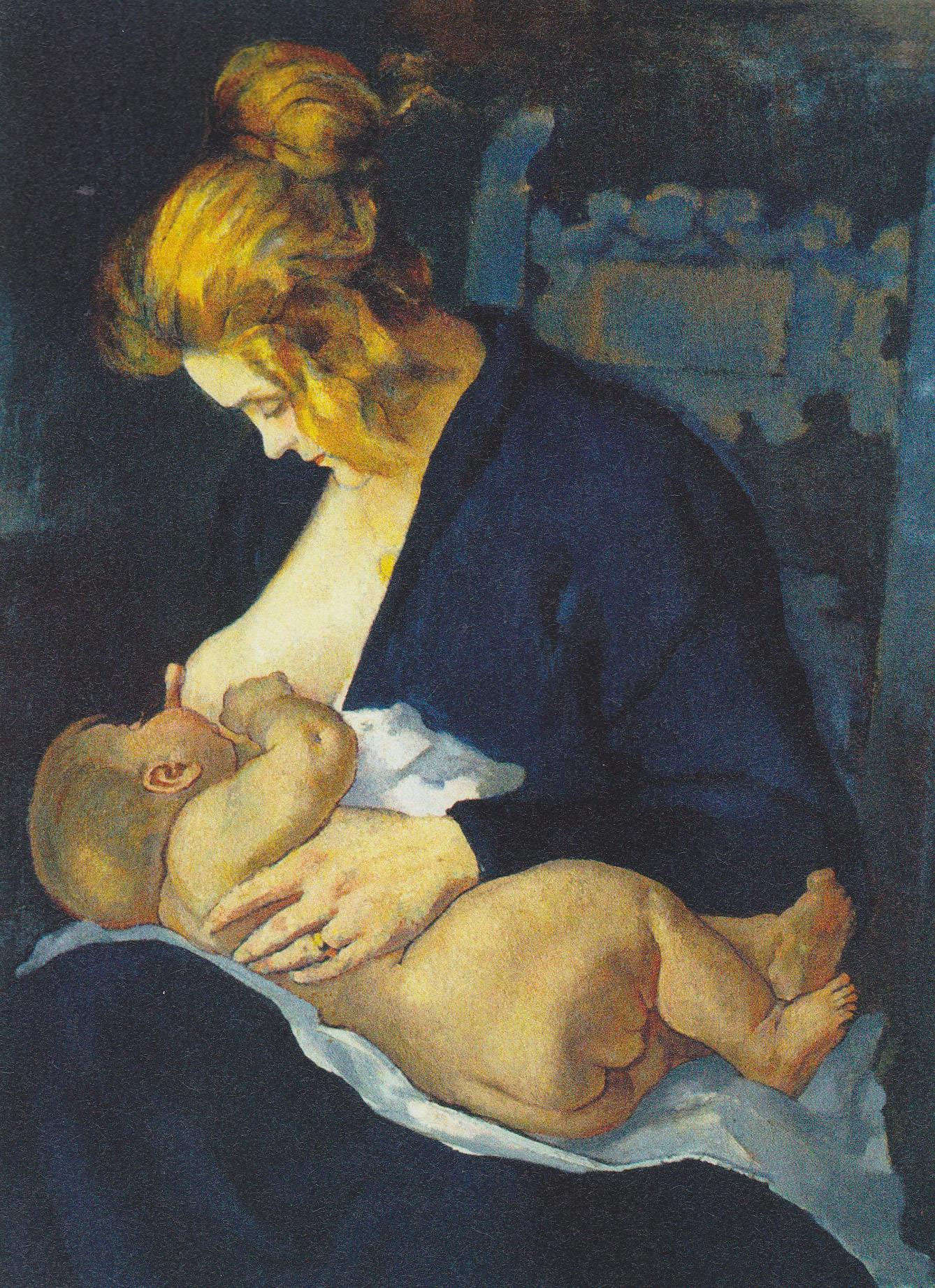
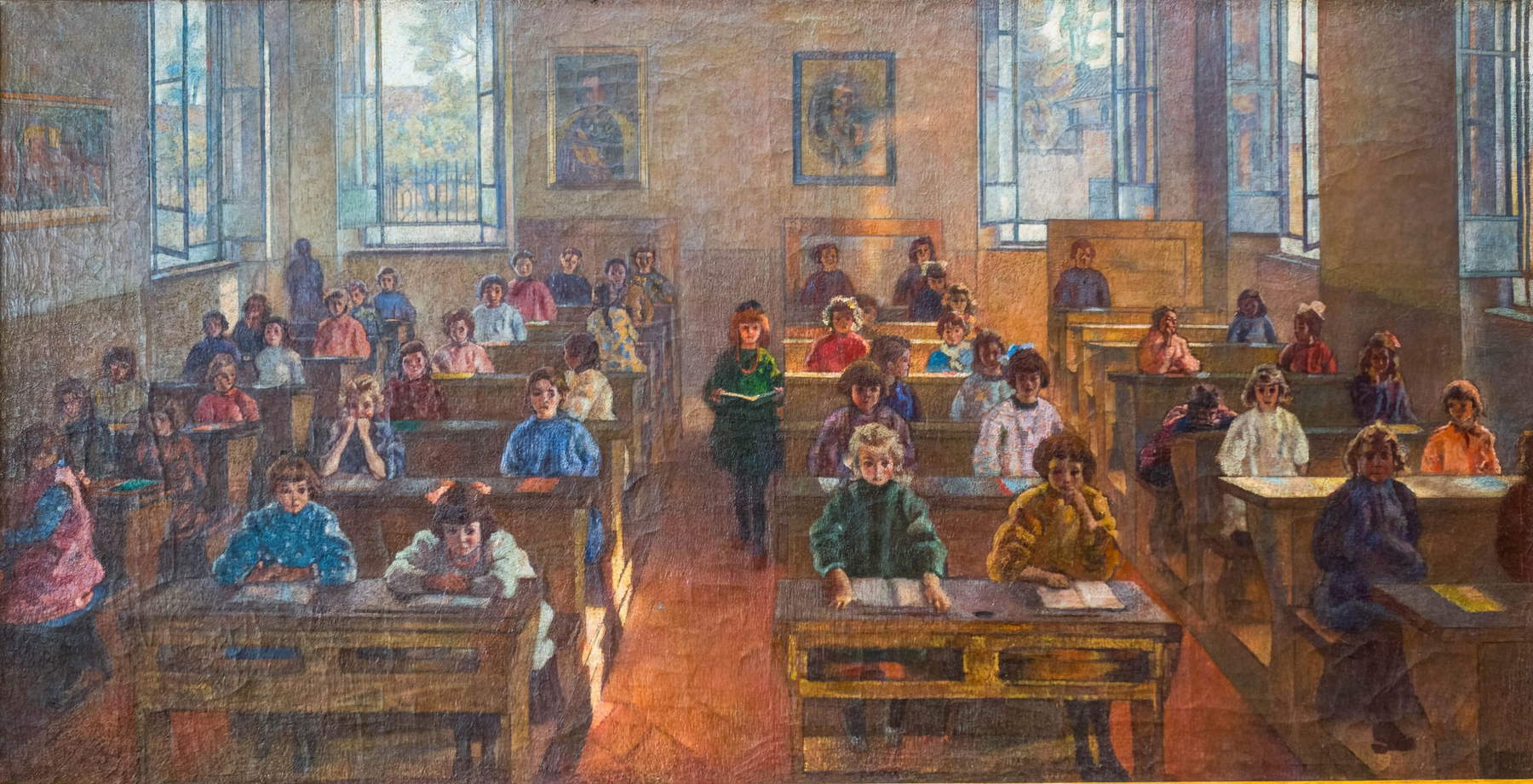
One of Bucci’s many quirks has always been, after all, this continual pursuit of a rappel à l’ordre path that was at once profoundly Italian and profoundly anti-Italian, profoundly classical and profoundly modern, of a modernity that would draw continually from reminiscences of his years spent in Paris (Bucci would remain in France from 1906 to 1914, and occasionally return there after the war). Rather than a return to order, for Bucci one could speak of a return to disorder, because that stubborn, windy eclecticism of his was anything but regulated, commanded, circumscribed. Even when Bucci seems dutiful and compliant, he is probably exercising in seemingly more recognizable and controlled forms his undisciplinedness. The result is an artist who, the exhibition reminds us, while walking along the boundaries of the group (and one could argue here: was Bucci an artist on the margins of the Novecento, as he has been portrayed by even recent historiography, or, as Beatrice Avanzi writes in the catalog, was he well within the group? Curiously enough, one could answer yes to both questions), so much so that he decided to move away from it in not even so much concealed controversy because of the corporate characters assumed by the group to which he himself had given its name (although he continued to exhibit in the group’s exhibitions, even when, in 1924, “Novecento” would become the group of “Six Painters of the Twentieth Century” following the final defection of Ubaldo Oppi), he would nevertheless offer a personal reading of the movement’s program, certainly the most open to international suggestions. Inconsistency was, after all, the driving force of his research, the creative core of his work, and it is the reason that sustains the reading of a Bucci who was less Italian, less Sarfattian, less Novecentista than what has always thought, the reading with which the exhibition intends to rewrite the perimeter of the interpretation of the figure of Anselmo Bucci, an interpretation that wants him to be a profoundly autonomous, profoundly European artist, an interpretation that descends from images and with images is strengthened. His international gaze had also manifested itself at the group’s debut exhibition, that of 1923, opened by a Mussolini who, during the inauguration, had given the famous speech in which he rejected the idea of encouraging “anything that might resemble state art” (a purpose that he would later, in fact, respect): Bucci had brought to the Pesaro Gallery, among other things, those very Jugglers on which breathed a fresh air of Paris, a theme and setting dear to the Impressionist and Post-Impressionist painters who were still, in those years, painting around the Seine. The same could be said for many works Bucci had painted in the period when Margherita Sarfatti’s project was taking shape, whose premise of rediscovering ancient Italian art he certainly shared. About Odeon, for example, one could say what was said about I giocolieri (Jugglers): the repertoire is Parisian, the image seems that of a resurrected and updated Zandomeneghi. La bigia giovane, a portrait of his sister Emilia, establishes a dialogue between painting and the decorative arts in a way that was typical of French portraiture in those years. Even one of the most archaizing images, those Painters about whom so much has been written, is based on a photograph: an ambition of antiquity that is grafted, therefore, onto the most modern of mediums, whose potential still refers back to the research of Paris. And again, The Exit from the Ark, which the audience will find in the section of the exhibition devoted to animals (one of Bucci’s most sincere passions), although it goes back to the period when Bucci exhibited with the other Novecento painters, almost seems to disavow the program of the movement in order to return to the paradises of Puvis de Chavannes.
That Bucci was a curious mixture of artist, an artist at once from the Marches and Paris, classical and modern, an artist who was familiar with Toulouse-Lautrec (to whom he looked insistently, even moving, one might say, on the frontier of plagiarism, especially at the beginnings of his graphic activity, prolific to the point of requiring a lunge in the exhibition), as well as with the Impressionists, with Van Gogh and with Utrillo, but at the same time also with Titian, Velázquez and Van Dyck, is, moreover, evident from the very first rooms and throughout the exhibition. Take a look, accumulated in one of the first rooms of the Mart’s exhibition, at his paintings of Paris, a repertoire of thoughtful, elaborate snapshots, a painted archive of life in motion, a chaotic anthill of cafés, of people at the theater, of people at cafe tables, of people strolling the boulevards always looked at from above and always from the side: what is the Bucci of those years, the Bucci who lived in Montmartre near the Bateau-Lavoir, the Bucci who was a friend of Picasso, of Modigliani, of Severini, even of Lorenzo Viani for those few months that the Versilian remained in France, if not a kind of fuzzy Utrillo, a kind of frayed Zandomeneghi, a kind of hungry Toulouse-Lautrec? Nor is a break of continuity given, in the exhibition, between the paintings of Paris and those of Sardinia and Brittany, the finds of an artist who, when he could, tried to see himself as a less transoceanic but equally exotic Gauguin, where exotic was understood at the time to mean everything that was not Paris, everything that began when one lost sight of the smokestacks and city lights. Those trips, first to Sardinia and then to Brittany, were also indispensable elements of the international artist’s construction, employed until the years of World War I (to whose paintings, those paintings attributable to one of the best-known portions of Bucci’s production, an entire room is devoted).
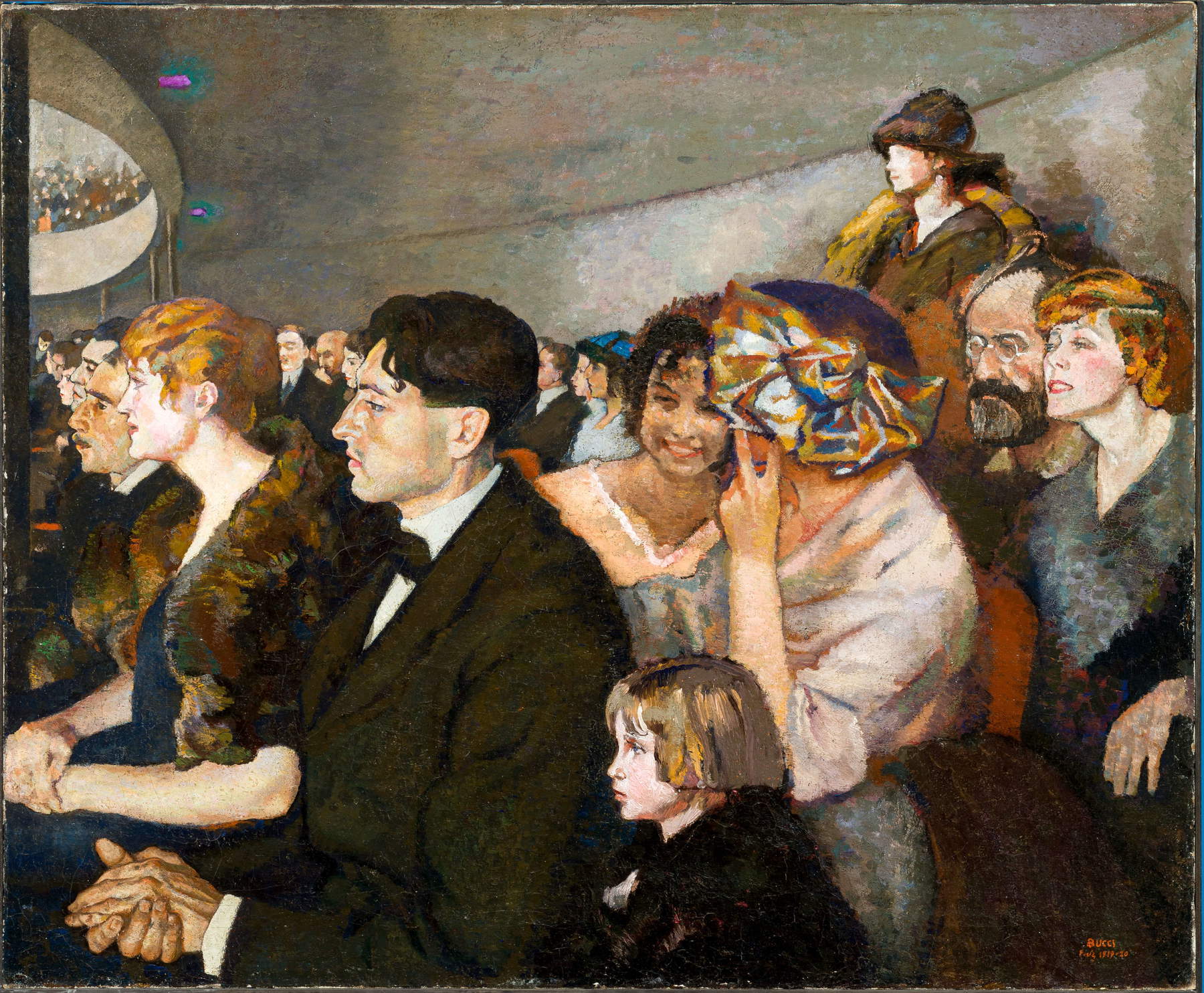
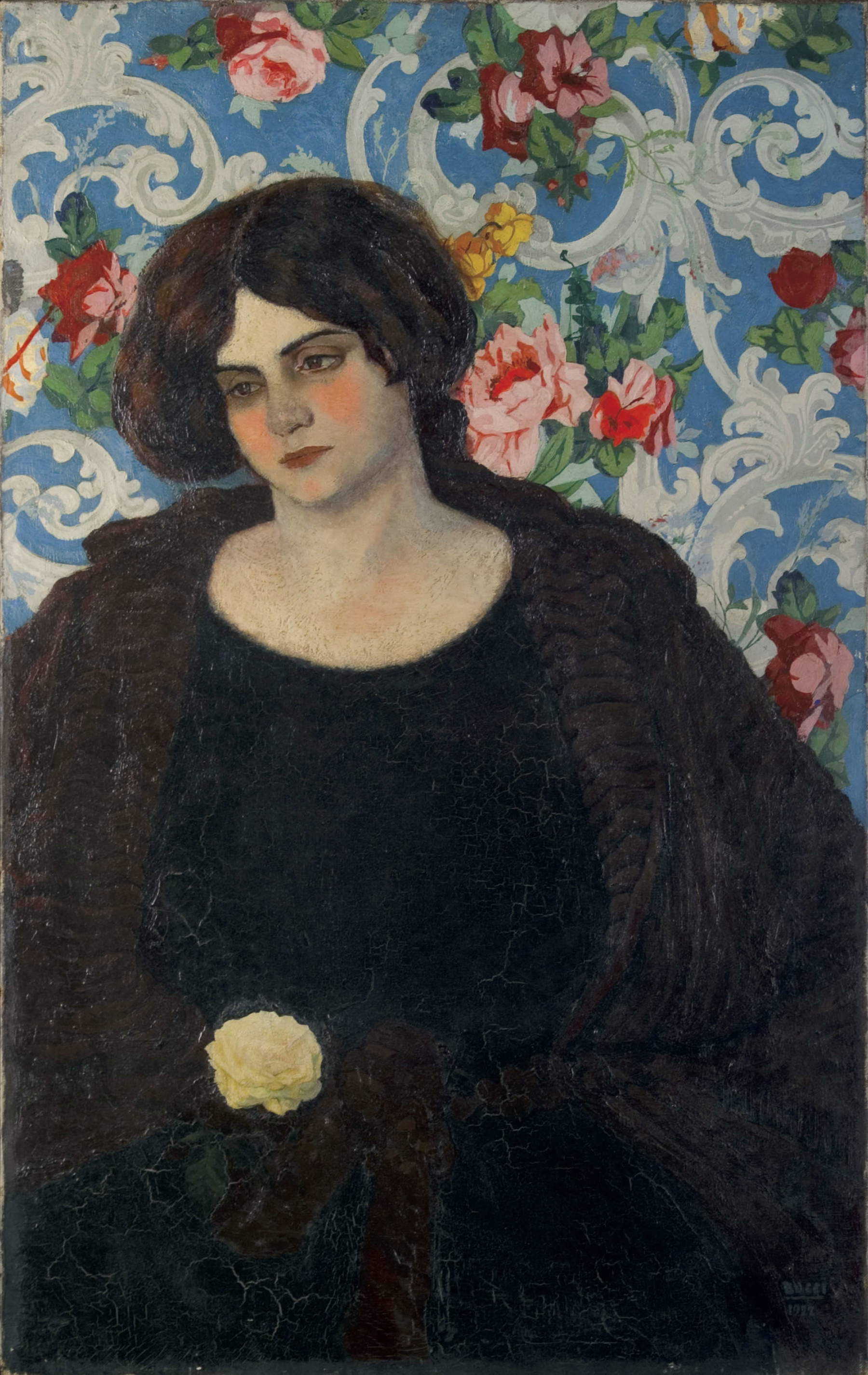
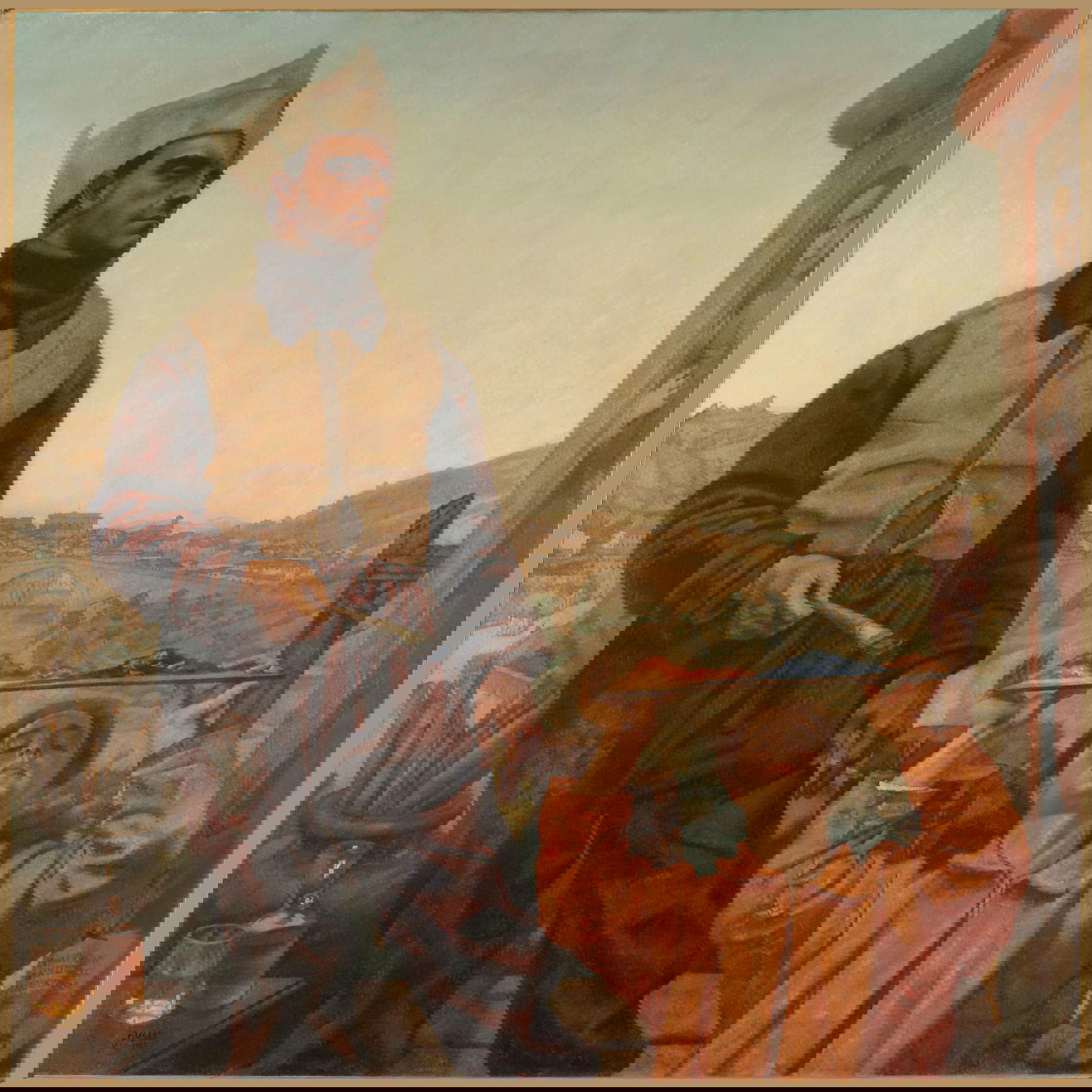
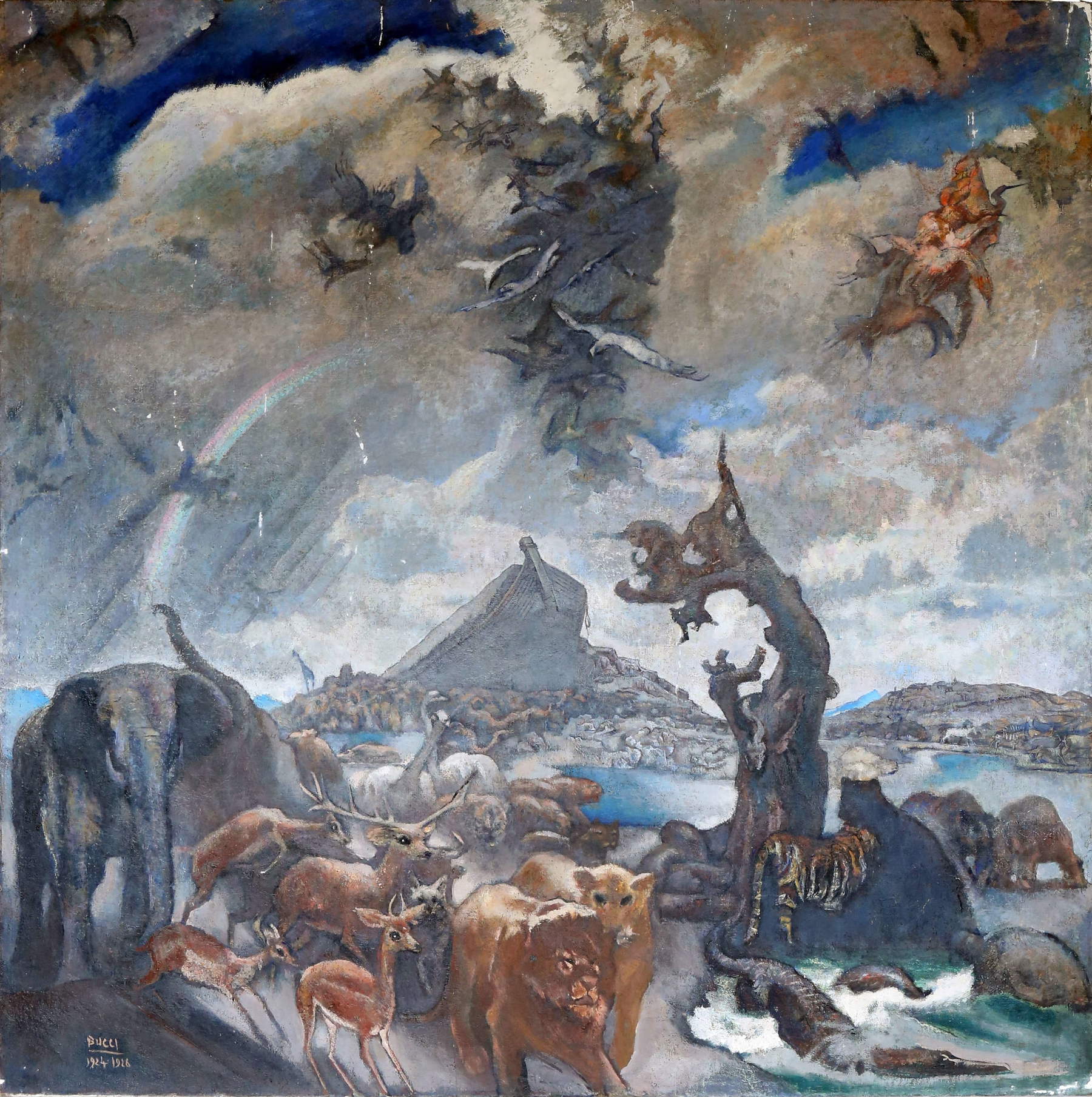
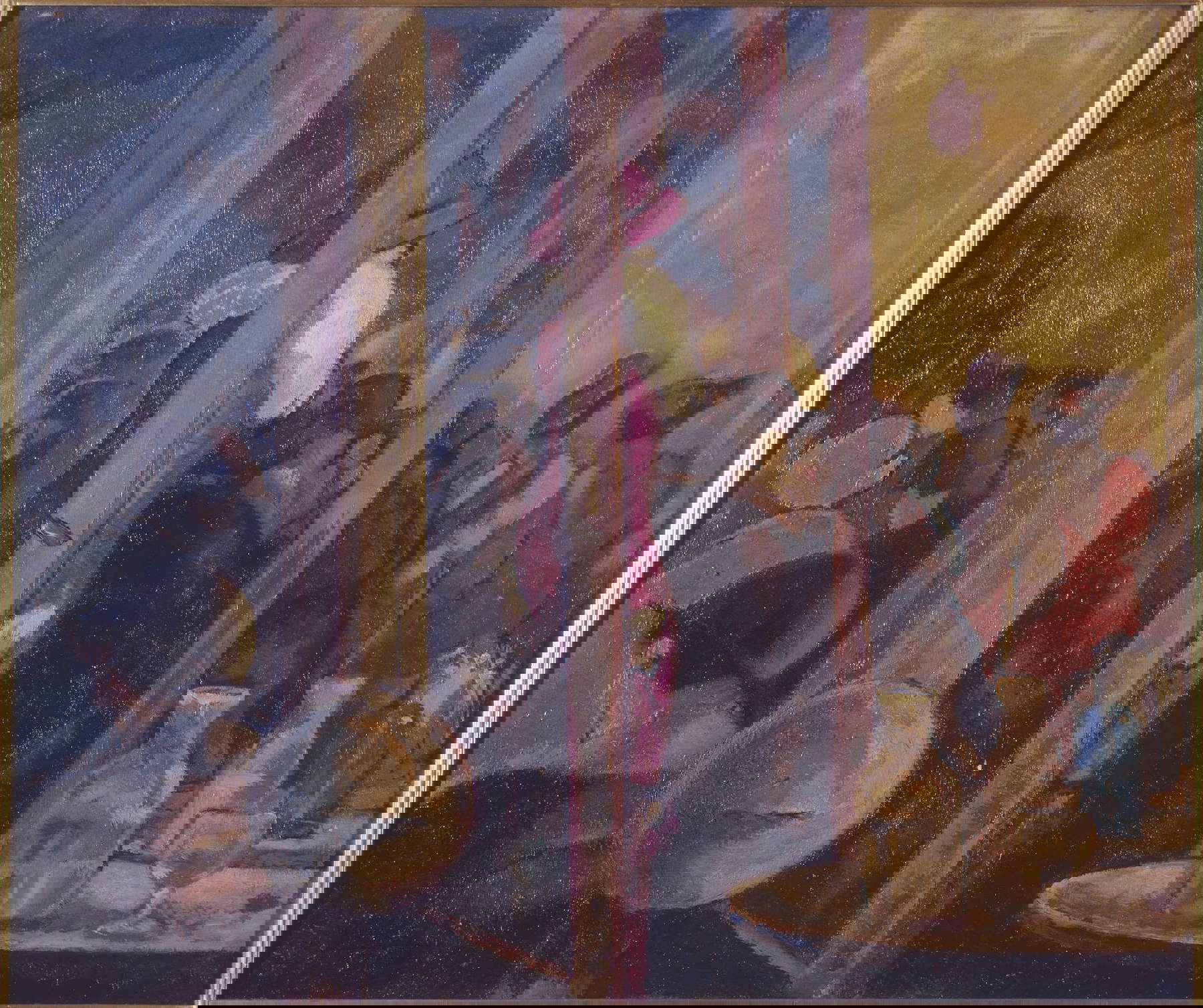
Then it had happened that Bucci had tried, perhaps decided, to abandon the art of Paris without ever really abandoning it, however. To reject it without ever rejecting it. The males became what they became as a result of this hesitant, uncertain, never full refusal. In his book Il pittore volante (The Flying Painter), with which he had won the first edition of the Viareggio Prize, tied with Lorenzo Viani, Bucci wrote that “modern painting is a confused repentance, ancient a clear certainty.” Perhaps he did not really believe it either: the fact is that The Males would never be exhibited. Bucci planned to take them to the 1924 Biennial, but for some reason, in the end, he decided it was time to leave the work to fester inside his studio, and there it would presumably remain until his death: we don’t know how it ended up in the municipal hall of Fossombrone (despite the fact that the artist had planned to donate it to his town when he was asked, it was 1938, to fresco that very hall: not feeling comfortable with the fresco he proposed, in return, the donation of the painting, but the papers that would certify the eventual bequest have not yet been uncovered), but his town can be happy to have inherited that hallucinatory vision where everything Anselmo Bucci is. “Everything” in the broadest sense: even the satirizing Bucci, if it is really necessary to read in this painting a curious little story that to say feminist would perhaps be too much, but which in any case is certainly not favorable to that group of energumens intent on occupying the center of the scene (“mocking allegory”, Baroni says it, perhaps not without allusions to the cult of virile masculinity promoted by the regime, in which a group of males of various ages, yearning for an encounter with their female counterparts, are violently rebuffed and speared with arrows.").
It is all in this monumental canvas the complexity of an artist who had never before been investigated with such an abundance of works in a single exhibition, which moreover has the merit of being ordered chronologically, an increasingly rare occurrence nowadays. The Mart’s exhibition is the largest that has ever been dedicated to Anselmo Bucci since his death, and it is also provided with a supremely useful catalog, as happy as the exhibition it accompanies, a tool that precisely completes the work that the curators have done to return Anselmo Bucci once and for all among human beings, he who at the end of his career said he was better off among his beloved beasts. Shake off from him once and for all the label of mere novecentist, perhaps even of strict observance. Make him rediscover all that familiarity with the antique that was for him a necessity rather than a fashion or a political program. Return him to that oblique cosmopolitanism of his. To consider him for what he was: the most Parisian of Marches. Or the most Marquesan of Parisians.
Warning: the translation into English of the original Italian article was created using automatic tools. We undertake to review all articles, but we do not guarantee the total absence of inaccuracies in the translation due to the program. You can find the original by clicking on the ITA button. If you find any mistake,please contact us.