





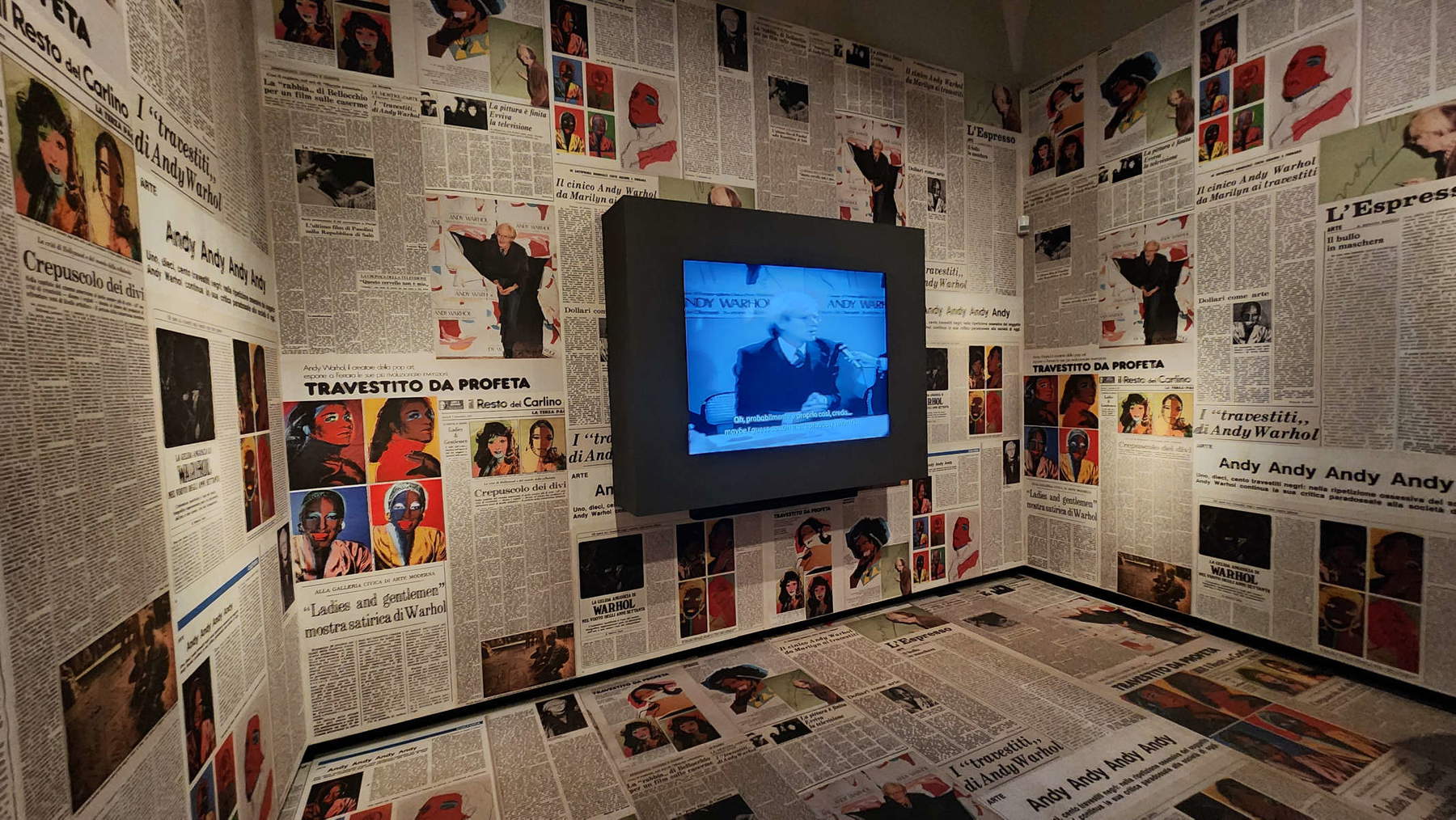
We cannot go back in time; however, we can recreate a past event that was particularly significant, both to bring it back to the memory of those who experienced it and to try to explain its significance to those who were not yet born or were too young, helping them to relate to a situation they therefore could not have experienced. But can a reenactment truly recreate that exact moment, that specific situation? The question arises naturally for those like me, who, due to my age, were not present at the opening of the “Ladies and Gentlemen” exhibition at the Palazzo dei Diamanti in Ferrara fifty years ago, on October 25, 1975. I can only imagine what it must have been like to see Andy Warhol himself appear—one of the most influential and famous American artists of the time, the leading exponent of Pop Art who had already portrayed, in his colorful and unmistakable style, among others, Marilyn Monroe and Mao Zedong, and had already transformed everyday objects into true pop icons—such as Campbell’s soup cans—at the Palazzo dei Diamanti, tearing down the exhibition posters that had been placed at the passageways between the exhibition halls in a sort of impromptu happening . And to see him sign a giant autograph on a panel at the entrance to the exhibition venue, accompanied by two Campbell’s Soup cans he had sketched on the spot—all documented with photos, of course.
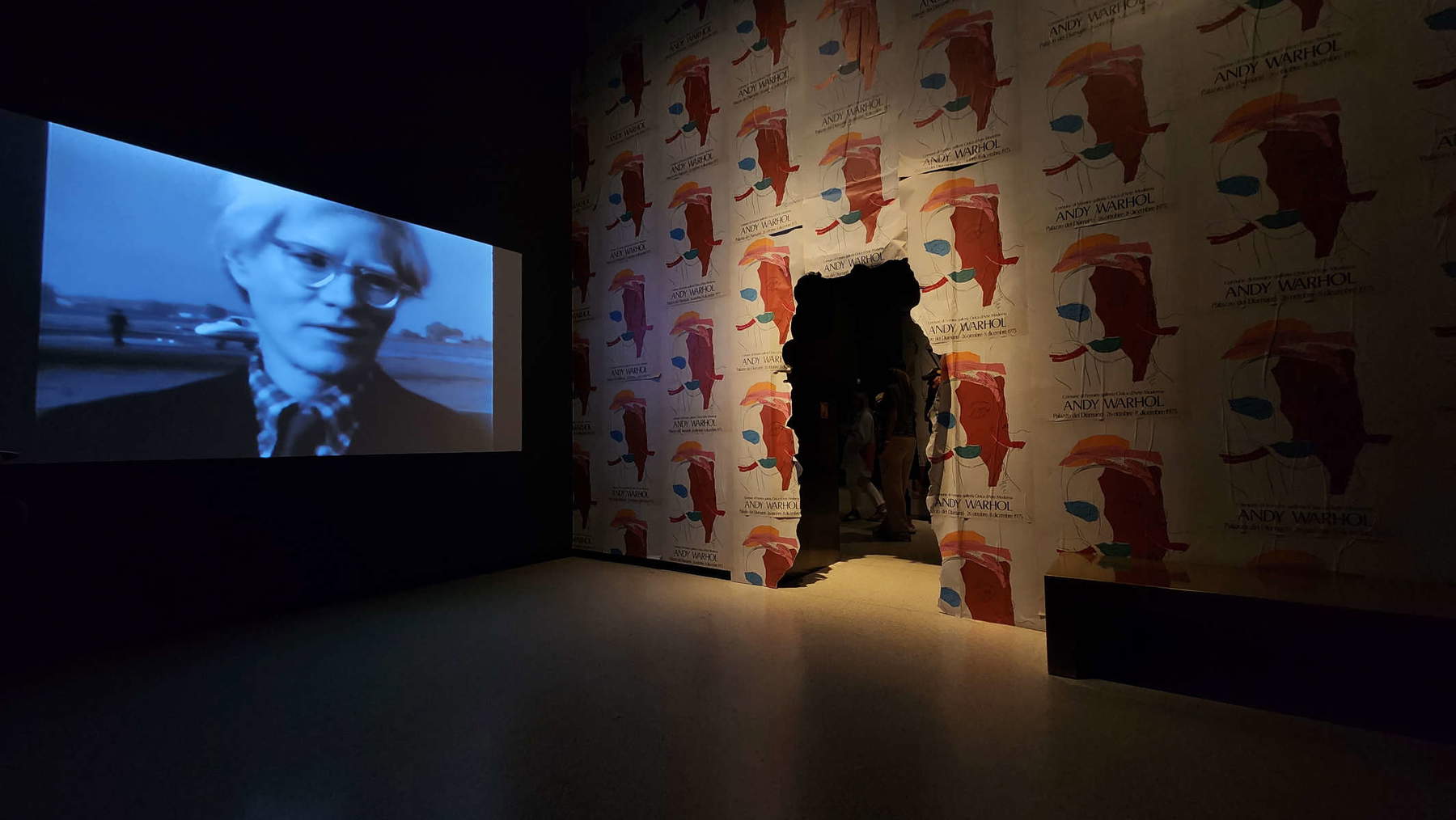
Now, upon entering the current exhibition *Ladies and Gentlemen* (March 14–July 19, 2026)—with which Palazzo dei Diamanti sought to commemorate and celebrate the fiftieth anniversary of that “explosive exhibition,” as the curator at the time, Janus, you are greeted by a video replaying that historic opening on screen, by the passage through the first exhibition hall that recalls the artist’s aforementioned tearing of the posters, and by the charcoal drawing featuring his autograph and sketches of the soup, but I believe that atmosphere—that “great euphoria in the air,” as Franco Farina, then director of the Galleria Civica d’Arte Moderna at Palazzo dei Diamanti, recalled—is irreplaceable. Because the element of novelty is gone: the series of African and Latin American drag queens—now featured again in the exhibition and which, in the 1975 show, represented a turning point in Warhol’s work—is no longer new, even though it appears less frequently in exhibitions dedicated to the artist than his more famous icons. Seeing marginalized subjects—members of Manhattan’s urban underground subcultures rather than celebrities who had by then entered the collective imagination and culture—depicted, and above all, seeing them portrayed in the same style Warhol had used for his most famous subjects, was something extremely innovative and revolutionary in his body of work. An absolute novelty. And secondly, because times have changed: In those years, Ferrara was a hub for contemporary art, thanks to the vision and dedication of Director Farina, who, during his thirty years at the helm—from 1963 to 1993—brought artists such as Roberto Sebastián Matta, Man Ray, Robert Rauschenberg, and Emilio Vedova to the city, as well as many Italian and international critics.
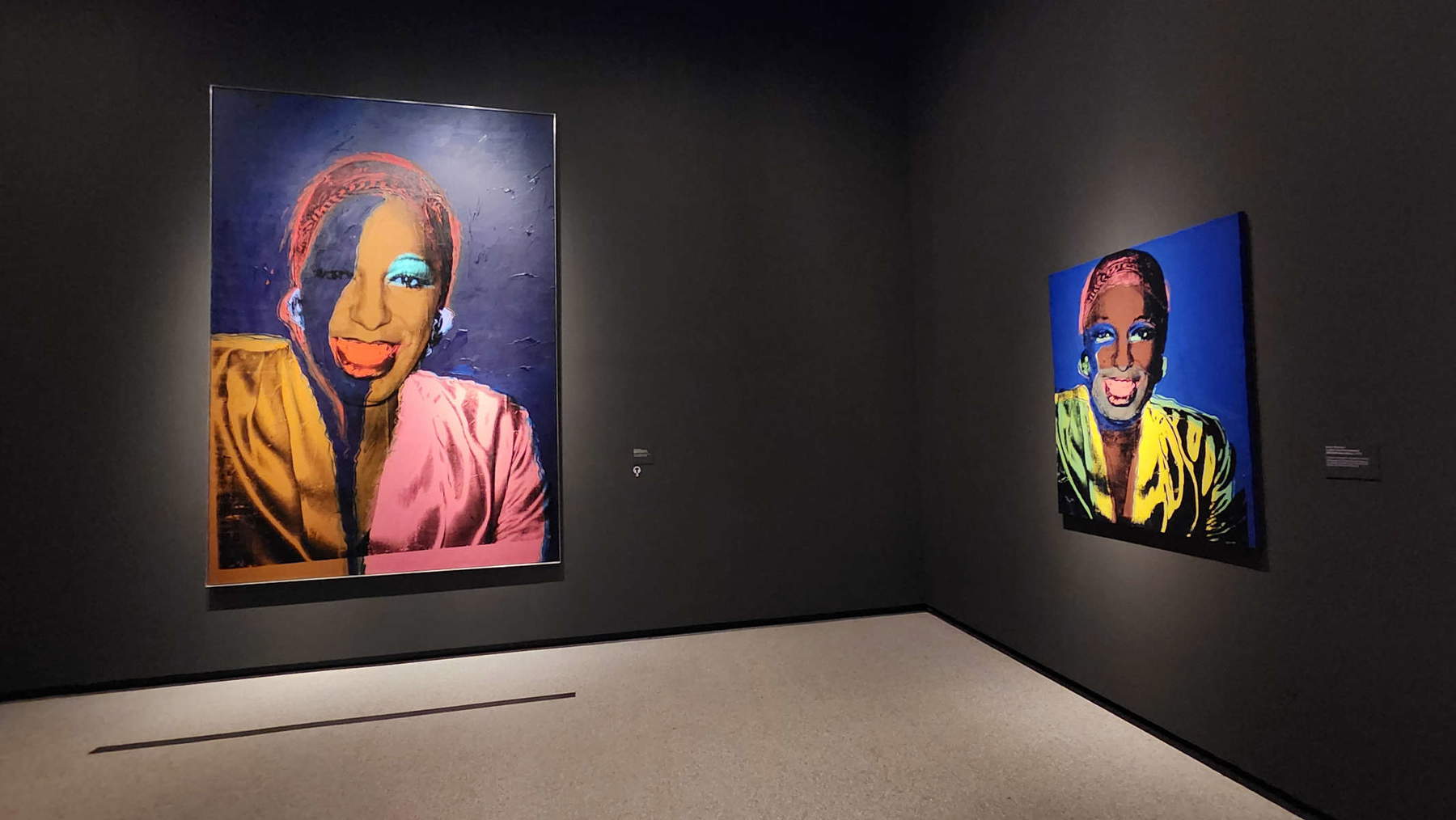
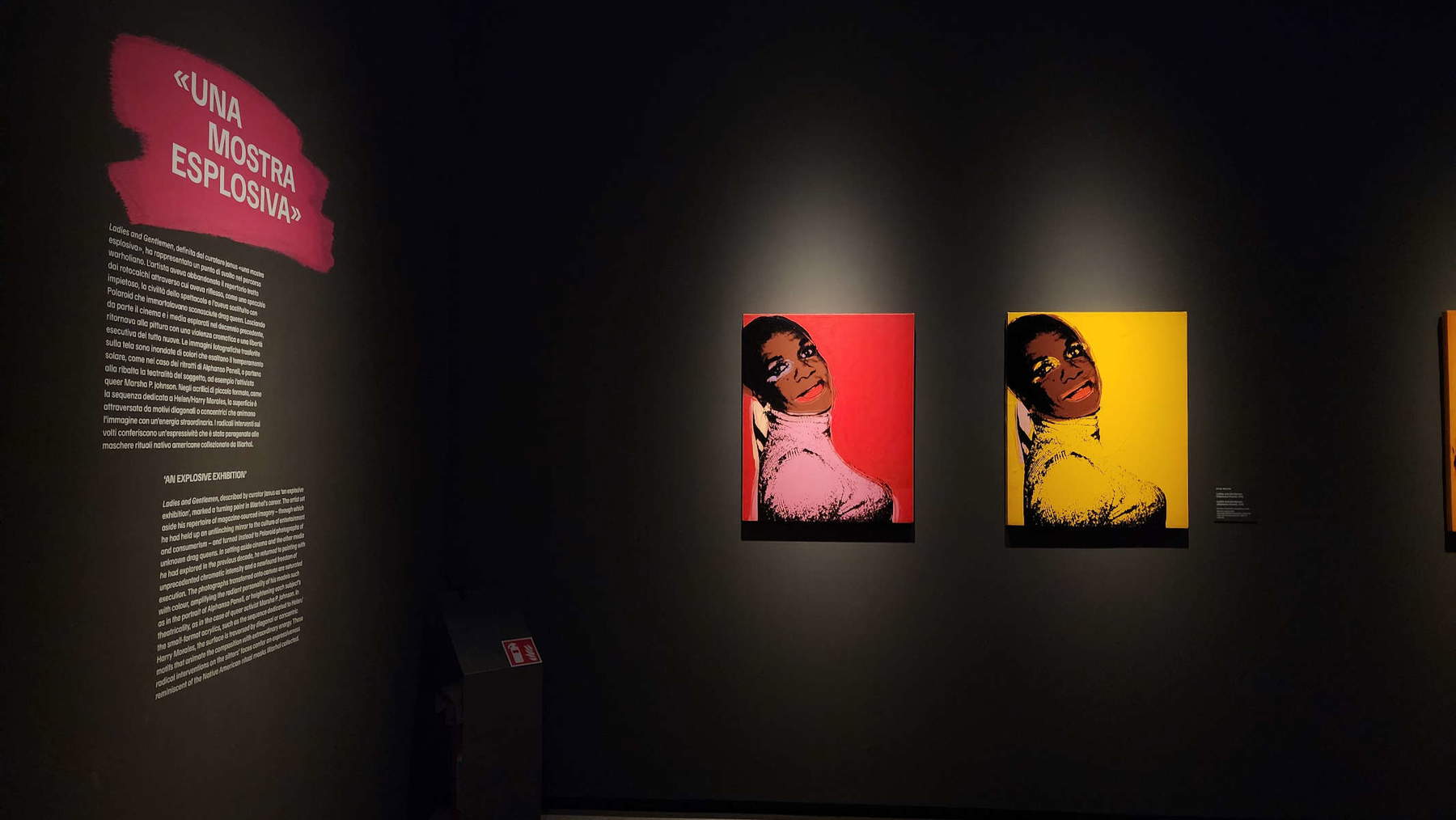
The idea of bringing Andy Warhol to Palazzo dei Diamanti came to Farina after the major 1974 exhibition at the Musée Galliera in Paris —made possible by gallery owner Ileana Sonnabend—where the series dedicated to Mao Tse-Tung took center stage; The critic Janus and Luciano Anselmino, owner of the Turin gallery Il Fauno—who had curated the 1972 Ferrara exhibition dedicated to Man Ray—were then brought on board to bring the Paris exhibition to Ferrara, but during the preparations, the project changed radically, as Anselmino, on his own initiative, after seeing the film *Women in Revolt*—produced by Warhol himself, released in 1971, and directed by Paul Morissey, which featuredtransgender womenassociated with the Factory, the place where Andy worked in New York (significantly called a “factory” rather than a “studio”), commissioned Warhol to create a new series of 105 paintings plus 10 silkscreen prints dedicated specifically to drag queens. The artist agreed only on the condition that he involve not the famous stars of the film, but anonymous African American and Latin American drag queens recruited from the Gilded Grape, a nightclub frequented by New York’s queer community. The recruitment was followed by photo sessions: over five hundred Polaroids were taken, which later served as reference images for the final paintings. The models received a fee of fifty dollars for posing for the portraits at the Factory. From the Polaroids—many of which are also on display in the current exhibition in Ferrara—one can see that the models paid particular attention to their outfits and chose glamorous, exuberant poses ; however,anonymity was truly a cornerstone of the entire project: initially, their identities remained unknown, but today, thanks to a recent, thorough 2014 study by the Andy Warhol Foundation , nearly all fourteen drag queens featured in the *Ladies and Gentlemen* series have been identified (only one remains completely unknown) by comparing the signatures on the Polaroids with other records. One section of the exhibition features a selection of Polaroids, alongside a reconstruction of each model’s identity, which formed the basis for the portfolio of silkscreen prints (displayed opposite) in which Warhol used intense, collage-like colors applied directly to the photographic print to highlight not only each model’s striking looks but, above all, their individuality and personality. Thus, the exhibition features Alphanso Panell, Michele Long, Broadway, Easha McCleary, Iris, Lurdes, Ivette, Helen/Harry Morales, Marsha P. Johnson, Kim, Vicki Peters, Monique, and the most famous of all, whom Andy Warhol portrayed in fifty-three Polaroids and depicted in seventy-three painted portraits: Wilhelmina Ross, the subject of the large paintings found in the first room of the exhibition, on loan from the Fondation Louis Vuitton in Paris and the Andy Warhol Museum in Pittsburgh.
The 1975 exhibition was an “exceptional event,” as Flavio Caroli wrote in *Corriere della Sera* after the opening, during which a press conference and a roundtable discussion were also organized (now viewable in a video at the current exhibition) attended by the artist, her friend and collaborator Bob Colacello, gallery owner Luciano Anselmino, curator Janus, and Franco Farina, director of Palazzo dei Diamanti, during which the audience misinterpreted the works as a political denunciation of the exploitation of drag queens. The exhibition was so successful that it was extended by a month, until January 1976, and featured in a subsequent showing at Anselmino’s Milan gallery, the latter introduced by a text by Pier Paolo Pasolini, one of the last writings the intellectual produced before his murder. One section is therefore dedicated to Pasolini’s assessment of the subjects in *Ladies and Gentlemen*: “The impression is that of standing before a Ravenna fresco [sic] depicting isocephalic figures, all, of course, facing forward. Repeated to the point of losing their own identity and being recognizable—like twins—by the color of their clothes […] The ‘Other’ in his permissive New York ghetto can triumph provided he does not deviate from a behavior that makes him recognizable and tolerable.” A critique that denounced stereotyping and repressive conformity in favor of diversity, even though the subjects portrayed were apparently free to express their own identities.
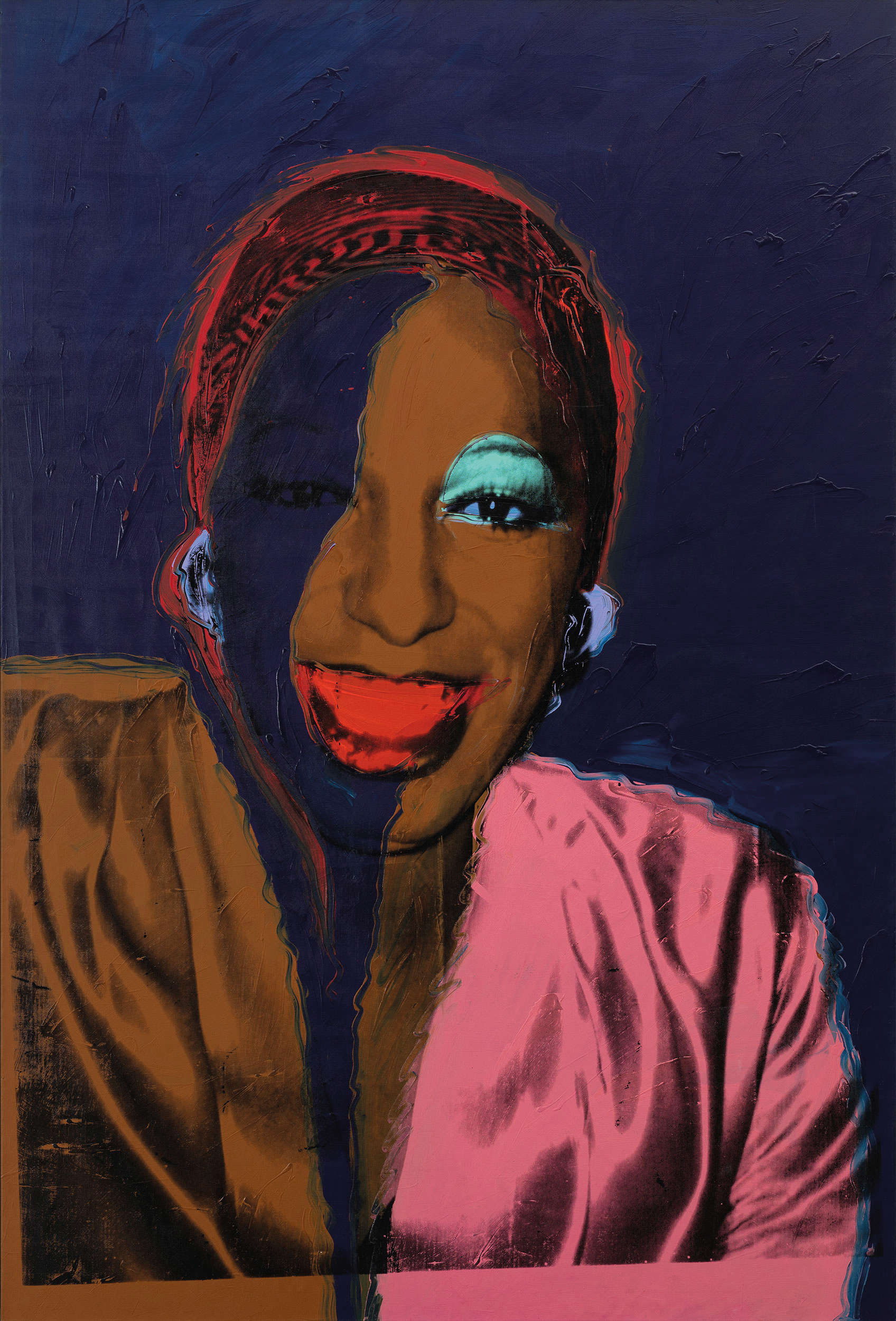
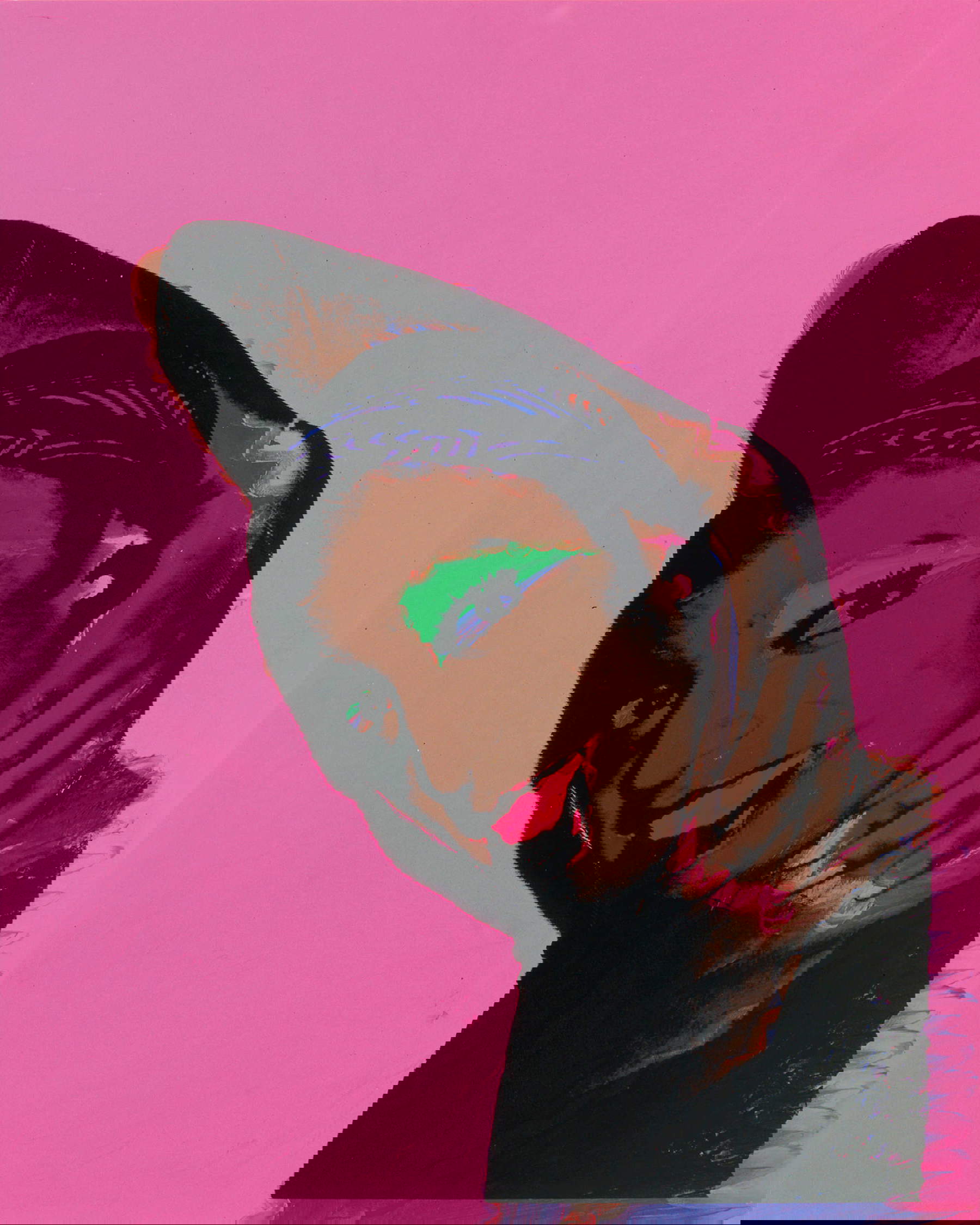
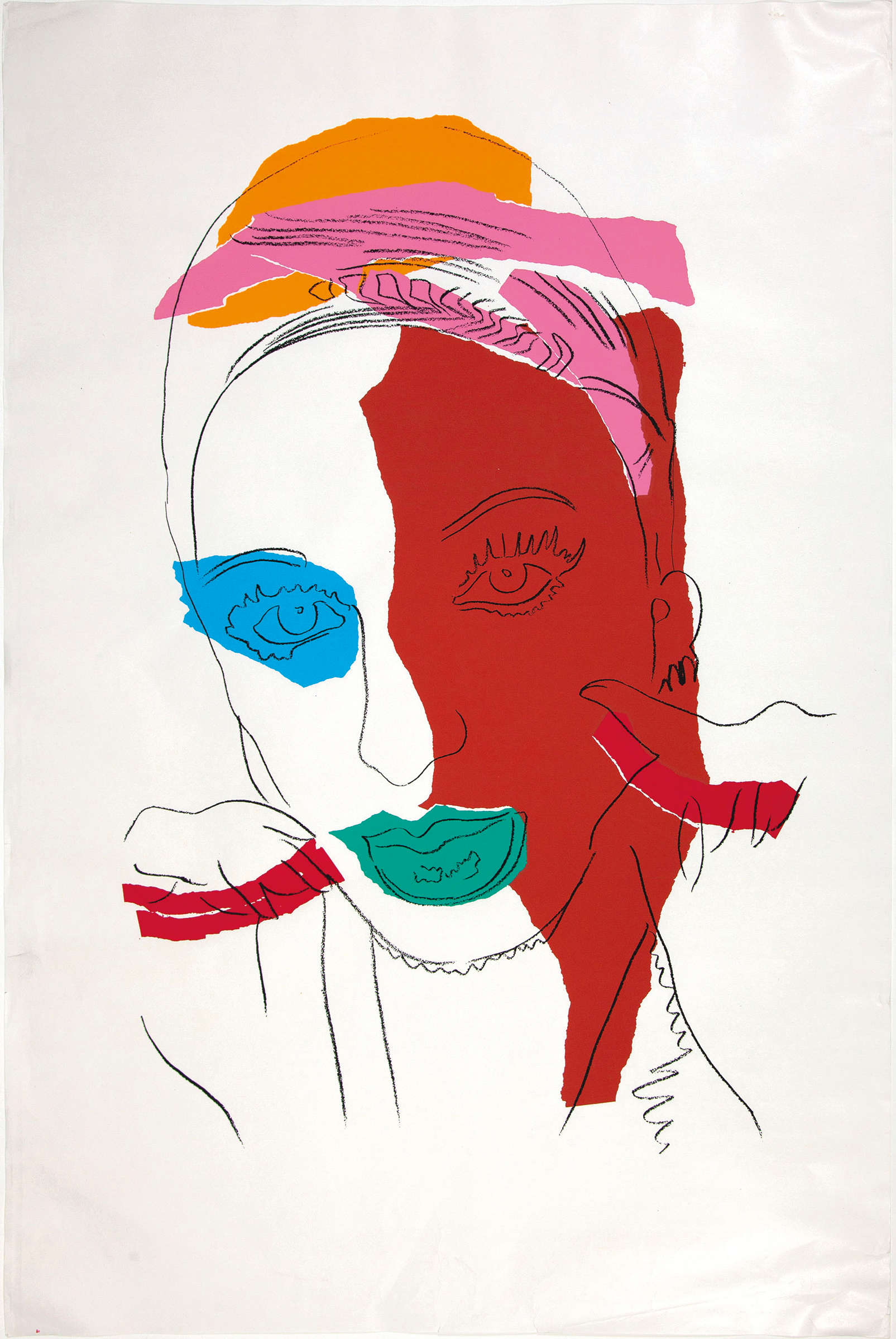
The current exhibition, curated by Chiara Vorrasi, is indeed intended as a commemoration —fifty years later—of the 1975 exhibition, a“reenactment through a non-literal reinterpretation,” in the curator’s own words—but what emerges with extraordinary power is the way Warhol addressed the theme of portraiture and self-portraiture throughout his career. This is the element that stands out most prominently among the more than 150 works on display. From the portraits of drag queens—which, as mentioned, represent the urban subcultures of Manhattan’s underground scene— we move on to a sort of gallery entirely dedicated to the Mao Zedong series—the centerpiece of the aforementioned 1974 Paris exhibition that inspired the idea of bringing the American artist to Ferrara: Warhol had used the official image of the Chinese president and then reinterpreted it as a pop icon with bright colors, eccentric makeup, and a parodic effect, reproducing it in various formats. The image, thus transformed, had lost its propagandistic power and entered what is known as celebrity culture.
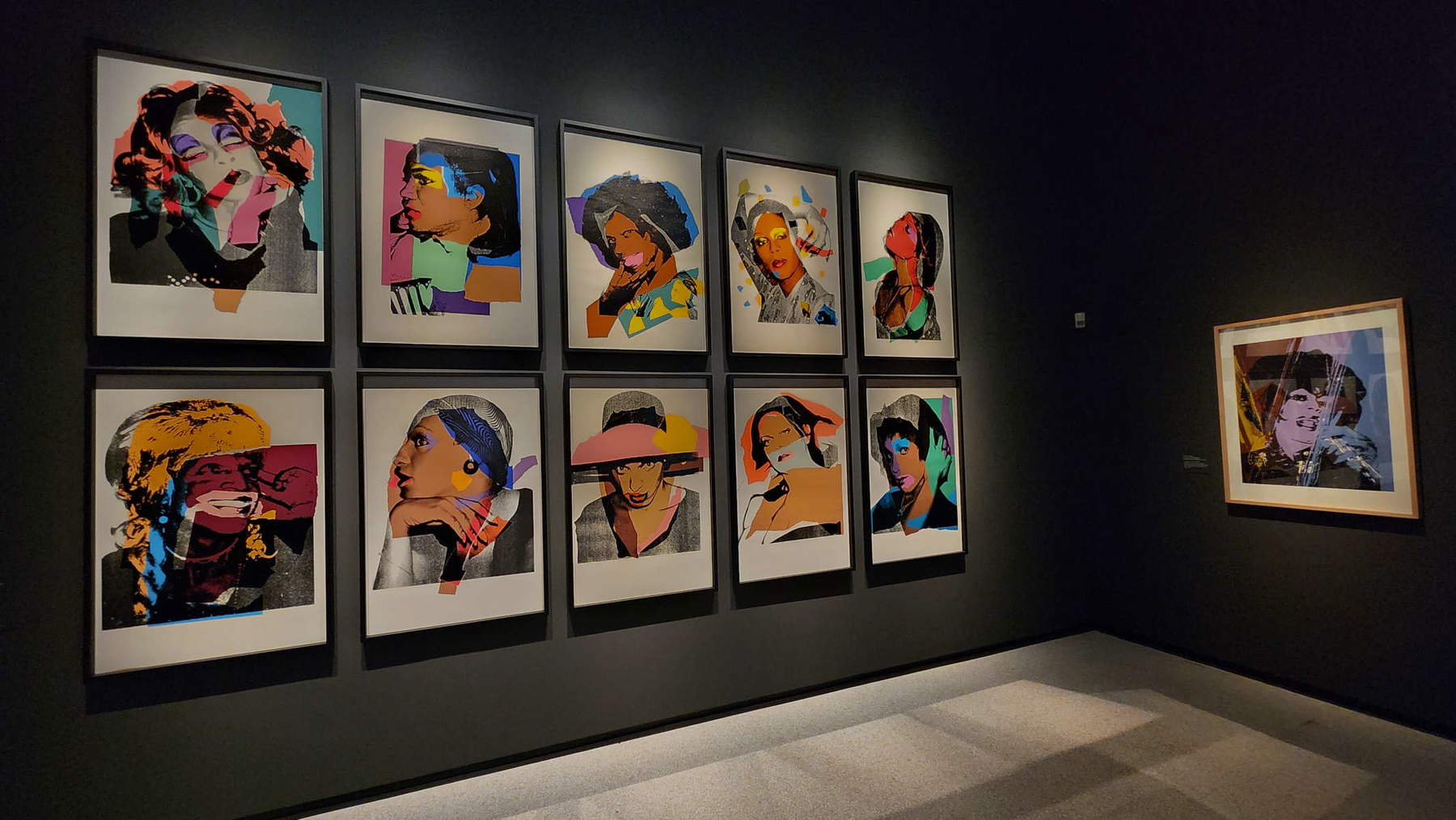
And then we are immersedin the rock atmosphere of the Rolling Stones with the video of their 1974 “Ladies and Gentlemen” concert. Warhol, in fact, created portraits of his friend Mick Jagger, again drawing on Polaroids taken during various photo shoots in which the band’s frontman showcased his full appeal, which are on display alongside the acrylic painting from the Andy Warhol Museum in Pittsburgh—characterized by the turquoise reflections of the lights—and the album covers for *Love You Live* and *Emotional Tattoo*, designed by Andy. These portraits bear witness to a true fusion of the arts, between painting and music. The same room also features Polaroids and portraits in acrylic and silkscreen ink depicting Liza Minnelli, another celebrity closely associated with Warhol’s world; both were regulars at Studio 54, the nightclub at the heart of New York’s social scene.
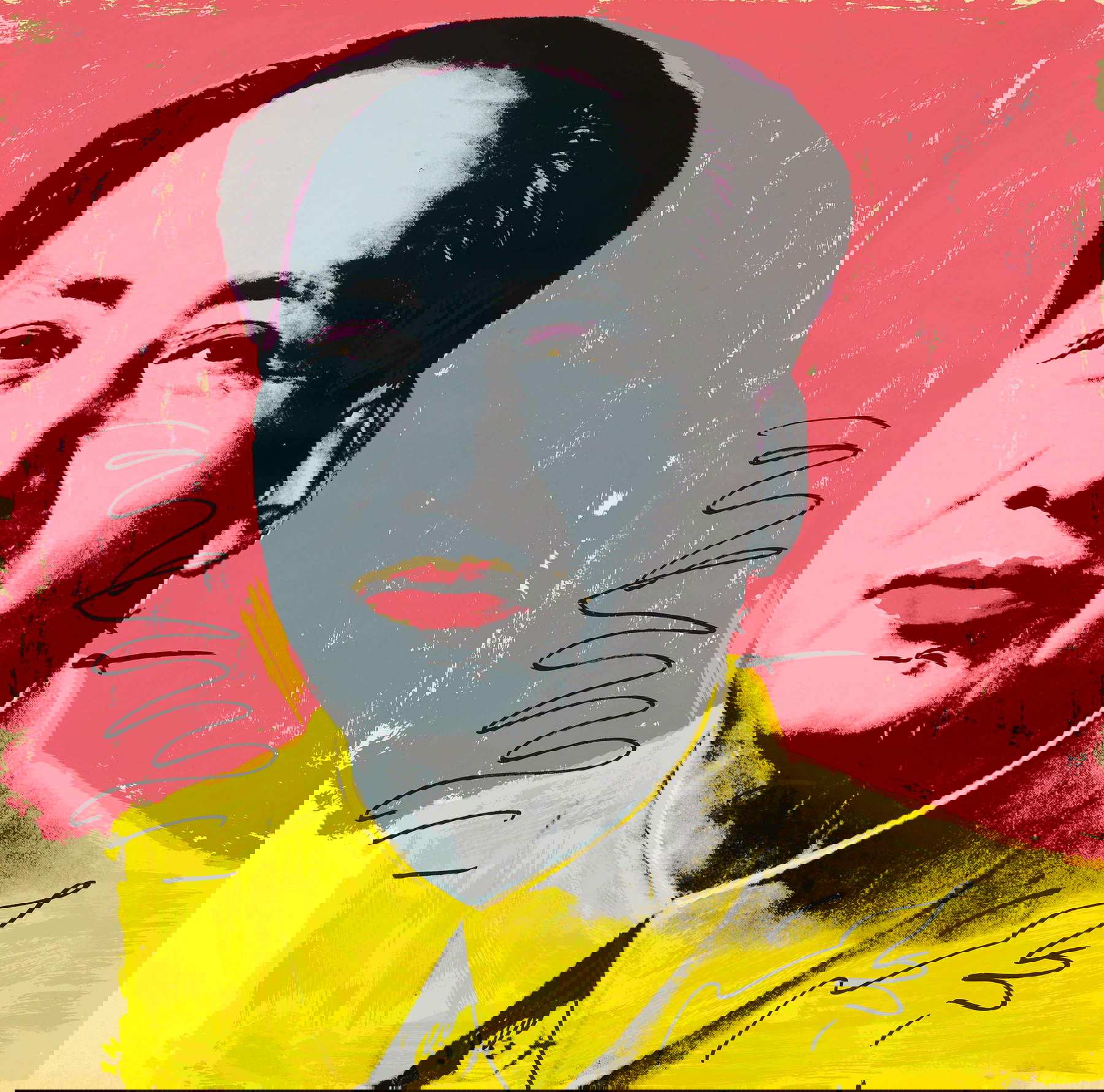
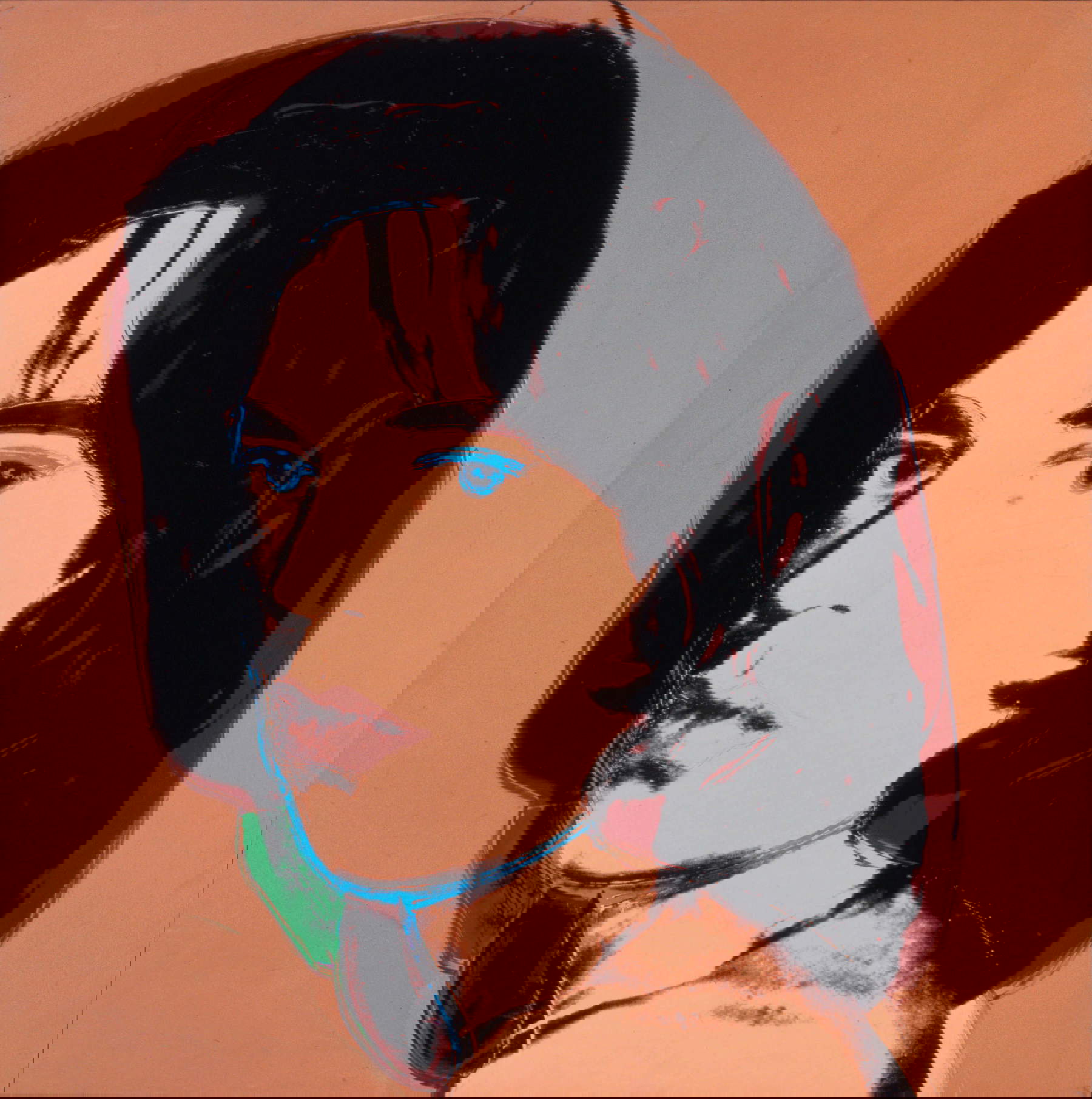
The theme of portraiture continues in the final section of the exhibition, dedicated specifically to Warhol’s reinvention of portraiture between the 1960s and 1980s. Examples include the famous image of Marilyn Monroe (shown here in silkscreen prints from the Luigi and Peppino Agrati Collection of Intesa Sanpaolo), derived from the actress’s promotional photo for the film *Niagara* and artificially transformed through various combinations of colors and contrasts with the background, and the portrait of Liza Minnelli, in which Warhol erases the natural imperfections of the face and emphasizes the makeup on her eyes and mouth. Robert Mapplethorpe’s portraits, on the other hand, are so heavily lit that the facial features disappear, while the image of Grace Jones takes on a highly virtual appearance. But Andy doesn’t just reinvent portraits of other people; he also reinvents his own self-portrait, as seen in the penultimate room: his face becomes a testing ground. His face fades away, multiplies, blends in, and stands out against a black background almost like a ghostly presence. By continually transforming and distorting his own image, Warhol even reinvents his own identity.
Finally, the American artist’s statement that concludes the exhibition seems to foreshadow today’s media overexposure and the incessant production of video content that now floods social media : “In the future, everyone will be famous for fifteen minutes,” he said. And so it has indeed come to pass. A wall of small screens broadcasts clips from the television show *Andy Warhol’s Fifteen Minutes*, which aired on MTV between 1986 and 1987, featuring celebrities from the worlds of music, entertainment, and art. Warhol had already sensed how portraiture was beginning to move beyond the visual arts and inevitably—and at an unstoppable pace—enter the new media. The future Warhol predicted is right there on our smartphones. Every second.


The author of this article: Ilaria Baratta
Giornalista, è co-fondatrice di Finestre sull'Arte con Federico Giannini. È nata a Carrara nel 1987 e si è laureata a Pisa. È responsabile della redazione di Finestre sull'Arte.
Warning: the translation into English of the original Italian article was created using automatic tools. We undertake to review all articles, but we do not guarantee the total absence of inaccuracies in the translation due to the program. You can find the original by clicking on the ITA button. If you find any mistake,please contact us.



























 IT
IT FR
FR DE
DE ES
ES CN
CN


