





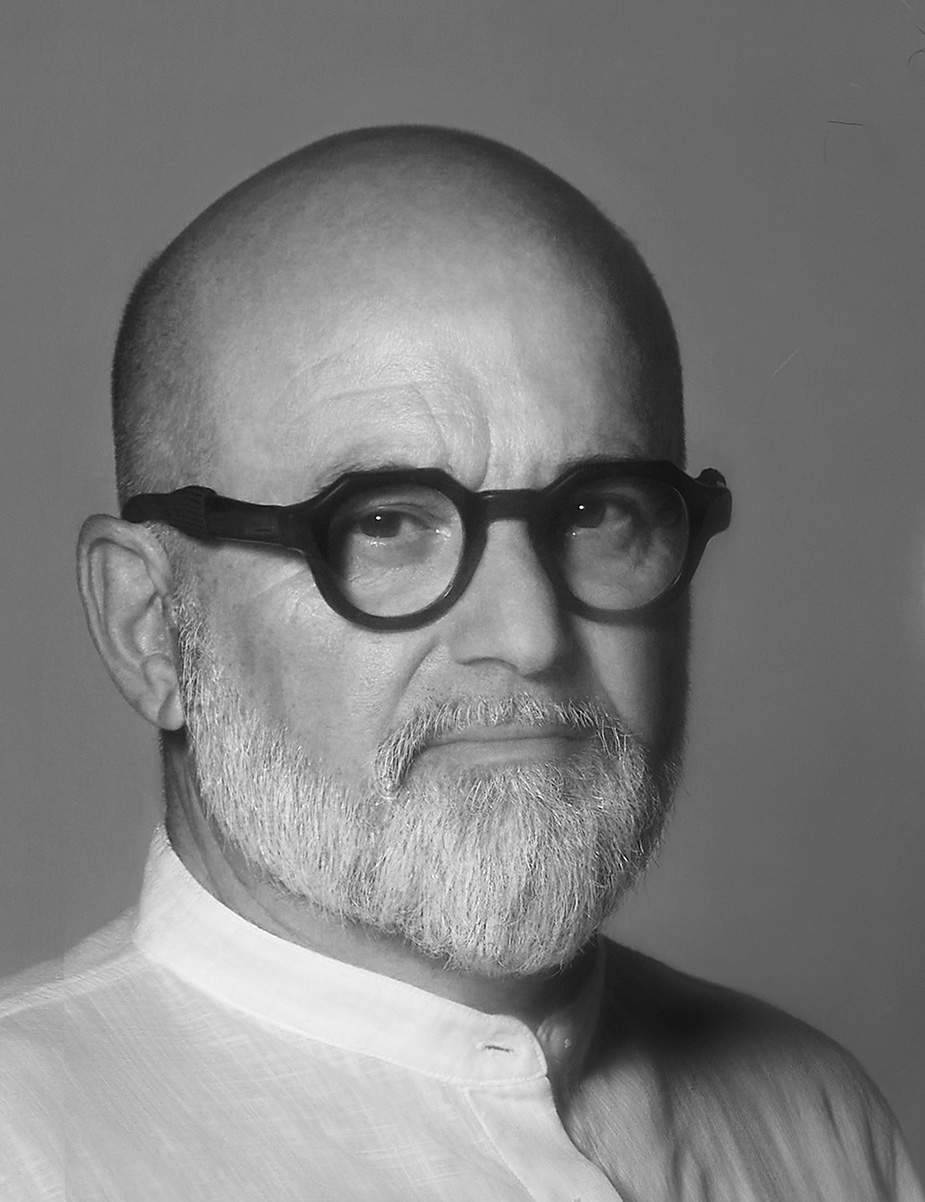
From March 28 to September 27, 2026, theMunicipal Antiquarium of Centuripe (Enna) will host the exhibition Sicily. One Island, Many Sicilies. Photography, memory and cultural heritage in the work of Armando Rotoletti, an exhibition project that aims to be one of the most extensive reconnaissance of the work of photographer Armando Rotoletti (Messina, 1958), built through more than 30 years of research on the island. The initiative, promoted by the Municipality of Centuripe in collaboration with Rjma Progetti Culturali and realized with the contribution of the Assessorato dei beni culturali e dell’identità siciliana, is based on a precise assumption: photography can be understood as a tool of scientific investigation, capable not only of documenting but also of interpreting the territory, memory and social transformations. In this perspective, Armando Rotoletti’s work is configured as a coherent and stratified corpus, matured over time through constant and personal frequentation of Sicily.
Born in Messina in 1958, Rotoletti was forced to leave the island at a young age for professional reasons, yet without severing his ties with his homeland. It is precisely this distance that turned into the engine of a research that, starting in the late 1980s, took Sicily as a privileged field of observation. The trips made for important Italian magazines are intertwined with personal projects, giving rise to a long visual narrative that avoids any claim to exhaustiveness to focus instead on an avowedly subjective, but at the same time rigorous and coherent look.
The exhibition brings together a significant selection of images made over a period of more than three decades, which together return a vision of Sicily as an “island-world.” Not a unitary entity, but a complex and plural whole, traversed by contrasts, historical stratifications and anthropological dynamics. It is in this sense that Rotoletti speaks of “Sicilies,” in the plural: each territory, each community, each human landscape contributes to defining different identities, often coexisting and sometimes in tension with each other.
The photographs do not simply record places, faces or objects, but restore practices and rituals, everyday gestures and forms of cultural resistance. In them, a dimension is grasped that goes beyond documentation, configuring itself as the construction of a cultural heritage, both material and immaterial. The project thus takes on a significance that is at once aesthetic, cognitive and political, in the broadest sense of the term.
According to the interpretation of art historian Tomaso Montanari, the Sicily that emerges from these images represents an antidote to global homogenization. A reality in which traditionalism does not coincide with backwardness, but can be configured as an advanced form of thinking, capable of valuing diversity as a fundamental element of human experience. “Rotoletti’s gaze,” he says, “equalizes men and things, places them in a memorial repertoire that does not hierarchize, but relates. It is a sensitive gaze, trained in complexity, capable of capturing the uniqueness of details without ever losing the overall vision. Precisely for this reason, the scientific value of the work lies not only in the documentation, but in the author’s interpretive ability, in the construction of points of view that stimulate a critical understanding of the territory.”
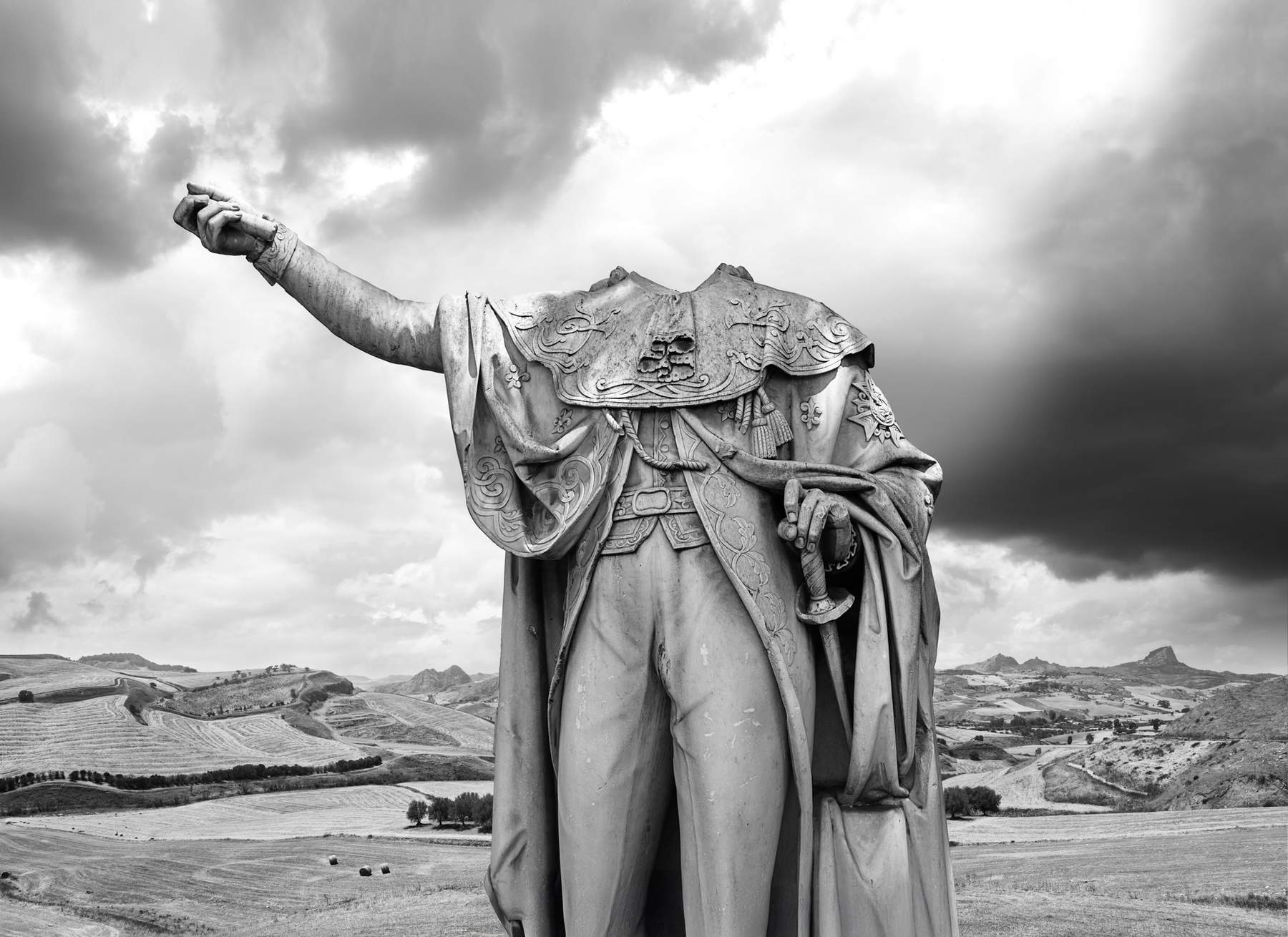
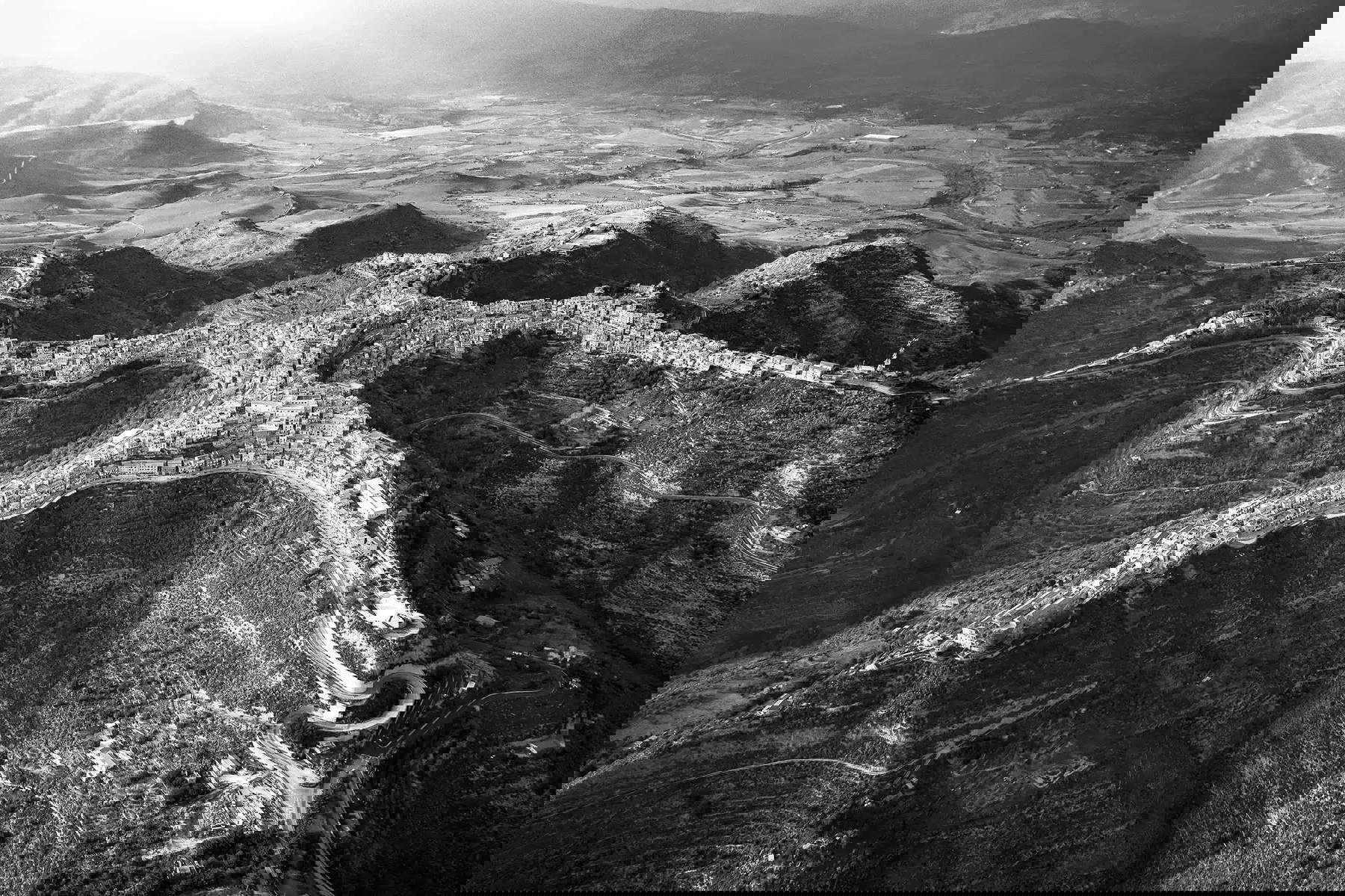
The choice of black and white and a deliberately classical form of expression reinforces this reading. The images appear suspended in time, prompting the viewer to question their chronological placement. What seems to belong to a remote past is instead revealed to be contemporary, generating a perceptive gap that becomes one of the central elements of the work. The photographs are thus configured as “ambassadors of another time,” according to a definition Italo Calvino had used to describe the work of Carlo Levi and which is taken up here by Montanari.
In this temporal suspension lies one of the most fertile interpretive keys of Rotoletti’s research: the ability to show what still exists but is in progressive danger of disappearing. His gaze builds a memorial repertoire in which men and things are placed on the same plane, without hierarchies, in a network of relationships that returns the complexity of reality.
The exhibition is therefore presented as an articulated path, in which the visual narrative develops along an extended timeline, relating images made in different contexts but united by the same intention. In this sense, the project also dialogues with the artist’s publishing activity, which over the past two decades has focused on the production of wide-ranging photographic books.
Among them, House of Charity. I volti le storie from 2005 recounts the experience of Don Colmegna’s foundation, while Barbieri di Sicilia from 2007 explores the island’s last traditional workshops. With 2013’s Gente di Barbaresco opens a path dedicated to Italian agrifood districts, continued with works such as Circoli di conversazione a Biancavilla, Valelapena and Scicli, città felice. These are joined by projects such as Wine and People of Etna, The Face of IO, Noto. Le pietre i volti and Selinunte, up to 2020’s Death in Sicily, which deals with the theme of mourning in the island tradition with texts by Dacia Maraini and Ignazio Buttitta.
In more recent years, Rotoletti has continued to develop his research with works such as Marina di Ventimiglia in 2021, Analisti allo specchio in 2023 and Marina di Pisa in 2024, the latter accompanied by a text by Salvatore Settis. His latest book, Sicily of 2025, represents a mature synthesis of this path, reaffirming the role of photography as a tool for knowledge and reflection.
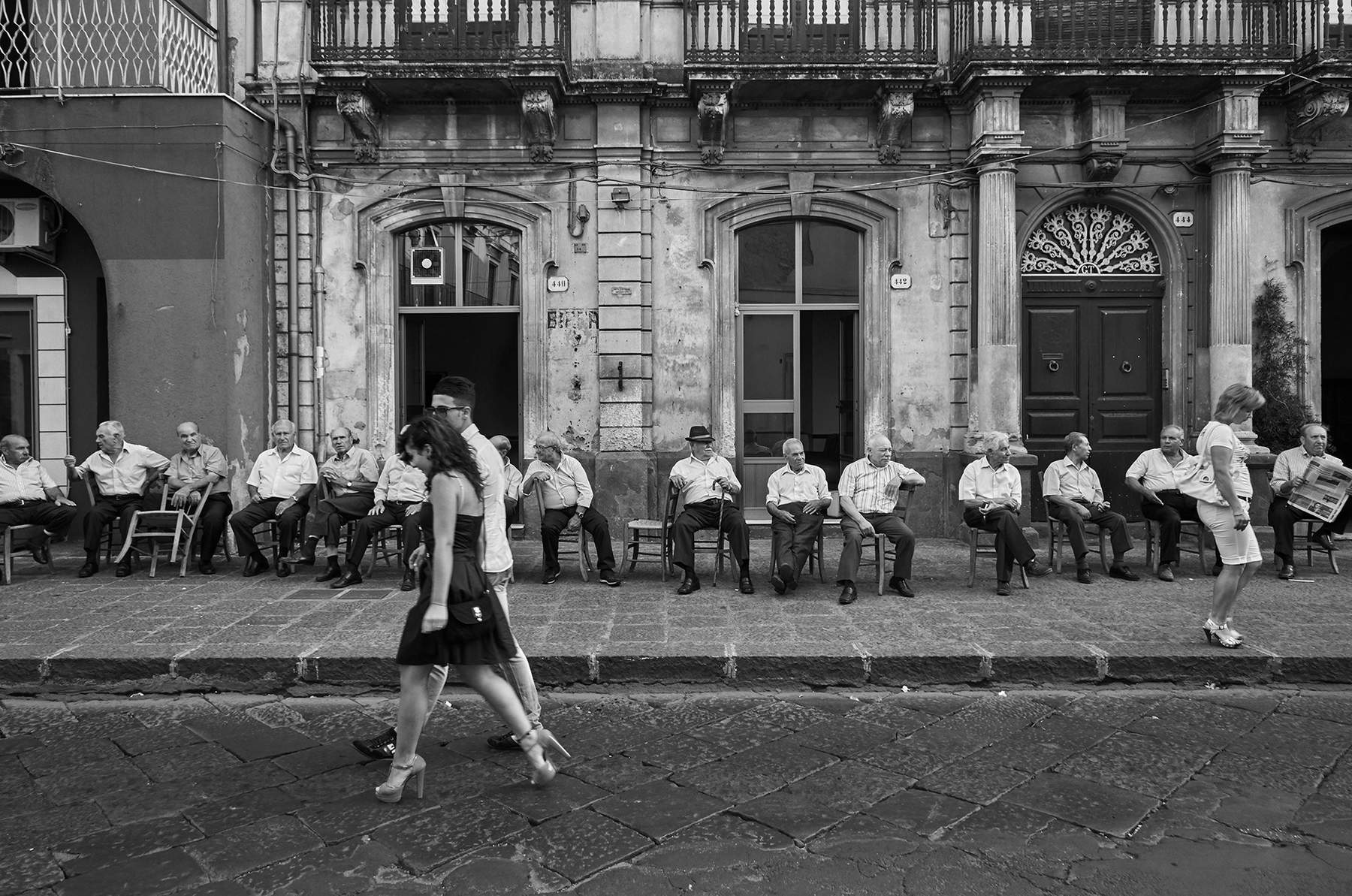
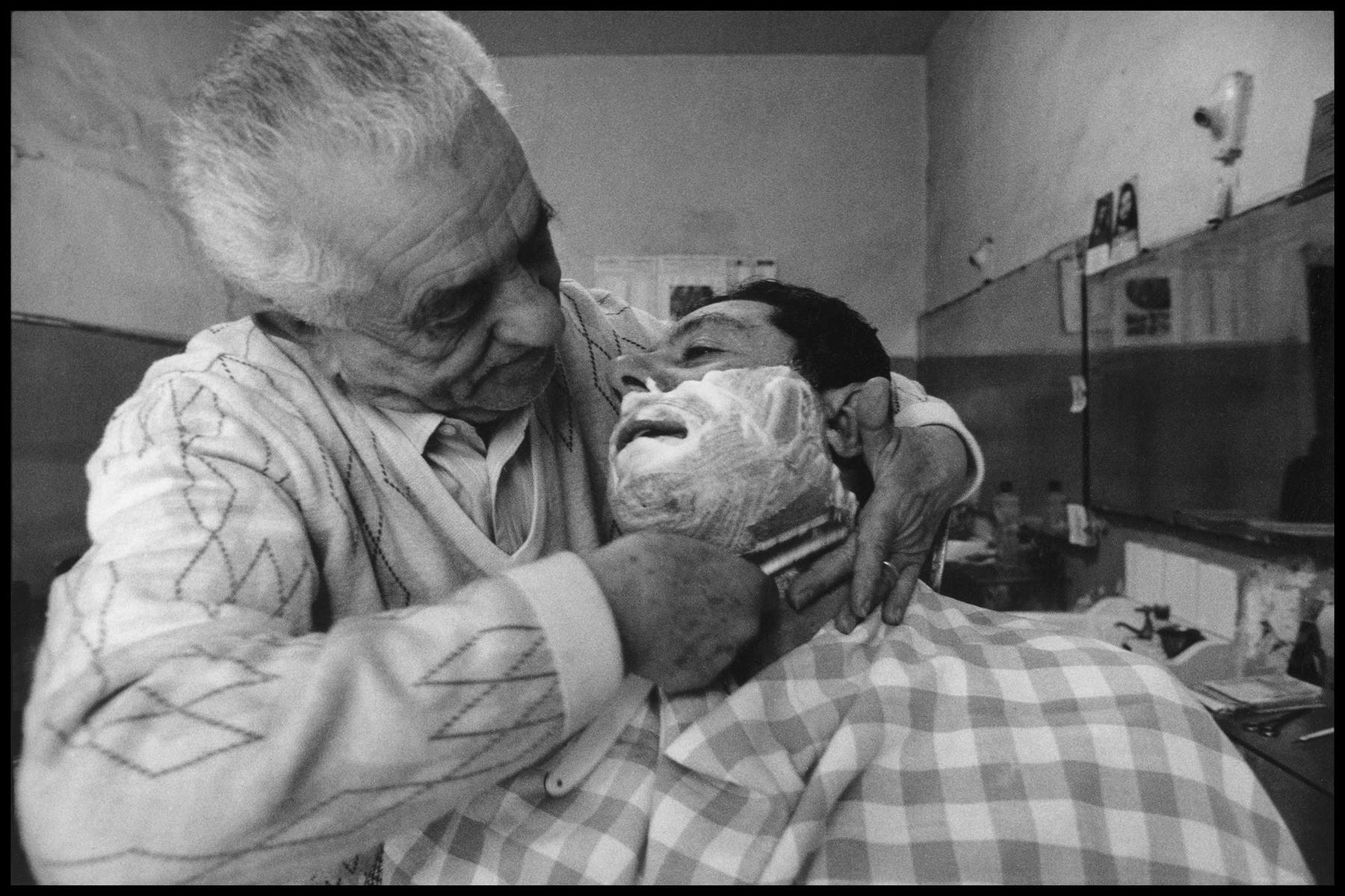
The Centuripe exhibition thus fits into a well-established trajectory, offering the public an opportunity to engage with work that spans decades and continues to interrogate the present. As Regional Councillor for Cultural Heritage Francesco Paolo Scarpinato points out, this is a virtuous example of how photography can contribute to the protection and enhancement of cultural heritage, returning a conscious and layered gaze.
Centuripe Mayor Salvatore La Spina also highlighted the value of the initiative: “Welcoming a project of such depth to Centuripe,” he said, “means strengthening the role of our community as a place of cultural production and reflection on Sicilian identity. The Antiquarium confirms its role as a living space, where memory, art and territory dialogue with the highest expressions of art.”
Through his images, Armando Rotoletti builds a narrative that does not claim to be definitive, but invites questioning on the complexity of contemporary Sicily. A tale that unfolds over time, that welcomes contradictions and returns the richness of an island that continues to tell its story, to resist and to transform itself.
|
| Armando Rotoletti's Plural Sicily is on display in Centuripe (Enna) |

Warning: the translation into English of the original Italian article was created using automatic tools. We undertake to review all articles, but we do not guarantee the total absence of inaccuracies in the translation due to the program. You can find the original by clicking on the ITA button. If you find any mistake,please contact us.




















 IT
IT FR
FR DE
DE ES
ES CN
CN


