




by Redazione 16/04/2026



Categories: Exhibitions / Disclaimer
Extended through May 24, 2026, the exhibition "Fairy Tales are True...Italian Folk History" at the Museum of Civilizations in Rome. An engaging journey combining fairy tales, arts and folk traditions, with a focus on accessibility and participation for all audiences.
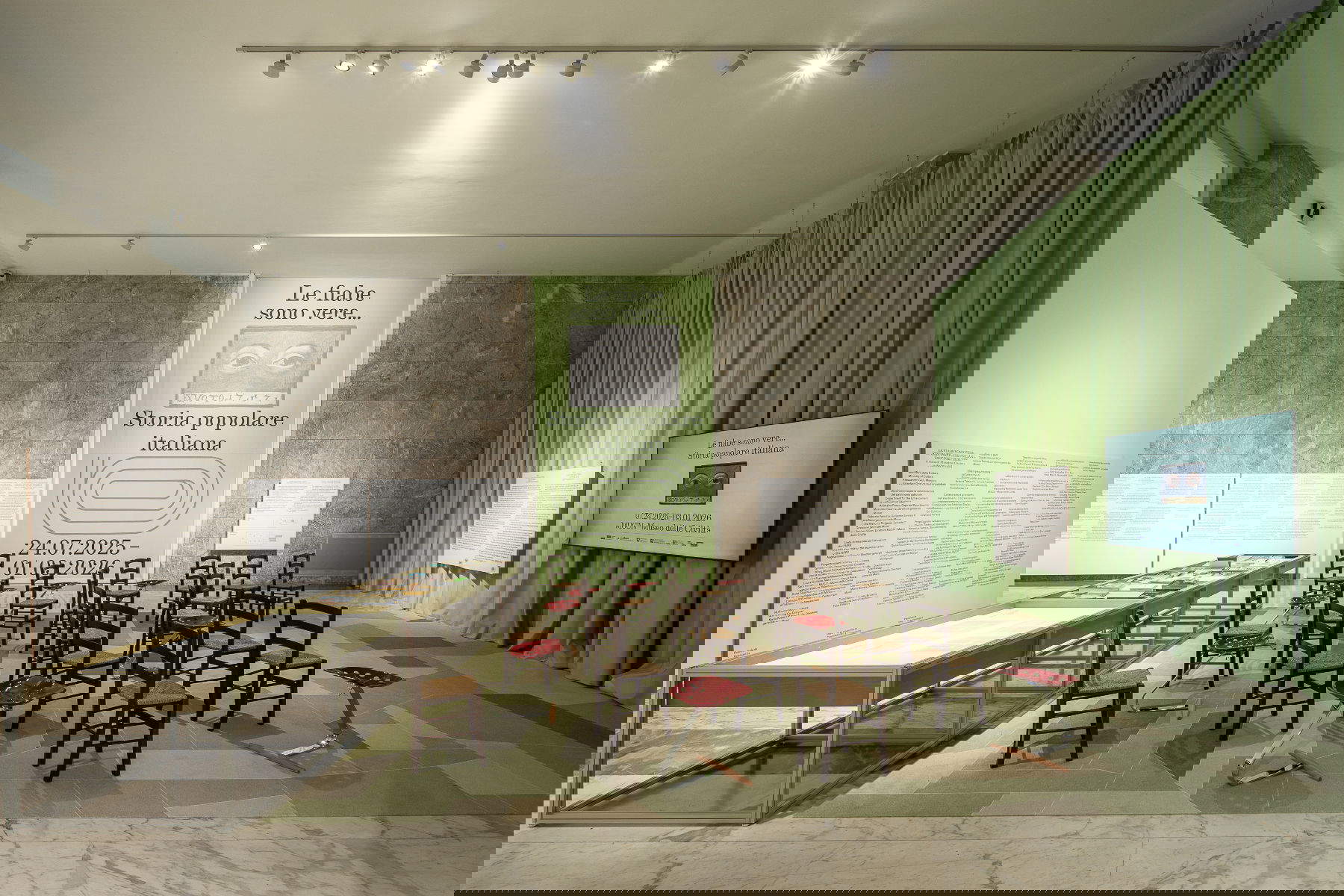
Extended to May 24, 2026, at the Museum of Civilizations in Rome is the exhibition Le fiabe sono vere... Storia popolare italiana, open to the public since last July 24 and set up as an innovative and immersive journey that aims to tell the connections between fairy tales, arts and folk traditions. The exhibition stands as a true manifesto of accessibility. It is, for all intents and purposes, a summation of achievable achievements in the field of design for all, a laboratory of ideas and practices for the museology of the present and future. The exhibition engages in a dialogue with a broad audience and insiders. The project was organized by the Directorate General of Museums of the Ministry of Culture and supported by PNRR Accessibility-National Plan for Recovery and Resilience funds, and was curated by Massimo Osanna, director general of Museums, and Andrea Viliani, director of the Museum of Civilizations. The exhibition takes the form of an authentic manifesto of public culture, aiming to redefine the role of the museum in relation to contemporary audiences. Not only a place of preservation and study, but also a laboratory for discussion, participation and shared growth. With this in mind, the exhibition was conceived as an inclusive and plural experience, capable of welcoming visitors with different needs and sensibilities.
Fairy Tales are True...Italian Folk History, in this sense, is not intended to be just an exhibition of works, but a path that questions the very role of the museum in contemporary society. The intent is to open the collections to confrontation with the present, offering visitors tools to read reality through the universal and symbolic language of fairy tales. The project, supported by PNRR funds, is also part of a broader strategy of the Ministry of Culture aimed at enhancing and revitalizing Italy’s cultural heritage with particular attention to issues of inclusion and participation. And the Museum of Civilizations, with this exhibition, strengthens its role as a reference institution for the study and dissemination of popular cultures, reaffirming its vocation to become a place of encounter, experimentation and collective growth.


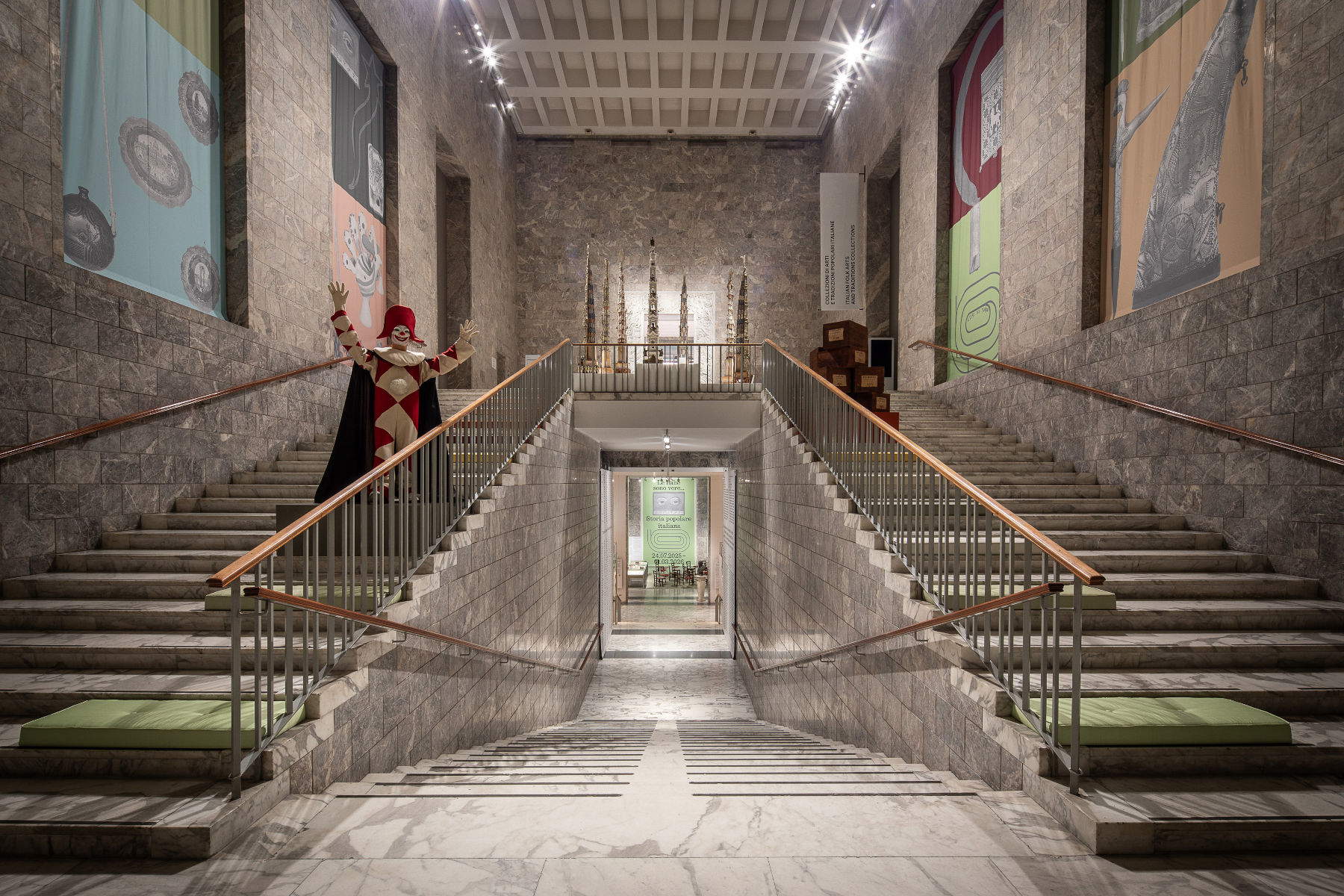
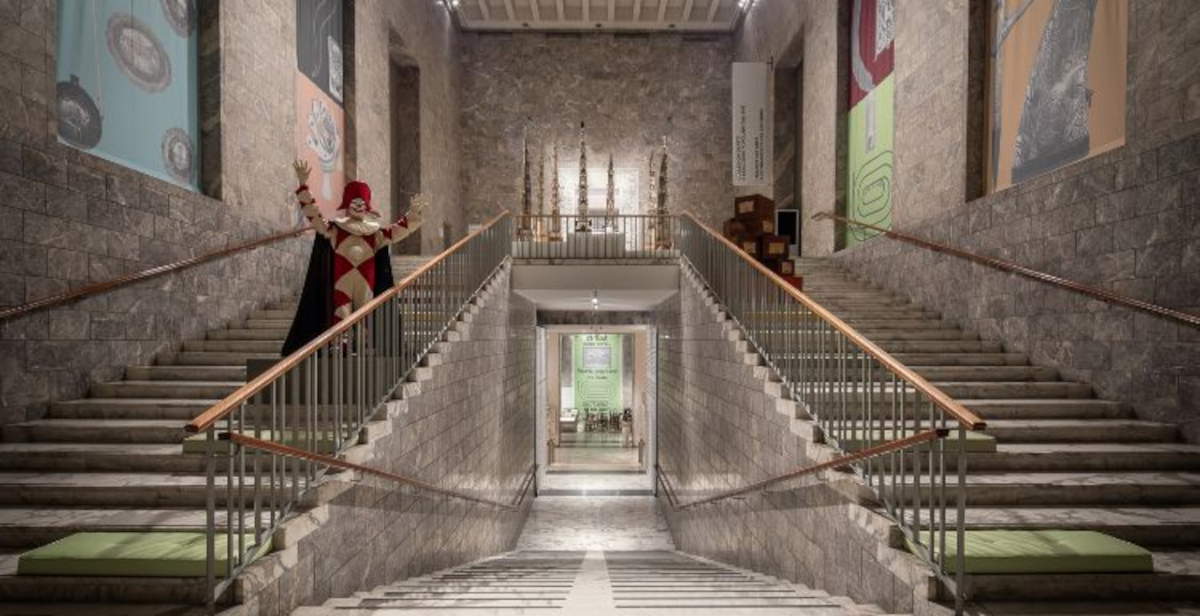
The itinerary, housed inside the Palazzo delle Arti e Tradizioni Popolari (Palace of Folk Arts and Traditions) in EUR, presents more than 500 works including paintings and drawings, clothes and masks, amulets and votive offerings, agricultural tools and means of transportation, musical instruments, toys, photographs, prints and films. A heterogeneous ensemble that restores the richness of Italy’s folk heritage and adopts the fairy tale as a narrative key to read both the past and the present. The exhibition layout is inspired by the reflections of Italo Calvino who, in the preface to his 1956 collection of Italian Fairy Tales, wrote that “fairy tales are true.” According to the writer, in fact, they represent a symbolic code that unites the mythical to the everyday, the individual to the collective, the natural to the cultural, the wild to the domestic. In this sense, the fairy tale is not only a literary genre for children, but a tool that helps us understand the world around us, offering keys to interpret it that are always relevant. The exhibition translates this perspective into an itinerary that adopts the fairy tale as its narrative structure, taking the visitor on a journey that weaves together stories, objects and symbols.
Guiding the experience is an original fairy tale written for the occasion by narratologist Elena Zagaglia. The protagonist is Elio, an imaginary character who invites us to value the encounter with the different and the wonderful, transforming the fear of the unknown into an opportunity for awareness and growth. The fairy tale is offered in multiple formats: audio, easy-to-read version, CAA (Alternative Augmentative Communication), LIS (Italian Sign Language) and ASL (American Sign Language). It is also linked to an itinerary consisting of nine works from the permanent collection, designed to make the visit even more engaging.
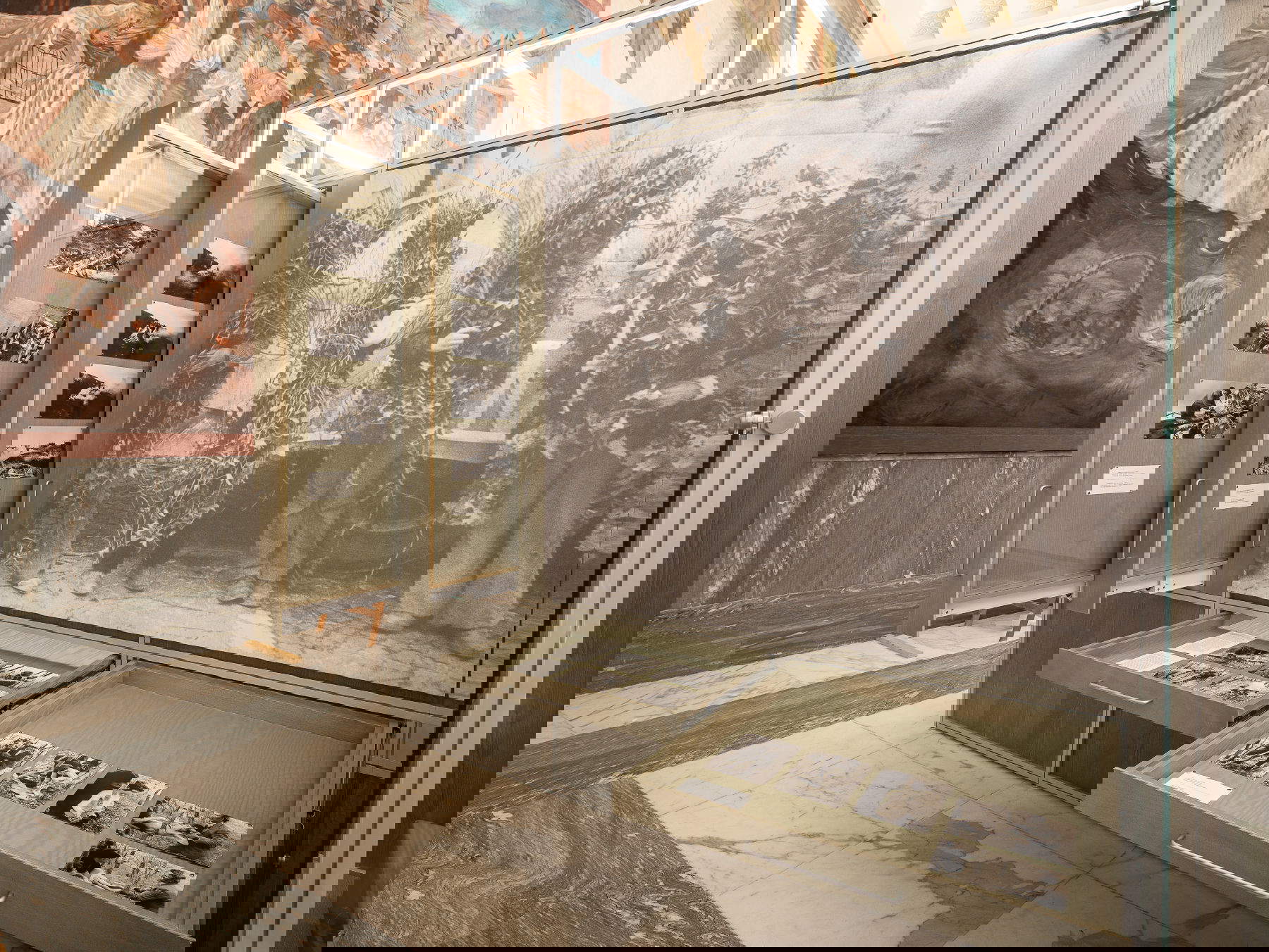
Attention to accessibility is one of the cornerstones of the project. The working group, coordinated by Miriam Mandosi, has developed a system of tools for physical, sensory, cognitive, relational and symbolic accessibility, with the collaboration of associations and reference bodies such as AIPD (Associazione Italiana Persone Down), ANFFAS Nazionale, Consulta Regionale per la Tutela dei Diritti della Persona del Lazio, ENS (Ente Nazionale Sordi), FAND (Federazione tra le Associazioni Nazionali delle Persone con Disabilità), F.I.S.H. (Federazione Italiana per il Superamento dell’Handicap) and UICI (Unione Italiana Ciechi e Ipovedenti, Rome section).
The tools prepared for the exhibition go beyond the traditional idea of accessibility related only to the distinction between ability and disability. Rather, the stated goal is to create fulfilling and generative experiences capable of fostering the well-being and self-actualization of all visitors, regardless of their condition. A tactile path with original objects and the translation of content into LIS and ASL, among others, have been planned.
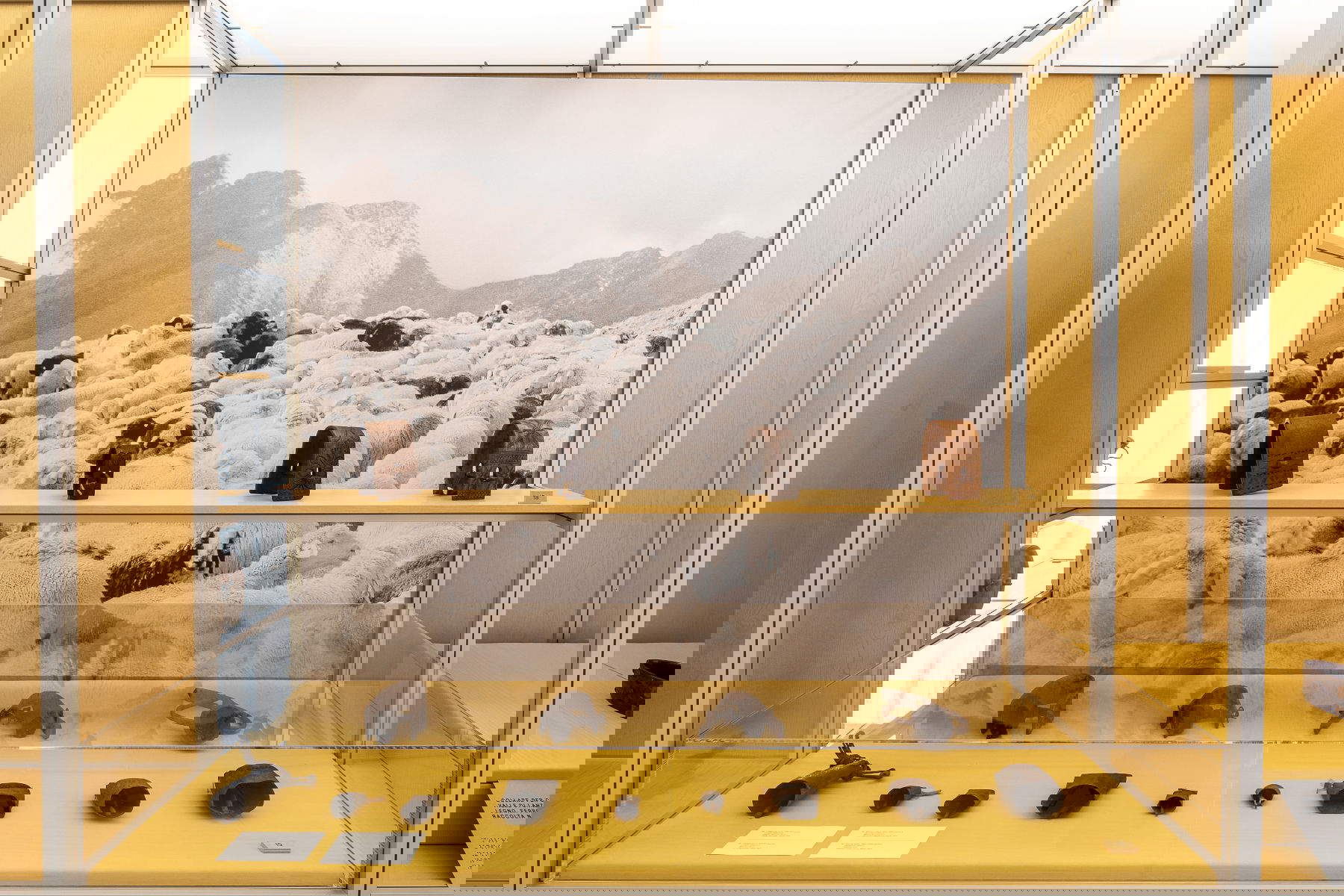
The exhibition thus presents itself as a large cultural laboratory that brings together material and immaterial heritage, scientific research and artistic experimentation. Contributing to its creation was a multidisciplinary team composed of staff from the General Directorate for Museums, MUCIV and the Central Institute for Intangible Heritage, with the collaboration of Cristiana Perrella. The exhibition design was entrusted to Formafantasma, a studio known for its innovative approach and ability to interweave design and content, with co-design by architect Maria Rosaria lo Muzio.
The exhibition will be on view until March 1, 2026 in the spaces of the Palazzo delle Arti e Tradizioni Popolari at EUR, Piazza Guglielmo Marconi 8. More information is available on the museum’s official website at www.museodellecivilta.it.
Statements
“We are living in an epochal moment, in which the issue of access to culture imposes itself with a new, urgent and shared force,” says Massimo Osanna. "Much ground has been covered since when ’accessibility’ meant only removing physical barriers. Today the challenge shifts to a broader and deeper plane: to build total accessibility, embracing the sensory, cognitive, relational and symbolic dimensions of cultural experience. It is a challenge that questions everyone - citizens and institutions - and calls us to imagine cultural spaces that are truly open, welcoming, and capable of reflecting the complexity and plurality of contemporary audiences. The exhibition Le fiabe sono vere... Storia popolare italiana (Fairy Tales are True... Italian Folk History), hosted by the MUCIV - Museum of Civilizations, stems from this shared vision and represents a significant step in the path that the Directorate General for Museums has been promoting for years: a culture of accessibility understood as responsibility and method, a true founding principle of museum action. The exhibition is, for this reason, a source of particular pride. It summarizes and concretizes an approach in which inclusion is the key to designing and narrating places of culture in a new, open and conscious way. Fairy tales are true... Italian Folk History is thus configured as a true manifesto, because it embodies-in the choice of content and in the way it is enjoyed-a vision of public culture that speaks to everyone. Fairy tales, a shared popular heritage, prove to be an extraordinary narrative tool for building bridges between different people, generations, cultures and sensibilities. And thanks to universal accessibility, they become a common experience, a plural voice, a participatory narrative."
“Like the museum-whose daily processes require time and care, the result of the skills of many people and constant attention to the audiences and needs that come from outside the museum itself-fairy tales also travel through time and space (’Once upon a time... ’) and never have only one author,” says Andrea Viliani. “This is why we conceived of the exhibition as a plural and developing tale, in which the professionalism and disciplinary methods of anthropology meet those of exhibition design, the criteria of cultural heritage protection with those of its physical, cognitive and sensory accessibility, the limit of the single exhibition with the broader responsibility of the museum mission. What emerges are working notes, albeit partial and provisional, with which to try to test the museum function and imagine other possible ones. That is why we ask you, the exhibition audience, to propose other stories, your own, and thus make yourselves co-authors of the exhibition itself.”
“In the process of transformation that has affected cultural policies in recent years,” explains Alfonsina Russo, Head of the Department for the Enhancement of Cultural Heritage, “the issue of accessibility has taken on increasing centrality, evolving from a technical and sectorial issue to a structural element of heritage enhancement strategies. Starting from this awareness, as the Department for the Enhancement of Cultural Heritage we are committed to strengthening coordination between different institutional actors and promoting an integrated and inclusive approach to access to culture, capable of taking into account the plurality of audiences and the complexity of their needs. The exhibition Le fiabe sono vere... Storia popolare italiana, promoted by the Directorate General for Museums and hosted by the Museum of Civilizations, fits fully into this vision. It is a project born from a long path of reflection and experimentation on the issues of inclusion, accessibility and cultural mediation, which the Ministry of Culture is pursuing through strategic guidelines, operational tools and structural investments. The Department of Enhancement supports and accompanies this path, ensuring a framework of coherence, sustainability and innovation. In particular, the Ministry of Culture’s National Recovery and Resilience Plan - under Mission 1, Component 3 ’Culture and Tourism 4.0’, Investment 1.2 - has provided a nationwide program of interventions to remove physical, cognitive and sense-perceptual barriers in museums, libraries and archives. The Directorate General for Museums, as the implementing party, played a central role in the implementation of the interventions, helping to build an increasingly open, accessible and participatory cultural system.”
“The exhibition,” says Angelantonio Orlando, director general of the Mission Unit for the Implementation of the PNRR, “stands out for a deeply inclusive and innovative layout, the result of a co-design process that involved numerous stakeholders, including professionals with and without disabilities. Through the adoption of the most up-to-date accessibility and evaluation tools, the exhibition promotes a plural culture of accessibility, emphasizing how the physical, social and digital environment can foster-or hinder-the participation of all people. Looking to the future, this exhibition serves as a model and stimulus for a new season of cultural policies geared toward participation, the removal of visible and invisible barriers, and the building of a more equitable and inclusive society. Accessibility, here understood in its broadest sense, is not just a goal to be achieved, but a dynamic process involving institutions, communities and individuals in the creation of a living heritage, open and shared by all and for all. In this perspective, the museum becomes a permanent laboratory of dialogue and transformation, a place where bridges are built between past and future, between memory and innovation, between individual and community. It is in this direction that we open the way toward a truly universal cultural heritage, capable of welcoming and valuing every voice, every experience, every difference.”
“Telling Italian folk traditions through the marvelous objects belonging to the MUCIV-Museum of Civilizations, trying to offer multiple interpretations, interconnected communicative tools and multiple accesses to them, has meant that everyone and anyone has been able to find in the overall path of the exhibition the unrepeatable wonder of their own fairy tale,” says Maria Rosaria Lo Muzio, an architect functionary of the General Directorate of Museums. “It was a demanding challenge that could only be reversed thanks to the human dedication and professional skills of an interdisciplinary working group composed of architects and designers, art historians, archaeologists and anthropologists, restorers, communicators and storytellers who managed to pool their skills in an exchange of knowledge and know-how that made it possible to create a collective work: that of Italian tradition and history with its countless individual fables.”
 |
| "Fairy Tales are Real..." Inclusive exhibition at Rome's Museum of Civilizations extended to May 24 |
Warning: the translation into English of the original Italian article was created using automatic tools. We undertake to review all articles, but we do not guarantee the total absence of inaccuracies in the translation due to the program. You can find the original by clicking on the ITA button. If you find any mistake,please contact us.