





Following the success of the exhibition Giorgio de Chirico. The Last Metaphysics, which exceeded 33,000 visitors in just over four months, the Palazzo dei Musei in Modena confirms its programmatic line for the 2026-2027 season with two new exhibitions of international scope. The project is part of the collaboration between themunicipal administration and Silvana Editoriale and continues the enhancement of the new wing of the museum complex, with access from Viale Vittorio Veneto 9, conceived as a space for large exhibitions capable of intercepting local audiences and tourist flows.
The new programming is developed through two separate appointments that cross different geographical and chronological contexts, maintaining a common key centered on human experience and its representation. The first appointment is dedicated to Robert Doisneau, while the second focuses on Katsushika Hokusai, a pivotal figure in Japanese art between the 18th and 19th centuries.
The exhibition season was presented at City Hall by Mayor Massimo Mezzetti, Culture Councillor Andrea Bortolamasi and Silvana Editoriale General Manager Michele Pizzi. The two exhibitions are presented as part of a medium- to long-term program, linked to the redevelopment of the spaces of the Palazzo dei Musei and the desire to consolidate a continuous exhibition offer.
The exhibition dedicated to Robert Doisneau, curated by Gabriel Bauret, will be on view from September 24, 2026 to January 24, 2027. The exhibition is produced in collaboration with the Atelier Doisneau in Paris and promoted by the Fondazione Cassa di Risparmio di Padova e Rovigo. It brings together about 150 black-and-white photographs from the collection of Atelier Robert Doisneau in Montrouge, the place where the photographer printed and archived his images for more than 50 years and where he passed away in 1994, leaving an archive of about 450,000 negatives.
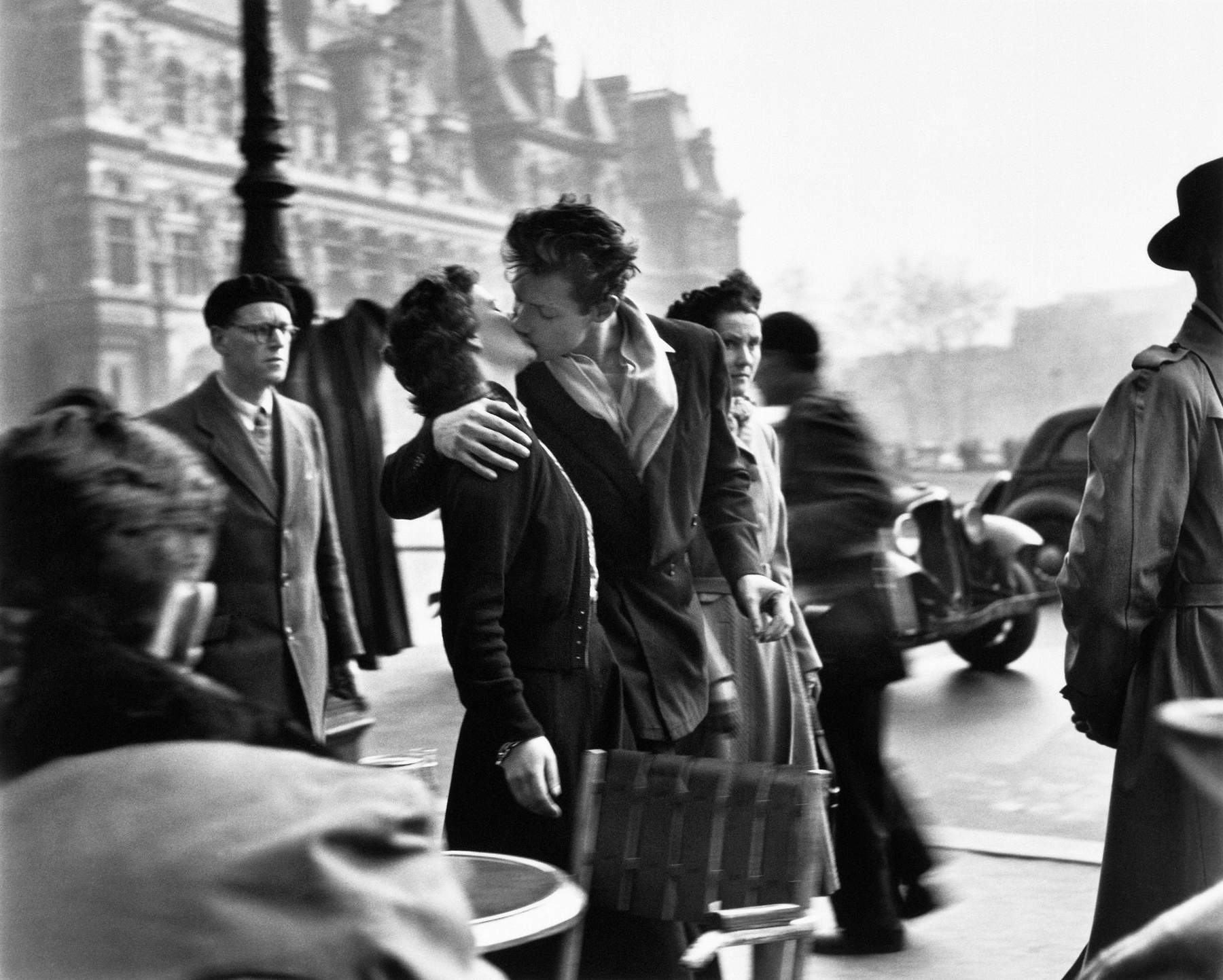
The core of selected works covers a chronological span from the 1930s to the 1960s and focuses mainly on Paris and its banlieue, territories that constitute the focus of the author’s visual research. The images document an urban everyday life observed with constant attention to the social dynamics and popular spaces of the French capital and suburban areas.
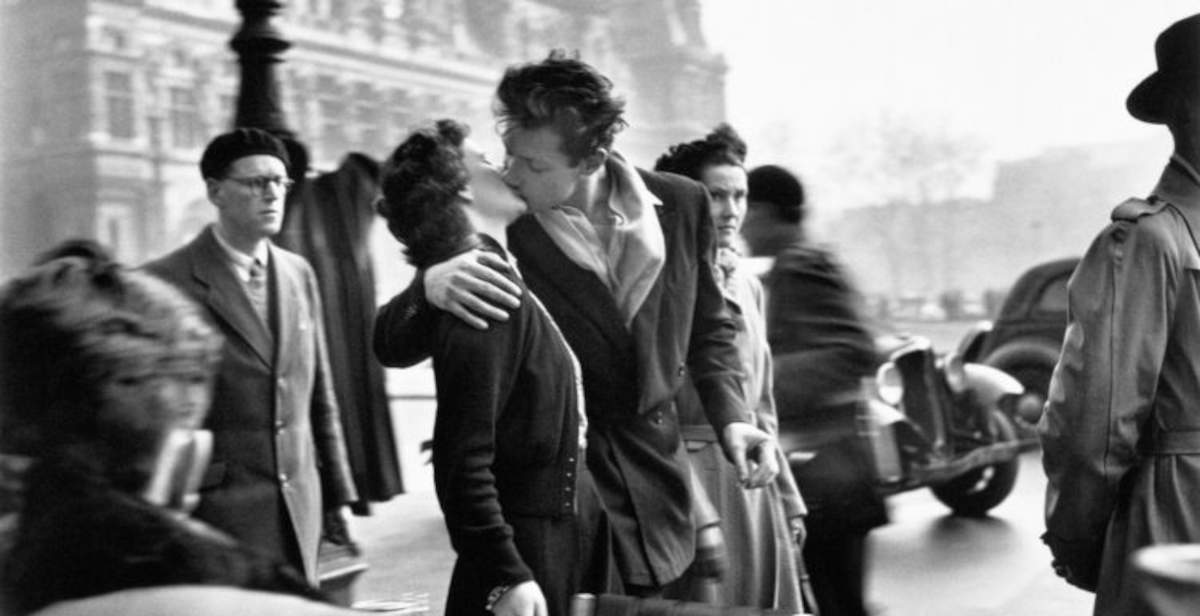
Among the works featured is Le Baiser de l’Hôtel de Ville, one of the best-known shots of twentieth-century photography, which over time has become one of the most popular images internationally. Alongside works of great renown, the exhibition includes lesser-known photographs, which restore the continuity of the author’s gaze and the consistency of his approach. The entire corpus highlights a reading of reality centered on an everyday dimension and a narrative construction that privileges the relationship between subject and environment.
Doisneau’s production is distinguished by a strong geographical concentration. The working-class neighborhoods of Paris and its suburbs constitute the photographer’s main field of investigation, which he returns to constantly throughout his career. His own home and work space of Montrouge also enters, in an indirect form, into the visual construction of the images. Compared to many contemporaries, Doisneau limited his travels, declaring a strongly rooted relationship with the city and showing a certain resistance to travel away from his usual context.
The second part of the exhibition season, scheduled from February to June 2027, will be dedicated to Hokusai and his time, curated by Francesco Paolo Campione, Marco Fagioli and Moira Luraschi, in collaboration with MUSEC - Museo delle Culture di Lugano. The exhibition focuses on Katsushika Hokusai, an artist among the greatest interpreters of the Edo period (1603-1868) and a central figure in defining the aesthetics ofukiyo-e.
The historical context in which Hokusai works coincides with the so-called golden century of Japanese polychrome woodcut, a technique that reached its full maturity at this stage. Against this backdrop, an autonomous figurative language developed, elaborated by thousands of artists active in woodcut production. The exhibition focuses on Hokusai’s role within this artistic system and his contribution to the transformation of visual imagery, which would later influence Western art as well. The period between the artist’s birth in 1760 and his death in 1849 coincides with a phase of profound stylistic and technical elaboration, marking a significant shift toward a modern dimension of artistic representation.
 |
| From Doisneau to Hokusai, at the Palazzo dei Musei in Modena, two major exhibitions dedicated |

Warning: the translation into English of the original Italian article was created using automatic tools. We undertake to review all articles, but we do not guarantee the total absence of inaccuracies in the translation due to the program. You can find the original by clicking on the ITA button. If you find any mistake,please contact us.





















 IT
IT FR
FR DE
DE ES
ES CN
CN


