





In Milan, from April 28 to May 8, 2026, takes place the exhibition Luna di loto, an exhibition project curated by Katia Bagnoli and Bruno Riva, articulated between Spazio TOMA in Via Moscova 25 and Ekadea studio in Via Plinio 42. The initiative takes the form of a diffuse itinerary dedicated to the figure of Ōtagaki Rengetsu (Kyōto, 1791-1875), a 19th-century Japanese artist, and relates a selection of his original works with contemporary interventions of a calligraphic and ceramic nature.
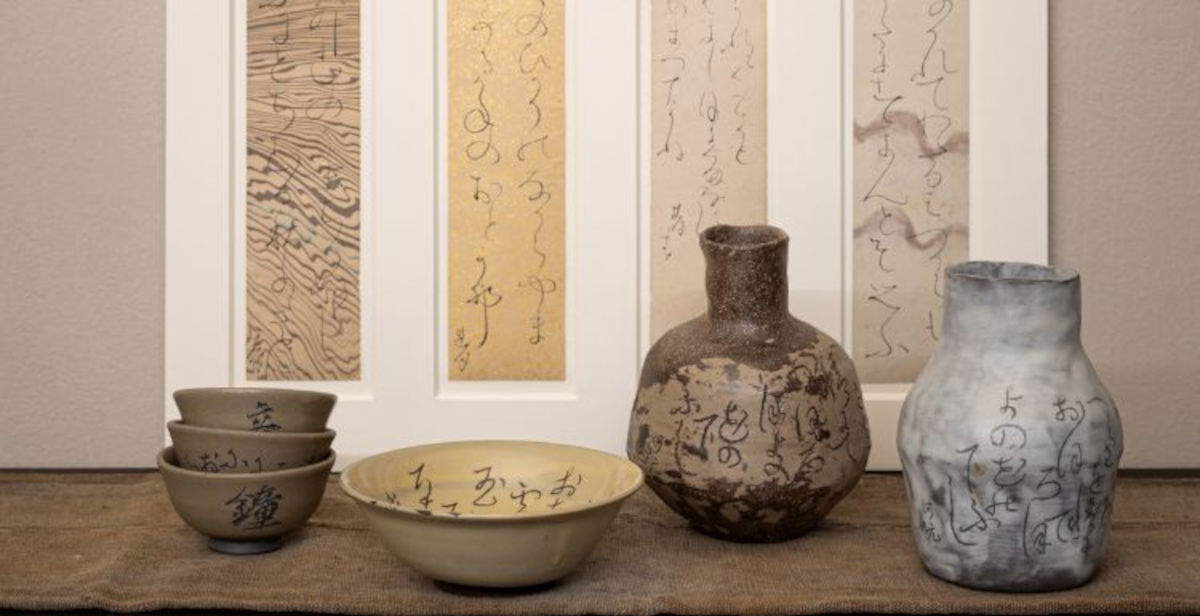
The exhibition project presents for the first time in Italy a nucleus of thirty original works by Rengetsu, a figure who worked between poetry, calligraphy and ceramics according to the aesthetic principles of wabi-sabi. This perspective, central to Japanese culture, is based on an idea of imperfect, essential beauty linked to nature, manifested through the simplicity of forms and the appreciation of impermanence. The artist’s production includes everyday objects, including bowls, tea cups and sake containers, on which are engraved waka poetic compositions, a traditional Japanese poetic form articulated in five verses.
The title of the exhibition, Lotus Moon, refers directly to the name taken by the artist after she chose the monastic life, which she undertook at age 33 following a series of family bereavements, including the loss of her children and two husbands. Rengetsu’s figure is situated in the cultural context of 19th-century Kyōto, where the artist was also active and recognized within a network of collaborations with other artistic and literary figures, including Tomioka Tessai. Her ceramic practice is distinguished by the absence of the potter’s wheel: works were shaped by hand through traditional techniques such as columbine and pinchwork, with a surface that retains direct traces of the gesture.
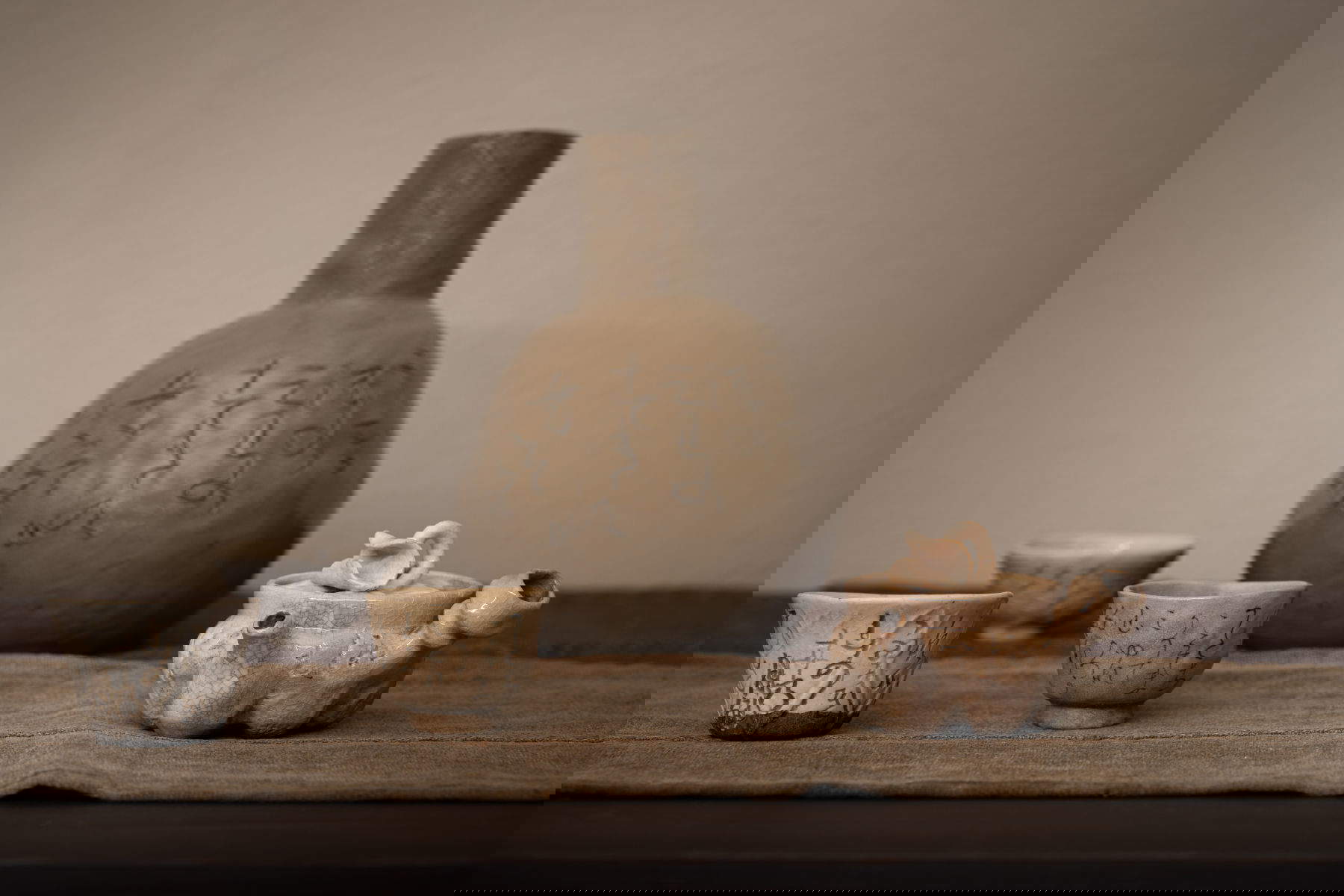
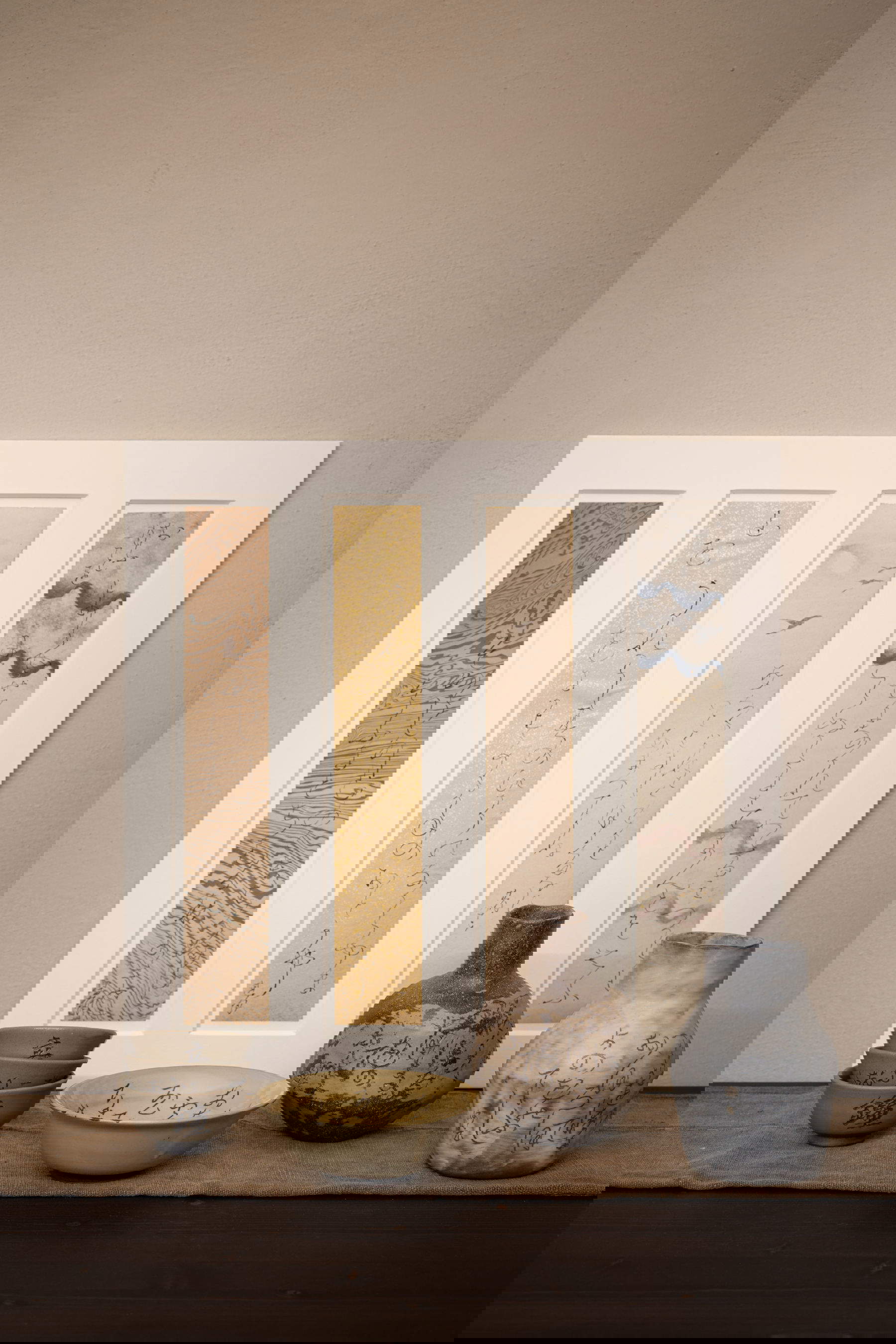
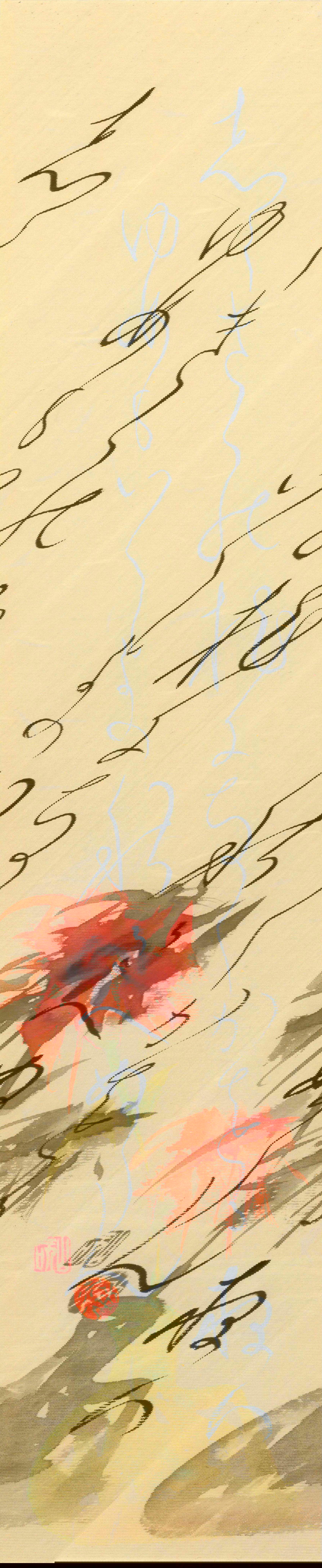
Alongside the historical works, the exhibition includes contemporary interventions by Bruno Riva, Katia Bagnoli and Ekaterina De Andreis, developed specifically for the project. The works are not configured as reproductions, but as interpretations inspired by Rengetsu’s poetic texts and aesthetic research. The dialogue between the historical and contemporary works is developed through different media, including calligraphy, painting and ceramics, with the aim of relating artistic practices that are distant in time but united by a focus on material and gesture.
The exhibition structure consists of two main venues. At Spazio TOMA, at 25 Moscova Street, the opening is scheduled for Tuesday, April 28, 2026 at 6:30 p.m. Here, original works by Rengetsu are presented along with calligraphic works by Bruno Riva, Katia Bagnoli and Elena Cristina Toma, as well as interventions by other calligraphers linked to Shodo.it. The itinerary also includes pictorial works by Shoko Okumura, Laura Serri and Claudia Verri, which are part of the visual dialogue with contemporary calligraphy. Also featured in this context are ceramics by Ekaterina De Andreis, hand-engraved by Bruno Riva and Katia Bagnoli.
The second venue, Ekadea studio at 42 Plinio St., opening April 29, 2026, at 6:30 p.m., hosts additional ceramics by Ekaterina De Andreis and a selection of calligraphic and pictorial works made on Japanese paper by Shodo.it artists and calligraphers. For the occasion, De Andreis created one hundred ceramics through traditional techniques, which were subsequently etched by Bruno Riva and Katia Bagnoli, in a manner consistent with the exhibition’s signature aesthetic.
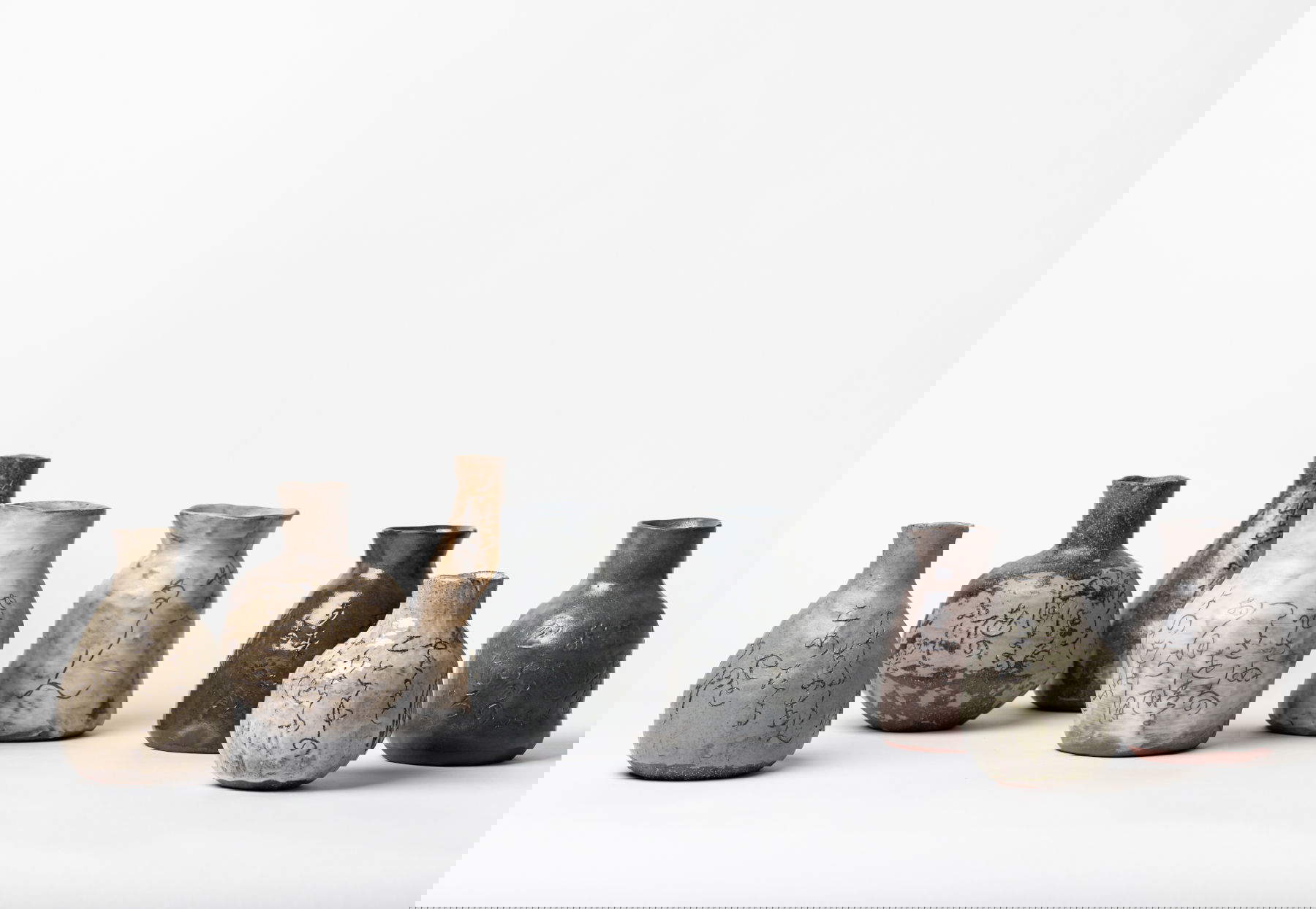
The exhibition project is preceded by a series of installations spread throughout the city starting April 8, 2026. Some works are presented at the Consulate General of Japan in Via Privata Cesare Mangili 2/4, while additional works can be seen in the window of the Toma Boutique in Via della Spiga 2. These interventions anticipate the main exhibition and contribute to the construction of a distributed urban itinerary. The entire project is conceived as an itinerary that invites a slow fruition of the exhibition spaces, according to a structure that recalls a meditative dimension.
The figure of Ōtagaki Rengetsu is restored through a reading that interweaves biographical data and artistic production. Born in Kyōto in 1791 from a secret relationship between a geisha and an official of the Iga-Ueno fiefdom, she received training in traditional Japanese arts. After a life marked by traumatic events, she chose the monastic state, becoming a prominent presence in the cultural landscape of nineteenth-century Kyōto. His activity developed in a context in which artistic practice was integrated with the literary and spiritual dimensions, resulting in a production that combines function of use and poetic writing. The exhibition catalog, published by Shodo.it, brings together more than fifty of Rengetsu’s poems translated into Italian for the first time with facing text. The editorial apparatus is part of the overall project as an additional tool for in-depth study of the artist’s poetic production and cultural context of reference.
“In a hectic time like ours,” say curators Katia Bagnoli and Bruno Riva, “this exhibition is an invitation to rediscover care, silence, and slowness; it suggests getting closer to Rengetsu’s ancient and very modern voice, to be touched by his poetic sobriety, and to discover, through works spanning two centuries, the deep breath of an aesthetic that continues to speak to the heart. Crossing cities, cultures, and languages, this encounter between Japanese and Italian artists, between past and present, renews the subtle web of philosophical and aesthetic exchanges that has united East and West for centuries.”
A Japanese poet, calligrapher, ceramicist and painter, Ōtagaki Rengetsu was born in Kyōto, the ancient capital of Japan, in the spring of 1791. She comes into the world as Nobu, the secret daughter of a geisha and a high administrator of the Iga-Ueno fiefdom. Shortly after her birth she is adopted by Ōtagaki Mitsuhisa (Banzaemon), a clerk at the Chion-in, an important temple belonging to the Pure Land (Jōdo-shū) school of Buddhism. Around the age of eight she was given a stint at Kameoka Castle in the Tanba region, where she received training in poetry, calligraphy and martial arts. Returning to Kyōto about ten years later, she marries the young samurai Mochihisa. The marriage is marked by numerous bereavements: her three children die at an early age, and in 1815 her husband also passes away. In 1819 she contracts a second marriage, but is widowed again after four years.
Family losses lead Nobu, at age 33, to the decision to shave her head and take monastic vows, taking the name Rengetsu, “lotus moon.” He settles near the Chion-in temple together with his adoptive father, who has since also taken up religious life. Upon Mitsuhisa’s death in 1832, Rengetsu began to support himself through the production and sale of ceramics on which he engraved waka poems, a classical Japanese poetic form structured in five lines according to the syllabic pattern 5-7-5-7-7.
The ceramic objects, characterized by a strong formal essentiality and the presence of poetic writing, constitute a coherent synthesis of function of use, craft gesture and literary practice. The combination of hand modeling, calligraphic engraving and poetic content gives the works a recognizable identity in the artistic landscape of the period. Her creations received considerable appreciation even in her lifetime, to the point that she was forced to make frequent changes of residence to escape the numerous production demands. Over the course of her long existence she composed a large body of poems, which she transcribed and integrated directly into ceramic surfaces.
His work also developed through collaborations with young artists, including Tomioka Tessai, who was destined to become a central figure in Kyōto’s artistic-literary milieu. In this context, Rengetsu takes a leading role for a generation of artists active between word, image and matter. Ōtagaki Rengetsu established himself as an important presence in the cultural landscape of nineteenth-century Japan. Her figure is studied today as an example of female creative autonomy and the integration of artistic practice, poetic writing, and the spiritual dimension.
 |
| Lotus moon in Milan: dialogue between Ōtagaki Rengetsu and contemporary artists |

Warning: the translation into English of the original Italian article was created using automatic tools. We undertake to review all articles, but we do not guarantee the total absence of inaccuracies in the translation due to the program. You can find the original by clicking on the ITA button. If you find any mistake,please contact us.


















 IT
IT FR
FR DE
DE ES
ES CN
CN


