





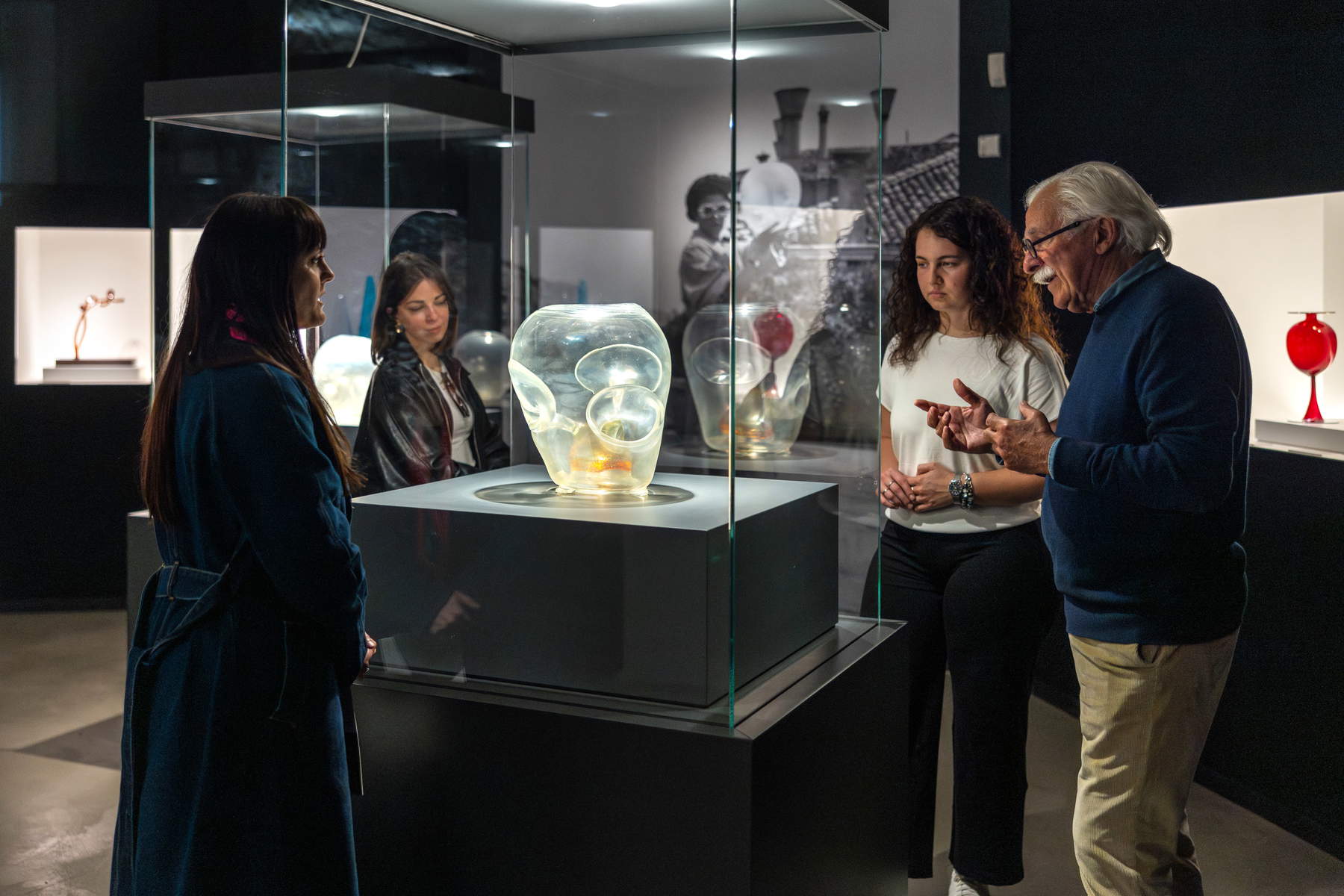
From April 19 to November 22, 2026, The Glass Rooms in Venice, Island of San Giorgio Maggiore, host the exhibition 1948-1958 Murano Glass and the Venice Biennale, the third chapter of the project dedicated to the presence of Murano glass at the Biennale. The initiative, promoted by the Giorgio Cini Foundation and Pentagram Stiftung, is curated by Marino Barovier and focuses on a crucial decade in the history of glass art.
The exhibition starts in 1948, the year of the resumption of the Venice Biennale after the pause imposed by World War II, and extends to the late 1950s, spanning editions XXIV to XXIX. It is a period marked by extraordinary creative vitality, in which Murano once again established itself as a center of international excellence, in tune with the climate of reconstruction and the emergence of design culture.
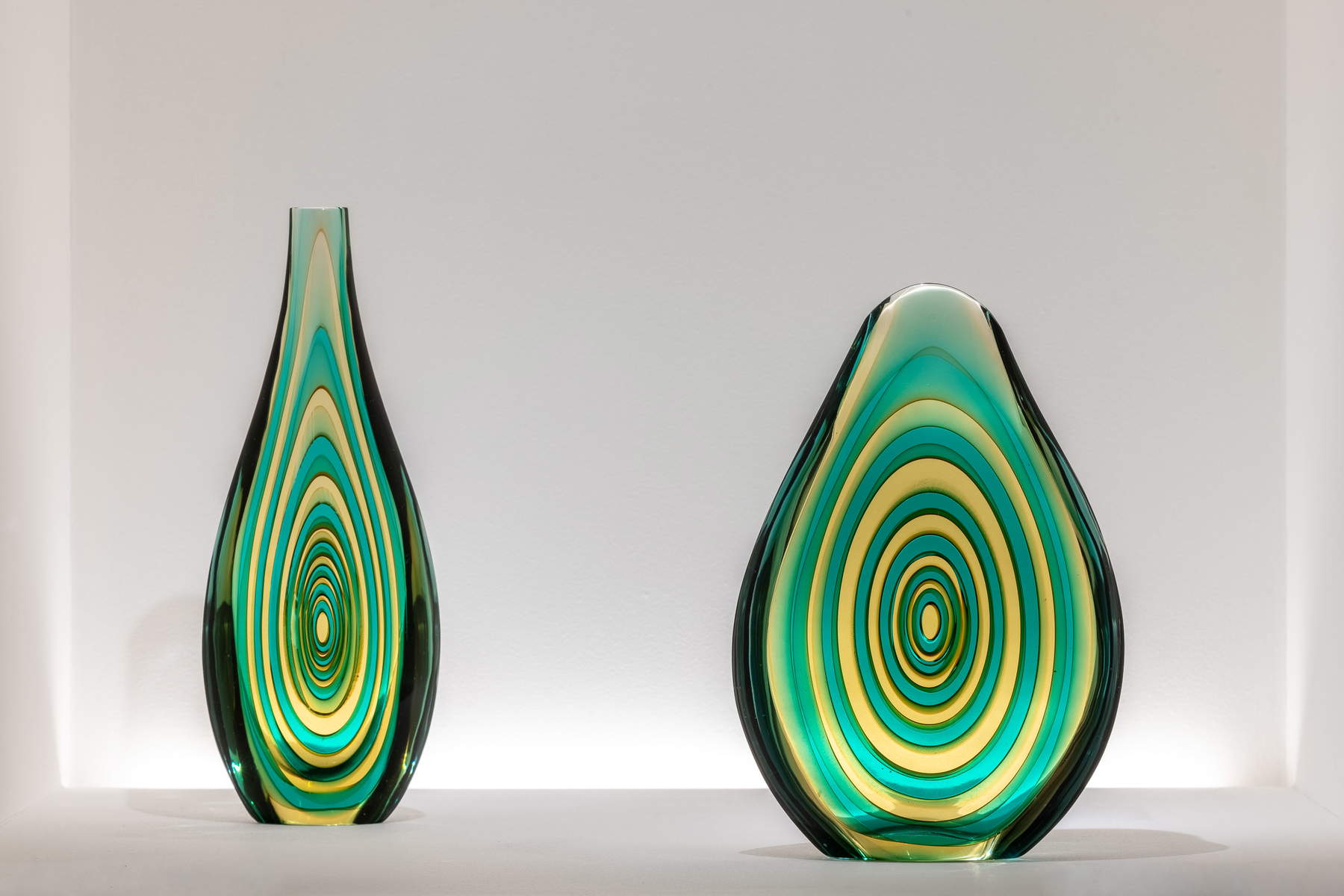
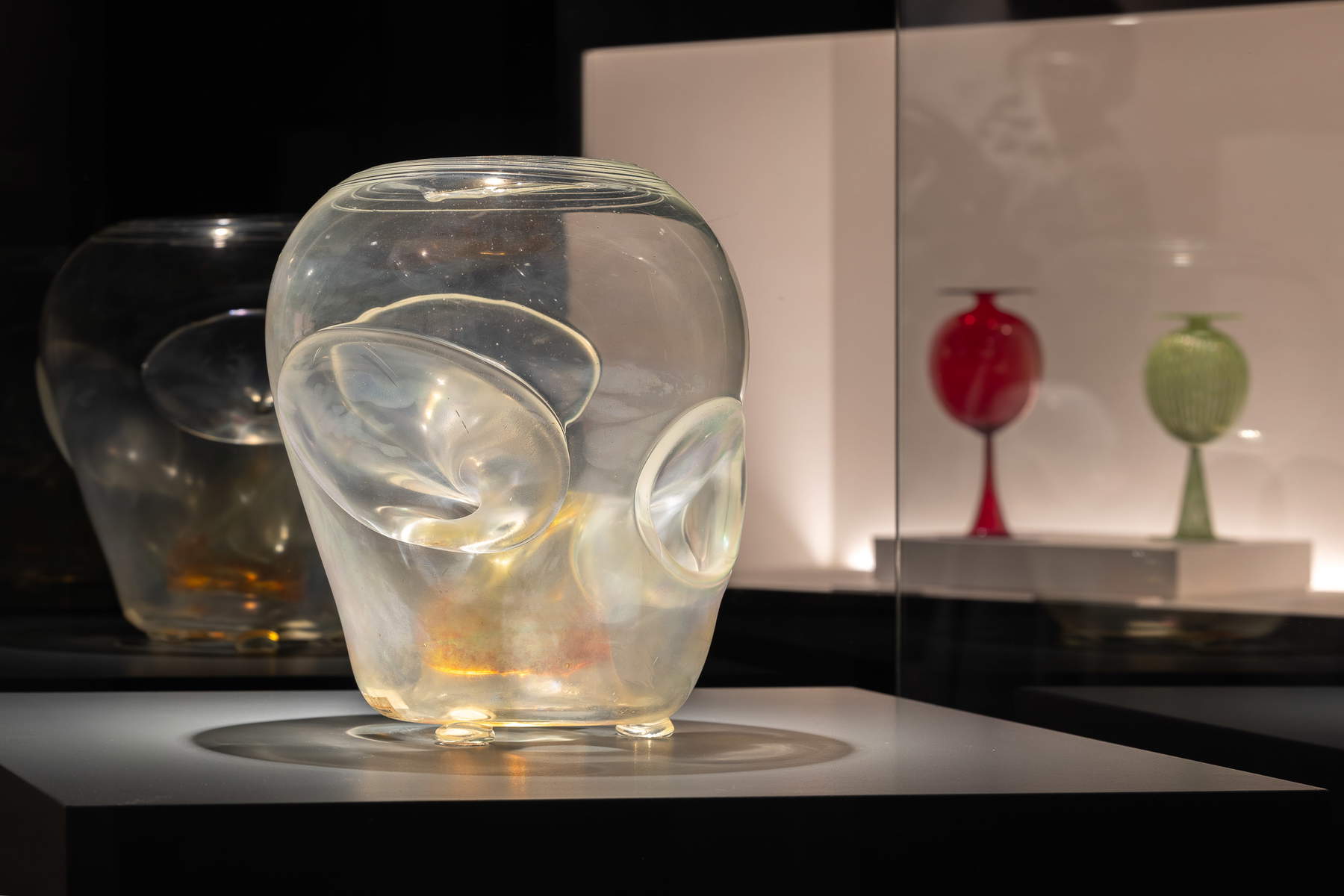
The exhibition brings together more than 160 works, offering a broad and articulate overview of a season defined as one of the most fertile in Murano production. The objects on display testify to a phase of great expressive freedom, characterized by the reinterpretation of traditional techniques and experimentation with forms, materials and colors. They alternate between transparent and heavy submerged glass, light blown work and solid plastic compositions, with particular attention to chromatic effects and the rendering of materials.
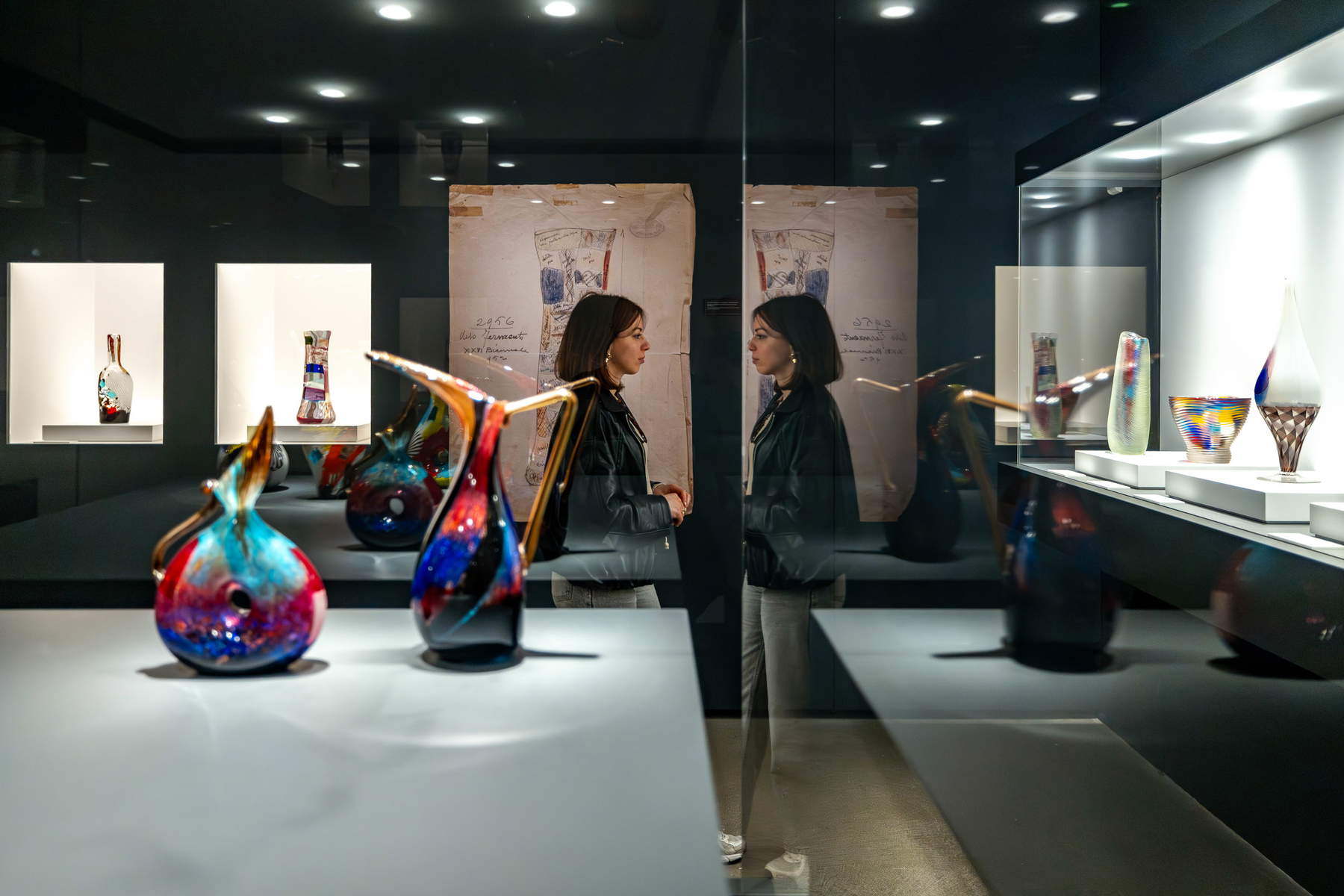
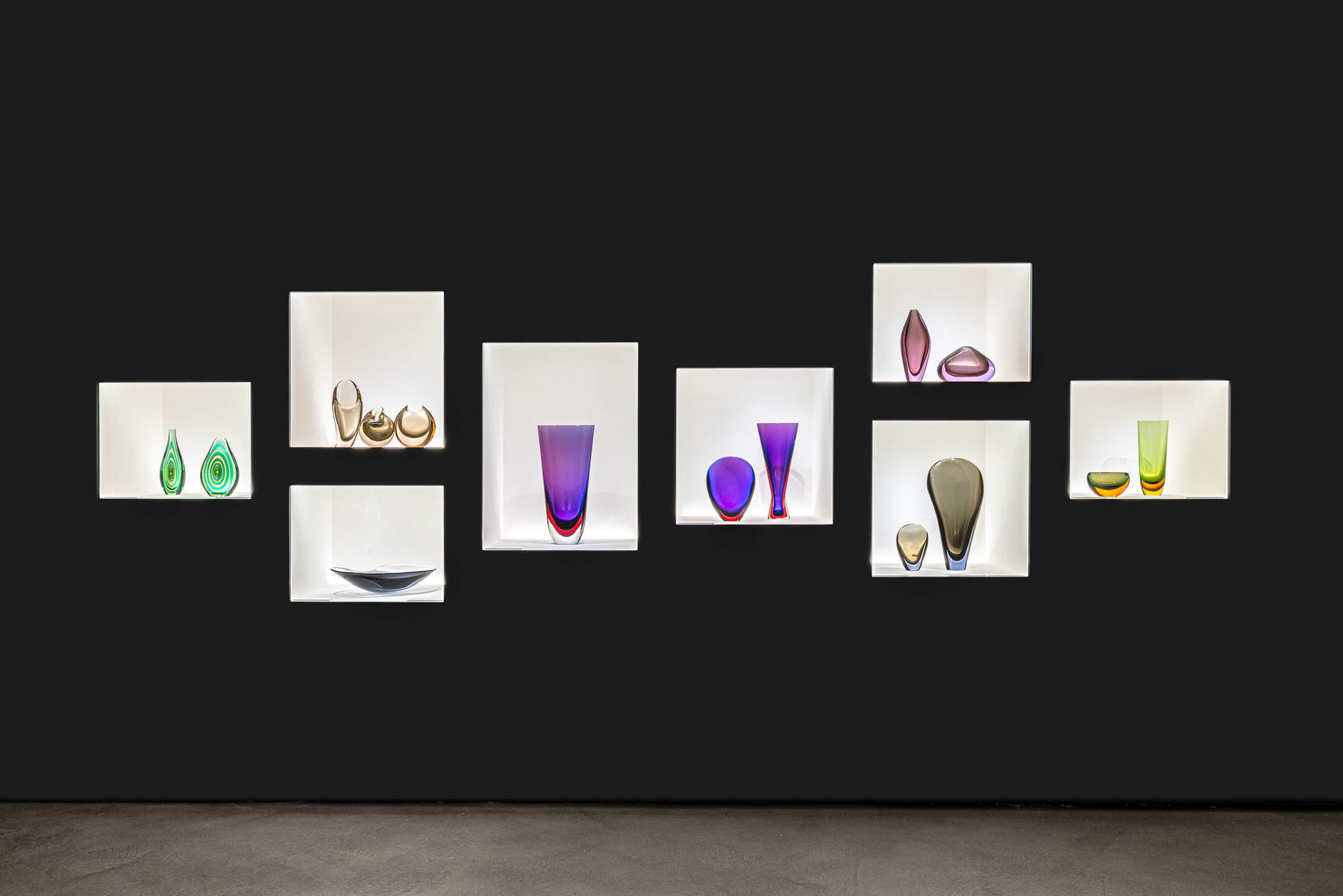
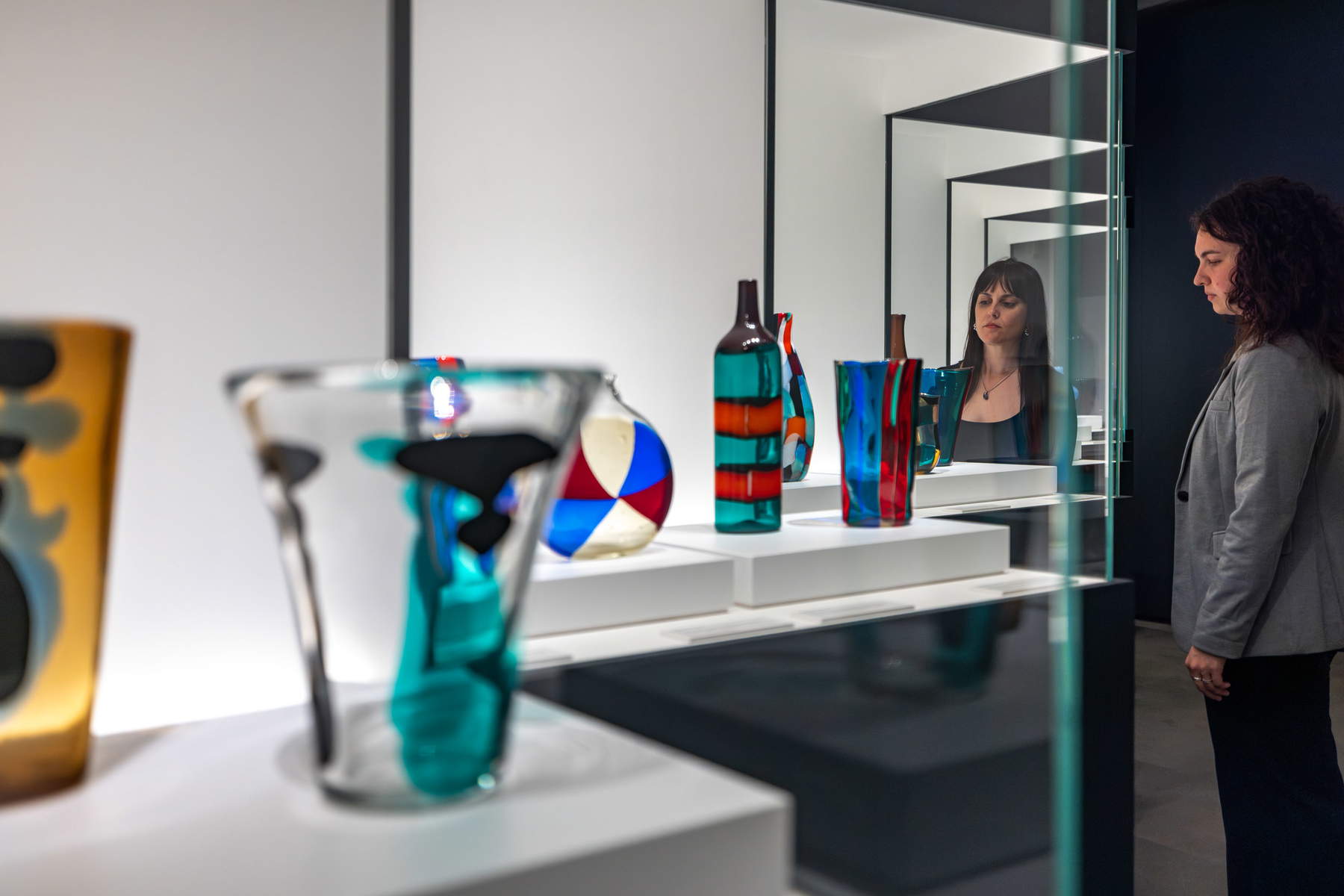
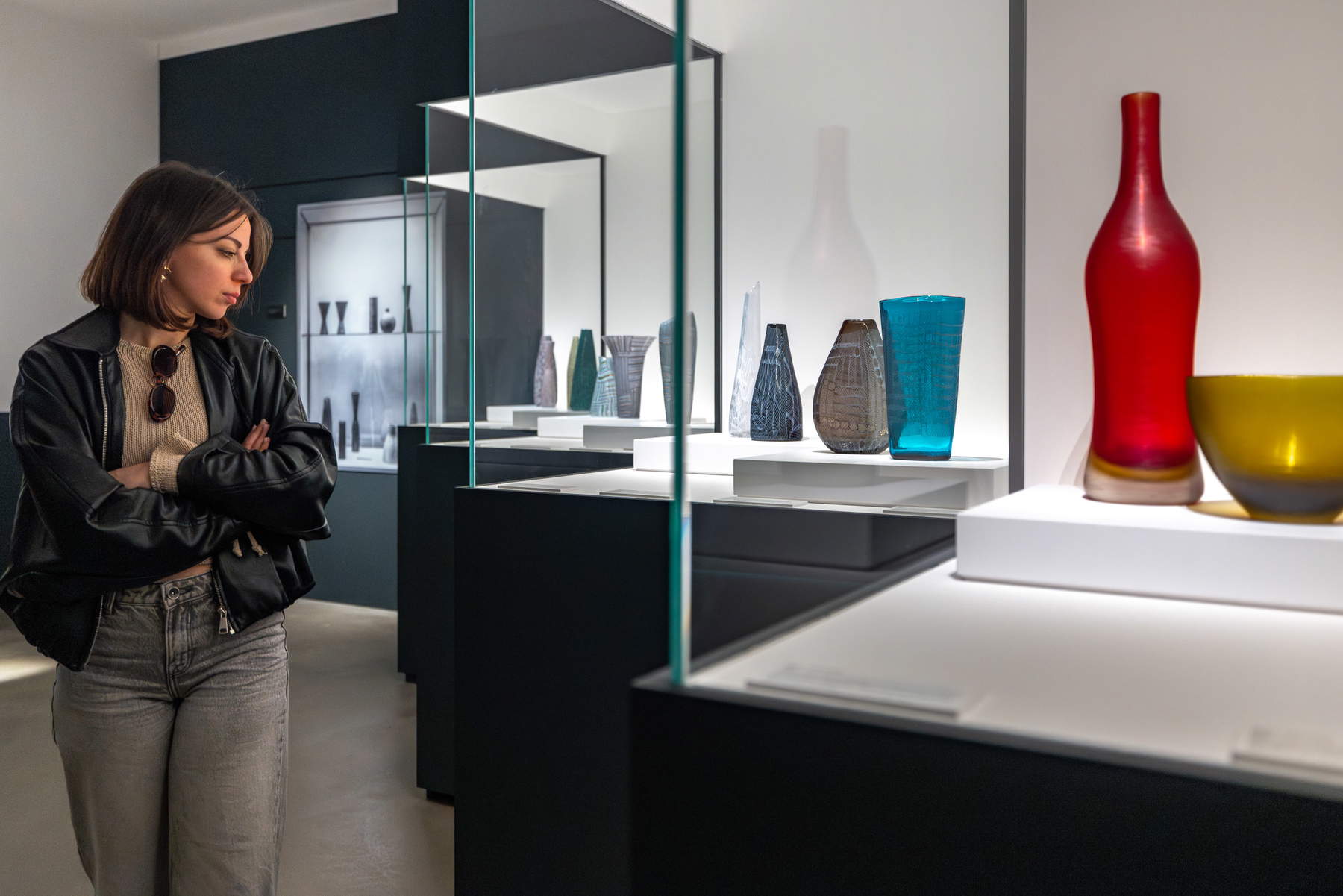
The works present now rigorous forms, influenced by Nordic design, now softer and more irregular, while some creations are distinguished by a marked sculptural character. In all cases, a tension toward innovation emerges, resulting in continuous formal and technical research.
The context of the Biennale played a decisive role in this process. Beginning in 1948, the Venice Pavilion, built in 1932 for decorative arts, once again became a central space for the presentation of Murano productions. Thanks to collaboration with the Istituto Veneto per il Lavoro and the contribution of figures such as Giuseppe Dell’Oro and Rodolfo Pallucchini, the event offered a privileged showcase for the island’s kilns. The exhibitions of the 1950s, culminating in the great Murano Glass Exhibition of 1952, helped consolidate Murano’s international prestige. On these occasions, glassworks demonstrated a renewed ability to interpret tradition in a contemporary key, offering objects that met the aesthetic and functional needs of the time.
Among the protagonists of this season were some of Murano’s leading furnaces, including Venini, AVEM, Barovier & Toso and Seguso Vetri d’Arte, alongside the likes of Aureliano Toso and F.lli Toso. Alongside the historic companies, new businesses also emerged, such as Gino Cenedese & C., founded in 1946, and workshops specializing in engraving and decoration, including S.A.L.I.R. and that of Francesco Andolfato.
Alongside the kilns, a key role is played by artists and designers who help define an innovative language. These include Alfredo Barbini, Archimede Seguso, and Vinicio Vianello, as well as figures such as Ercole Barovier and Flavio Poli, protagonists of important experiments. Ercole Barovier, at the helm of Barovier & Toso, presented at the 1948 Biennale the Corinto and Damasco series, characterized by cups made with alternating canes and enriched with gold leaf. These works represented a refined reinterpretation of traditional techniques, with articulated and dynamic forms that anticipated later research.
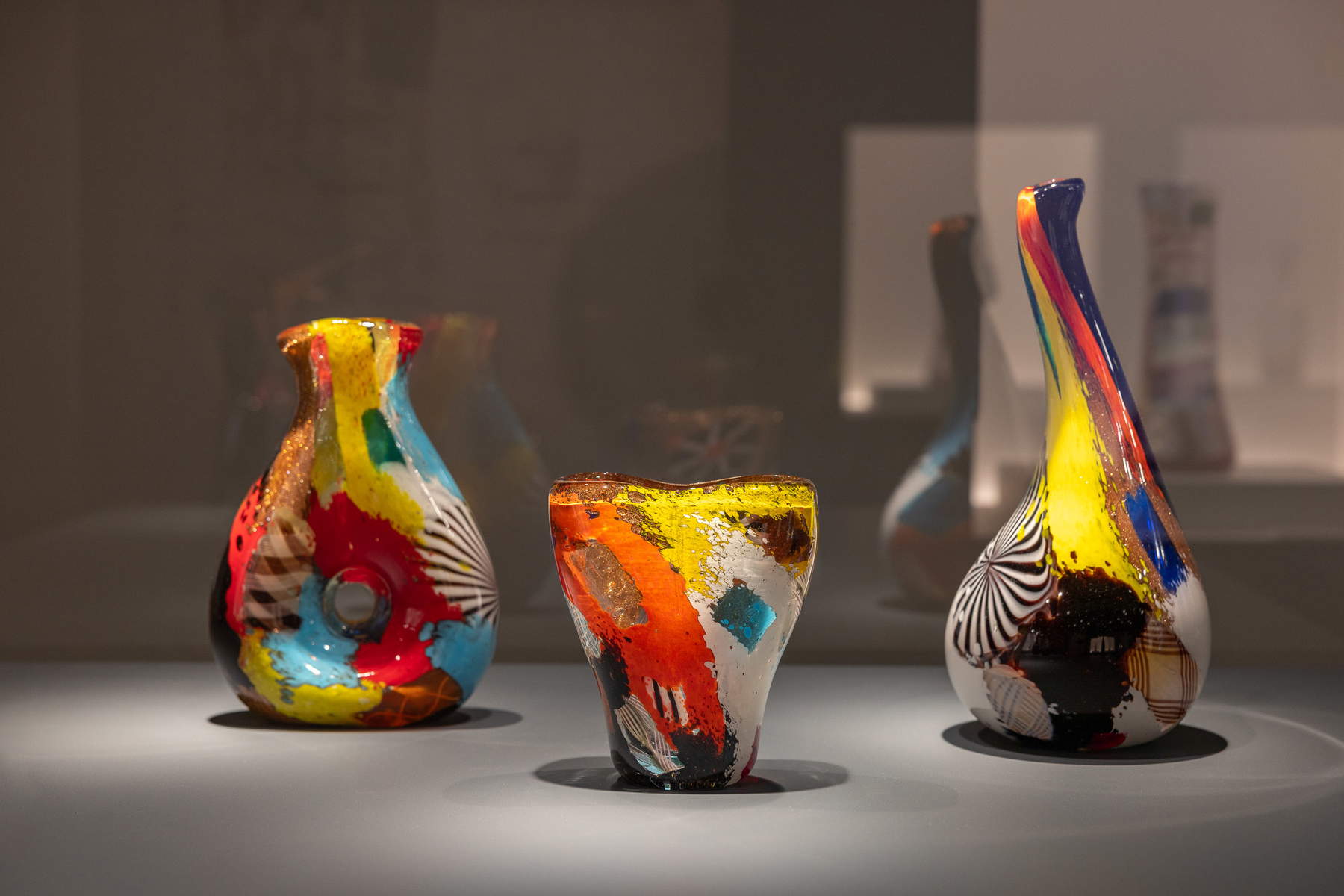
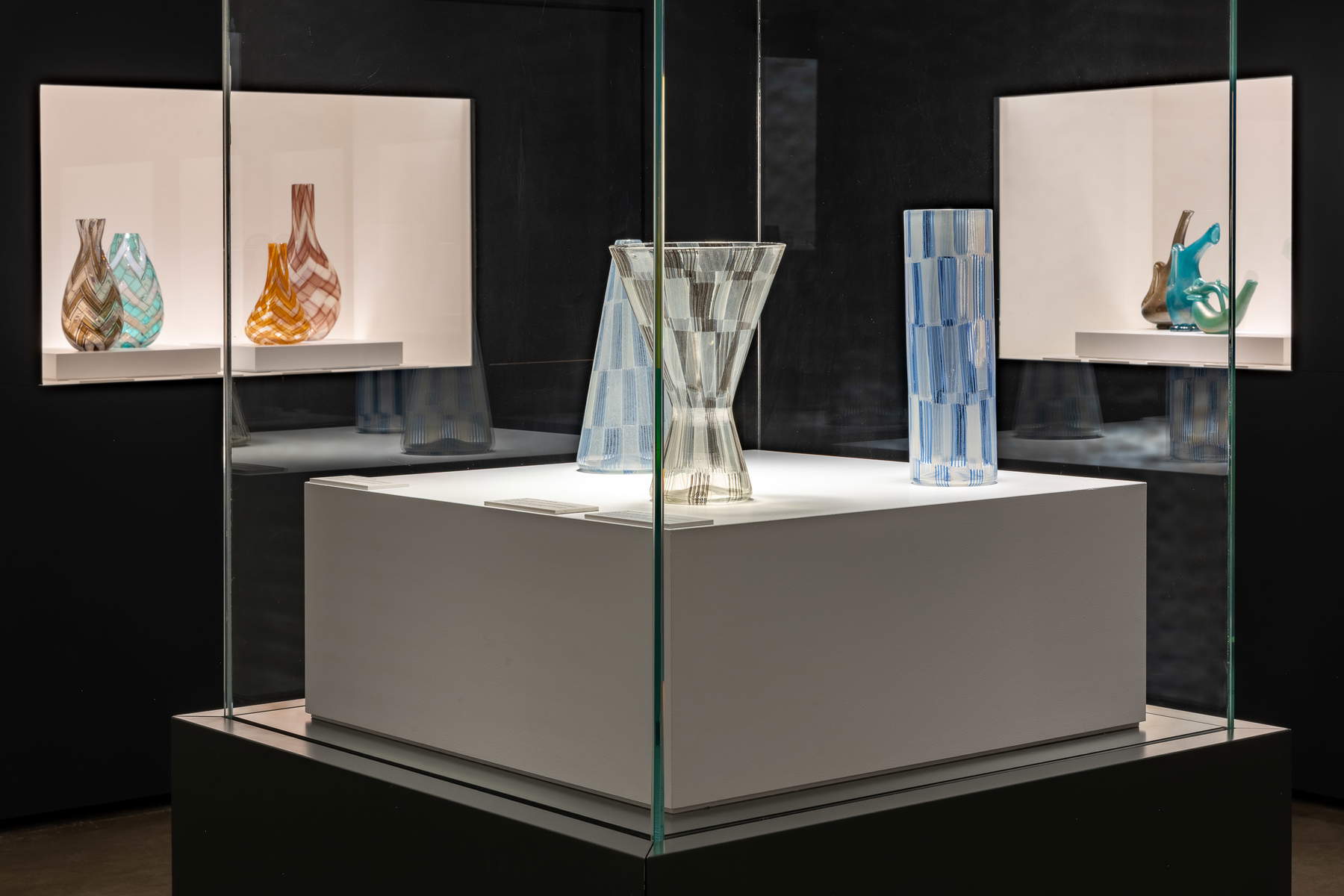
Innovative use of traditional elements, such as canes and murrine, is also found in Aureliano Toso’s creations designed by Dino Martens. His works, made with inclusions of glass fragments, grits and decorative inserts, feature irregular polychrome surfaces that emerge on transparent backgrounds, creating visually striking compositions. Prominent among them is the “Wizard’s Bottle,” an emblematic example of the research conducted in those years.
Different but equally significant is the work of Flavio Poli for Seguso Vetri d’Arte, who experimented with semi-opaque reeded glass with striped textures and gilded surfaces, as well as a series of thick submerged glass, often characterized by organic forms and sophisticated color effects.
Overall, the exhibition aims to restore the image of a decade in which Murano was able to make a decisive contribution to the renewal of decorative arts after World War II. Participation in the Biennale represented a fundamental moment of international comparison and visibility, allowing the furnaces to assert their identity in a rapidly changing context.
|
| Murano glass at the Venice Biennale, at the Stanze the exhibition on the decade 1948-1958 |

Warning: the translation into English of the original Italian article was created using automatic tools. We undertake to review all articles, but we do not guarantee the total absence of inaccuracies in the translation due to the program. You can find the original by clicking on the ITA button. If you find any mistake,please contact us.






















 IT
IT FR
FR DE
DE ES
ES CN
CN


