





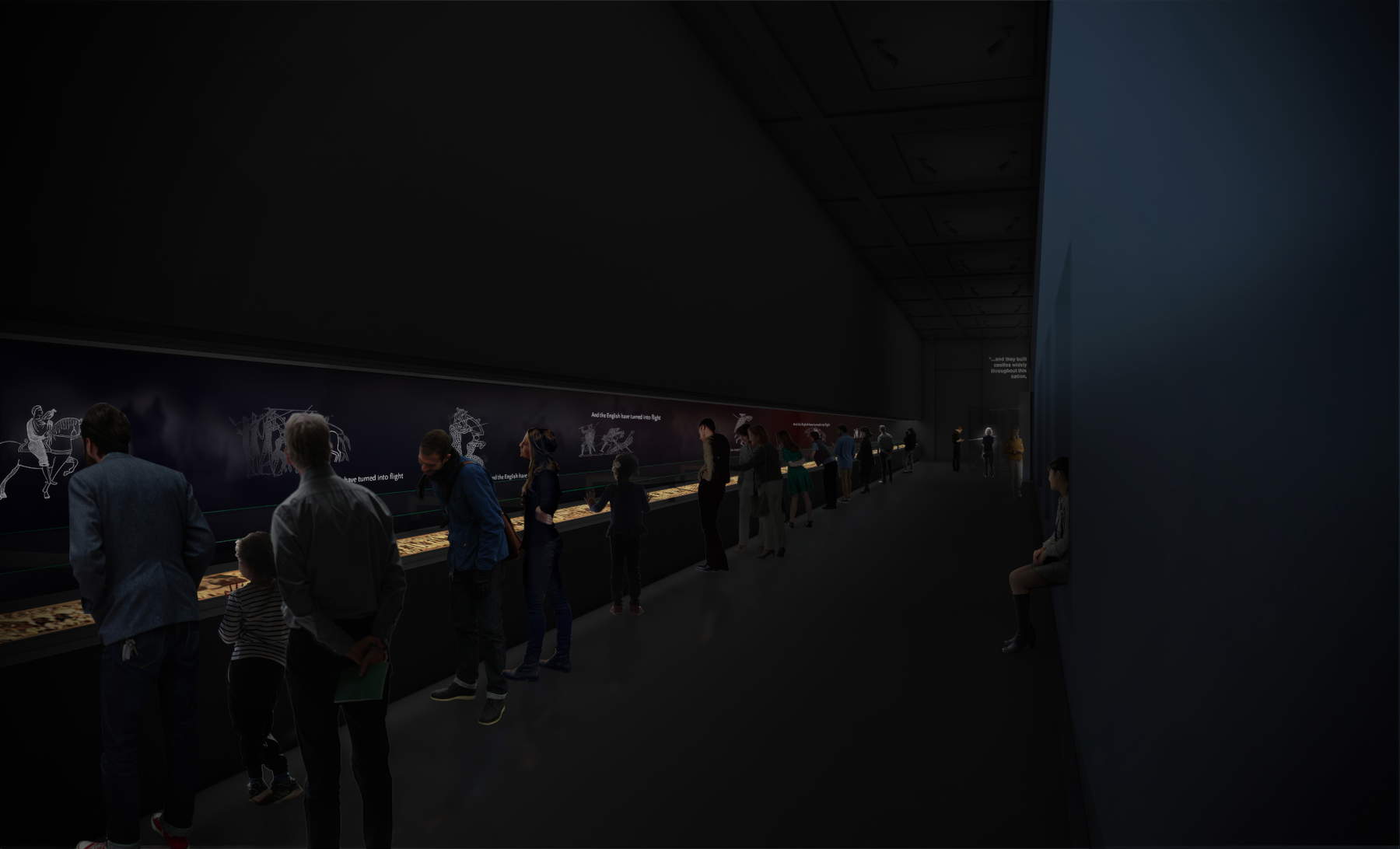
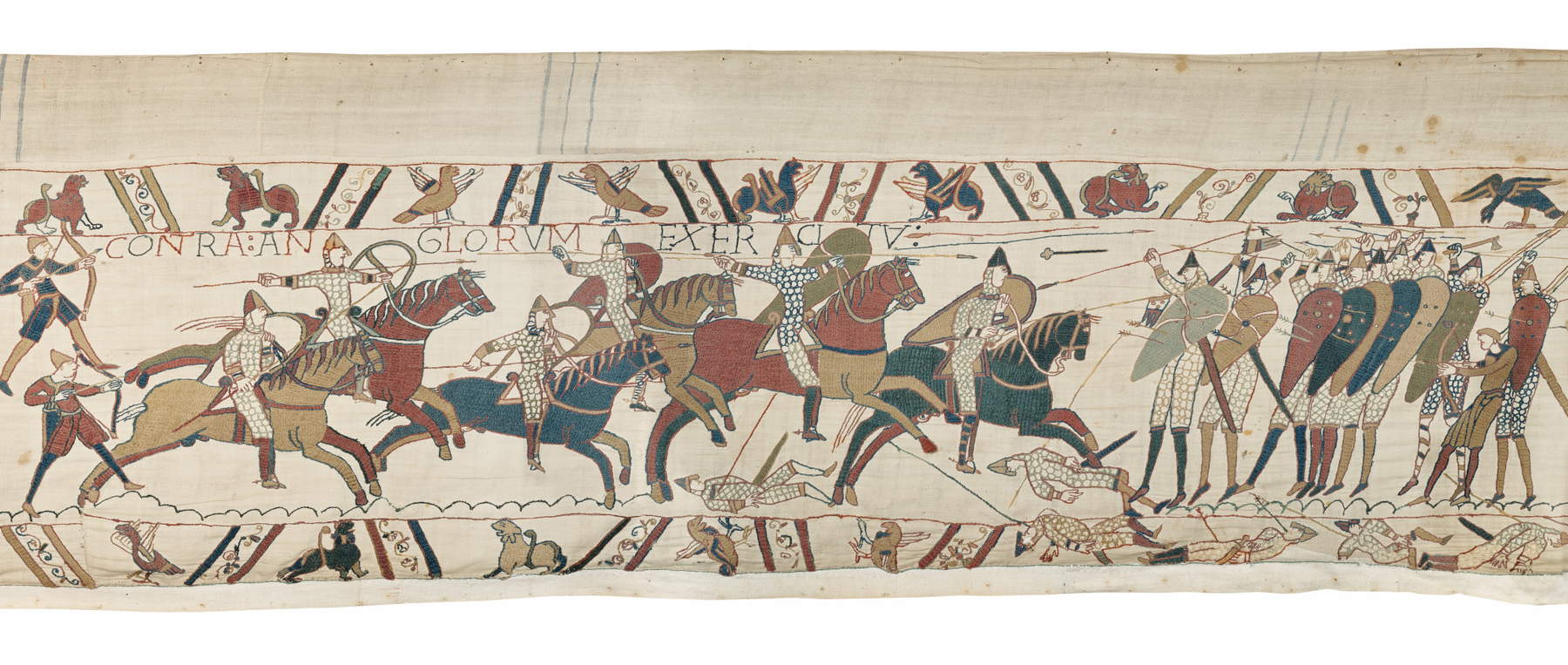
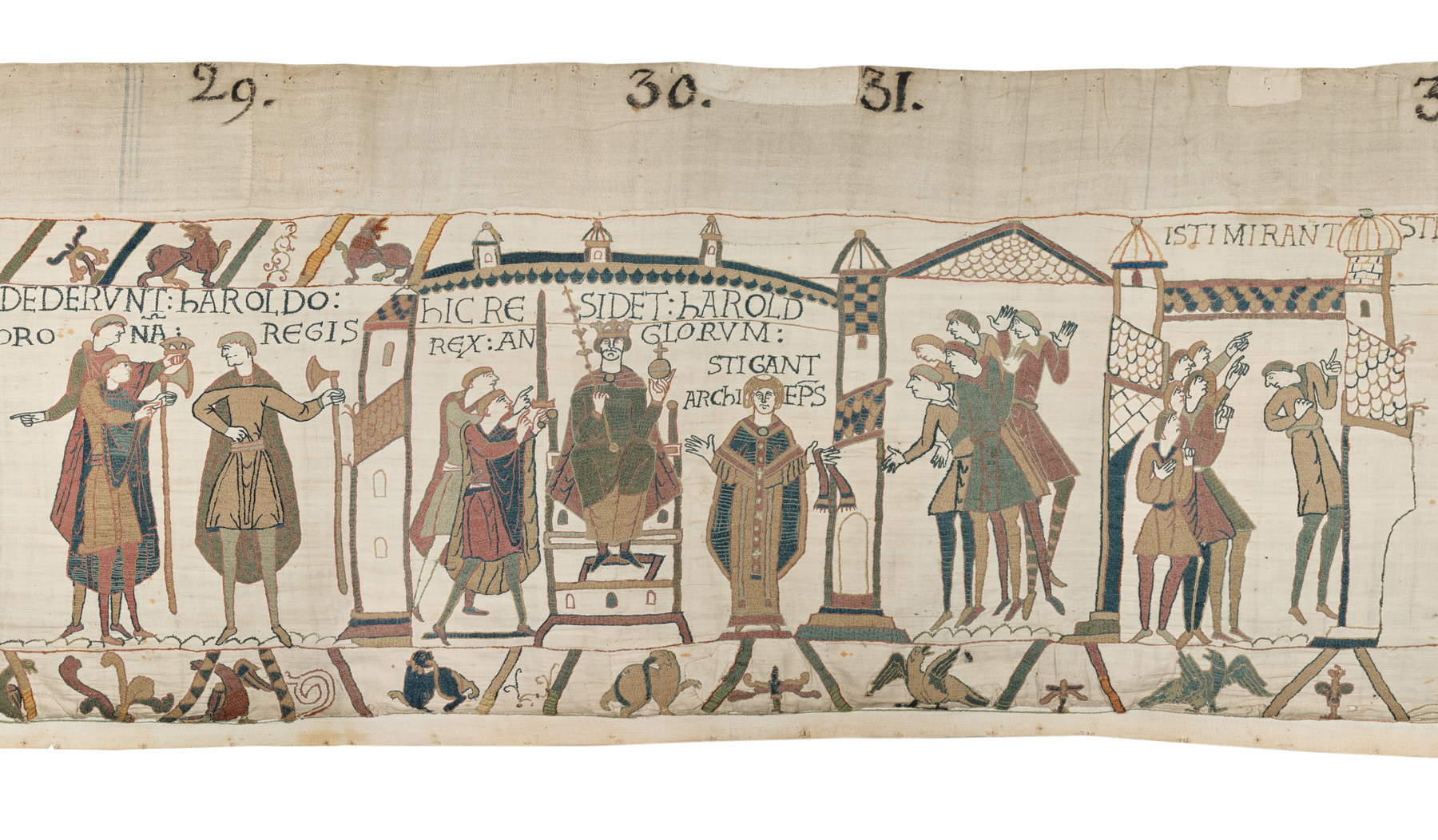
The British Museum in London has announced the first details of what has already been dubbed the exhibition of the century, which will see the display of the famous Bayeux Tapestry for the first time in the UK, from September 10, 2026 to July 11, 2027, at the Sainsbury Exhibitions Gallery (Room 30). Produced thanks to the support of Igor Tulchinsky, the exhibition will give visitors the opportunity to view the Bayeux Tapestry in a completely new way: arranged horizontally and presented in one continuous piece within a specially designed vitrine. In previous permanent exhibitions, in fact, the work had always been displayed vertically and, from 1700 to 1842, was generally unrolled only for scholars and academics.
Theflat display will allow the extraordinary extent of this exceptional tapestry, some 70 meters long, to be fully grasped, while also offering new ways of reading it through digital tools designed to deepen its understanding and historical context.
The exhibition will be enriched by objects from the museum’s collections and important loans from British and European institutions, with the aim of placing the Tapestry in the broader context ofmedieval England and the events surrounding the Norman conquest.
Among the materials on display is a 1060 charter of Edward the Confessor: a document, written in Latin and Old English, that bears the signatures of several figures depicted in the Tapestry, including King Edward, Queen Edith, Archbishop Stigand, Earl Harold II and his brother Gyrth, both of whom are depicted in the Tapestry being killed at the Battle of Hastings.
The illuminated manuscript Junius II, from the Bodleian Libraries of the University of Oxford, will also be on display. The manuscript, which narrates biblical episodes, would likely have provided inspiration to the creators of the Tapestry in the depiction of clothing, vessels and objects of everyday life. Made likely in Canterbury around the year 1000, the manuscript would have been available to the artists involved in designing the work.
To deepen the immediate impact of the Norman conquest, the exhibition will also include the so-called Chew Valley Treasure, a collection of silver pennies belonging to Harold II and William I of England. The treasure, on loan from the South West Heritage Trust and Somerset Council ’s museum collection with support from the National Lottery Heritage Fund and theArt Fund, was probably hidden shortly after the Norman conquest during revolts against William’s rule in southwest England.
Among the most significant documents is a charter issued by William I in 1067, shortly after his accession to the throne, to the citizens of London, now preserved at the London Archive. Written in Old English, the language of the newly conquered people, it promised respect for the laws and customs of the reign of Edward the Confessor, offering a reassuring image that nevertheless contrasted with the political and social tensions of the period.
Tickets for this approximately 40-minute visit will be available from July 1, 2026 on the British Museum’s website, with prices ranging from £25 to £33 depending on the day and time chosen. To encourage access for schools, dedicated admissions will be provided each week, while children under 16 will be able to enter free of charge when accompanied by an adult. Tickets will be sold in stages: the first tranche, scheduled for July, will cover visits between September and December 2026; additional tranches will then go on sale in October and January for dates between January and March and April to July 2027, respectively.
The British Museum’s membership program, available from £82, will also include two admissions to the exhibition during the exhibition period (with discounts for subsequent visits), as well as access to other paid exhibitions, the British Museum’s magazine, member spaces, and a 10 percent discount in museum stores.
“The Bayeux Tapestry is one of the most important works of the medieval world that has come down to us and an extraordinary record of a crucial moment in our history,” said Nicholas Cullinan OBE, director of the British Museum. “Ever since we announced this historic loan, we have been working to ensure that as many people as possible could see it, and we are thrilled to welcome the first visitors on September 10.”
“One of the reasons I decided to sponsor this very important exhibition on British history was to allow art to be admired and to change the lives of those who view it. The tapestry demonstrates extraordinary craftsmanship. The symmetries and proportions reveal accuracy. Its chronological structure reveals something equally sophisticated: a modern sense of causality and sequence. It is a narrative of decisions made under conditions of uncertainty, of commitments made before their consequences can be known. I hope the Tapestry inspires us all to recognize the value of what endures and to keep dreaming about what we might build, preserve and make possible for future generations,” said Igor Tulchinsky, founder, president and CEO of WorldQuant.
“The Bayeux Tapestry exhibition at the British Museum offers visitors a unique opportunity to become part of history. This will be a new and exciting presentation of the history of the Tapestry: the events leading up to the Norman Conquest, an incredible moment that changed England forever,” added Michael Lewis, curator of the exhibition. “Important loans will help visitors fully appreciate the Tapestry, explaining why and how it was made. In addition, its account of events, though ambiguous, probably intentionally, offers a unique perspective on the past. The Norman conquest did not only impact kings, dukes and elites, but also ordinary people, including those who made this work of art.”
|
| The Bayeux Tapestry will be on display at the British Museum from September 2026. Some previews from the museum |

Warning: the translation into English of the original Italian article was created using automatic tools. We undertake to review all articles, but we do not guarantee the total absence of inaccuracies in the translation due to the program. You can find the original by clicking on the ITA button. If you find any mistake,please contact us.



























 IT
IT FR
FR DE
DE ES
ES CN
CN


