





From the earliest vision-correcting devices to accessories that have shaped the history of fashion, all the way to eyewear that has become instantly recognizable on the big screen: the history of eyewear is also a story of culture, creativity, and identity. This is the central theme of *The Lens of Time* — Eyewear from Its Origins to the Cinema, the exhibition that, following its debut in Venice and its appearance at the MIDO | Eyewear Show in Milan, arrives in Rome at Palazzo Piacentini, headquarters of the Ministry of Enterprise and Made in Italy, from October 14 to 30, 2026. The project, launched in 2025 to highlight the history of eyewear and one of the most representative sectors of “Made in Italy,” is sponsored by ANFAO —the National Association of Optical Goods Manufacturers—in collaboration with the Eyewear Museum in Pieve di Cadore and under the patronage of the Ministry. The curatorship is entrusted to Alessandra Cusinato and Daniela Zambelli, while the exhibition design is the work of Roberto Casanova Rosolo.
This new stop in Rome introduces a special section dedicated to cinema, created in collaboration with Steve Della Casa, curator of the National Film Archive at the Experimental Center of Cinematography, film critic, and author. Through photographs, stills from films, and audiovisual content, the exhibition explores the role of eyewear in character development and the collective imagination.
The exhibition is divided into five sections and weaves a narrative that spans different eras and artistic languages. Original eyewear, historical documents, photographs, scientific texts, screenings, and audiovisual materials guide visitors through the technical, social, and cultural transformations of this object.
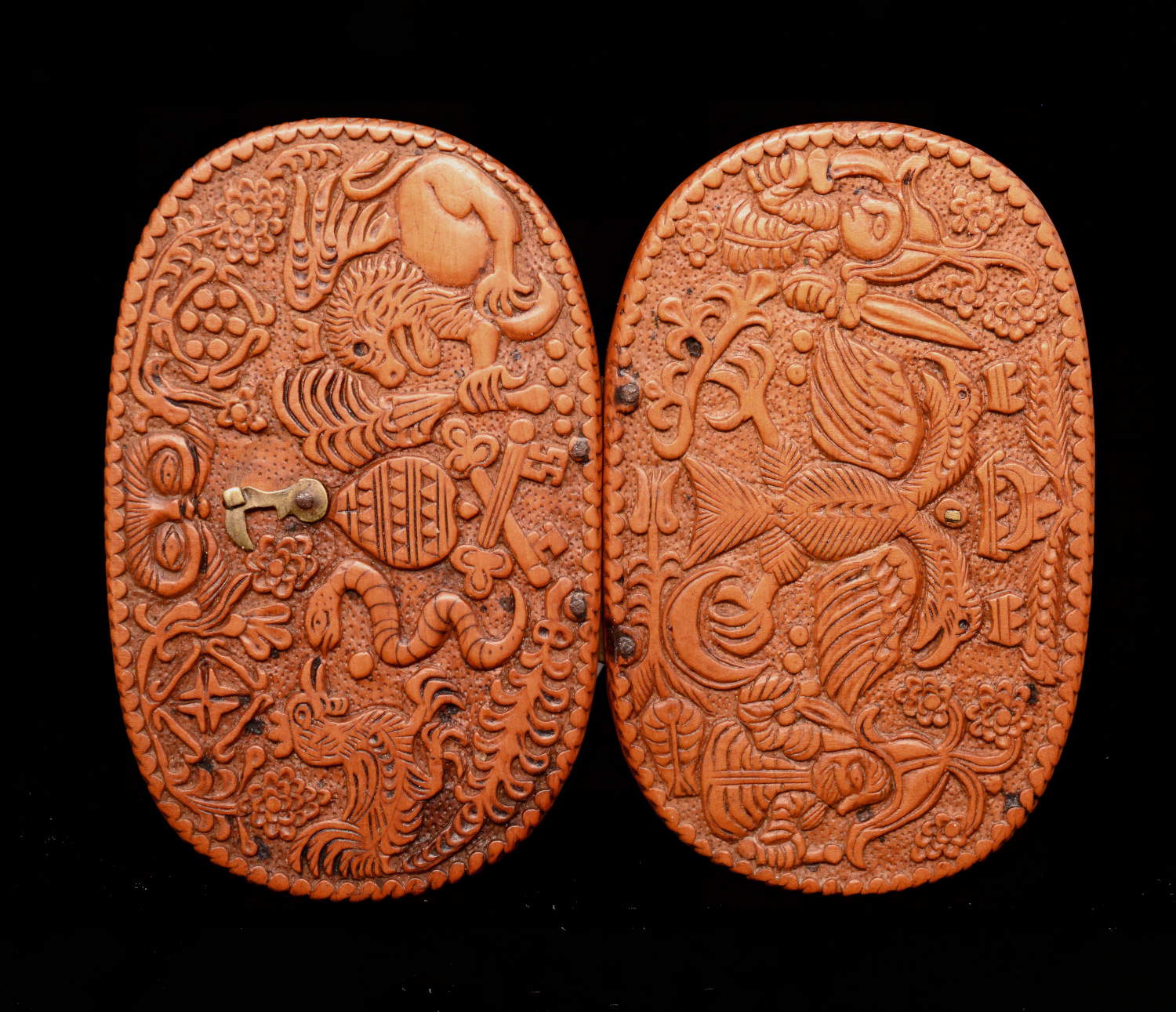
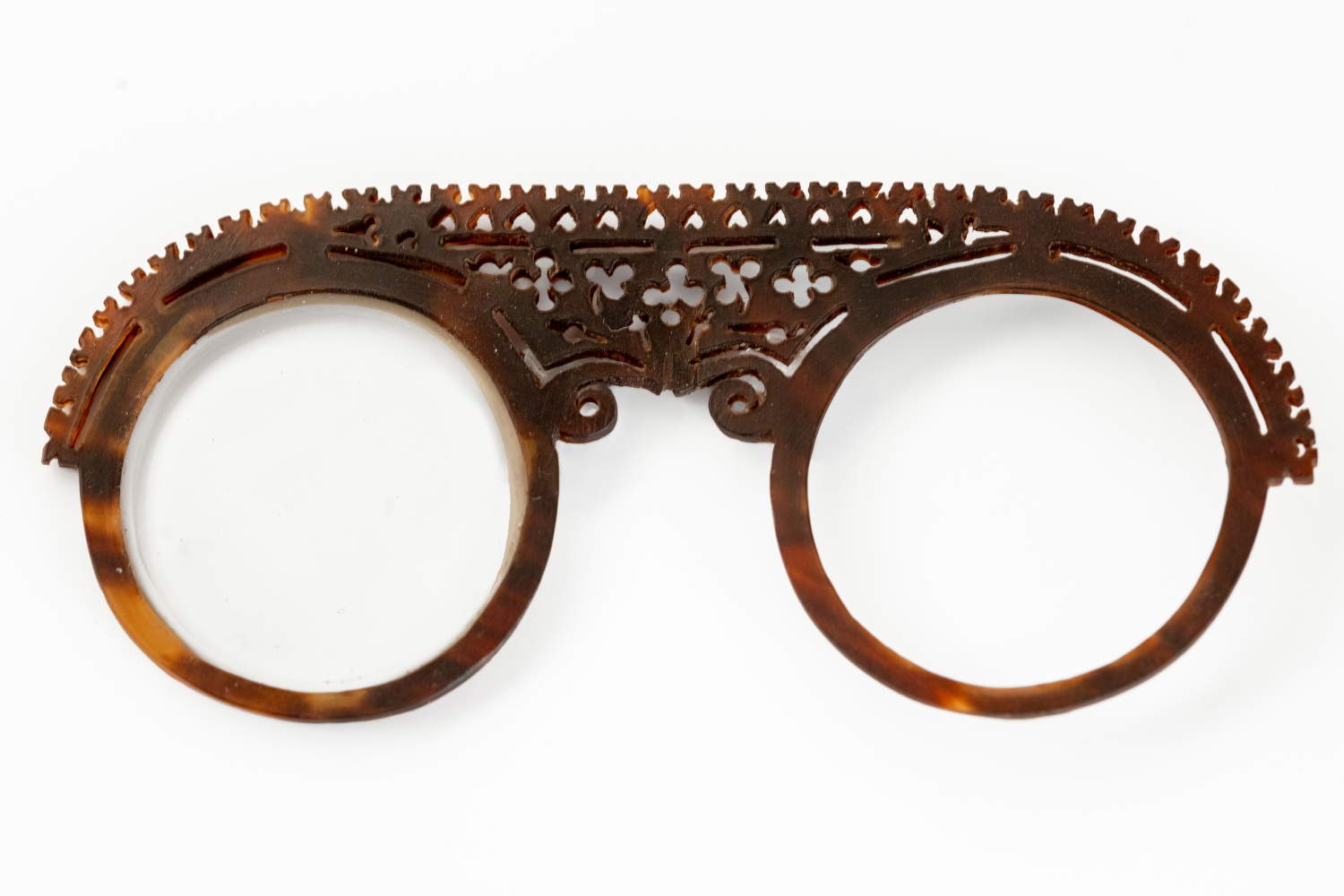
The first section traces the origins and spread of optical instruments, from the earliest reading glasses to medieval and Renaissance spectacles, up to models from the 17th and 18th centuries. Particular attention is given to the emergence of colored and protective lenses, which marks an important milestone in the evolution of eyeglasses from a simple visual aid to a personal object, one that also carries social and cultural significance. Among the artifacts on display are a rare tortoiseshell pair of spectacles made in Nuremberg in the late 17th century, featuring an elegant openwork design on the bridge, and a carved boxwood case produced in Italy in 1687. The latter commemorates the conquest of Morea and the Holy League’s victory over the Turks, demonstrating how even accessories related to eyeglasses could become objects of prestige and historical memory.
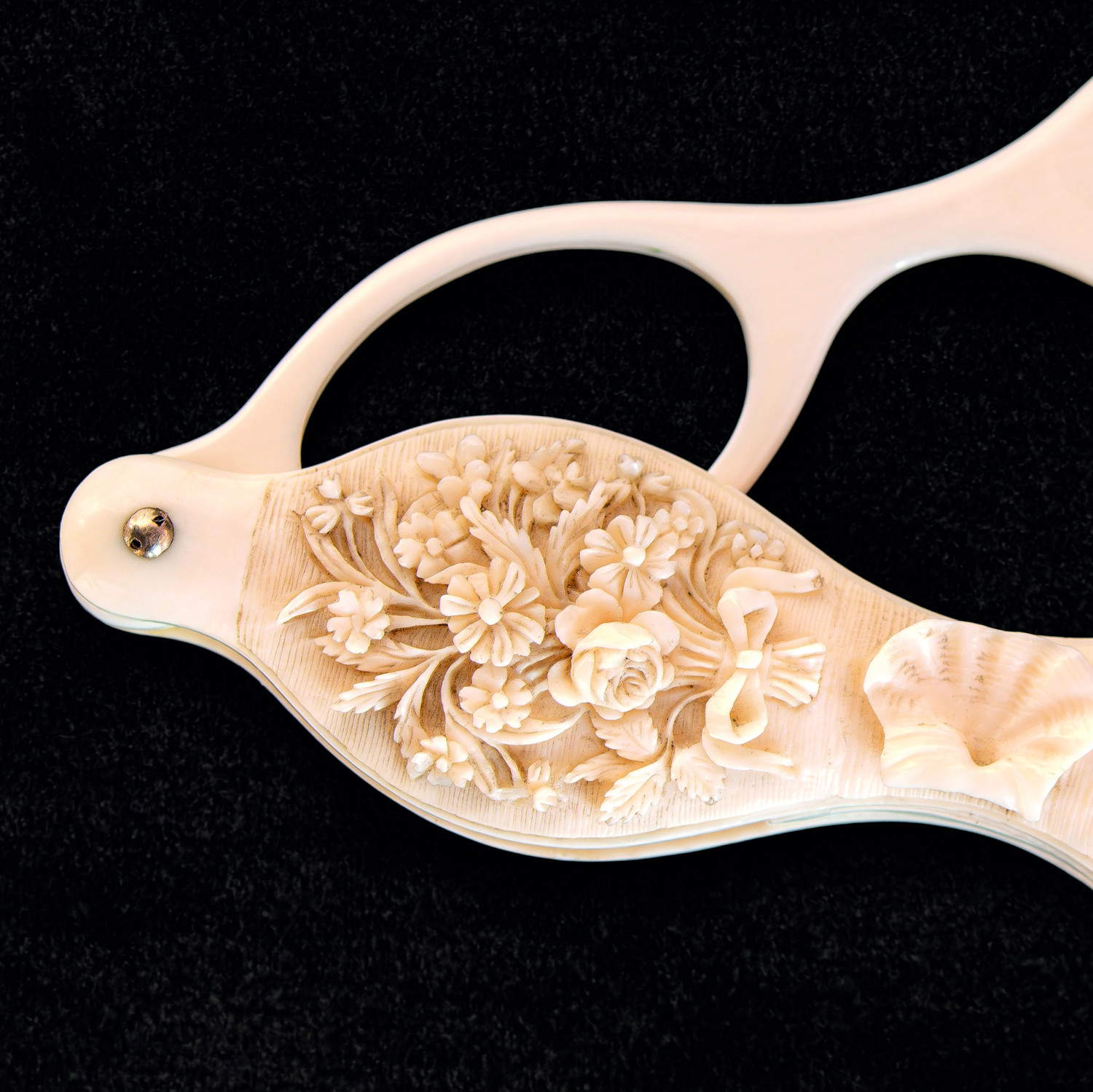
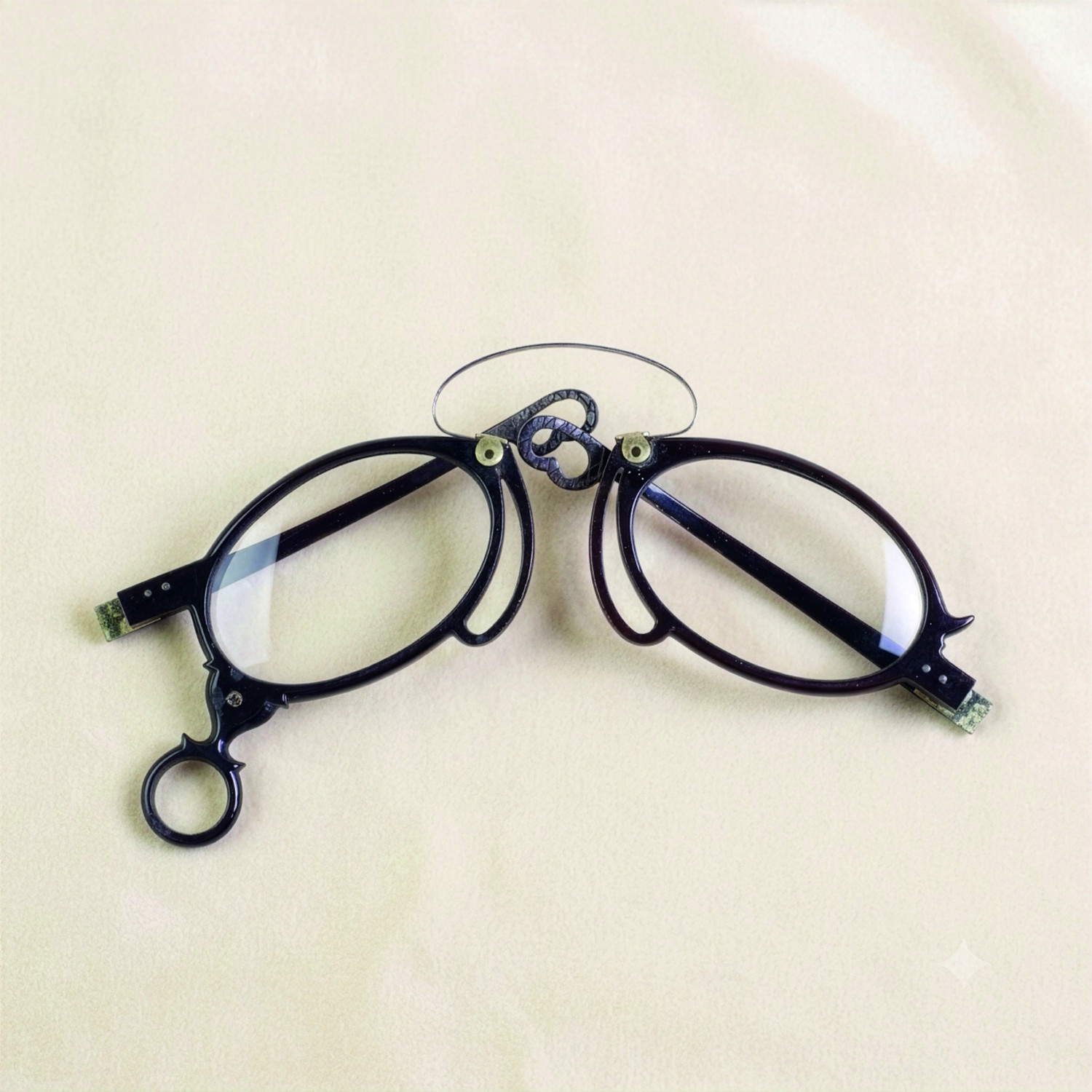
In the 19th century, eyeglasses gradually expanded their function: alongside the need to correct vision, elegance, fashion, and the expression of individual identity gained importance. Pince-nez, Fassamani, and lorgnettes illustrate the evolution of taste and the search for increasingly refined solutions. Among the pieces on display, a French ivory fassamano stands out, featuring a handle-case decorated with floral motifs in bas-relief, along with a rare tortoiseshell pair of glasses that combines the pince-nez system with temples, improving stability on the face. The model dates from the late 19th to the early 20th century. This was also the century in which the foundations of Italian industrial production were laid. In 1878, in Calalzo di Cadore, in the province of Belluno, the first Italian eyewear factory was established, founded on the initiative of Angelo Frescura in collaboration with Giovanni Lozza and Leone Frescura. This was a pivotal step in the development of a region destined to become one of the world’s leading centers for eyewear manufacturing.
The third section spans the 20th century, beginning in the 1950s, when industrial and technological changes profoundly transformed the sector. New materials, experimental designs, and an increasingly close dialogue with fashion and design turned eyewear into an accessory capable of expressing personality and cultural identity. Among the most recognizable examples are the cat-eye models of the 1960s and 1970s, embellished with rhinestones, decorations, and amber or gradient lenses. The narrative then moves into the contemporary era, focusing on material research, sustainability, and technological innovations, right up to smart devices. Traditional craftsmanship, creativity, and new frontiers in production thus converge in an industry undergoing constant transformation.
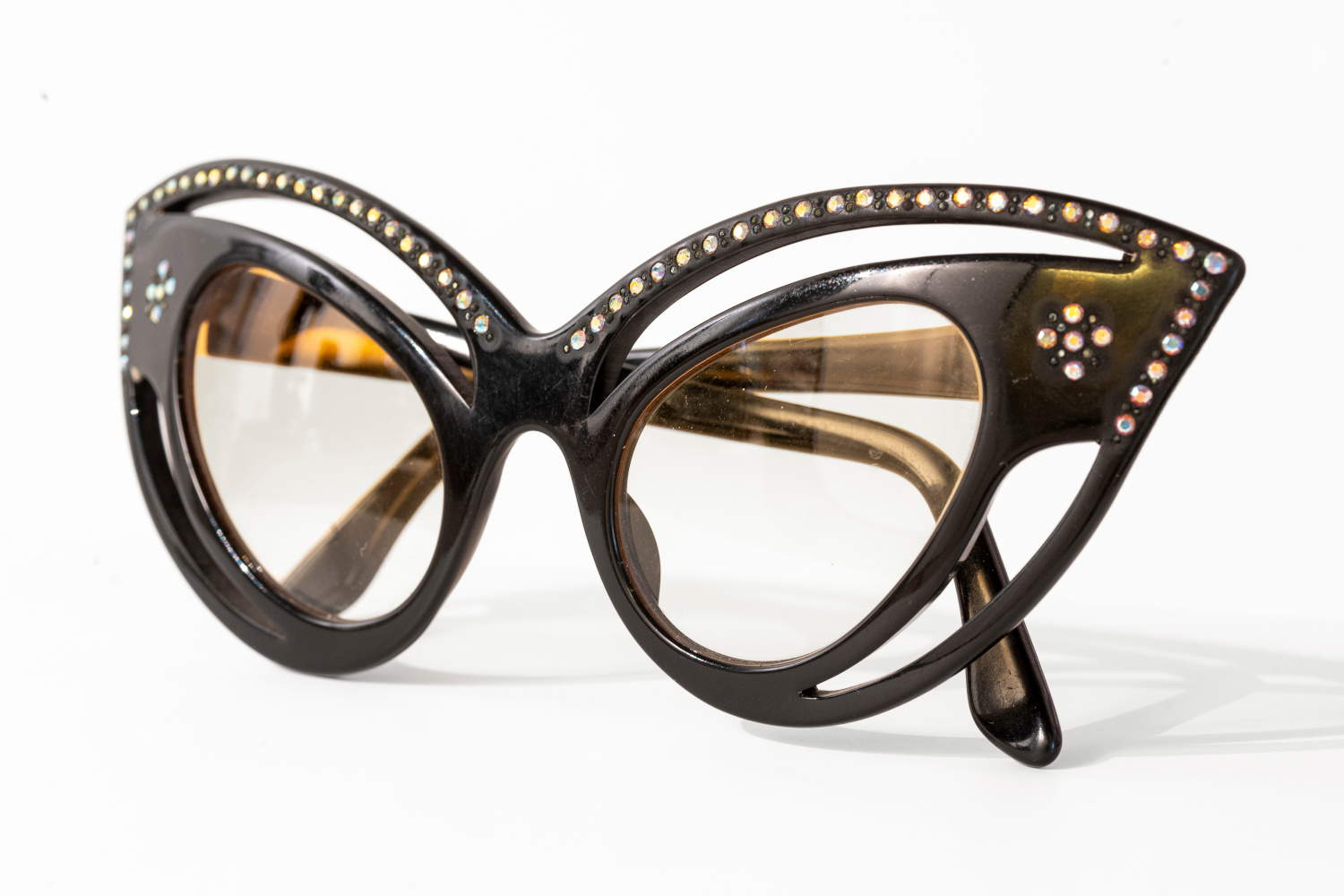
The heart of the new exhibition in Rome is the fourth section, dedicated to the relationship between eyewear and cinema. On the big screen, a pair of glasses can become much more than an accessory: it helps define a character’s personality, emphasizes their individuality, and often ends up becoming an instantly recognizable trademark. The selection brings together original models, stills, and photographic and audiovisual materials spanning decades of cinematic history. Examples include the Ray-Ban Olympian sunglasses worn by Peter Fonda in *Easy Rider* (1969) and the Cazal Targa Design sunglasses worn by Brad Pitt in *The Counselor* (2013). Ample space is also devoted to icons of Italian cinema: from the Persol glasses produced by Ratti and worn by Marcello Mastroianni in *La dolce vita* (1960) to the Zilo by Lozza chosen by Brigitte Bardot in the 1970s, all the way to the famous Persol 649 associated with Mastroianni in *Divorzio all’italiana* (1961). The exhibition also features the glasses worn by Federico Fellini in 1978 and the L.G.R. glasses worn by Tom Cruise in *Mission: Impossible – Rogue Nation* (2015).
The relationship between eyewear and identity also extends to television series, where glasses can accompany and highlight the psychological evolution of the protagonists. The Professor in *Money Heist*, with his 1930s-inspired frames, creates an unmistakable image, while in *Breaking Bad*, Walter White’s glasses help illustrate his transformation from a chemistry teacher to the protagonist of his own criminal life. In *Emily in Paris*, on the other hand, frames primarily serve a stylistic function, becoming an integral part of the characters’ image.
This section thus demonstrates how cinema and television have helped establish certain styles, transforming them into symbols capable of transcending the realm of fashion. Eyewear becomes part of the audience’s visual memory and is etched into the collective imagination alongside the faces that made them famous. The cinematic exploration was developed in collaboration with Steve Della Casa and the National Film Archive of the Centro Sperimentale di Cinematografia, which granted free use of photographic images.
The exhibition concludes with the fifth section, conceived as a visual and conceptual synthesis of the exhibition’s themes. At its center is a contemporary resin artwork that incorporates original pairs of glasses, transforming them into tangible testimonies of different eras, functions, and styles.
The exhibition is also made possible thanks to the contribution of collectors Lucio Stramare and Roberto Vascellari. After its run in Rome, *The Lens of Time* will return to MIDO | Eyewear Show, scheduled for February 6–8, 2027, at Fiera Milano Rho, bringing this new evolution of the project to the international eyewear community, with a particular focus on the connection between eyewear and cinema. Through historical artifacts, technical innovations, and icons of the silver screen, “The Lens of Time” thus tells the story of how an accessory created to improve vision has become a fundamental element of the language of fashion and design, as well as a tool capable of shaping the identity and visual memory of entire generations.
|
| "The Lens of Time": An Exhibition in Rome on Eyewear, Combining History, "Made in Italy," and Cinema |

Warning: the translation into English of the original Italian article was created using automatic tools. We undertake to review all articles, but we do not guarantee the total absence of inaccuracies in the translation due to the program. You can find the original by clicking on the ITA button. If you find any mistake,please contact us.























 IT
IT FR
FR DE
DE ES
ES CN
CN


