




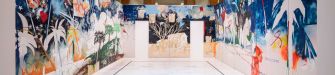
In Venice, the SV exhibition space, located in Campo San Zaccaria a Castello 4693, is hosting a double event dedicated to the work of François Reboul, a French artist active between Venice and Provence, who is presenting a new series of works created since 2020 and focused on a personal reinterpretation of abstract expressionism. The exhibition project is divided into two distinct but complementary moments. The first exhibition, titled Beyond Chaos, is scheduled from May 1 to August 15, 2026, and the second, From Chaos to Freedom, will instead be on view from August 28 to November 22, 2026, with the opening scheduled for September 4 at 6 p.m. Both exhibitions are curated by Vittoria Brachi and take place in the same Venetian space, building a narrative continuity that accompanies the public over several months.
Reboul’s work is located within a dialogue with the tradition ofabstract expressionism and the so-called New York School, which the artist does not simply cite, but uses as an operational structure for a personal research on painting. The pictorial language thus becomes a device through which to test the possibilities of gesture, understood not as mere execution but as a process of image construction.
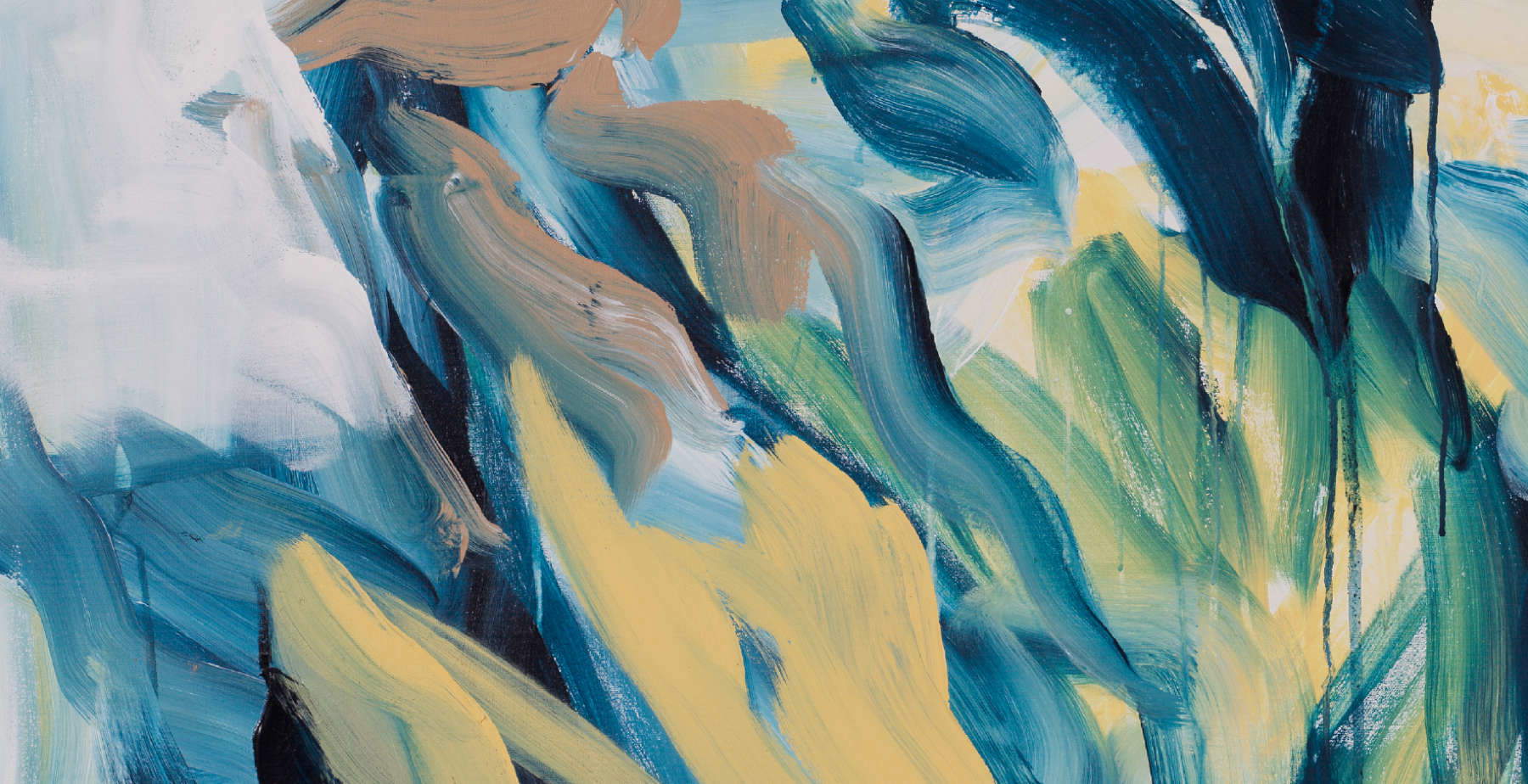
The two exhibitions present a total of twenty paintings each, organized according to a progression that concerns both the size of the works and the density of the pictorial material. The surfaces, often marked and rough, make evident the physical presence of manual intervention. The painting, in the words of curator Vittoria Brachi, does not hide its own process of formation, but exposes it integrally. Each layer of color, each passage of the brush and each material accumulation becomes a visible trace of the artist’s work on the canvas, to the point of generating three-dimensional elements that emerge or shine from the surface.
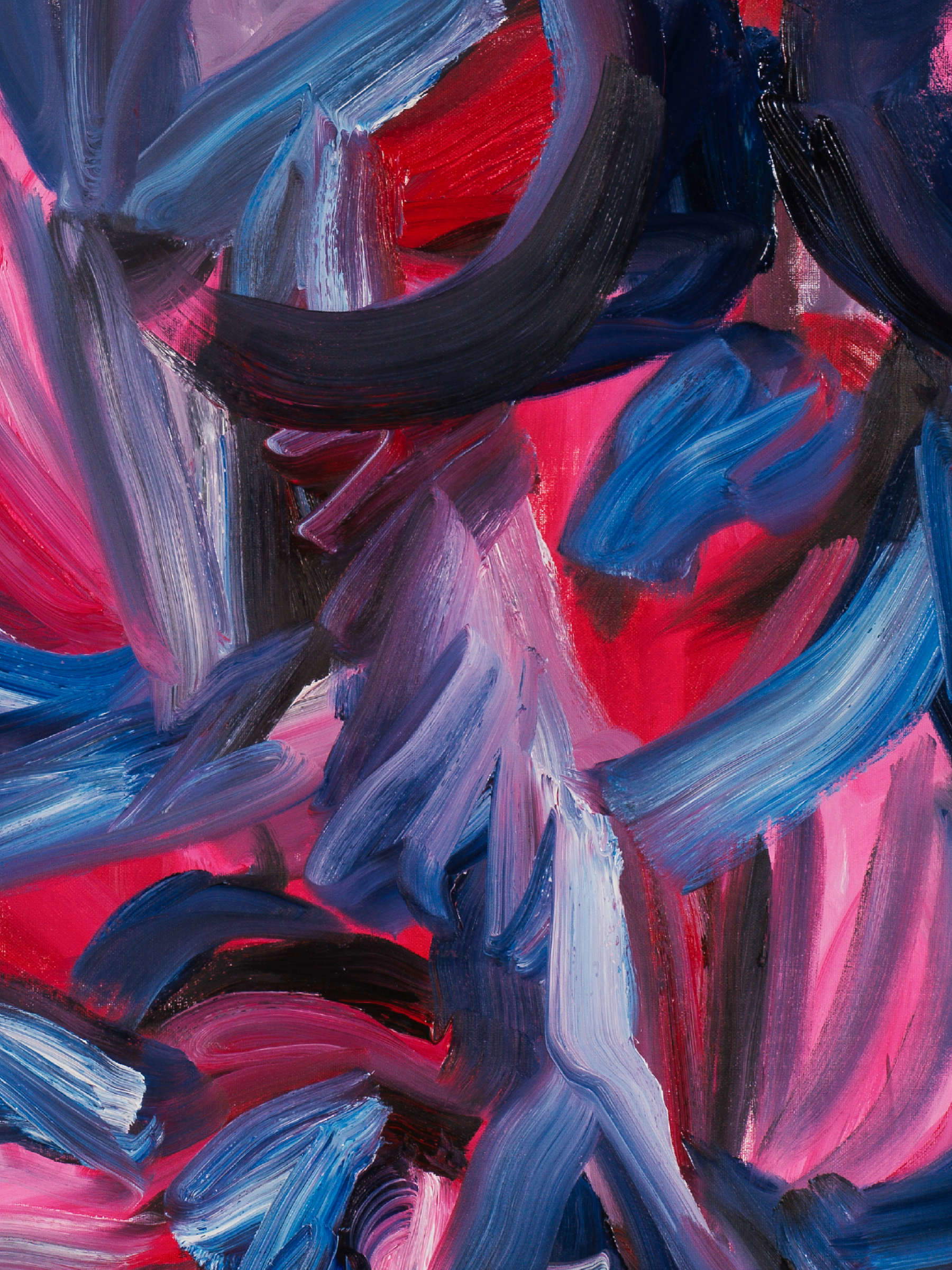
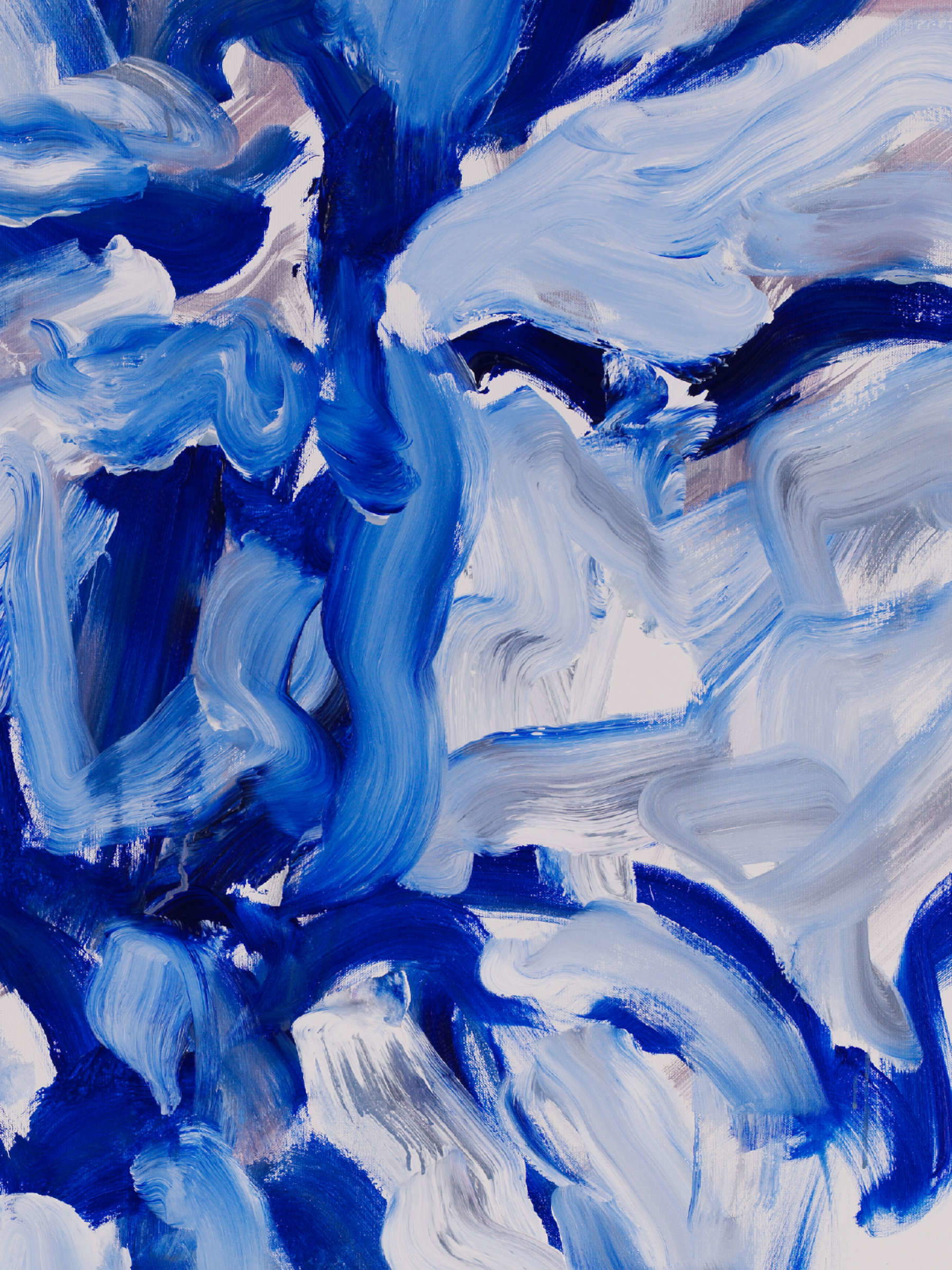
The formal structure of the works favors predominantly vertical formats, which reinforce a frontal perception and reduce any possible illusion of depth. There is no hierarchy between background and figure, nor a traditional perspective construction. Everything takes place on the surface, where color acts through intense contrasts and juxtapositions that evoke, even in their full abstraction, a memory of the Venetian painting tradition, from Tintoretto to Tiepolo.
Within this apparent formal coherence, however, elements of instability emerge. Indeed, Reboul’s works oscillate between abstraction and figuration, allowing images to surface that seem to dissolve in the pictorial gesture. Bodies, often female, appear and disappear in the chromatic matter, never assuming a definitive form. These are not accomplished representations, but temporary appearances, forming and unraveling in the flow of painting.
A distinctive element of the artist’s research is the presence of a chiaroscuro tension that runs through many works. Dark lines, black or blue, cross the surfaces and help define margins and possible depths, introducing a spatial dimension that does not entirely abandon three-dimensionality. Painting thus becomes a field of forces in unstable balance, in which control and loss, construction and dissolution, structure and gesture coexist.
In this dynamic, Reboul’s research sometimes approaches an almost surrealist dimension, in which images emerge as fragments not fully controlled by consciousness. The result is a painting that does not merely represent, but is constituted as a process of continuous emergence, in which the visible always appears in a state of formation.
For the artist, abstraction does not represent a formal exercise, but an expressive necessity. Abstraction is described as a form of freedom, a way of interrupting the ordinary flow of thought and fixing an immediate tension on the canvas. The works are thus configured as “visual situations” rather than definitive images, in which backgrounds and lines generate movements and trajectories that are activated in the viewer’s gaze, involved in a continuous process of recognition and loss.
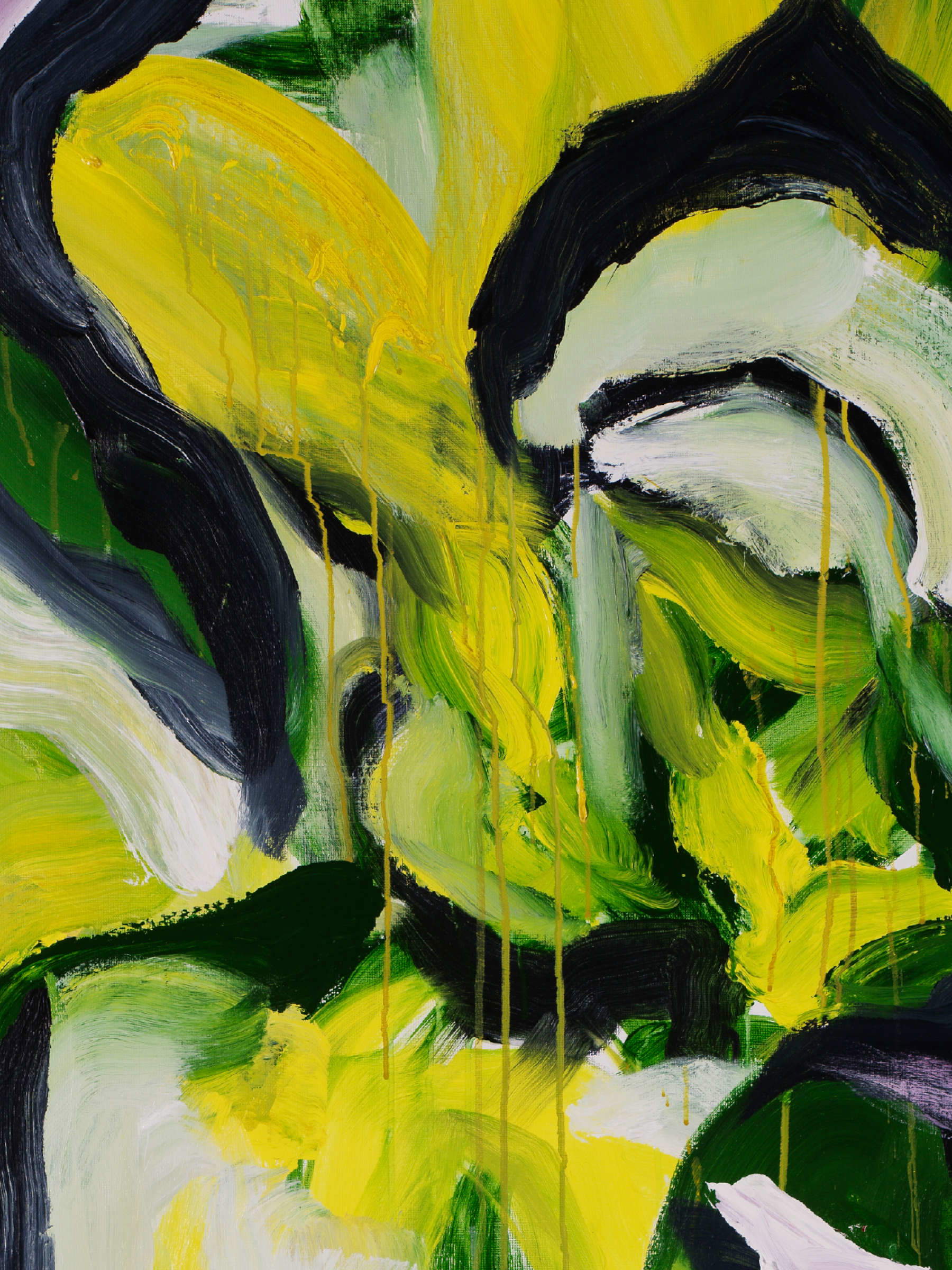
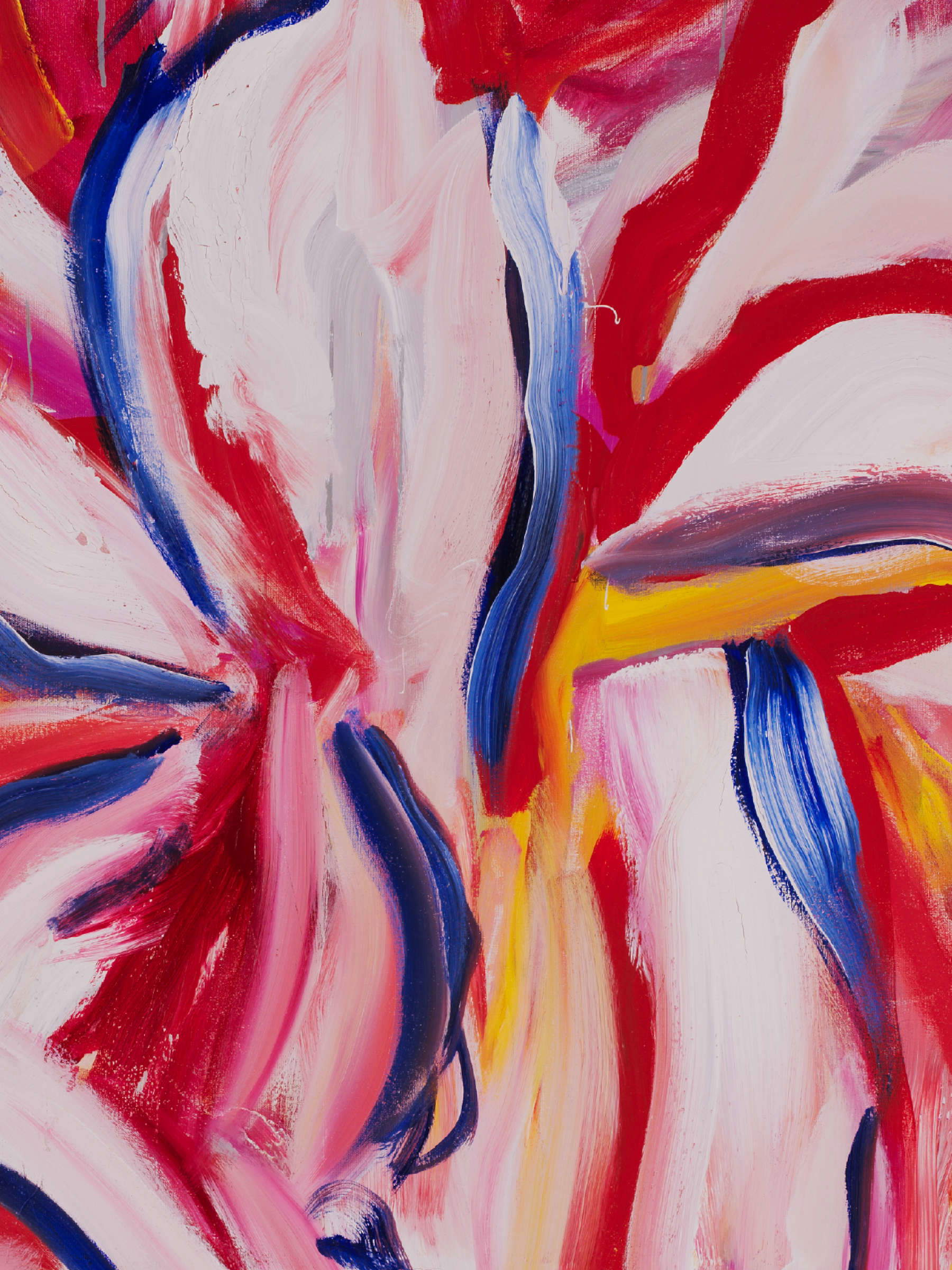
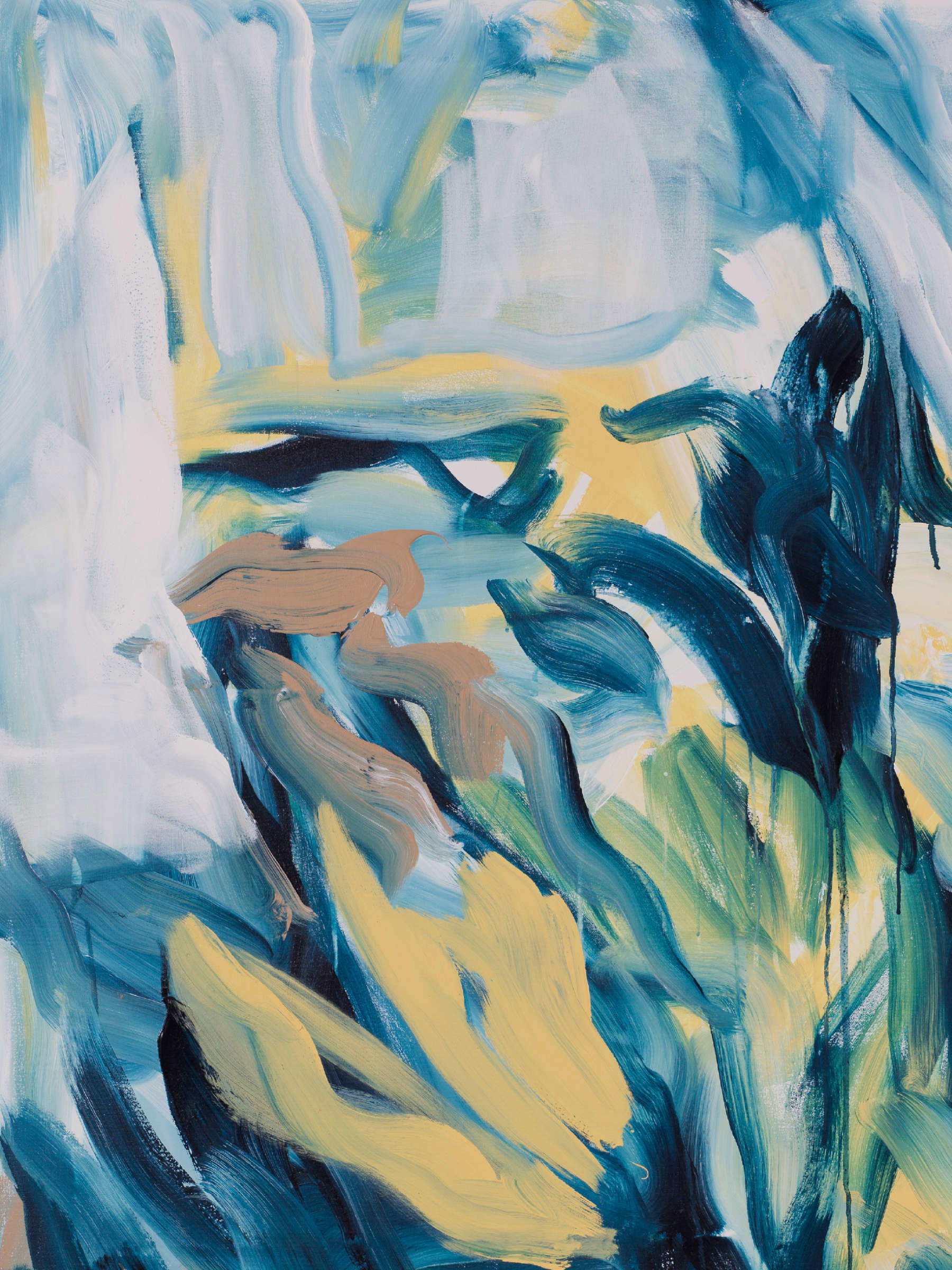
Even in works in which reference to the figure becomes more evident, Reboul avoids any descriptive intention. Faces and anatomies remain in the state of trace, essential signs to which it is color that lends emotional density. Painting thus seems to push itself to the limit of image formation, placing itself in an intermediate zone between appearance and dissolution.
François Reboul’s artistic journey is part of a biography characterized by a complex and articulated relationship with the world of art and culture. Born in France, he lived and worked between Venice and Provence, developing from a young age an interest in modern art and identifying abstract expressionism and the New York School as the main references of his research. A decisive moment was his trip to the United States in 1960, which enabled him to come into direct contact with the American art scene. Returning to Europe, he embarked on a career as a medical oncologist between Europe and the United States, while maintaining a constant link with the cultural environment. In parallel, he developed a photographic practice fueled by travels to Asia and South America, which helped broaden his visual and conceptual gaze.
It is only during the first lockdown period that Reboul returns to painting, choosing to devote himself fully to what he calls his original vocation. From that moment, he initiated a daily practice that gave rise to a coherent body of work, all oriented toward a personal reinterpretation of abstract expressionism and its contemporary possibilities.
 |
| Two exhibitions in Venice for François Reboul: from abstraction to the pictorial freedom movement |

Warning: the translation into English of the original Italian article was created using automatic tools. We undertake to review all articles, but we do not guarantee the total absence of inaccuracies in the translation due to the program. You can find the original by clicking on the ITA button. If you find any mistake,please contact us.













 IT
IT FR
FR DE
DE ES
ES CN
CN