





With the presence of Maria Magdalena Campos Pons at the Venice Biennale 2026, the Giampaolo Abbondio Gallery enters the exhibition itinerary through the work of an artist with whom it has had an ongoing relationship for over twenty-five years. Founded in 2001 under the name PACK Gallery, the reality founded and directed by Giampaolo Abbondio has developed over the years a programming that links emerging artists and already established international figures, maintaining a constant attention to the productive dimension of the work and the processes that determine its realization. In September 2019, after nineteen years of activity, the gallery assumed its current name of Galleria Giampaolo Abbondio, marking a phase of further identity definition. In June 2020, it moved its registered office to Milan, and then, in June 2021, it moved its exhibition activity to the historic center of Todi, Umbria, inside a historic building. In the course of its activity, the gallery has taken part in numerous contemporary art fairs, both nationally, including Arte Fiera Bologna and Miart, and internationally, participating in exhibitions such as Arco in Madrid, Art Chicago, Art Miami, Art Moscow and Beirut Art Fair, thus consolidating a constant presence in the main circuits of the art system.
For Giampaolo Abbondio, the presence at the Biennale represents the result of a long journey shared with the artist, which began over twenty-five years ago precisely in Venice and has been consolidated through ongoing collaborations and international projects. In this edition, Campos Pons’ work takes on a central role within the main Pavilion in the Biennale gardens, also becoming an opportunity to reflect on the relationship between production, economic sustainability and the possibility of access of Italian and international artists to major exhibition contexts. In this interview, Giampaolo Abbondio also presents a look at the contemporary Biennale as a space in which the quality of the work prevails over any category of identity or geography, restoring centrality to the artist’s studio and the autonomous strength of the work. It is an approach that reflects the gallery’s philosophy: to follow the complexity of creative processes without reducing them to definitions, letting the works, first and foremost, determine the meaning of their placement in the art world. Here is what he told us.
NC. What does the presence of the Giampaolo Abbondio Gallery at the Venice Biennale tell about?
GA. The Gallery is not directly present within the Biennale, but through the work of an artist with whom it has been collaborating for a longer time, Maria Magdalena Campos Pons. I encountered her work for the first time 25 years ago right here in Venice, in a collateral event that dealt for the first time with the theme of the African diaspora, alongside other artists who later gained great international relevance. From that occasion a relationship was born that has been consolidated over time and found its first official form in 2002, with a dedicated exhibition. Since then, the collaboration has continued on an ongoing basis, through numerous shared projects. For the gallery, this path probably represents the highest point in its history: a particularly important moment, both for the duration of the relationship and for the recognition obtained over time. At the Biennale, in fact, Campos Pons’ work also occupies an extremely relevant position, being placed in the first large room of the Main Pavilion at the Giardini.
What is the work that Maria Magdalena Campos Pons presented at the Venice Biennale and how did the gallery contribute to the realization and development of the project?
The gallery plays a very active role, but the selection of artists remains in the hands of the Biennale. In this case, the artist developed a specific project that then materialized into the work presented. The work was made together with two other galleries that follow Magda in different countries, Barbara Thumm Gallery and Efie Gallery, considering the particularly complex nature of the project and the onerous costs associated with its production. In this regard, when discussing the absence of Italian artists within the international exhibition, the issue is also related to these aspects: it is often difficult to sustain such important investments for the production of the works, especially when it comes to national artists. This becomes a central node, affecting choices and possibilities for participation. This creates a vicious circle that ends up penalizing Italian artists in major international exhibitions.
So what is your view on the absence of Italian artists at the Biennale, within the main exhibition?
Over the years there has often been a greater investment in foreign artists, with the consequence of a progressive impoverishment of the national proposal. Actually, the geographical origin of the artists represents the least relevant aspect. Selection, from my point of view, should not be based on identity categories: one does not ask whether an artist is Italian, female or belongs to a specific culture or religion. The focus should be solely on the work, its quality and its ability to generate interest. If a work works, it is offered without further distinction. At the same time, compared to two decades ago, there is a decrease in the number of Italian artists with whom work is being done, not so much because of a choice, but because there are fewer strong and really convincing proposals on the current scene.
What is the link between the artist’s project and the Biennale’s curatorial project?
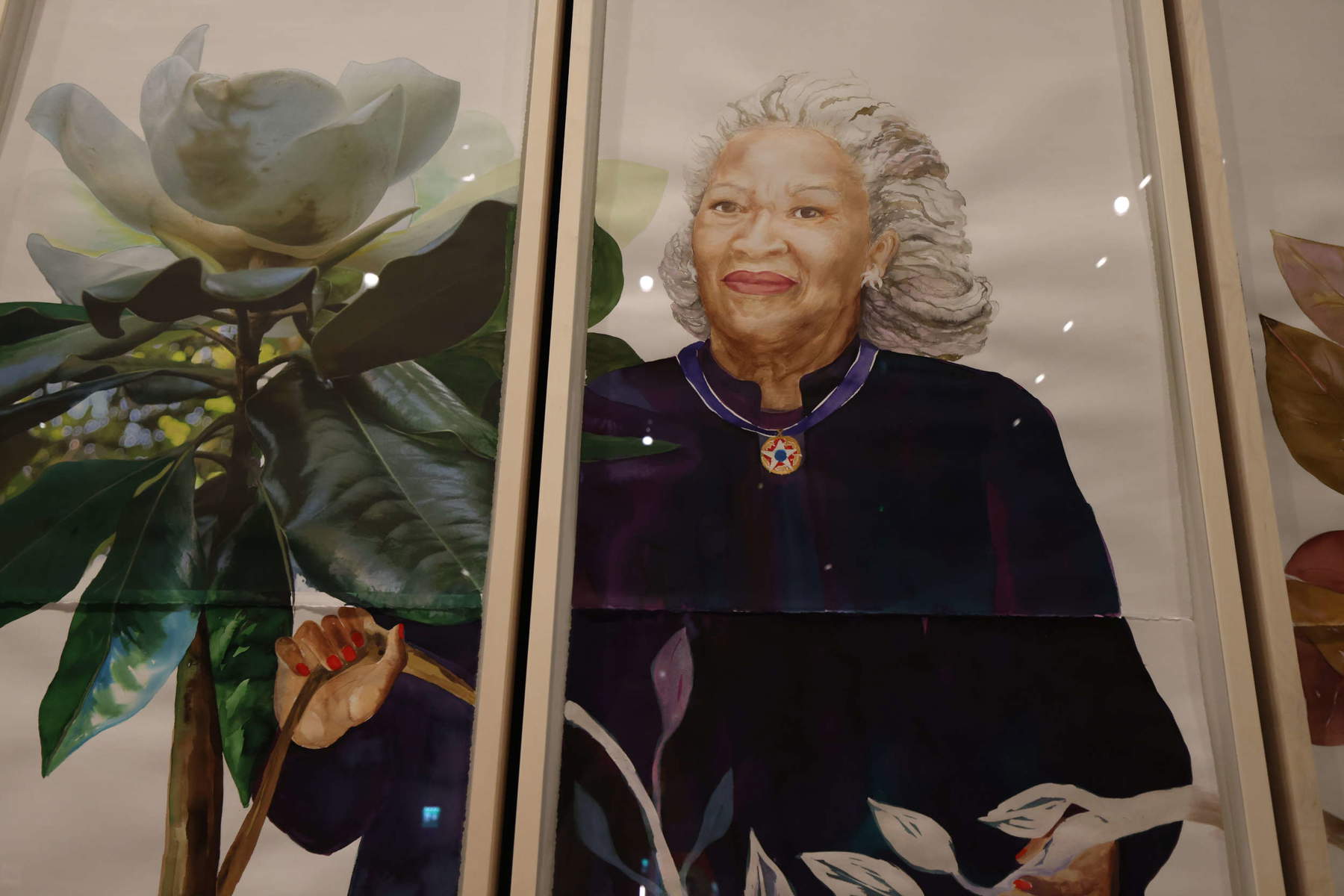
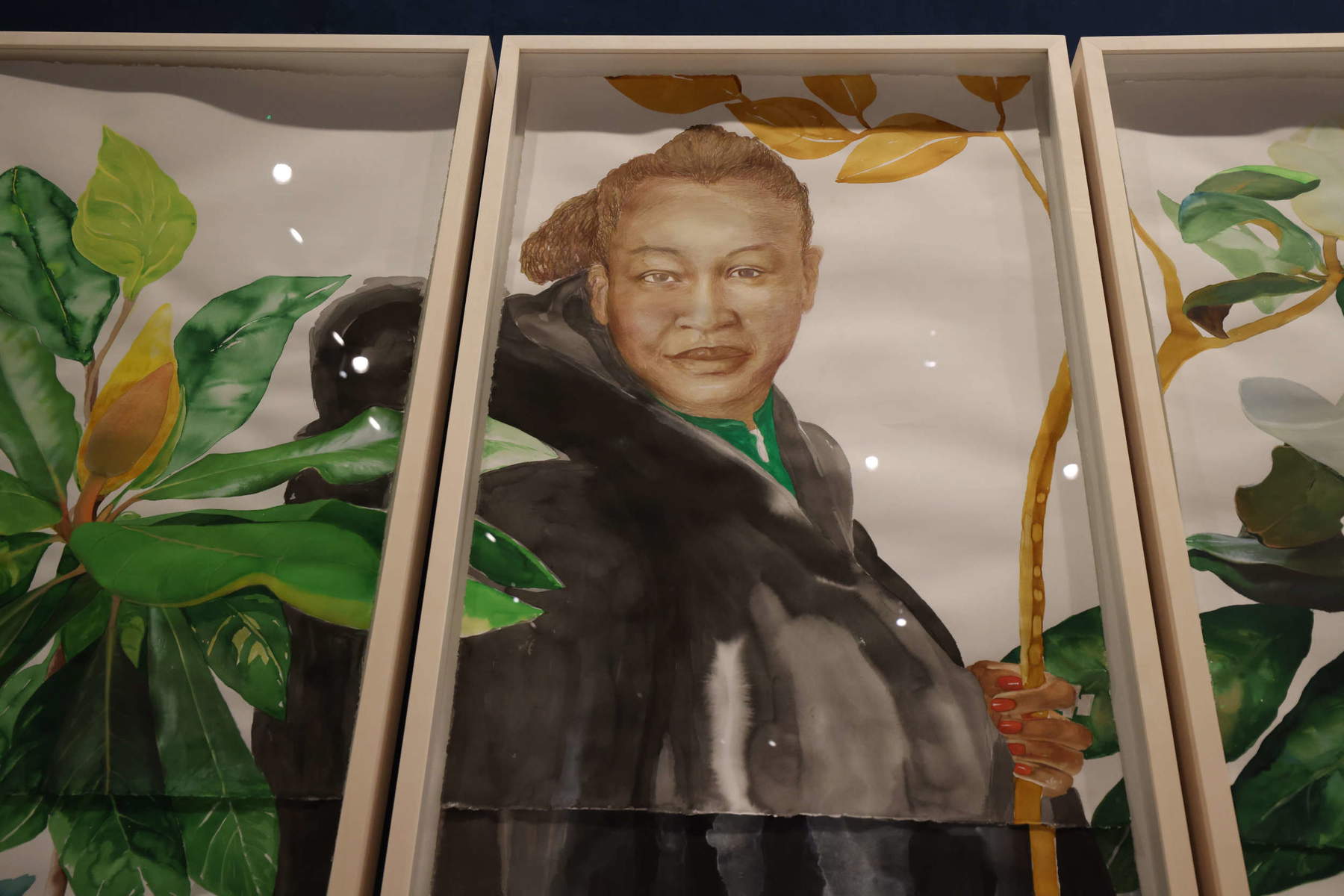
This is an interesting question, especially in this case, partly because curator Koyo Kouoh passed away a year ago. I know that she had chosen Maria Magdalena Campos Pons and had also defined the placement of the work, but I am not sure if the project was already fully formed in the artist’s mind at that early stage. However, there was a long-established relationship between them: they had known each other for many years and Koyo Kouoh had already invited her to the Dakar Biennale in 2004. So it was a long relationship, built on an obvious mutual esteem. I imagine that this very closeness influenced the process, even in the absence of a defined project from the beginning. Not surprisingly, the work created by Campos Pons also takes on the value of a tribute, including a portrait of the curator.
In your opinion, what should visitors expect from the artist’s work exhibited at the Biennale?
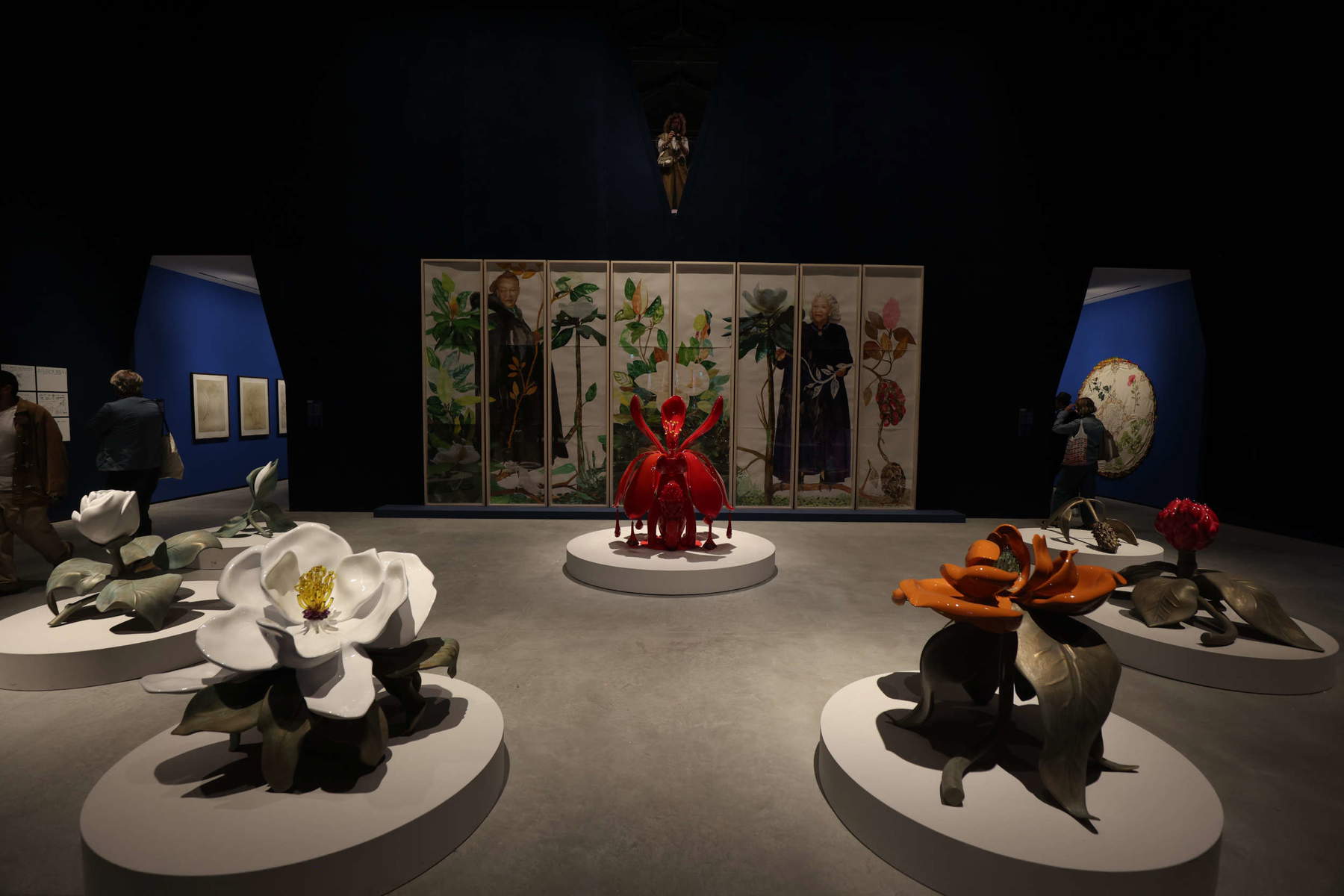
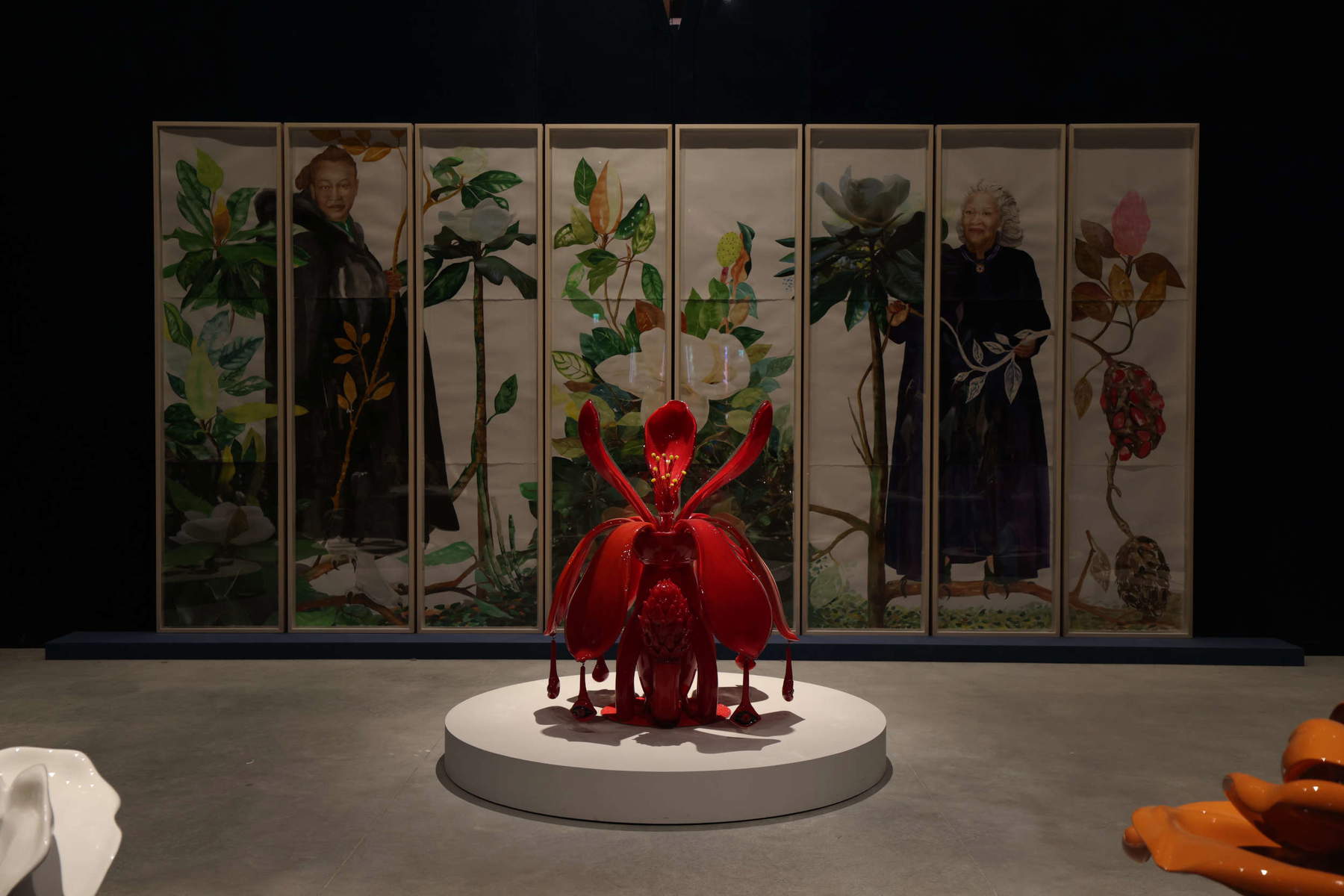
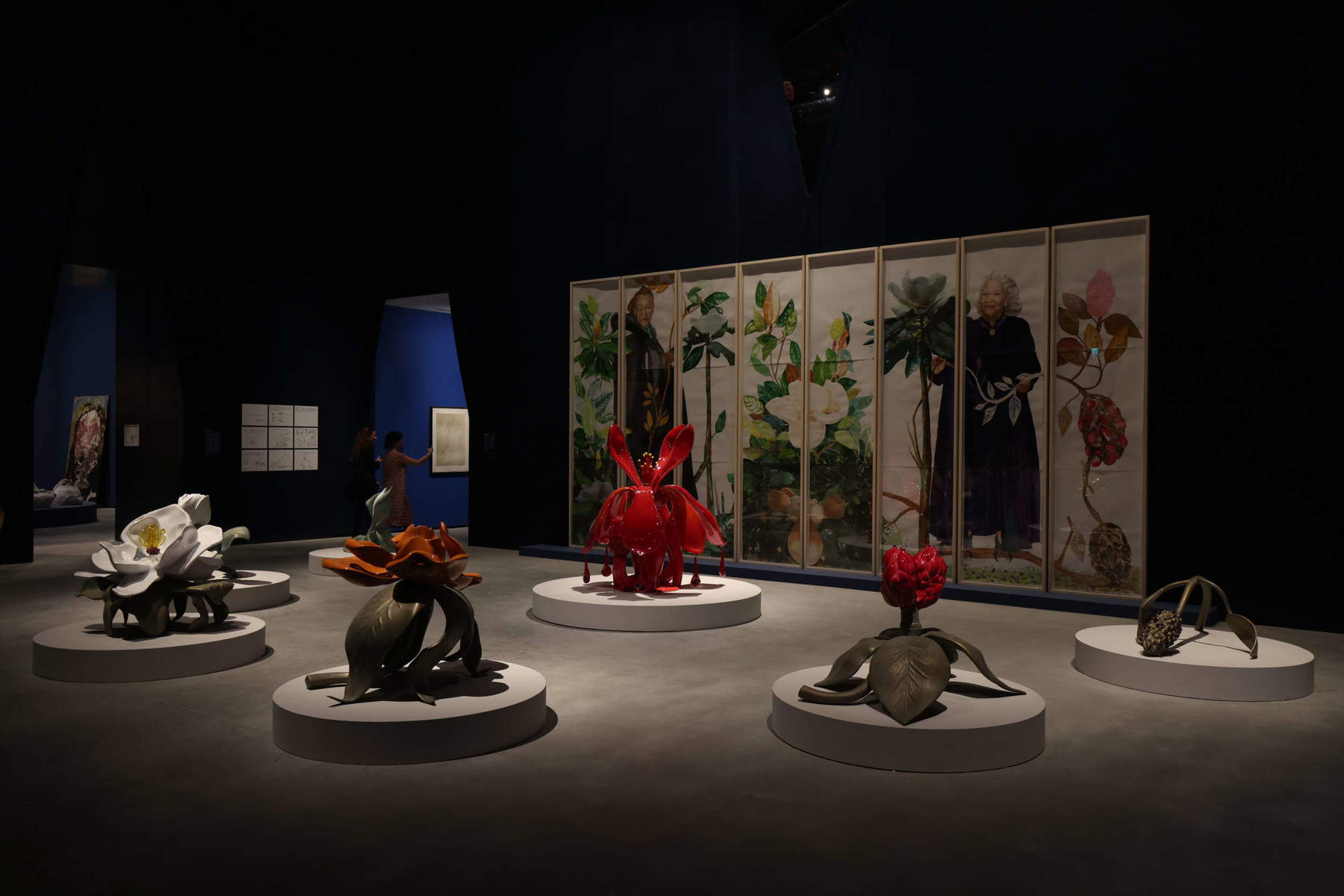
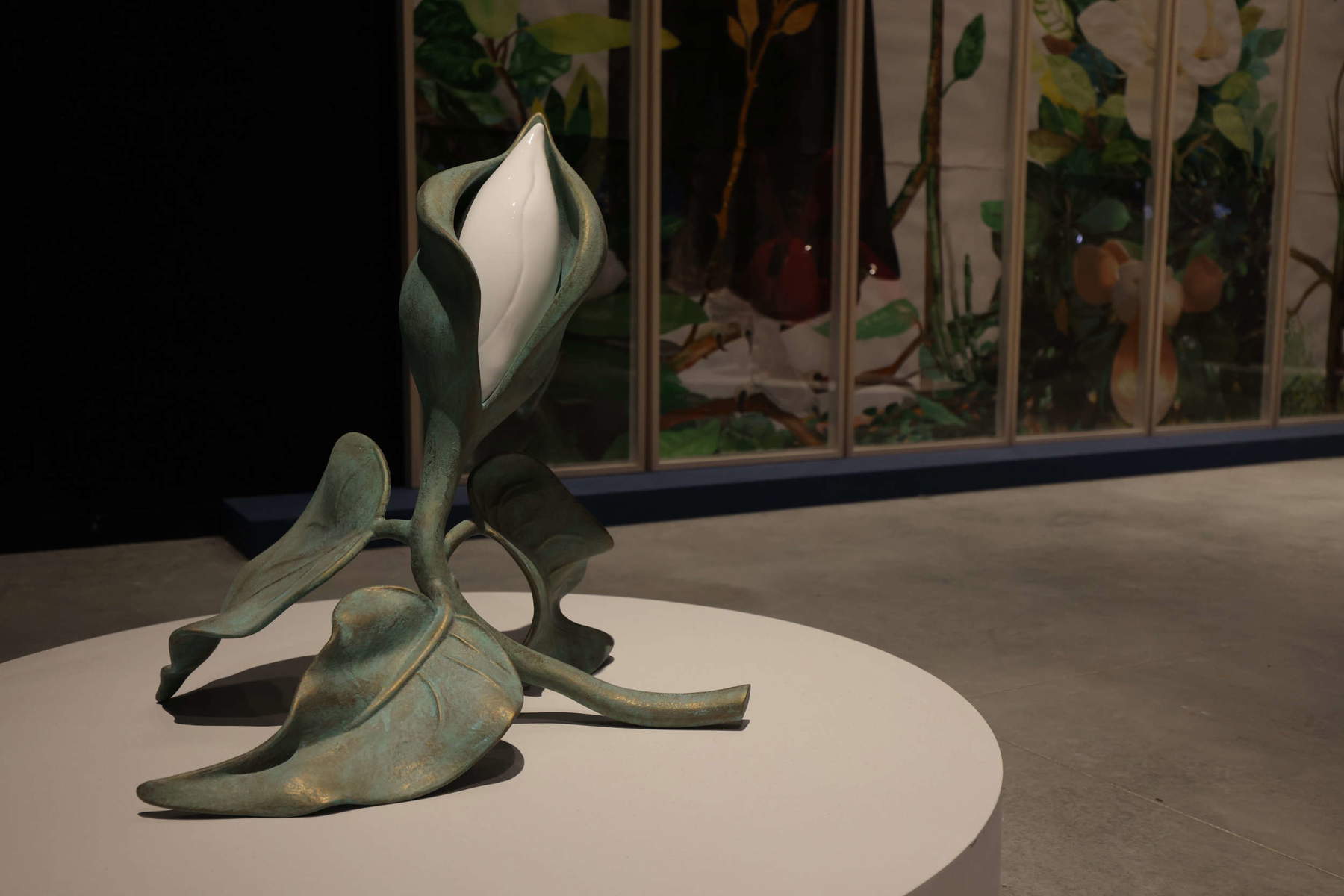
The project presented at the Biennale, although produced by us three galleries on shared directions, developed with a strong autonomy on the part of the artist. At some stages, this very independence made it not always immediate to understand the work as a whole. Between the initial idea and its realization, in fact, it can happen that the work changes and transforms itself even in a relevant way, conditioned by the production process itself. In this particular case, the Biennale features large panels painted in watercolor, measuring about three and a half meters, as well as a series of flowers that went through different design phases. In fact, there has been a long oscillation between being made in Murano glass and being made in fiberglass, precisely because the sculptures originate from the artist’s watercolors, which are not true technical designs. During production, the artist discovered the possibilities presented by a specialized firm that translated his watercolors into three-dimensional forms. The result was so convincing that she preferred this solution over glass, which would have been more fragile and difficult to replicate in multiple elements. Glass still remains present as a poetic choice, but in one piece, of great quality. The flowers, moreover, are a direct reminder of the curator’s memory. In many cultures, on the occasion of the loss of a person, flowers are brought as a sign of respect: here they take on a symbolic value of balancing beauty and grief, almost with a function of elaboration and healing of mourning. Floral elements also appear within the panels, such as the magnolia, which also recurs in the colors and atmospheres of the work, reinforcing this visual and symbolic link. For the gallery, seeing this project at the Biennale represents a great thrill and the crowning achievement of a twenty-five-year journey, bringing an artist to such a central position within the event. The work, in addition to its visual strength, also has a deeply poetic component. Collaboration with two other galleries has made the process complex, sometimes even delicate in day-to-day management. With the artist, however, the dialogue has always been very direct and continuous, almost daily. There was a strong harmony, although different among the various interlocutors involved. Female gallerists, in general, often show a very strong determination and great operational capacity; in comparison, the male role within these dynamics can be more defiladed.
Can you share some of your general impressions of the Biennale?
I do not have an academic background in art history: I have no art studies behind me. However, I have tried to turn this unpreparedness of mine, let’s say, into a working tool. Since I don’t have too rigid parameters, I rely a lot on instinct to figure out what interests me and what doesn’t engage me. It was also easier in the beginning, because I knew less and therefore left even more room for immediate reaction. Over time I have learned something, although I believe that learning in this field never ends: the more you work, the more you develop an insight. When I visit the Biennale, between the Venice Pavilion and the Arsenale, I often don’t immediately dwell on the artists’ names. I just look at the works. If something strikes me, I approach it. Then I photograph: first the work, then the artist’s name, because that’s when I need to go deeper. For example, in the previous two Biennales I had not photographed anyone. In this one, on the other hand, I have already photographed four artists, which for me is a lot. To find four works that surprise me in one edition is an important signal. And, reflexively, the main exhibition gains as well. I haven’t visited all the national pavilions yet, but the general feeling is that the main exhibition is among the most successful in recent years. The previous edition, the one curated by Pedrosa, on the other hand, I had perceived it as much weaker, at least compared to my view. In my opinion the difference lies in the curatorial approach. In that edition the feeling was that identity or political categories, gender, origin, belonging, prevailed more than the specific quality of the works. Here, on the other hand, there is a sense of greater attention to the work itself. For me, what matters is what happens inside the studio, not what happens when the artist leaves the studio. That is where the quality of the work is measured. The title of this Biennial, In Minor Keys, is also interesting: it recalls the minor keys in music, which are often considered more melancholy or complex, but are actually very rich in nuance. In the exhibition this idea comes across well. One aspect that really strikes me is the emotional relationship with the works. It is never just an intellectual or theoretical question: there has to be a reaction, even one of rejection. The important thing is that the work does not leave one indifferent. If it does not produce any emotion, positive or negative, it loses meaning for me. The real problem in the contemporary art world today is when the word “brilliant” is used. When I hear that a work is genius, I get the feeling that it closes everything down too quickly: as if there is nothing left to question. Instead, a work should open up different levels of reading. I think of Boetti: at the beginning he was called genius, then it became clear that his research is much more complex and layered. My impression of this Biennale is positive. It would have been interesting to know the jury’s vote, but that will always remain out of reach. Even the public’s judgment, in the end, is inevitably biased: distributed over time and conditioned by individual paths.


The author of this article: Noemi Capoccia
Originaria di Lecce, classe 1995, ha conseguito la laurea presso l'Accademia di Belle Arti di Carrara nel 2021. Le sue passioni sono l'arte antica e l'archeologia. Dal 2024 lavora in Finestre sull'Arte.Warning: the translation into English of the original Italian article was created using automatic tools. We undertake to review all articles, but we do not guarantee the total absence of inaccuracies in the translation due to the program. You can find the original by clicking on the ITA button. If you find any mistake,please contact us.

























 IT
IT FR
FR DE
DE ES
ES CN
CN


