





The National Museum of Medieval and Modern Art in Arezzo will inaugurate, on Wednesday, June 17, the restored monumental courtyard of its headquarters, Palazzo Bruni-Ciocchi, at the end of a complex process of study, survey and restoration promoted by the National Museums Tuscany Regional Directorate of the Ministry of Culture. The appointment is set for 5 p.m. with free admission subject to availability. The intervention concludes an articulated program of knowledge and recovery involving Palazzo Bruni-Ciocchi, a building that preserves a long and complex history intertwined with that of the city of Arezzo. In fact, the monumental courtyard constitutes the architectural fulcrum of theentire complex and represents one of the most significant examples of the city’s Renaissance architecture.
The opening ceremony will open with institutional greetings from the prefect of Arezzo Clemente di Nuzzo, the superintendent of the Soprintendenza Archeologia, Belle Arti e Paesaggio for the provinces of Siena, Grosseto and Arezzo Gabriele Nannetti, the regional director of National Museums Tuscany of the Ministry of Culture Carlotta Paola Brovadan and museum director Luisa Beretti. Afterwards, the design process and interventions carried out on the porticoed courtyard will be explained. Rossella Sileno and Raffaele Fuschino will introduce the work, while architect Angela Savalli will present the study, analysis and design activities that accompanied the conservative restoration. Restorer Andrea Vigna, on the other hand, will delve into the interventions carried out on the stone apparatus and plasterwork, illustrating the operations that enabled the recovery and enhancement of the historic surfaces of the complex. The inauguration will culminate with the traditional ribbon-cutting ceremony and the performance of the Tourdion Vocal Ensemble directed by maestro Stefania Barberi, called upon to highlight with music the moment of restitution of this space to the city and visitors.
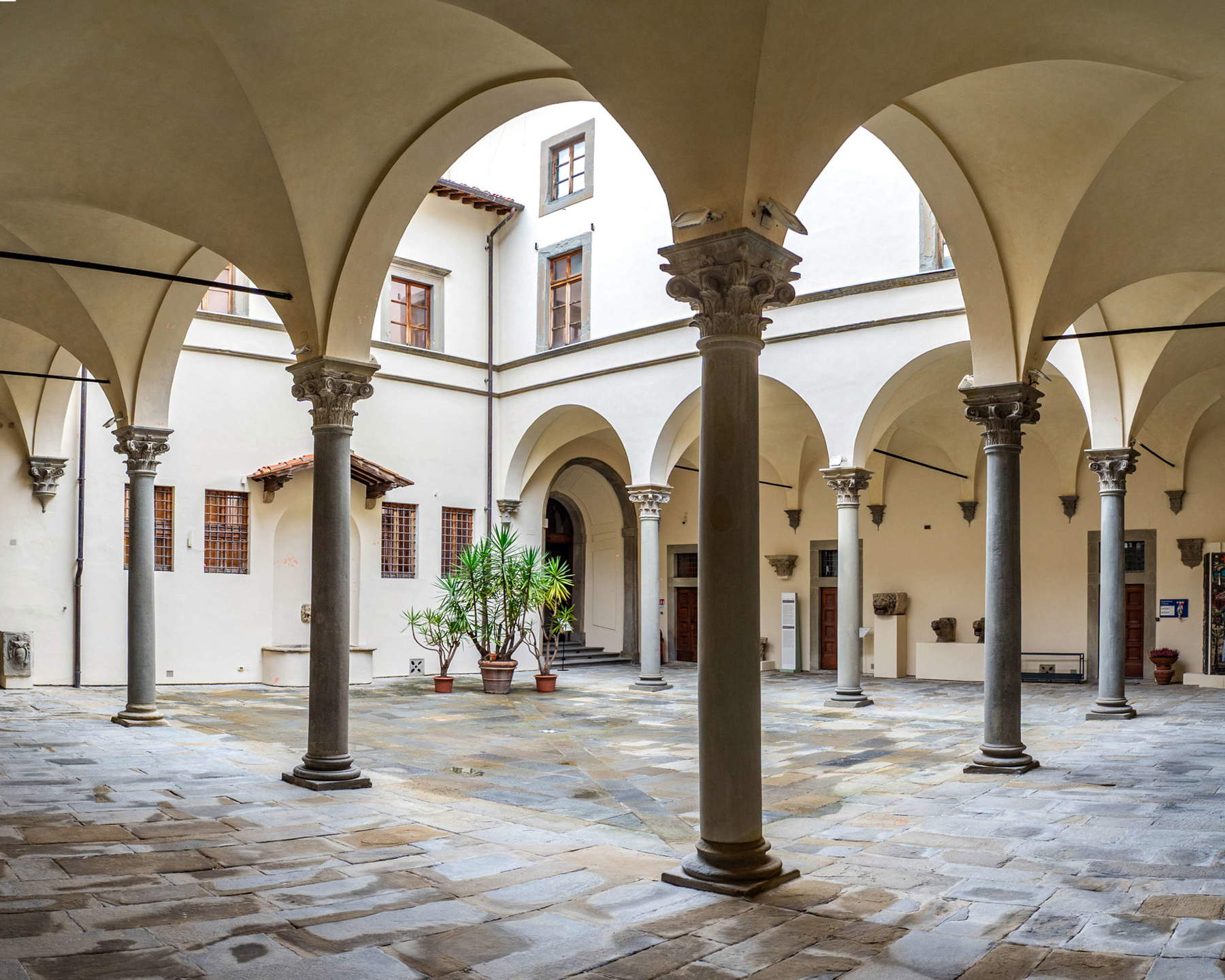
The monumental courtyard of Palazzo Bruni-Ciocchi represents one of the most distinctive elements of the building. Traditionally attributed to Bernardo Rossellino (Settignano, 1409 - Florence, 1464), it presents an architectural language that reveals a clear Brunelleschian inspiration, an element that contributes to making it one of the palace’s most refined spaces. At the back, on the first-floor level, the courtyard is complemented by a Renaissance-inspired hanging garden that further expands its historical and landscape value. Important stone fragments of civil and religious character are preserved within this environment. Prominent among them are thirteenth-century capitals from the apse of the Pieve di Santa Maria, valuable evidence of the city’s artistic and architectural history.
Prior to the start of the restoration, the courtyard underwent a thorough three-dimensional survey carried out by laser scanner technology. The diagnostic investigations, which were essential for the design of the conservative interventions on the elevations, enabled the acquisition of a detailed knowledge of the state of conservation of the structures. The analyses showed an overall positive picture, characterized by a fair general state of preservation, although highlighting some deterioration phenomena typical of pietra serena, caused mainly by the action of atmospheric agents and moisture. It was precisely these elements that guided the definition of the interventions necessary to ensure the long-term preservation of the complex.
The works carried out involved the restoration of the plasters, maintenance of the roofs, restoration of the stone elements and improvement of the rainwater disposal systems. Interventions that will ensure greater durability of surfaces and better preservation of architectural structures over time. The recovery of the courtyard also takes on special importance because it is the prelude to the museum itinerary that develops inside the palace. Indeed, the exhibition rooms take visitors through a chronological itinerary that spans more than a thousand years of art history, from the early Middle Ages to the 19th century. Restoration has also restored full legibility to the many artifacts in the courtyard, enabling a more effective enhancement of the works on display. These include important examples of Mannerist sculpture of classical derivation, which constitute one of the most interesting nuclei of the collection.
Particularly significant are the lion protome and the two equine protomes found in the 1930s during work related to the Arezzo aqueduct, a Medici infrastructure traditionally associated with a project by Giorgio Vasari. The sculptures originally served a technical as well as a decorative function: placed at the Godiola, they contributed in fact to the regulation of the flow of water coming from the Alpe di Poti and destined for Piazza Grande through a sophisticated system based on the principle of communicating vessels. The presence of these works testifies to the link between art, architecture and urban infrastructure that has characterized the city’s history over the centuries. Next to them is an additional protome of smaller dimensions inserted into the courtyard fountain, an element that further reinforces the appeal to classical and Renaissance aesthetics.
The monumental staircase also preserves significant evidence of Arezzo’s urban history. Indeed, the large seventeenth-century canvas by Girelli is kept here, an important figurative document dedicated to the city’s historic hydraulic work and the relationship between the palace and the great civic infrastructures of the past.
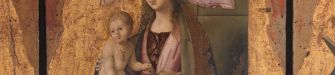
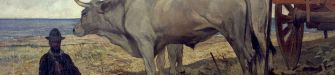
The strong Vasarian imprint that characterizes the complex is fully reflected in the upper floors of the museum, where visitors can admire one of the most important Italian collections of majolica along with a pictorial heritage of extraordinary value. Among the works preserved are thirteenth-century panels by Margarito d’Arezzo and paintings by Spinello Aretino, Bartolomeo della Gatta, and Luca Signorelli, absolute protagonists of Tuscan artistic history. The itinerary culminates with Giorgio Vasari’s great Convito per le nozze di Ester e Assuero, one of the most significant masterpieces in the museum collections. Rounding out the artistic panorama is also a rich section devoted to nineteenth-century painting, with a large representation of works by the Macchiaioli, which testify to the continuity of the territory’s artistic tradition up to the contemporary age.
The history of the palace that houses the museum is equally articulate. Also known as Palazzo della Dogana for the period when it housed the State Monopolies, the building was built starting in 1445 at the behest of the Bruni family, the same family that gave birth to the Florentine humanist and chancellor Leonardo Bruni. The building incorporated 14th-century pre-existences and properties belonging to the Ghibelline Accolti family, in a strategic area of the city located in the area of San Lorentino and the Porta del Foro district, then one of the main urban accesses to Florence. Over the centuries the palace passed to the Ciocchi del Monte family, probably becoming the city residence of Cardinal Giovan Maria Ciocchi del Monte, destined to become pope under the name of Julius III. Later the building came into the possession of the Counts Barbolani di Montauto, originally from Valtiberina, who helped enrich it with the construction of the gallery and the great hall. Beginning in 1816 the complex was transformed into a government depot and took on administrative functions that partially changed its original use. The wartime events of the 20th century, which severely affected the old Praetorian Palace, subsequently contributed to redefining the building’s role.
From 1958 Palazzo Bruni-Ciocchi became the headquarters of the National Museum of Medieval and Modern Art, assuming the function that still characterizes it today. Over the decades the institution has amassed an extraordinarily rich patrimony from the suppressions of religious orders following the Unification of Italy, from the collections of important figures of scholarly collecting such as Bartolini, Funghini and Fossombroni, and from the collections that flowed into the Fraternita dei Laici. These have been joined over time by deposits from the Florentine Galleries and the valuable donation of Arezzo art historian Mario Salmi, helping to make the museum one of the main points of reference for knowledge of the artistic history of Tuscany.
|
| Arezzo, restored and reopened the monumental courtyard of the Museum of Medieval and Modern Art |

Warning: the translation into English of the original Italian article was created using automatic tools. We undertake to review all articles, but we do not guarantee the total absence of inaccuracies in the translation due to the program. You can find the original by clicking on the ITA button. If you find any mistake,please contact us.



















 IT
IT FR
FR DE
DE ES
ES CN
CN


