





Energy upgrading, autonomous production of energy from renewable sources, architectural restoration and new spaces dedicated to hospitality: two years after the start of construction, the Capodimonte Museum and Real Bosco di Capodimonte and ENGIE Italia have inaugurated a new phase in the history of the Neapolitan museum complex. A far-reaching intervention that represents a strategic step in the process of innovation of the Italian cultural heritage.
The project was carried out by ENGIE as part of the first Public-Private Partnership promoted by the Ministry of Culture for the redevelopment of an autonomous museum. The operation, developed through the project financing tool, involved a total investment of 45.7 million euros, divided between a public contribution of 22.2 million and a private investment of 23.5 million.
The intervention involved the entire complex with the aim of integrating the enhancement of the historical-artistic heritage with advanced technological solutions. One of the most innovative aspects concerns the introduction of renewable energy production systems. In fact, a completely integrated and invisible photovoltaic system has been installed on the roofs of the Reggia, designed in full respect of the historical context and approved by the Superintendence as a pilot intervention. The system, consisting of about 4,500 panels, produces about 800 MWh of clean energy each year and is supported by a trigeneration system that optimizes energy management. Thanks to these technologies, the museum is now able to cover about 90 percent of its energy needs independently. Overall, the interventions have resulted in more than 50 percent energy savings and reduced emissions by about 1,700 tons of carbon dioxide, an impact equivalent to planting more than 20,000 trees.
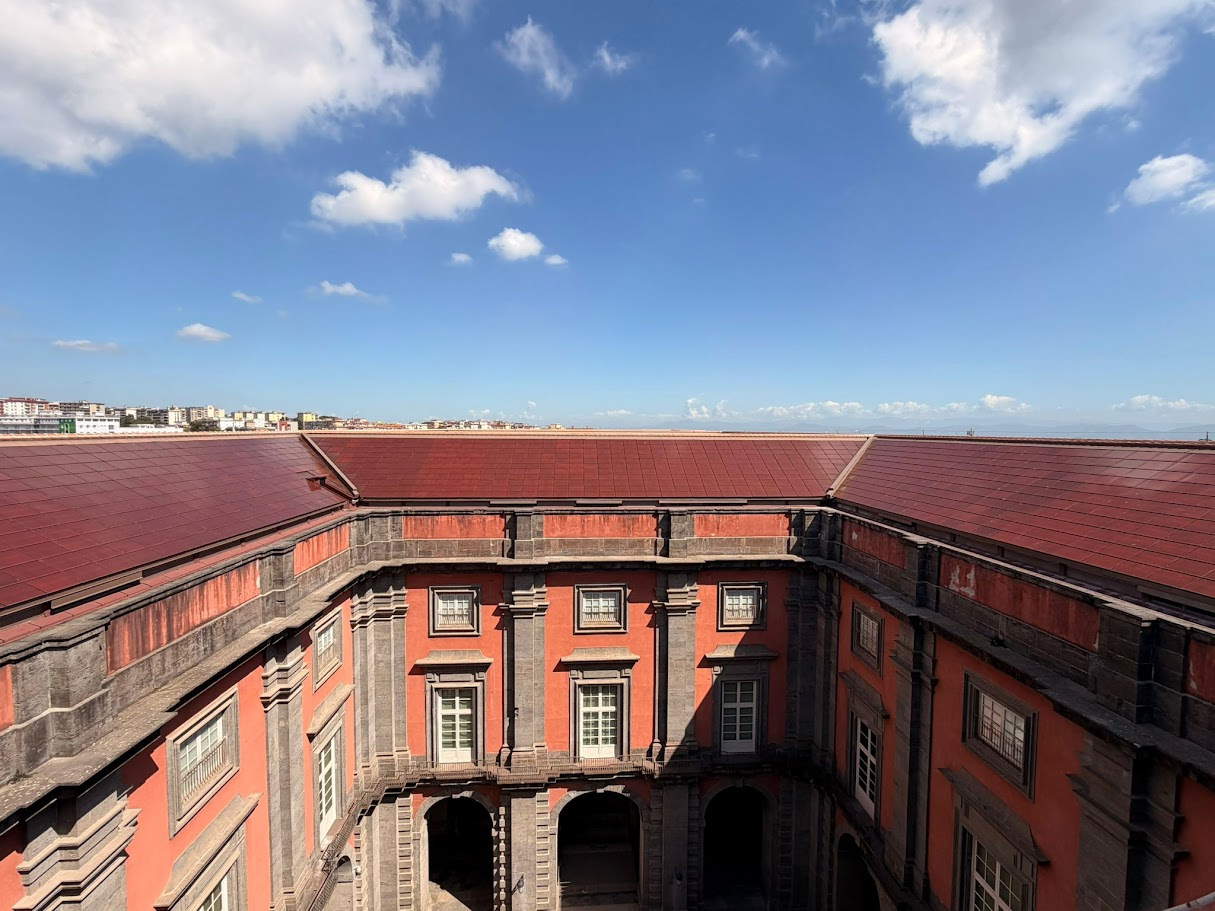
Particular attention has also been paid to environmental comfort and conservation of the works, through the introduction of the latest generation of air conditioning systems capable of ensuring constant and precise control of temperature and humidity. The new solutions make it possible to maintain optimal conditions without compromising the architectural balance of the historic environments. The intervention also significantly expanded the air-conditioned areas, which increased from 8,000 to 14,500 square meters, an increase of 77 percent, accompanied by the installation of advanced environmental monitoring systems for the protection of the works and compliance with international conservation standards.
A key role has also been given to light, which has been completely rethought as a central element of the exhibition experience. The new digital lighting design introduces a true “light direction”: more than 7,000 LED points make it possible to modulate the lighting according to the settings and conservation needs of individual works. ENGIE oversaw both the design and execution of the interventions and, through a 20-year agreement with the museum, will continue to manage the energy, technological and multimedia services, as well as the ordinary and extraordinary maintenance of the facilities. A model designed to ensure operational continuity, efficiency and sustainability in the long term.
The re-functionalization of spaces has made the Reggia more accessible and inclusive, with the aim of keeping respect for its historical identity at the center. Emblematic in this sense is the new Reception Hall, which introduces visitors to a dialogue between contemporary art and natural light through Mimmo Paladino’s work Do you know the country where lemons grow?
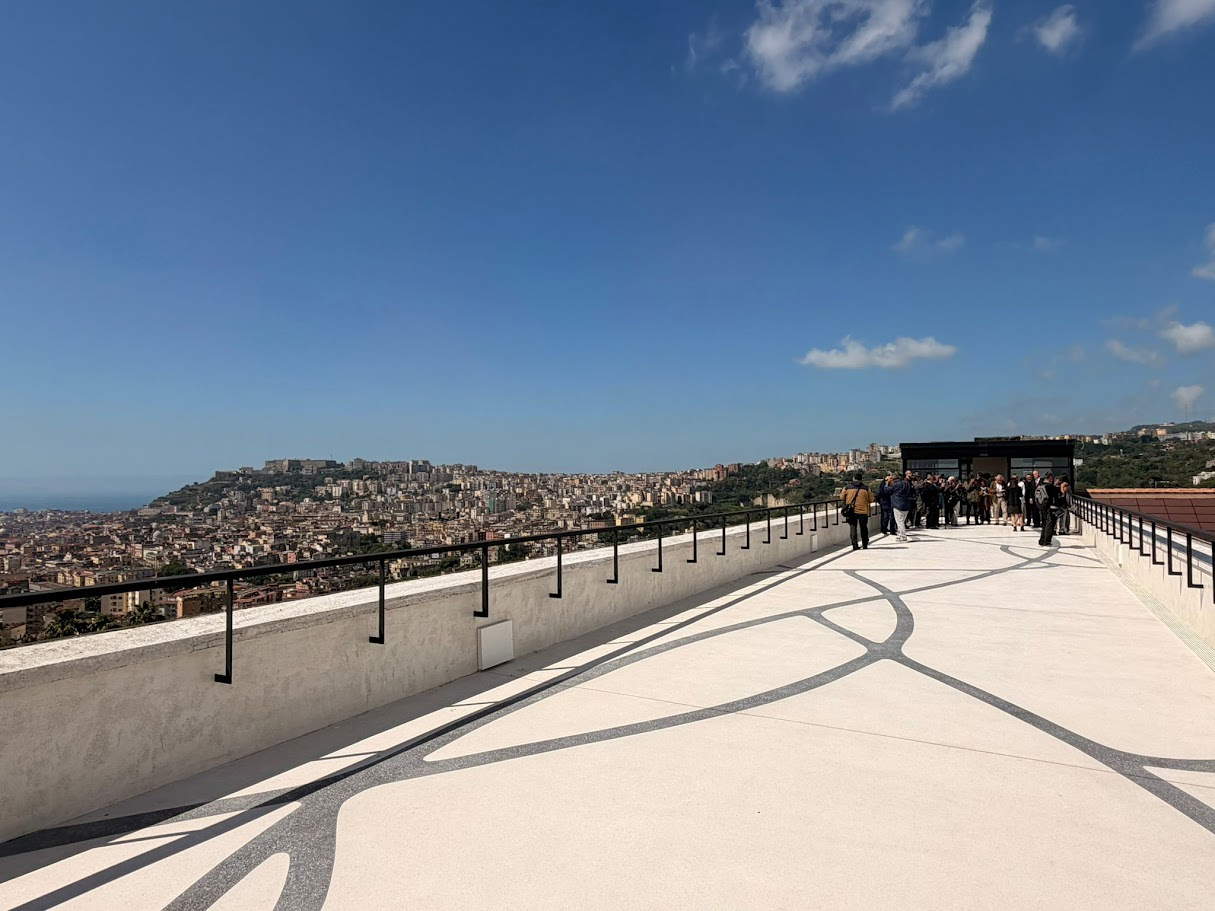
Significant interventions also include the restoration of the historic roofing, carried out in collaboration with the Superintendence to restore the Reggia’s harmony in the urban landscape of Naples, and the recovery of the Belvedere Terrace, now accessible again thanks to a project that combines philological rigor and contemporary sensibility. The space houses the work Espansione Orizzontale Capodimonte by artist Christiane Löhr.
The architectural design and artistic direction of the intervention were entrusted to studio Corvino+Multari.
“The public-private partnership between the Capodimonte Museum and Real Bosco di Capodimonte and Engie underpins the important infrastructural works, which were closed ahead of schedule, a project that is not only futuristic from an administrative point of view, affecting the economic system on which the expenditures are based, but which finally equips the Reggia with a heating and air conditioning system capable of protecting the works of art as well as guaranteeing visitors a climatically pleasant experience,” said Eike Schmidt, Director of the Capodimonte Museum and Real Bosco di Capodimonte. “Thanks to the photovoltaic technology installed on the roofs and the ultra-low-consumption LED lighting, Capodimonte takes a leap forward in the museum ranking of energy efficiency: from one of the last positions it has now become a beacon and a model. These works, carried out while keeping the museum open and in recent years without depriving it of its masterpieces, we hope are the beginning of a series of necessary interventions: the installation or reconversion of vertical connections to create emergency routes, the remediation of large parts of the ground floor, the construction of a capacious, air-conditioned underground storage room equipped with the most up-to-date anti-theft technologies, a conference room after the loss of the auditorium by architect Ezio Bruno De Felice. We present on this occasion a preview of the site-specific works by Christiane Löhr and Mimmo Paladino, which join the others created for Capodimonte, by Alberto Burri (1978) and Sol LeWitt (2002), and which seal the role of our museum as a space for contemporary art, a role destined to grow with the works donated by Lia Rumma for which space and funds have been identified for restoration.”
“The collaboration initiated with the Museo e Real Bosco di Capodimonte marks an important step in the relationship between energy innovation and the protection of Italy’s artistic and cultural heritage. It is a concrete demonstration of how it is possible to combine respect for history, cultural development and intelligent, as well as sustainable, modernization,” said Monica Iacono, CEO of ENGIE Italia. “In an increasingly complex energy context, it is also important to work alongside public administrations by supporting interventions that do not just solve an immediate need, but build lasting value. Culture is a factor of economic development and competitiveness for the country system, and the project carried out at Capodimonte represents a lever of competitiveness, as well as a good practice of artistic and cultural heritage management.”
|
| Capodimonte unveils its sustainable revolution, from invisible photovoltaics to led lighting |

Warning: the translation into English of the original Italian article was created using automatic tools. We undertake to review all articles, but we do not guarantee the total absence of inaccuracies in the translation due to the program. You can find the original by clicking on the ITA button. If you find any mistake,please contact us.

























 IT
IT FR
FR DE
DE ES
ES CN
CN


