





In Mantua , the Fondazione Palazzo Te announces two major new restoration projects that will begin in spring 2026 and will affect the Camerino degli Uccelli and the Camera Grande of the Appartamento del Giardino Segreto. These are two frescoed rooms that are currently not accessible to the public because they are unfit for use, and once the work is completed, they will be able to be reintegrated into the visiting itinerary of the Mantuan complex. The initiative stems from a new collaboration with the Istituti Santa Paola School of Restoration and is part of the Programmed Conservation Plan promoted by the Foundation in the year of the Cinquecentenario celebrations, with the aim of restoring unity and legibility to decorated spaces of particular historical and artistic value.
Restoration activities will affect the frescoed surfaces and plasters of the two rooms and will be carried out by students of the Santa Paola Institutes’ Cultural Heritage Conservation Laboratory School. The work will be conducted under the guidance of the teacher restorer in charge and in constant coordination with the client and relevant institutional bodies. As required by current regulations, the program of conservation and restoration operations will be authorized by the Soprintendenza Archeologica, Belle Arti e Paesaggio for the provinces of Cremona, Lodi and Mantova. The intervention is intended to provide the institute’s students with a concrete opportunity for training in the field and will allow the Fondazione Palazzo Te to recover two rooms that represent a significant piece in the history of the Julian villa.
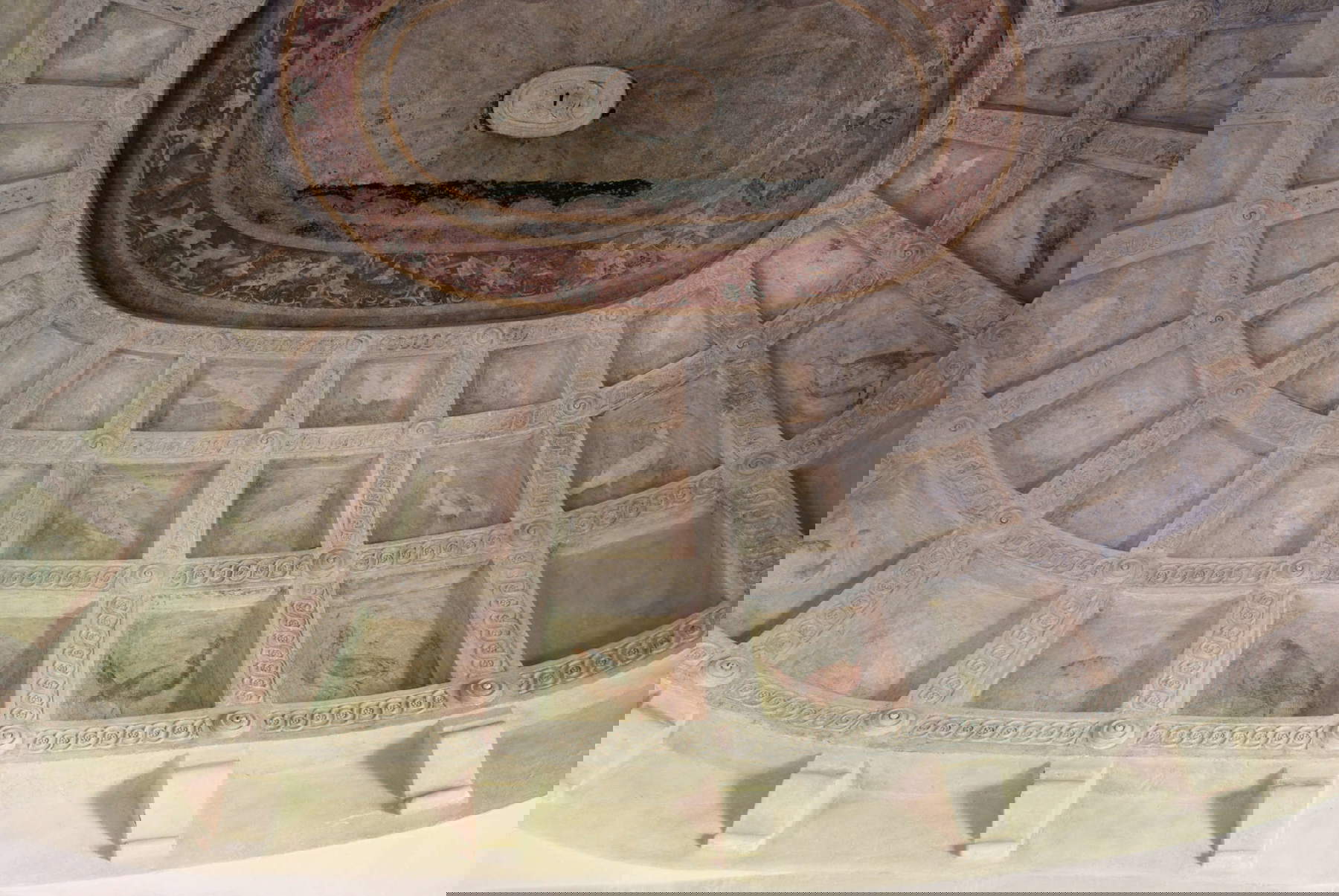
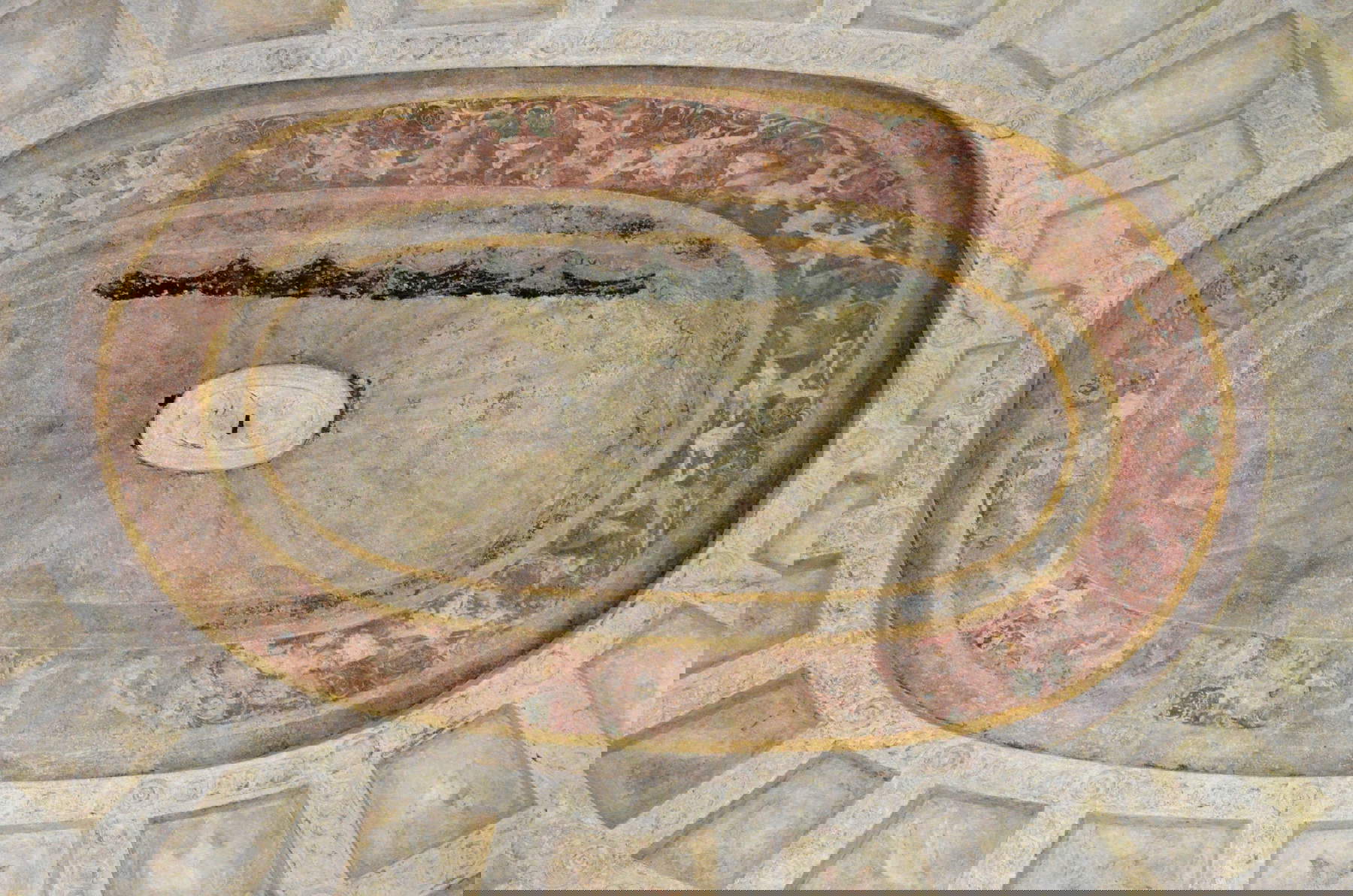
The first construction site will concern the Camerino degli Uccelli. Its structure is characterized by a masonry vault with an elliptical plan divided into sixty-six trapezoidal lacunars. The cornices bordering the lacunars feature refined stucco reliefs with interlaced motifs and Roman nails. A different bird is depicted within each lacunar, following an iconographic repertoire that highlights the Renaissance interest in nature and the variety of the animal world. The stuccoes date from 1532, while in 1534 a grotesque figuration was added to the central oval, further enriching the decorative complexity of the room. The recovery of the Camerino will make it possible to restore to its original legibility a significant ornamental ensemble, the current fragility of which has long prevented its enjoyment.
Fondazione Palazzo Te and Istituti Santa Paola have signed a multi-year agreement aimed at consolidating a structured collaboration both in terms of training and on a technical and theoretical level, sharing the fundamental principles of protection and conservation. The agreement represents a significant milestone in the palace’s opening up to projects that combine conservation needs and educational activities in a highly specialized context. Through this ongoing relationship, the Foundation aims to create opportunities for study and professional comparison while ensuring the systematic care of its spaces in a conservation process understood as constant monitoring and planned intervention.
In fact, the planned interventions are located within the Conservation Plan developed by Fondazione Palazzo Te as part of the Concession. The Plan is conceived as a dynamic system that evaluates the interactions between architectural and decorative elements and processes of use, with particular attention to phenomena affecting the stability and legibility of surfaces. This approach is based on the provisions of the Cultural Heritage Code, with reference to ordinary and extraordinary conservation interventions. During the year dedicated to the Cinquecentenary, the Foundation has already completed among the main interventions the conservative restoration of the ceiling of the Hall of Cupid and Psyche and the associated diagnostic and monitoring campaign, which has contributed to expanding the knowledge of the decorative apparatus and its state of conservation.
The School of Restoration and Conservation of Cultural Heritage of the Santa Paola Institutes is based in the ancient convent complex founded in 1420 by Paola Malatesta Gonzaga and located in the historic heart of Mantua. The Institutes today constitute one of the most relevant centers of reference in northern Italy for restoration training and practice. Educational activities include the course for Cultural Heritage Restoration Technician and the five-year single-cycle degree course for Cultural Heritage Restorer.
“The collaboration with the Santa Paola Institutes is valuable for the high professionalism always demonstrated by them and for the didactic intent of field restoration of a precious fragment of the palace,” says Fondazione Palazzo Te President Giovanni Pasetti. “In fact, these are the last two monumental rooms ever subjected to an organic intervention. Today begins a collaboration that I believe will be long-lasting and fertile.”
“It is with great pleasure that we kick off this new collaboration in a Mantuan context that has seen us committed over the years alongside numerous other partners to the enhancement of the city’s artistic heritage,” says the director of the Santa Paola Institutes, Enrico Furgoni. “The school, after the activation in 2017 of the five-year single-cycle degree for ’Restorer of Cultural Heritage’ has undergone an exceptional development, arriving to be one of the most promising training realities in this field throughout the country. We see this result as an achievement of the whole city also after the agreement that our degree courses have signed with the Univermantova Foundation: a master’s degree so closely related to the preservation of the artistic heritage can only be a great opportunity for a Unesco city whose treasures are known internationally.”
|
| Mantua, at Palazzo Te new restorations in 2026: interventions on Camerino degli Uccelli and Camera Grande |

Warning: the translation into English of the original Italian article was created using automatic tools. We undertake to review all articles, but we do not guarantee the total absence of inaccuracies in the translation due to the program. You can find the original by clicking on the ITA button. If you find any mistake,please contact us.






















 IT
IT FR
FR DE
DE ES
ES CN
CN