





In the heart of the Denon Wing—the most visited section of the Louvre—the Courtyard of the Sphinx is set to undergo a transformation. Following the restoration of Anne of Austria’s apartments, which was completed in 2024, the French museum is launching a new and ambitious project to redevelop one of the most significant spaces in its history. The courtyard will be restored, redesigned from a museographic perspective, and repurposed to house the works of the revamped exhibition dedicated to Roman art.
To support the project, the Louvre is launching a special fundraising campaign called “All Patrons! 2026 ”: the goal is to raise 800,000 euros by engaging thousands of museum enthusiasts and supporters. Donations can be made on the campaign website through January 19, 2027. The restoration will be overseen by Michel Goutal, chief architect for historic monuments, while the museum design will be entrusted to the WHY-BGC consortium. The work is expected to be completed around 2029.
One of the main projects will involve the glass roof, installed in 1934. The current structure suffers from water infiltration and insufficient ventilation, and requires particularly complex maintenance. It will therefore be completely replaced by a new glass roof, with twice the transparent surface area and a passive cooling system based on natural ventilation. This solution aims to ensure more stable conditions for the preservation of the artworks, reduce energy consumption, and improve visitor comfort, while also addressing new requirements related to climate and the sustainability of historic buildings.
The facades, including those designed by Le Vau, will also be restored to repair damage caused by water infiltration. The flooring, meanwhile, will be completely redone, incorporating an underfloor heating system. The work will also highlight the various historical layers of the architecture, distinguishing the 17th-century masonry from the 19th-century sections.
The new layout will transform the courtyard into a peaceful and welcoming space, also designed as a place to take a break during a visit to the Louvre. The museum displays will also tell the story of the courtyard and the collections that have been exhibited there over time.
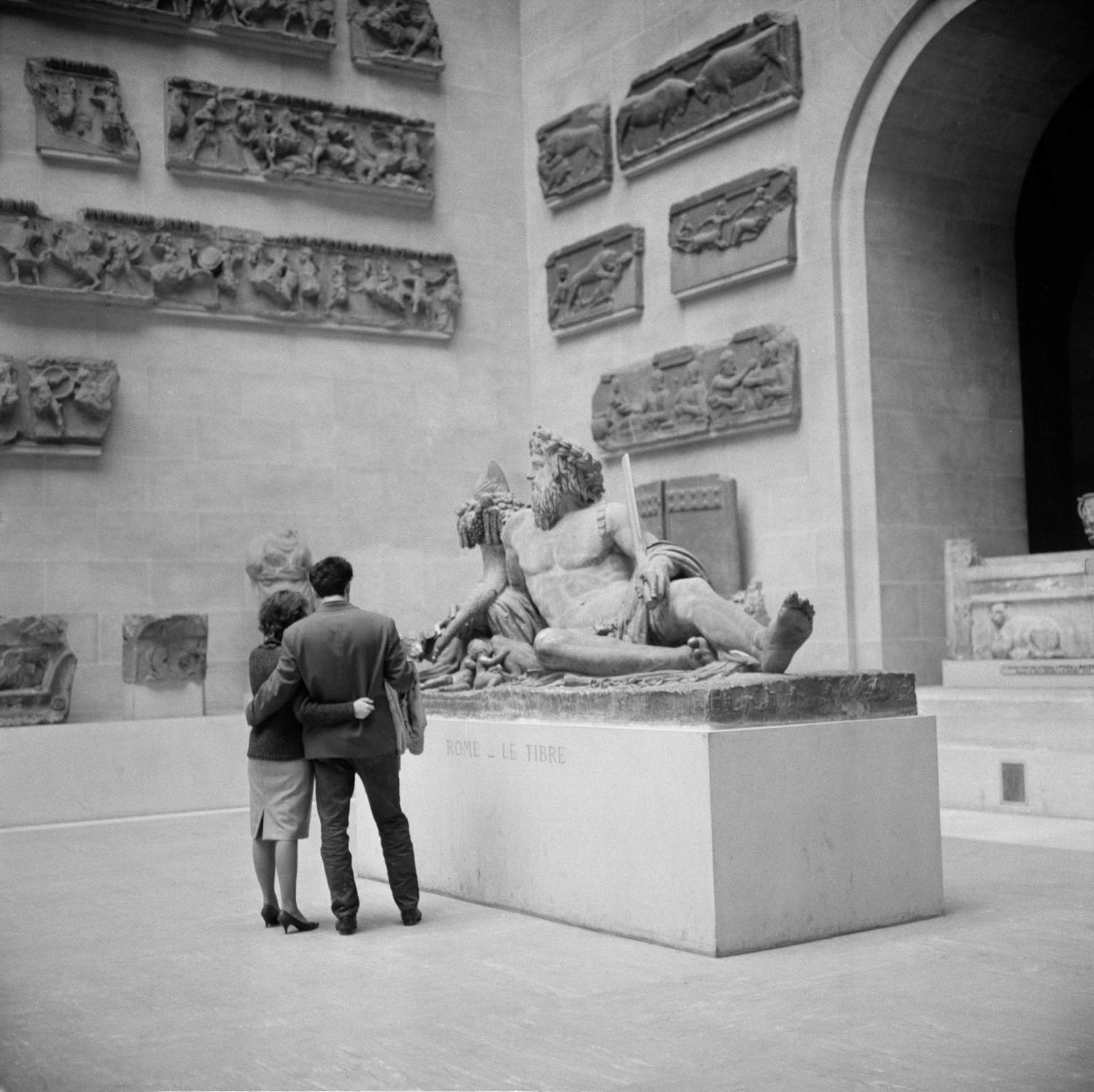
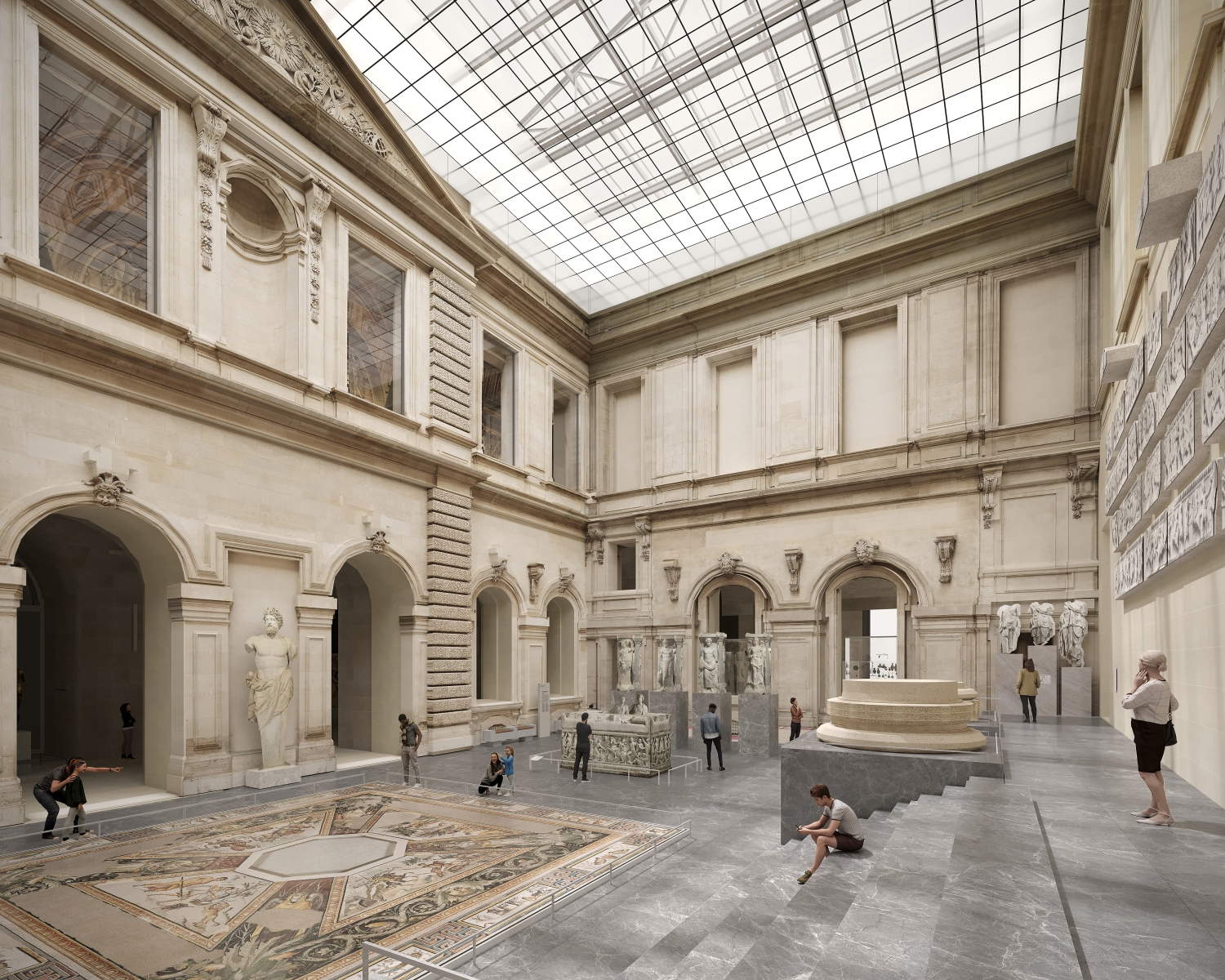
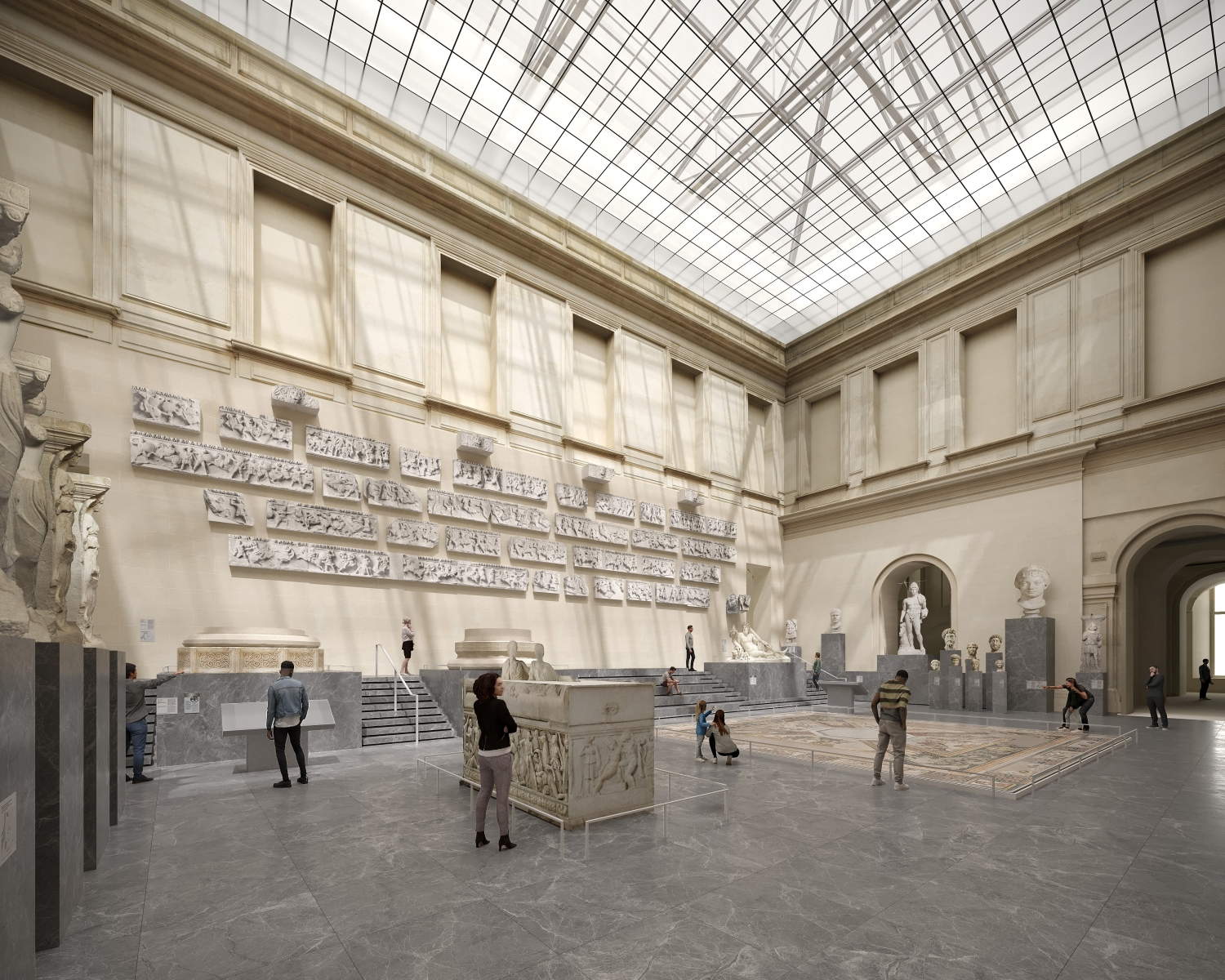
Over the centuries, the space has changed its name several times. It was known as the “Queen’s Courtyard,” “Monsieur Girardon’s Little Garden,” “the Infanta’s Courtyard,” and, after the opening of the Central Museum of the Arts in 1793, “the Museum Courtyard”. Its current name, however, dates back to the period between 1826 and 1848, when the Sphinx of Tanis was displayed in the courtyard. The monumental pink granite sculpture, dating from the Pharaonic era, was discovered in 1825 among the ruins of the Temple of Amun at Tanis. The following year, it was purchased by Henry Salt and subsequently entered the Louvre’s collections. The Sphinx of Tanis, however, has not been in the courtyard for nearly two centuries. This has given rise to a second initiative by the museum: to find a new name for one of the Louvre’s most iconic spaces.
For the first time, the Louvre is inviting the public to participate directly: anyone can propose a new name for the Courtyard, inspired by its architecture, its history, or the works it houses. Proposals may be submitted on the website tousmecenes.louvre.fr by November 23. Subsequently, donors to the campaign will be asked to vote on a selection of the proposed names.
Originally designed to house works from Asia Minor—present-day Turkey—the Courtyard of the Sphinx will now be dedicated to showcasing monumental sculptures from various regions of the Roman Empire. Rome’s expansion, in fact, led to a widespread dissemination of monumental sculpture, which reached even the territories farthest from the capital. There, Roman artistic models intersected with local traditions, giving rise to works characterized by original styles and distinctive features. From Asia Minor to North Africa, passing through Greece, these sculptures thus bear witness to the complex interaction between Roman culture and regional identities, demonstrating how the Empire’s expansion produced not mere artistic uniformity, but a plurality of forms and interpretations.
|
| The Louvre is restoring the Cour des Sphinxes and looking for a new name |

Warning: the translation into English of the original Italian article was created using automatic tools. We undertake to review all articles, but we do not guarantee the total absence of inaccuracies in the translation due to the program. You can find the original by clicking on the ITA button. If you find any mistake,please contact us.





























 IT
IT FR
FR DE
DE ES
ES CN
CN


