





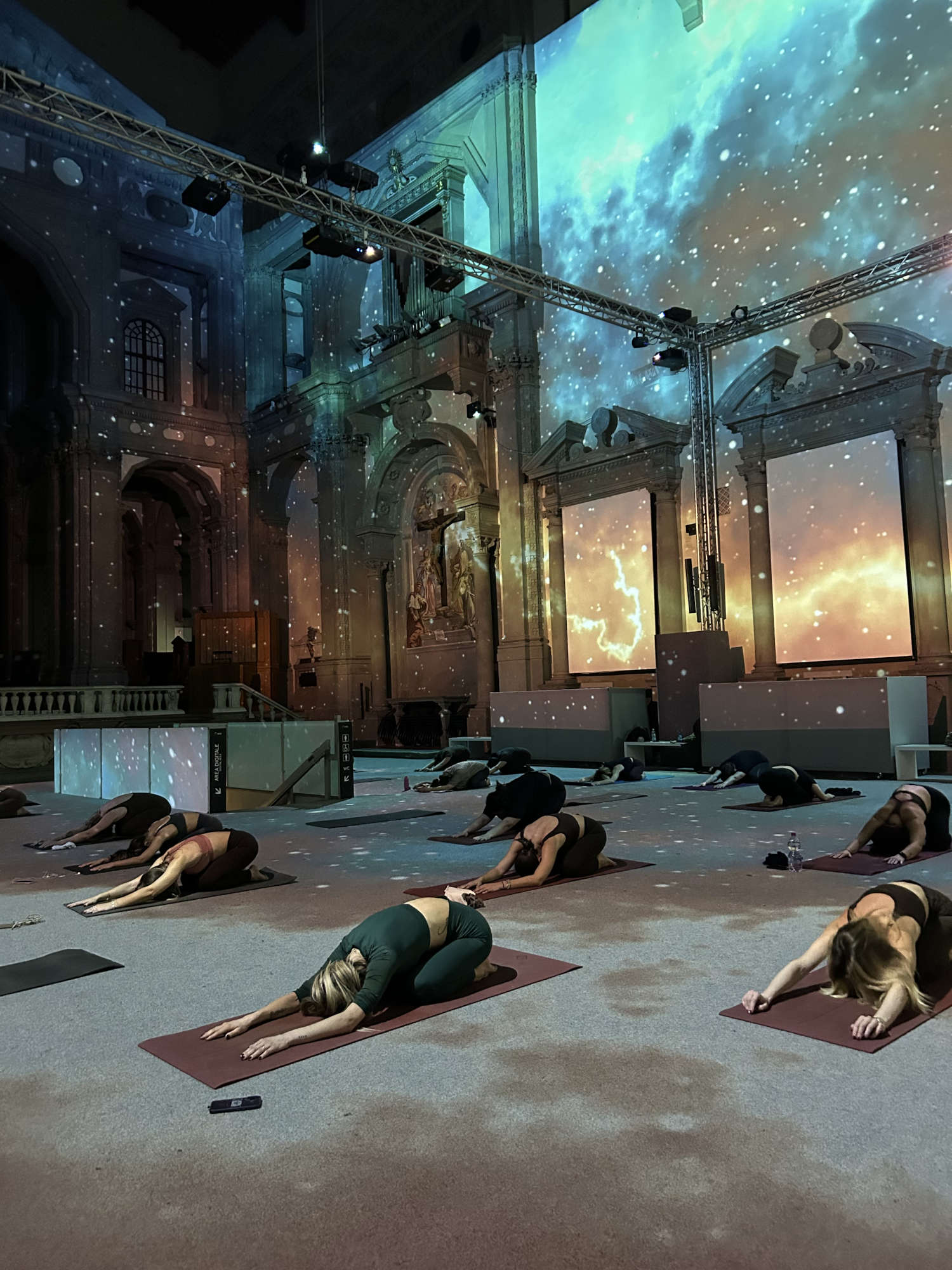
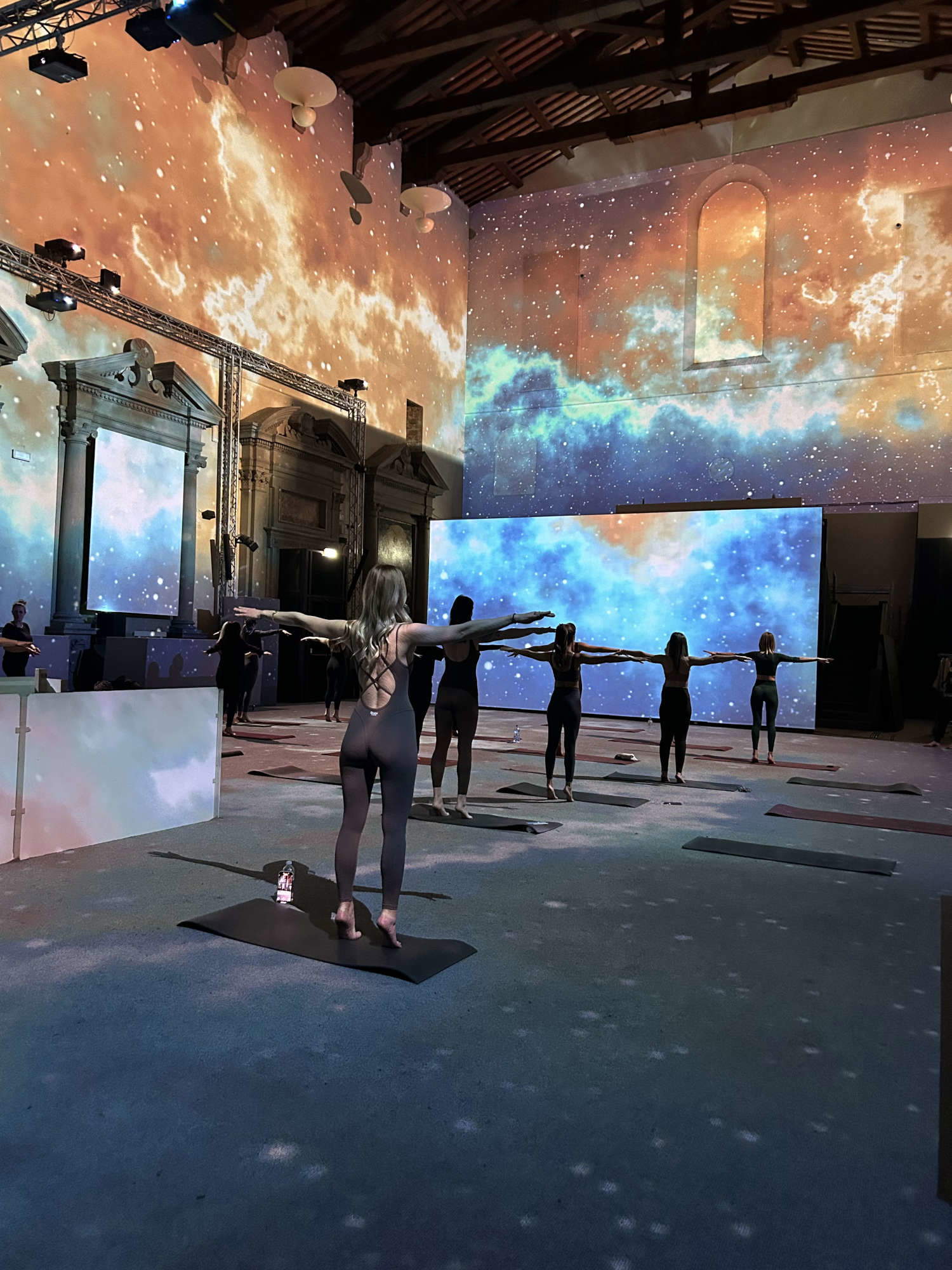
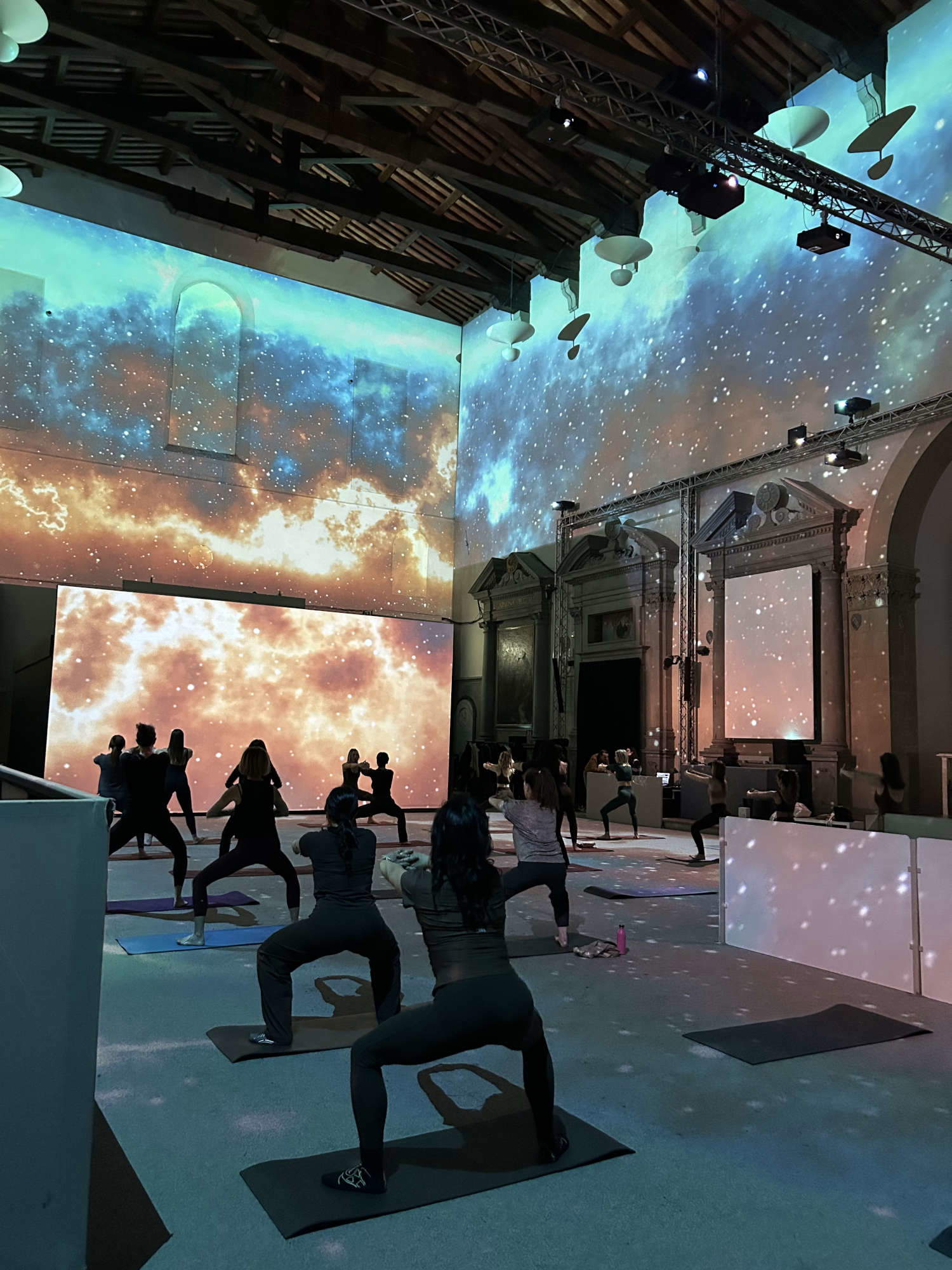
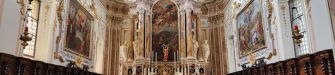
In the center of Florence, just a few meters from the Ponte Vecchio, it is possible to do pilates inside an 11th-century church. This is not completely new, because the workout to be held on Saturday, March 28, was preceded by two other appointments, one in December and one in March: the news is that, given the success of the proposal, this activity will become structural, as far as we know. We are in the church of Santo Stefano al Ponte, renamed the “Cathedral of the Image” since 2015 after the company Crossmedia Group turned it into the venue for its immersive shows. And, apparently, also into a gymnasium. So the church is preparing to host a new ORA Pilates session on Saturday, March 28, once again transforming a centuries-old nave into a space dedicated to contemporary wellness.
The appointment is set for 10 a.m., when Aurora Faccio, leading Aurora Personal Pilates Studio, will lead an hour of exercises amid music, lights and immersive projections. The proposal is clear: to offer participants an experience that combines movement, energy and body awareness, promising benefits beyond class time. And so far, nothing unusual: we are used to seeing the proliferation of hybrid initiatives between fitness and cultural entertainment. Yet the context in which all this takes place continues to raise some questions. Because while the event is presented as a “not-to-be-missed appointment to take care of oneself in a space where art and movement meet,” it is hard to ignore the fact that it all takes place inside a building that for centuries has been a place of worship and a reference point for the city community.
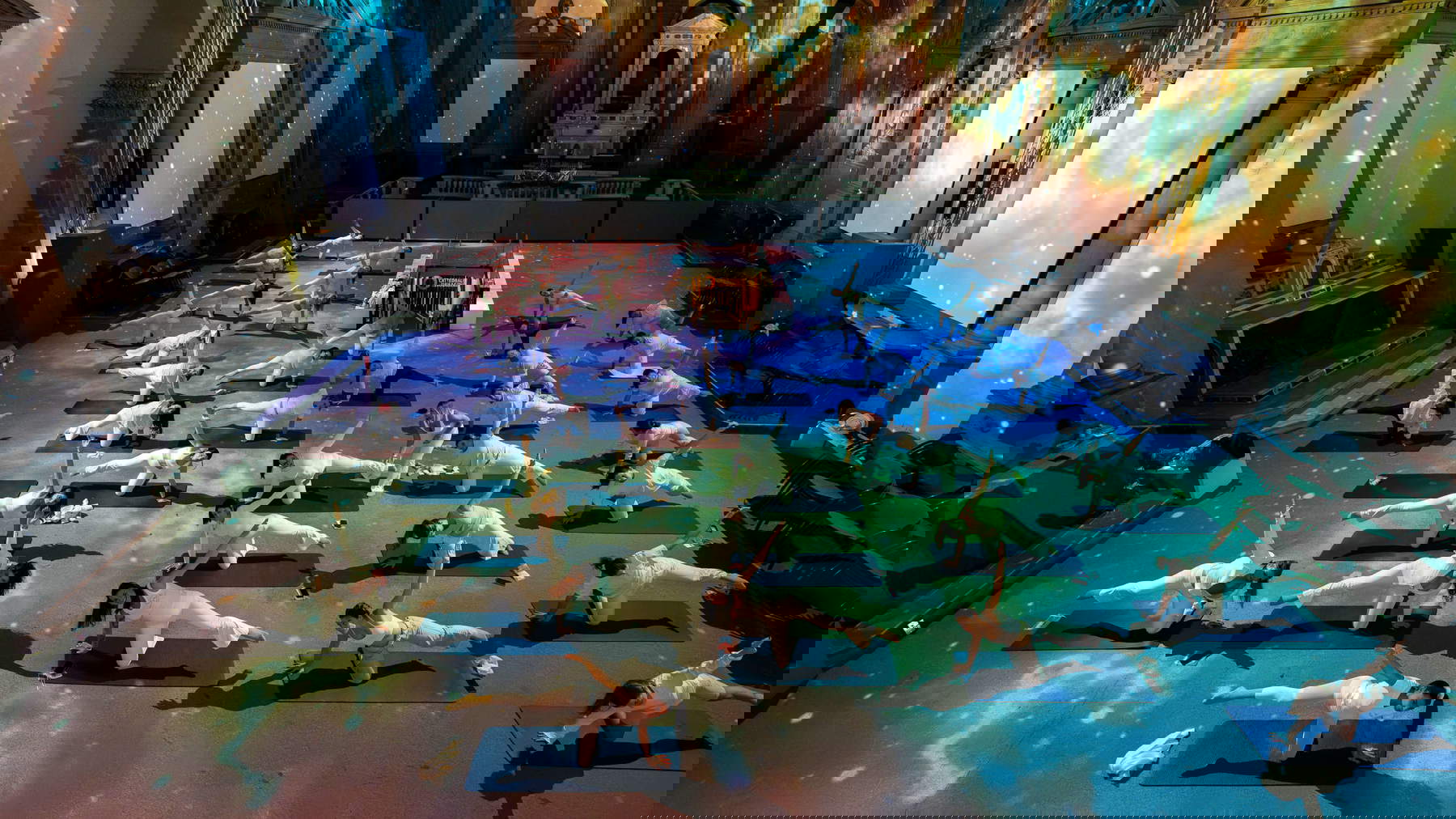
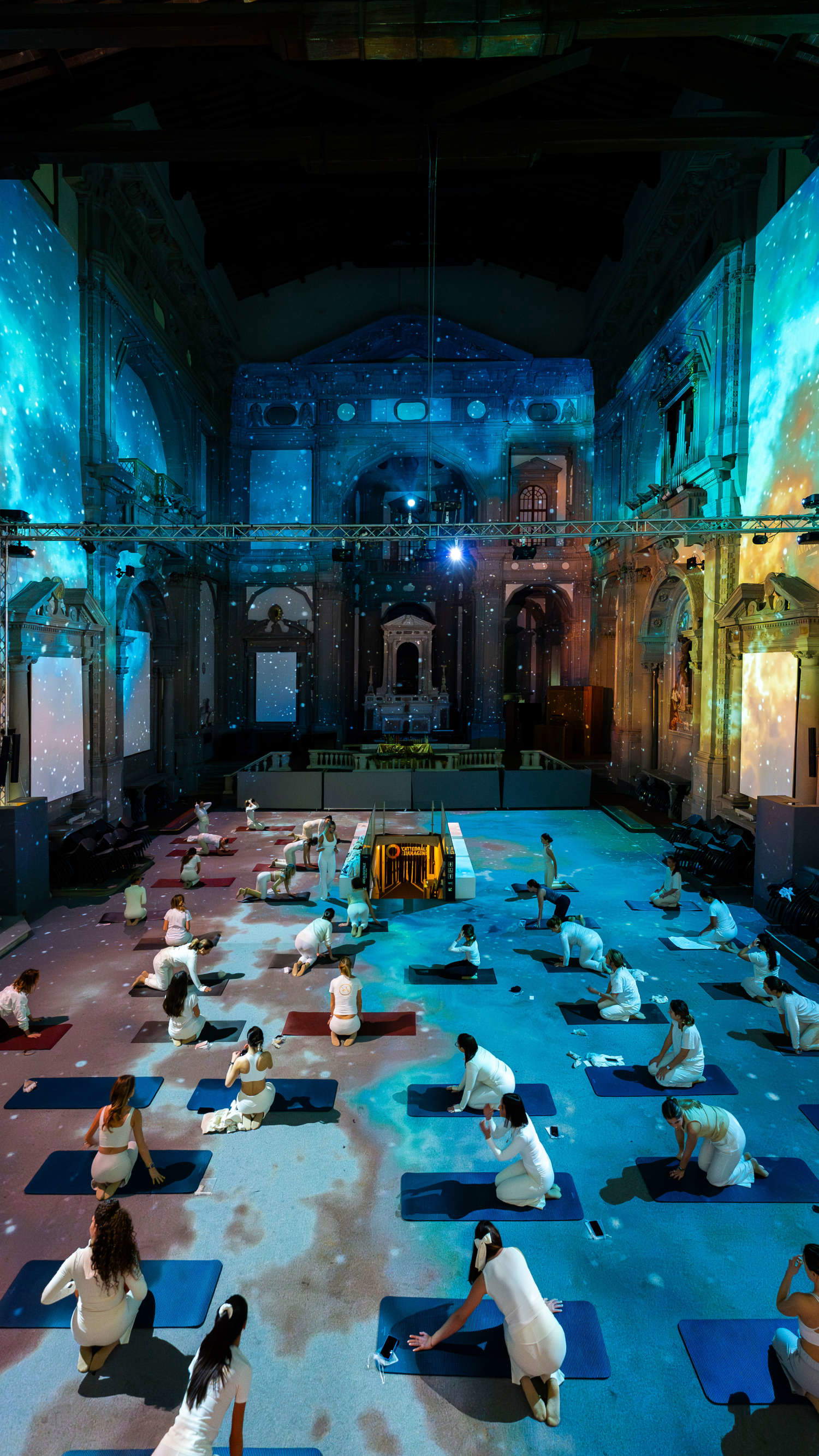
NOW Pilates, as mentioned, is back for the third time in this space, after the dates in December and early March, and the success of the audience seems to confirm a now established trend: Crossmedia Group, through a statement, has already let it be known that the format will be repeated in the coming months. From an organizational point of view, everything is built to make participation simple and immediate. Places are limited and bookable via email, and mats are provided on site, removing any practical obstacles. A detail that says a lot about the setting of the event: accessible, yes, but also perfectly embedded in an experiential product logic.
To complete the package, there is also the possibility of a free visit, at the end of the session, to the Frida Kahlo - Emotion Exhibition, on view until April 19. A combination that reinforces the idea of an integrated offer.
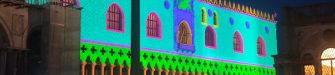
The initiative of the “Cathedral of the Image” to convert one of Florence’s most interesting churches, however deconsecrated, into a space for immersive shows has already raised more than a few questions, since the projections completely transform the perception of the space. It is a powerful scenic effect designed to amaze and engage. But it is also a sign of a deeper transformation: one that leads places laden with history to become containers for increasingly entertainment-oriented experiences.
To understand the symbolic weight of this transformation, one need only trace the history of Santo Stefano al Ponte. Documented as early as 1116, the church has its roots in an even more remote past, so much so that some traditions even link it to the time of Charlemagne. Over the centuries, the building has gone through different phases, becoming a point of reference for noble families, the seat of corporate activities and a place of even institutional importance in medieval Florence. Between the 13th and 14th centuries it took on a more defined form, with the creation of a single nave and choir chapels, while in the 15th century it was enriched with a Brunelleschi-style cloister. Its importance was such that, on the occasion of the election of the city’s leaders, it fell to the prior of Santo Stefano to celebrate mass. The most radical transformations came between the 16th and 17th centuries, however, when the building was completely remodeled according to an original architectural language based on broken lines and complex geometries. An intervention that still represents one of the most distinctive elements of the church, and yet projections prevent it from being grasped.
The subsequent history is marked by traumatic events and continuous rebirths. The 1944 bombings, which devastated the area around the Ponte Vecchio, also hit Santo Stefano hard, leading to the death of parish priest Pietro Veneziani, who remained attached to his church until the very end. Then the 1966 flood and the 1993 Via dei Georgofili bombing, which caused further damage, followed by restoration and new uses. From the 1980s onward, the church permanently lost its religious function, becoming first an auditorium and then an exhibition space. Since 2015 it has been hosting interactive exhibitions, marking a definitive shift toward a contemporary cultural dimension.
It is in this trajectory that ORA Pilates fits. An event that, beyond its stated intentions, also becomes a symbol of a city that continues to reinvent its historical spaces to adapt them to new needs. An understandable choice, in some ways inevitable, but one that never ceases to raise perplexity: enhancement or a sophisticated form of cultural consumption? Meanwhile, the public seems to have no doubts. The previous editions were a good success, and everything suggests that this time, too, the seats will sell out quickly. A sign that the formula works, also (and perhaps above all) thanks to the charm of a place that continues to exert its attraction, regardless of its use.
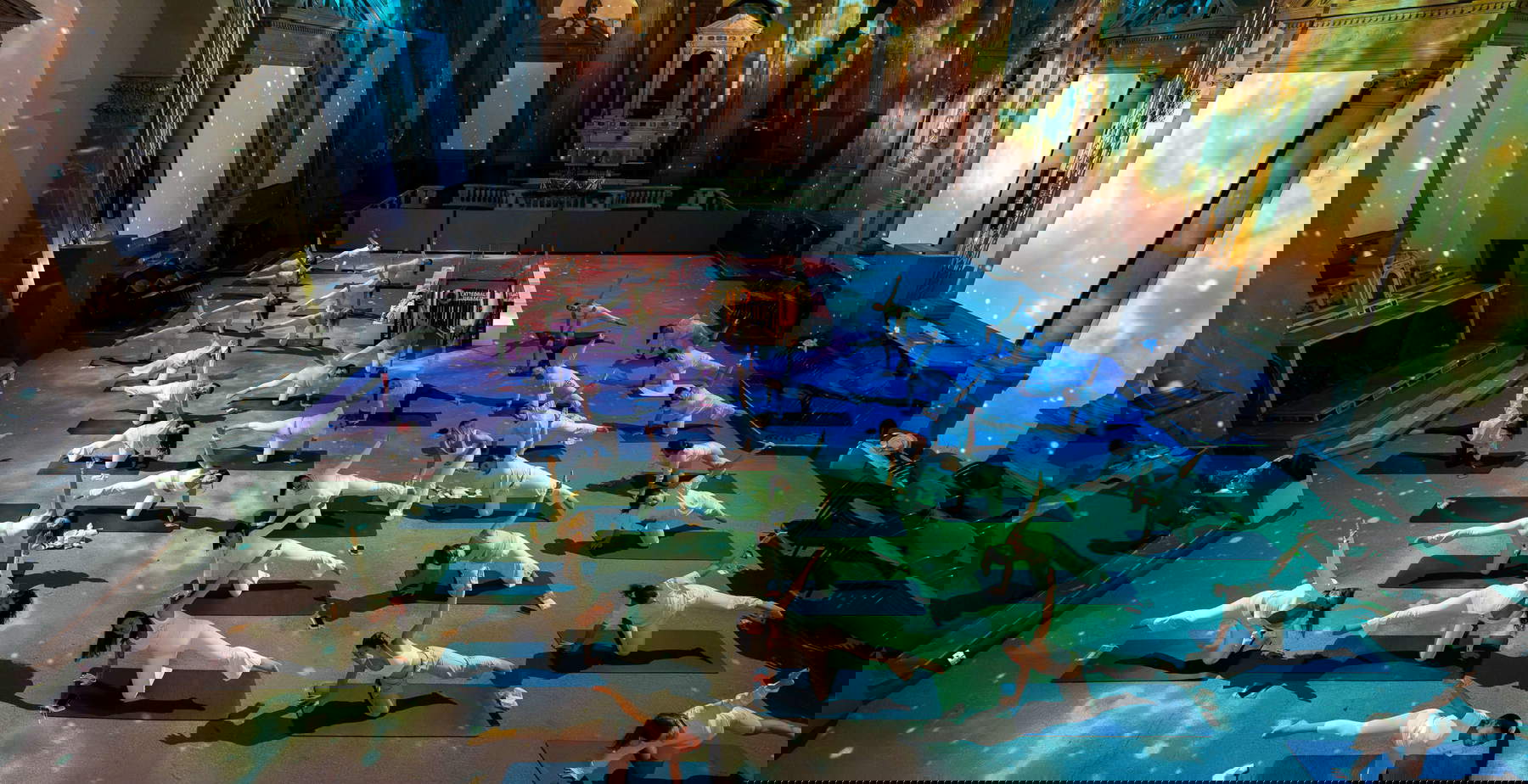 |
| In Florence, pilates is done inside a 12th-century church |

Warning: the translation into English of the original Italian article was created using automatic tools. We undertake to review all articles, but we do not guarantee the total absence of inaccuracies in the translation due to the program. You can find the original by clicking on the ITA button. If you find any mistake,please contact us.






















 IT
IT FR
FR DE
DE ES
ES CN
CN