



by Redazione 14/05/2026



Categories: News / Disclaimer
On May 16, 2026, the MarteS Museo d'Arte Sorlini in Calvagese della Riviera will host a study day dedicated to Pietro Bellotti. The focus of the conference will be new attributions, restorations, scientific investigations and updates on the Venetian exhibition at the Gallerie dell'Accademia.
The MarteS Museo d’Arte Sorlini in Calvagese della Riviera, in the province of Brescia, will host on Saturday, May 16, 2026, a day of studies dedicated to Pietro Bellotti, a painter active in the seventeenth century between Lombardy and Veneto, who has been the focus of renewed critical attention in recent years. The initiative, organized by the Luciano Sorlini Foundation in collaboration with the Gallerie dell’Accademia in Venice, aims to take stock of the most recent developments in studies on the artist through a series of talks that will address attributional, documentary, conservation and art-historical issues.
The day will open at 10 a.m. with institutional greetings by Stefano Sorlini, president of the Luciano Sorlini Foundation. This will be followed, at 10:30 a.m., by a two-part talk by Michele Nicolaci and Filippo Piazza entitled Per un bilancio e alcune considerazioni sulla mostra Stupore, realtà, enigma. Pietro Bellotti and seventeenth-century painting in Venice. The meeting will also be an opportunity to present the project dedicated to the discovery of Pietro Bellotti through the Path for Transversal Skills and Orientation promoted by the Luciano Sorlini Foundation.


The two scholars’ contribution will retrace the recent exhibition organized by the Gallerie dell’Accademia in Venice and concluded in January 2026, dwelling on the results obtained in terms of public participation and critical response. Nicolaci and Piazza also intend to address some of the issues that emerged during the months of the exhibition, including elements related to the “behind-the-scenes” set-up and curatorial research. Reflections related to attributive, chronological and comparative issues matured both in the dialogue between the curators and in the discussion with scholars who intervened during the exhibition period will be offered. The talk will also serve as an introduction to the entire study day, clarifying its setting and objectives.
Michele Nicolaci, an art historian official of the Ministry of Culture at the Gallerie dell’Accademia in Venice since 2018, deals with seventeenth- and eighteenth-century painting and is responsible for educational services and new acquisitions at the Venetian museum. Her studies focus mainly on naturalist painting in the Caravaggesque sphere. Curated exhibitions include Da Vivarini a Tiepolo. New Acquisitions for the Gallerie dell’Accademia 2023 and Astonishment, Reality, Enigma. Pietro Bellotti and Seventeenth-Century Painting in Venice, realized in 2025 with Francesco Ceretti and Filippo Piazza. Piazza, an official of the Ministry of Culture at the Superintendence of Brescia and Bergamo, is a scholar of Lombard art history and author of monographs and contributions devoted to artists active between the 15th and 18th centuries. He has curated exhibitions devoted to, among others, Giacomo Ceruti and Renaissance painting between Brescia and Cremona.
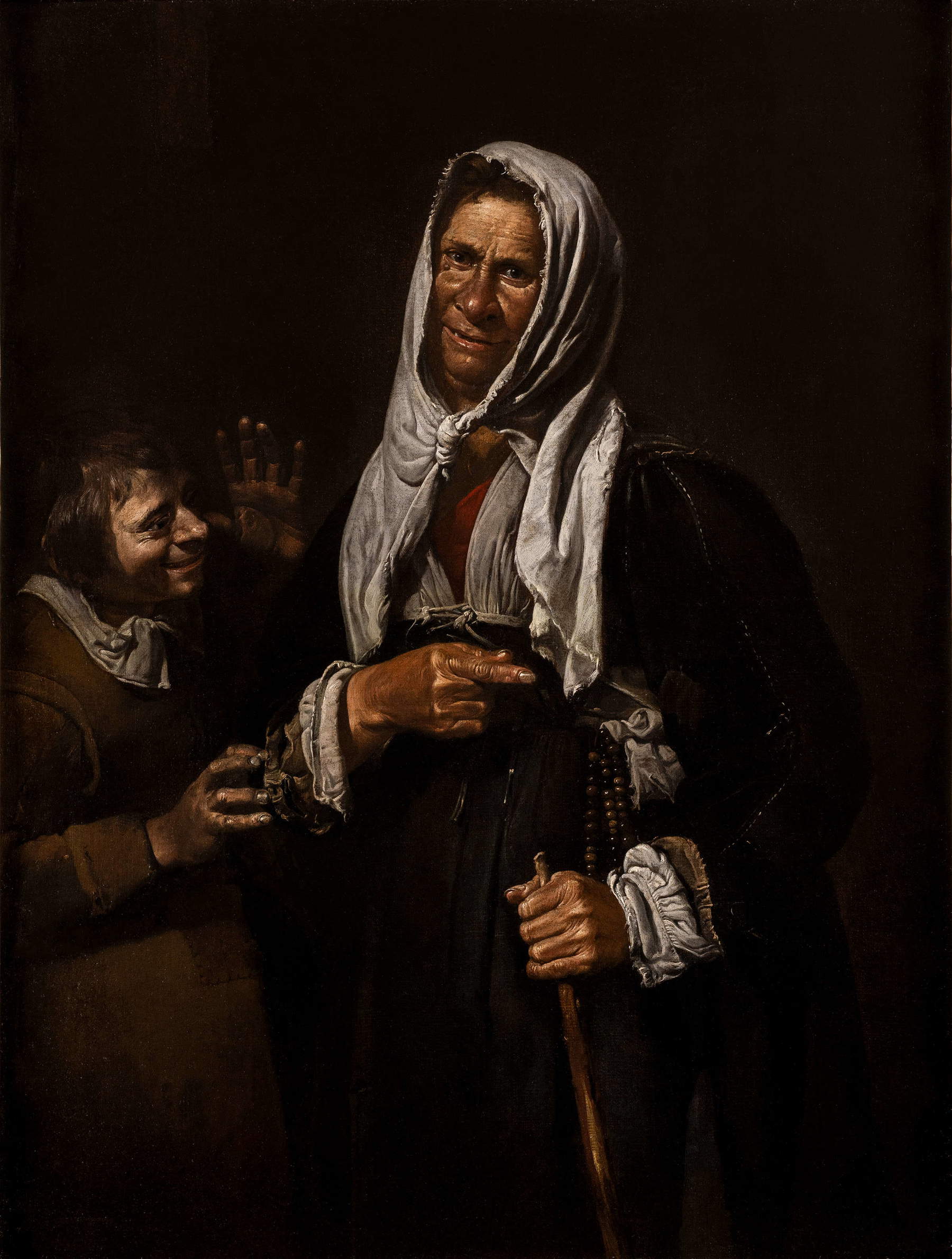
At 11 a.m. Francesco Ceretti will speak with a paper devoted to Problems of connoisseurship around Pietro Bellotti. His contribution will take as its starting point the so-called “Bellotti case,” defined as one of the most controversial issues in twentieth-century connoisseurship. According to Ceretti, the name of the Brescian painter has long been used as an extensive category to attribute works of different provenance and quality, especially pitocchi and philosophers, causing an uncontrolled expansion of the artist’s catalog. The talk therefore aims to initiate a critical review of attributions through a number of case studies that will allow us to distinguish Bellotti’s hand from that of other painters with whom he has frequently been confused. Works from northern, Venetian and Lombard areas will be discussed in an attempt to redefine the contours of the artist’s language.
Ceretti is a research fellow in modern art history at the University of Pavia, Cremona branch. His research mainly concerns the figurative culture between Lombardy and Veneto in the modern age. He has published monographs devoted to Genovesino and Altobello Melone and curated exhibitions on Giacomo Ceruti and Boccaccio Boccaccino. He was also involved in the curatorship of the 2025 Venetian exhibition on Bellotti.
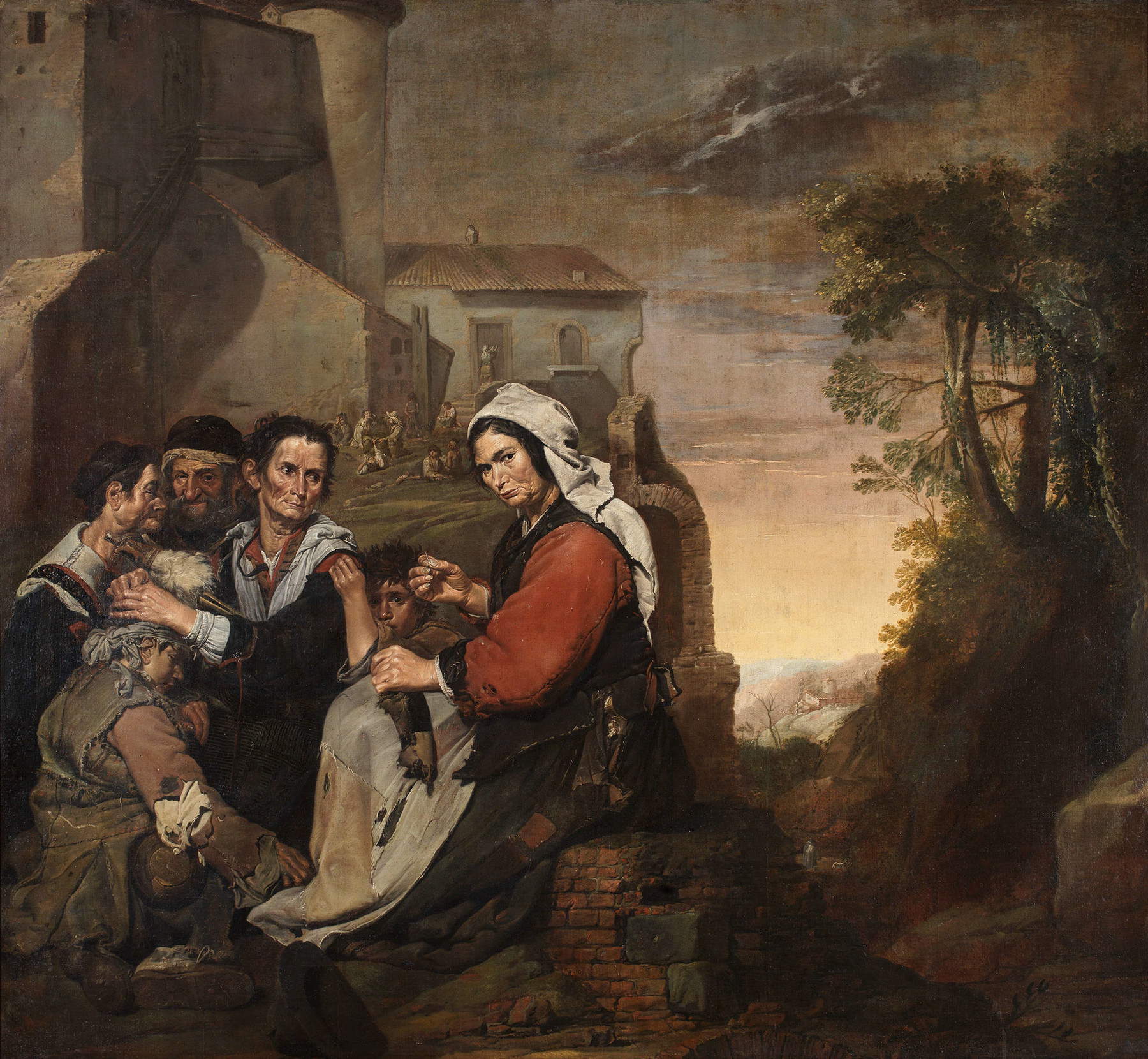
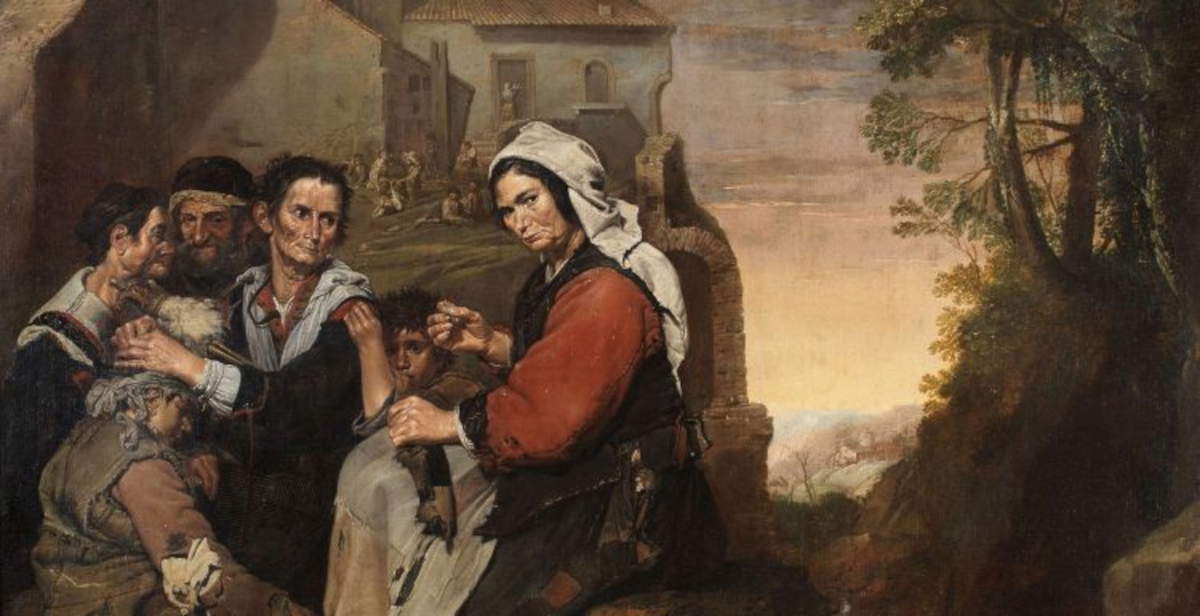
At 12 noon it will be the turn of a talk devoted to the restorations and scientific investigations conducted on some of Bellotti’s works. Giulio Bono, Rosa Costantini, Michele Nicolaci and Cristiana Sburlino will present the results of the conservation operations carried out on theSelf-portrait in the guise of Stupor and on the Popolani all’aperto, both works from the Gallerie dell’Accademia in Venice restored for the exhibition. Through unpublished materials, the methodologies adopted and the results of the diagnostic investigations carried out at the museum’s Scientific Laboratory by Stefano Volpin and Rosa Costantini will be illustrated. The analyses also involved the Vecchia Popolana preserved at the MarteS, allowing for the first time a direct comparison between the works. The talk will conclude with some remarks by Michele Nicolaci on the use of material evidence in understanding Bellotti’s painting technique and attributive processes.
Giulio Bono, a conservator restorer based in Venice, has been working since 1991 for Italian and foreign institutions and foundations dealing with interventions on wall decorations and paintings on wood and canvas from the 15th to the 18th century. In the course of his work he has restored works by artists such as Giovanni Bellini, Piero della Francesca, Titian Vecellio, Paolo Veronese, and Giambattista Tiepolo. Her most recent interventions include the restoration of Titian’sAssunta dei Frari andAnnunciazione at the Scuola Grande di San Rocco, Giovanni Bellini’s Madonna Sorlini conserved at the MarteS, the Popolani all’aperto attributed to Pietro Bellotti at the Gallerie dell’Accademia, and Girolamo Savoldo’s Natività in the Venetian church of San Giobbe.
Rosa Costantini is a diagnostician chemist specializing in the study of art materials. In 2021 she received a PhD from the University of Glasgow with a thesis dedicated to the chemical and physical degradation of tapestries. She then collaborated with Ca’ Foscari University of Venice and the National Research Council focusing on painting techniques and materials. Since 2024 he has worked with the Scientific Laboratory of the Gallerie dell’Accademia in Venice participating in diagnostic campaigns dedicated to the study of execution techniques and conservation problems of the museum’s works.
In the afternoon, at 3 p.m., Silvia Merigo will present an update of the documentary record concerning Pietro Bellotti. The talk aims to systematically reexamine the corpus of documents published in the Venetian exhibition catalog, supplementing it with new archival acquisitions and historical sources. Merigo will focus attention on the still unclear points of the painter’s biography, starting from the definition of the date of his birth to the last years of his activity. Issues related to the artist’s Brescian origins, his professional relationships in the Venetian period, his Mantuan experience in the context of the Gonzaga court, and finally the Garda phase, considered relevant for understanding the last developments of his activity, will be addressed.
An art historian trained at the University of Verona and at the Catholic University of the Sacred Heart in Milan, Merigo has worked in the field of cataloguing and enhancement of Brescian and Garda cultural heritage. Since 2024, he has been an art historian official for the Ministry of Culture at the Ducal Palace in Mantua.
At 3:30 p.m. Mauro Pavesi will speak on the theme of “reality painting” between Lombardy and Veneto between the seventeenth and eighteenth centuries. Starting from the insights that emerged from the recent Venetian exhibition, the scholar will reflect on the fortune of genre painting in northern Italy and the relations between Bellotti and other artists active in the same cultural sphere. The painter’s Lombard sojourn will provide an opportunity to analyze connections with figures such as Cipper, Sebastianone and Magnasco, as well as with the collector’s diffusion of works by Ribera, Salvator Rosa and the so-called Maestro della Tela Jeans. Pavesi will also focus on the difficulty of rigidly separating the painting of reality from fantastic inventions, a theme that will also be extended to Giambattista Tiepolo’s naturalistic beginnings and possible relationships with Giacomo Ceruti.
A professor of modern art history at the Catholic University since 2011, Pavesi has devoted his studies to figures such as Leonardo, Lomazzo, Giulio Romano and Giovanni Ambrogio Figino. In the last months of 2025, he conducted a research stay at the Prado Museum in Madrid.
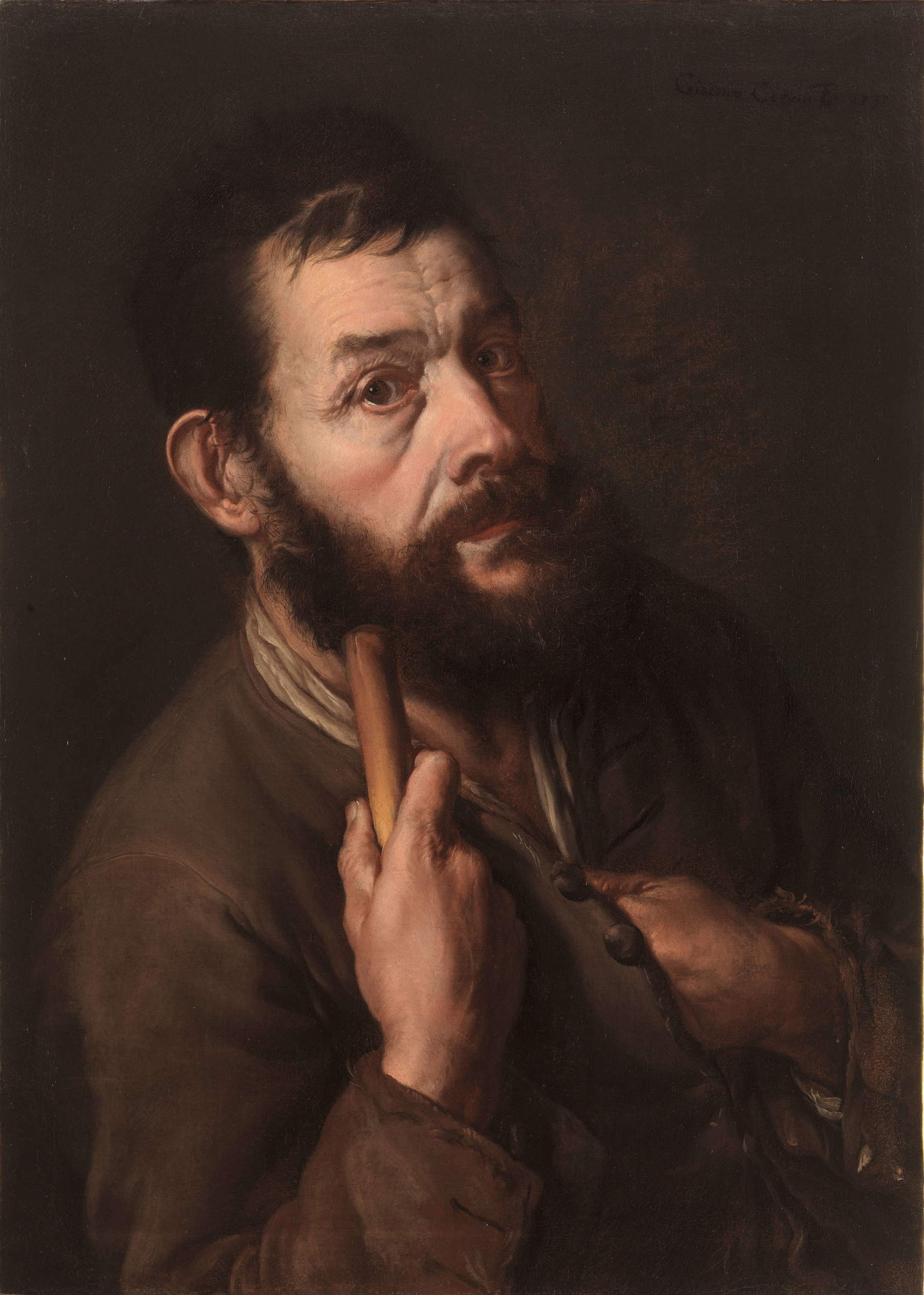
At 4 p.m. Stefano Lusardi will present an unpublished inventory of the Donà collection, a document that will provide insight into the role of Venetian collecting in the formation of Bellotti’s figurative language. The inventory, compiled between 1665 and 1672 for Palazzo Donà in Santa Fosca, documents the presence of numerous contemporary works and works by living artists, including Nicolas Regnier, Michele Desubleo, Pietro della Vecchia, Pietro Liberi, Pietro Ricchi, Daniel van den Dyck, Sebastiano Mazzoni, Ermanno Stroiffi, Giuseppe Diamantini, Girolamo Pellegrini, Giovanni Battista Langetti and Francesco Rosa. Although there are no works directly referable to Bellotti, the document allows us to reconstruct the cultural and collecting context in which the painter operated during his Venetian years.
Lusardi, conservator of the Fondazione Ugo Da Como’s art collections since 2000, collaborated with Luciano Sorlini between 2004 and 2008 and has been conservator of the MarteS since 2017. Curated exhibitions include shows dedicated to Giacomo Ceruti and reality painting between Lombardy and Veneto.
Closing the talks, at 4:30 p.m., will be Tania De Nile with a talk dedicated to the theme of the occult in Bellotti’s painting. Starting from the section The Call of the Occult of the Venetian exhibition, the talk will analyze the role of magical themes in seventeenth-century Venice through a comparison with works created in the same period in Naples, Rome, Florence and Bologna. The aim will be to highlight the plurality of meanings associated with the occult in the 17th century: a genre intended for the art market, a space for cultural experimentation, an instrument of anticlerical tension and a reflection of superstitious beliefs widespread in different social strata. In this context, the figures of sorceresses and fortune-tellers painted by Bellotti will be read as useful examples for understanding the relationships between patronage, visual culture and the representation of magic in the seventeenth century.
De Nile teaches Dutch and Flemish art at the University of Rome Tor Vergata and is head of the Pietro Canonica Museum at Villa Borghese. A specialist in artistic relations between the Netherlands and Italy, he has published studies on witch subjects and Nordic artists active in the Italian peninsula, including the volumes Fantasmagorie. Witches, Demons and Temptations in Seventeenth-Century Flemish and Dutch Art and Flemings in the South. Beyond Naples.
The day will conclude at 5 p.m. with a panel discussion coordinated by Francesco Ceretti, Michele Nicolaci and Filippo Piazza. The speakers will be moderated by Federico Giannini, journalist and director of Finestre sull’Arte.
 |
| Pietro Bellotti, a study day at MarteS revives research on the painter |
Warning: the translation into English of the original Italian article was created using automatic tools. We undertake to review all articles, but we do not guarantee the total absence of inaccuracies in the translation due to the program. You can find the original by clicking on the ITA button. If you find any mistake,please contact us.