





They were hidden behind a wall built specifically to make them impossible to find, among concrete blocks and drywall: that is how investigators recovered the last two paintings by Pierre-Auguste Renoir stolen on September 8 from the museum dedicated to the artist in Cagnes-sur-Mer, in southern France. The works were found on Friday, October 9 ( though the news was only released in the past few hours) during a second search of the main suspect’s home, but they have sustained some damage that will require restoration before they can be returned to the museum’s galleries.
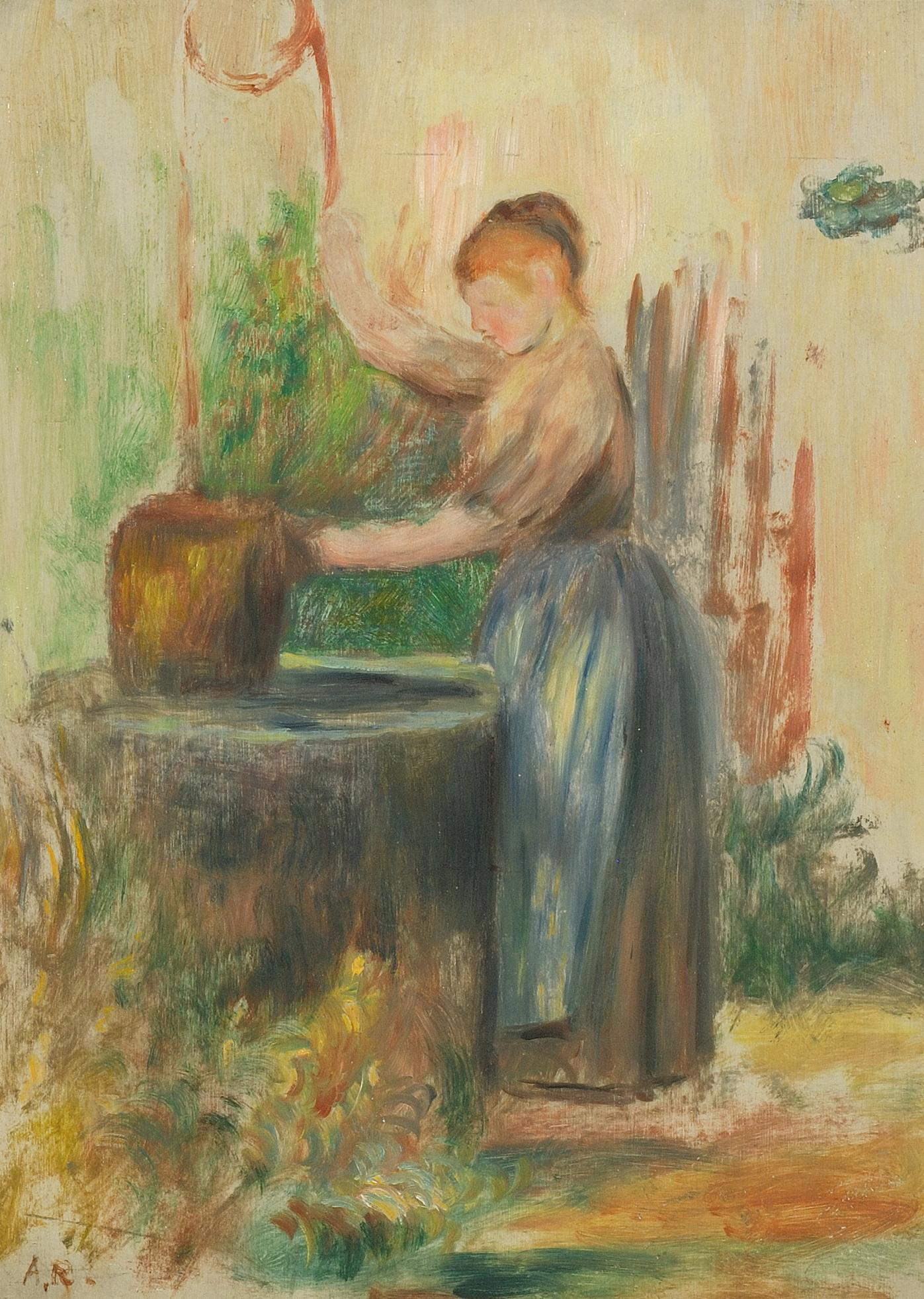
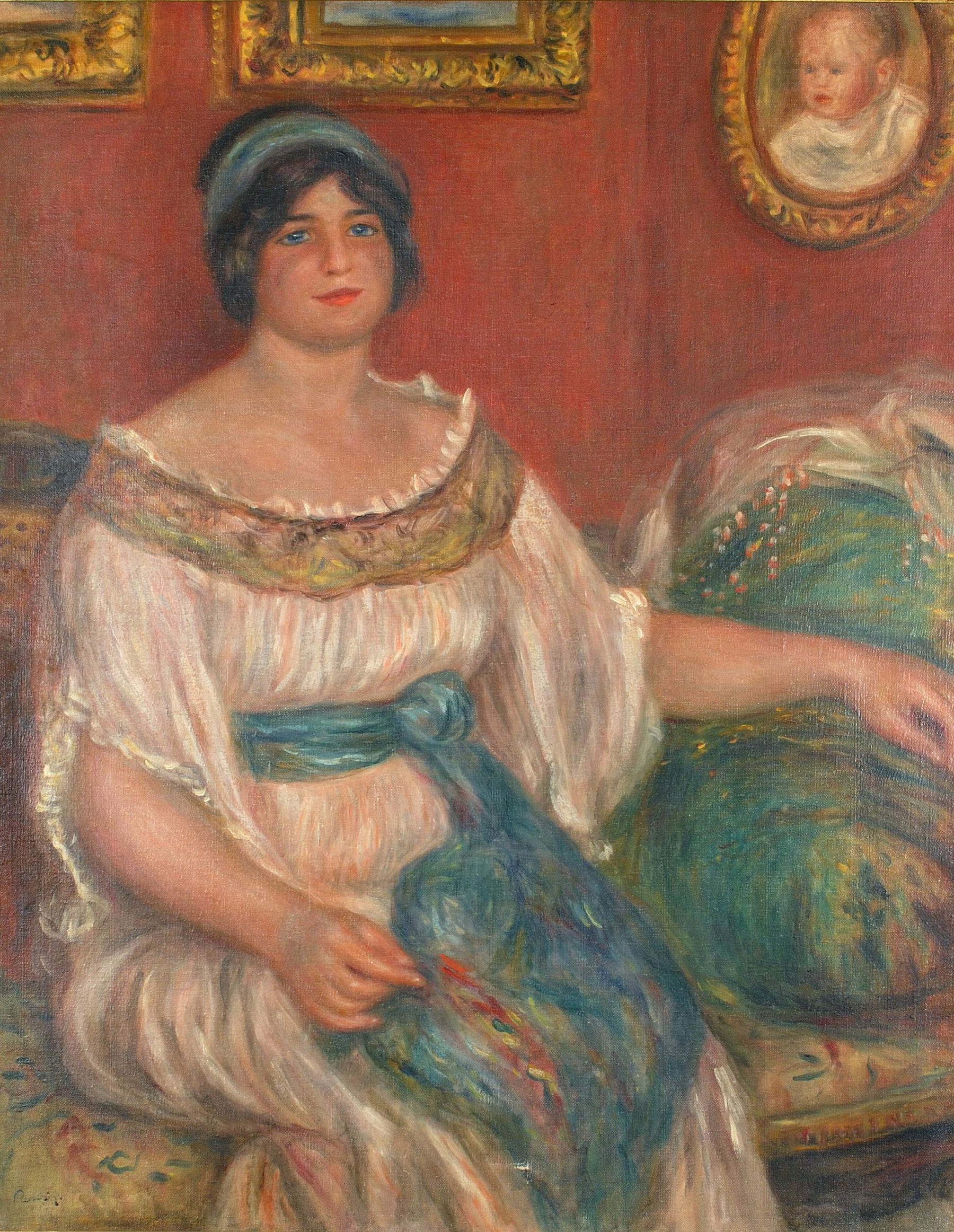
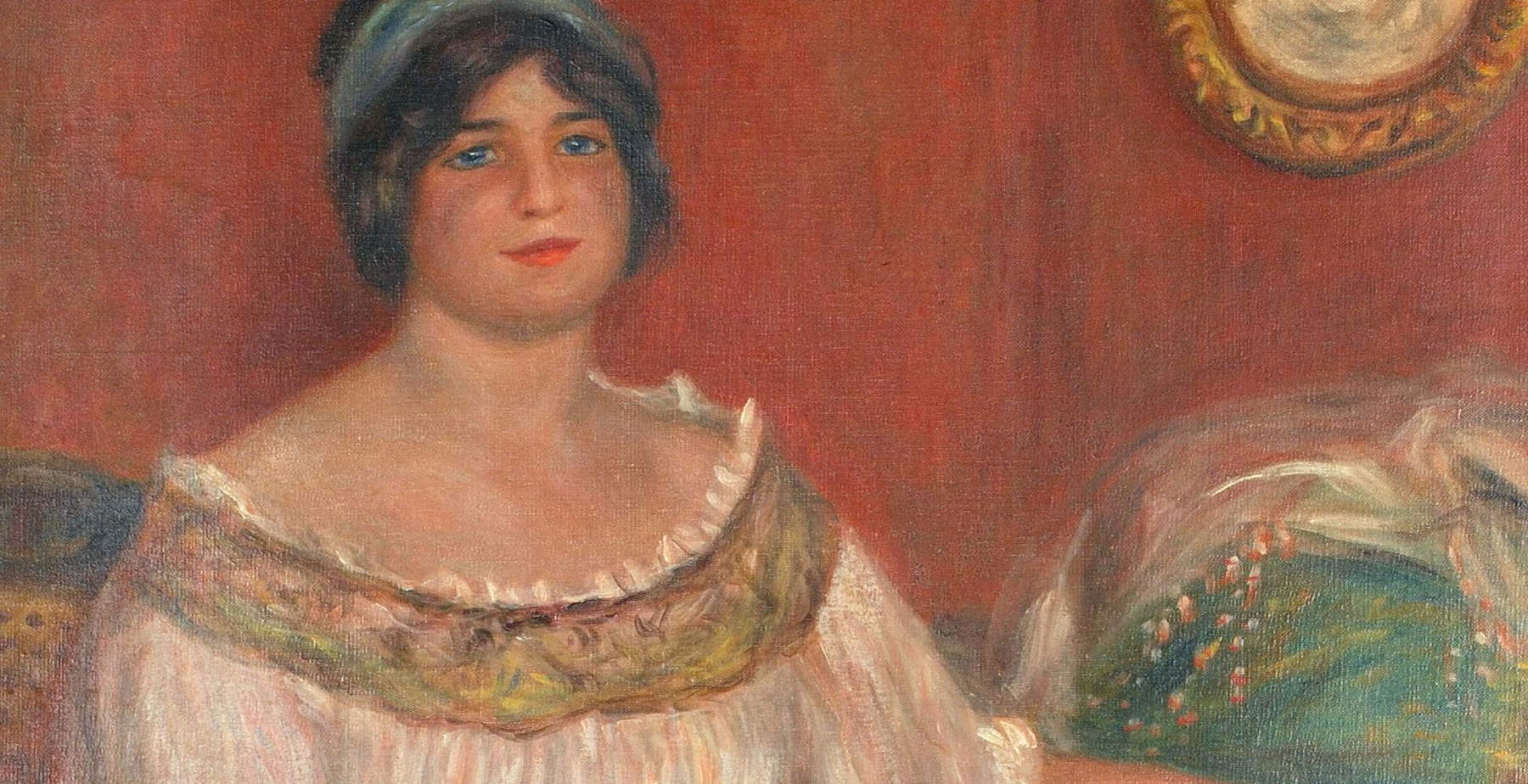
Nicolas Bessone, the public prosecutor of Marseille, provided details of the recovery during a press conference held on Monday, October 12, in Nanterre, at the headquarters of the judicial police. The works, he explained, were found “slightly damaged.” In the case of *Femme au puits*, the damage is to the frame, while the *Portrait of Madame Colonna Romano* has a tear. The condition of the paintings prevented them from being transported to Paris for the press conference: before they can be displayed again, they will need to be examined and restored.
The discovery completes the recovery of the four works taken during the theft. When the thieves fled the museum, in fact, two paintings had been left behind by the perpetrators as they escaped after the municipal police arrived. The other two, however, had disappeared, prompting an investigation that led detectives to a hiding place set up in the home of one of the suspects.
According to Éric Antonetti, head of the interdepartmental unit of the Maritime Alps Judicial Police, the paintings had been concealed behind a false wall constructed of solid blocks and drywall, making them completely invisible during a routine inspection. Antonetti expressed satisfaction with the recovery, noting that the works were found in relatively good condition, despite the damage observed.
The theft took place in the early hours of September 8. Two men had entered the museum’s garden after cutting a hole in the fence, then forced open a window to gain access to the building. CCTV footage allowed investigators to reconstruct the sequence of events: the thieves had entered a single room, where one of them used a saw to cut the paintings loose, while his accomplice placed them in a protective case.
According to Prosecutor Bessone’s reconstruction, the entire operation lasted less than two minutes. The alarm went off at 5:49 a.m., and the Cagnes-sur-Mer municipal police arrived on the scene at 5:53 a.m., forcing the perpetrators to flee. During their escape, they left behind two of the four stolen works.
A biological trace found on the case used to transport the paintings also led investigators to one of the alleged perpetrators. DNA analysis led to the identification of a 29-year-old man residing in the Var department, who was already known to law enforcement; he has been placed under investigation on charges of theft by an organized gang and criminal conspiracy. Investigators attribute a central role to him in organizing the heist.
The investigation led to the arrest of a total of six suspects in the week leading up to the press conference. According to attorneys Jean-Denis Flori and Morgan Raynaud, who are representing one of the suspects, the alleged second perpetrator of the theft was also brought before an investigating judge on Saturday, October 10, in anticipation of possible formal charges. On the same occasion, a third person was implicated, suspected of having received the stolen works or of having helped conceal them: the two recovered paintings were, in fact, hidden in his home.
Another crucial piece of evidence came from the vehicle used in the getaway. After abandoning the stolen car—which had been used to reach the museum—in the countryside near the Gréolières ski resort, the suspects reportedly took another vehicle. However, this vehicle was equipped with a tracking device installed by the police as part of a separate investigation. The presence of this device allowed investigators to track its movements, and this development made a significant contribution to reconstructing the events.
The recovery of the two paintings now allows attention to be focused on their condition. The damaged frame of *Femme au puits* and the tear in the *Portrait of Madame Colonna Romano* will require inspection and restoration before the works can be returned to public view. No date has yet been set for their return to the museum.
The Renoir Museum in Cagnes-sur-Mer is located on the estate where the painter spent the last years of his life. The theft thus targeted a place directly linked to the artist’s life story, as well as a collection of works housed in a particularly significant historical setting. With the discovery of the last two paintings, all four works stolen on September 8 have been recovered. The next step is the conservation work needed to repair the damage and, once the restoration is complete, return them to their original location.
 |
| Two Renoir paintings stolen in France have been recovered: they were hidden behind a false wall |

Warning: the translation into English of the original Italian article was created using automatic tools. We undertake to review all articles, but we do not guarantee the total absence of inaccuracies in the translation due to the program. You can find the original by clicking on the ITA button. If you find any mistake,please contact us.















 IT
IT FR
FR DE
DE ES
ES CN
CN


