





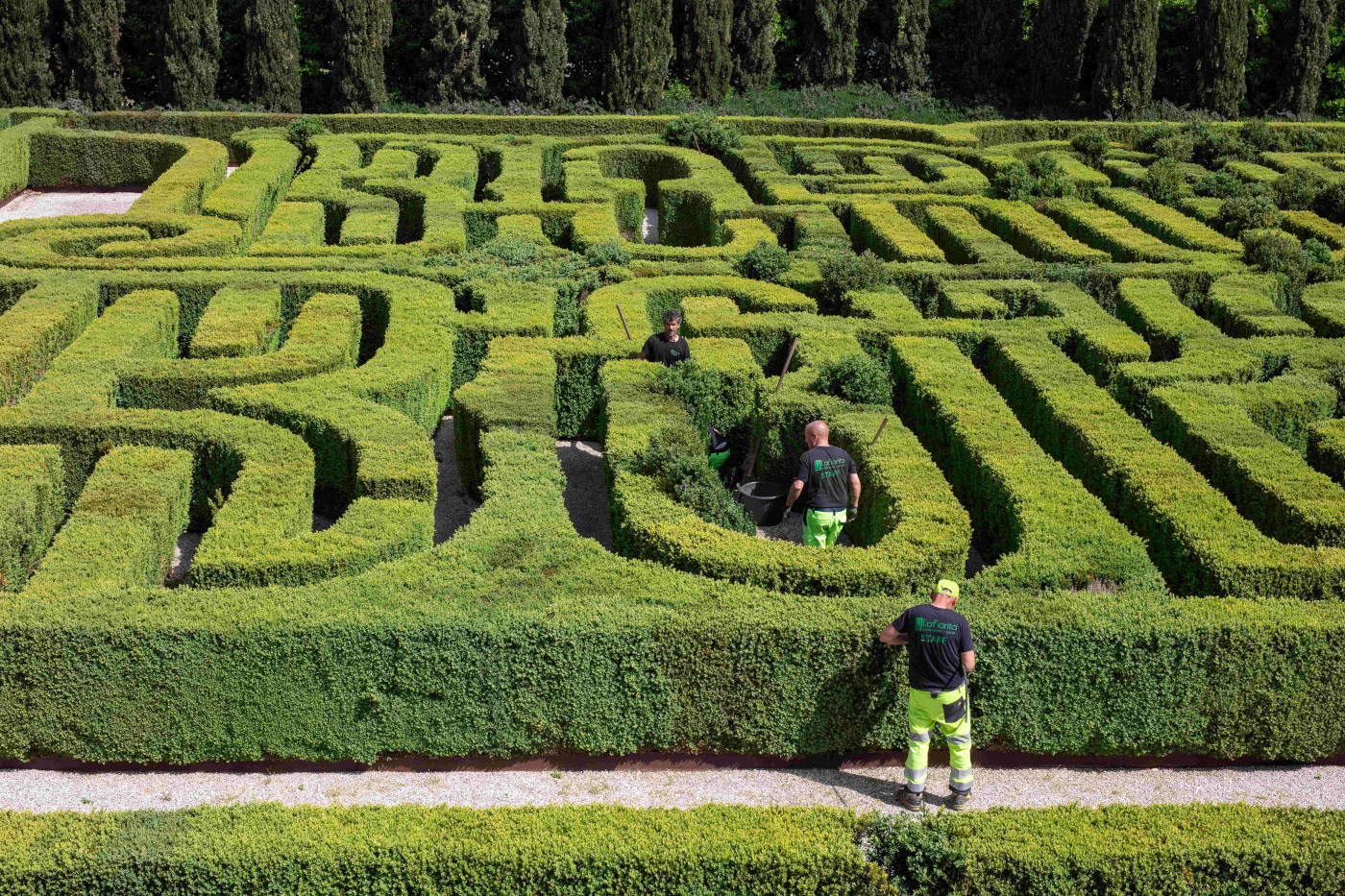
The Giorgio Cini Foundation has announced the completion of the restoration of the Borges Labyrinth, one of the most famous siteson the Island of San Giorgio in Venice, dedicated to the Argentine writer Jorge Luis Borges, the 40th anniversary of whose death falls this year. The project, carried out with the support of PwC Italia as the main sponsor, breathes new life into one of Italy’s most beautiful labyrinths, which has now become an integral part of the Foundation’s monumental complex. Conceived as a dialogue between landscape, architecture, and literature, the Borges Labyrinth serves as a sort of “third cloister” on the island of San Giorgio. Open to the public since 2021 through guided tours organized by VisitCini, it has welcomed over 25,000 visitors in the past five years.
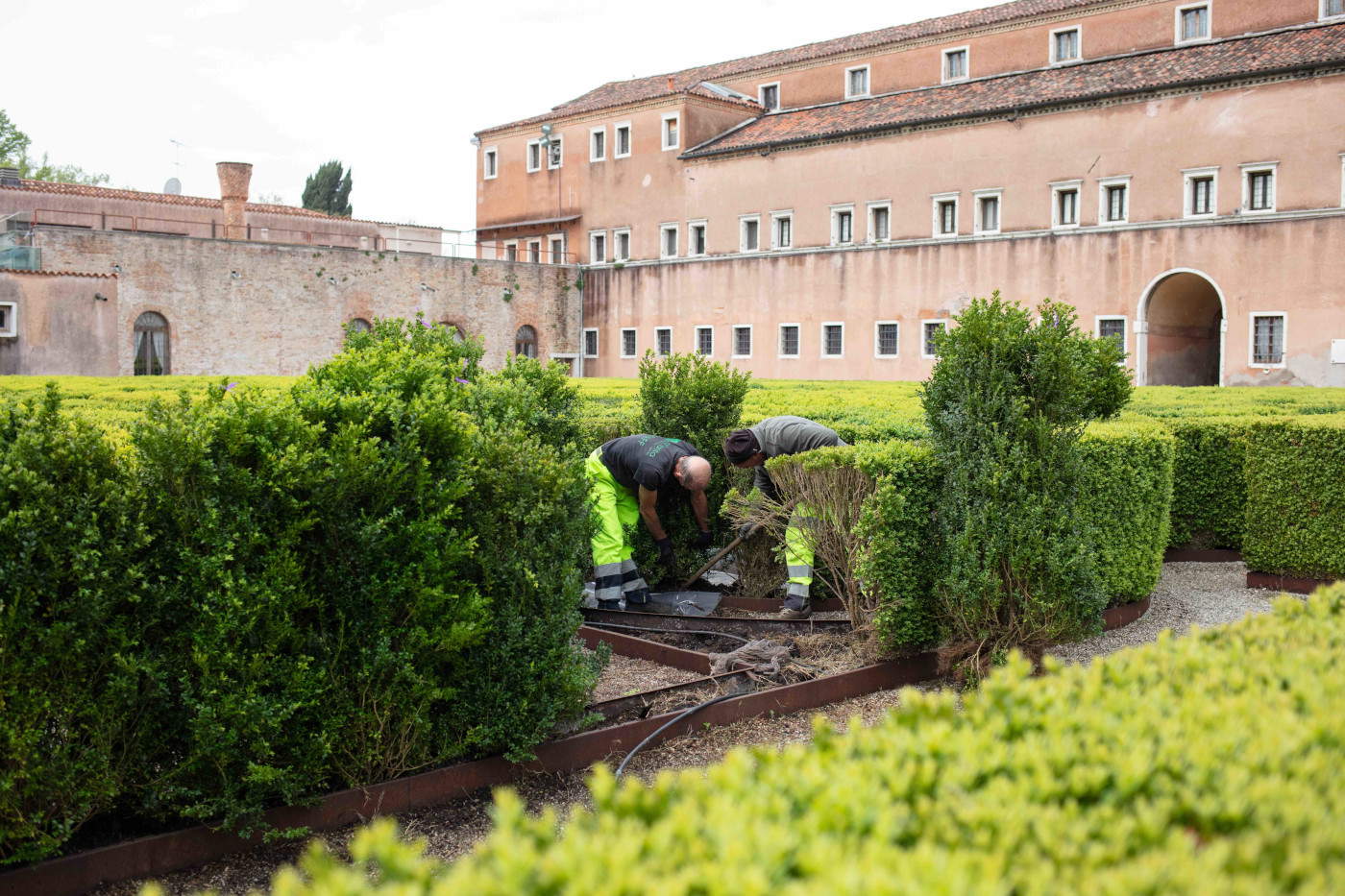
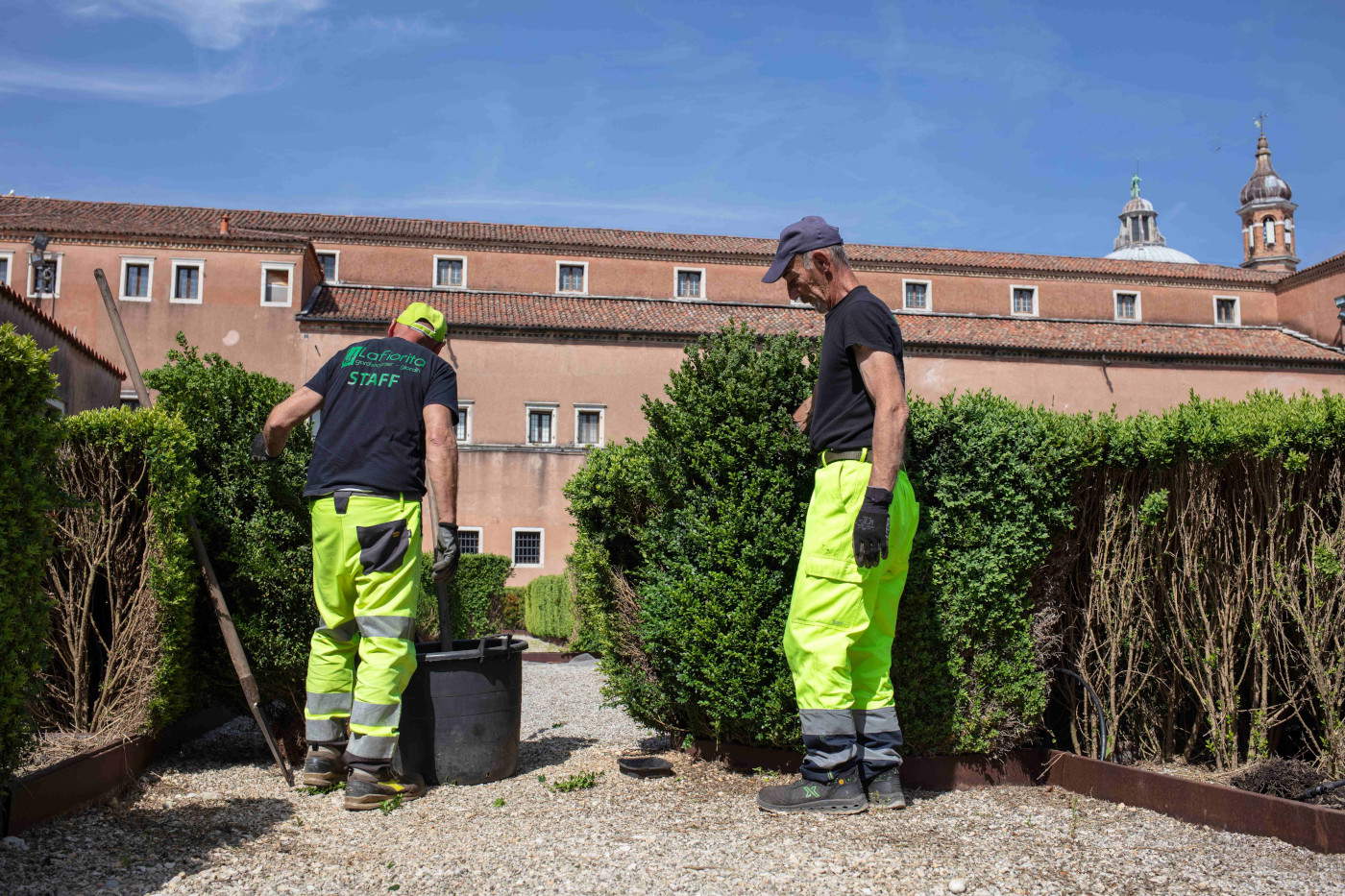
The restoration project focused primarily on the plant life. A total of 165 boxwood plants that had become compromised were removed and replaced with new specimens of the same species, selected for their already established growth to ensure continuity with the original planting. At the same time, the irrigation system was thoroughly inspected and restored, while the soil was enriched with new soil and specific fertilization treatments to promote proper root establishment of the new plantings. Work continued with the pruning of the new plants to harmonize them with the maze’s historic design, accompanied by constant monitoring of their growth. The specimens that did not survive the establishment phase were replaced with an additional thirty plants, while careful manual removal of weeds helped preserve the garden’s overall balance.
Alongside the botanical work, special attention was givento accessibility. The entry paths were upgraded by leveling the ground, removing excess gravel, and installing interlocking pavers, making the route stable and easily navigable even for people with mobility impairments. A further step toward accessibility was taken thanks to a collaboration withthe Italian Union of the Blind and Visually Impaired. A tactile map was installed at the entrance to the Labyrinth, allowing blind and visually impaired visitors to orient themselves and understand the layout of the path before beginning their visit.
The Borges Labyrinth will reopen to the public in mid-July with new visiting hours, available on the VisitCini website. Additionally, this fall, PwC Italia will host a weekend of free admission, offering everyone the opportunity to enjoy the immersive experience of this extraordinary green space. Details on how to participate will be announced through the official channels of the Giorgio Cini Foundation and PwC Italia.

“The restoration and ongoing preservation of the island and its heritage have been a cornerstone of the Cini Foundation since 1951,” stated Renata Codello, Secretary General of the Giorgio Cini Foundation. “This is ongoing work—a precise, long-term project that is both scientific and visionary—based on a concept of conservative restoration that is not merely emergency-driven but aims to adapt the heritage to the contemporary world. The Giorgio Cini Foundation has always viewed the island as a restoration laboratory in the heart of the city of water, bridging the past and the future, combining rigor with creative challenge. This project at the Labyrinth demonstrates how it is possible to restore a “vegetal architecture” that is volume, geometry, a meditative space, and a page of literature.”
"The restoration of the Borges Labyrinth is a particularly significant project for PwC Italy because it combines heritage preservation, cultural enhancement, and a focus on accessibility. Supporting this project alongside the Giorgio Cini Foundation means helping to make a site of great artistic and symbolic value more accessible and open to diverse audiences, while respecting the unique context of the Island of San Giorgio Maggiore. This is the direction of our commitment through PwC for Culture: to partner with leading cultural institutions on projects capable of preserving memory, fostering participation, and creating value for communities,” said Giovanni Andrea Toselli, Chairman and CEO of PwC Italy.
“The issue of accessibility to cultural sites is much broader than is commonly imagined. In an era of longevity, we need to develop new ways of welcoming people: the beauty of these places, which contributes so much to people’s well-being, requires concrete action. Families and young people have different ways of experiencing the appeal of art venues and visiting them: offering a positive experience that can be shared with others is a key aspect of inclusion,” added Renata Codello.
|
| Venice: The Giorgio Cini Foundation’s Borges Labyrinth Has Been Restored; It Reopens More Accessible and Refreshed |

Warning: the translation into English of the original Italian article was created using automatic tools. We undertake to review all articles, but we do not guarantee the total absence of inaccuracies in the translation due to the program. You can find the original by clicking on the ITA button. If you find any mistake,please contact us.




























 IT
IT FR
FR DE
DE ES
ES CN
CN


