





There are words that always come at the most opportune moment, when an action has already caused a rift and the news begins to crack the orderly surface of the narrative. “Art” is one of these. It appears when the image is no longer enough to sustain itself, when the audience stops merely asking what they see and begins to question how that vision was achieved. Then the discourse shifts to a higher plane—toward freedom of expression, exploration, and provocation—as if the loftiness of the vocabulary could make the material from which it springs less evident. It is an immense word, and perhaps precisely for this reason, vulnerable to abuse. It has traversed centuries of bodies—exposed, desired, wounded, offered up to risk, transformed into language; it has encompassed masterpieces and failures, necessary gestures and terrible ideas cloaked in technique, works created to open a wound in the visible, and interventions that, on the contrary, seem to ask form to close it. Precisely for this reason, it should be used with caution, almost with modesty at times. For it is one thing to make the body the site of a thought, to compel the gaze to acknowledge its own share of responsibility and to gauge the boundary between exposure and violence. It is quite another to invoke art afterward, when the body has already been taken against its will, and to ask that word to make the act of removal more presentable.
The Ray Banhoff case returns today, thanks to the investigation by AesteticaSovietica, to the center of public discussion precisely because it forces us to bring together different planes: photography, the law, the female body in public space, and the masculine culture of the archive. Fie, the project presented in 2015, was described even then as the result of over three thousand photographs of women in Milan, compulsively collected on the commute between home and the office, on the street, in secret, even reaching under the clothes of the unsuspecting women. In 2026, those images made headlines again following news articles, calls to file complaints, reports, potential evaluations by the prosecutor’s office, and the artist’s defense, in which he asserted the artistic nature of the project, rejected the accusation of sexism, and spoke of “goliardia.” “Goliardia” is a curious word. It often comes up when there’s a need to downplay something that isn’t trivial, when a practice rooted in asymmetry is reduced to frivolity, a joke, a game, and that comfortable zone where responsibility dissolves and only the stated intention of the person who committed the act remains.
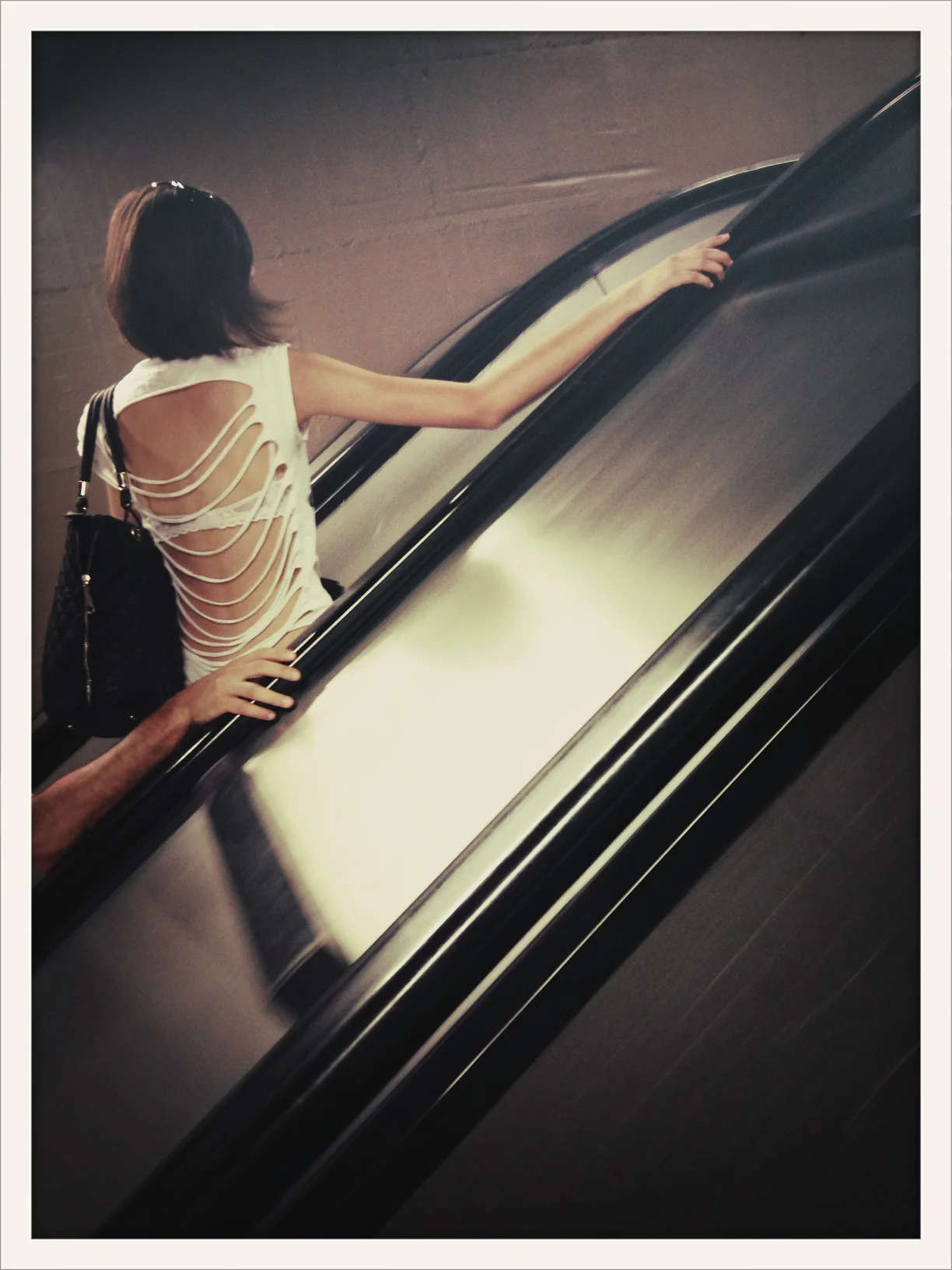
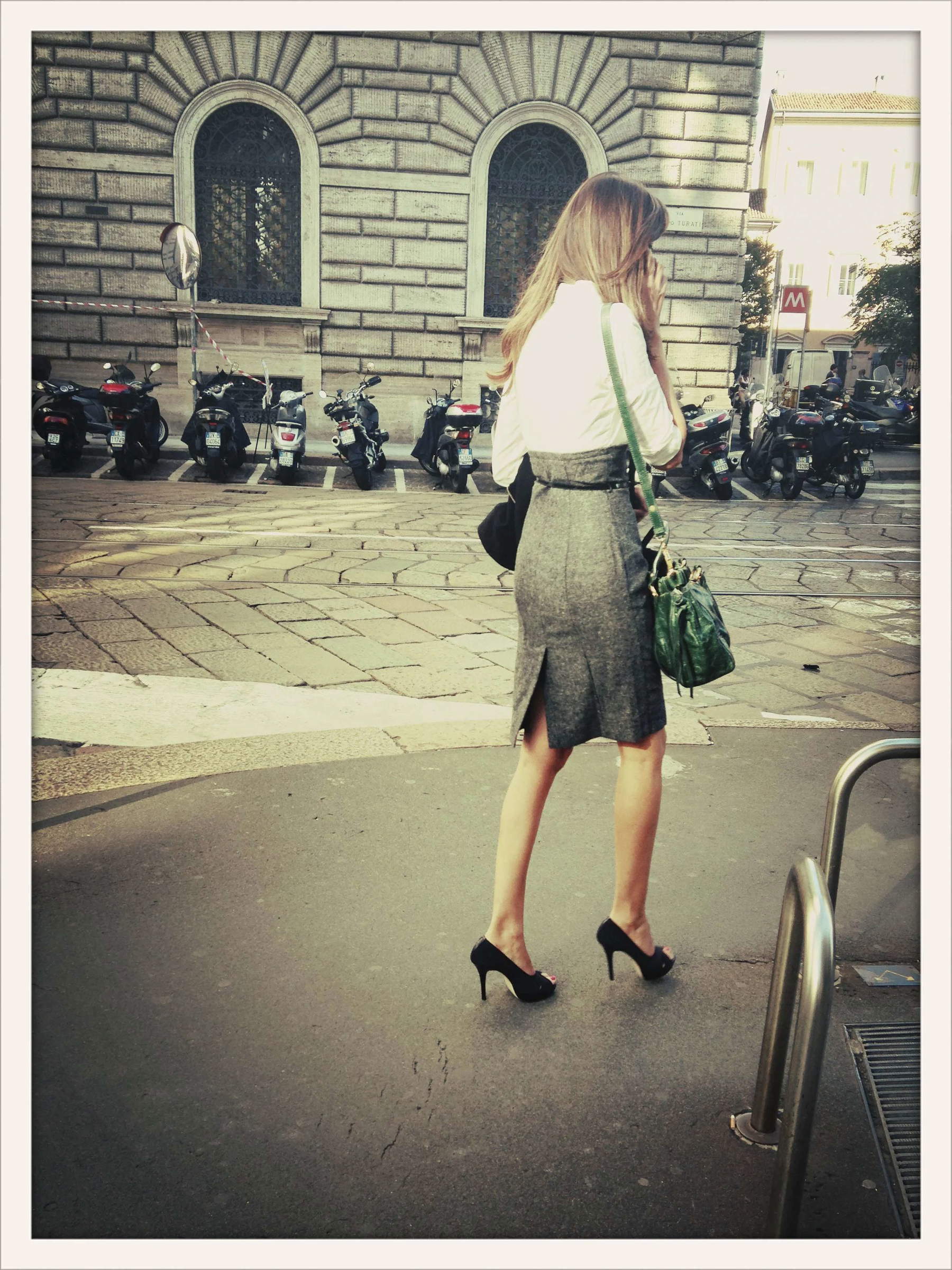
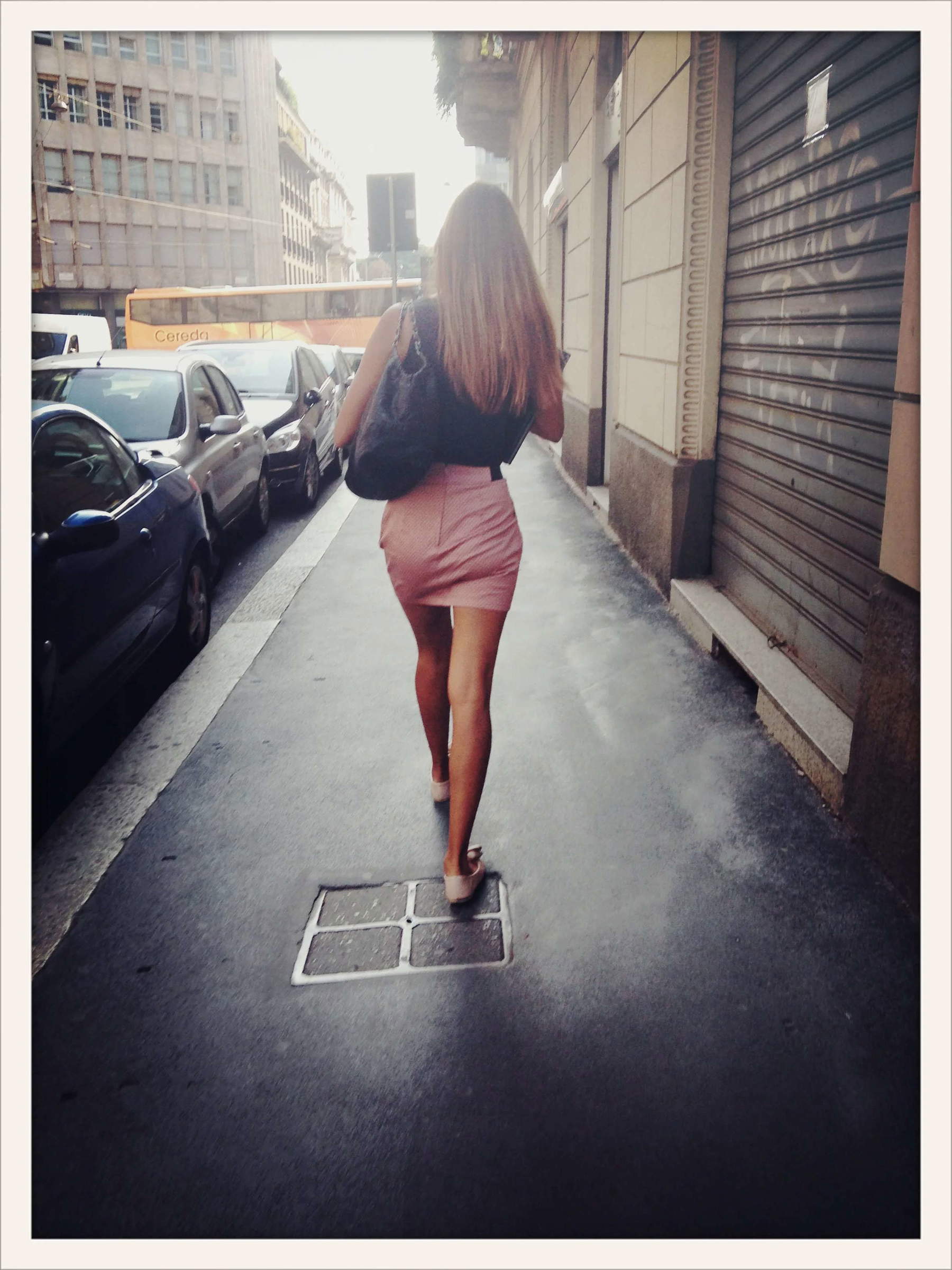
Italian law is not without tools, but it still maintains an uncertain relationship with these hybrid zones, where violations occur through technology, imagery, reproducibility, and the swift action of a pocket-sized device. Article 612-ter of the Penal Code, introduced with the “Codice Rosso” in 2019, punishes the unlawful dissemination of sexually explicit images or videos intended to remain private, without the consent of the persons depicted. This is the provision that public debate often simplistically associates with so-called “revenge porn.” But the world of non-consensual images is broader, more elusive, and does not always coincide with personal revenge; it does not always arise within a relationship, nor does it always require a private setting. Sometimes it occurs on the street, on an escalator, on a tram—in a place frequented by everyone—where the very public nature of the space is used as a cultural excuse, as if being visible were equivalent to being available. Then there is Article 660 of the Penal Code, which deals with harassment or disturbance of persons, and punishes anyone who, in a public place or a place open to the public, out of petulance or for any other reprehensible reason, causes harassment or disturbance. In 2018, the Court of Cassation already ruled that secretly photographing a person with a cell phone may constitute such an offense, to the extent that it justifies the seizure of the phone. But the question remains open: when the unauthorized image concerns the body, its intimacy, or its involuntary exposure, the issue goes beyond mere harassment and touches on the individual’s freedom in its most contemporary form—that of control over one’s own representation.
Now, it is certainly not the role of an article to establish individual criminal liability—and each case must be investigated by the competent authorities—but it is indeed the role of criticism, cultural journalism, and public debate to scrutinize the language and the ways in which certain actions are presented. Because when we speak of unwitting bodies and images obtained without consent, the word “art” cannot function as a symbolic whitewash. It is not enough to attach an aesthetic intention to an act for that act to change its nature. It would be convenient, of course. Even a thief could call himself a scholar of domestic thresholds, if simply renaming things were enough to change their substance. Shakespeare conveyed this to Juliet with far greater grace: a name does not change the nature of what it names. A rose would still be a rose; in the same way, an act based on others’ unawareness does not become any less serious simply because it is framed as research, student prank, or artistic project. The word changes, but the power dynamic that produced it does not.
The point here is not merely modesty. It is not the skirt, it is not the body, it is not the freedom of street photography, nor is it that supposed bourgeois annoyance at provocation that is invoked whenever it suits to shift the discussion elsewhere. The issue is more concrete and more radical: who decides when a person can become an image? Who determines that a body—simply because it moves through public space—can be isolated, preserved, organized, displayed, and transformed into material? And why, even today, is the lack of awareness on the part of the person photographed under her skirt treated as a secondary detail—almost a technical footnote—when it is, in fact, the moral heart of the matter?
It must be said: photography has always had an ambiguous relationship with reality. It arises from a capture, separating something from the flow of the world and transforming it into an image. Street photography, in particular, often thrives on this uncertain margin, where public space makes possible a visual encounter with passersby, cities, unprepared gestures, and figures who have entered the frame without having established an explicit relationship of posing or consent with the photographer. From a legal standpoint, however, that gray area is not a lawless territory: in Italy, the situation changes as soon as the photograph moves from being taken to being published, because a portrait of a person generally cannot be displayed, reproduced, or sold without consent, except in cases provided for by law involving public figures, public interest, legal requirements, scientific, educational or cultural purposes, or a connection to facts and events that took place in public. To dismiss this entire tradition as predatory would be historically crude and inaccurate. From Walker Evans to Helen Levitt, from Garry Winogrand to Vivian Maier, the street has been a fundamental visual laboratory for interpreting modernity—its rhythms, its solitude, and its crowds. But precisely because that tradition occupies a delicate line between public presence and the right to one’s own image, it must be approached with rigor. It is not enough for a person to be in a public space for them to automatically become fair game, nor is it enough to invoke the freedom of photography to dismiss the issue of the image’s method and intended use—and the potential harm to the person portrayed. Not because photography should be reduced to a contract, or because public life can be documented only with prior authorization. That would be a bureaucratic caricature of vision, and photography would die, suffocated in an office before it even reached the street. But between chance, encounter, the public scene, and the deliberate search for and violation of a vulnerable body, there is a distance that cannot be dismissed with the word “freedom.” Susan Sontag wrote about this with a harshness that still retains its power to pierce the discourse today: to photograph also means to transform someone into an object of knowledge, to fix them in a form that they no longer fully possess, to hand them over to a gaze that can return to them whenever it pleases. This is not a condemnation of photography. That would be ridiculous—and intellectually lazy as well. It is a recognition of its most unsettling nature: every photograph takes, holds, and separates. For this reason, the problem is never merely the image itself, but the relationship that made it possible. John Berger, from a different perspective, had shown how the Western visual tradition has for centuries trained the gaze to conceive of the feminine as an apparition. In his *Ways of Seeing*, he writes: “Men act and women appear. Men look at women. Women look at themselves while being looked at. This determines not only most relationships between men and women, but also women’s relationship with themselves. The one who observes the woman within herself is the man: the one being observed is the woman. Thus she becomes an object of vision: a spectacle.”
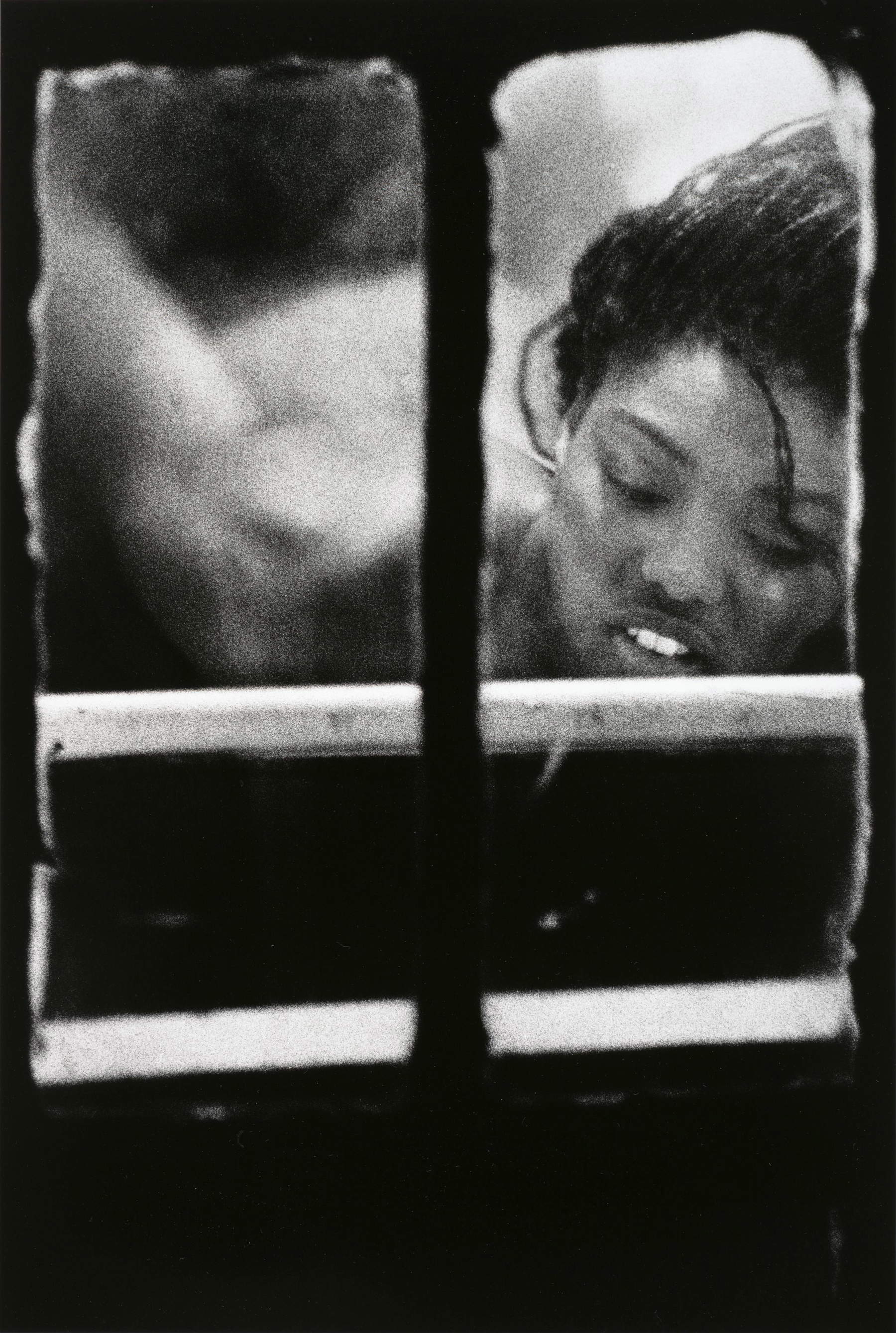
Merry Alpern, with *Dirty Windows*, worked in the 1990s from an almost indefensible position: she photographed through the window of an underground club in New York, observing what was happening inside a space that did not belong to her. The result is unsettling not because it erases the issue of voyeurism, but because it keeps it on the surface of the image. Anyone looking at those photographs cannot pretend to be facing a pure testimony. The window remains there, like an architectural fault line separating two positions: those who see and those who are seen, those who know they are watching and those who do not know they have become an image.
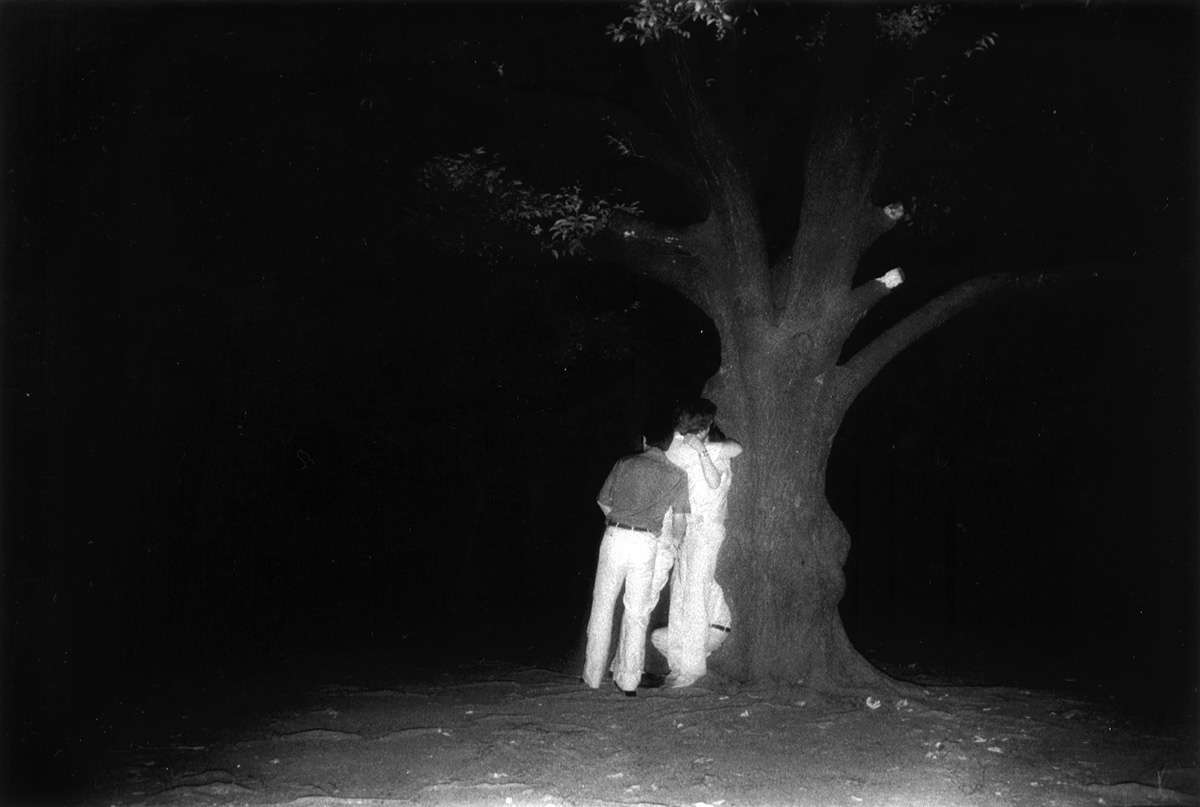
Kohei Yoshiyuki, with *The Park*, takes this ambiguity into even darker territory. At night, in Tokyo’s parks, he photographs secluded couples and men watching them, using infrared film. The series is unsettling because it does not merely reveal clandestine desire; it doubles it. The work here is the opposite of easy justification: it does not say, “This is art, therefore it is safe,” but forces us to see how much the act of looking can already be a form of participation.
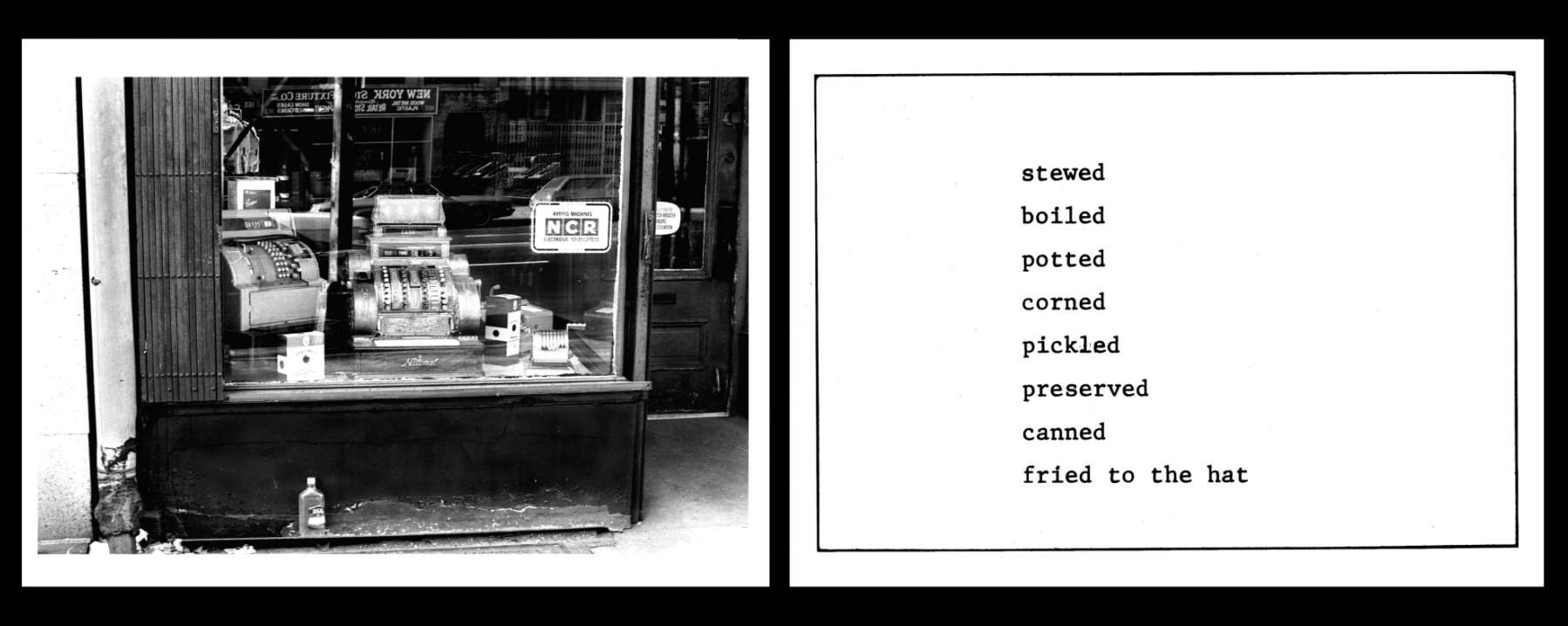
Martha Rosler takes the opposite approach, one that is perhaps even more radical in its harshness. In *The Bowery in two inadequate descriptive systems*, she chooses not to photograph the bodies of the alcoholics who lived on the Bowery, even while working within that context. She photographs streets, shutters, entrances, and urban voids, and pairs the images with a sequence of words related to drunkenness. The vulnerable body remains off-screen because Rosler rejects the most effective shortcut—the one that would have elicited immediate compassion—and precisely for this reason, she dismantles the viewer’s hunger for documentation. Poverty is denied to our expectation of possessing it through the image. Rosler chooses not to include the body when that body risks becoming an emotional shortcut. She does not shy away from the harshness of the subject—quite the contrary—but she prevents those who are already exposed from bearing the brunt of that harshness. It is a huge difference, because it shows that art can choose to hold back; it can construct a discourse precisely at the point where it rejects the easiest image. And this rejection, in an era when everything seems to have to be shown in order to exist, possesses a brutal force.
From this perspective, we should also reexamine the most radical body-based practices of the late 20th century, freeing them from the convenient interpretation that turns every extreme gesture into a free pass. Those works do not say that anything can be done in the name of art. They say something more difficult and more severe: that when the body truly enters the work, it brings with it the question of its own exposure. Furthermore, radicalism does not coincide with the absence of responsibility; on the contrary, it arises precisely at the moment when responsibility becomes visible and the viewer loses the privilege of remaining untainted in the face of what they are looking at.
In 1968, VALIE EXPORT took *Tapp-und-Tastkino* to the streets—one of the most precise actions through which late-20th-century art forced the gaze to lose its innocence. The work emerged during the era of Expanded Cinema but immediately shifted its focus: cinema leaves the theater, abandons the protected darkness of the screening, renounces the screen as a reassuring distance, and contracts into a box attached to the artist’s torso. A small portable theater, open at the front and back, covers the artist’s bare breast and allows passersby to slip their hands inside for a limited time, while Peter Weibel draws in the audience and transforms the street into a threshold of participation. The gesture is extremely powerful in its conceptual simplicity. Cinema, the modern machine of visual desire, is stripped of its image and reduced to touch; and the woman—who, throughout the history of cinema and representation, has been gazed upon countless times by an audience sheltered in the shadows—now wears the device herself and reverses the spectator’s position. Those who approach enter a public scene. Desire, accustomed to the distance of the screen, becomes a gesture performed in front of others. Vision loses the privilege of aesthetic secrecy and is forced to reveal itself through the body.

Here, the female body does not appear as a readily available fragment or as prey gathered in urban space and then arranged into a sequence. It appears as the active center of the apparatus. It is the artist who establishes the frame, the time, the rule, and the conditions of access. In this sense, *Tapp-und-Tastkino* reveals with extreme clarity what visual culture often prefers to leave ambiguous: the female body, in public space, is constantly subject to a presumption of access, to a conditioning of the gaze that confuses appearance with availability, presence with permission, visibility with the right to touch.
EXPORT does not ask the viewer to forget how the gesture takes place. It compels the viewer to remain within it. Whoever touches knows they are touching, knows they are being seen while touching, and knows they are participating in a situation designed to make their own position legible. And the artist’s body becomes the place where the gaze must finally account for itself, lose the shelter of anonymity, and emerge from its comfortable state of faceless power. This is why Tapp-und-Tastkino works in the opposite direction of any image obtained from an unaware person. EXPORT’s work makes the structure of the relationship visible; it brings to the forefront the boundary between desire and responsibility, between access and control, between participation and domination. In a series based on the unawareness of others, however, that threshold is crossed even before it is declared. The frame comes later, the discourse comes later, the word “art” comes later.
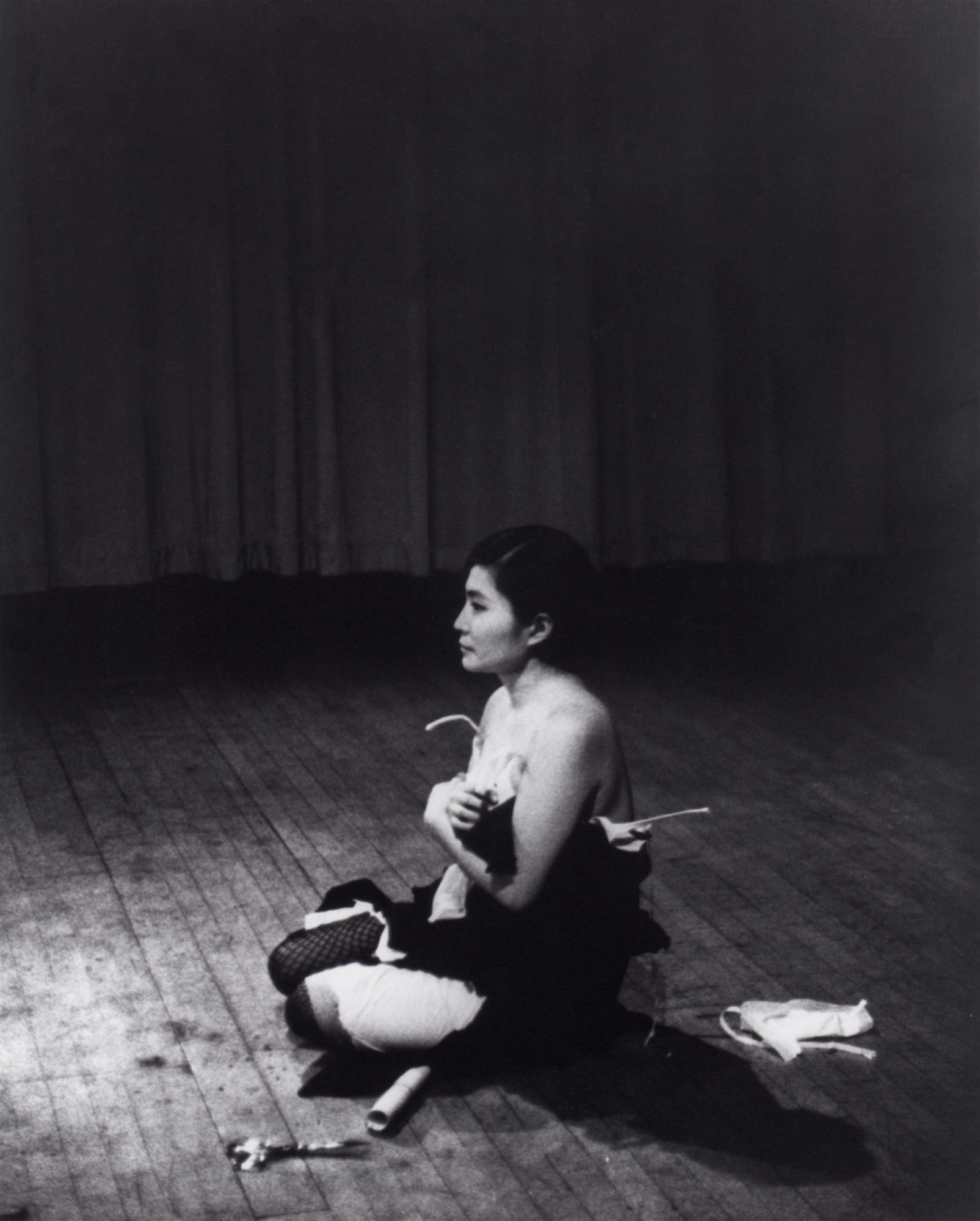
Yoko Ono, too, with *Cut Piece*, works within an equally precise realm, but chooses a different tone. The work, first presented in 1964, has an almost elementary structure: the artist sits motionless in front of the audience, with a pair of scissors beside her, and invites viewers to approach her and gradually cut her clothes. There is only a seated body, exposed to the decisions of others, and there is an audience that, fragment by fragment, discovers its own role.
The work concerns the slow transformation of the spectator into an agent. At first, the gesture may seem hesitant: someone approaches, cuts a piece of fabric, and returns to their seat. Then each cut builds on the previous one; each intervention alters the artist’s body and changes the atmosphere in the room. Responsibility builds up gradually, without needing to erupt in a single act. Ono creates a situation in which the audience must gauge how far they feel authorized to go, and to what extent they still consider an aesthetic gesture what now increasingly resembles an exercise of power.
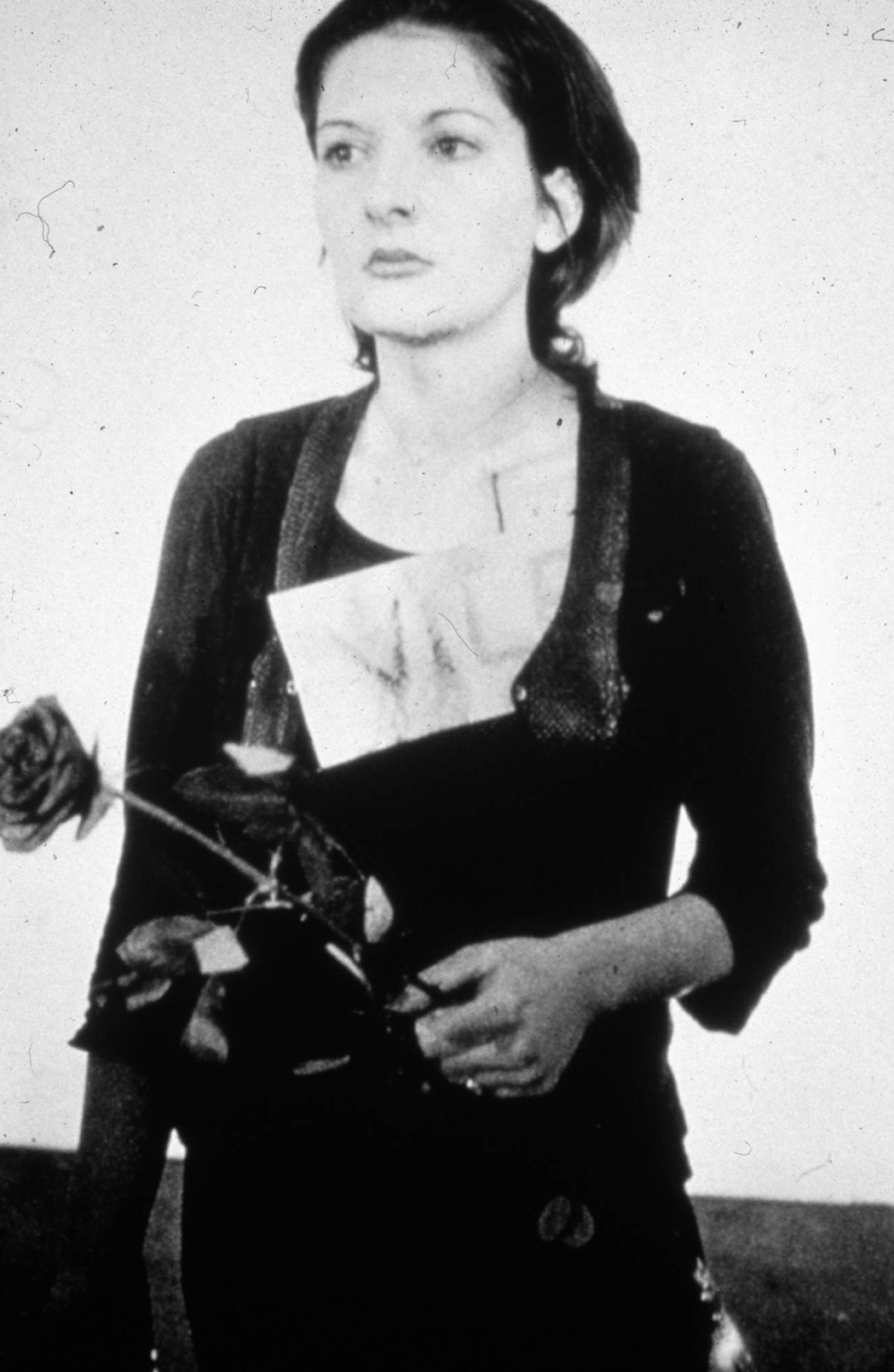
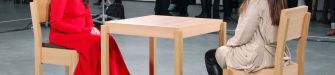
Marina Abramović, in *Rhythm 0*, takes this same dynamic into a far darker and harsher realm. In 1974, in Naples, she arranged seventy-two objects on a table and remained for six hours in front of the audience in a state of apparent passivity. Some objects relate to care, others to injury; some seem harmless, while others immediately suggest the possibility of harm. The performance is often described as a test of collective cruelty, but this interpretation risks being too simplistic—and therefore too consoling. The core of the work is more precise: Abramović shows what happens when a body is perceived as entirely at the disposal of others and when the framework of the experiment seems to suspend—even if only for a few hours—individual responsibility. Here, art never absolves the viewer: every gesture performed on the artist’s body remains as a trace of the stance of the person who performed it. The presence of the work concentrates and makes the violence legible by bringing it to the surface. The audience enters into a defined relationship, within a set timeframe, in the presence of a body that has chosen to take on that extreme ordeal, yet responsibility does not disappear within the word “art.” On the contrary, it becomes more visible.
Cindy Sherman tackles the same issue from another angle—less physical but no less fierce. In her *Untitled Film Stills*, created between 1977 and 1980, the artist photographs herself in scenes that seem to come from nonexistent yet immediately recognizable films. A woman in a room, a woman on the street, a woman suspended within an interior, a woman caught in an incomplete narrative moment, as if something had just happened or were about to happen. The American artist does not stage a body under attack, but a body already inhabited by the images of others, and her work does nothing more than show how the gaze never arrives completely unencumbered when faced with a woman. It brings with it poses, expectations, roles, and small, ingrained scripts.
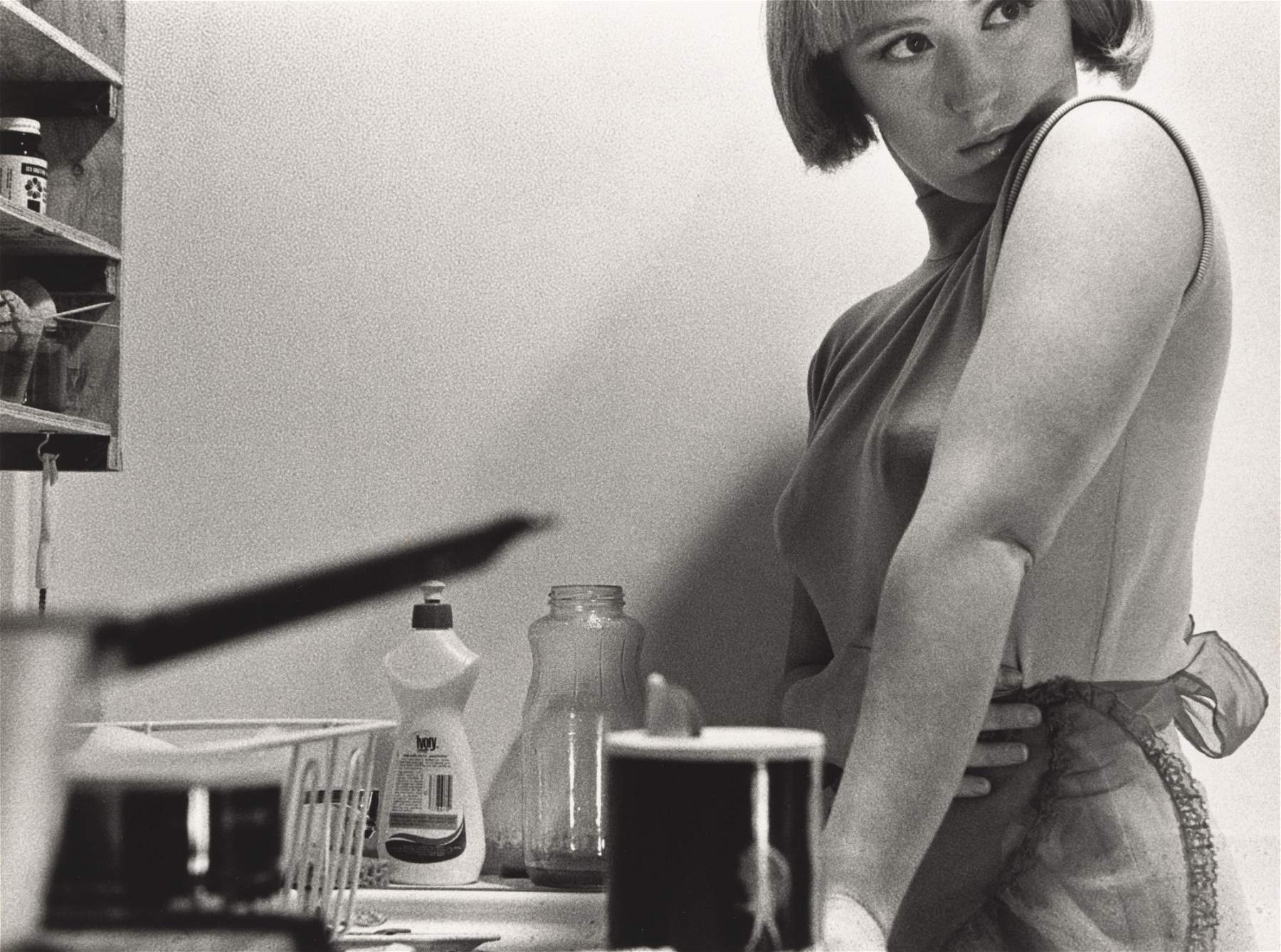
We could continue with Ana Mendieta, who turns the body into a trace in the earth rather than a figure to be possessed; with Carolee Schneemann, who brings into the art scene a gendered body capable of producing language, not merely receiving it; with ORLAN, who uses surgery to challenge the models imposed on the female body; with Shirin Neshat, who inscribes on skin, face, and hands the tension between political control, identity, and representation. One could even bring into the discussion contemporary practices closer to explicit performance art, pornography, and public sexuality, such as those of Rosario Gallardo, where the body deliberately operates on the threshold between desire and censorship. But even in these territories—much more slippery and less settled—the point remains the conscious construction of the scene: those who expose themselves govern their own framework, use their bodies as a language, and decide which aspect of the obscene to bring into the public sphere.
The point, then, is not to accumulate names, as if a genealogy of female artists were enough to ennoble a discourse already wounded at its root. The point is to understand that, in the most self-aware works of the second half of the 20th century, the body enters the image bringing with it the conditions of its own appearance. It does not arrive as mere material to be tracked or as a figure to be sorted into a sequence afterward. It arrives together with the frame that displays it, the risk it assumes, the position of the viewer who observes it, and the question of the power that every image exerts when it captures a body and delivers it to other eyes.
For this reason, a photographic series built around unsuspecting people cannot ask to be judged solely as a formal exercise, as an urban obsession, as an accumulation, or as a language. Because if the body enters the image without knowing it is entering it, if the project arises from the advantage of the viewer and the lack of awareness of the person being viewed, then the aesthetic question comes too late, when the most important question is already on the table: who had the power to transform a person into an image?
Here, the word “goliardia” reveals the full extent of its cultural poverty. It often resurfaces in the worst aspects of Italian public discourse, when a practice rooted in an imbalance is reduced to a joke, excess, play, and frivolity among peers. But there is no equality when one person builds an archive and another doesn’t even know she has become part of it. There is no lightheartedness when a person’s body is separated from her will, captured, preserved, discussed, and then defended as research material. Goliardia works only for those who remain on the side of the act, never for those who suffer its consequences. Responsibility, however, does not stop with the perpetrator. That would be too simple—and also too convenient—for a cultural system that for years has provided the words, frameworks, interviews, and critical attention. Because a practice does not enter the public discourse on its own; it needs to be presented. It needs pages to host it, formulas to make it more interesting, and a lexicon capable of transforming discomfort into eccentricity and asymmetry into poetics. When Banhoff today refers to the reception of 2015, when he invites us to look at the way the press, critics, and curators spoke of Fie, he touches on an essential point—perhaps more essential than his own defense. Because that reception does not absolve the method, but rather illuminates the context that makes it presentable.
It is here that the case becomes a matter of cultural responsibility. The art world, when it chooses to, knows how to exercise philological precision regarding languages, genealogies, references, and stances. It knows perfectly well how to distinguish a derivative gesture from a necessary one, a citation from plagiarism, a weak image from one capable of standing the test of time. Yet, when faced with the material conditions under which certain images are produced, that precision often loosens. The method becomes a backroom affair, consensus becomes a detail, and the person photographed becomes a figure, a presence, an urban subject.
This disproportion should be viewed without leniency. On the one hand, there are those who transform unwitting bodies into a series. On the other are people left out of the discourse, yet necessary to its existence. The culture that legitimizes such an operation without sufficiently questioning how those images were obtained does not remain neutral. It participates in constructing the frame. It decides which words to place around the act. It determines whether to call it research, student prank, obsession, archive, or a view of the city. And every word chosen either lightens or aggravates the reality it claims to describe.
Perhaps, then, the most urgent question is not whether Fie can be called art. The more serious question is what happens when art is called upon to make a power dynamic less visible. What happens when a practice based on others’ unawareness is given a vocabulary capable of elevating it even before it has been questioned? What happens when form, instead of bringing the problem to light, makes it more bearable?
What happens is that art loses one of its most essential functions. It ceases to make visible what everyday language tends to conceal and becomes, for a moment, its opposite: a zone of attenuation, a well-lit room where appropriation can seem like research, the archive can seem innocent, frivolity can seem like tone, and the viewer’s advantage can seem like style. Instead, art—when it lives up to its own history—should do the opposite. It should hold the gaze to account. It should compel form to answer for its method. It should remind us that no image is ever merely an image when someone remains within it without having chosen to enter it.


The author of this article: Francesca Anita Gigli
Francesca Anita Gigli, nata nel 1995, è giornalista e content creator. Collabora con Finestre sull’Arte dal 2022, realizzando articoli per l’edizione online e cartacea. È autrice e voce di Oltre la tela, podcast realizzato con Cubo Unipol, e di Intelligenza Reale, prodotto da Gli Ascoltabili. Dal 2021 porta avanti Likeitalians, progetto attraverso cui racconta l’arte sui social, collaborando con istituzioni e realtà culturali come Palazzo Martinengo, Silvana Editoriale e Ares Torino. Oltre all’attività online, organizza eventi culturali e laboratori didattici nelle scuole. Ha partecipato come speaker a talk divulgativi per enti pubblici, tra cui il Fermento Festival di Urgnano e più volte all’Università di Foggia. È docente di Social Media Marketing e linguaggi dell’arte contemporanea per la grafica.Warning: the translation into English of the original Italian article was created using automatic tools. We undertake to review all articles, but we do not guarantee the total absence of inaccuracies in the translation due to the program. You can find the original by clicking on the ITA button. If you find any mistake,please contact us.























 IT
IT FR
FR DE
DE ES
ES CN
CN


