




by Noemi Capoccia 17/07/2026



Categories: Opinions / Disclaimer
Director Christopher Nolan brings to the screen a monumental epic that goes beyond a simple adaptation of Homer’s poem. Amid hubris, nemesis, and the weight of memory, Ulysses’s journey becomes a reflection on war, responsibility, and time—a central theme in his filmography.


Song is what prevents the dead from truly disappearing. As long as someone continues to recount their deeds, heroes survive the passage of time. This is the realm of Mnemosyne, mother of the Muses and embodiment of memory, who, through the voices of men, transforms memory into narrative and narrative into history. Memory, even before writing, is the spoken word. This is how names endure through the centuries.


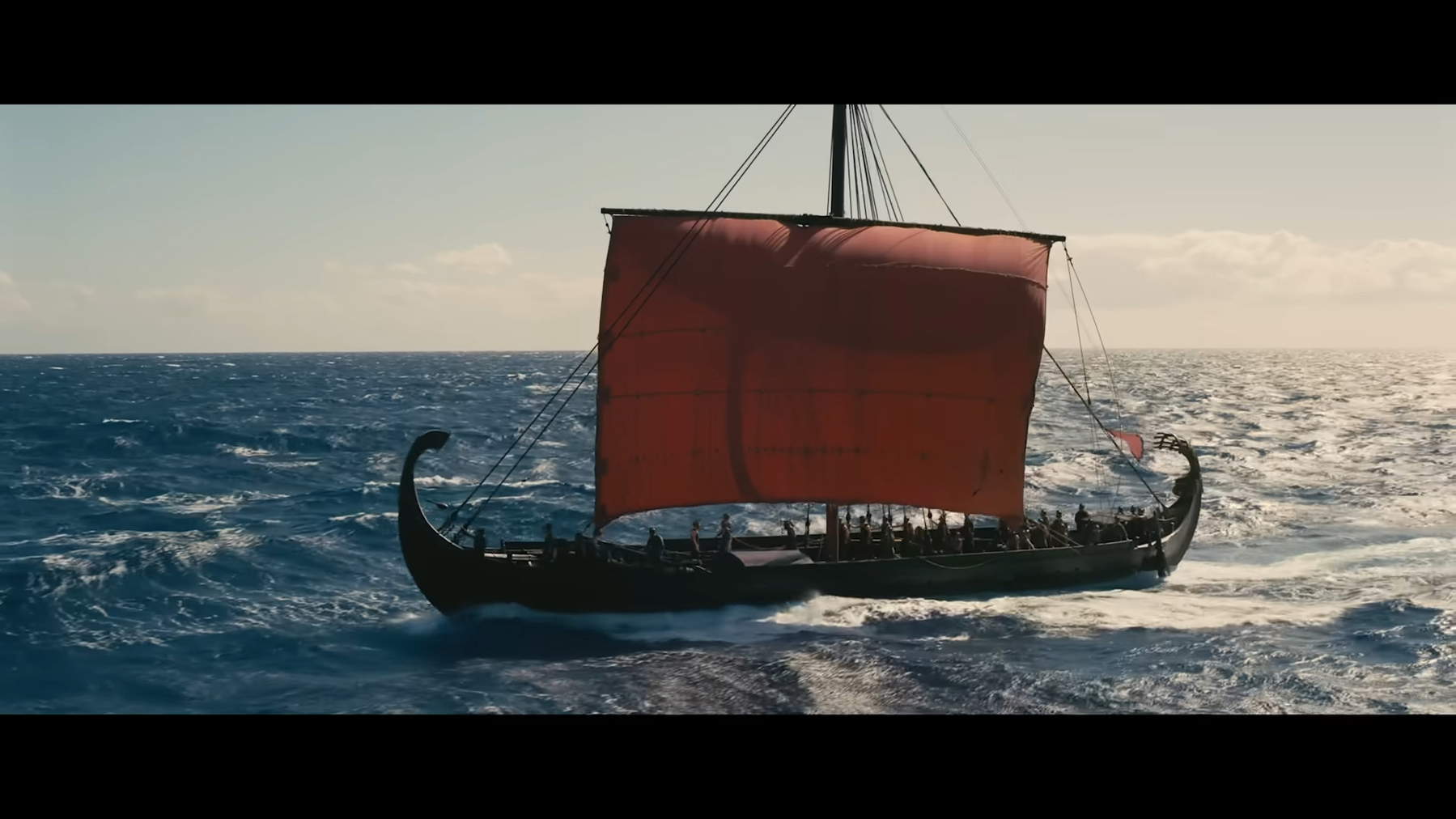
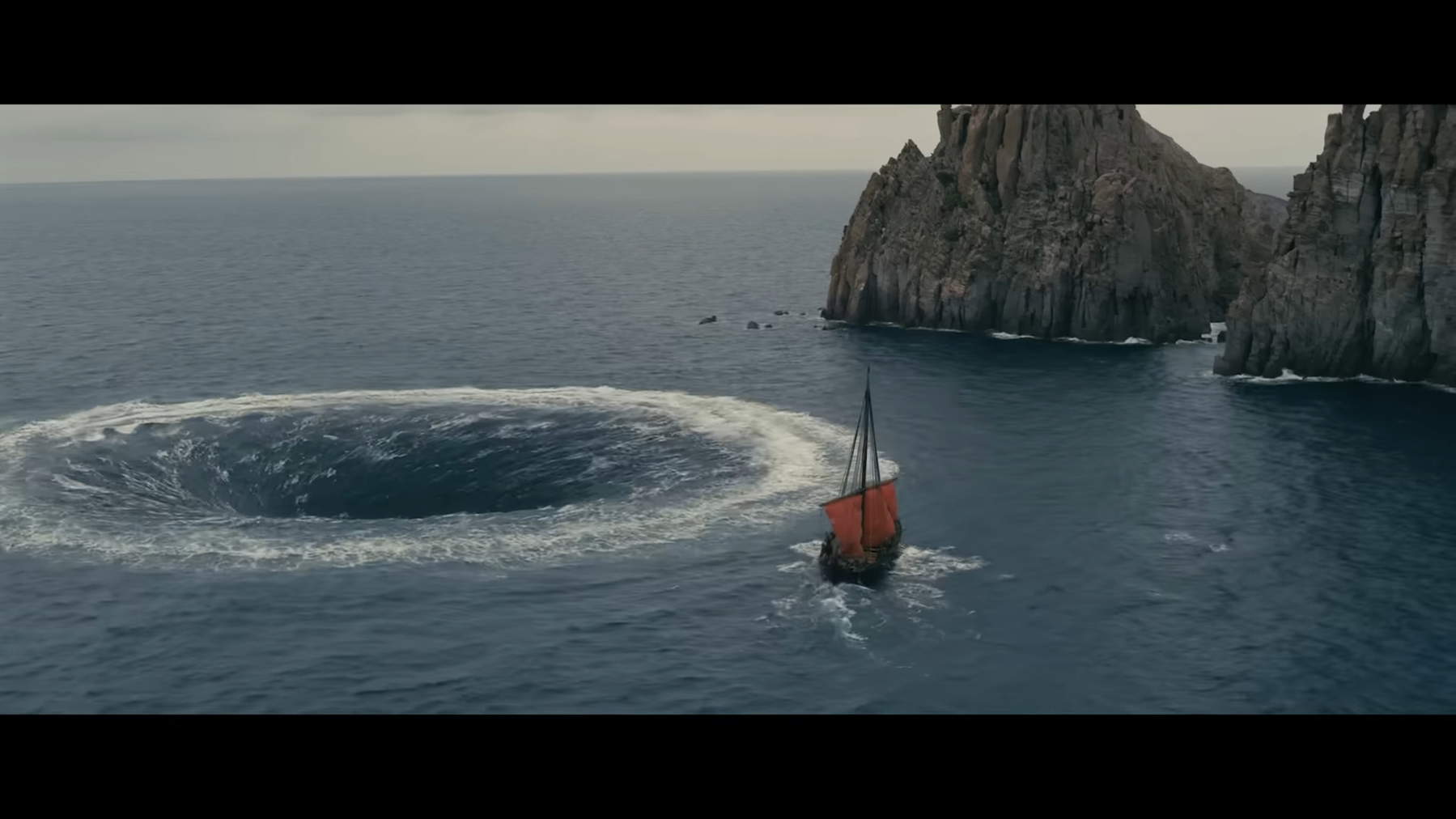
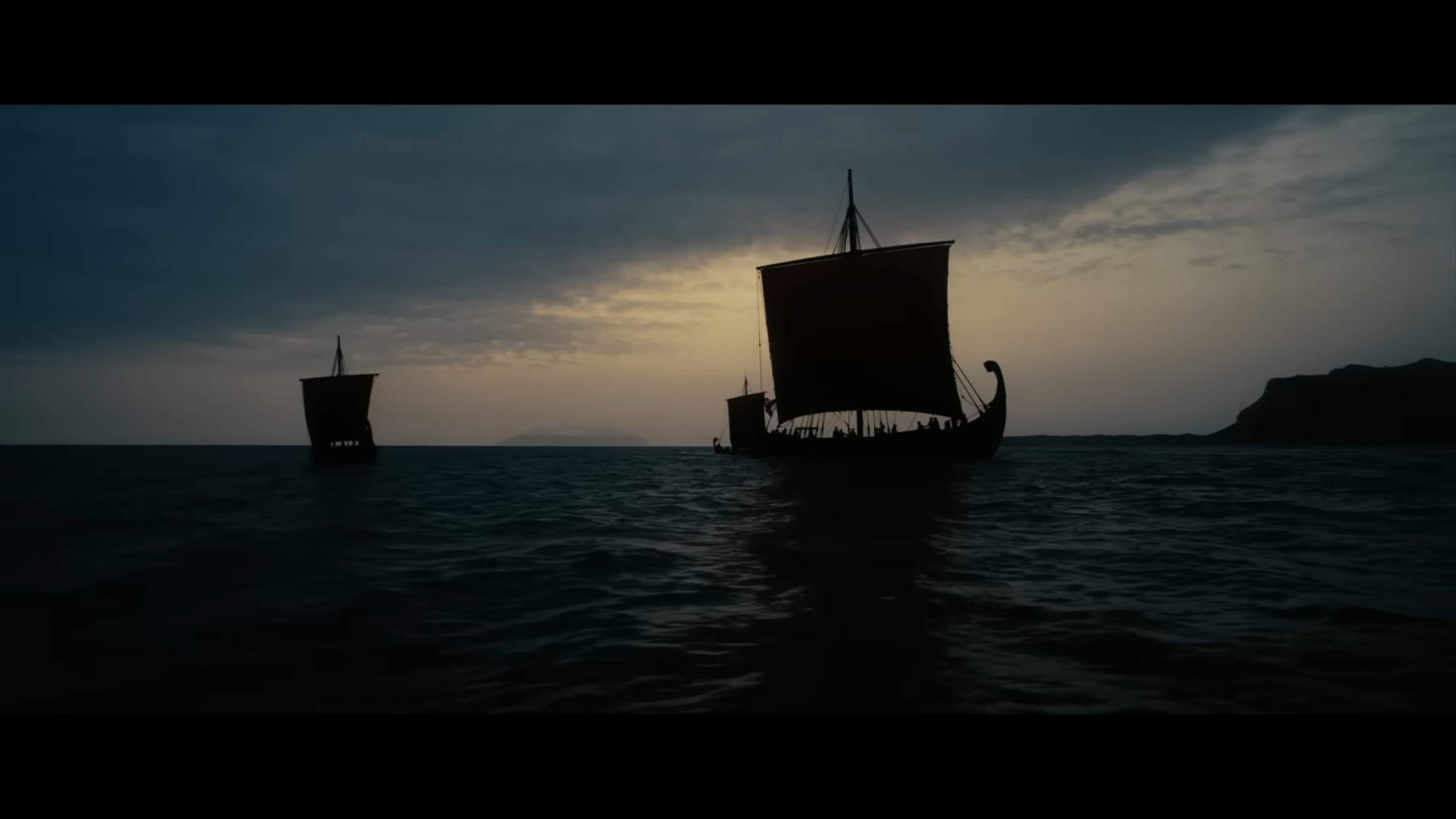
From this premise, *Odyssey*, Christopher Nolan’s new film, takes shape. Like other filmmakers before him, the British director brings Odysseus’s journey (called Ulysses in the Italian version of the film) back to life, giving it a surprisingly concrete dimension that goes beyond simply adapting a poem for the screen. Nolan constructs a universe that draws the viewer into the archaic Mediterranean, between the Aeolian Sea, the coasts of Greece, and the islands that dot the return journey to Ithaca. It is a journey that allows for very few moments of respite. Just when it seems possible to resurface, the narrative drags the viewer back into the depths of the Aeolian Sea.


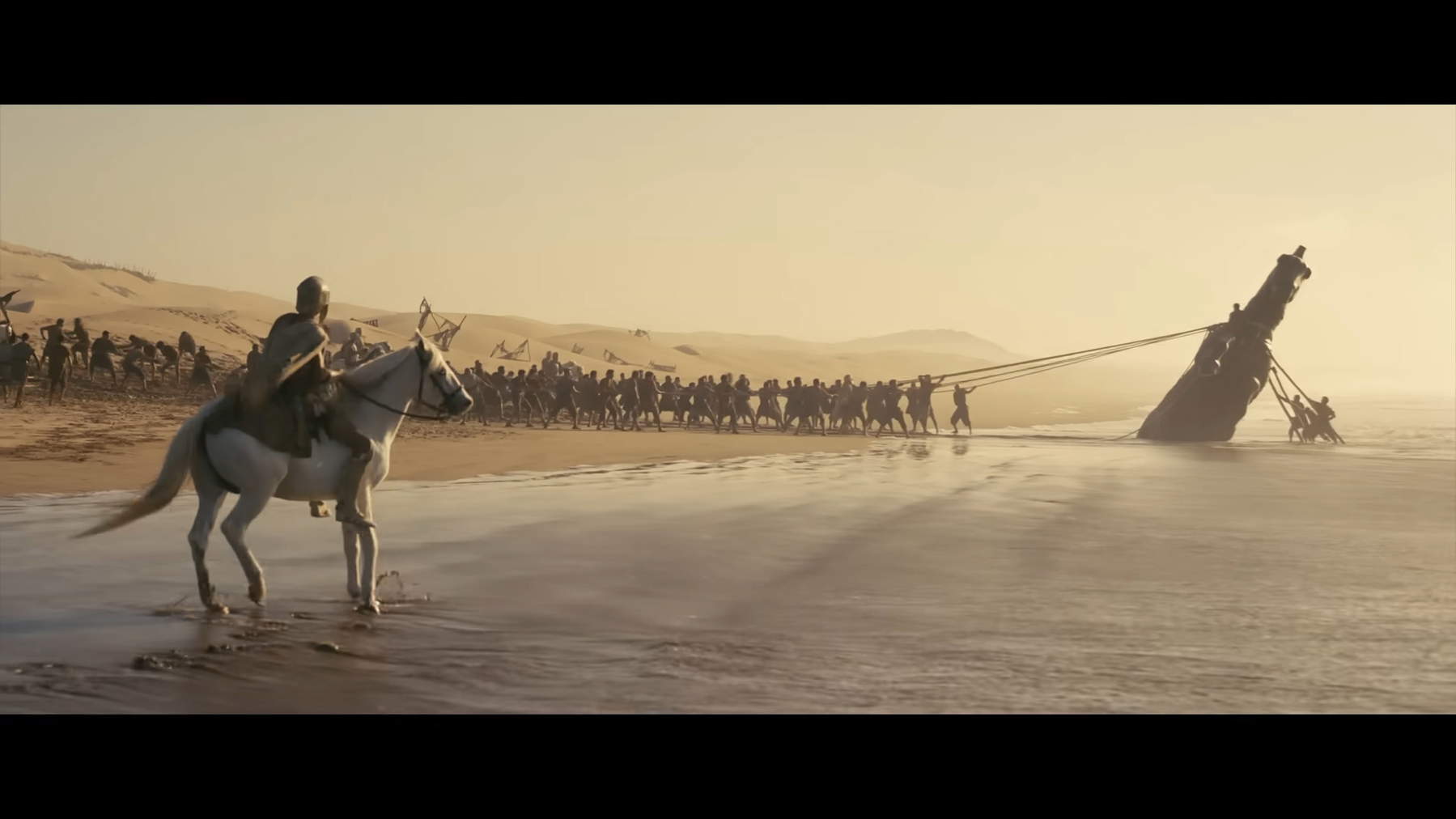
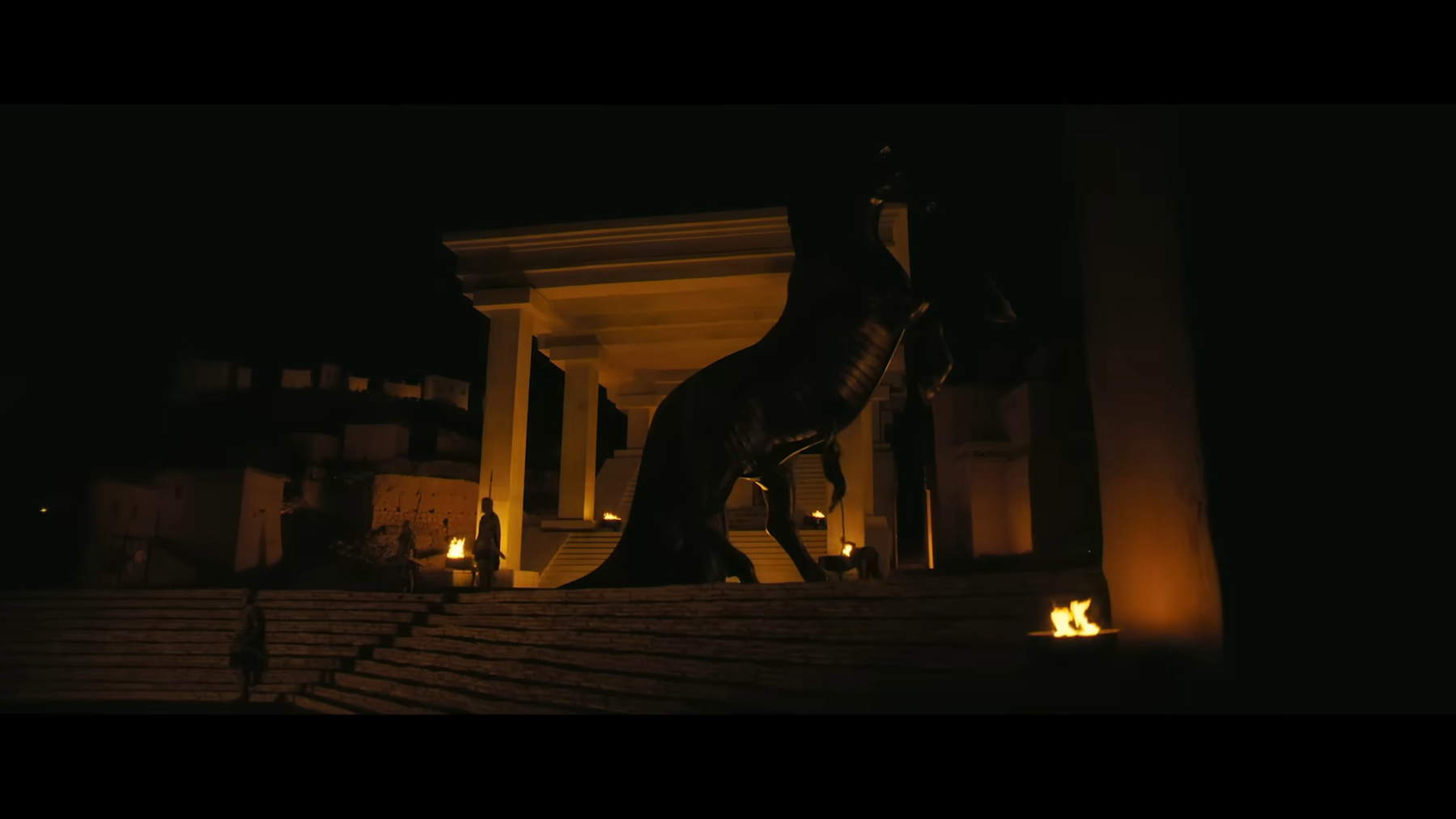
The tension remains constant, as does the feeling of witnessing a long, cruel, and inevitable punishment inflicted by the gods. Even before the film’s release, one question seemed inevitable to me. Nolan has built much of his filmography around the relationship with time—from *Memento* to *Inception*, and including *Interstellar*—and narrative linearity has almost always been called into question.*The Odyssey*, however, is itself a tale about time—about the ten years of wandering that separate Odysseus from his return home. The question was therefore straightforward: Which structure would the director choose? A chronological narrative? A circular interweaving? A mosaic of temporal leaps?


The answer comes through a structure far more balanced than one might have expected. Nolan preserves the linear framework of Homer’s epic, but continually interweaves it with four major temporal planes that chase one another throughout the film. The ten years in Troy, the fallof the city and its final days, the seven years spent with Calypso on the island of Ogygia, the long journey home, and what, in the meantime, happens in Ithaca with Penelope, Telemachus, and the suitors. These are four threads that weave together to form a single narrative. The sensation, therefore, is that of observing a fabric taking shape little by little, almost as if it were the tapestry that Penelope weaves by day and unravels by night. The fragments find their place without ever creating confusion. In the end, what remains is a complex yet perfectly legible tapestry, where each memory illuminates the ones that follow.
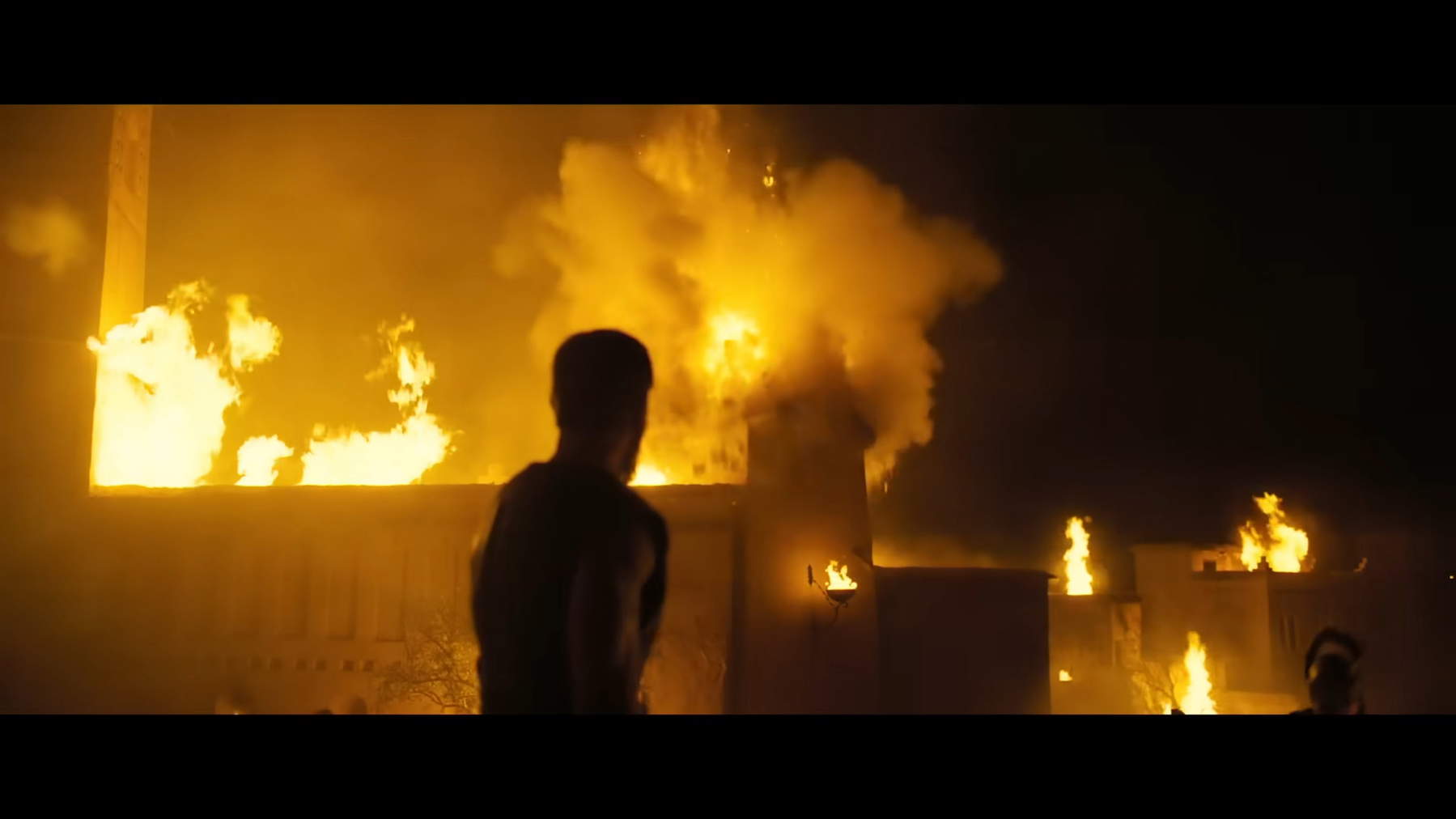
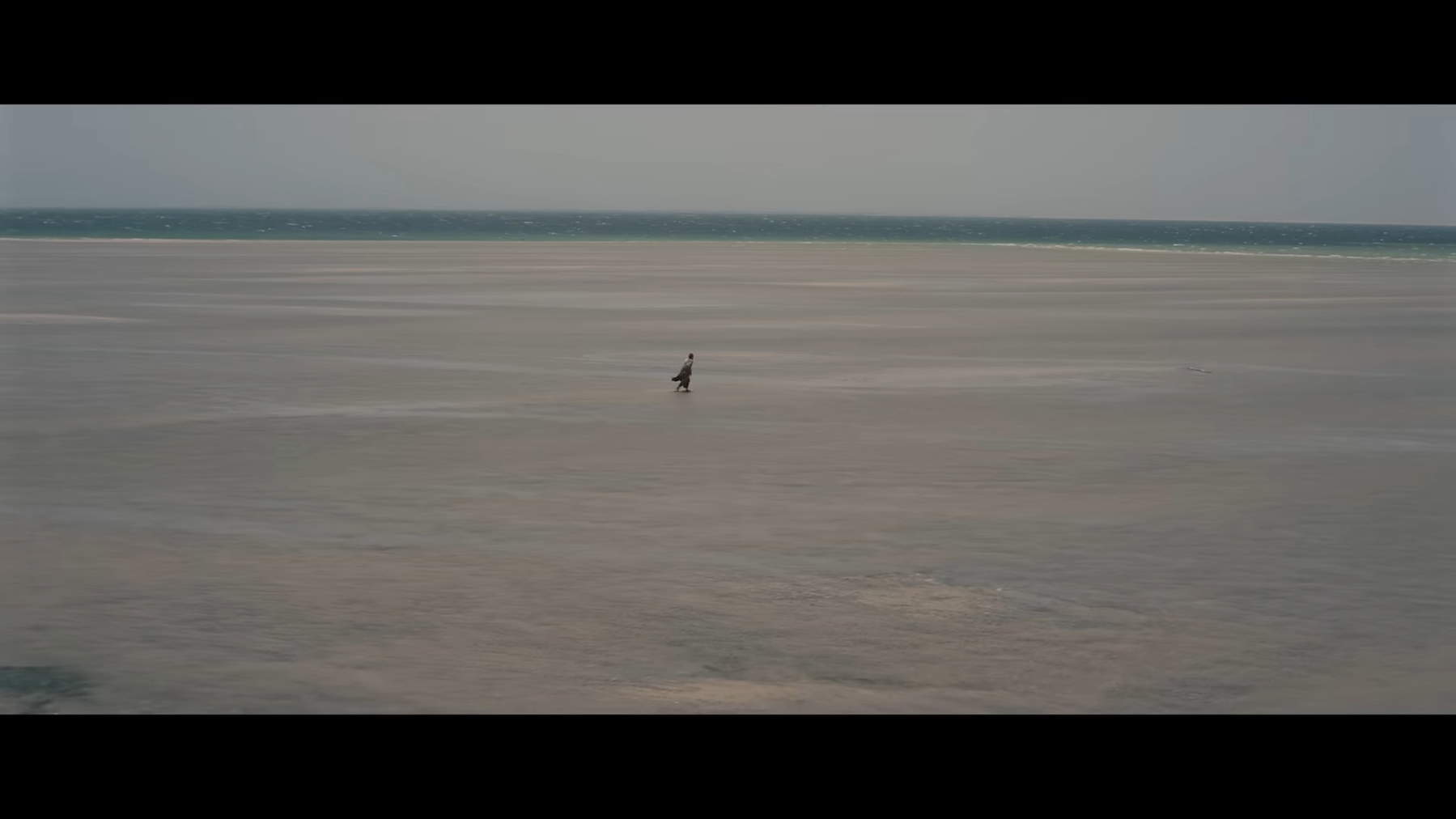
The film’s strength, however, lies not only in its narrative structure. *Odyssey* is likely Nolan’s most monumental work to date. The approximately $250 million budget is fully evident on screen, but not through a sterile display of special effects. Its scope is that of the great historical epics of the 20th century, from Cecil B. DeMille’s *The Ten Commandments* to *Cleopatra*, inevitably including *Gladiator*, * *, and *The Passion of the Christ*. Nolan never seeks light-hearted adventure. His is a serious narrative, permeated by a sense of fatalism that never leaves the viewer. It is precisely here that one of the most compelling aspects of the entire film emerges. For the first time, cinema succeeds in translating into images two fundamental concepts of Greek culture:hubris andnemesis. The arrogance of man who crosses the boundary imposed by the gods, and the inevitable response that restores order.
The entire story is constructed as a long chain of consequences stemming from the sins committed during the Trojan War. Poseidon pursues Odysseus for blinding Polyphemus, his son. The sun god Helios demands vengeance for the slaughter of his sacred cows on the island of Trinacria. Even the conquest of the city becomes a sin destined to be atoned for. The gigantic metal horse built to penetrate the walls of Troy thus takes on an almost symbolic role, a silent presence that continues to loom even when it is no longer on stage. The sorceress Circe is also reinterpreted in this light. The transformation of men into pigs appears as the revelation of their true nature; Circe does not merely cast a spell. These are warriors who have violated temples, desecrated statues, and massacred priestesses and civilians. War is depicted without any idealization. Greek glory gives way to the consequences. Let the will of the gods be done, then.
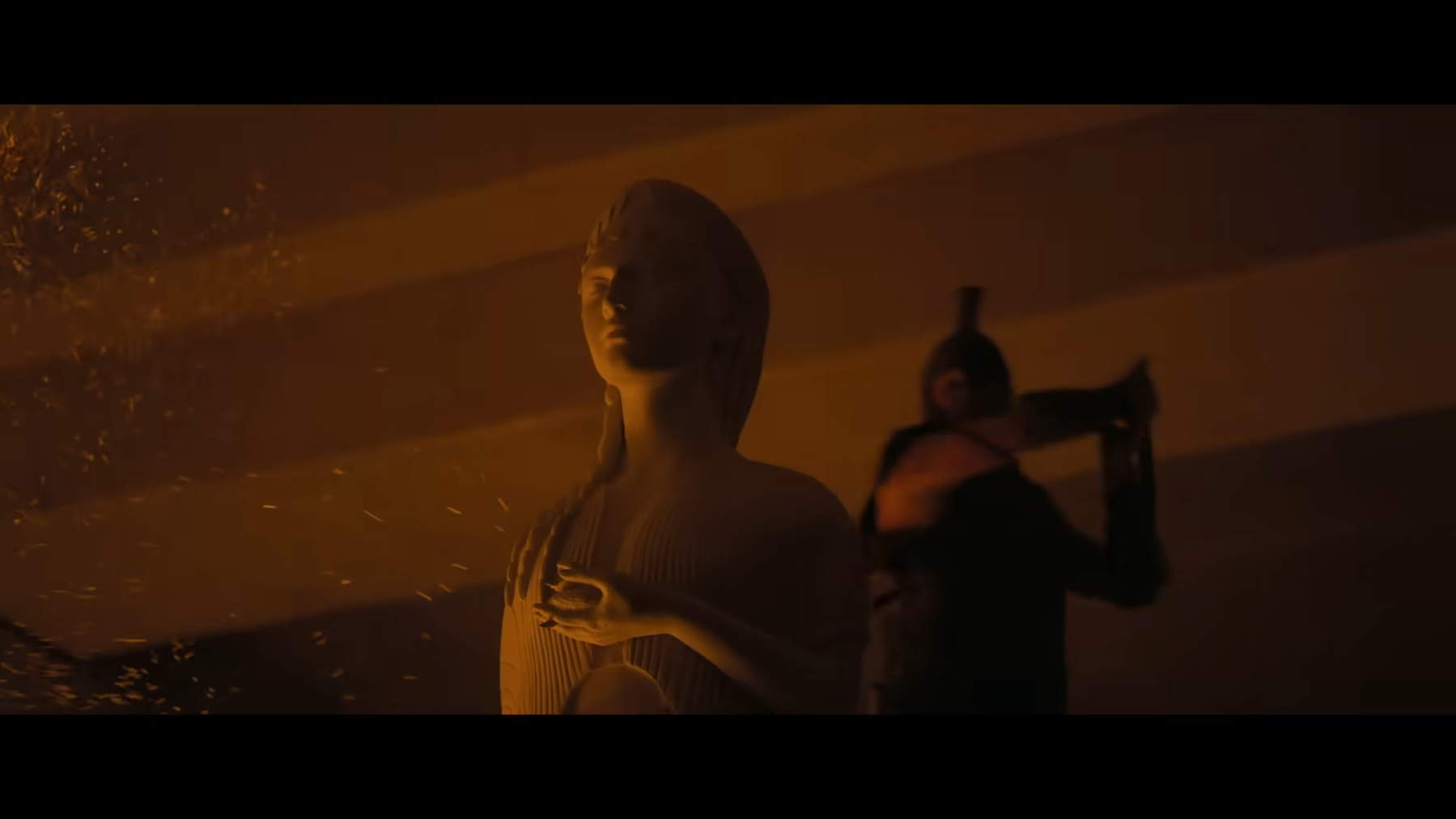
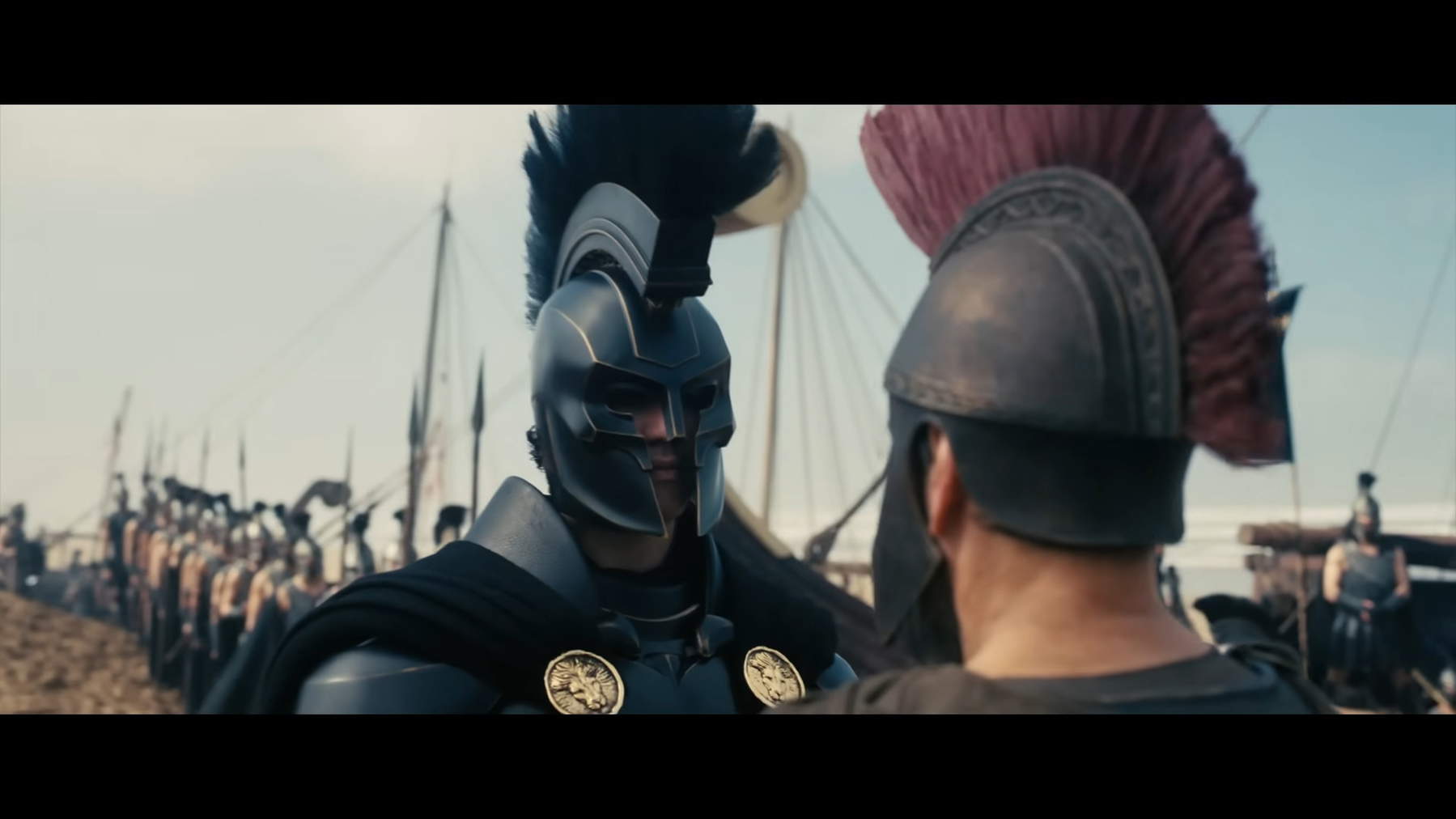
From this point on, the return journey can no longer be interpreted as a heroic adventure. Nolan’s version appears to be a slow atonement. None of Odysseus’s men are destined for a glorious death, because no one can escape the weight of their own actions. In this sense, the director seems to align himself almost more closely with Dante than with Homer. In Dante’s *Inferno*, Ulysses appears among the fraudulent counselors (Canto XXVI, eighth circle), punished precisely for the deceptions he devised during the Trojan War. The director thus references the idea of the journey as punishment throughout the entire film.
After all, the destruction of a city is always the destruction of a city. Eras change, names change, but the result remains the same. The violence inflicted upon Troy is no different from that inflicted upon other civilizations of ancient history. Nolan seems to constantly remind us that war produces only ruins and that no victory can erase its cost. Actor Matt Damon portrays an Odysseus who is a far cry from the invincible hero of cinematic tradition. His face bears the weariness of one who is fully aware of his responsibilities. The cunning for which he is known is never celebrated as an absolute virtue. Rather, it is an ambiguous quality that both saves and condemns him. Athena, the only deity truly close to the protagonist, almost takes on the role of his conscience; rather than protecting him, she accompanies him in his constant reckoning with his own choices. The return to Ithaca, which in this interpretation almost always appears as the reaching of a geographical destination, is instead an attempt to reclaim a part of himself lost during the war.
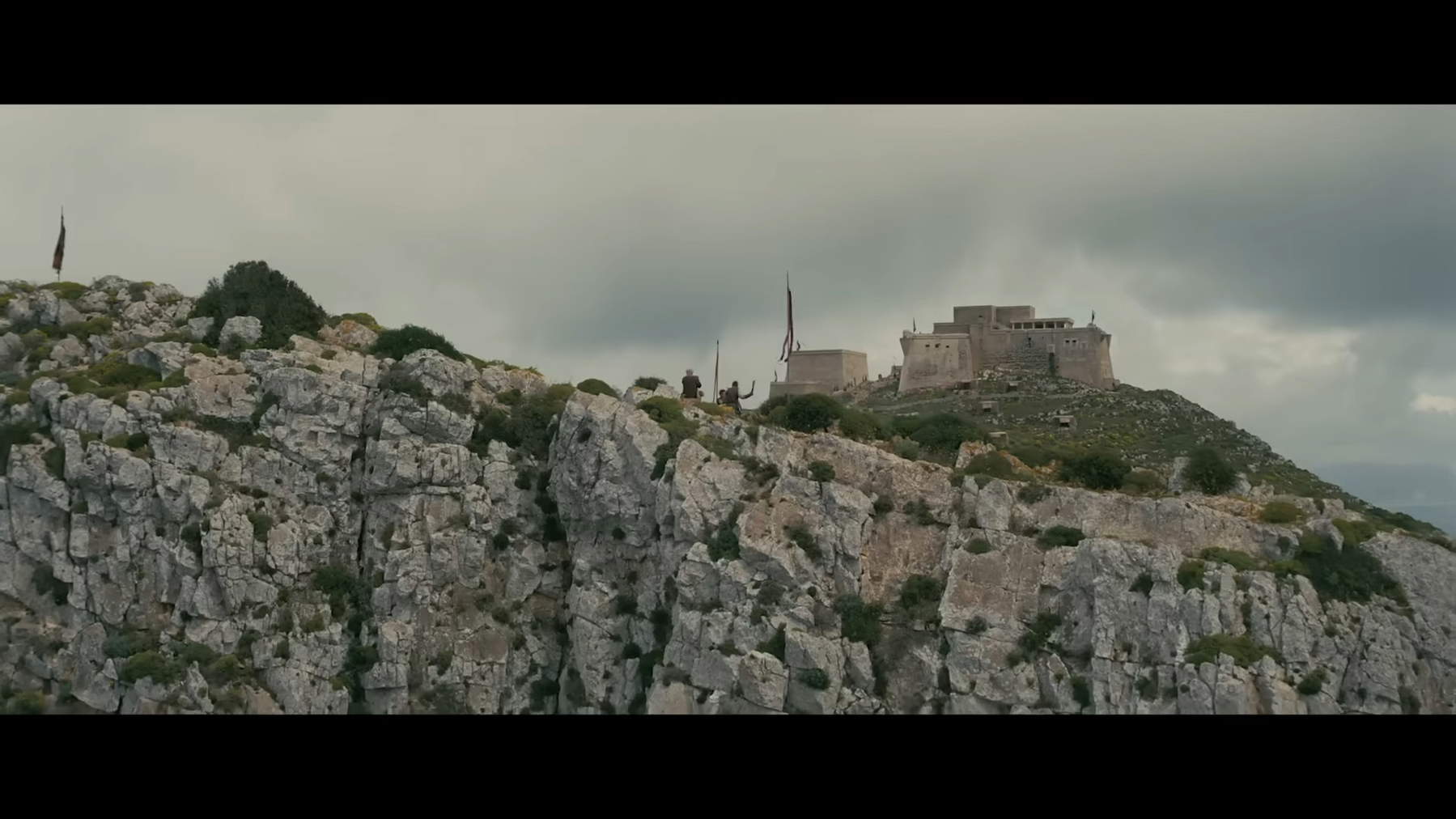
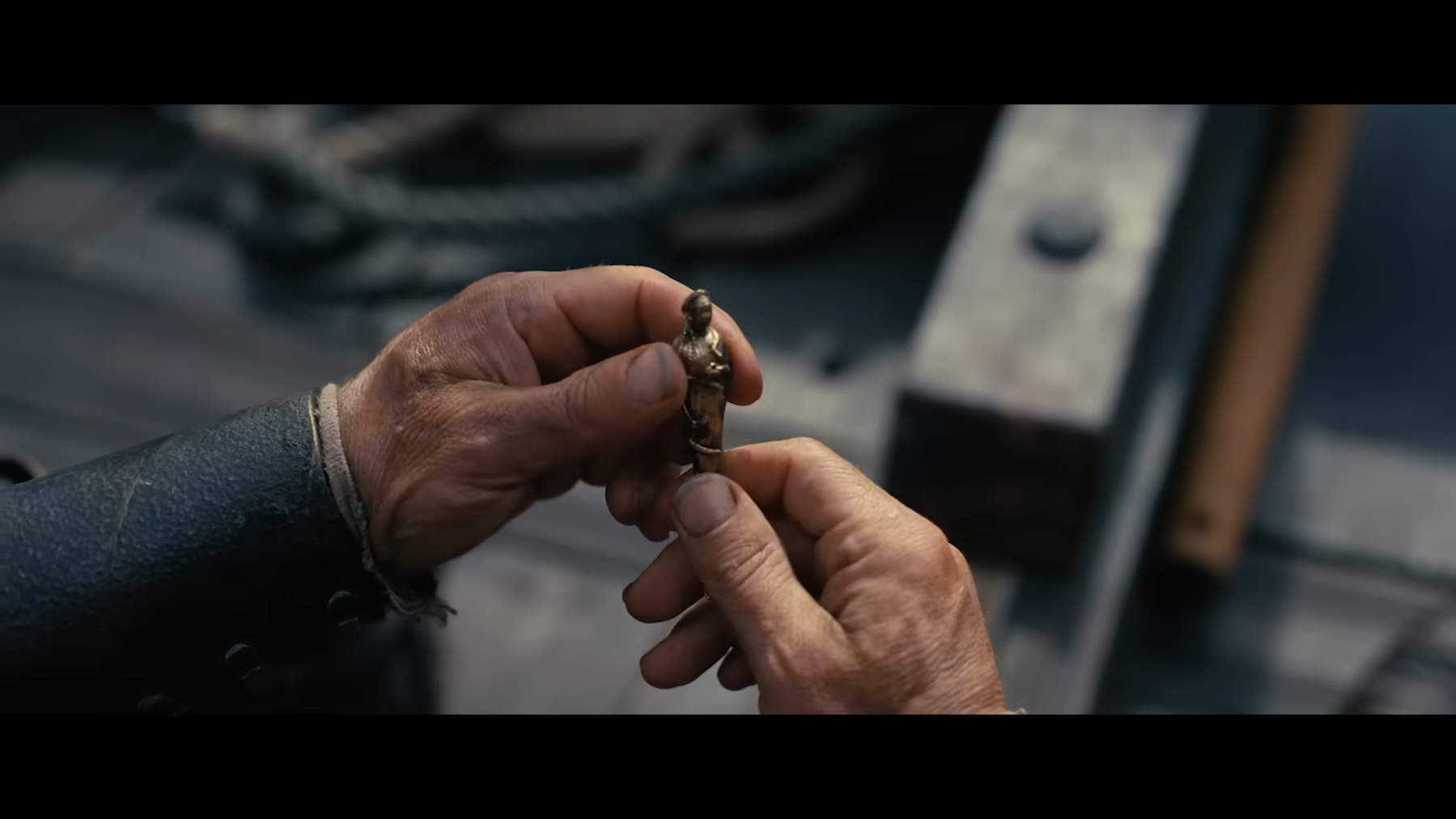
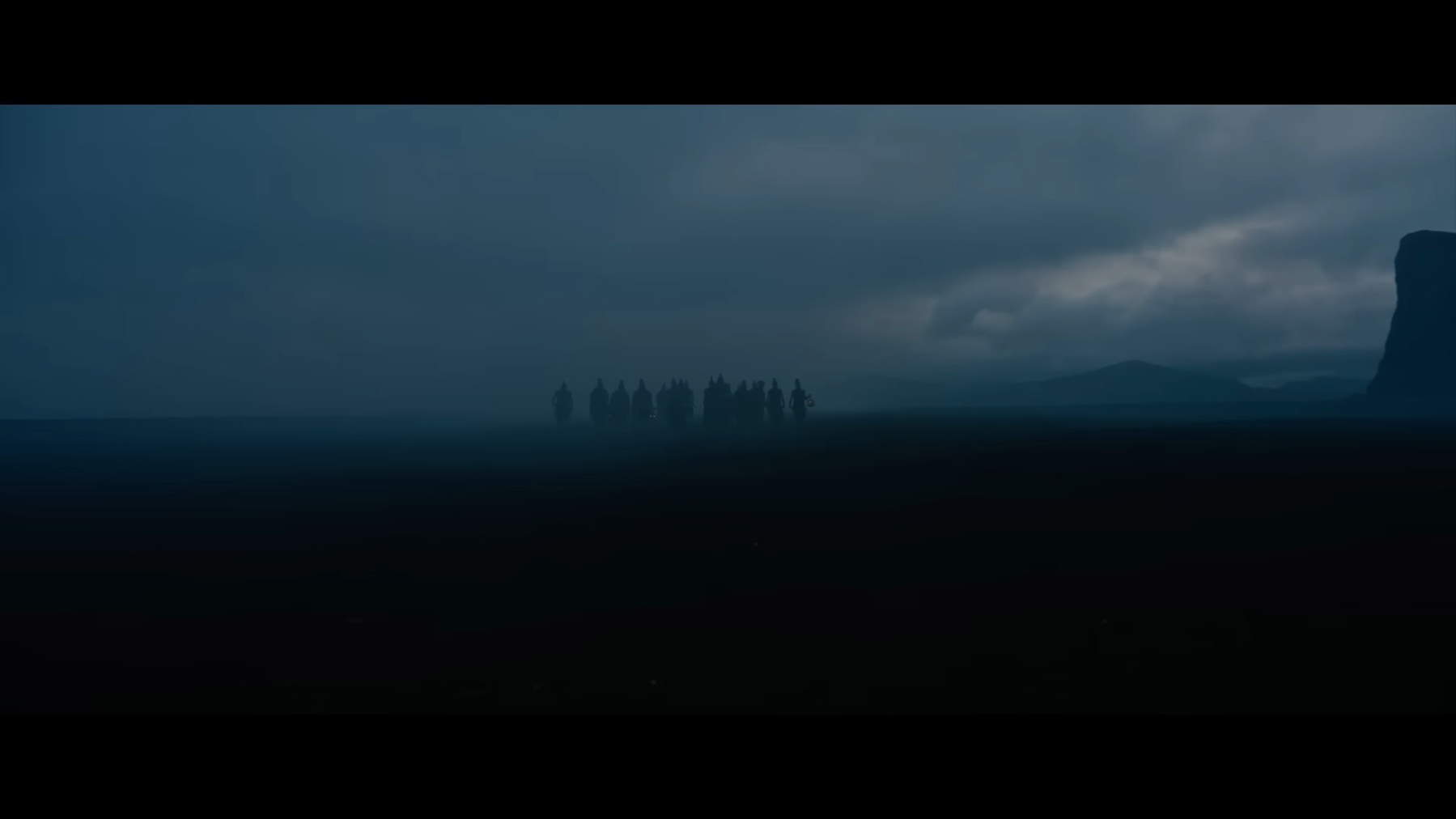
Visually, the film is sublime. The Egadi and Aeolian Islands capture the full radiance of the Mediterranean, while Greece, Morocco, and Iceland —and their respective locations (see this dedicated article)—constantly expand the story’s geographical scope. Iceland, chosen to represent the realm of the dead, provides some of the film’s most unsettling images. The cinematography alternates between the light of the southern coasts and the icy, almost surreal landscapes of the afterlife, accompanied by the score by Ludwig Göransson, who previously composed the music for *Oppenheimer* (Nolan’s 2023 film). Here, the absence of composer Hans Zimmer is not felt. Göransson crafts a darker, less epic, and more sacred soundscape that perfectly supports the entire narrative.
In *Odyssey*, all sensations are almost physical. You can feel the salt on your lips, the wind sweeping across the coast, the scent of the Mediterranean scrub, the dust of burning cities. The Sirens emerge from the fog like apparitions; Troy collapses in flames; the sea seems to possess a will of its own. The sequences dedicated to the war represent some of the film’s most powerful moments. Nolan clearly distances himself from Wolfgang Petersen’s 2004 film *Troy *. Here, there is no interest in the romantic dimension of the myth. Achilles, Hector, Paris, and Helen are not the focus of a sentimental narrative. War is shown in all its brutality, and the Trojan Horse once again becomes an instrument of deception and destruction.
The only emotional relationship that plays a central role is that between Odysseus and Penelope. The queen of Ithaca lives under siege by the suitors, forced to defend her kingdom and her dignity while Telemachus grows up chasing the memory of a father who has now become a legend. Here, too, Nolan avoids any melodramatic emphasis. Emotions always remain secondary to the tragedy that governs the characters’ fates. Furthermore, the gods do not dominate the scene with spectacular displays. Their presence is discreet yet constant. They live in the storms, in the beggars encountered along the way, in the wind that suddenly changes direction, in the small votive offerings scattered along the path. It is an essential form of religiosity—and precisely for this reason, all the more unsettling.
Naturally, there has been no shortage of discussion regarding the film’s aesthetic choices.Agamemnon’s armor—dark and massive—departs from the traditional Mycenaean imagery to align almost with the aesthetic of comic-book movies. Rather than an archaeological reconstruction, it becomes a symbolic representation of power. Let’s forget, for example, his actual funeral mask. The same goes for Odysseus’ helmet, which is deliberately left open at the face to allow Matt Damon to convey the character’s expressiveness, even at the cost of sacrificing greater fidelity to the sources.
These are legitimate observations, but they ultimately have little impact on the work’s overall outcome. Nolan is not making a documentary on Mycenaean Greece, nor does he claim to offer a philological reconstruction of the poem. His goal is something else. What is it? To convey the profound meaningof the *Odyssey*—that of a man forced to confront the consequences of his own actions and a memory that never ceases to haunt him. It is precisely this memory that serves as the true thread running through the entire film. Not the journey, not the war, not the return.
The images seem to remind us that no hero can truly escape his past and that every feat survives only as long as someone continues to tell its story. Perhaps this is where Nolan truly encounters Homer—not in the reconstruction of events. He encounters him in the realization that cinema, like epic poetry, is first and foremost an act of remembrance. And if, after all these years, we still follow Odysseus on his journey to Ithaca, it means that Mnemosyne has never stopped speaking.
Warning: the translation into English of the original Italian article was created using automatic tools. We undertake to review all articles, but we do not guarantee the total absence of inaccuracies in the translation due to the program. You can find the original by clicking on the ITA button. If you find any mistake,please contact us.