





Valsesia is not only the land of great mountaineering ascents to the peaks of Monte Rosa or the home of the monumental complex of Sacro Monte di Varallo. There is a widespread network of less celebrated but equally valuable trails that wind through the side valleys, touching clinging hamlets and once densely populated mountain pastures. These are the Paths of Art, a cultural enhancement project born of the foresight of a group of Italian Alpine Club members who, starting in 1972, decided to establish a specific commission dedicated to the protection of ancient mountains. The primary objective was to rescue from degradation and oblivion that heritage of “minor art” composed of oratories, chapels and frescoes that dot the territory. This constant effort, which led to the restoration of more than one hundred artifacts, was officially recognized in 1991 with the awarding of the bronze medal of the Presidency of the Republic for merits acquired in the artistic and cultural field.
The initiative has evolved over time, transforming the recovery work into a structured excursion proposal that today has twelve different itineraries. Each route is designed to offer walkers a different key to interpreting the alpine landscape, where the aesthetic dimension merges with the religious and social ones. The itineraries cover the main areas of the valley, from Val Sermenza to Val Grande and Val Mastallone, offering a variety of testimonies ranging from the late Middle Ages to the Baroque and the neoclassical influences of the 19th century.
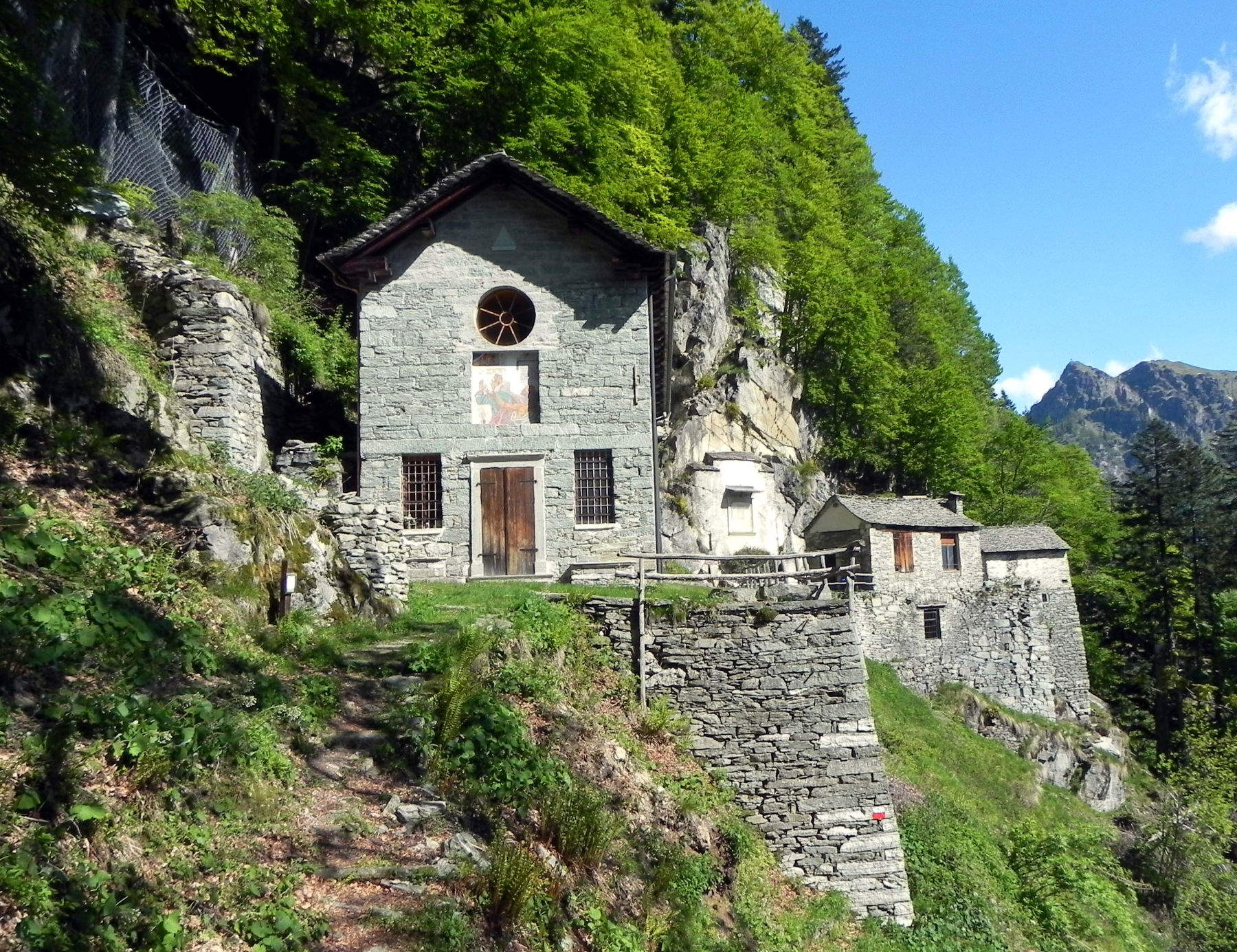
In Val Sermenza, the path from Boccioleto to Alpe Seccio is considered one of the most emblematic. Here the hiker encounters theOratory of San Lorenzo, a structure consecrated in the mid-15th century that houses cycles of frescoes of rare beauty attributed to Johannes Andreas. The surprisingly well-preserved images depict the Redeemer, the Evangelists and figures of martyrs, offering a glimpse of the 15th-century pictorial sensibility in rural areas. Not far away, in the territory of Rossa, the route to Alpe Sull’Oro allows visitors to admire the chapel of San Bernardo, whose restoration in 1973 marked the official birth of the CAI committee’s activity. The area is rich in suggestions, as evidenced by the Giavinelle church, erected in the 15th century and defended from avalanches by an imposing stone avalanche guard.
Still in the same valley, Piaggiogna’s route goes as far as the sanctuary of Madonna del Sasso, located over 1,200 meters above sea level. Legend tells of a Marian apparition that supposedly restored speech to a young mute shepherdess, an event recalled by a fresco on the rock that still attracts visitors and devotees. Along the ascent, the hamlet of Palancato offers significant examples of local architecture, with houses with large loggias and facades decorated by the 19th-century painter Giovanni Piccina.
Moving toward the Val Grande, the Campertogno Art Trail reveals an almost monumental artistic dimension. The parish church, whose design probably saw the involvement of the likes of Filippo Juvara and Bernardo Vittone, is a model of Valsesian baroque that influenced many other buildings in the valley. The route climbs toward Argnaccia and Cangello, through beech and birch forests, crossing the oratory of San Bernardo and a rock that experts identify as an ancient megalithic altar.
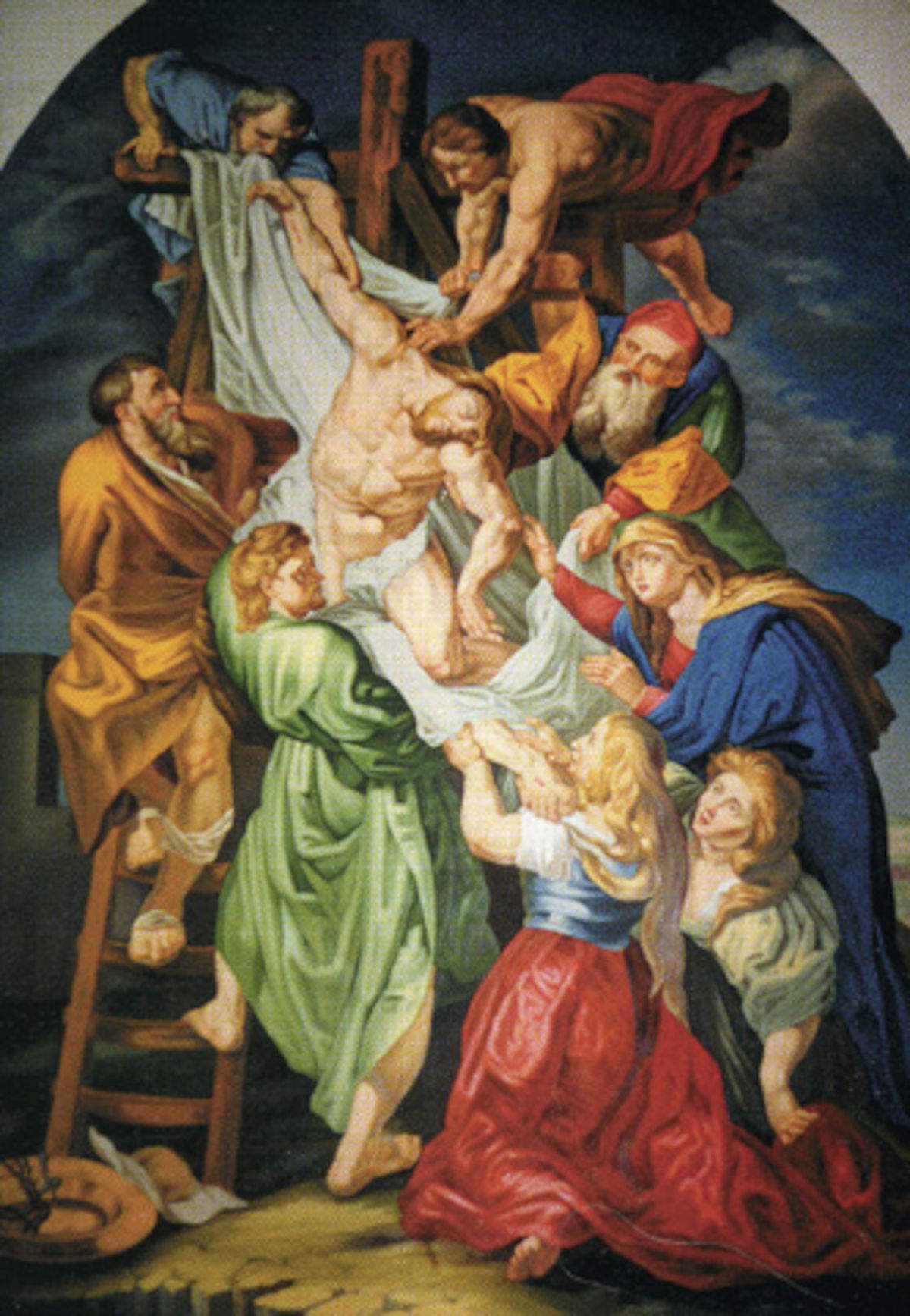
Not far away, Mollia offers a flat itinerary that touches hamlets such as Goreto and Grampa, where mountain life is also told through the recovery of historic production structures. A 17th-century complex now houses a mill, a kiln, a forge and a carpentry shop, part of the Valsesian Ecomuseum circuit, bearing witness to a subsistence based on the transformation of local materials. In this area, the work of the Orgiazzi family of painters is omnipresent, with decorations enriching oratories and chapels, including the curious chapel of San Defendente, where the tradition of auspicious bonfires is renewed every year.
Val Gronda, in the territory of Rassa, on the other hand, offers a journey into the roots of a community that has made marble and woodworking its hallmark. Stone bridges, such as the 17th-century one that crosses the stream, are masterpieces of mountain engineering that connect hamlets such as Rassetta and Mezzanaccio. In the latter hamlet, the majesty of the “Ca granda,” a five-story building, surprises visitors with its grandeur in such an isolated setting. Art in these places is also expressed through the works of Arienta, a local artist and pupil of the Avondos, who decorated the oratory of San Bernardo alla Piana drawing inspiration from models of great European masters.
The highest altitudes of the Val Grande are touched by theVal Vogna route, along theAlta Via dei Walser. Here the architecture adapts to the needs of the settlers of Alemannic origin, with the famous “peats” made of larch wood equipped with mushroom-shaped supports to protect the grains from rodents and moisture. The hamlets of Rabernardo and Peccia retain intact the charm of a distant past, where every stone and beam met a functional and symbolic need, such as the white stone placed on roofs to ward off negative influences.
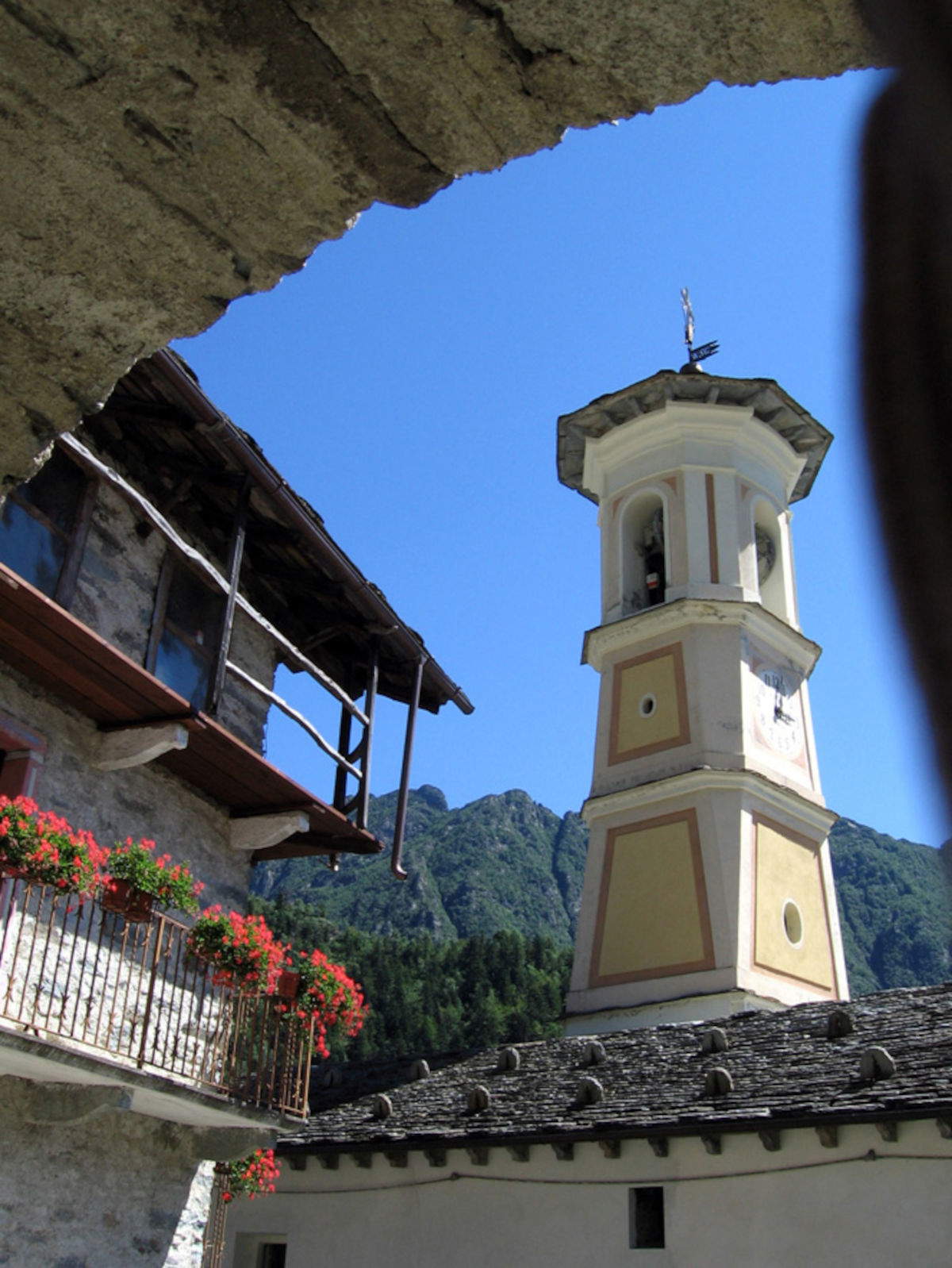
In the Mastallone Valley, Rimella represents the oldest Walser settlement in the region, with a history documented as far back as the 13th century. The path through the hamlets of Chiesa, Prati and San Giorgio is a lesson in adaptation to the alpine environment, with mule tracks called “schtigu” and “gassu” connecting stone and wooden dwellings. A recurring and poignant element of these paths is the “laying of the dead,” places where coffins were laid during the long and arduous shoulder transports from the high hamlets to the village cemetery, waiting for the clergy to welcome the coffin.
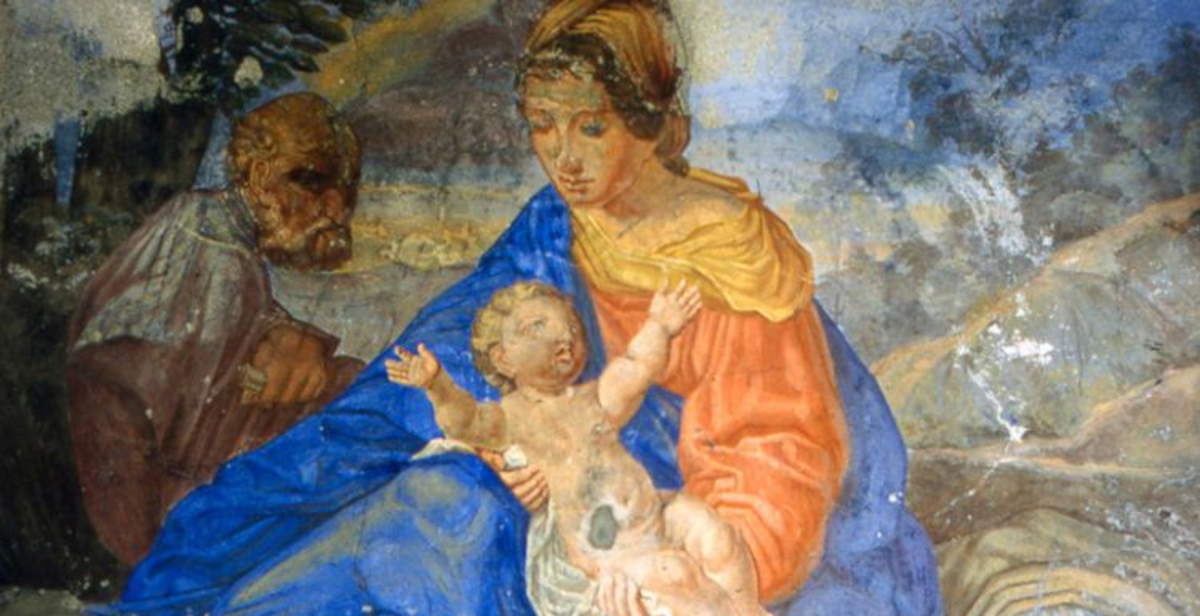
The elegance of Fobello, home of the Lancia family and a renowned resort that also hosted Queen Margaret, offers a circular route among stately villas and chapels of popular devotion. The itinerary, updated in 2023, touches the Carestia Tirozzo Museum and hamlets such as Gazza and Belvedere, offering wide panoramic views of the Cervo Valley. Faith manifests itself here in refined forms, such as the oratory of St. Joseph at the Fountain, the result of a collaboration between painters Borsetti and Orgiazzi, or the chapel of the Holy Family in Ronco.
Among the lesser-known but highly suggestive itineraries is the route from Cervatto to the sanctuary of the Madonna del Balmone. The ascent starts from the small Walser center, located just over 1,000 meters above sea level, and follows the ancient mule track that passes through Giavina and the hamlet of Orlino, where characteristic dwellings developed in height to adapt to the limited availability of building land survive. The trail passes by the Consolata oratory and the church of San Martino, then enters a dense forest of oaks, firs and beeches to the small church of Saints Peter and Paul. Entering the valley dominated by Punta Castello, the landscape opens up to the meadows of Taponaccio and finally leads to the sanctuary of Madonna del Balmone, dedicated to the Madonna of Oropa and preceded by a characteristic restored hut. Along the way, rural architecture and popular devotion restore the image of an inhabited mountain deeply linked to its places of worship.
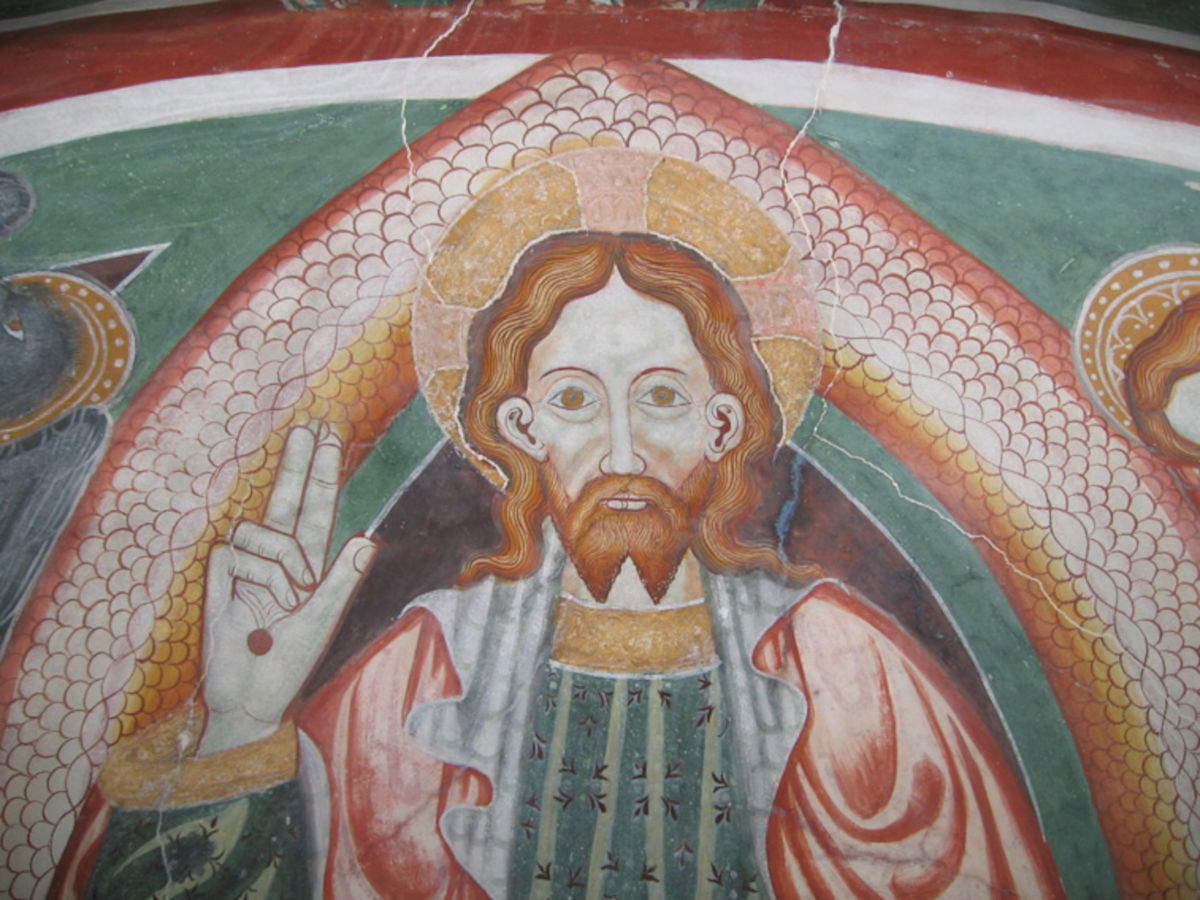
Another itinerary develops between Cerva, the Piane di Folecchio and the Lavaggi mountain pastures, in a landscape where the religious dimension is linked with the memory of the ancient communities of Val Sermenza. The hamlet of Cerva, among the oldest documented nuclei in the valley, preserves the oratory of San Bernardo di Aosta and Sant’Eligio, decorated with frescoes attributed to Giovanni Avondo, the last great interpreter of the eighteenth-century Valsesian painting tradition. The mule track then climbs back up to Folecchio, a well-preserved hamlet that holds the oratory of Saints Fabian and Sebastian, probably built on older structures and enriched with neoclassical-style paintings. The trail passes through woods and votive chapels frescoed by Giacomo Novarina, a very active figure in 19th-century popular decoration in the valley, until it reaches the Piane di Folecchio, where a 16th-century chapel and a more recent oratory dedicated to St. James and St. Francis de Sales coexist. From here the trail continues to the Lavaggi pastures, among pastures and evidence of alpine devotion such as the chapel of the Crucifixion and the frescoes of the Madonna del Latte, signs of a widespread spirituality that accompanied the daily lives of mountain dwellers.
Finally, the Piani Alti di Scopa trail leads the hiker to mountain pastures where protective symbolism is still visible, such as the Child Jesus portrayed with a red garnet necklace, an ancient amulet against the evil eye. The oratory of St. Elizabeth and the oratory of Mary Magdalene were landmarks for prayers related to the weather, essential for the survival of shepherds and livestock.
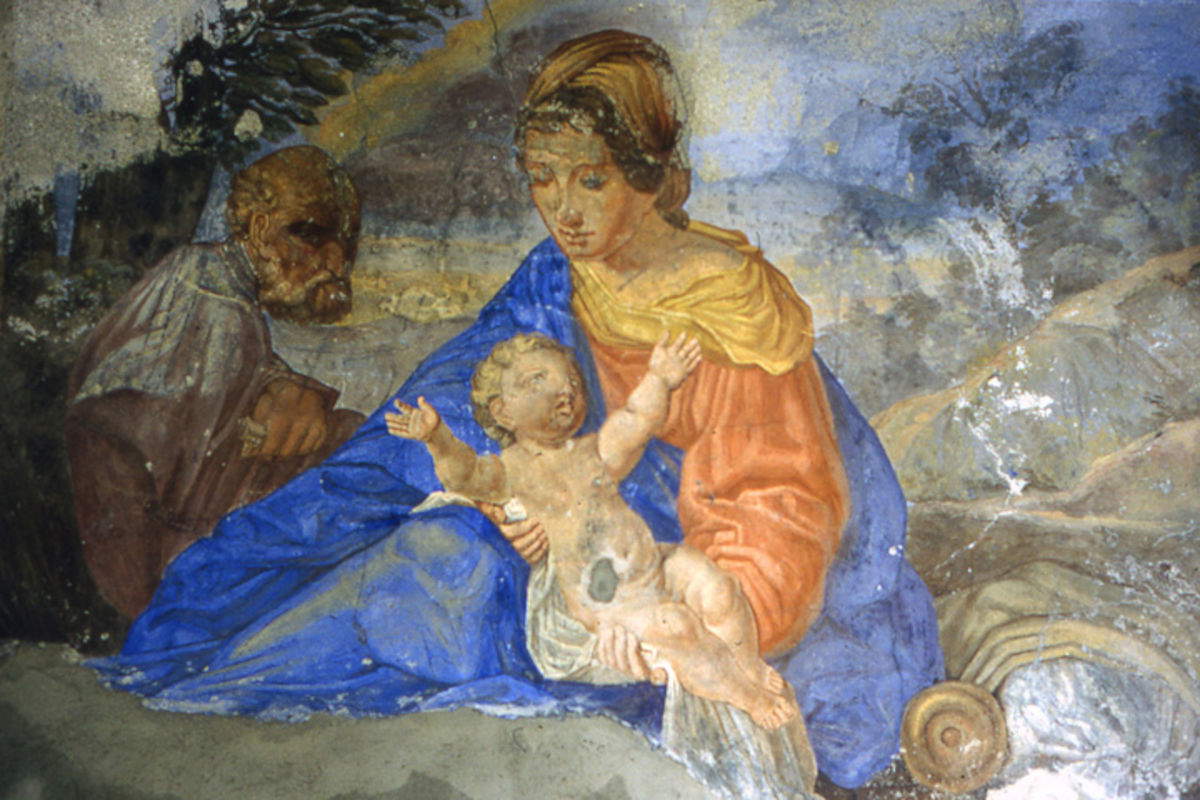
Traversing the Paths of Art thus means much more than simply hiking in the mountains. It is an act of respect toward a centuries-old history that has been able to produce beauty even in the most difficult conditions. The protection work carried out by the CAI of Varallo and the “Ancient Mountain, Mountain to be Saved” commission ensures that these testimonies are not lost, offering new generations the chance to understand the profound identity of a valley that has always considered art as an essential component of its everyday life.
 |
| Valsesia, twelve Art Trails tell centuries of alpine devotion |

Warning: the translation into English of the original Italian article was created using automatic tools. We undertake to review all articles, but we do not guarantee the total absence of inaccuracies in the translation due to the program. You can find the original by clicking on the ITA button. If you find any mistake,please contact us.

























 IT
IT FR
FR DE
DE ES
ES CN
CN


