





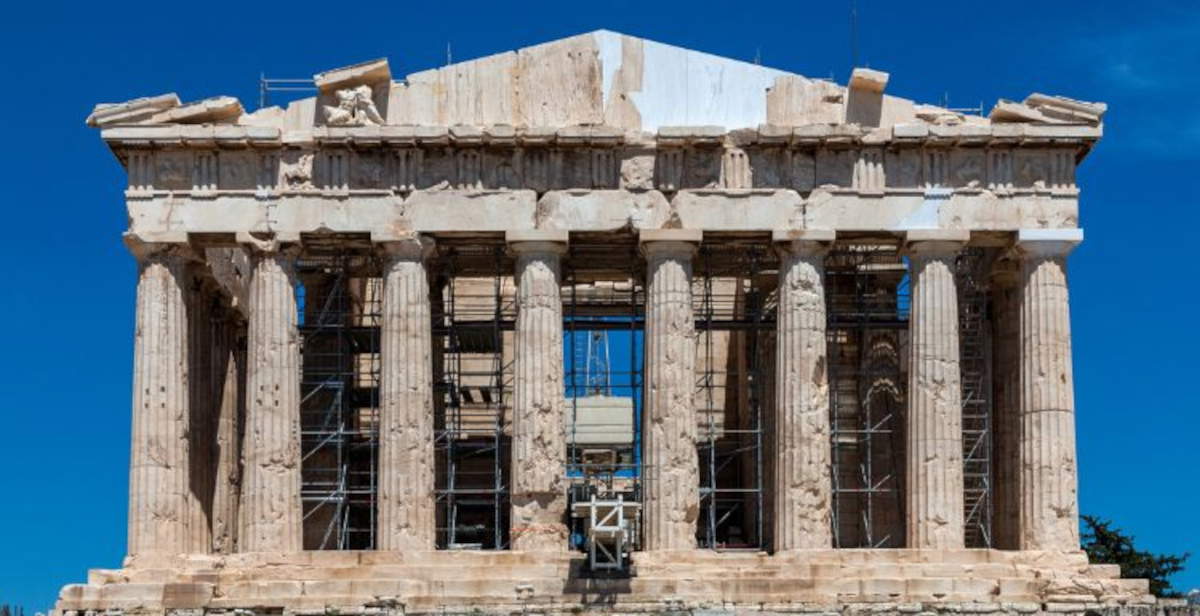
Restoration work on the western pediment ofthe Parthenonon the Acropolis in Athens has been completed, with the permanent removal of the external scaffolding from the monument’s west facade. For the first time in about 220 years, the western portion of the temple is once again visible in a form considered more complete, following work carried out bythe Greek Ministry of Culture , which announced the news. The project involved restoring the architectural coherence of the pediment by reinstalling two vertical elements in their original positions. The work also included the completion of the front wall, with the aim of reestablishingthe formal unity of the tympanum. The work was carried out as part of the conservation and restoration efforts coordinated by the agencies responsible for the Acropolis monuments.
The work on the two pediment columns was among the most complex carried out in recent years. The first column was restored by welding together the surviving ancient fragments and integrating them with new marble blocks, while the second was entirely reconstructed using newly quarried stone. The various phases of the project required specific technical solutions and a high degree of precision during lifting and installation operations. To enable the completion of the project, a new functional scaffolding system was installed, designed to meet updated safety standards and to blend visually with the monumental structure, thereby minimizing the impact on the site’s overall appearance.
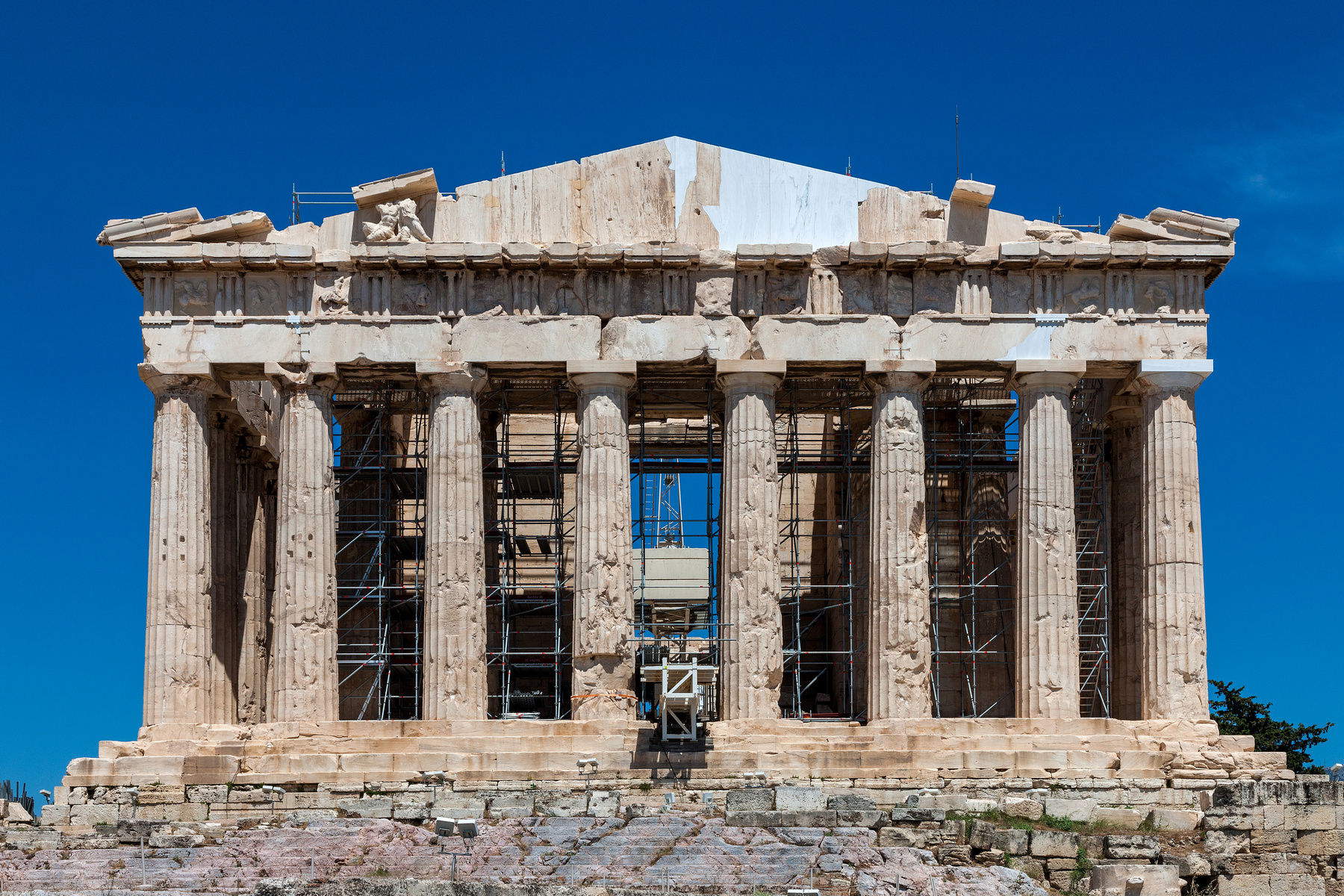
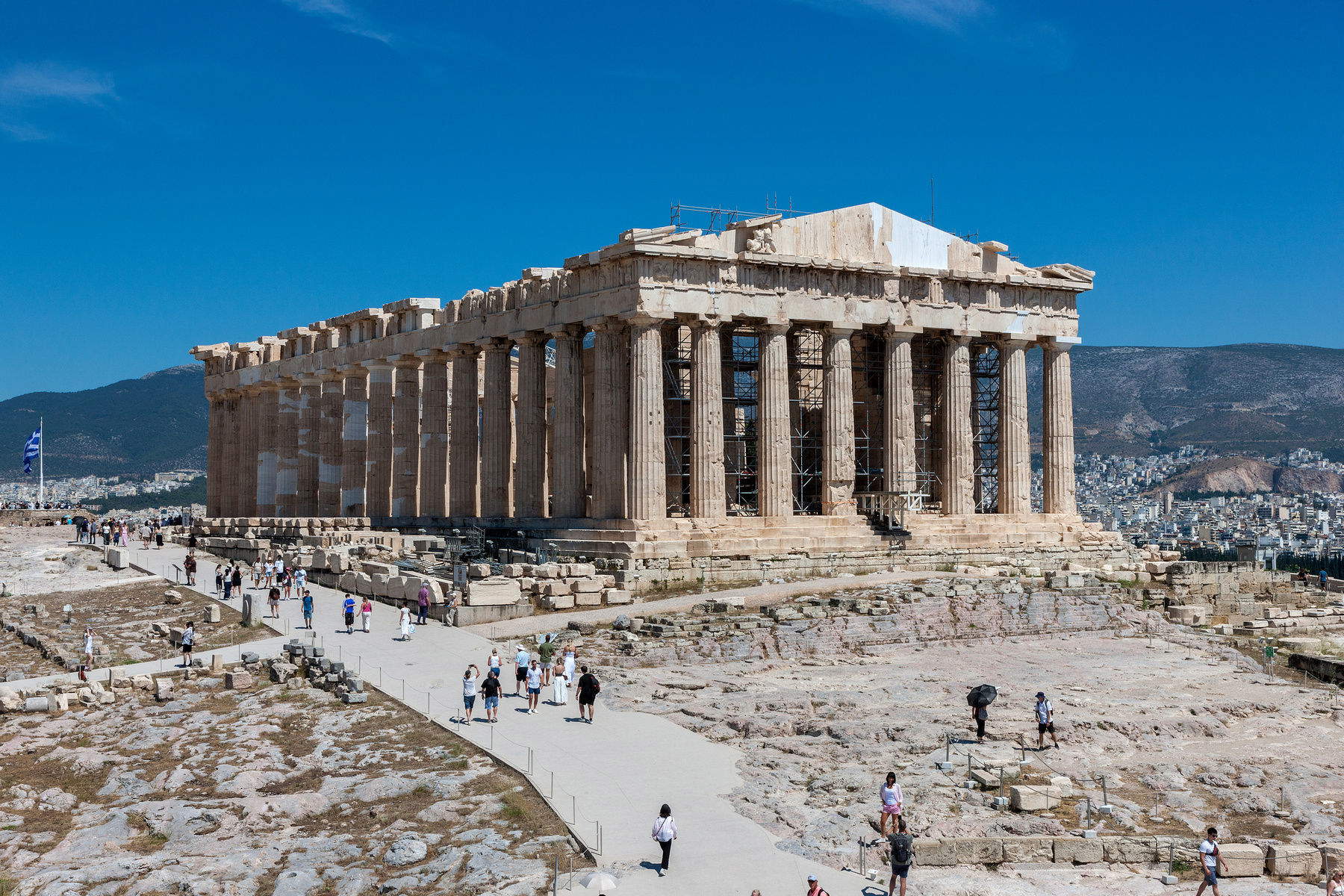
The restoration program for the western façade was funded through the Recovery and Resilience Facility and carried out by specialized staff from the Acropolis Monuments Conservation Service (YSMA) and the Acropolis Monuments Conservation Committee (ESMA), the bodies responsible for the conservation of the Acropolis monuments.
“A few months ago, we were talking about the first unobstructed view of the Parthenon in decades, without the external scaffolding that had covered its western side,” said Greek Minister of Culture Lina Mendoni. “Today we are celebrating the completion of an extremely challenging restoration project, thanks to which the western pediment of the Parthenon has been restored to its most complete form in approximately 220 years. The sight is truly breathtaking. The pediment, which generations of Greek citizens and visitors from around the world had grown accustomed to seeing as incomplete, has regained its architectural unity. The two new vertical elements, placed in their vacant positions, do more than simply fill a structural void. They allow the unique proportions and geometric perfection of the Parthenon’s western façade to be highlighted once again. This is a project of exceptional difficulty, carried out by scientists, engineers, artisans, and the staff of the Acropolis Monuments Conservation Service with exemplary precision and dedication. Its successful completion demonstrates once again that Greece, the Ministry of Culture, and its leaders have succeeded in making the Greek school of restoration pioneering and among the best internationally. Today we see the western pediment of the Parthenon as we have not seen it for two centuries. This is a moment of historic significance for the monument, for the Acropolis, and for world civilization. A moment that fills us with pride, but also with a sense of responsibility to continue, with the same consistency, the great work of preserving and showcasing the principal symbol of Western civilization.”
 |
| Acropolis of Athens: The Parthenon’s West Pediment Is Visible Again After 220 Years |


The author of this article: Noemi Capoccia
Originaria di Lecce, classe 1995, ha conseguito la laurea presso l'Accademia di Belle Arti di Carrara nel 2021. Le sue passioni sono l'arte antica e l'archeologia. Dal 2024 lavora in Finestre sull'Arte.Warning: the translation into English of the original Italian article was created using automatic tools. We undertake to review all articles, but we do not guarantee the total absence of inaccuracies in the translation due to the program. You can find the original by clicking on the ITA button. If you find any mistake,please contact us.

























 IT
IT FR
FR DE
DE ES
ES CN
CN


