




by Redazione 02/07/2026



Categories: Ancient art / Disclaimer
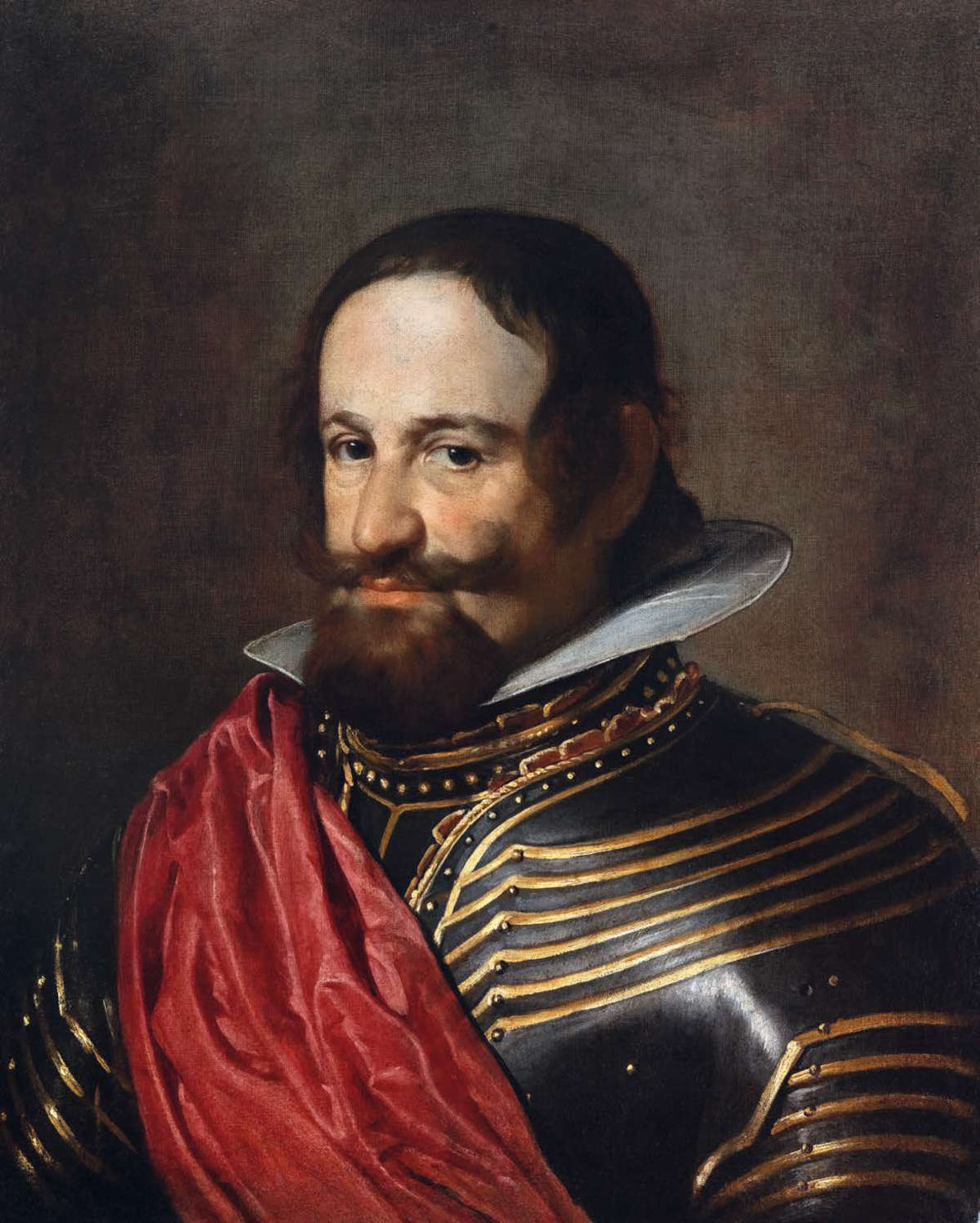
A previously unseen portrait by Diego Velázquez has been discovered in Spain: it depicts the Count-Duke of Olivares. The discovery was made by art historian Salvador Salort-Pons, director of the Detroit Institute of Arts. The painting is a masterpiece from 1626 that had remained hidden in a private collection until now.


A previously unknown work by Diego Velázquez (Seville, 1599 – Madrid, 1660), one of the most important artists of the Spanish 17th century, has been discovered in Spain . The discovery was announced by art historian Salvador Salort-Pons, director of the Detroit Institute of Arts, who has dedicated a lengthy article to the painting in the latest issue of ARS Magazine: it is the first portrait of the Count-Duke of Olivares in armor painted by the Sevillian master. This canvas, held in a private collection, proves to be a key piece for understanding the complex political and artistic dynamics of Philip IV’s court in 1626, a period marked by intense diplomatic activity between Spain and the Vatican and by the Andalusian painter’s consolidation as the Spanish Crown’s favorite portraitist.

The origin of this important discovery can be traced back to historical research on the papal legations in Madrid. In 1970, historian Enriqueta Harris published several excerpts from the travel diary of Cassiano dal Pozzo ( Turin, 1588 – Rome, 1657), a great collector, patron, and secretary to the papal legate, the influential Cardinal Francesco Barberini. Pope Urban VIII, the cardinal’s uncle, had sent Barberini on a complex diplomatic mission, first to the court of Louis XIII of France in 1625, and subsequently to that of Philip IV in Madrid in 1626, with the primary objective of negotiating a truce between the two European powers regarding Valtellina, at the time a disputed territory over which an intense war was being waged.


Cassiano Dal Pozzo explicitly wrote in his diary that in 1626 the Sevillian artist had painted two portraits, for which there is no prior documentary evidence: one of the Count-Duke of Olivares (Gaspar de Guzmán y Pimentel; Rome, 1587 – Toro, 1645) and another of Cardinal Francesco Barberini. The diary also reveals a detail of great historiographical interest, as Dal Pozzo expressed his deep disappointment after seeing the portrait of Barberini painted by Velázquez, which he critically described as a work executed with a melancholic and severe air. As a direct consequence of this disappointment, the Roman delegation commissioned a new portrait of the cardinal from Juan van der Hamen, a prominent Madrid-based painter of Dutch origin, whose work ultimately won the approval of the papal entourage.


Cassiano dal Pozzo’s harsh opinion is surprising when one considers that Velázquez had entered the king’s service precisely because of his extraordinary talent as a portraitist. Today, scholars agree that this rejection of Velázquez’s portrait and its replacement with Van der Hamen’s work reflect the tensions, fears, and resistance that the young Sevillian painter’s meteoric rise to prominence stirred up at the Alcázar in Madrid. It was, however, in the context of relations between the Spanish and Italian authorities that the Count-Duke of Olivares may have commissioned his own portrait and that of the papal legate from Velázquez: they had in fact been conceived as a mutual tribute attesting to the success of the papal mission. Until today’s discovery, it had not been possible to locate either of Velázquez’s two paintings, nor the replacement portrait painted by Van der Hamen.
The research published by Salort-Pons formally identifies this previously unknown work—a half-length portrait of the Count-Duke of Olivares in armor—as the painting that Cardinal Barberini received in Madrid in 1626. The painting was meticulously recorded in the inventory of the cardinal’s Roman collection in 1631, described verbatim as a portrait of Count Olivares, head and bust, in armor, measuring “head-sized canvas.” This technical term historically refers to paintings measuring approximately 62 by 47 centimeters, a size that matches precisely the current dimensions of the rediscovered painting, which measures 60 by 48 centimeters. The work remained in the Barberini collection until his death, after which it appears listed in the posthumous inventory of his estate drawn up in 1669 at the Palazzo della Cancelleria under number 191.
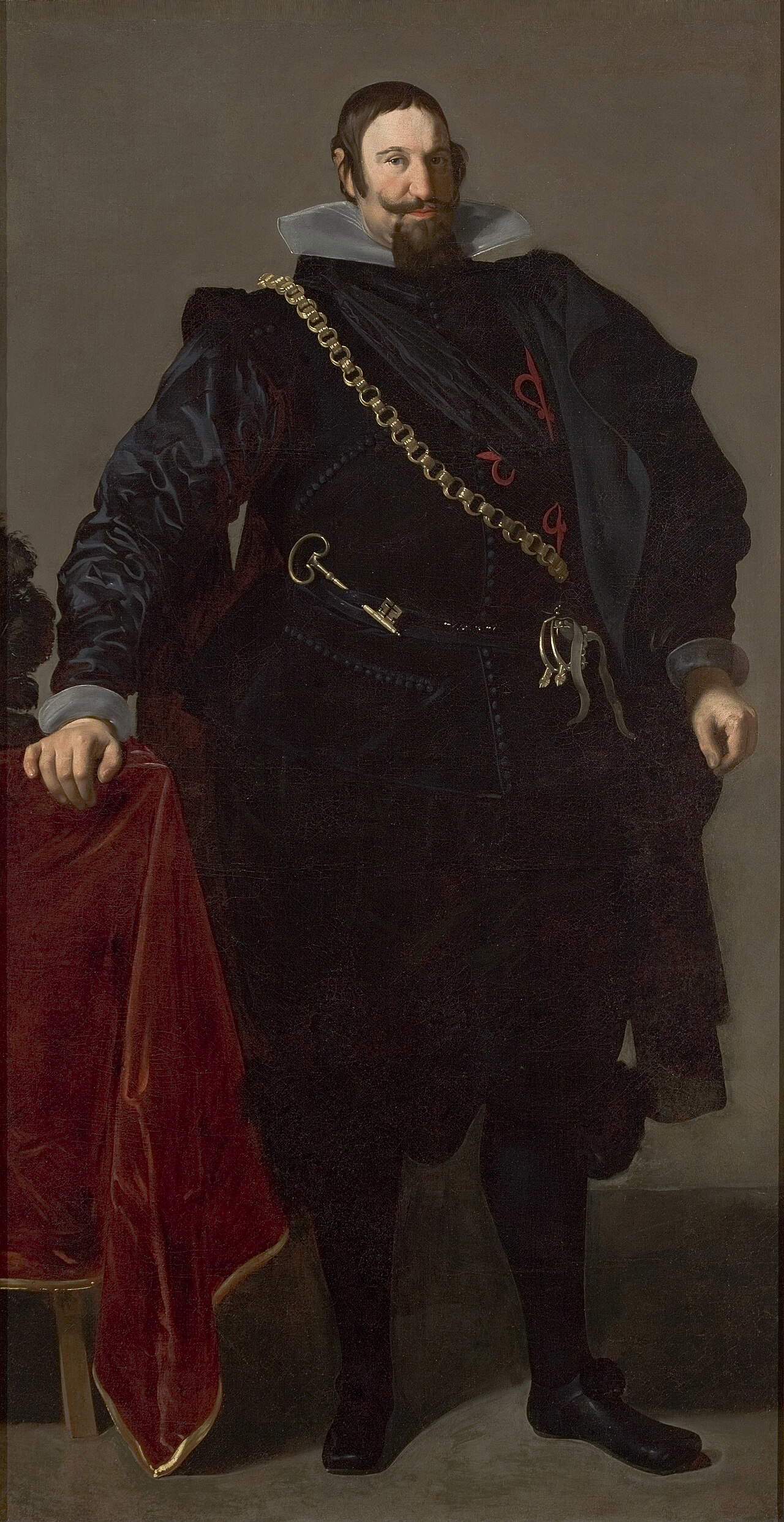
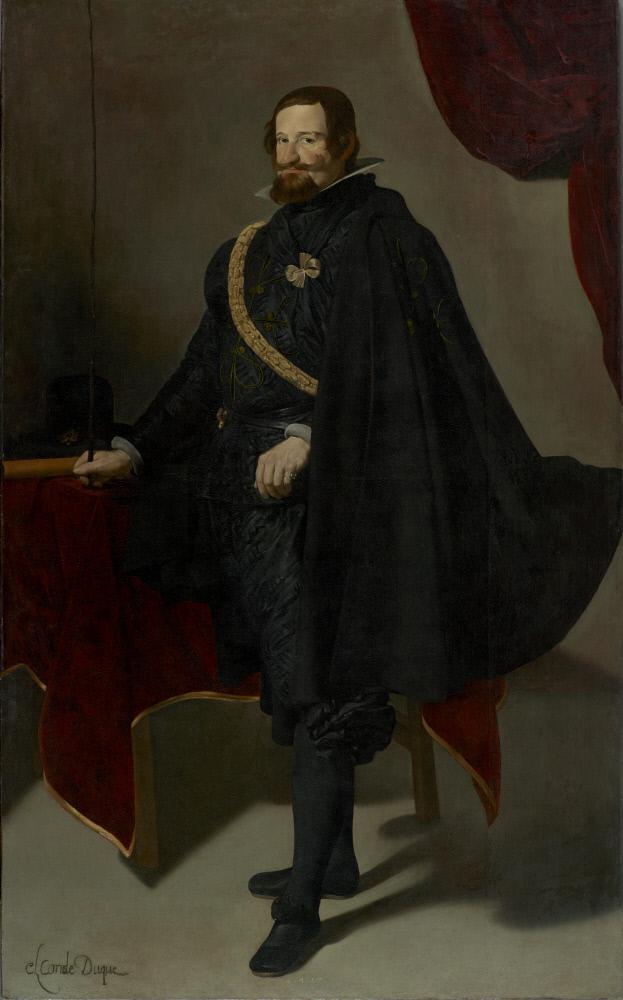
An analysis of Velázquez’s oeuvre shows that between 1623 and 1626, the painter developed three distinct iconographic approaches to portraying the Count-Duke of Olivares, seeking to visually express his immense power and his closeness to the monarch. These portraits served the institutional purpose of presenting the new administration and the monarchy in a fresh light, grounded in the principles of administrative reform and economic austerity championed by the new government. The first of these portraits is the one now housed at the Museu de Arte in São Paulo, Brazil; it was painted in 1624 on direct commission from García Pérez de Araciel and likely derived from an earlier portrait created for the same Count-Duke. In this first version, Olivares is depicted in a frontal pose, with an authoritative and energetic demeanor, standing next to a table. He wears a black suit against which stand out the cross of the Order of Calatrava, a gold chain crossing his chest in accordance with court fashion, as well as the gold key and spurs at his belt—attributes alluding to his court offices of “sumiller de corps” and “caballerizo mayor.”
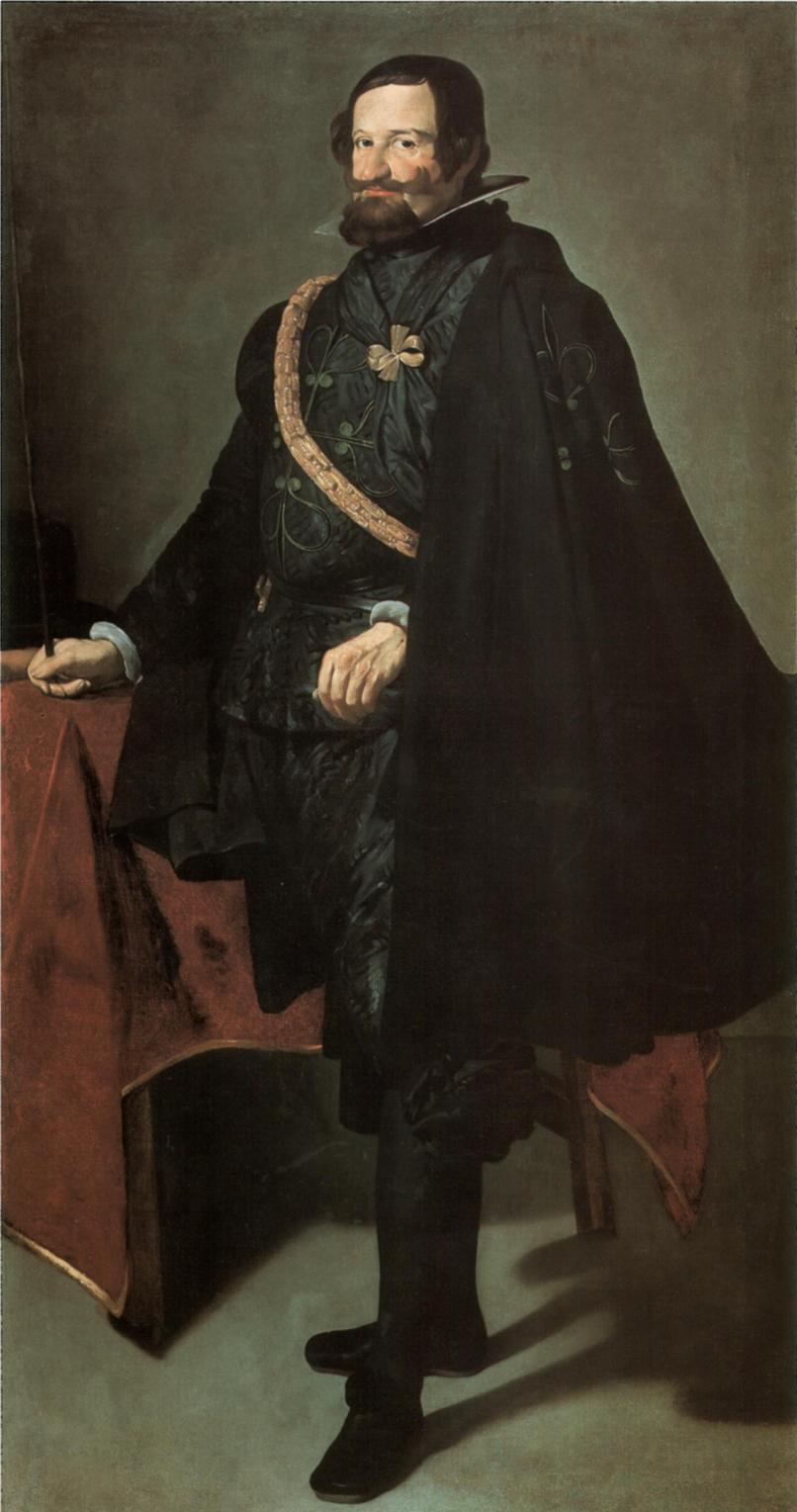
The second type of portrait dates to 1625 and is documented by two autograph versions by Velázquez, one housed at the Hispanic Society of America and the other in a private Spanish collection. In this case, the artist depicts the Count-Duke in a dark suit adorned with the embroidered cross of the Order of Alcántara and a heavy gold chain, to which is added the gold key as a further sign of his rank at court. This official portrayal is accompanied by political and military symbols, such as the general’s baton resting on the table—alluding to his military responsibilities—and the whip firmly grasped in his right hand, which, rather than indicating a specific office, celebrates his equestrian skill as a metaphor for his ability to govern the state. Compared to the energetic frontal composition of the 1624 portrait, this new version favors a three-quarter pose, which is more elegant, refined, and detached.
The third prototype, to which the recently rediscovered, previously unpublished painting belongs, was created in 1626 on the occasion of Cardinal Barberini’s visit. In this half-length portrait, Olivares is depicted in armor, adorned with the red sash of a general. Although the facial features follow the model developed in 1625, the hair is slightly disheveled, with a lock falling naturally over the left side of his forehead. The painting technique reveals a deliberate contrast in execution: while the face is painted with a light impasto that allows the reddish ground layer to show through—particularly visible in the beard area—the armor and sash are rendered with a more fluid brushstroke and a noticeably thicker impasto. The treatment of the metallic highlights and the glazes on the folds of the fabric bears a close resemblance to that employed by Velázquez in the Portrait of Philip IV, dated between 1626 and 1628. To render the gilded elements of the armor, the painter applied long brushstrokes from left to right, initially dense with paint and gradually becoming thinner. The compositional similarities with the portrait of the sovereign are evident: both paintings are of similar dimensions, feature a brownish background, and depict the figure in a three-quarter half-length pose, wearing armor and a red sash.
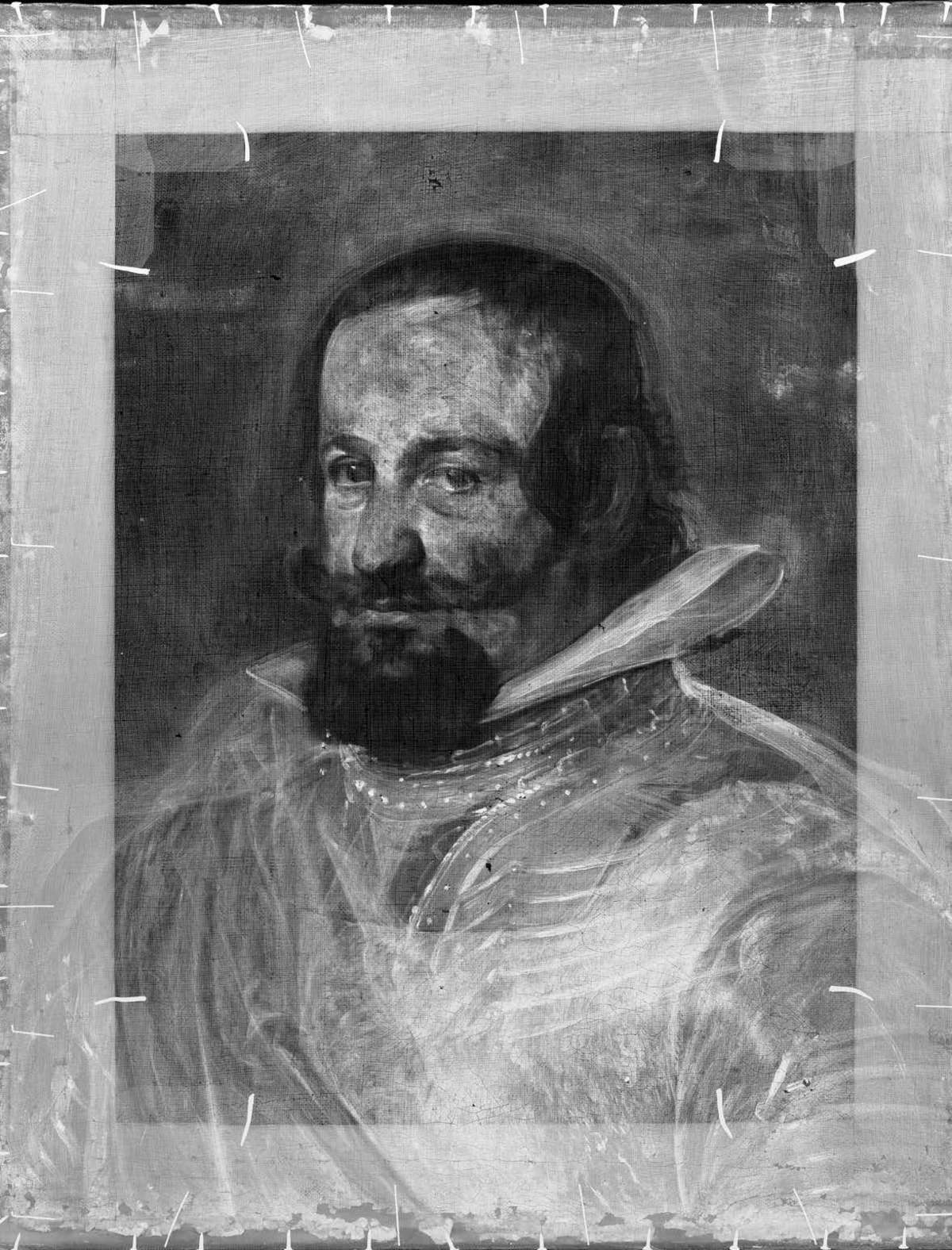
X-ray analysis has revealed numerous retouches made by Velázquez while painting the work. On the face, the artist altered the position of the left ear, moving it closer to the head to reduce its protrusion, and lowered the right shoulder slightly. The most significant changes, however, concern the clothing. The X-rays show that the Count-Duke was initially depicted without armor, wearing a dark civilian suit trimmed with fur, still recognizable on the right side as a wide, light-colored band crossing the chest beneath the later metallic layer. This first layer was executed with lead white, applied using short, dot-like brushstrokes designed to suggest the texture of the fur. The ruff, or collar, also underwent a substantial change: the final version—wide, stiff, and smooth—replaced a collar that was initially narrower and slightly ruffled. This evidence demonstrates that the painting was initially conceived as a portrait of a statesman and only later transformed into a military image. At an intermediate stage, the hilt of a sword was even added to the lower part of the composition, but it was subsequently removed to simplify the final composition.
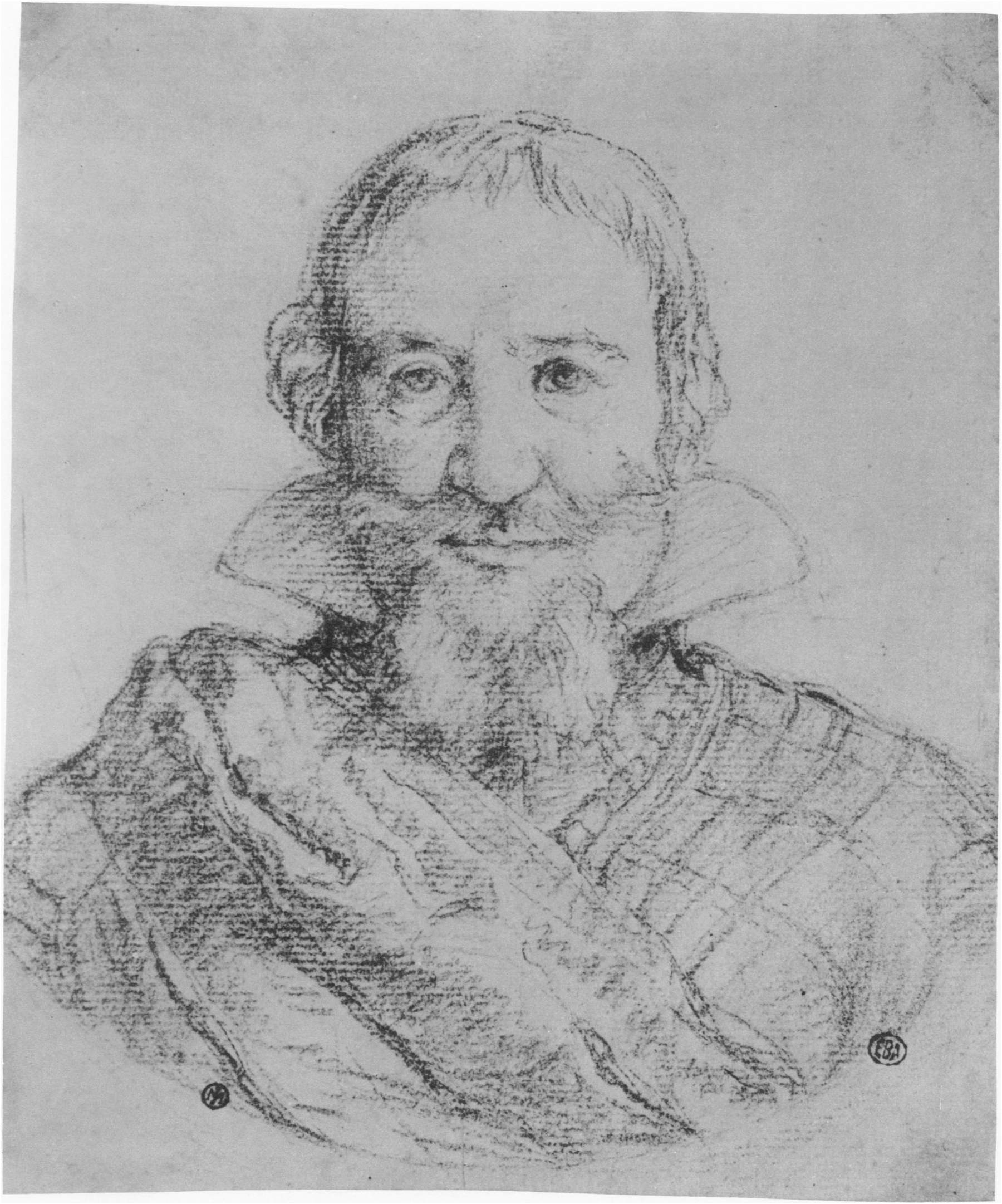
This shift toward a military iconography directly links the painting to the political project ofthe Unión de Armas promoted by the Count-Duke between 1625 and 1626. The visit of the papal delegation was, in fact, the ideal opportunity to disseminate an image of Olivares as a military leader at the Roman court, which served to legitimize his international strategy. Although Cassiano dal Pozzo’s diary contains no specific observations on the portrait, the expression painted by Velázquez—characterized by an intense, introspective gaze and tightly pursed lips—evokes the severity and melancholy that Italian observers criticized in the portrait of Cardinal Barberini. Subsequent correspondence between Barberini and the nuncio in Madrid, Giovanni Battista Pamphilj, indirectly suggests that the portrait did not meet the expectations of the Roman court. In November 1626, the nuncio arranged for a new drawing —probably executed by Velázquez and approved by Barberini himself—to be sent to Rome, and it received papal approval in December of that same year. This drawing may be identified as the circular sheet now preserved at the École des Beaux-Arts in Paris, generally attributed to the Sevillian master, although no corresponding painting is known to exist.
The significance of this portrait in armor is also evident from its connection to the famous allegorical engraving of the Count-Duke created in 1626 by Paulus Pontius as part of a collaborative project involving Pieter Paul Rubens and Velázquez himself. Rubens’ preparatory sketch, housed at the Musées royaux des Beaux-Arts in Brussels, depicts Olivares wearing the same dark, fur-trimmed robe that X-rays revealed as the painting’s initial state, while retaining the facial features of the 1624 model. In the final print, Pontius retained the allegorical composition developed by Rubens, but replaced the head and torso with Velázquez’s new model in armor. A preparatory drawing of the head, executed by the engraver himself, reproduces the painting with extreme fidelity, limiting himself to modifying the ear to accentuate its relief, even going so far as to study it separately in the margin of the sheet.
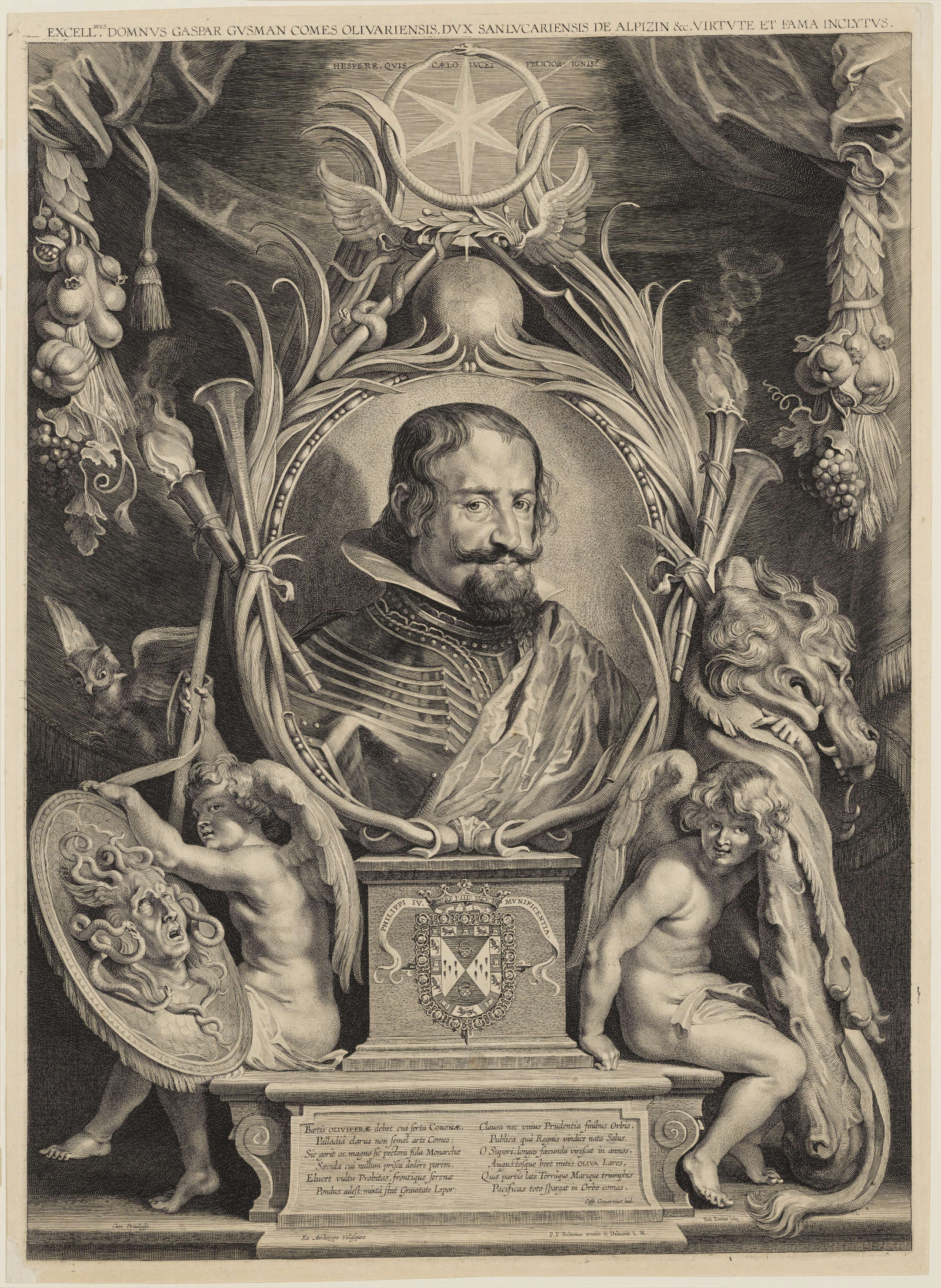
In both the engraving and the painting, the Count-Duke wears a suit of armor likely made in Brussels by the armorer known as Maestro MP. A closer look reveals that Velázquez deliberately omitted one of the two rivets located on the upper part of the left arm, just below the shoulder guard, leaving the empty hole visible. This subtle device demonstrates the artist’s technical virtuosity through a refined trompe-l’œil effect, which was particularly appreciated at the Madrid court and praised by his teacher Francisco Pacheco. The fact that the painting presents a mirror image of the engraving and retains compositional pentimenti further confirms that it is the original model and not a copy derived from the print.
Finally, technical analyses confirm that the materials and execution process are fully consistent with Velázquez’s practice in the second half of the 1620s. The canvas preparation consists of a black-and-white ground layer covered by a reddish primer, a recurring feature of the artist’s court work. The fabric, woven on a handloom, has a warp of ten threads per centimeter and a weft of eleven threads per centimeter—values identical to those found in the portraits of Philip IV and the Infante Don Carlos housed at the Prado Museum. Infrared reflectography has also revealed the preparatory drawing of the facial features and the ruff, while X-rays highlight the characteristic outlines executed in lead white and a luminous halo around the head that accentuates its volume. Finally, macro photography of the left eye revealed a minute brushstroke of azurite in the iris and a dot of lead white intended to simulate a light reflection—a technique almost invisible from a distance that Velázquez also employed in the portrait of Philip IV at the Prado Museum. This discovery therefore represents one of the most significant contributions in recent years to the artist’s catalog and exemplifies the intertwining of European diplomacy and visual culture at the court of Philip IV.
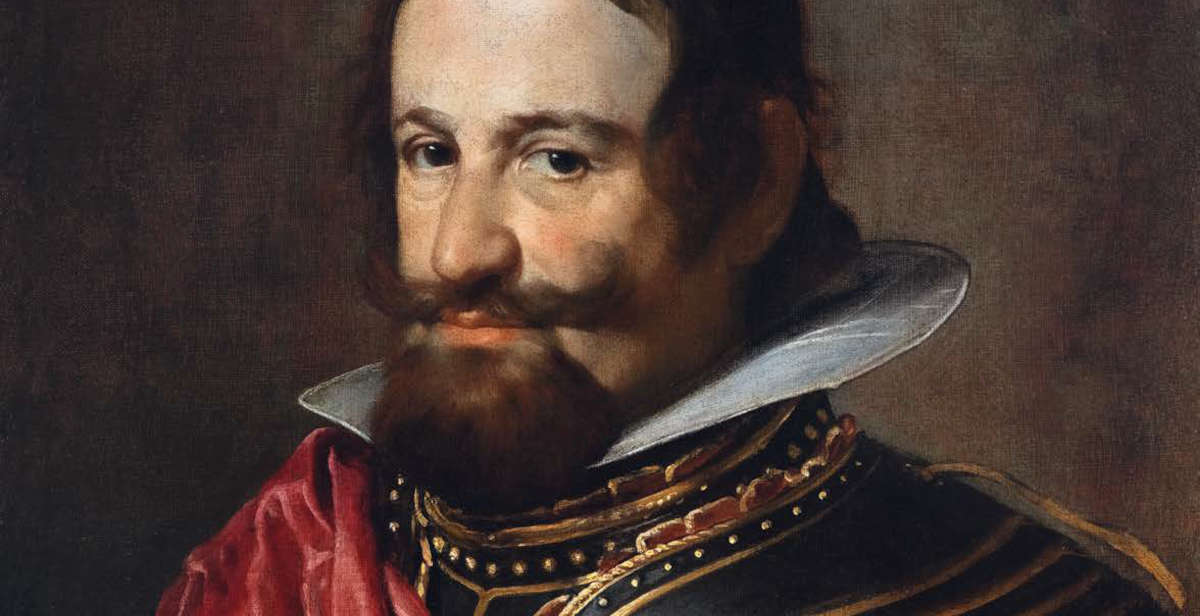 |
| Spain: A painting by Diego Velázquez has been discovered—it is a portrait of the Count-Duke of Olivares |
Warning: the translation into English of the original Italian article was created using automatic tools. We undertake to review all articles, but we do not guarantee the total absence of inaccuracies in the translation due to the program. You can find the original by clicking on the ITA button. If you find any mistake,please contact us.