





On Mount Petrarvella, in the territory of the Municipality of Panicale (Perugia), the third campaign of archaeological excavations has just concluded, returning a historical picture of particular relevance for the local community and for scholars who have been working on the area for years. The results that have emerged confirm the presence of a medieval settlement and an extensive necropolis, within which a number of intact burials have also been found, elements that give further scientific and historical value to the ongoing investigations.
The excavation campaign, conducted under the scientific direction of Professor Andrea Polcaro of the University of Perugia, was carried out with the support of the Municipality of Panicale and is part of a research path that in recent years has progressively expanded knowledge of the site. The archaeological activity was not limited only to the field investigation phase, but also took on a public and participatory dimension thanks to the organization of an Open Day sponsored by the municipal administration, designed to directly involve citizens, institutions and associations in a shared reflection on the future of the area.
The discoveries that emerged during the excavation reinforce the hypothesis that Mount Petrarvella may hold traces of the first historical settlements related to the birth of Panicale. This is one of the considerations put forward by local institutions, which see in the findings a possible turning point in the reconstruction of the territory’s origins. The site is thus configured not only as a place of archaeological interest, but also as an identity space capable of restoring an older and deeper narrative of the community.
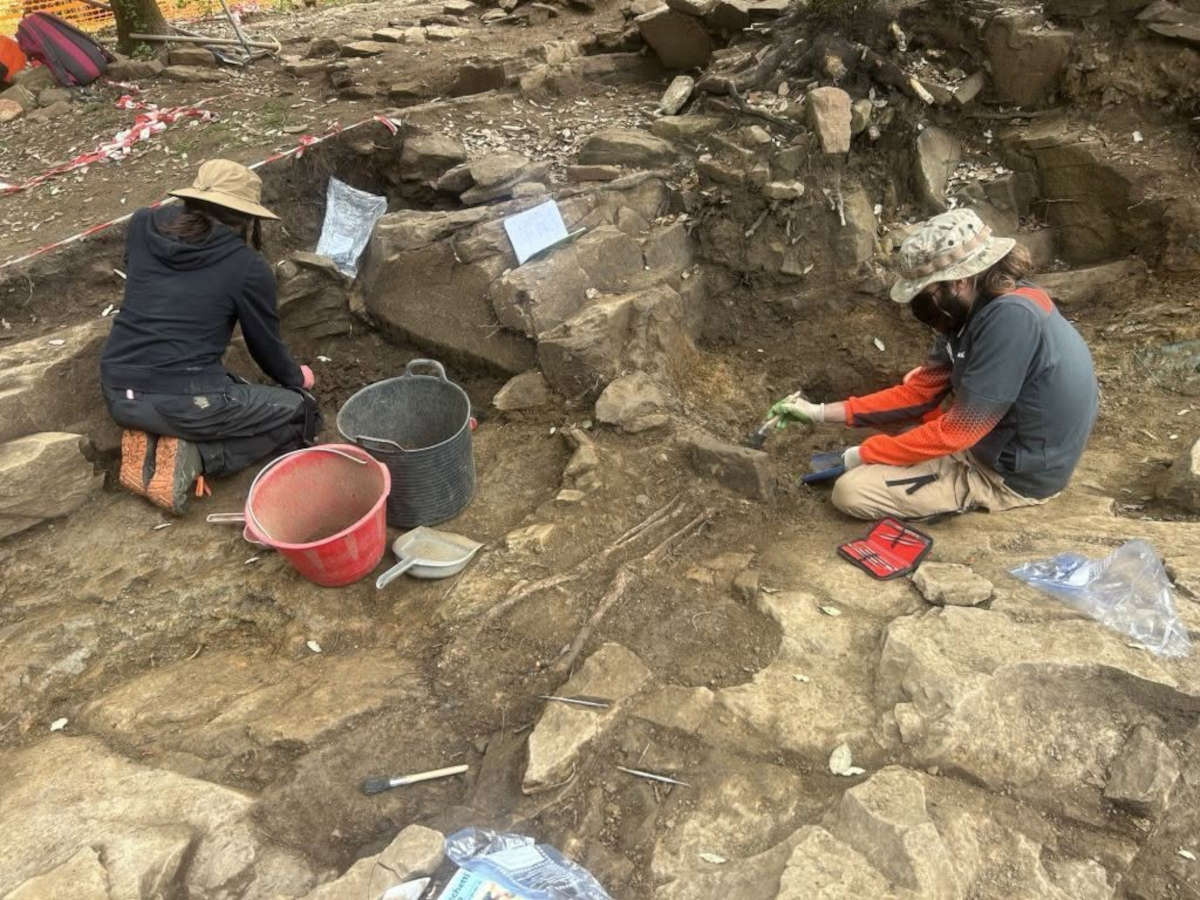
According to Panicale’s mayor Giulio Cherubini and culture councillor Elena Sepiacci, the evidence that has emerged “indicates to us that in all likelihood the earliest settlements of Panicale should be traced back to this place and that our own roots reside here. What the researchers report to us could make rewrite the history of our territory and effectively pave the way for a project of an Archaeological Park, inserted in a landscape context of considerable interest and already the destination of itineraries for walkers. A project that we hope will be of interest to as many people as possible.”
The area of Mount Petrarvella, in fact, presents itself as a context of special interest not only from the historical and archaeological point of view, but also in terms of landscape. The area is already included in itineraries frequented by hikers and walkers, a feature that according to local institutions represents a favorable element for the development of a sustainable cultural enhancement project integrated with the territory.
The Open day organized by the municipality aimed to turn the spotlight on the results of the excavation campaign and promote an open discussion on possible future prospects. The initiative made it possible to bring the public closer to the research activities, making visible the ways in which archaeological investigations are carried out and illustrating the importance of the discoveries made. At the same time, the event was a time for sharing and raising awareness, aimed at strengthening the bond between the community and its historical heritage.
The work of the archaeologists brought to light a complex stratification that testifies to the presence of a structured medieval settlement, flanked by a large funerary area. The unearthed burials, in some cases still intact, offer scholars important information on the funerary practices and characteristics of the community that inhabited the area in medieval times. These are data that can be further investigated in the next phases of study and that contribute to enriching the historical picture of the Panicale area.
The third excavation campaign thus represents a significant step within a larger research project, which over the years has progressively consolidated knowledge of the site and its transformations over time. The activity on Mount Petrarvella is part of a scientific perspective that aims not only at data collection, but also at the construction of a coherent and documented historical narrative, capable of restoring the complexity of human events that affected the area.
In this context, the hypothesis of the creation of an archaeological park could assume strategic value. This is not just a proposal for the protection of the site, but a broader project that aims to transform the archaeological evidence into a cultural and social resource for the area. The idea is to enhance Mount Petrarvella as a place of knowledge and dissemination, capable of attracting scholars, visitors and enthusiasts, integrating the scientific dimension with the educational and touristic one.
With the conclusion of the third excavation campaign, the project therefore enters a decisive phase, in which the results obtained will be fundamental in defining future intervention strategies. The goal shared by institutions and scholars is to continue the research work and at the same time start a path of valorization that can transform Mount Petrarvella into a reference point for the archaeological culture of the area.
|
| Monte Petrarvella (Perugia), archaeological discoveries open to the birth of a park |

Warning: the translation into English of the original Italian article was created using automatic tools. We undertake to review all articles, but we do not guarantee the total absence of inaccuracies in the translation due to the program. You can find the original by clicking on the ITA button. If you find any mistake,please contact us.



























 IT
IT FR
FR DE
DE ES
ES CN
CN


