





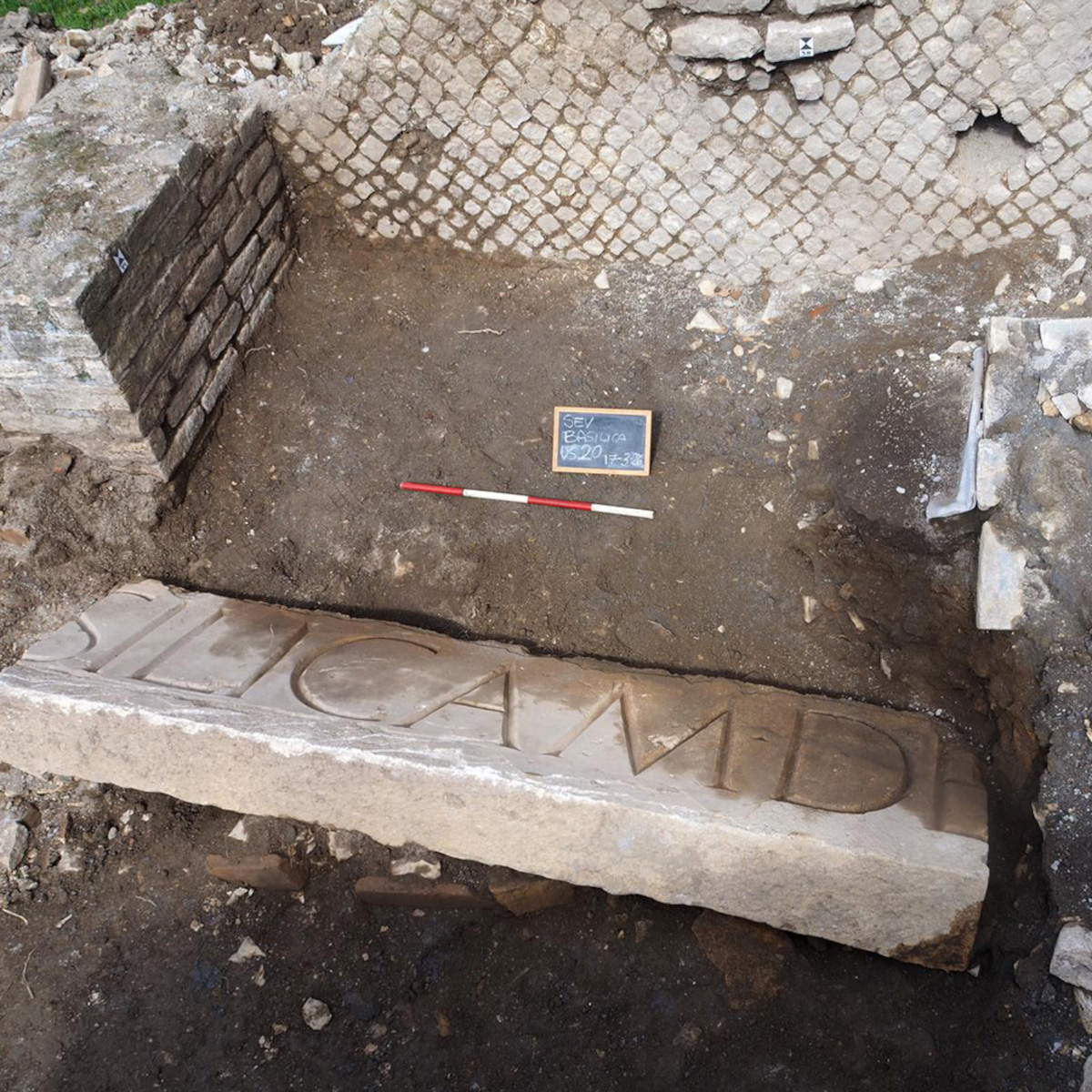
An important archaeological discovery has emerged during investigations conducted at the Sanctuary of Hercules the Victor in Tivoli, one of the most significant monumental complexes in Roman Italy. As part of a new campaign of studies promoted by the Villa Adriana and Villa d’Este Institute, with the support of the Ministry of Culture - Directorate General for Museums and in collaboration with the Department of Sciences of Antiquity of Sapienza University of Rome, a plastered travertine lintel block bearing part of a monumental inscription was found. The clearly legible letters bear the inscription [BA]SILICAM DE[---].
The inscription, which can be dated to the age of Emperor Augustus (between the end of the first century B.C. and the beginning of the first century A.D.), represents a decisive confirmation: it attests that the building identified more than 30 years ago behind the temple was a basilica, i.e., a large covered space intended for public functions, including administrative and judicial activities.
This discovery also makes it possible to reread in a new light a passage from the historian Suetonius. In De vita Caesarum (Divus Augustus 72), the historian recalls how Augustus “among the places of retreat, frequented above all the seaside resorts and islands of Campania or the cities near Rome, Lanuvio, Preneste and Tivoli, where he often administered justice in the porticos of the temple of Hercules” (Ex secessibus praecipue frequentavit maritima insulasque Campaniae aut proxima urbi oppida, Lanuvium, Praeneste, Tibur, ubi etiam in porticibus Herculis templi persaepe ius dixit).
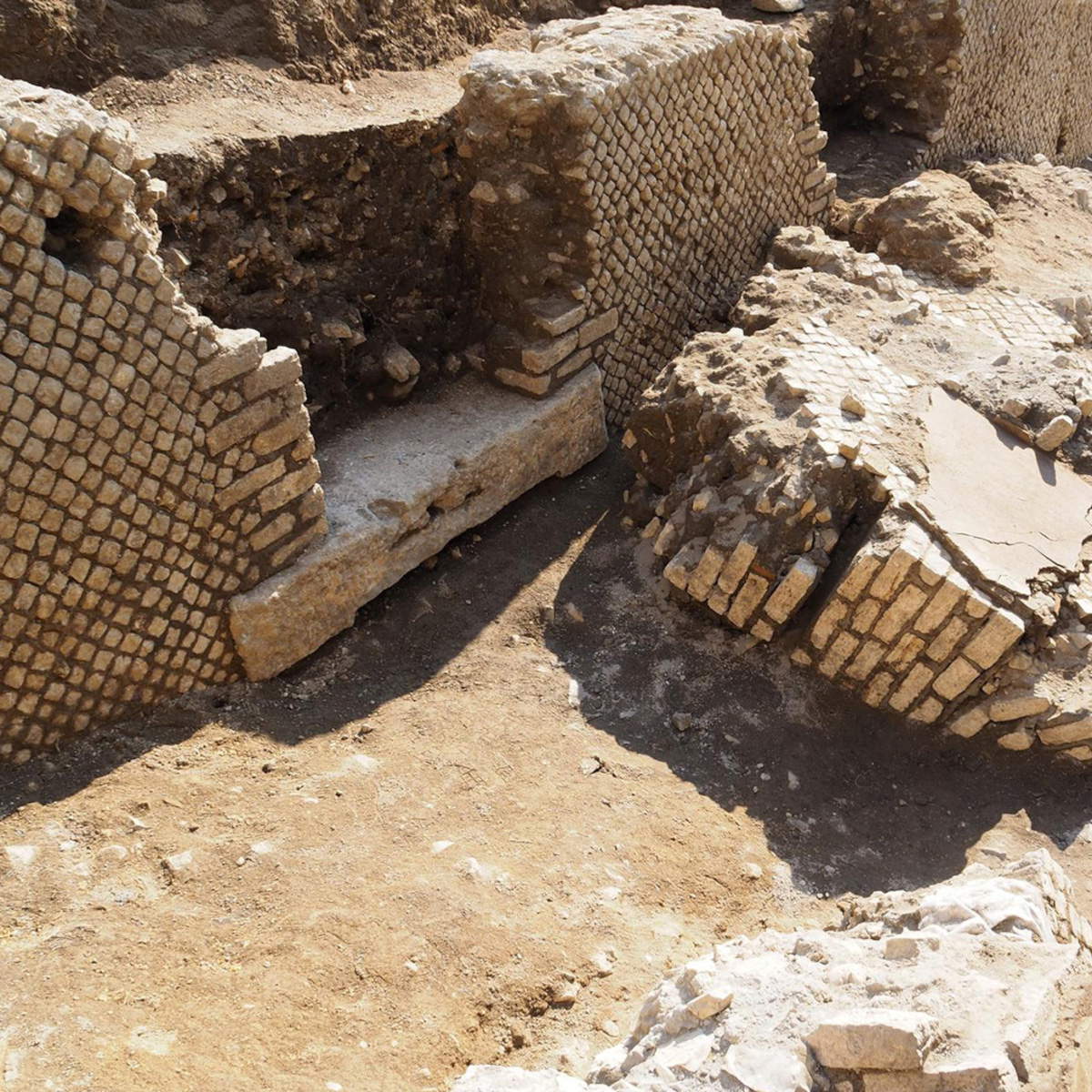
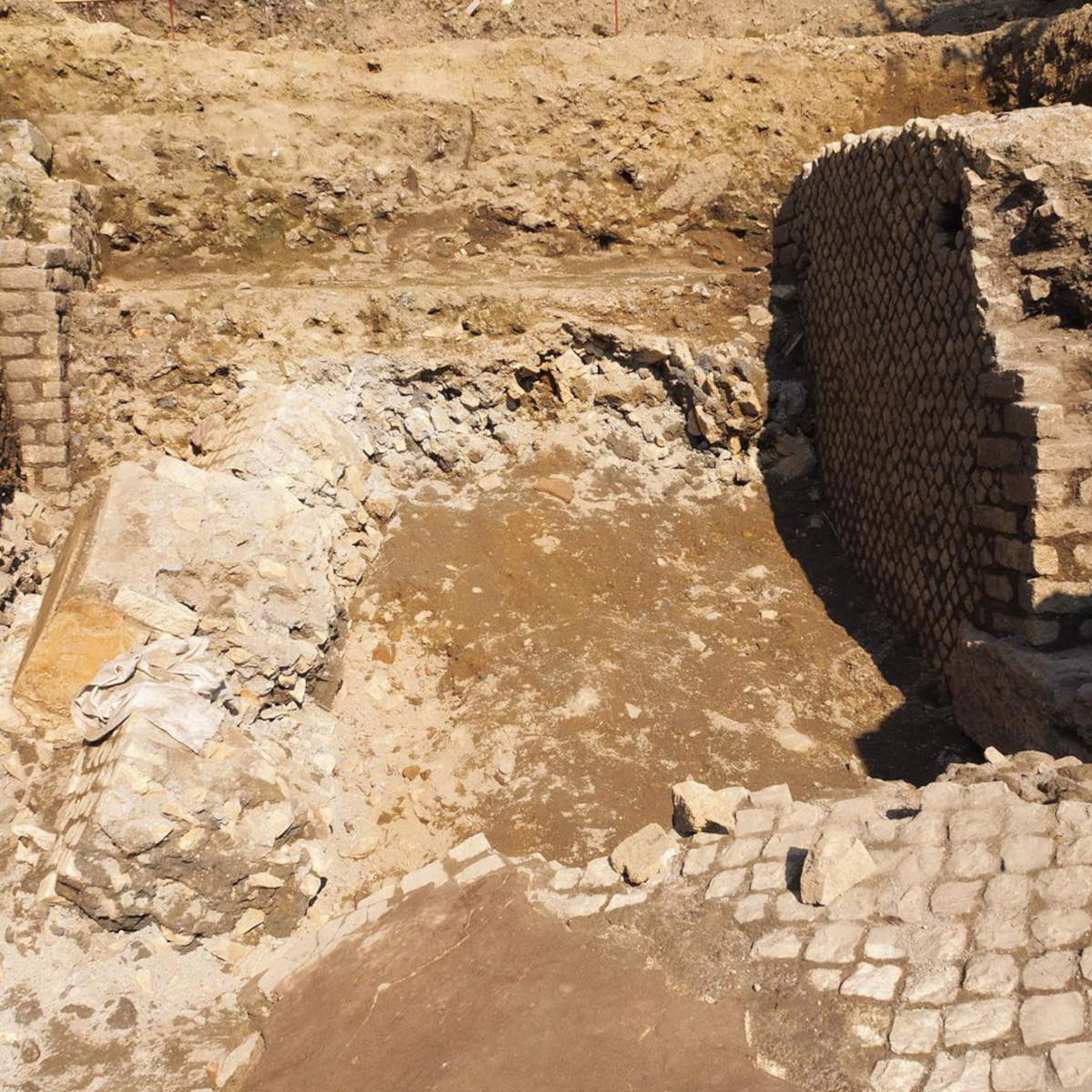
The discovery is set in an exceptionally well-preserved excavation context. About three meters below the present floor level, extensive collapse layers were identified, probably caused by an earthquake that occurred in late antiquity. These layers, which remained sealed for centuries, yielded an extraordinarily rich set of materials: pottery, terracotta architectural elements, marble inscriptions, metal objects, sculptural reliefs, and numerous fragments of painted plaster. Among the most significant finds is a bronze ring with engraved inscriptions.
The paintings found on the collapsed walls, which can be traced to the second and third Pompeian styles, indicate that the building was already richly ornamented in the early imperial age, suggesting the presence of a highly prestigious representative space. Further elements of interest are the brick stamps with the names of the makers C. Naevius Asc(lepiades?) and P. Decumius, active between the late Republican and early Imperial ages. Also found were fragments of Campana slabs, architectural terracotta decorations depicting the contest for the Delphic tripod between Apollo and Heracles, comparable to specimens from the so-called House of Augustus on the Palatine.
The layers following the collapse also yielded numerous ceramic materials datable between the fifth and sixth centuries CE, including African sigillata, oil lamps and transport amphorae. These findings attest to the continuity of activity in the area even in the late period and strengthen the hypothesis that the sanctuary was reused for defensive purposes during the Gothic Wars between the Byzantines and Ostrogoths.
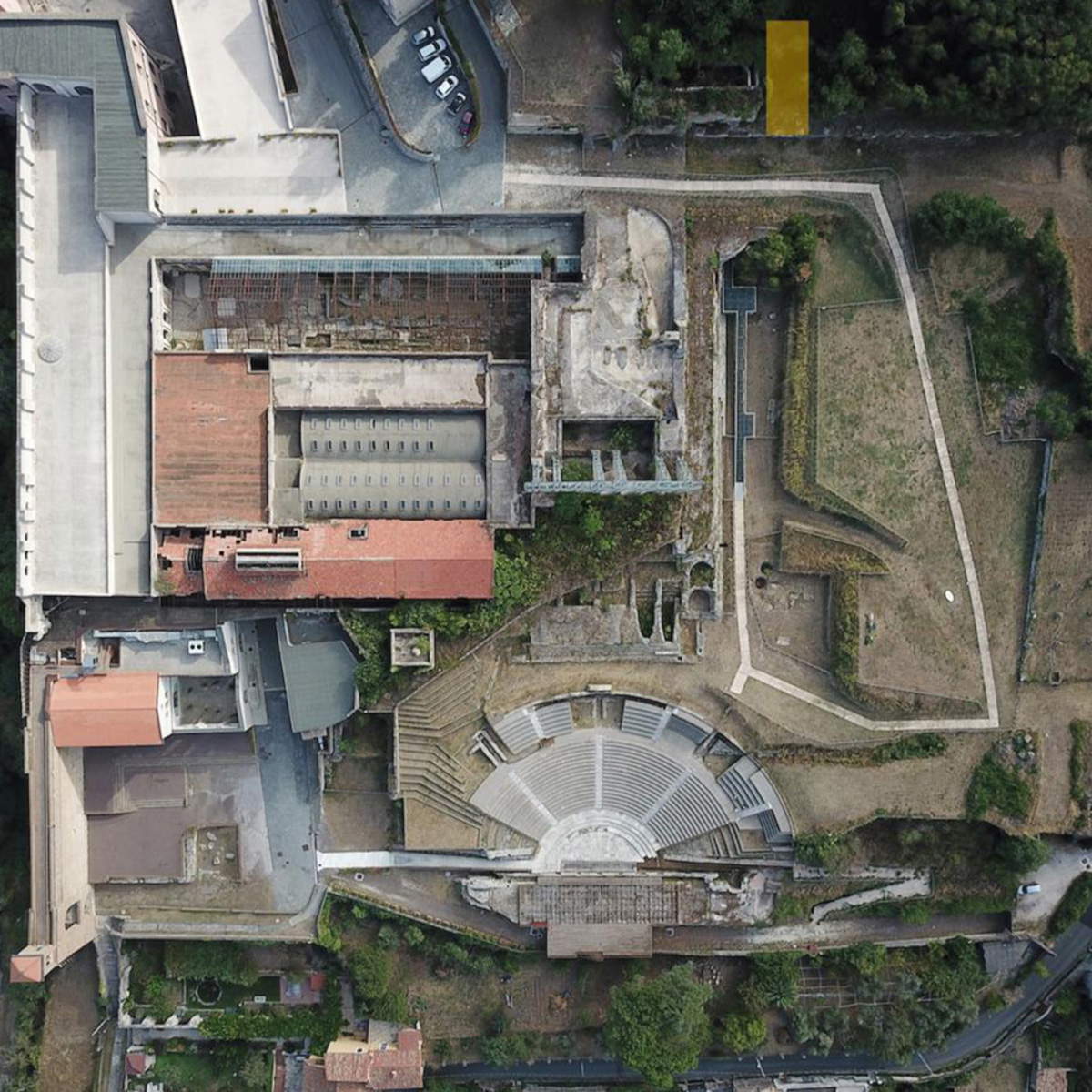
The building, now identified with certainty as a basilica, had been identified but not excavated as early as 1992, behind the temple, leaning against the back wall of the triporticus, a large porticoed space on three sides around an uncovered central area. At that time the monumental facade, characterized by nine entrances, had been unearthed. Its size, exceeding 800 square meters, and architectural organization had already suggested the presence of a large central hall surrounded by a covered corridor. The discovery of the inscription now allows this interpretation to be confirmed with certainty, restoring full identity and function to one of the most significant spaces of the complex.
Investigations will continue in the coming months and may provide additional data on the structure of the building, its decorations and how the sanctuary was used throughout its long history.
“The discovery of this inscription is of extraordinary scientific importance: in fact, it makes it possible to identify with certainty the basilica of the Sanctuary of Hercules the Victor, one of the most significant public spaces of the complex, restoring new clarity to its monumental articulation and its function,” said Minister of Culture Alessandro Giuli. “Moreover, the discovery offers a concrete match to what has been handed down in ancient sources: the passage from Suetonius, which recalls Augustus administering justice in Tivoli, finds a tangible correspondence here. Thanks to this find, therefore, we can imagine and perceive a new dimension of these places, thus increasing our historical awareness.”
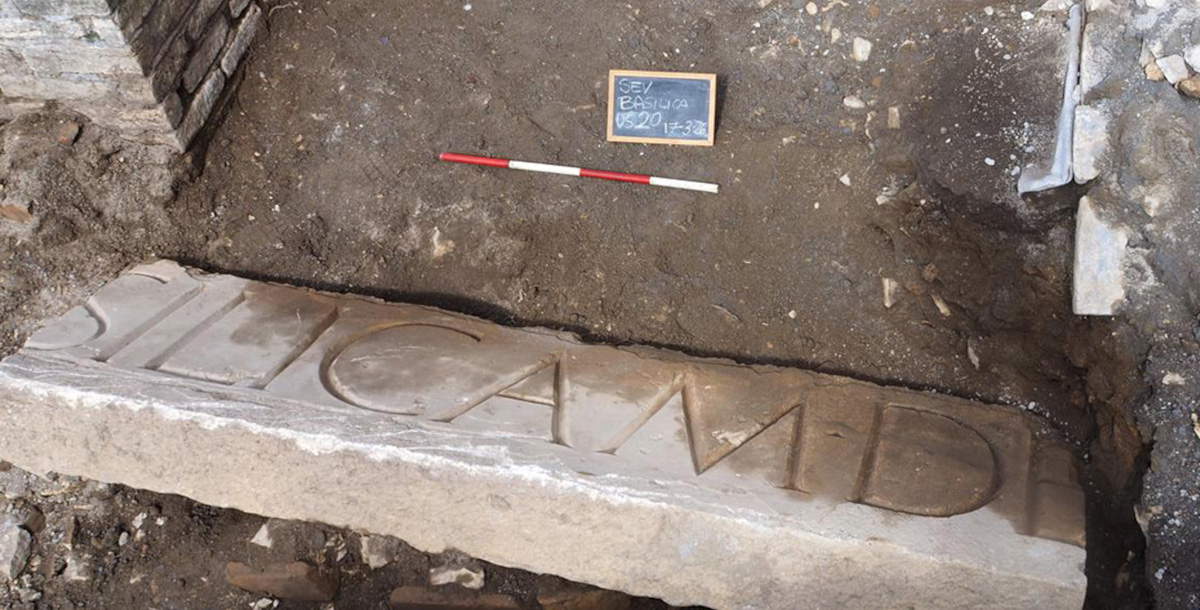 |
| Tivoli, an inscription discovered confirming the basilica of the Shrine of Hercules the Victor |

Warning: the translation into English of the original Italian article was created using automatic tools. We undertake to review all articles, but we do not guarantee the total absence of inaccuracies in the translation due to the program. You can find the original by clicking on the ITA button. If you find any mistake,please contact us.
























 IT
IT FR
FR DE
DE ES
ES CN
CN


