





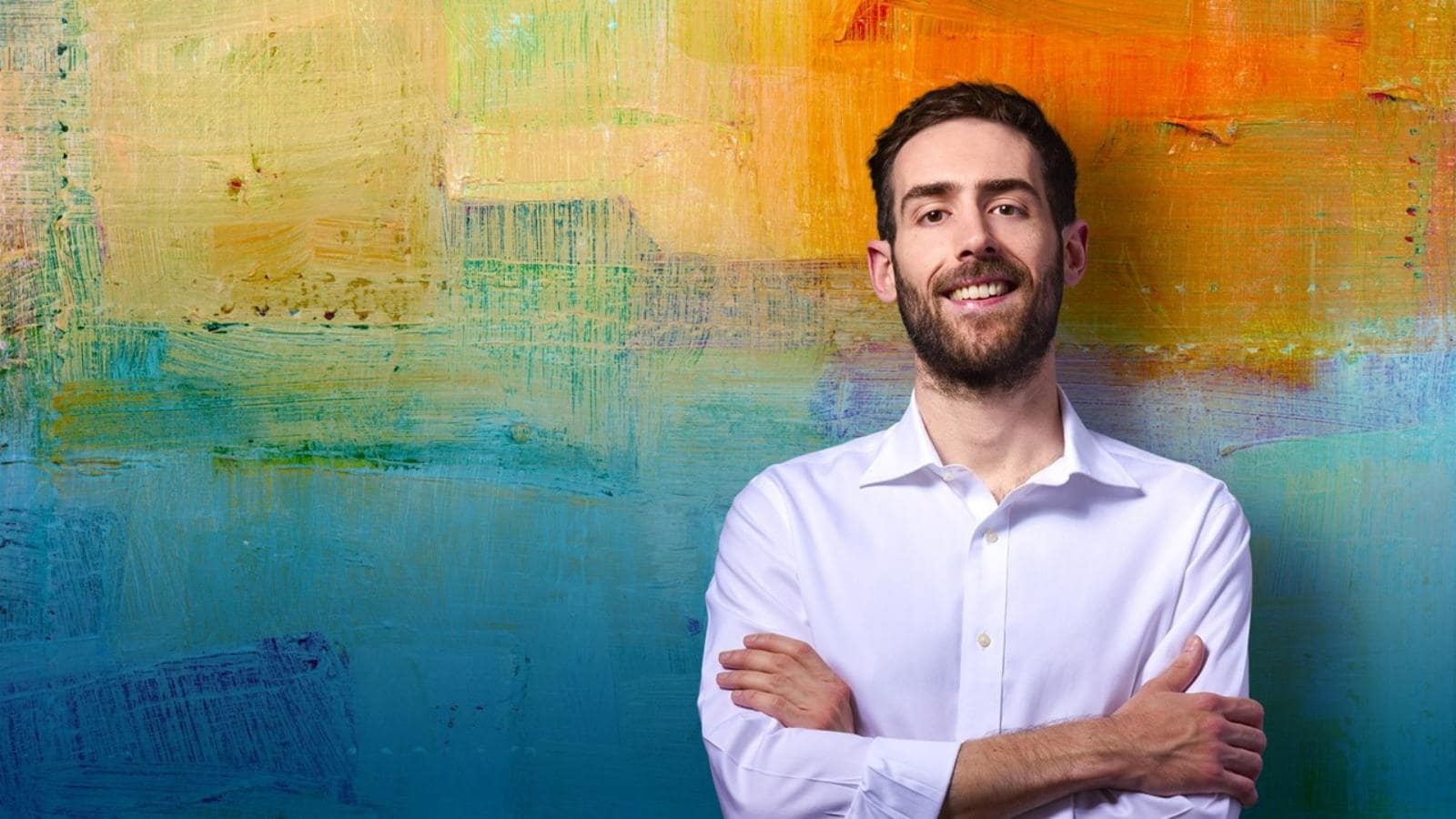
For the past few hours I’ve been noticing in my bubble a certain overexcitement over Aldo Grasso’s critique in the Corriere newspaper of Jacopo Veneziani’s program (“Vita da artista”), this time more fierce than six months ago, when Veneziani got away with a “pop popularizer”, while now he is demoted in the field to a cultural heritage tiktoker, branded as an “influencer lent to public service,” joined by the accusation of metonymic criticism (but when Daverio did it, all the same) with the aggravating “triumph of disintermediation” because he is guilty of using a “light and easygoing” tone. We learn today from Grasso that disintermediation is not a structural process but corresponds to the language a popularizer uses to reach his audience (not to mention that the classification evidently changes depending on how Grasso pulls down the sheets when he gets out of bed, since Barbero’s solicitations, when ours reviewed his program on Matteotti, are “good use of rhetoric,” while Veneziani’s levity is, it seems, a deplorable symptom of the destruction of traditional critical authority), but beyond this insignificant detail I note an interesting parallel. Let me preface this: mine is not an intervention in defense of Veneziani’s program, about which I care just enough (and unfortunately the disclaimer is an almost mandated nuisance, since the demented assumption that if you criticize one it is because you are defending the other is established on social media today: no, I still claim the right to criticize everyone). Not least because I had already expressed my reservations about Jacopo Veneziani’s program last summer, basically saying that if the authors of “Artist’s Life” would stop with those harlequinades to which they force the hapless host (him peeking out from behind doors, the pop references that in a month everyone will have already forgotten, the assorted gags), and if they allowed Veneziani to simply be himself and avoided forcing him to be a charmer at all costs, then the program would benefit (and we all consequently), and we might have a worthy successor to Passepartout and similar programs. From this point of view, it seems to me that the second season has made significant strides over the first, but the authors should get their act together once and for all: stop chasing 20- to 30-year-olds with language that the 20- to 30-year-olds themselves would be the first to invariably brand as cringe, and organize themselves to give everyone else a serious art program that is not an academic lecture but also does not give the viewer the impression that the author has taken them for a listless 16-year-old with an IQ below the 50th percentile. Let us rid television of the ruinous calamity that is youthism at any cost. It would be a win-win in all cases: if we think the audience is smart, we will give the audience a serious product. If we think the audience is dumb, we will try to break them out of their condition.
I note, I was saying, a curious parallel between the imputation of tiktokism applied to cultural heritage TV and Aldo Grasso’s italics. What exactly are Aldo Grasso’s italics if not a kind of tiktok for old men? Of tiktok for boomers? What are they if not an ennobled, perfumed, typographically respectable form of what is abhorred if done with the means that third-millennium technologies put in everyone’s hands? That is, a superficial content, all based on lightning-fast banter, on sarcasm, to be consumed in a clock minute, exactly like the social-media tears that ours evidently despises? Aldo Grasso may not realize that he, too, is an influencer, a tiktoker, who, however, expresses himself on paper instead of on social, and who addresses an audience that used to see Carousel instead of the public that has yet to finish developing its prefrontal cortex. A cellulose tiktoker. Wish tiktok users had the constancy to follow a guy who talks to them for twenty minutes straight about Vasari or Morandi! And perhaps we would not be far from the truth if we suspected that the same applies to Grasso’s readers as well, since his blurb takes two minutes to read, at least according to the Corriere website’s plugin that reads the pieces to you by voice. Plugin, moreover, which is also slow to speak: if you read the little article in your head it takes a minute, a minute and a half. Basically the time of two or three stories on Instagram. Once upon a time, when there was no Instagram or Tiktok, the counterpart of stories were these little comments written mostly on sentiment by specialized journalists who were able to churn out one a day. I use farmer’s eggs. The 60-year-old who has now discovered Instagram, if he has to read a facetiousness, prefers to turn on Instagram, run into the first jester of the airwaves who points the camera in his face and pontificates on random things, from the war in Iran to the national soccer team losing to Bosnia via how museums tell about seventeenth-century artists (on social media they comment on everything, commentary is the most popular genre because it is also the easiest: you just need to know how to talk and be minimally brilliant), devote a few tens of seconds of his attention to the barker on duty and comment. For the former reader of the Courier, everything is gained: first, it’s free. Second, he sees the face of the speaker. Third, there is a chance that the charlatan on duty will respond to him if he has something to reply.
Grasso is an almost octogenarian who can take the luxury of commenting without arguing (as influencers do) because it used to be that to comment on the day’s faits divers on sentiment you needed a platform willing to publish you. And because there were few platforms, there were few commentators as well, so print influencers had plenty of time to become famous. Of course, there was selection: you needed the ability to be brilliant, sharp, cutting. Here, little articles like this are the fruit of this capital accumulated over the decades (and it shows, because if there were an ATP ranking of famous journalists who write by catchphrases, Aldo Grasso would be among those playing for the lead: to say, in the last three articles alone I count a “takes us by the hand and leads us,” a “without too many turns of phrase,” a “the heart remained the same,” a “more than just X,” a “strange fate that of,” a “to draw the line,” a “irremediable wounds”). And when there will be no more Aldo Grasso, that is, those journalists whom the public today reads more by name than by what they express, what will be left? Is this still credible journalism?
If a comment identical to Grasso’s on Veneziani’s program had been proposed for publication to any newspaper by a 25-year-old with pundit ambitions, in all likelihood it would have been trashed after the first two lines, and the sender’s address put in the junk mail, along with offers for Cialis and the e-mail from the Nigerian heir who wants to share his million-dollar fortune with the editor. If Aldo Grasso writes it instead, the Courier publishes it for him. But it remains a form of Tiktok for the third age, which we will probably get rid of in the future. And fortunately so, because in the age in which anyone can comment on anything, in the age in which everyone knows everything, and brilliance being a dowry indeed not so rare (anyone will have, among his acquaintances, a funny friend, with a ready joke: if he is also photogenic and is equipped with a vocabulary that surpasses that of a third-medium, at the next dinner at a pizzeria turn on the phone camera when he talks about Sanremo or the referendum on justice, if thealgorithm is generous there’s a chance he’ll become the next successful influencer), there is no difference between one comment by Aldo Grasso and the thousands that daily muddy the Instagram user base. That kind of journalism is dead, very dead, buried under quintals of dirt, dust and gravel.
Opinion journalism, if it thinks it’s a good idea to want to survive, should do what few people still know how to do, and which is not the preserve of your friend who comments on the national soccer team at the pizza parlor: study, do reasoned criticism, do analysis, delve deeper. On “Artist’s Life,” for example, I wonder if the excitement of seeing places that no one knows and that do not have the appeal of a Versailles or a Pompeii (yes, I am referring to another popularizer famous for his penchant for easy wins) ends up beingbe at least tempered by Veneziani’s carnivalesque language, whether being able to see Casa Morandi or Casa Balla in a preserale on Rai Tre manages to make us turn a blind eye to the fact that this program lasts twenty minutes (as opposed to the sixty ofa Passepartout), whether it is a good thing (for me it is) that the soundtrack of a program that has vaguely to do with art surpasses a chronology stopped in 1861 and it is therefore possible to see Casa Morandi with Journey or Gotye in the background. Argumented criticism, in short. A critique that goes back to shredding our balls. A criticism heedless of the subhumans resentful because the journalist forces them to read more than one page of Word and they don’t have time to waste, they have to go to the FB page of the Gazzetta to write the two lines with which they will suggest, in 180 characters, the reform of the FIGC to win the next World Cup. We can’t get enough of levity anymore, everywhere is all a call to be funny, short, comfortable, light, slick, easy. It’s 2026, let’s get out of the depths of postmodernism once and for all. Let’s get back to complexity. Otherwise, if I have to put up with a one-minute commentary written as Aldo Grasso’s little article is written, I prefer Tiktok: it’s faster.

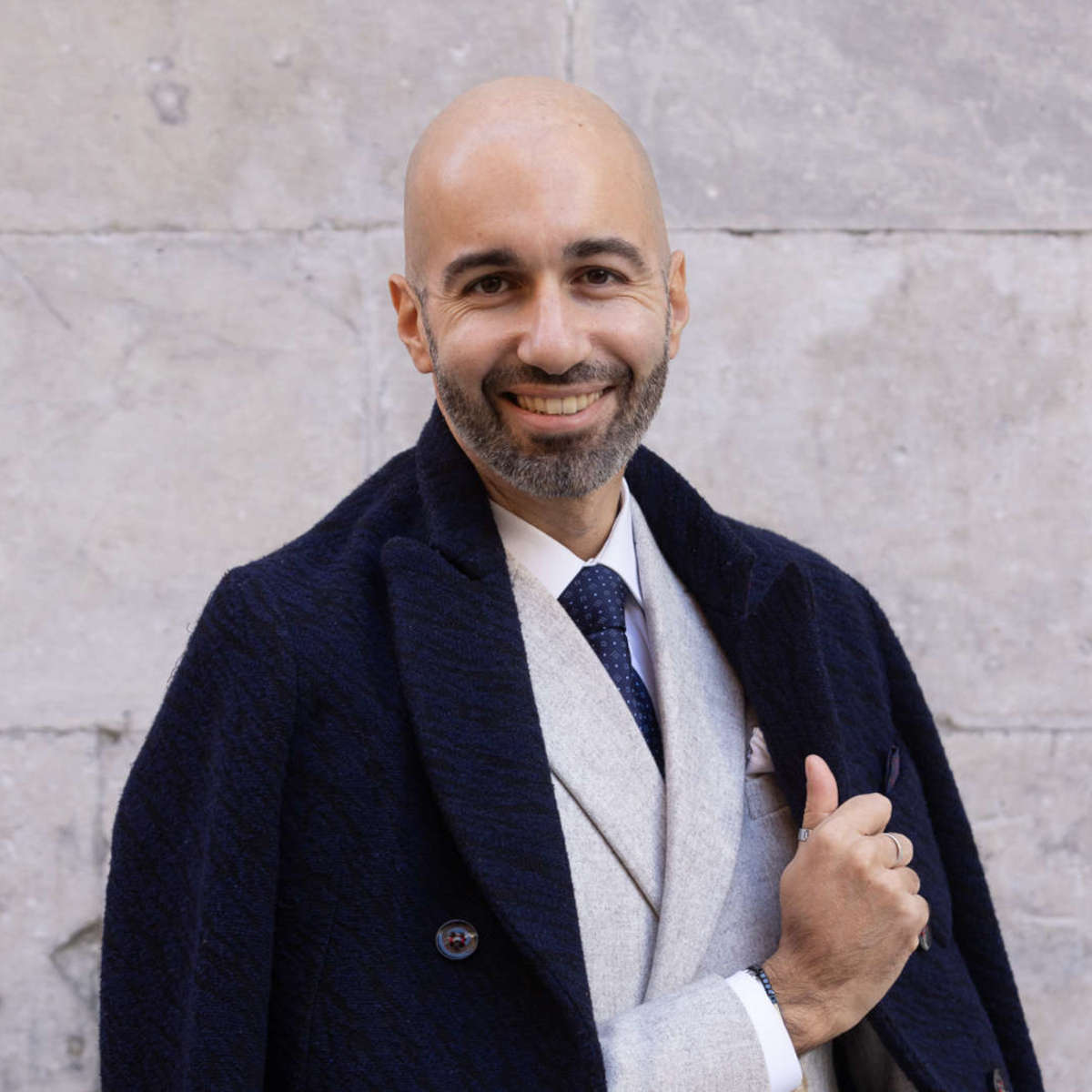
The author of this article: Federico Giannini
Nato a Massa nel 1986, si è laureato nel 2010 in Informatica Umanistica all’Università di Pisa. Nel 2009 ha iniziato a lavorare nel settore della comunicazione su web, con particolare riferimento alla comunicazione per i beni culturali. Nel 2017 ha fondato con Ilaria Baratta la rivista Finestre sull’Arte. Dalla fondazione è direttore responsabile della rivista. Nel 2025 ha scritto il libro Vero, Falso, Fake. Credenze, errori e falsità nel mondo dell'arte (Giunti editore). Collabora e ha collaborato con diverse riviste, tra cui Art e Dossier e Left, e per la televisione è stato autore del documentario Le mani dell’arte (Rai 5) ed è stato tra i presentatori del programma Dorian – L’arte non invecchia (Rai 5). Al suo attivo anche docenze in materia di giornalismo culturale all'Università di Genova e all'Ordine dei Giornalisti, inoltre partecipa regolarmente come relatore e moderatore su temi di arte e cultura a numerosi convegni (tra gli altri: Lu.Bec. Lucca Beni Culturali, Ro.Me Exhibition, Con-Vivere Festival, TTG Travel Experience).
Warning: the translation into English of the original Italian article was created using automatic tools. We undertake to review all articles, but we do not guarantee the total absence of inaccuracies in the translation due to the program. You can find the original by clicking on the ITA button. If you find any mistake,please contact us.



















 IT
IT FR
FR DE
DE ES
ES CN
CN


