





In the catalog of Exit, an exhibition on “young Italian art” curated by Francesco Bonami in 2002 at the Fondazione Sandretto Re Rebaudengo, Massimiliano Gioni, now curator at the New Museum in New York, defines young Italian artists this way: “Italy and Italian art seem doomed to lose on every front: we are no longer exotic enough - and so here we are discovering Chinese, Thai, Mexican and Scandinavian art from time to time - but we are also not professional or cynical enough to compete with America, Switzerland, England, France and Germany.” A prophetic statement if it were not for the fact that Massimiliano Gioni himself has been one of the protagonists of the Italian art system that seems to have doomed art formed and produced in Italy over the past twenty-five years. Quality artists are no longer born on trees, we need a stimulating and world-informed critical and educational system.
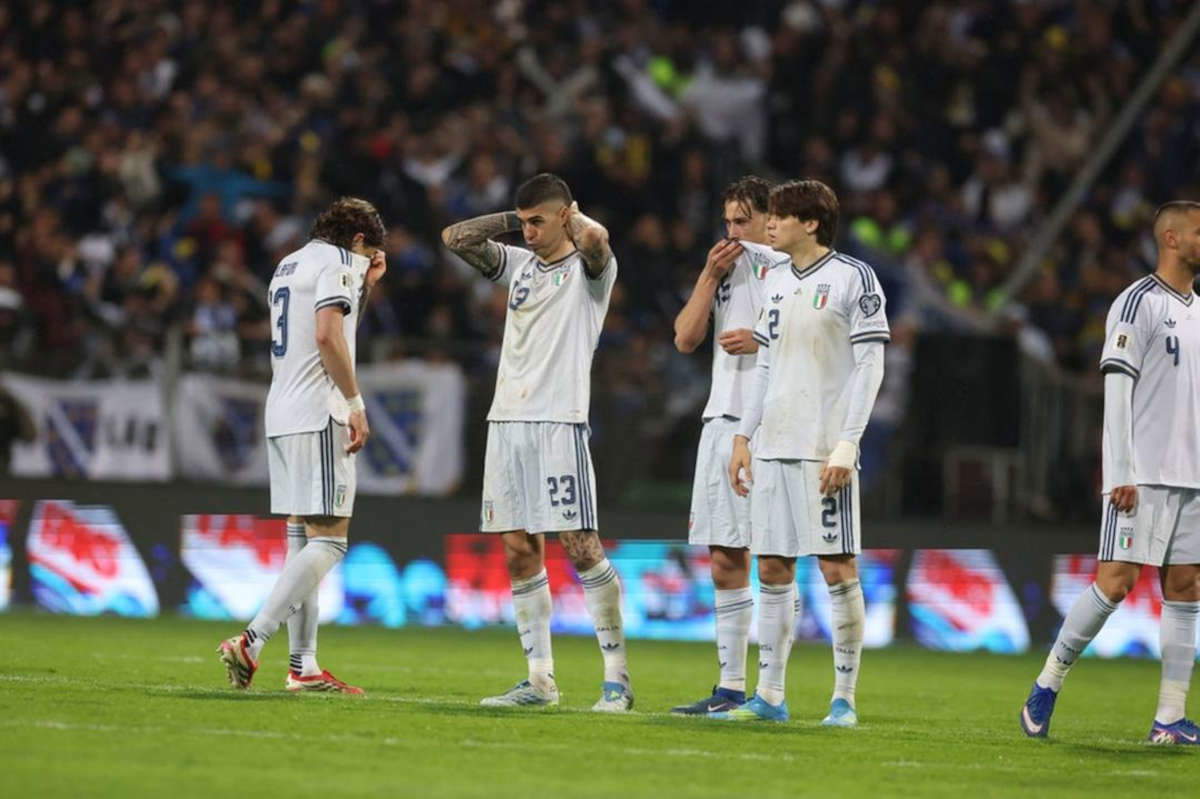
The absence of Italian artists from the Venice Biennale 2026 and the recent opening of the Tragicomica exhibition at the MAXXI Museum in Rome, with as many as 140 Italian artists, seem to remark and seal this marginality of our art. A marginality that is in danger of becoming self-referentiality where a few figures in the system are in danger of playing and singing their own songs. In these same days, even the Italian National Football Team, a true temple of national pride, has been left out of the World Cup for the third consecutive time. What is going on? If we look at tennis, Formula One and MotoGp, however, we find three highly successful individual Italian personalities who are at the top of the world in their respective sports: Jannik Sinner, Andrea Kimi Antonelli and Marco Bezzecchi.
The marginality and problems of the Italian art system were already evident around 2009 so much so that in 2015, with the Stati Generali dell’arte convened at the Pecci Museum in Prato by Fabio Cavallucci, the establishment of the Italian Council was proposed and obtained, which, in line with the British Council in England (the choice of name was already a program and denounced a state of subservience and marginality), was supposed to finance and support Italian art. In a few months, the Italian Council call, born to support the individual artist, soon became an instrument of welfarism for that same Italian system that was not working in the previous years. That is, gasoline for a machine that was not working, a real boomerang.
After fifteen, years the Italian Council has disbursed 25.4 million euros, of which 50 percent has been disbursed only in the last five or six editions. What has been achieved? Nothing: simply the funding of projects that have gone unnoticed and already forgotten, while the international relevance of Italian art (which was the goal of the call) has not been achieved given the total absence of Italian artists on the international scene that matters.
Comparing art and sports, the feeling is that when Italy tries to create a system it is doomed to fail while when individual individuals manage to emerge on their own, as individual talents, the results come in thick and fast. If we look at the path of the artist Maurizio Cattelan, defined, by the famous critic Nicolas Bourriaud, as the only Italian artist really recognized abroad, we find evidence of this: Cattelan in the 1990s was forced to create a bogus foundation (the Oblomov Foundation) in order to scrape together money to be able to move to New York where, in the late 1990s, his career really took off. Indeed, Cattelan was frowned upon in Italy and was not really supported. Only success in the Big Apple, here again Italian provincialism, allowed him visibility and recognition even in Italy.
If we leave aside the condition of soccer and sports, why is the Italian contemporary art system not working? Here are some possible causes:
1) Without quality, the system cannot function, and quality can only be obtained from the critical humus that is capable of creating open, fair and professional critical confrontation. In Italy, the culture of the “family clan” does not allow critical and divergent thinking and this condition, over the years, kills the training of artists and curators as much as the popularization of contemporary art as a “space of opportunity” to interest and enthuse the public and collectors. Without quality, the Italian Council’s 25 million becomes a boomerang because it supports weak projects that help crystallize the low quality of Italian art and a bad perception of Italy abroad. Today if you have critical thinking in Italian art they try to take you out professionally.
2) Italy needs to systematize but it should not copy what is happening abroad where they certainly have much more material resources. Here is the mistake of calling the Italian art support instrument precisely “Italian Council” denouncing an overt subservience to the international scene. Never would an English, American or Swiss support institution be called: “English Renaissance,” “American Renaissance” or “Swiss Renaissance.” Instead, Italy must play “late comer” i.e., innovate contemporary art from scratch with the advantage of not having the weights and ballasts of much more rigid and institutionally structured countries in reading contemporary art.
3) If there is a problem only an artist can solve it just as if there is a problem in a restaurant dish only the chef can solve it. So curators, journalists and editors need to let the Sinners and Alcaraz play the tournament and stop playing it to them, of course on the condition that they reactivate that critical confrontation that is fundamental for the formation and quality of artists. Today the real “artless” protagonists of the art system are the curators: at MAXXI, for 140 artists in the Tragicomica exhibition, we have two curators who emerge as the real authors and directors of the exhibition when in fact they create nothing but merely select, flank and justify their selection. If we don’t solve this anomaly, we will find ourselves watching Wimbledon being played by the umpires, ball boys, and tournament directors: low quality, boredom, and marginality, the very things we perceive going around fairs, exhibitions, and biennials in recent years.
4) There is an international crisis of language that affects not only Italy but the whole international system where in the last 25 years no relevant figures emerge as they did in the 1990s. Suffice it to say that when you have “contemporary art exhibitions” with big names you go fishing for artists trained in the 1980s-1990s and emerged precisely during the 1990s. Therefore, there is a 25-year qualitative hole given by a crisis of representation that occurred in 2001 and 2008 and for which everything that rises to the pedestal of the work struggles to compete with an increasingly complex and pulsating reality where we are all producers and consumers of thousands of contents. If the system does not resolve this crisis by breaking out of the fetishism of imaginaries to address attitudes and ways to resist and cope with the present, art will be increasingly marginal even internationally.

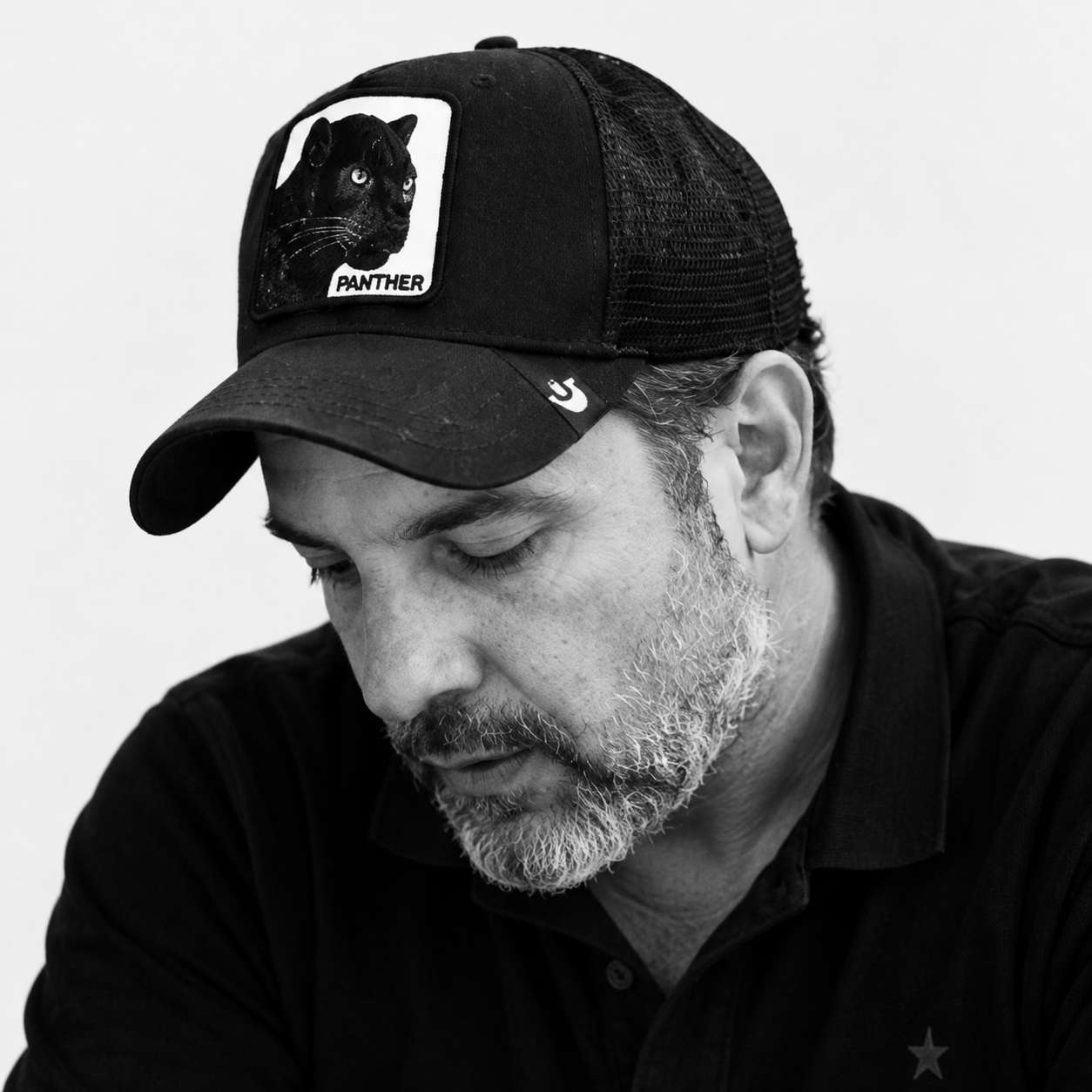
The author of this article: Luca Rossi
“Luca Rossi" è un nome di fantasia in cui idealmente convergono tutti i ruoli del sistema dell'arte: artista, critico, curatore, blogger e osservatore indipendente. È stato definito da Fabio Cavallucci “la personalità artistica più interessante d'Italia”. Dal 2009, “Luca Rossi”, collettivo aperto e figura controversa nel sistema artistico, cerca di stimolare quotidianamente un dibattito più critico nell'ambito dell'arte contemporanea, intesa come materia capace di rivestire un ruolo fondamentale nel nostro presente. Dalle sue riflessioni critiche, ampiamente diffuse, sue le definizioni di “Ikea evoluta”, “Sindrome del Giovane Indiana Jones” e “Nonni Genitori Foundation”, è nato un progetto artistico non convenzionale, che comprende anche attività di divulgazione e formazione, culminate nel 2016 con la creazione della Luca Rossi Art Academy & Coaching (documenta.live). Nel febbraio 2026, un Hidden Work di Luca Rossi è entrato nel nuovo percorso espositivo di Osteria Francescana di Massimo Bottura, segnando un ulteriore sviluppo del progetto e della ricerca intorno agli Hidden Works. Nel 2014 Giacinto Di Pietrantonio, in un’intervista, definì Luca Rossi la promessa futura dell'arte contemporanea, paragonandolo a ciò che Vanessa Beecroft avrebbe potuto essere negli anni Novanta. Alcuni “nodi critici” sviluppati nel corso degli anni da Luca Rossi sono entrati a far parte del linguaggio dell'arte italiana e hanno contribuito a cambiare la prospettiva e la visione di molte persone, dentro e fuori il settore. Nel 2014, la celebre critica d'arte Angela Vettese dichiarò che, dopo aver letto i testi di Luca Rossi, aveva deciso di non dedicarsi più alla pratica artistica, ma esclusivamente alla teoria.Warning: the translation into English of the original Italian article was created using automatic tools. We undertake to review all articles, but we do not guarantee the total absence of inaccuracies in the translation due to the program. You can find the original by clicking on the ITA button. If you find any mistake,please contact us.






















 IT
IT FR
FR DE
DE ES
ES CN
CN


