





The Fondazione Querini Stampalia in Venice is hosting until November 22, 2026 the exhibition Ding Yi Cosmotechnics: Ding Yi as a Planetary Code, one of the most extensive presentations in Europe devoted to Chinese artist Ding Yi (Shanghai, 1962), a central figure in contemporary Chinese abstraction. The exhibition project is curated by Alfredo Cramerotti and Auronda Scalera. The exhibition is part of the collateral program of the Venice Biennale and offers an extended reflection on the pictorial language developed by the artist since the late 1980s, when Ding Yi started the series Appearance of Crosses, destined to become the founding nucleus of his research. At a time in history when contemporary Chinese art was dominated by currents such as neo-expressionism and political pop, the artist chose to move toward a visual grammar based on the elementary sign of the cross and its variant “x,” transforming it into a systematic device for constructing meaning.
According to the organizers, Cosmotechnics represents a synthesis point of this long journey, in which the pictorial practice expands to include sculptural and architectural dimensions, resulting in an exhibition environment conceived as a walkable system. The title of the project echoes the philosophical concept developed by Yuk Hui, used to describe a relationship between technology, cosmology and culture, here translated into a visual structure that transforms the space of the Foundation into a meditative landscape.
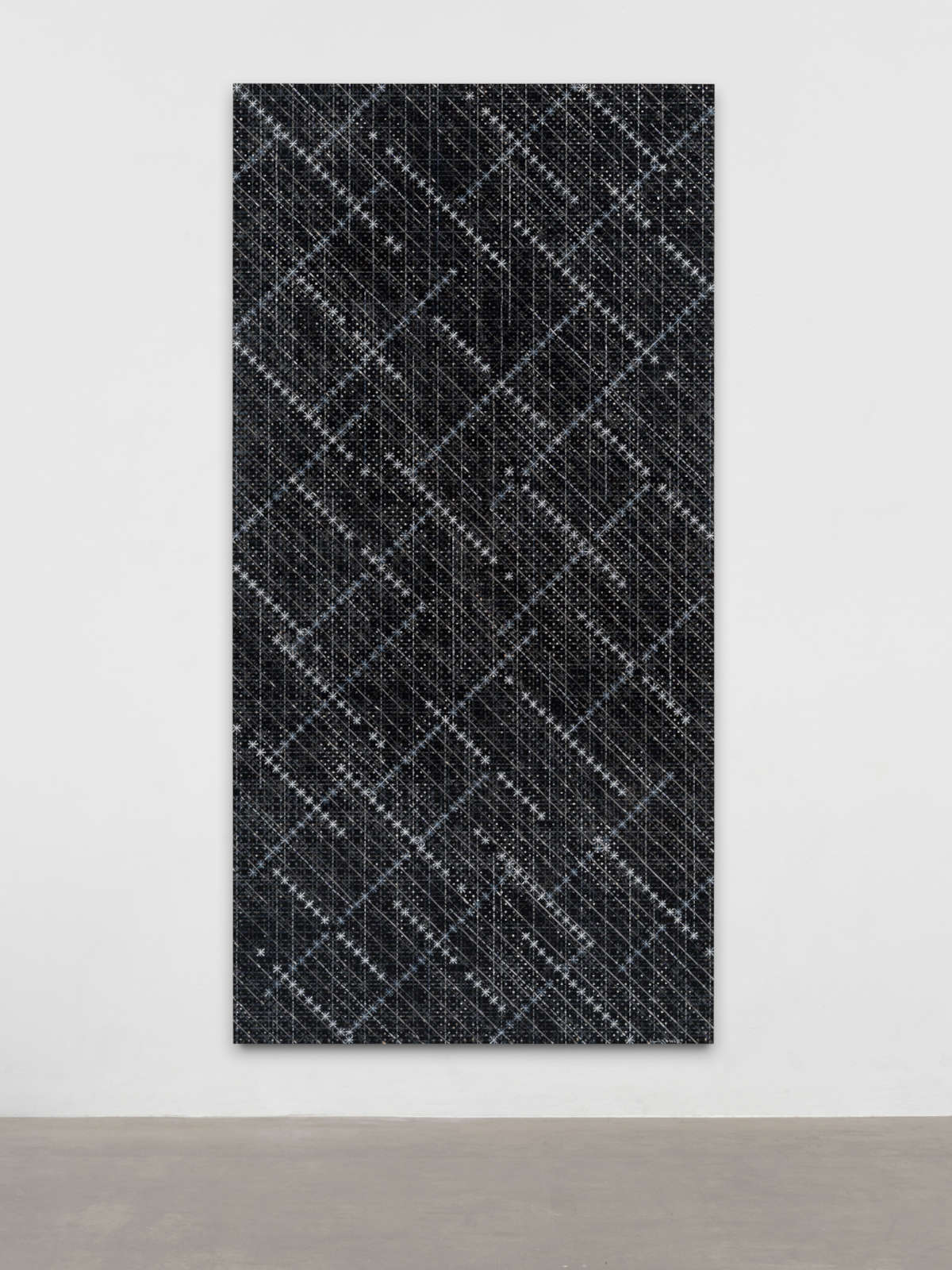
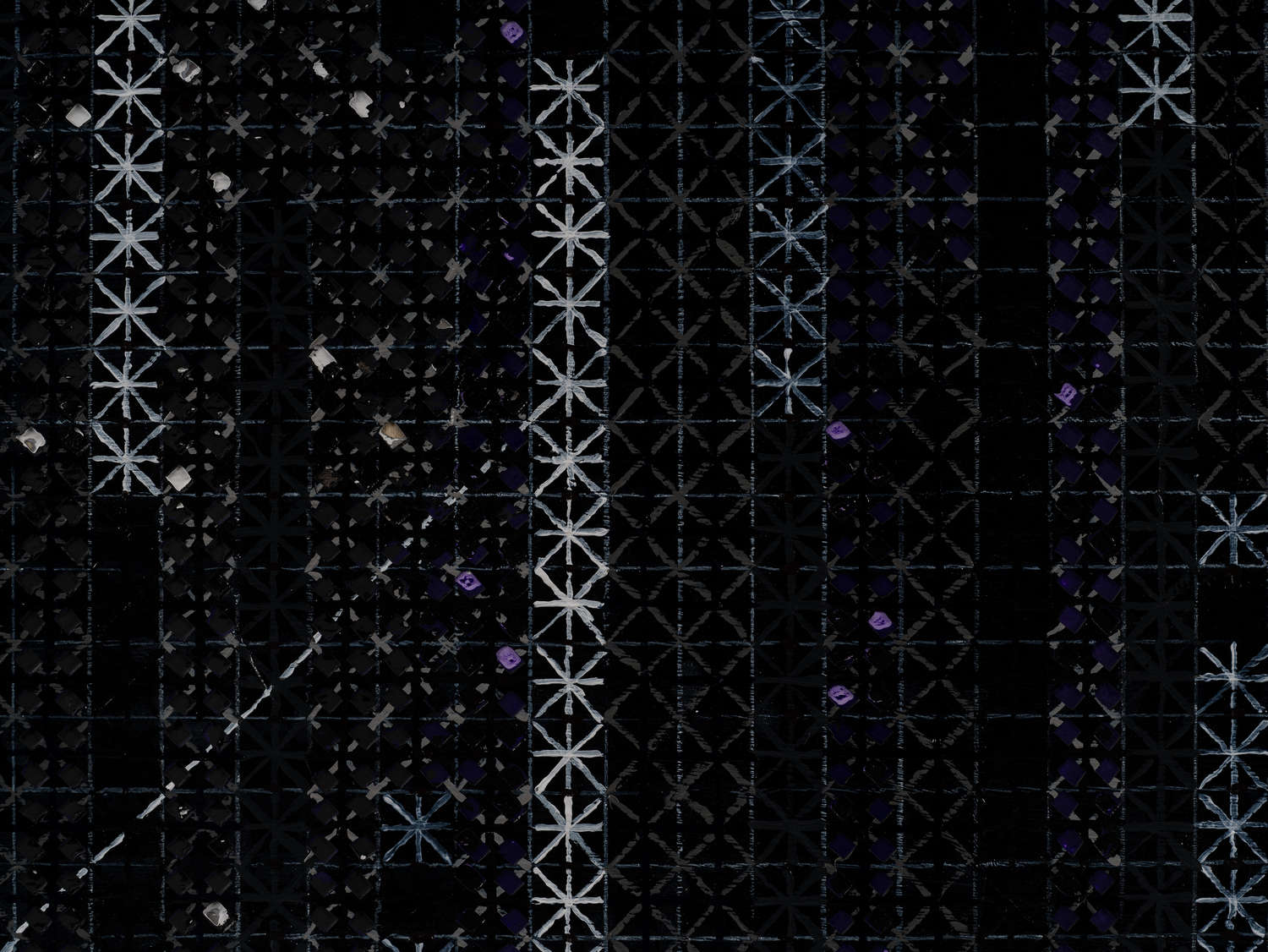
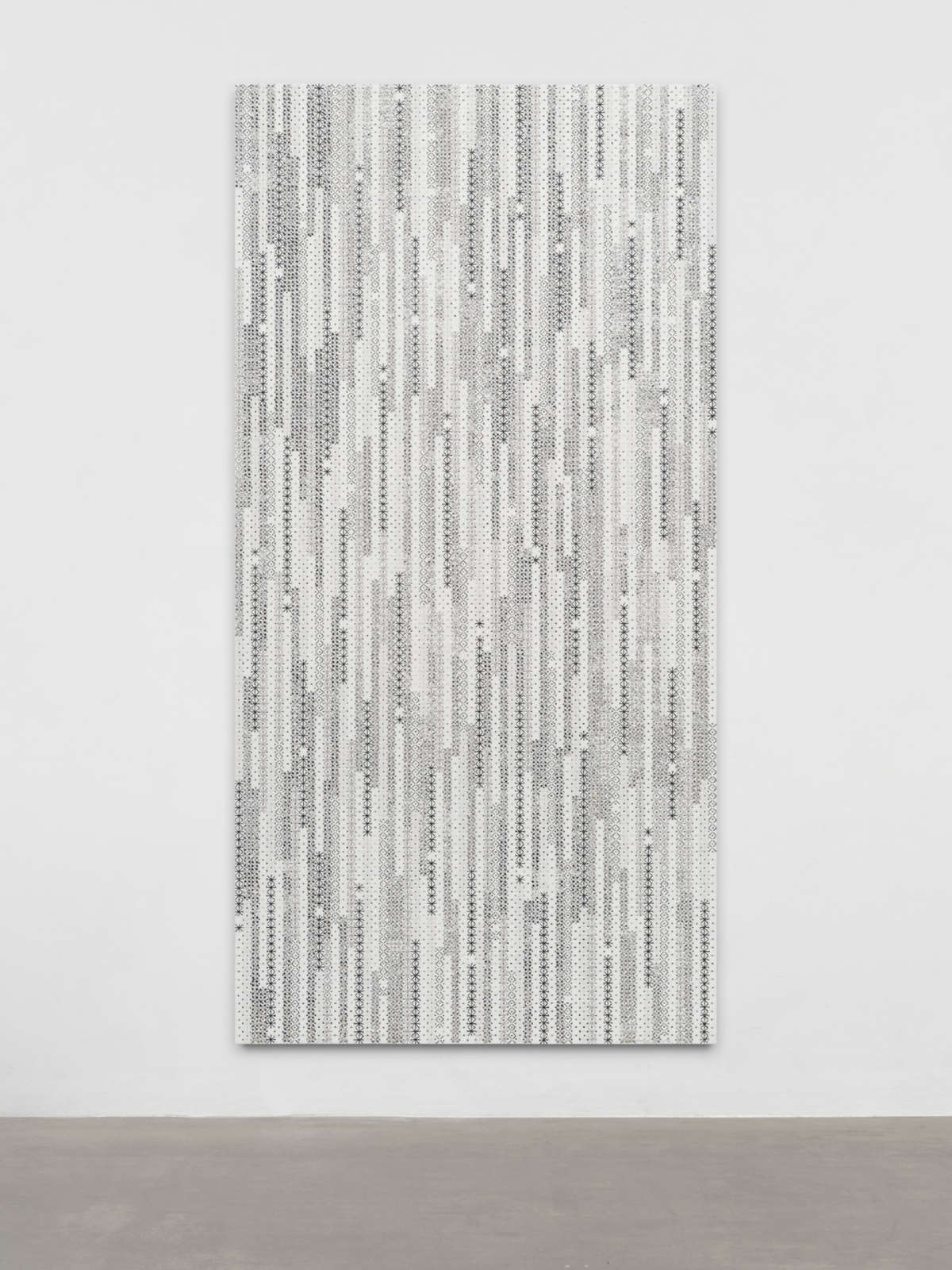
The exhibition itinerary unfolds within theScarpa Area of the Querini Stampalia, where twelve black-and-white paintings, made on panels of identical dimensions, are arranged as a constellation. Each work takes on the function of a contemporary stele, placed in an environment that invites a slow and contemplative fruition, in which the visitor is called to move through the space as within a system of interconnected signs.
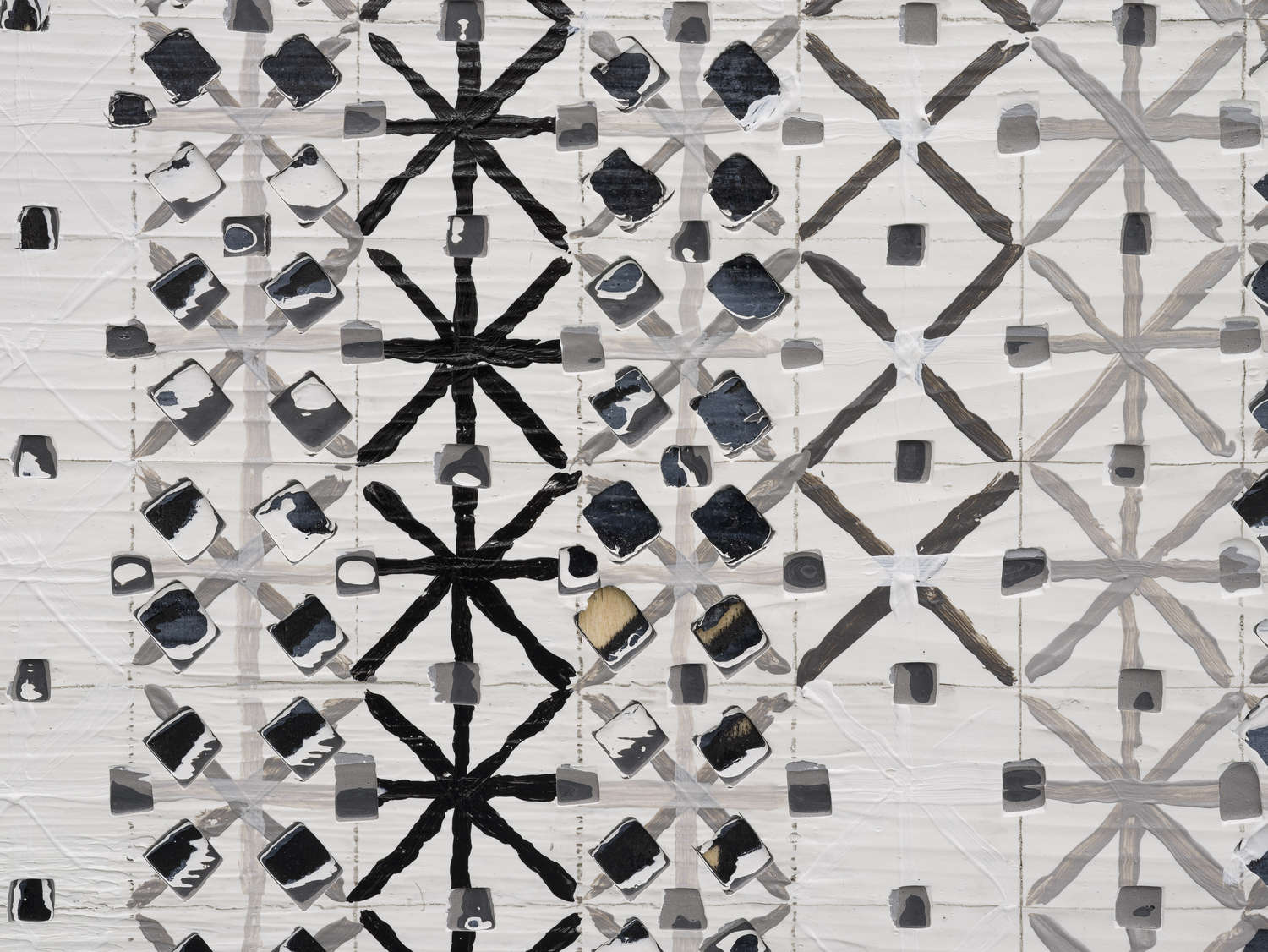
The choice of black and white marks a significant transition in the artist’s production. After a long period devoted to chromatic experimentation and the use of fluorescent hues, linked to Shanghai’s urban transformations and the visual perception of modernity, Ding Yi arrives at an extreme reduction of pictorial language, moving toward a dimension of visual subtraction that aims to reduce “perceptual noise” and highlight the fundamental structures of the image.
Alongside the twelve main paintings, the exhibition presents seven historical works made between the 1980s and the 1920s of the new century, which allow us to reconstruct the evolution of the artist’s language. The set of works highlights the transition from an early phase characterized by methodological rigor and formal reduction to an increasingly broad and articulate practice in which painting, sculpture and architectural space intersect to form a single field of operation.
A central role within the project is given to two stone stems, engraved or worked in relief with the recurring motif of the cross. These elements, which lie between sculptural object and commemorative device, establish a dialogue with the Chinese stele tradition and symbolic sites such as the Stele Forest in Xi’an, but also evoke broader references to European monumental culture, such as Stonehenge. Their presence introduces a layered temporal dimension in which memory, history and perception of time overlap.
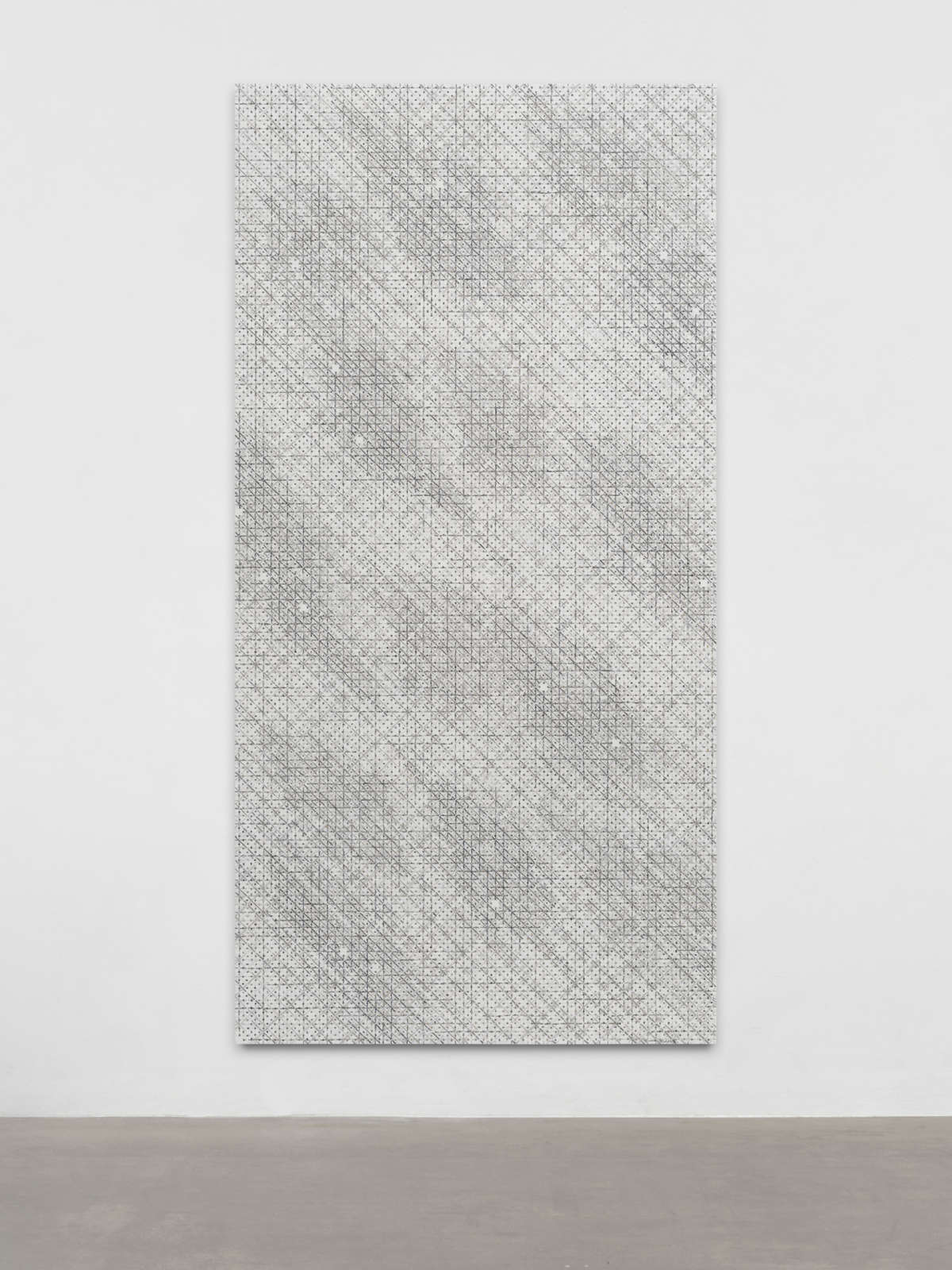
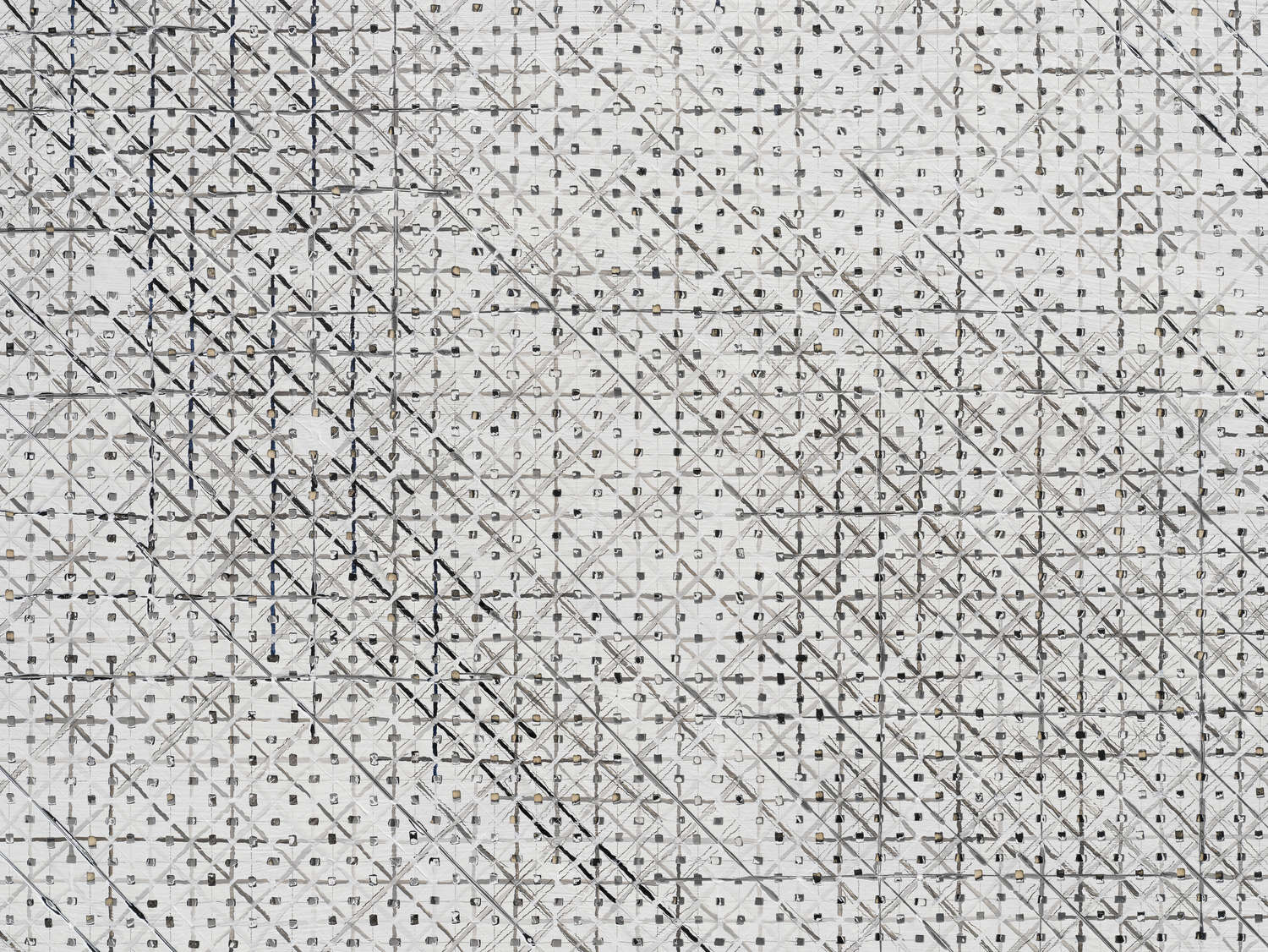
The relationship between Ding Yi’s work and Carlo Scarpa’s architecture constitutes a further conceptual axis of the exhibition. Curators Alfredo Cramerotti and Auronda Scalera emphasize how the space of the Querini Stampalia, designed by Scarpa, is configured as a balancing device designed to coexist with the environmental complexity of Venice. In this perspective, the Chinese artist’s work is read as a system for measuring the visual field, in which painting and architecture share the same logic of construction based on interval, proportion and relationship.
Ding Yi himself describes the project as a reflection on the relationship between microcosm and macrocosm within his series Appearance of Crosses. The twelve wooden works, all the same size, are arranged as a constellation that transforms the exhibition space into a meditative void, while the two stone stems establish a material dialogue between pictorial surface and sculptural carving. In this relationship, the artist identifies a direct confrontation between pictorial gesture and engraved sign, between contemporaneity and historical memory.
The exhibition project is accompanied by a publication published by Skira, conceived not as a simple catalog but as an autonomous critical object. The volume includes previously unpublished texts, curatorial contributions and an extensive iconographic apparatus documenting the works exhibited within the Scarpa Area, along with a selection of works made between the 1980s and the 2000s. The publication also delves into the relationship between the artist’s monochromatic turn and the spatial structure of the exhibition, highlighting the dialogue between Ding Yi’s language and Scarpa’s architectural precision.
The artist’s research, begun in 1982 and consolidated with the Appearance of Crosses series since 1988, is based on a rigorous methodology that combines repetition, structure and gesture control. Influenced by modern Western painting, particularly Piet Mondrian and Frank Stella, Ding Yi has developed an abstract language that reflects the transformations of contemporary Chinese society, from the dynamics of industrialization to the visual logics of the digital age.
Throughout his career, the artist’s works have been acquired by major international institutions, including the British Museum in London, the Centre Pompidou in Paris, the Metropolitan Museum of Art in New York, and the M+ in Hong Kong. He has also participated in numerous international exhibitions, including the 45th Venice Biennale, the first Asia-Pacific Triennial and the first Yokohama Triennial, consolidating his presence in the global contemporary art scene.
|
| Ding Yi in Venice, at the Querini Stampalia the exhibition Cosmotechnics |

Warning: the translation into English of the original Italian article was created using automatic tools. We undertake to review all articles, but we do not guarantee the total absence of inaccuracies in the translation due to the program. You can find the original by clicking on the ITA button. If you find any mistake,please contact us.






















 IT
IT FR
FR DE
DE ES
ES CN
CN


