




The international Thaddaeus Ropac Gallery has announced the launch of a collaboration with the Leoncillo Foundation, taking on the role of its representative within the scope of its exhibition and curatorial activities. The agreement is part of a project to promote the work of Leoncillo Leonardi and includes plans for an inaugural exhibition at the gallery’s Milan location, scheduled for September 2026.
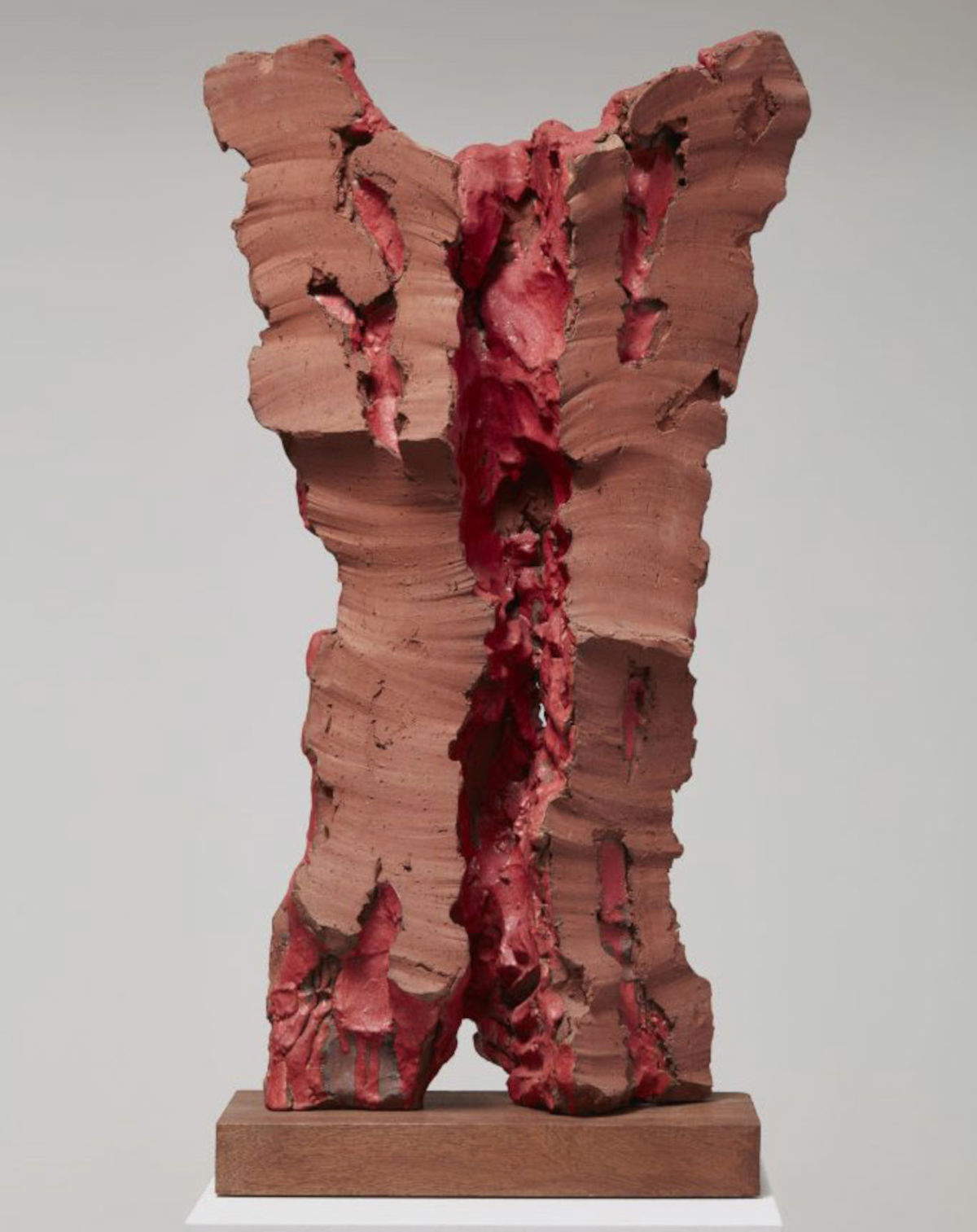
Leoncillo Leonardi, known as Leoncillo, is considered one of the central figures of post-World War II Italian sculpture. Born in 1915 and deceased in 1968, he developed an artistic practice that placedclay at the center of a radically innovativesculptural language, transforming it into an expressive medium capable of absorbing both formal and existential tensions. According to art historian and curator Enrico Crispolti, his work constitutes “unprecedented” sculpture, grounded in the centrality of the body and gesture and characterized by a direct and visceral relationship with the material.
Throughout his career, Leoncillo received consistent critical acclaim both in Italy and internationally. He participated in six editions of the Venice Biennale between 1948 and 1968, establishing a significant presence in the artistic discourse of the period. His works were subsequently featured in exhibitions at major museums, including the National Gallery of Modern Art in Rome in 1979, the Gallery of Modern and Contemporary Art at Palazzo Forti in Verona in 1985, and the Museo Novecento in Florence in 2021. Internationally, Leoncillo’s work has been included in group exhibitions at venues such as the Centre Pompidou in Paris in 1986, the Centro de Arte Reina Sofía in Madrid in 1990, and the Solomon R. Guggenheim Museum in New York in 1994. Subsequently, his work was also presented at the Galleria dell’Accademia in Florence in 2012, at the National Gallery of Modern and Contemporary Art in Rome in 2015 and 2018, and at Palazzo Strozzi in 2018.
The evolution of his artistic practice highlights a transition from his early figurative works—influenced by the Baroque tradition and the Roman School—toward a progressive abstraction that matured in the post-World War II period. This transition coincides with an increasingly radical exploration of the expressive possibilities of material—particularly clay—understood as a substance endowed with its own vitality.
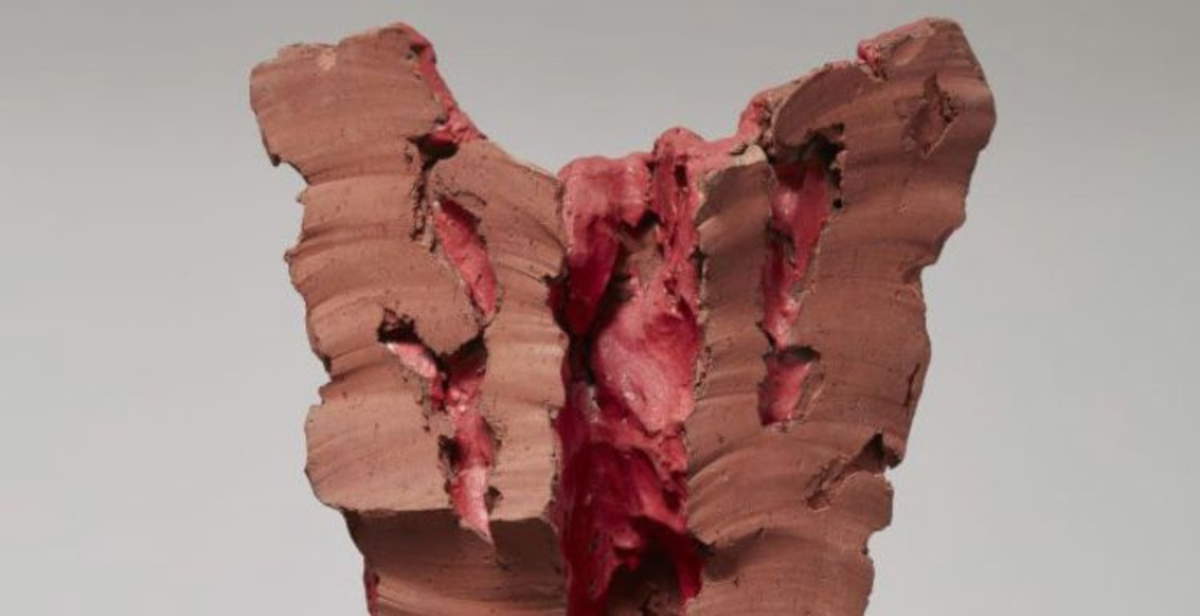
Leoncillo, in fact, conceived of the material as a field of forces in which destruction and regeneration coexist. In numerous works, he intervened directly with his hands or through the use of metal wire, a tool with which he incised and lacerated the ceramic surface. “Cutting clay with a metal wire means performing a decisive gesture—cruel and liberating,” Leoncillo stated. “Clay is like my own flesh—an absolute process of identification.” The collaboration between Thaddaeus Ropac and the Leoncillo Foundation thus takes place within the context of a critical reinterpretation of the sculptor’s work, with particular attention to its material and process-oriented dimensions.
“The Leoncillo Foundation was established with the aim of safeguarding Leoncillo’s intellectual and artistic legacy and exploring the still little-known aspects of one of the most significant postwar artists,” says Ariela Leonardi, President of the Leoncillo Foundation. “We are delighted to collaborate with the Thaddaeus Ropac Gallery to open new avenues for research and dialogue and to promote, on an international level, broader scholarly activity, institutional collaboration, and public awareness.”
“Exhibiting Leoncillo’s works today is not merely an act of faith,” continues Bernard Blistène. “It is a recognition of the beauty and creativity of a truly great artist. It is also an affirmation that the present is illuminated by the light of the past. Finally, it is the revelation of a multifaceted artist, a joyful virtuoso whom only Italian art knows how to portray with such grace and spirituality.”
“Leoncillo’s work has never been limited to a single style or movement,” says Thaddaeus Ropac. “The material itself was his primary means of expression, thanks to his unwavering dedication to clay. His sculptures stand out above all for their ability to reveal the medium’s intrinsic vital force and to reflect the inner human experience.”
 |
| Thaddaeus Ropac will represent the Leoncillo Foundation: agreement and exhibition in Milan in September |

Warning: the translation into English of the original Italian article was created using automatic tools. We undertake to review all articles, but we do not guarantee the total absence of inaccuracies in the translation due to the program. You can find the original by clicking on the ITA button. If you find any mistake,please contact us.

















 IT
IT FR
FR DE
DE ES
ES CN
CN


