





Through Sept. 13, 2026, the Museo Novecento in Florence is hosting the exhibition Baselitz. Avanti!, curated by Sergio Risaliti and deicated to Georg Baselitz, German painter among the leading contemporary artists. The exhibition brings together about 170 works. We publish a conversation between the two artists Gabriele Landi and Gianluca Sgherri who visit the exhibition and look at it, precisely, as artists.
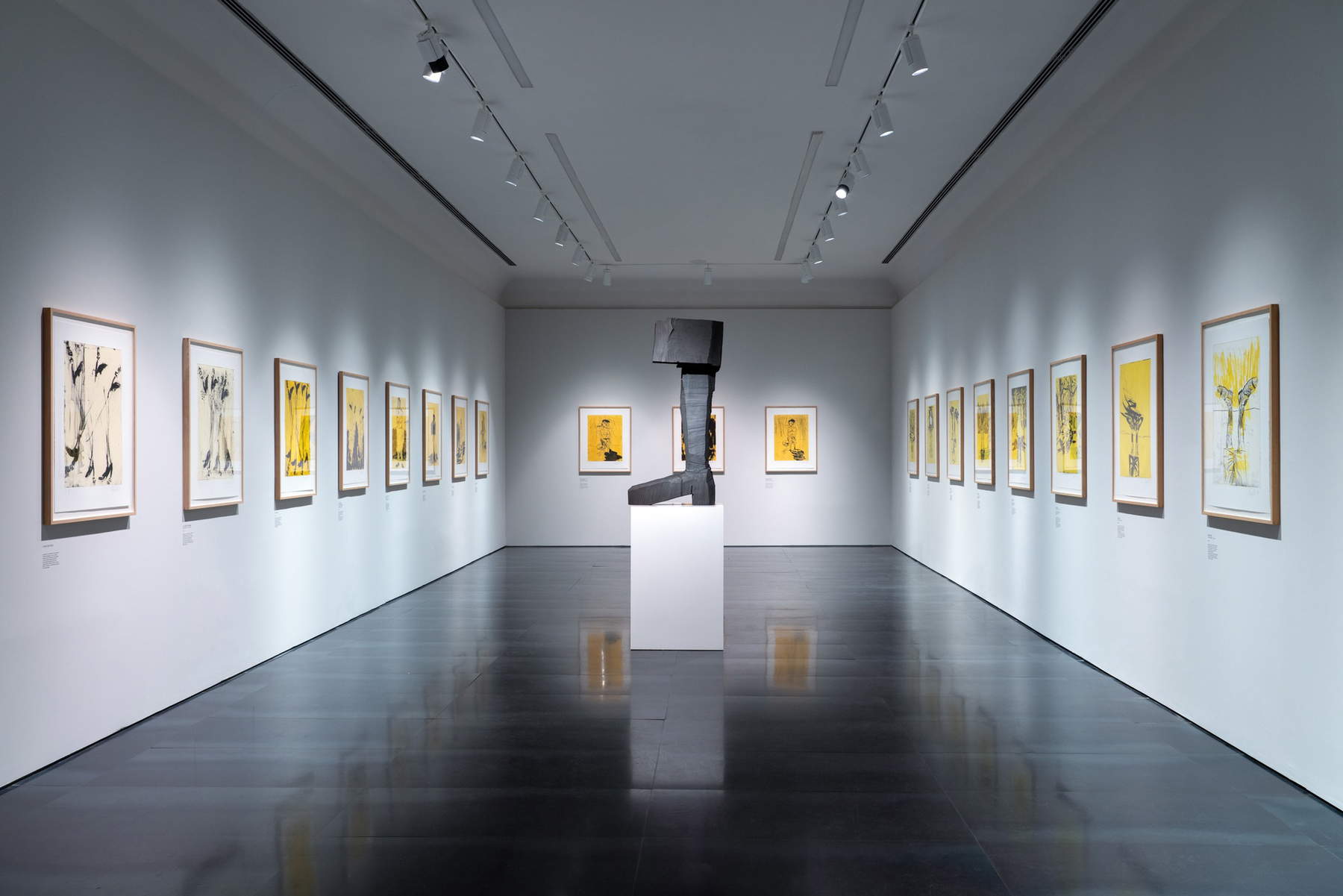
Gabriele Landi. If you visit this exhibition, watch out for a sore neck! The temptation to tilt your head in an attempt to flip the image, at least in the first room, comes to everyone. German artist Georg Baselitz, born in 1938, is best known among the general public for exhibiting his paintings upside down for many years. I confess that I laughed to myself when, upon entering the first room of the exhibition, I heard one of the museum’s janitors advising perplexed female visitors, who were twisting their heads in an attempt to straighten the image, to photograph the works with their smartphones and then turn that...
Gianluca Sgherri. Ahahahah... since the paintings don’t have the automatic rotation lock like smartphones do, the headache here is practically included in the ticket! Aside from that little downside, though, I would avoid both tilting my head and really following the janitor’s advice, which I imagine (and hope) was more of a joke than a serious invitation.
Gabriele Landi. The tone sounded serious! Anyway, for the avoidance of doubt, when asked why in his paintings the figures are always upside down, Georg Baselitz replied that the reason is because he is more interested in the painting and the sign than in the subject represented.
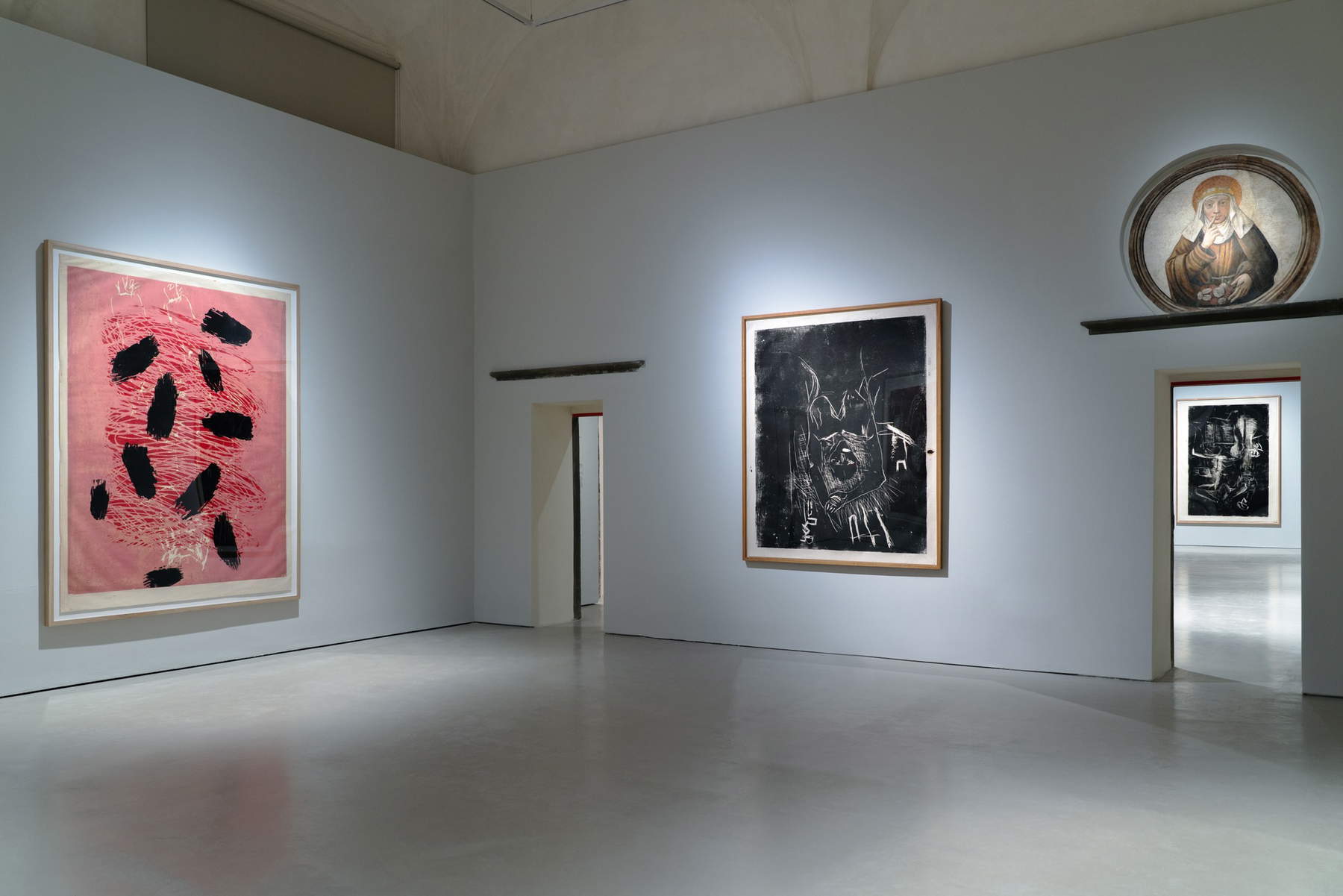
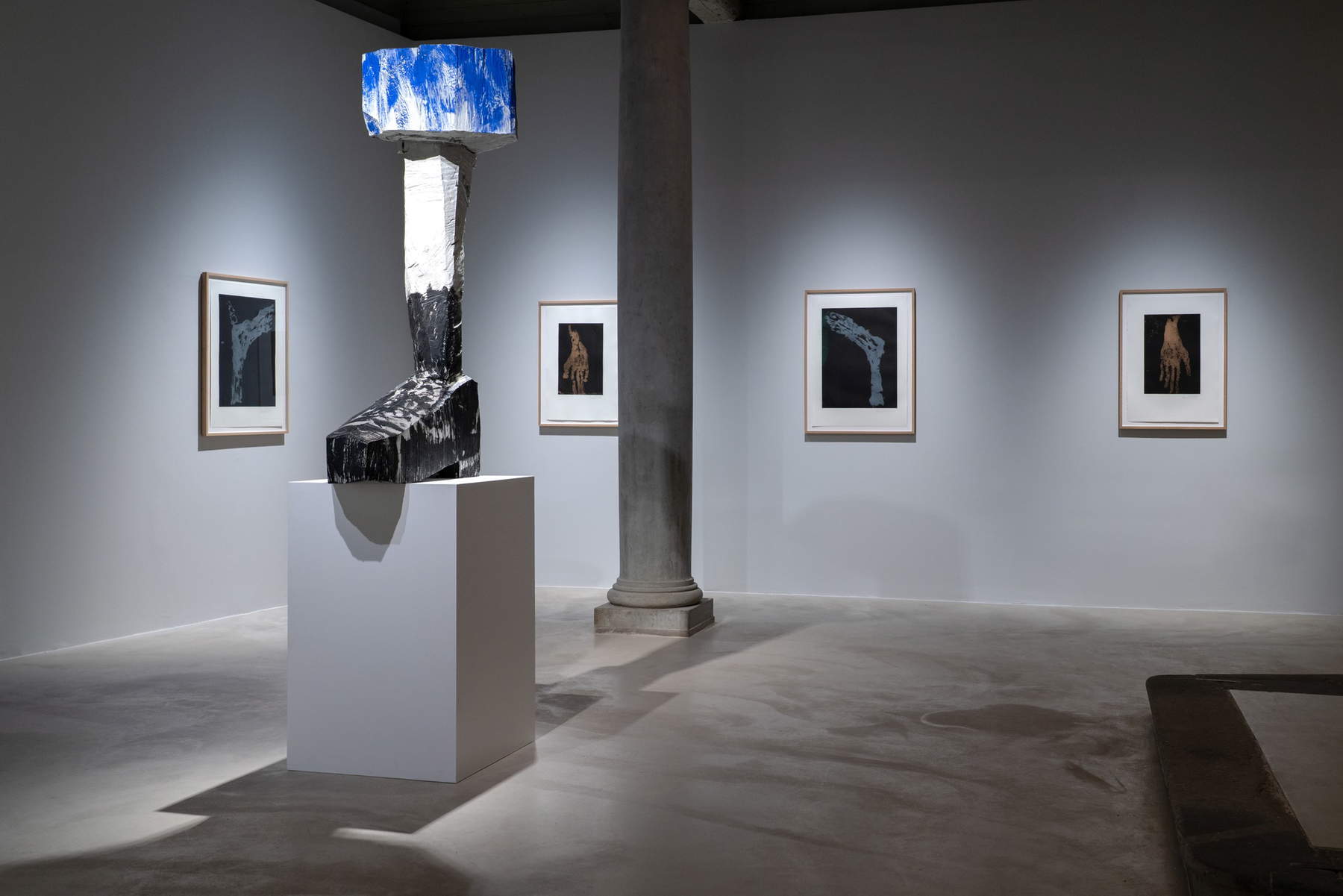
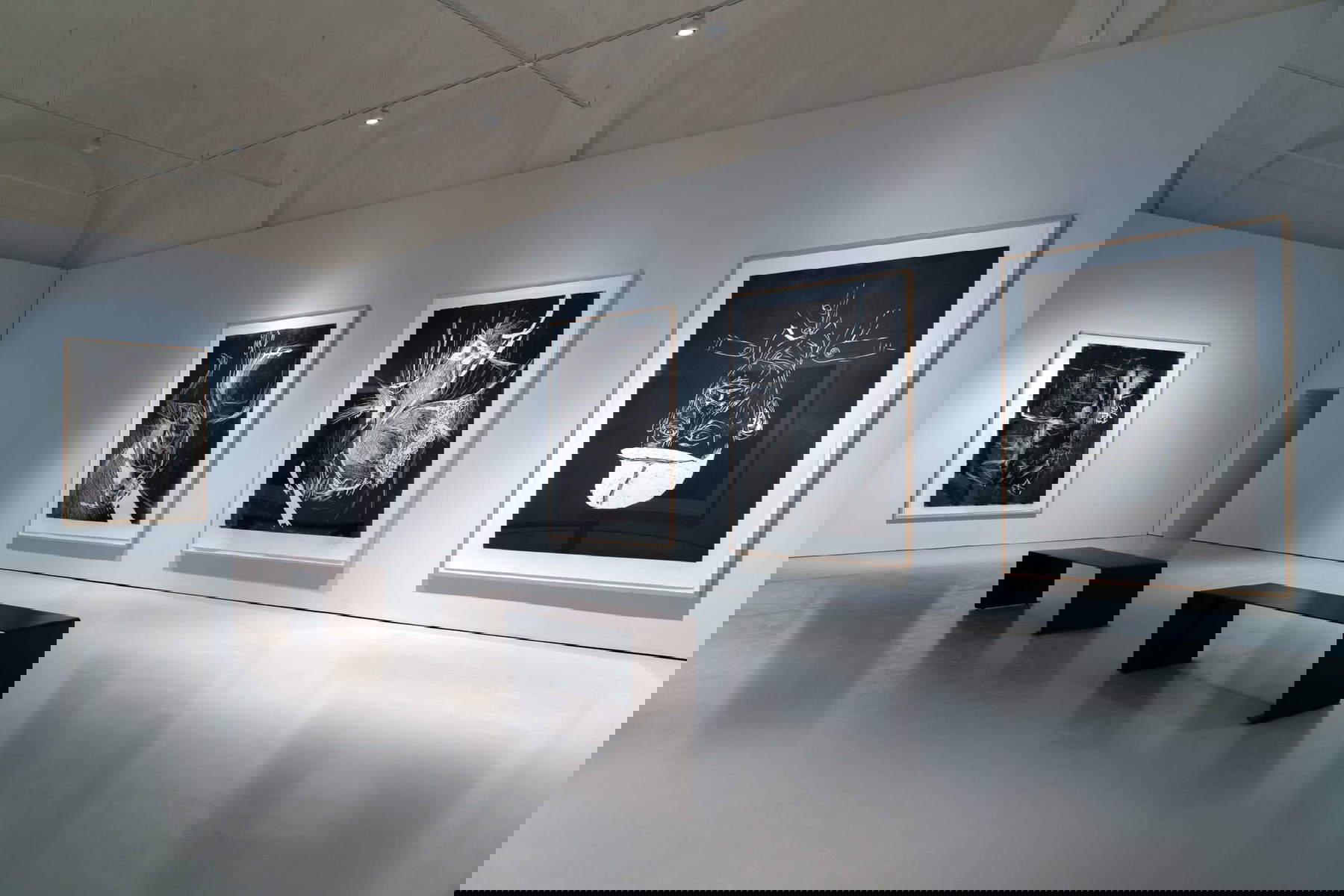
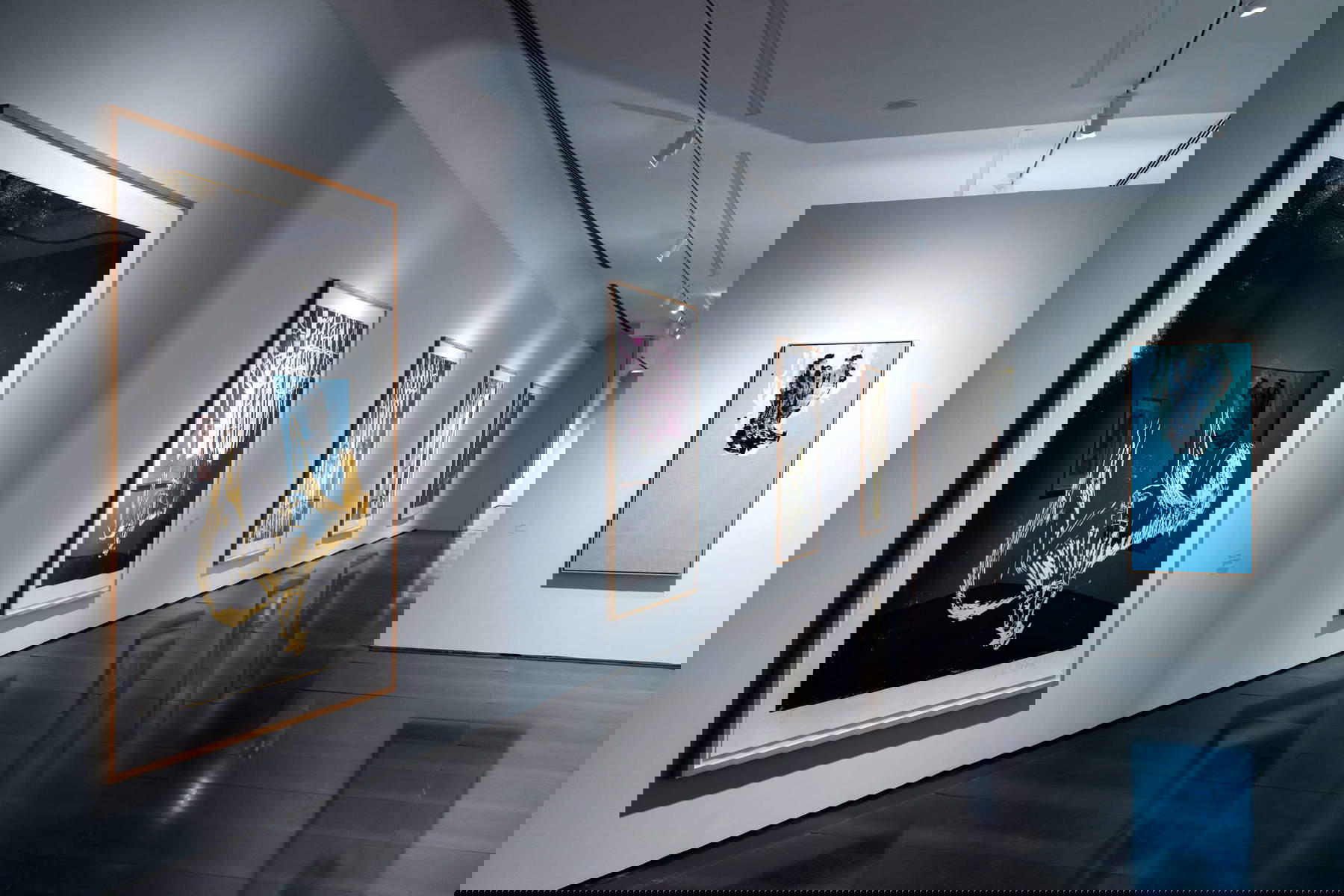
Gianluca Sgherri. In fact, behind Georg Baselitz’s celebrated reversals there is no sophisticated theoretical or conceptual framework to decipher. And this is perhaps the most interesting aspect: his work seems to resolutely eschew any interpretative superstructure, to focus instead on something more direct, almost primary. Indeed, Baselitz appears to be deeply and inseparably linked to the expressive medium he chooses from time to time-graphics, painting or sculpture. In each practice he pours a vision that manifests itself in an immediate, spontaneous and above all authentic way, free of hesitation and far from any intellectual complacency. The gesture imprints itself on the support - paper, canvas or wood - with a force that seeks no justification, but asserts itself. Even the overturning of the figures should be read in this key: a radical, instinctive act, if not even ideological in its essentiality. It is precisely in this extreme consistency, in the almost stubborn purity of language, that one recognizes a distinctive feature capable of making Baselitz, in many respects, a unique presence on the contemporary scene. A quality that also emerges clearly in the rooms of the Museo del Novecento.
Gabriele Landi. Dear Gianluca, I must admit that this exhibition surprised me! I did not think I would be in front of something so strong. A set of works spanning a wide time span, from the 1960s to the present, always conducted with great intensity in a single direction: the one indicated by the title of the exhibition, Avanti!
Gianluca Sgherri. I confess that the discourse on the title of the exhibition, Avanti!, does not entirely convince me: on the one hand it inevitably recalls a certain rhetoric, even journalistic, on the other hand it suggests an idea of linear progression that, frankly, I have a hard time recognizing in the path exhibited. If one looks especially at the more recent production, from the 1910s onward, a downturn seems rather to emerge: the work seems to lose some of that tension and necessity that characterized it earlier.
Gabriele Landi. The merit of this exhibition seems to me to be to lay bare, precisely through the graphic activity that the artist conceives as an integral part of his work process, the anatomy of his work. The impression one gets is that Baselitz enacts a process of chewing and remastication of his own work, showing - as in an anatomy lesson - its skeleton, muscles and circulatory, respiratory, nervous, digestive and reproductive systems. Many of the works on display keep their subversive corrosive charge alive: they are a real attack, a rush of punches to the viewer’s stomach. However, it is true and it always happens, there are things that also convinced me the most and others undoubtedly more discharging such as for example the remixes present in the rooms on the top floor of the museum, it is normal...
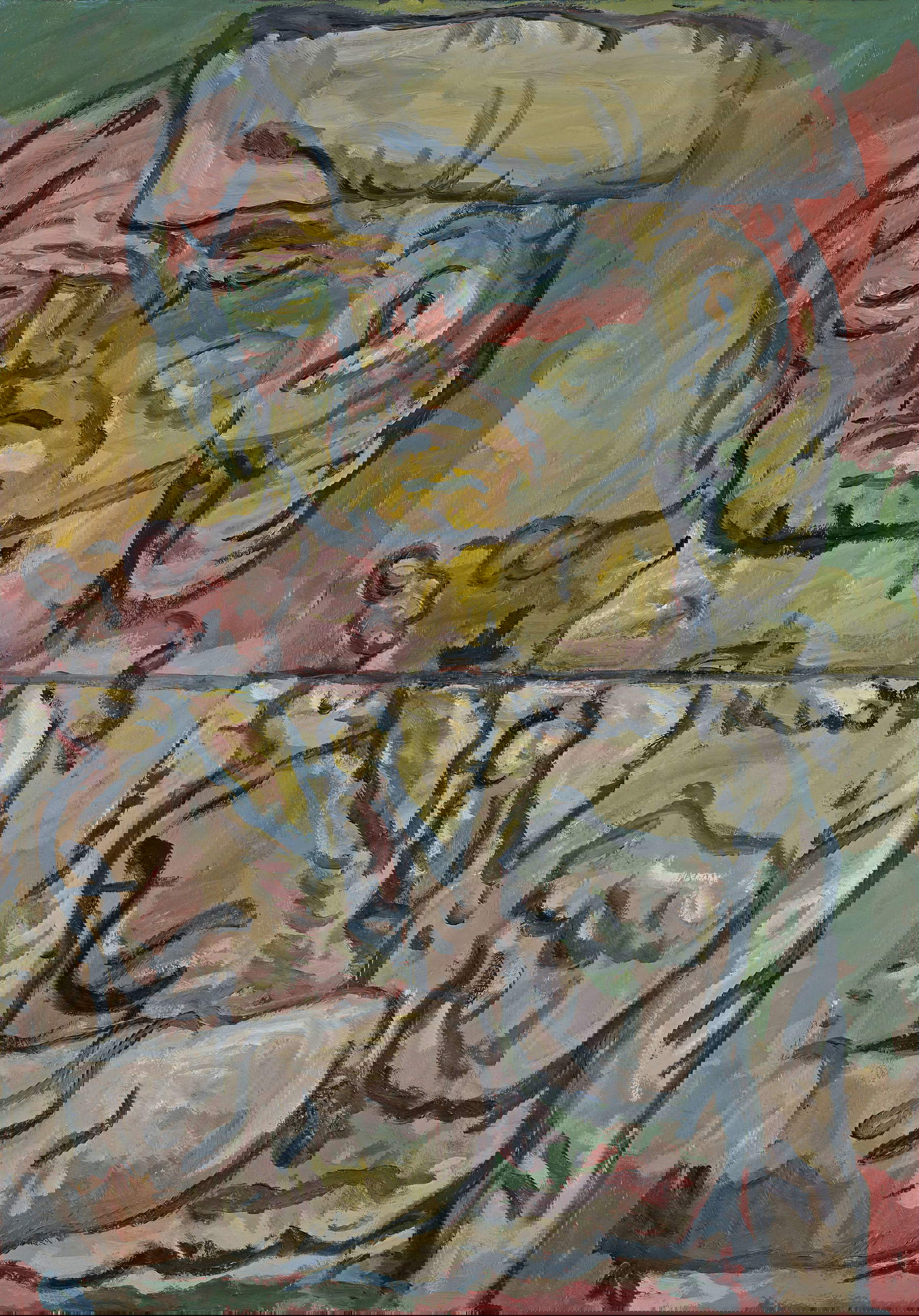
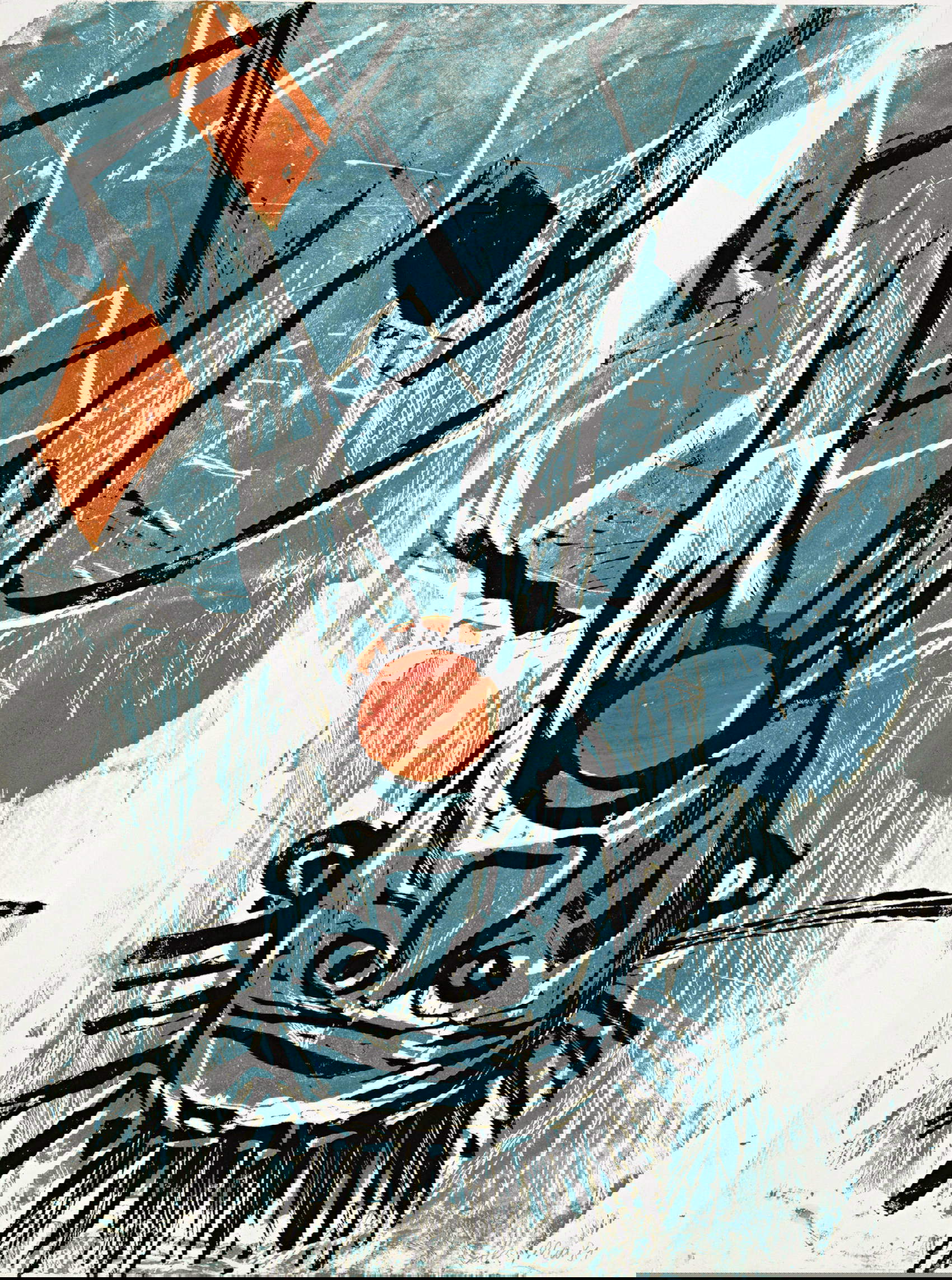
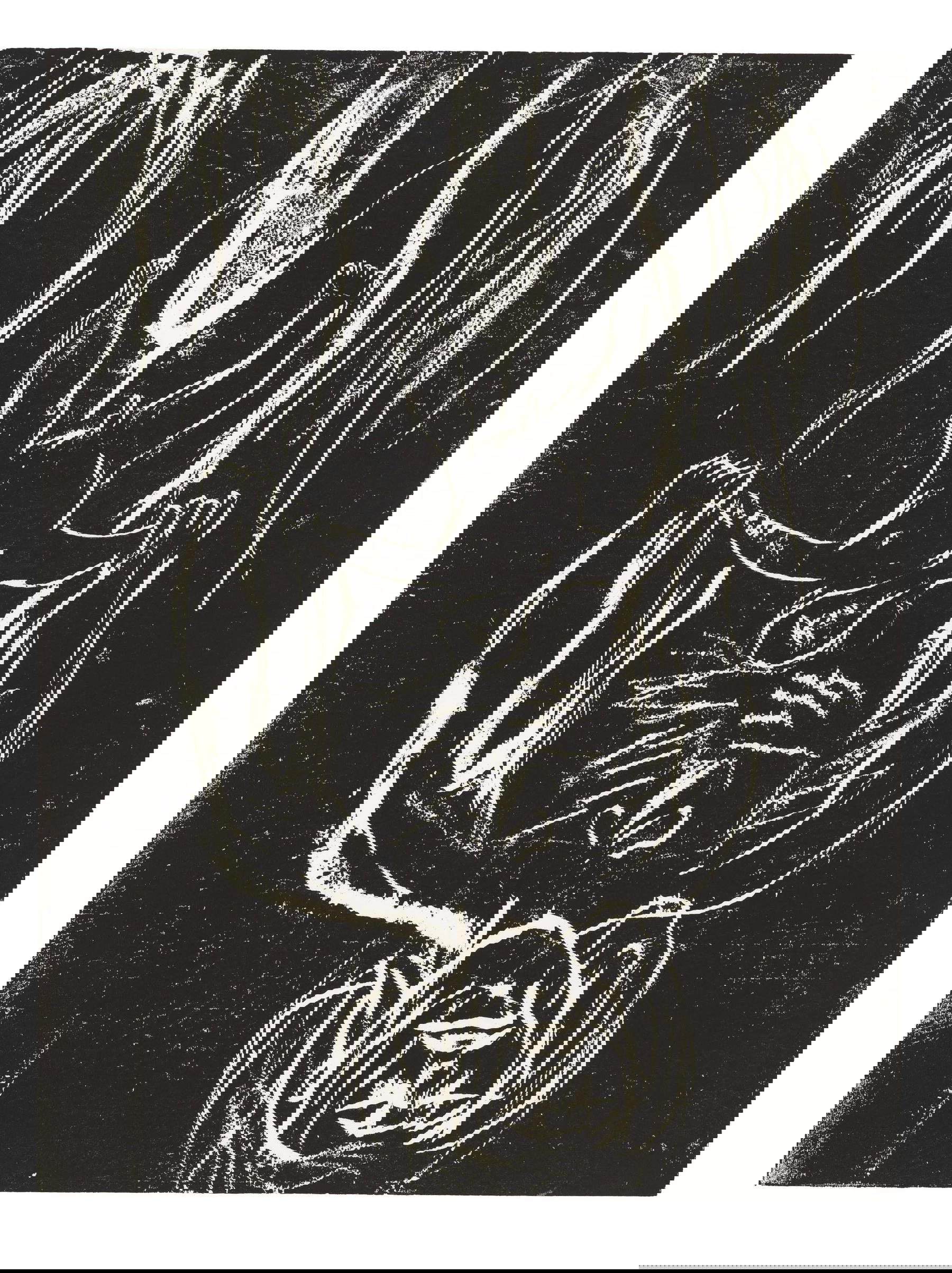
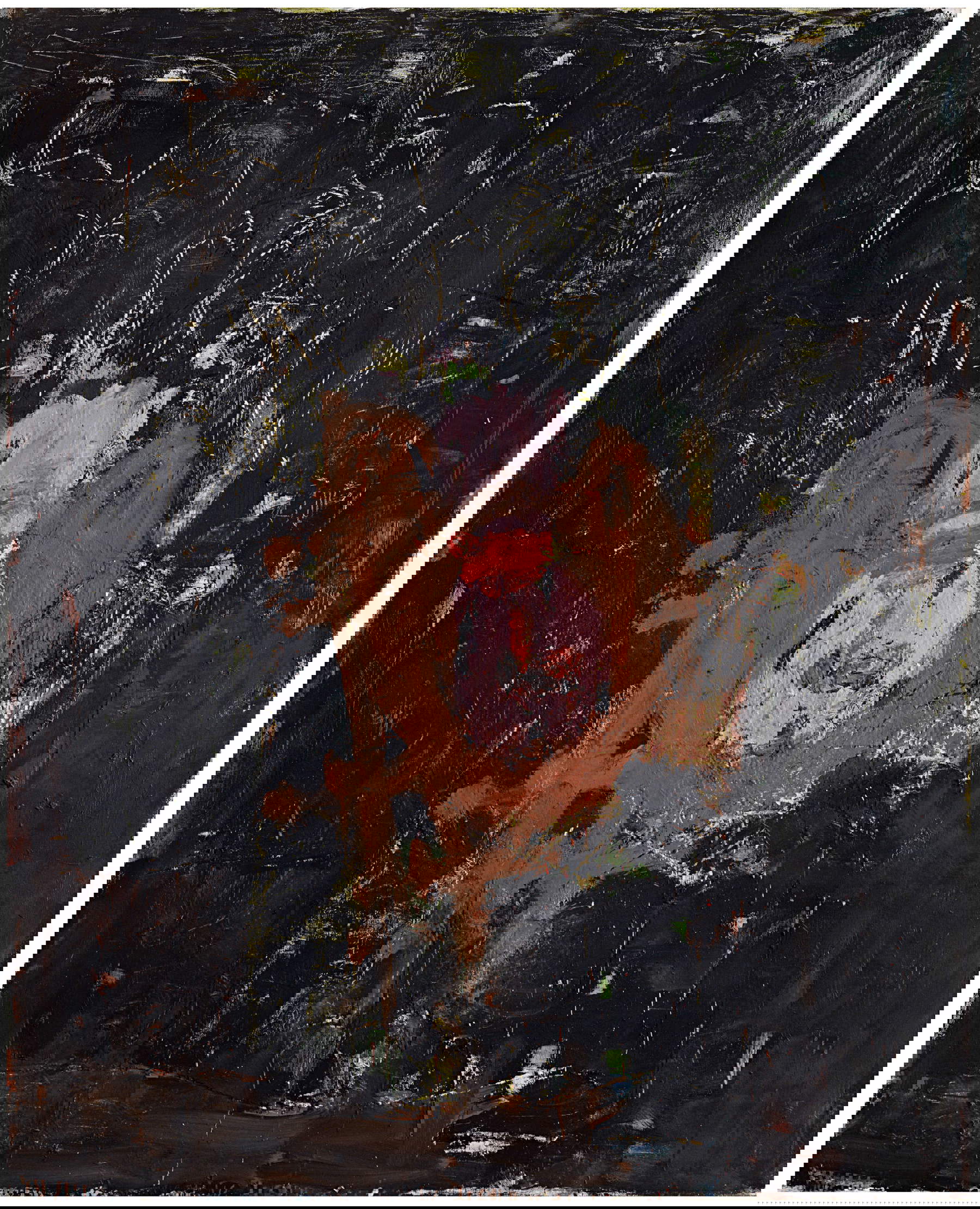
![Georg Baselitz, Die Hand - Das brennende Haus (Remix) (The Hand - The House on Fire [Remix]) (2006; drypoint; Private Collection). Photo: G. Michaloudis, farbanalyse, Köln © Georg Baselitz 2026](https://cdn.finestresullarte.info/rivista/immagini/2026/fn/georg-baselitz-die-hand-das-brennende-haus-1.jpg "Georg Baselitz, Die Hand - Das brennende Haus (Remix) (The Hand - The House on Fire [Remix]) (2006; drypoint; Private Collection). Photo: G. Michaloudis, farbanalyse, Köln © Georg Baselitz 2026")
Gianluca Sgherri. Then again, it is a fate common to many artists. Only rarely do we witness that sort of “second flowering” capable of completely reinventing language in old age - as happens, in an almost miraculous way, to Henri Matisse. Here, on the other hand, there is more the feeling of a gradual fading of the initial energy, albeit within a coherence that remains unquestionable. At this point, however, I would like to ask a question, Gabriele. Some of the figures in the exhibition, particularly the heads from the mid-1960s, seem to recall with surprising evidence the work of an Italian artist linked to the Transavantgarde of the 1980s. If it is true, as is often stated, that good artists know how to copy while only the greatest know how to “steal,” to which of these two categories do you think the artist to whom I am alluding, and whom I am sure you have recognized, belongs?
Gabriele Landi. Ahahaha...I think it’s attempted theft! Attempted does not mean successful in fact what for Baselitz is primary instinct for the other is an intellectual exercise, well expressed in all those suffixes like Neo, Post, Trans that precede many of the appellations given to the various artistic manifestations in vogue in the late 1970s and early 1980s. In any case, I think it is only fair to let those who visit the exhibition have the freedom to answer your question and enjoy it perhaps on an empty stomach to get a clearer view of it.

The author of this article: Gabriele Landi
Gabriele Landi (Schaerbeek, Belgio, 1971), è un artista che lavora da tempo su una raffinata ricerca che indaga le forme dell'astrazione geometrica, sempre però con richiami alla realtà che lo circonda. Si occupa inoltre di didattica dell'arte moderna e contemporanea. Ha creato un format, Parola d'Artista, attraverso il quale approfondisce, con interviste e focus, il lavoro di suoi colleghi artisti e di critici. Diplomato all'Accademia di Belle Arti di Milano, vive e lavora in provincia di La Spezia.Warning: the translation into English of the original Italian article was created using automatic tools. We undertake to review all articles, but we do not guarantee the total absence of inaccuracies in the translation due to the program. You can find the original by clicking on the ITA button. If you find any mistake,please contact us.



















 IT
IT FR
FR DE
DE ES
ES CN
CN


