





The exhibition Danse Macabre by Hans Op de Beeck at Tenuta dello Scompiglio (Lucca)opened last April 11 and will run until October 25. Here, a double review by two artists, Gabriele Landi and Gianluca Sgherri.
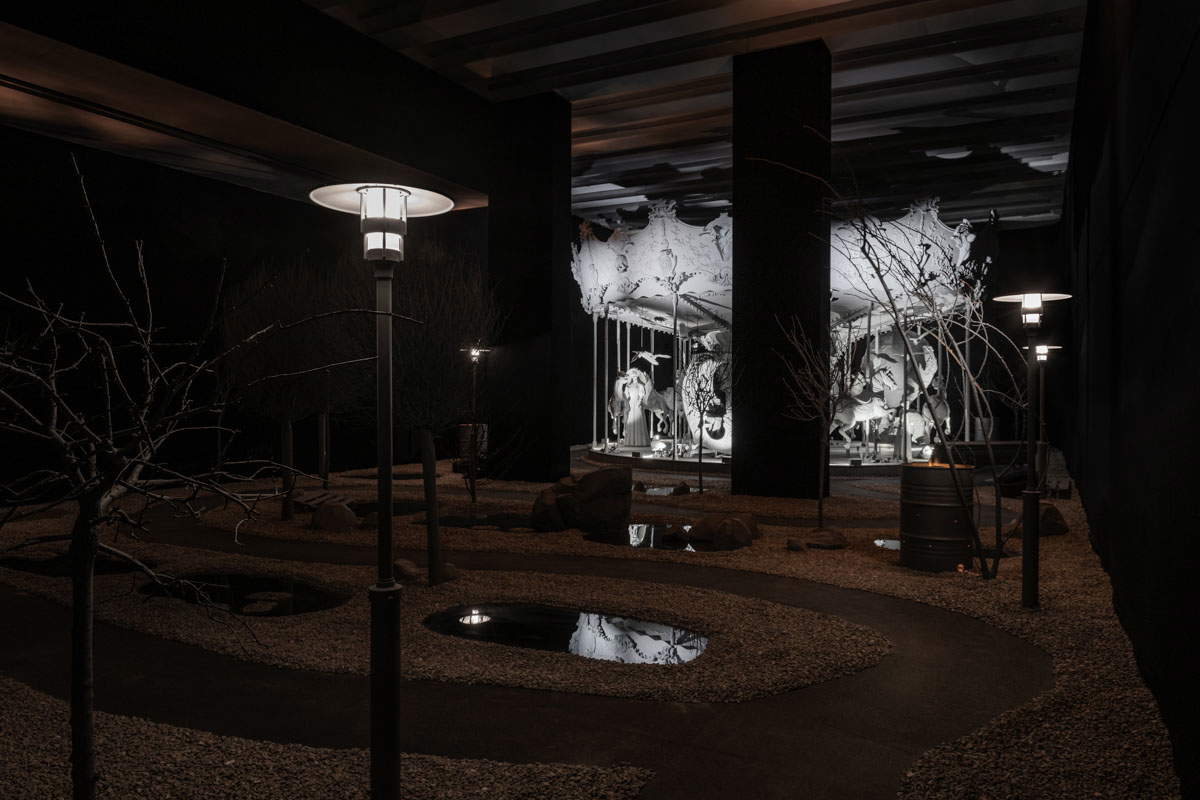
Today it is very fashionable to make exhibitions that focus on the spectacularization of artistic intervention: artworks must generate, at first glance, the “wow” effect. The characteristics of this recipe are always the same: monumental format of the artifact, creation of an immersive atmosphere through the use of ambient lighting, ad hoc created music and other contouring elements, with the aim of giving the viewer an unforgettable multisensory experience. The exhibition Dance Macabre by Hans Op de Beeck, currently running at Tenuta Dello Scompiglio in Vorno, in the province of Lucca, also adheres strictly to this protocol.
This way of operating does not convince me. Indeed, aiming at the aforementioned effect generates, in my opinion, a distracted and superficial fruition that, beyond an immediate reaction, is unable to deeply engage the viewer.
In the case of this specific intervention by the Belgian artist, upon entering the exhibition one finds oneself walking down a short path surrounded by small pebbles of gray color - which is in fact the only color the artist resorts to, not only in this intervention but constantly in his works. Stark trees stand out on the driveway, interspersed with a series of small street lamps that give off a faint yellowish light, ponds or puddles, a series of abandoned tires, pallets and metal bins that seem to contain crackling embers, all in a kitschy and cold atmosphere with a vague lugubrious vein.
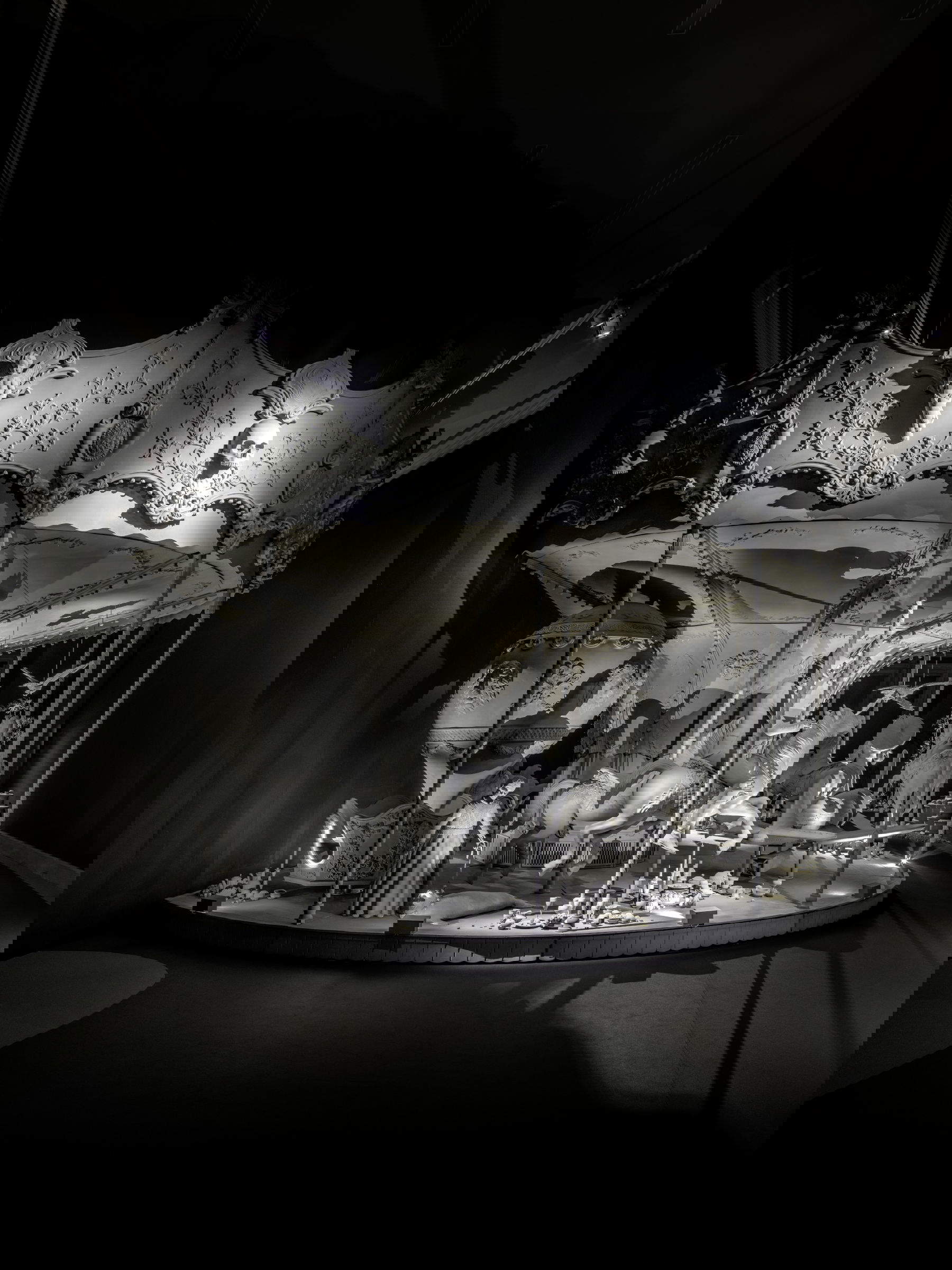
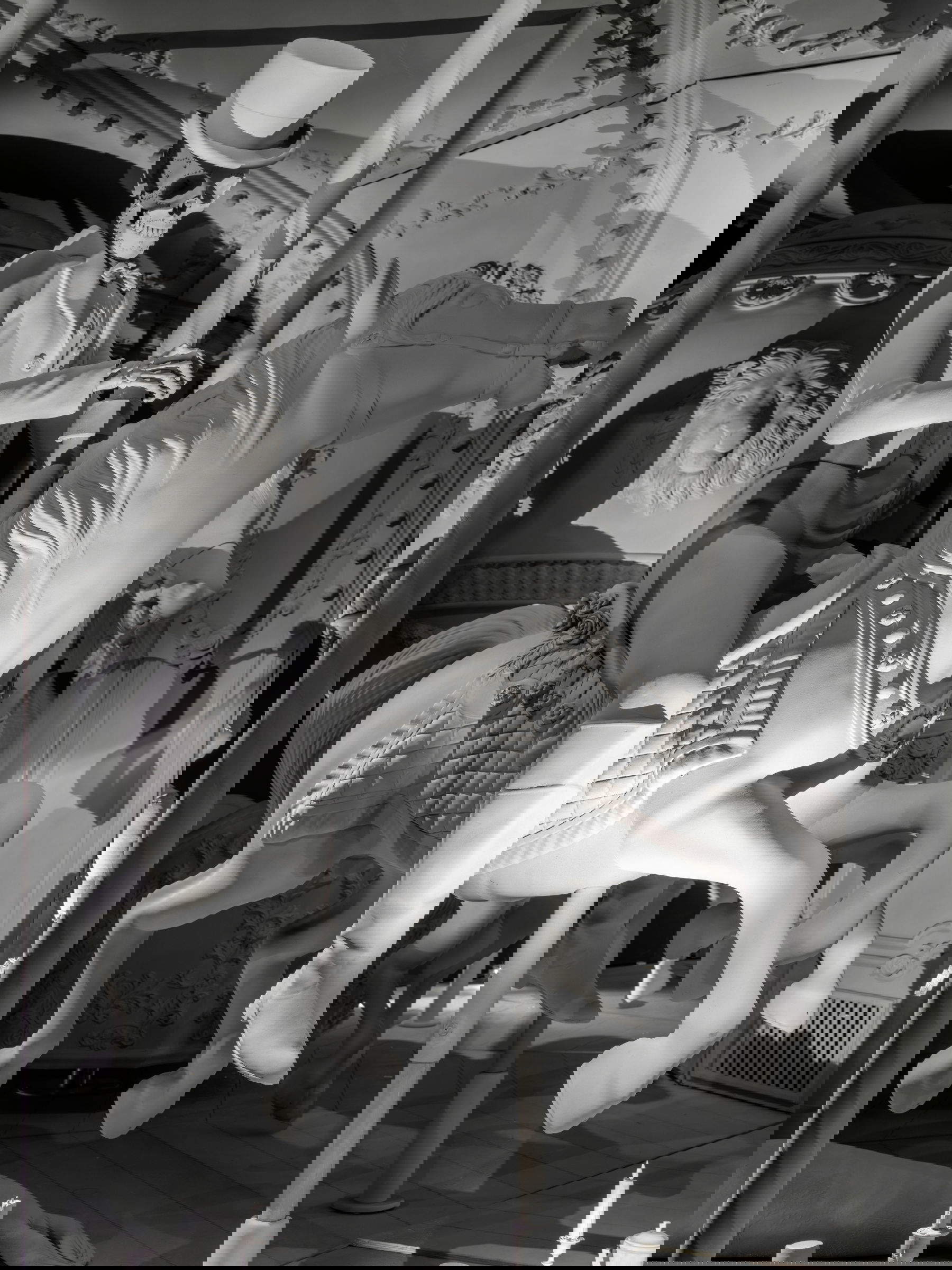
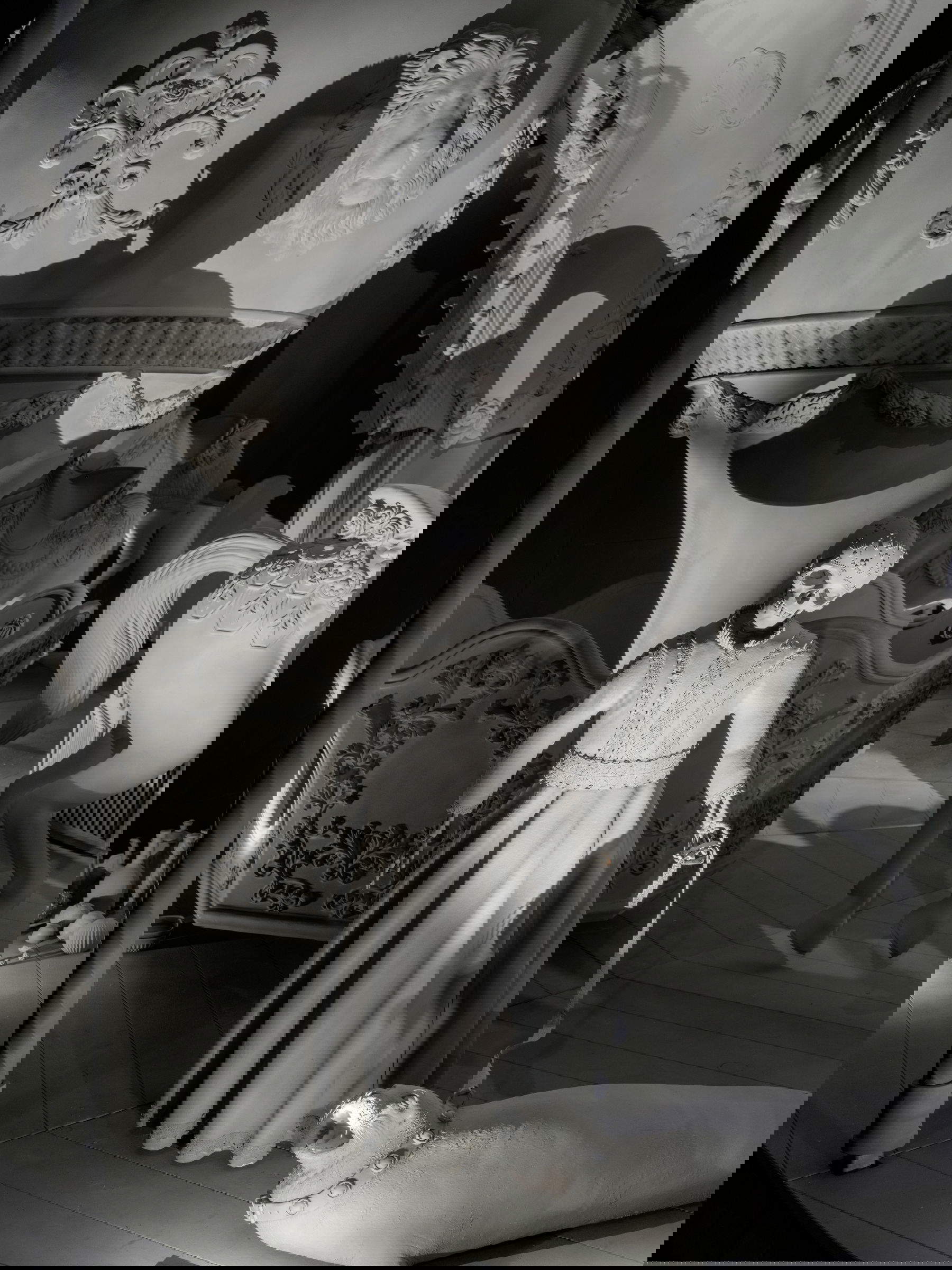
The impression is confirmed when one arrives in the presence of the “centerpiece” of the exhibition: the motionless merry-go-round, inhabited by a small family of skeletons in period clothing who are joined by a number of non-skeleton animals in addition to the merry-go-round attractions. The walls of the room are painted black. The ride closes with a video in which the artist has had a series of his watercolors animated by artificial intelligence. The whole thing is accompanied by specially composed music. It seems to me that nothing is missing.
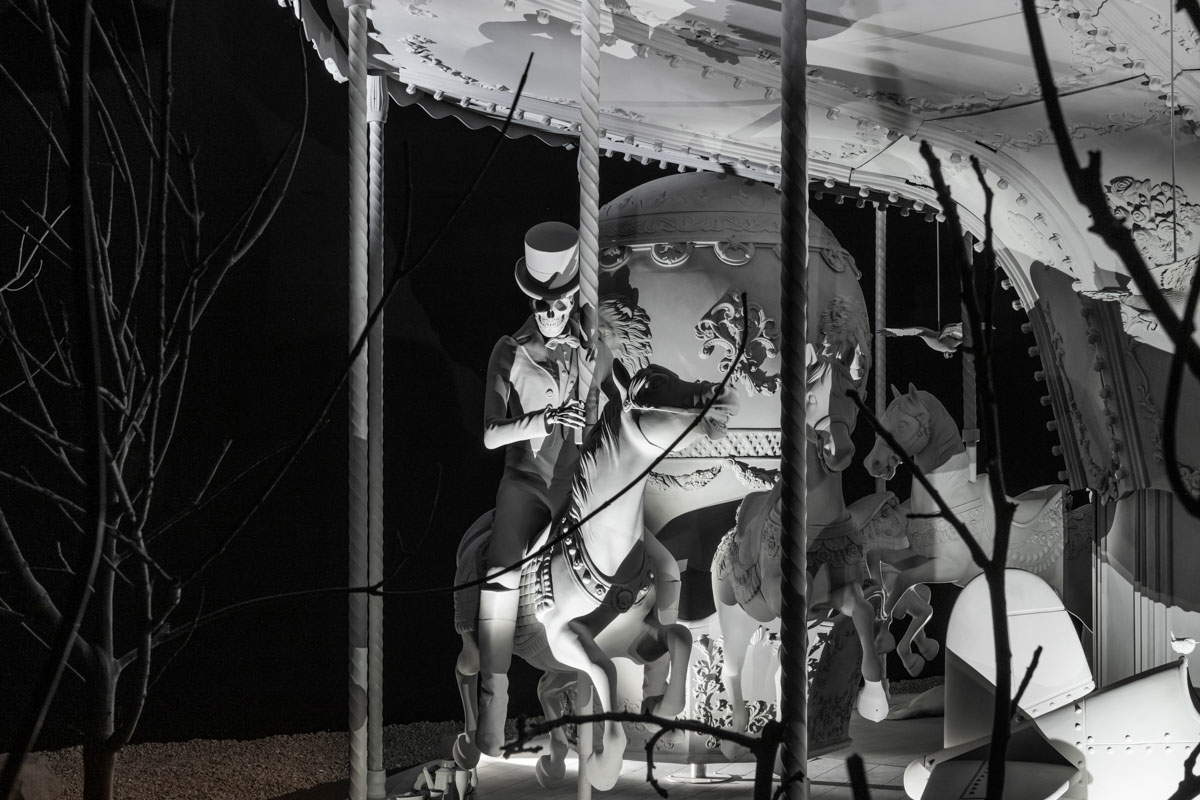
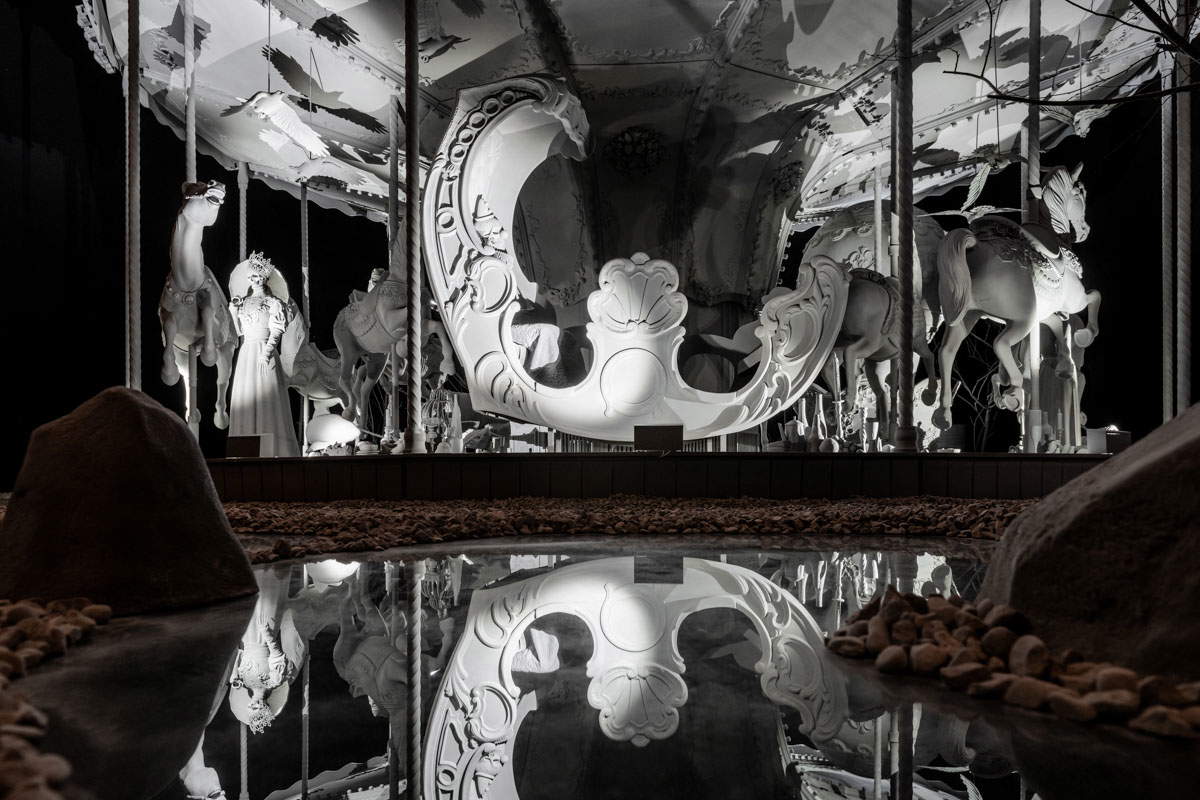
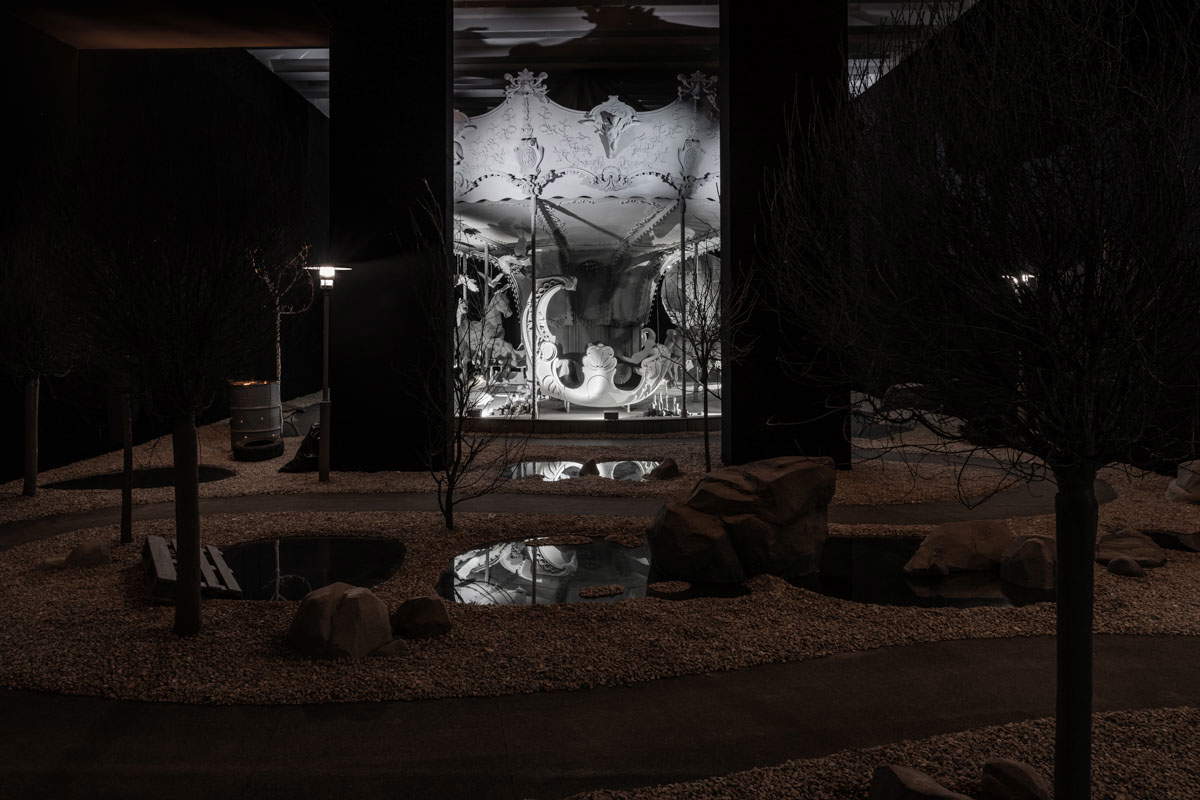
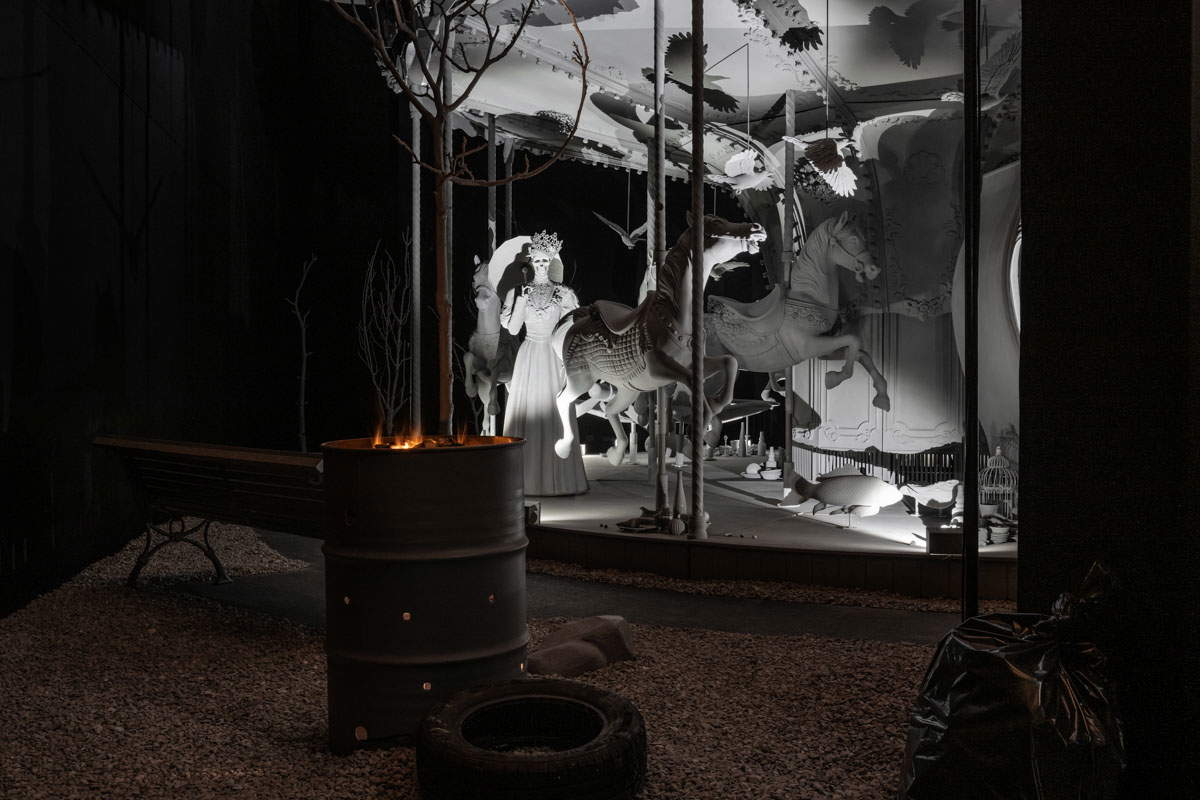
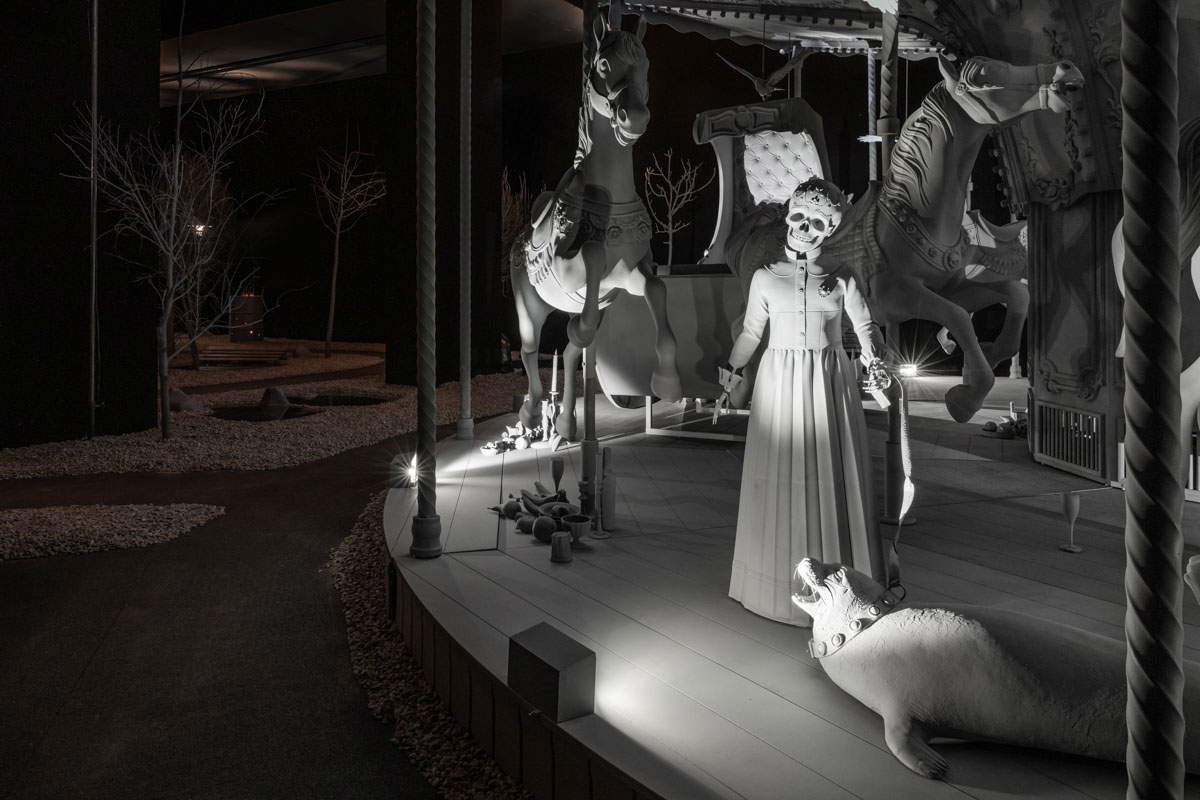
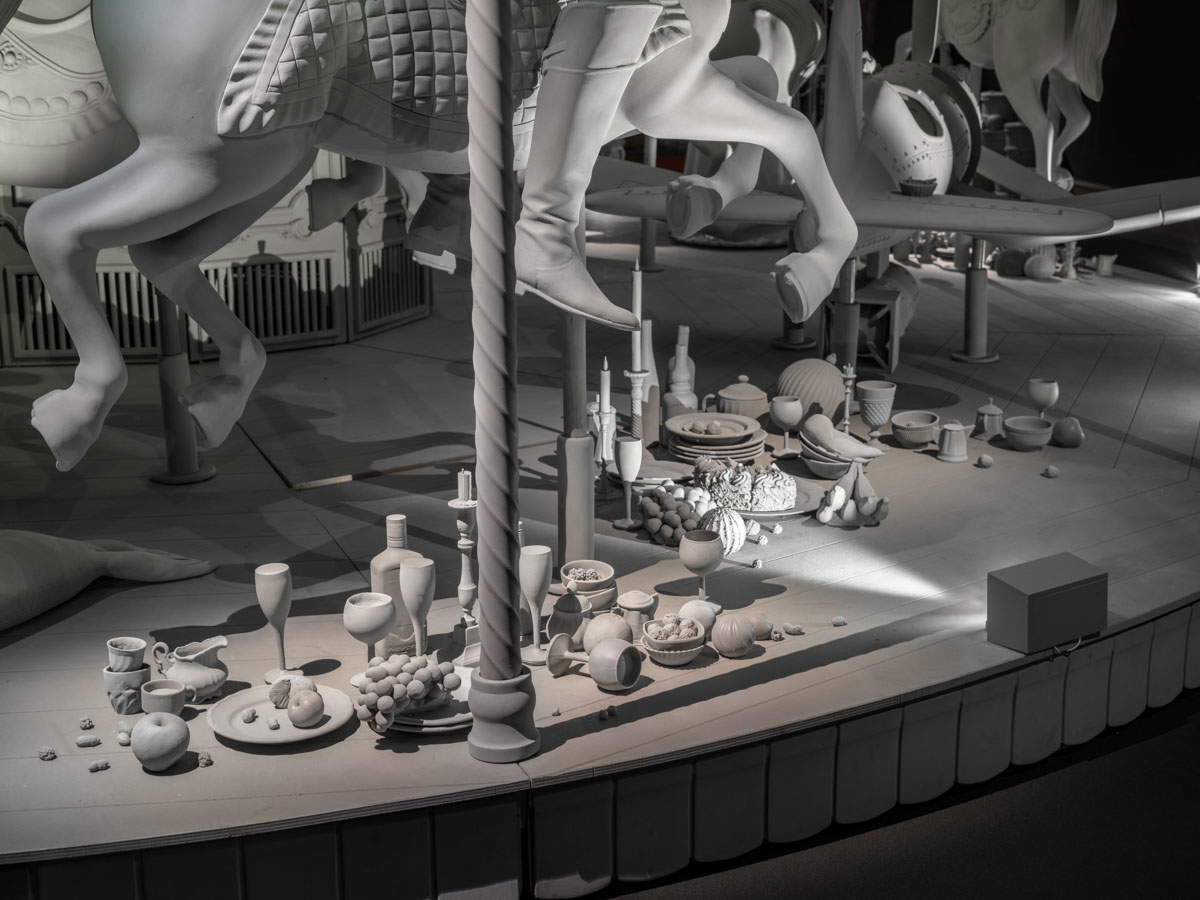
If art and exhibitions should offer us the opportunity to confront the world and look at it from new perspectives, here this possibility appears to be severely limited, if not completely absent.
If we think of the contemporary artist as one who interrogates reality through aesthetic and formal questions, here we are rather faced with a practice that borders on craftsmanship: an accurate reproduction of figures and objects, a repertoire of resin casts.
Hans Op de Beeck constructs a personal, full-scale, monochrome universe. Fascinating as it is, this world remains closed in on itself: it does not seem to offer tools to truly understand it or to rework our relationship with our surroundings. The effect is immediate, but it quickly wears off, dissolving once we leave the exhibition: an impression that leaves no lasting impression.
The emotion and references to the past are present and recognizable, but the language appears compact and unidirectional: it does not open a confrontation, nor does it raise questions capable of lingering beyond the visual experience.

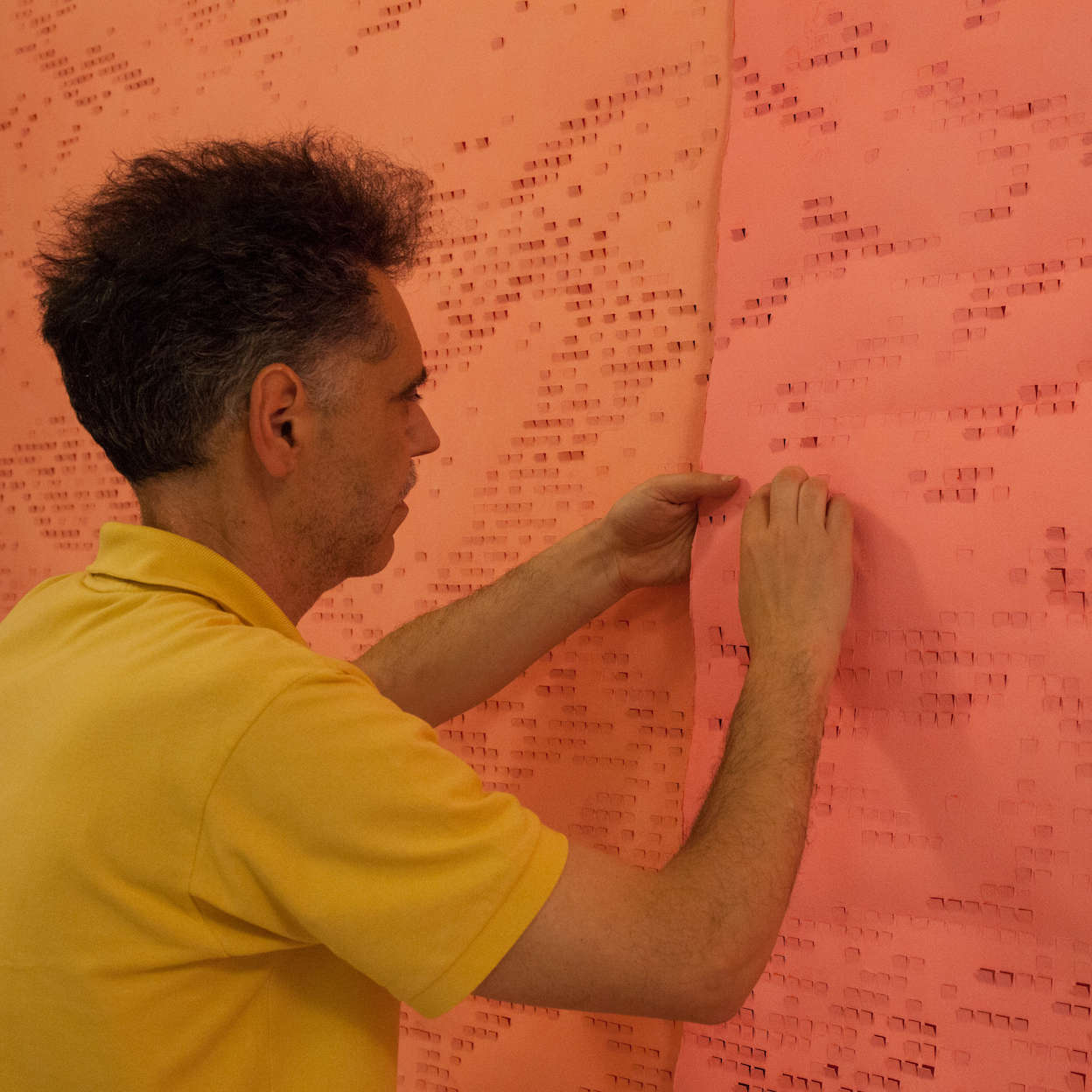
The author of this article: Gabriele Landi
Gabriele Landi (Schaerbeek, Belgio, 1971), è un artista che lavora da tempo su una raffinata ricerca che indaga le forme dell'astrazione geometrica, sempre però con richiami alla realtà che lo circonda. Si occupa inoltre di didattica dell'arte moderna e contemporanea. Ha creato un format, Parola d'Artista, attraverso il quale approfondisce, con interviste e focus, il lavoro di suoi colleghi artisti e di critici. Diplomato all'Accademia di Belle Arti di Milano, vive e lavora in provincia di La Spezia.Warning: the translation into English of the original Italian article was created using automatic tools. We undertake to review all articles, but we do not guarantee the total absence of inaccuracies in the translation due to the program. You can find the original by clicking on the ITA button. If you find any mistake,please contact us.



















 IT
IT FR
FR DE
DE ES
ES CN
CN


