





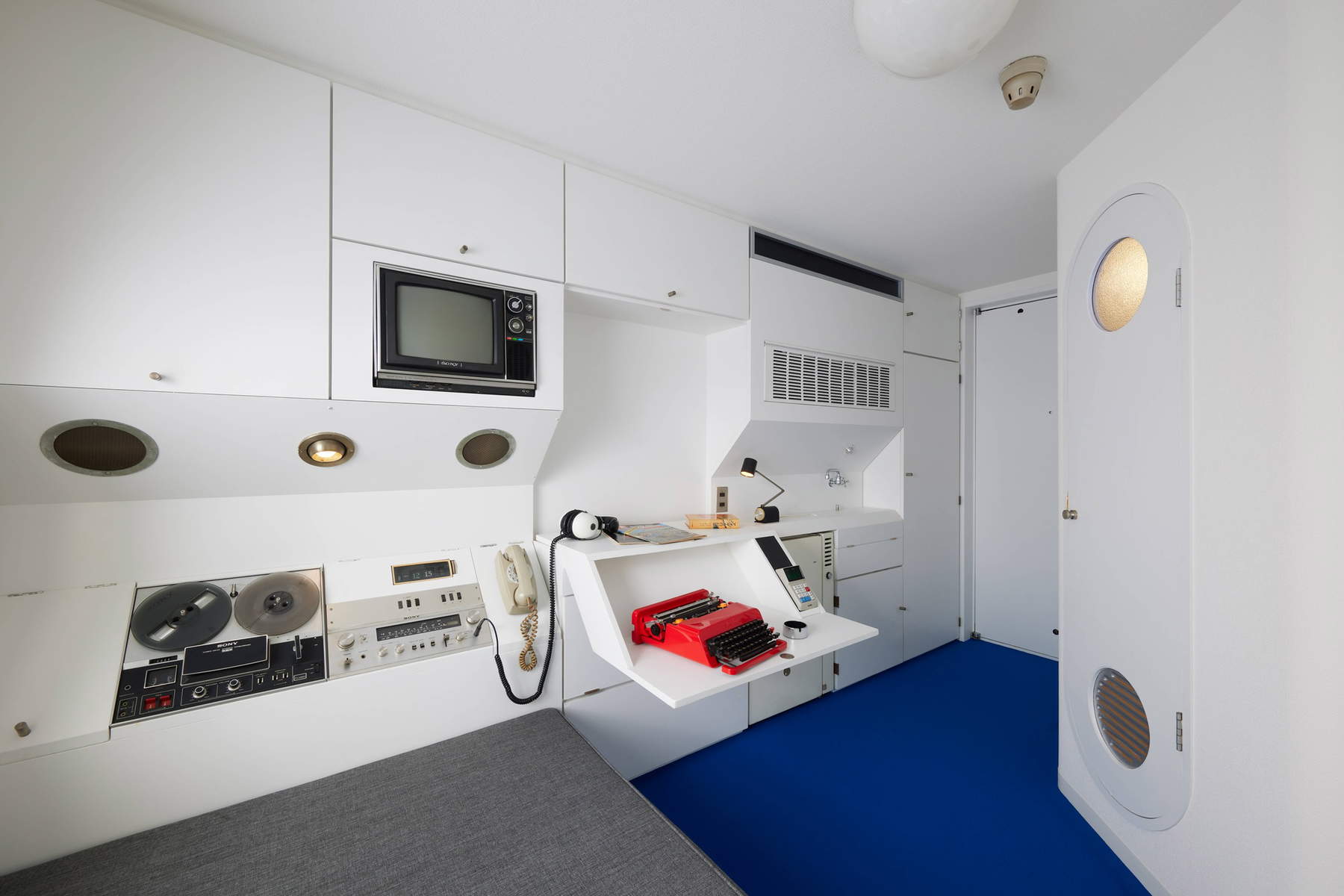
Entering MoMA, the Museum of Modern Art in New York City, and standing in front of a Nakagin Capsule Tower capsule produces an ambiguous feeling. It is not awe in the traditional sense, it is something more unstable: the perception of standing before a fragment that no longer belongs to anything. Capsule A1305 is there, restored, autonomous, almost flawless. But at the same time it is a remnant. A surviving element of a building that no longer exists, dismantled in 2022 after fifty years of life. Kisho Kurokawa had envisioned the Nakagin Capsule Tower (1972) as an organism capable of continuous renewal: interchangeable, replaceable, upgradeable capsules. An architecture designed to mutate over time, like a living body. That mutation never happened. The capsules were not replaced, the system stiffened, and the project, conceived as dynamic, became fragile. The demolition marked the end of the building, but not of its cultural existence, and today it survives in the form of fragments, distributed in museums and collections.
And it is here that The Many Lives of the Nakagin Capsule Tower exhibition builds its most interesting knot: how do you exhibit anarchitecture that no longer exists? At the center of the exhibition is not the tower, but a part of it: a singlehousing unit , one of the 140 capsules that made up the original system. This choice changes everything. Why? Because architecture, by definition, is relationship: between spaces, between bodies, between urban contexts. Here, however, it is isolated, extracted, made an object. The capsule becomes something ambiguous: it is no longer a functioning housing unit, but neither is it a simple design object. It is a fragment that carries with it an absence, and MoMA avoids treating it as a sculpture. It does not place it in the garden, it does not turn it into an isolated icon. It places it in a passing space, at street level, freely accessible, as if to maintain a continuity with its urban origin. Yet even so, one wonders, “is that capsule still architecture?”
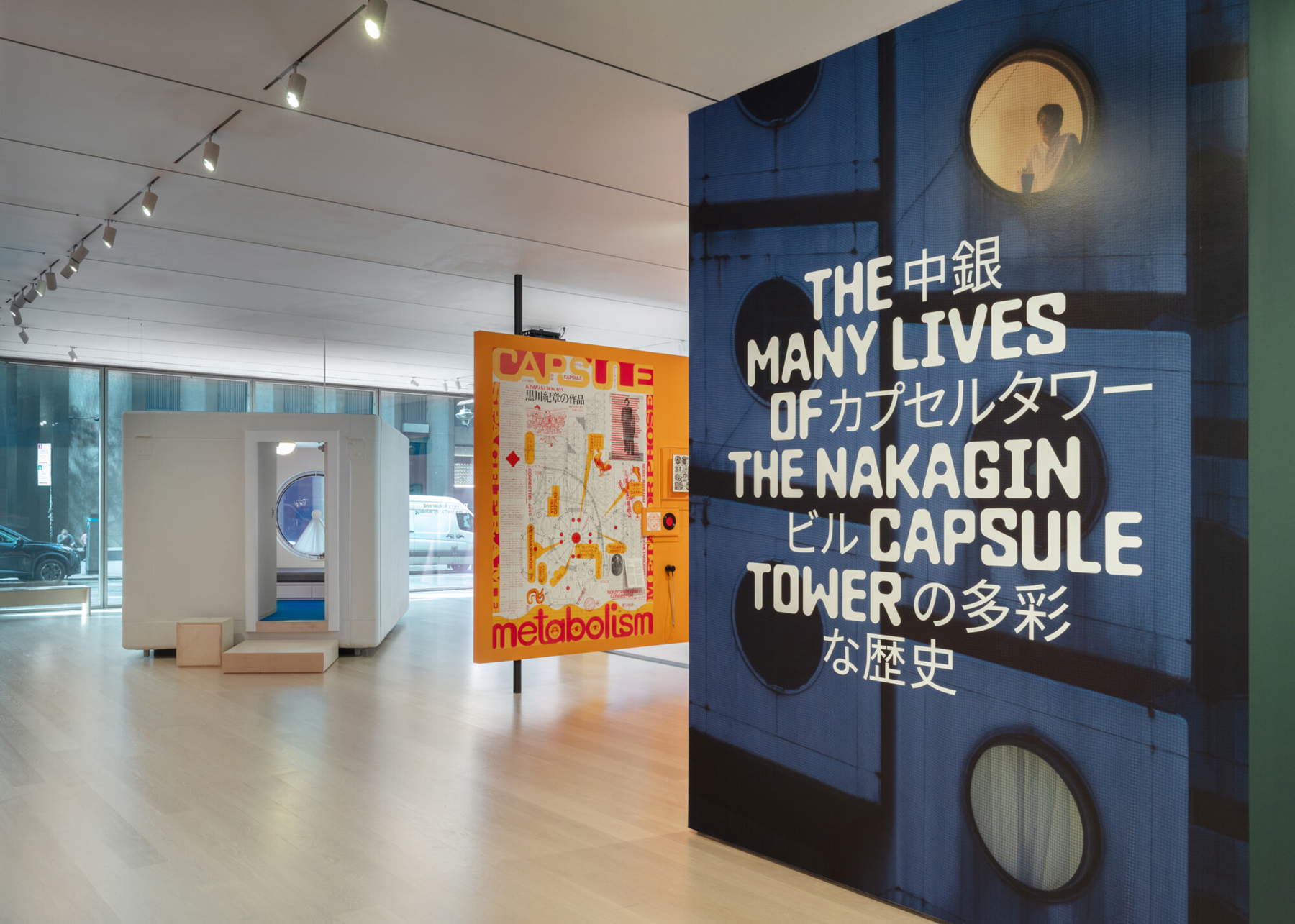
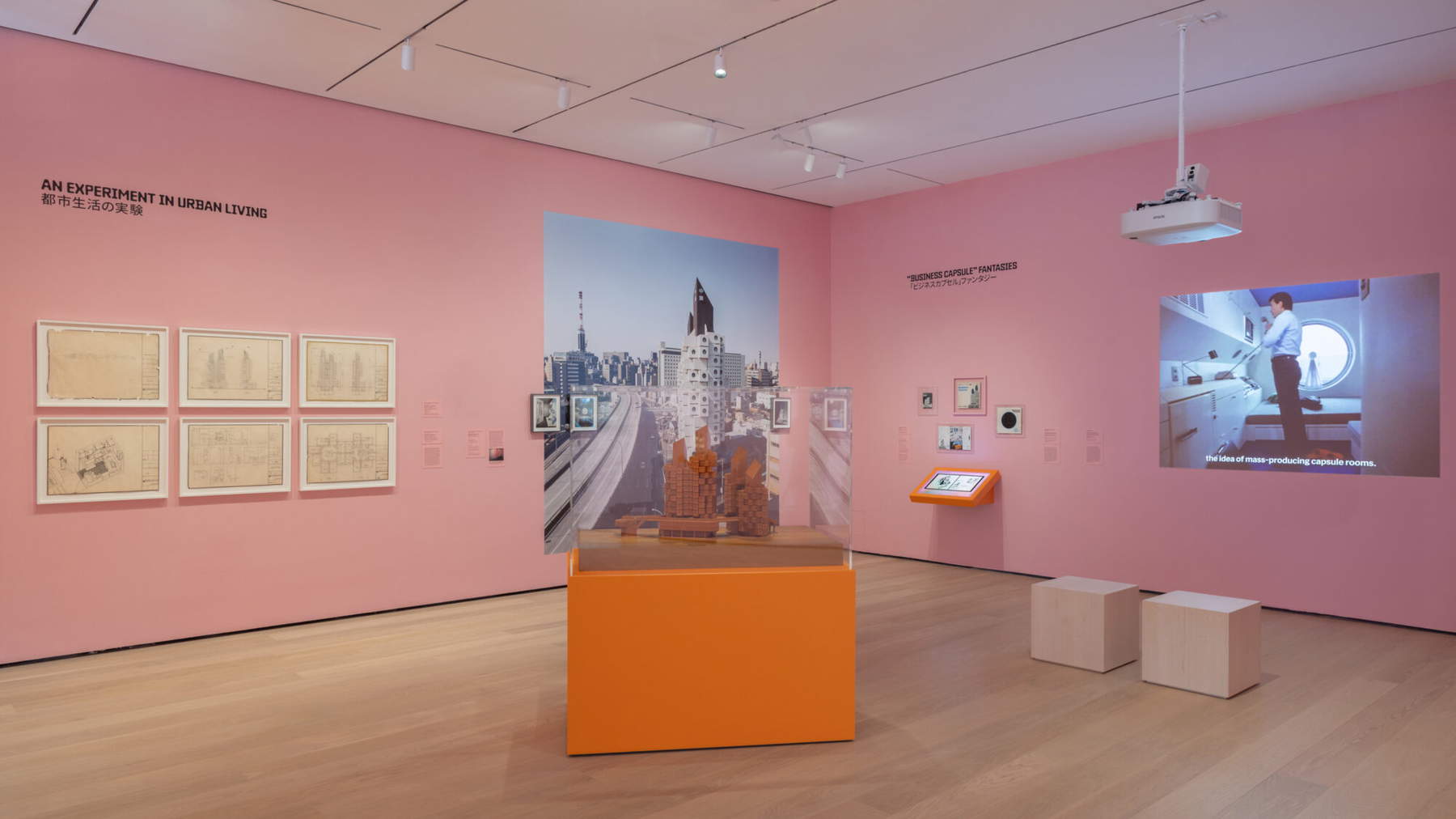
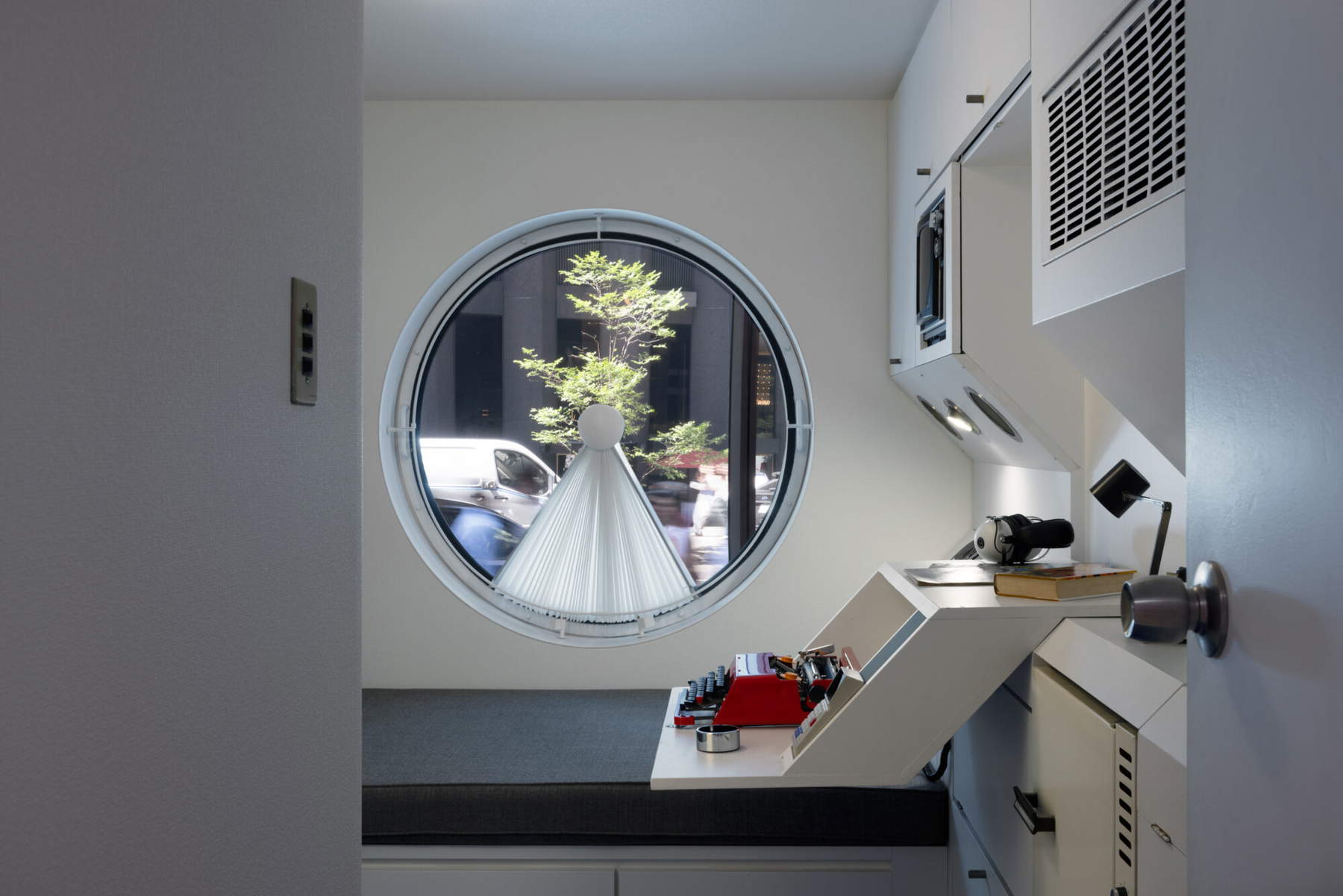
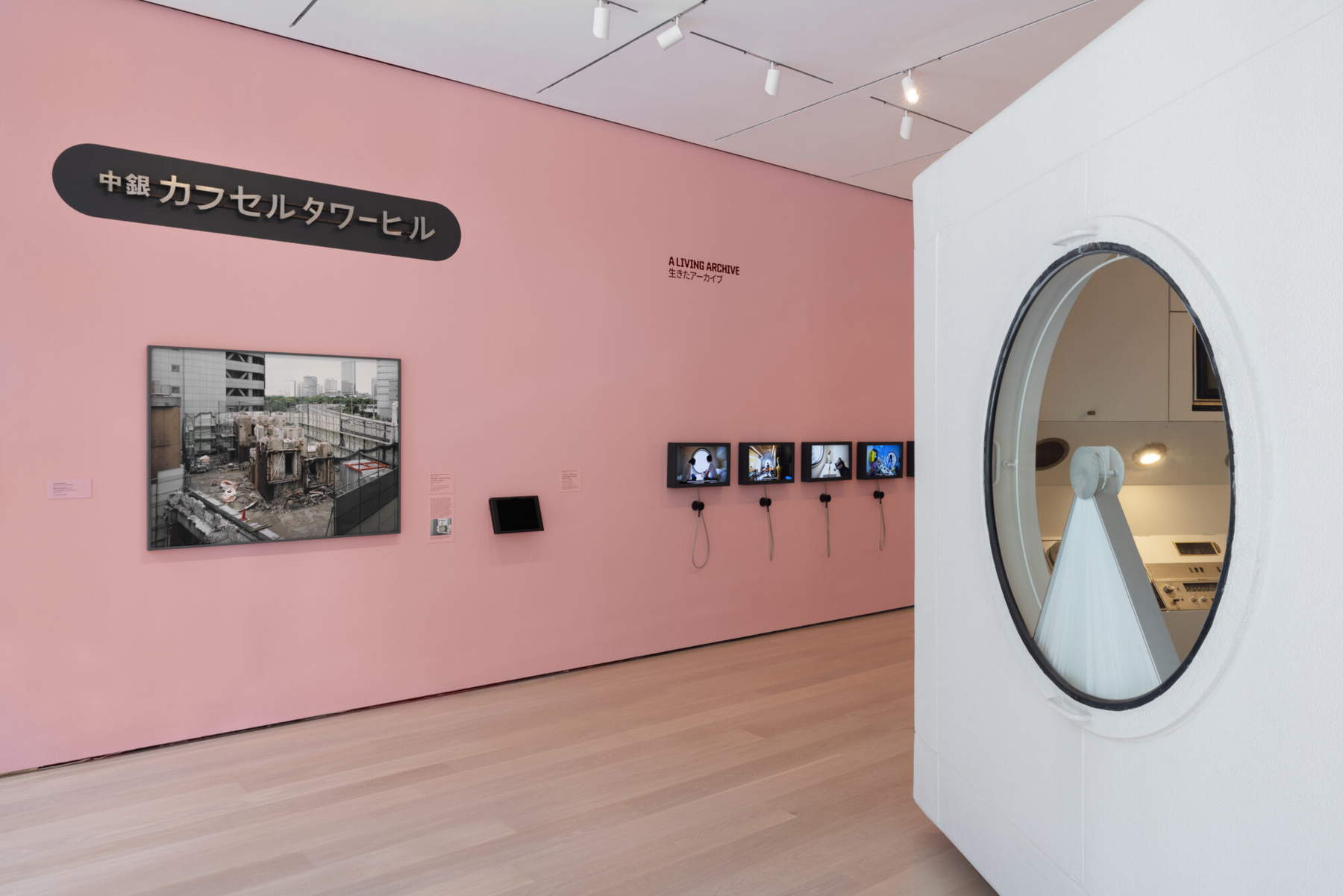
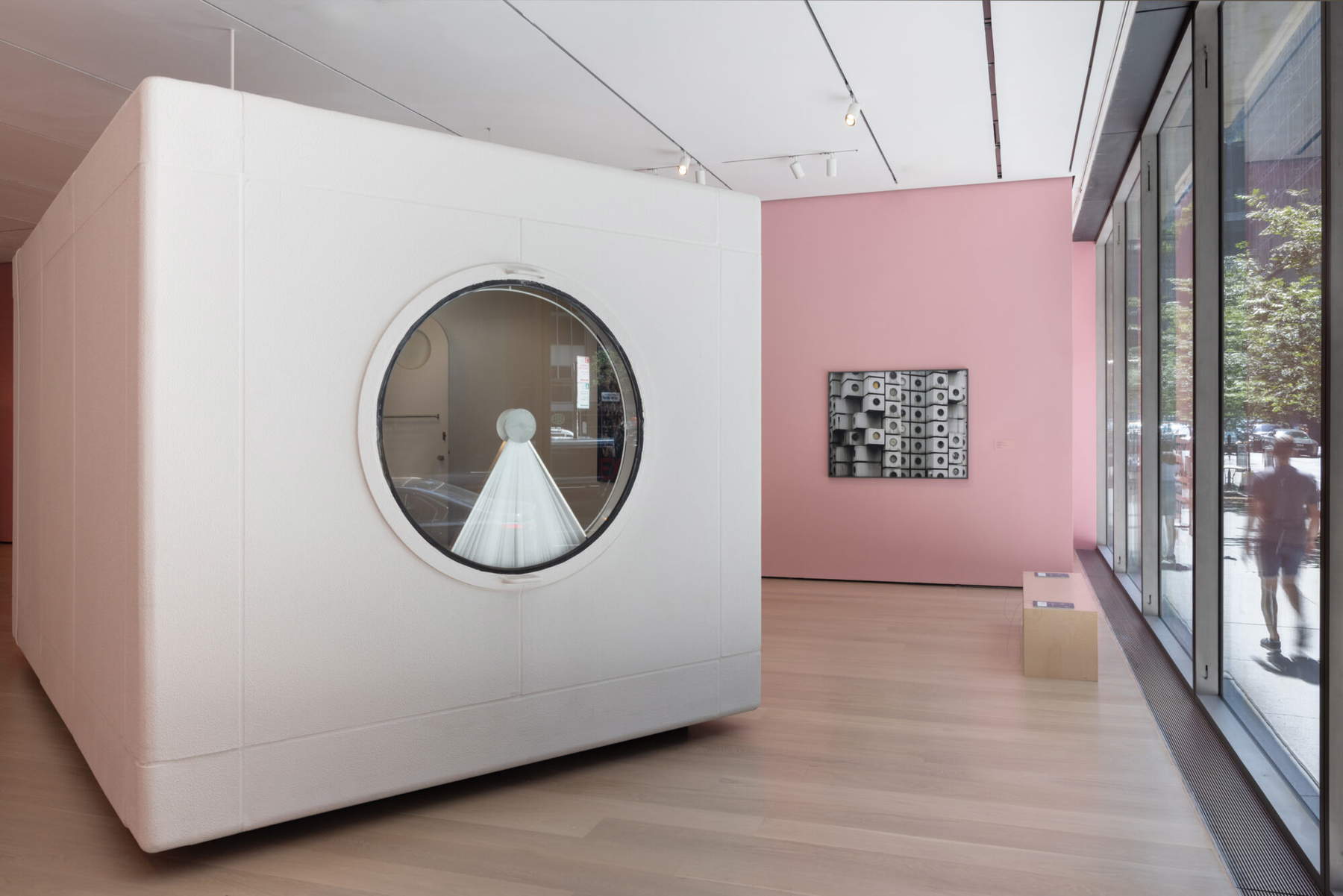
The exhibition does not simply reconstruct the building’s history. It complicates it. Alongside the capsule, a series of materials-photographs, films, documents, digital scans-tell the many lives of the tower, based not only on the initial utopian project, but also on what happened afterwards: the unforeseen uses, the daily transformations, the individual appropriations. Some capsules became homes, some became offices, and some became hybrid spaces. This plurality breaks the linear narrative of architecture as an accomplished project. The tower is no longer just Kurokawa’s idea, but a set of lives, of modifications, of detours. In this sense, the exhibition shifts the focus: from the object to its use, from form to its durability, from design to its transformation.
The most radical gesture, however, remains that of preservation. During the demolition some capsules, twenty-three in total, were saved, restored and distributed in different contexts. This process introduces a paradox: you preserve something that was designed to be temporary. Indeed, the Nakagin Capsule Tower was born from ametabolist idea: architecture as an evolving organism, capable of renewal through cycles of replacement. Today, however, what remains is fixed, stabilized, musealized. The capsule, which was meant to be interchangeable, becomes unique; the module, meant to be replaced, becomes a relic.
But perhaps the most interesting point of the exhibition is not the capsule itself, but what happens around it. Observing, one can see that people are approaching, leaning out, trying to look inside. Some photograph the circular porthole, others try to capture the compact, almost science fiction-like interior. Some stay longer, trying to imagine life inside that minimal space. And that is precisely where the work moves. Not in the capsule, but in the behavior it generates. In the way the audience tries to mentally reconstruct an absent building, a life it has never lived.
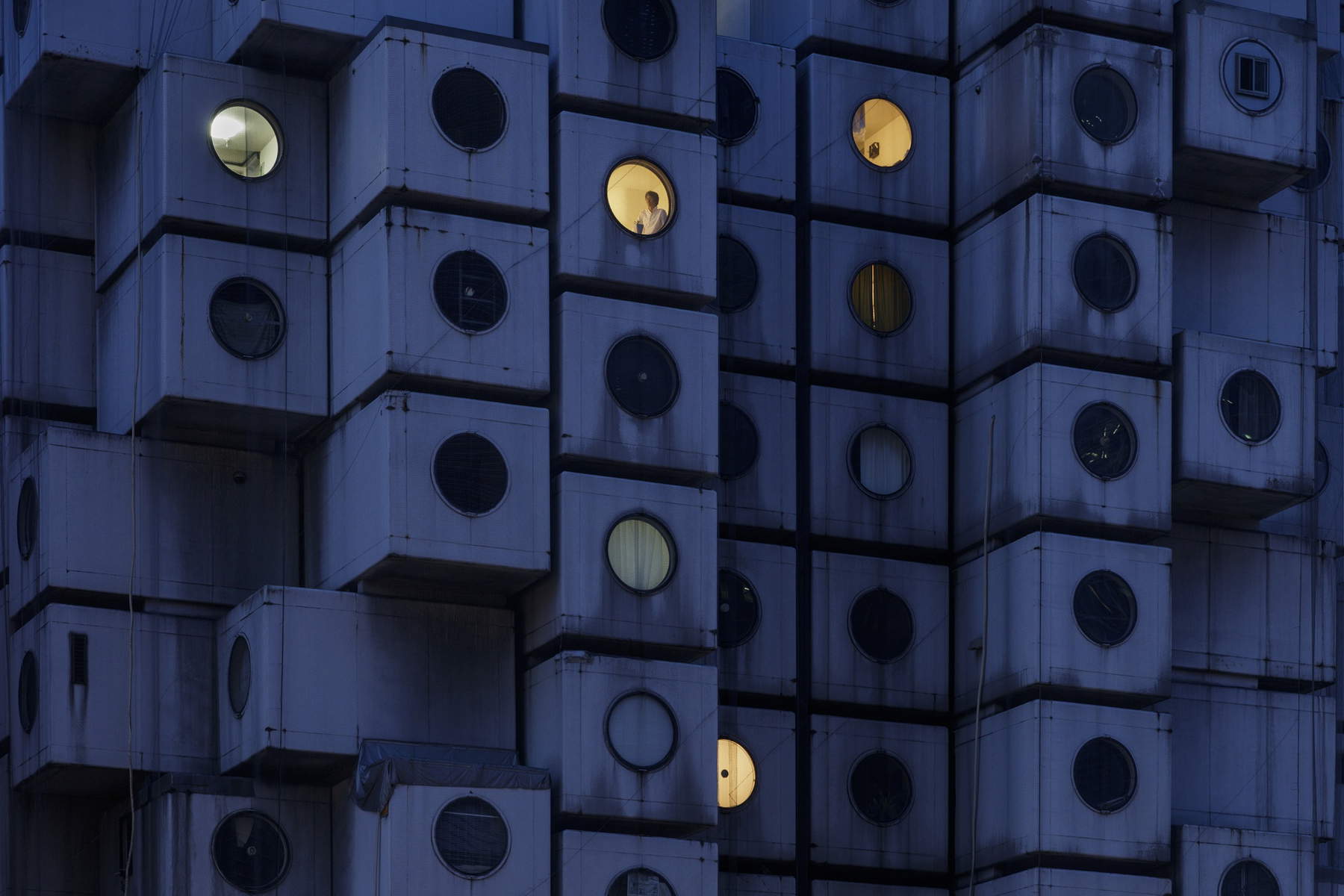
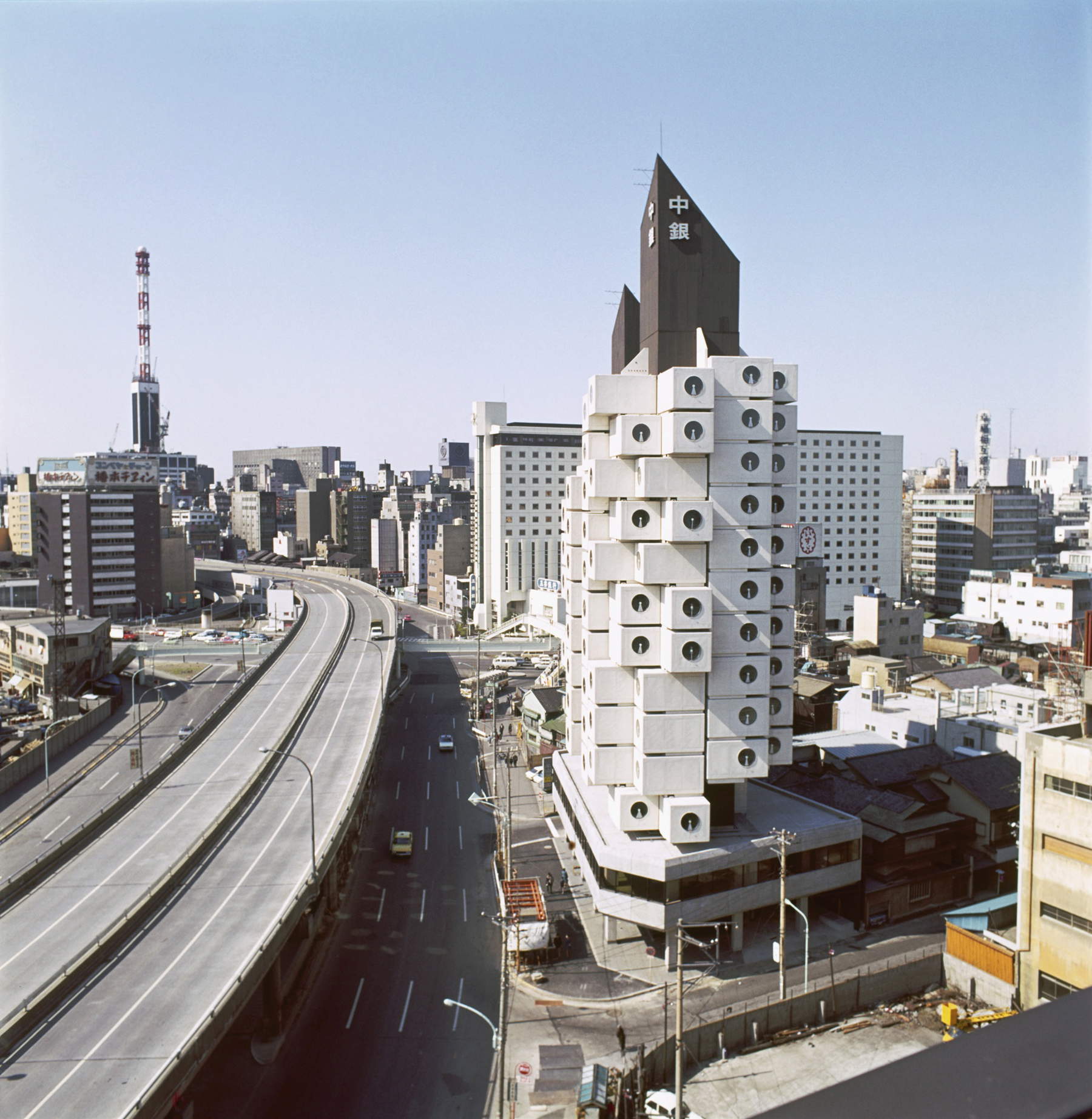
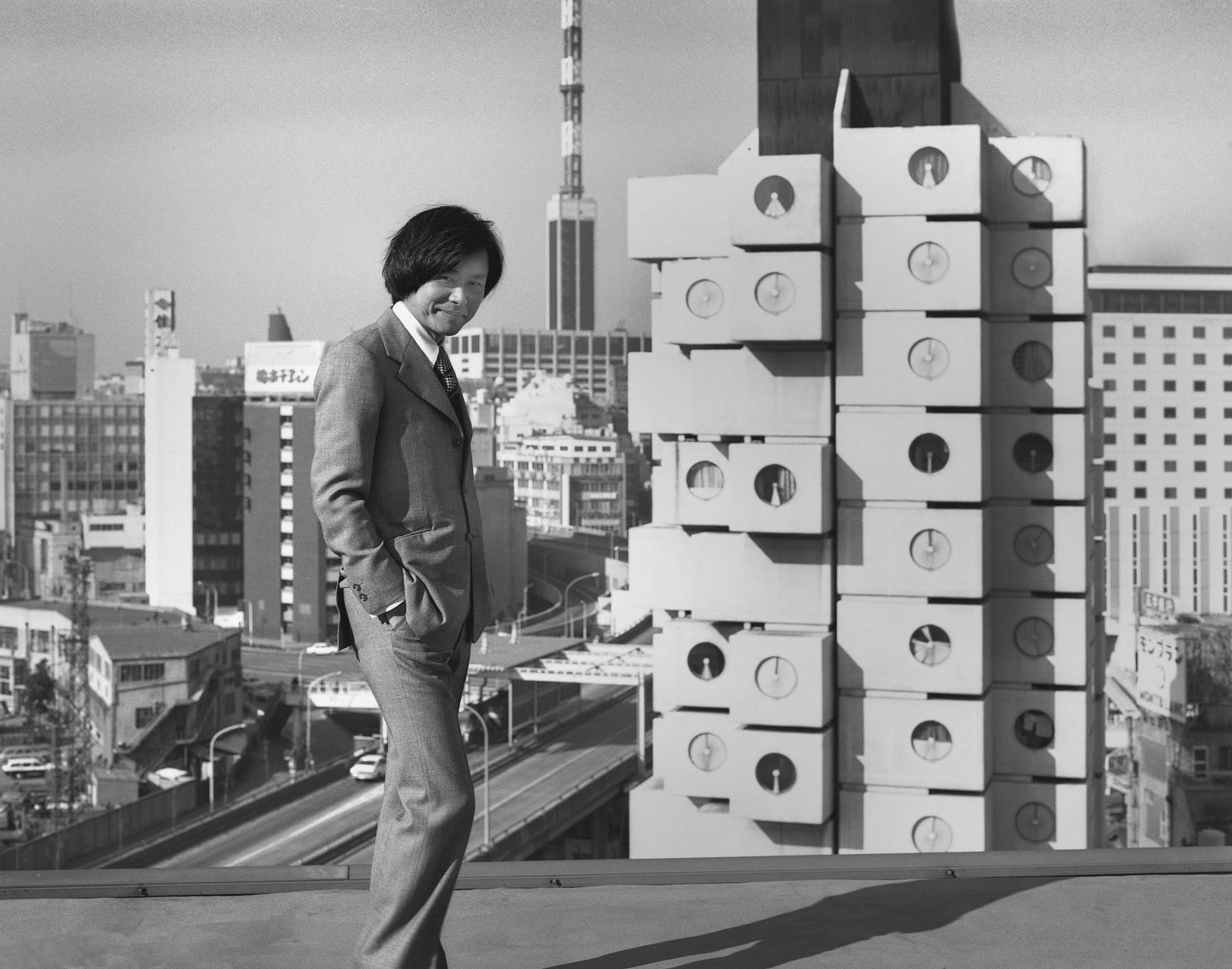
![Noritaka Minami, B1004 I, from the 1972 series (2010-2022 [2011]; archival pigment print, 101.6 × 127 cm) © Noritaka Minami](https://cdn.finestresullarte.info/rivista/immagini/2026/3496/noritaka-minami-b-10004.jpg "Noritaka Minami, B1004 I, from the 1972 series (2010-2022 [2011]; archival pigment print, 101.6 × 127 cm) © Noritaka Minami")
The capsule then becomes a threshold between inside and outside, between past and present, between real and imagined experience. In this sense, MoMA has succeeded in constructing a reflection on what it means to exhibit today, focusing not only on the display of objects but especially on the activation of relationships: between fragment and totality, between memory and present, between design and use. The Nakagin Capsule Tower, once dismantled, does not disappear. It multiplies. It exists in distributed, fragmented form, reconstructed through documents, images, testimonies. And the museum becomes the place where these dimensions meet, without being completely reassembled.
At the end of the visit a question remains suspended within us, namely, “Is that capsule still architecture, or has it become a museum object? Is it a living device or a historical fragment?” Perhaps the answer lies not in a definition, but in the tension between these possibilities, as the exhibition itself does not resolve the paradox. It exposes it. And precisely in this exposure, in this impossibility of closing meaning, lies its strength. For it forces one to think of architecture not as something stable, but as something that can continue to exist even after its own end, in unexpected, fragmentary, incomplete forms. Like a capsule that, once separated from its building, continues to carry within it all its lives.


The author of this article: Federica Schneck
Federica Schneck, classe 1996, è una giornalista specializzata in arte contemporanea. Laureata in Storia dell'arte contemporanea presso l'Università di Pisa, il suo lavoro nasce da una profonda fascinazione per il modo in cui le pratiche artistiche operano all’interno, e in contrapposizione, alle strutture sociali e politiche del nostro tempo. Si occupa delle trasformazioni del sistema dell'arte contemporanea, del dialogo tra ricerche emergenti e patrimonio culturale, del mercato, delle istituzioni e delle fiere internazionali. Alla scrittura giornalistica affianca quella critica, con testi per artisti, gallerie e collezioni private.Warning: the translation into English of the original Italian article was created using automatic tools. We undertake to review all articles, but we do not guarantee the total absence of inaccuracies in the translation due to the program. You can find the original by clicking on the ITA button. If you find any mistake,please contact us.




















 IT
IT FR
FR DE
DE ES
ES CN
CN


