




by Redazione 12/05/2026



Categories: Exhibitions / Disclaimer
From May 5 to November 14, 2026 Venice will host CHIHULY: Venice 2026, a project dedicated to Dale Chihuly with three new monumental works on the Grand Canal and an archival exhibition at Palazzo Loredan, in conjunction with the Biennale and The Venice Glass Week.

Thirty years after Chihuly Over Venice, the project that helped redefine the relationship between contemporary art and the Venetian glassmaking tradition in the 1990s, Dale Chihuly returns to the lagoon city with a new diffuse intervention conceived for the Grand Canal. The project, titled CHIHULY: Venice 2026, will be open to the public from May 5 to Nov. 14, 2026, and will bring together three new monumental works installed outdoors and an archival exhibition housed inside Palazzo Loredan, home of the Istituto Veneto di Scienze, Lettere ed Arti. The initiative, curated by Suzanne Geiss, is presented by Pilchuck Glass School and Frederik Meijer Gardens & Sculpture Park, in conjunction with the Venice Biennale and in collaboration with The Venice Glass Week 2026.
The project takes shape along the Grand Canal through three large-scale installations, all visible from the Accademia Bridge. The works expand the language developed by Chihuly over the course of a nearly 60-year career and are in the groove of the research begun with Chihuly Over Venice, made between 1995 and 1996. On that occasion the U.S. artist installed fourteen monumental chandeliers at different points in the city, creating one of his best-known interventions.


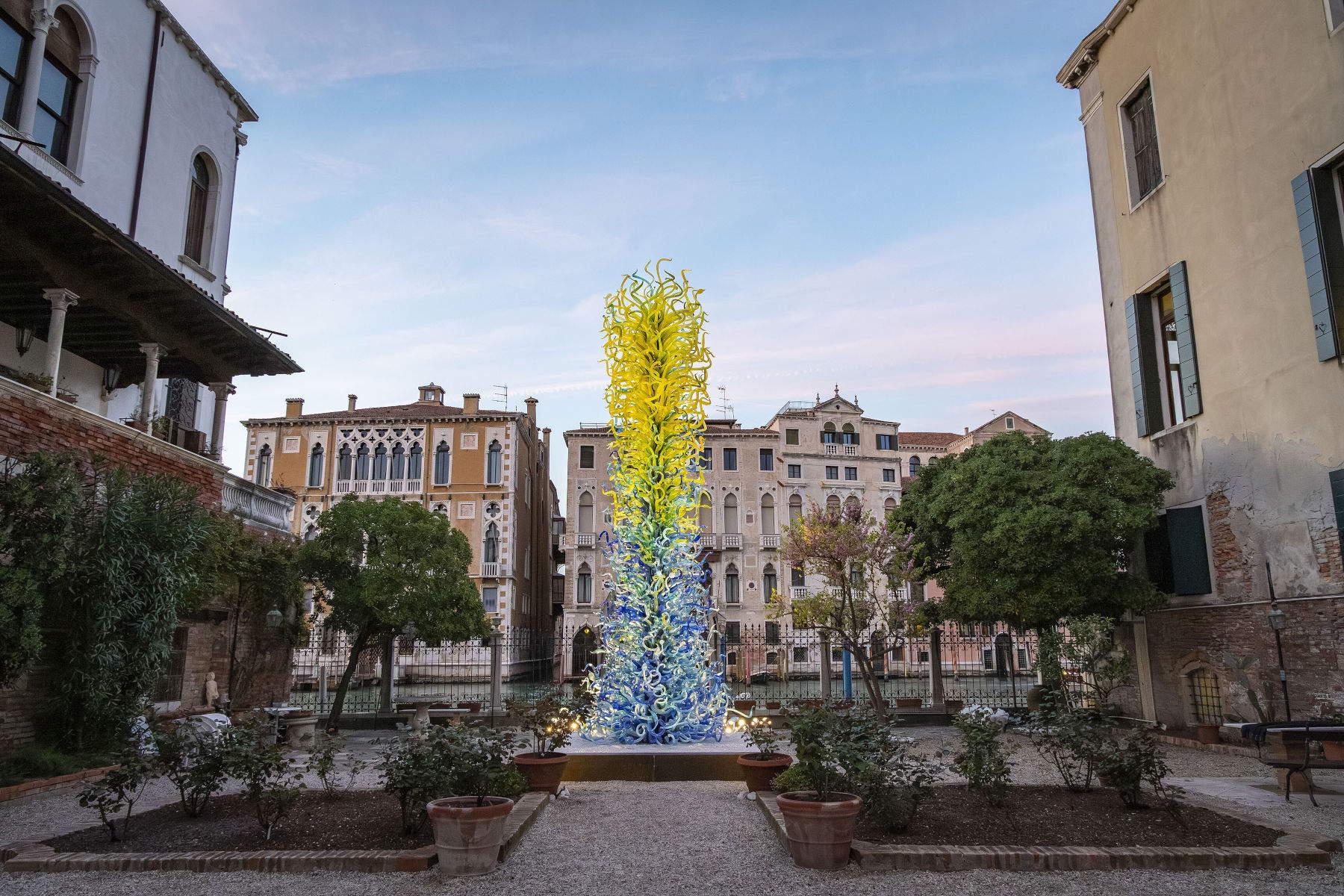
The first of the new works, Gold Tower of 2025, will be placed in the garden of Palazzo Franchetti. At 9.5 meters high, it is composed of blown glass and steel structure. The work unfolds vertically but features a dynamic construction that, according to the curatorial description by Suzanne Geiss, leads the eye along circular trajectories on the sculpture’s surface. The tower brings together a wide variety of glass forms and continues the artist’s experimentation with color and light refraction. Golden hues shift from honey-colored transparencies to more intense amber hues as light passes through the different elements creating perceptual variations that change throughout the day.
The second installation, Blue Green Tower of 2025, on the other hand, will be set up in Palazzo Balbi Valier. Again, the structure is made of blown glass and steel and reaches 8.1 meters in height. The composition uses a smaller number of elements, entrusting visual energy mainly to color transitions. Blue tones predominate in the lower part of the work, while green gradually emerges in the upper section, creating a chiaroscuro effect that varies according to natural light.
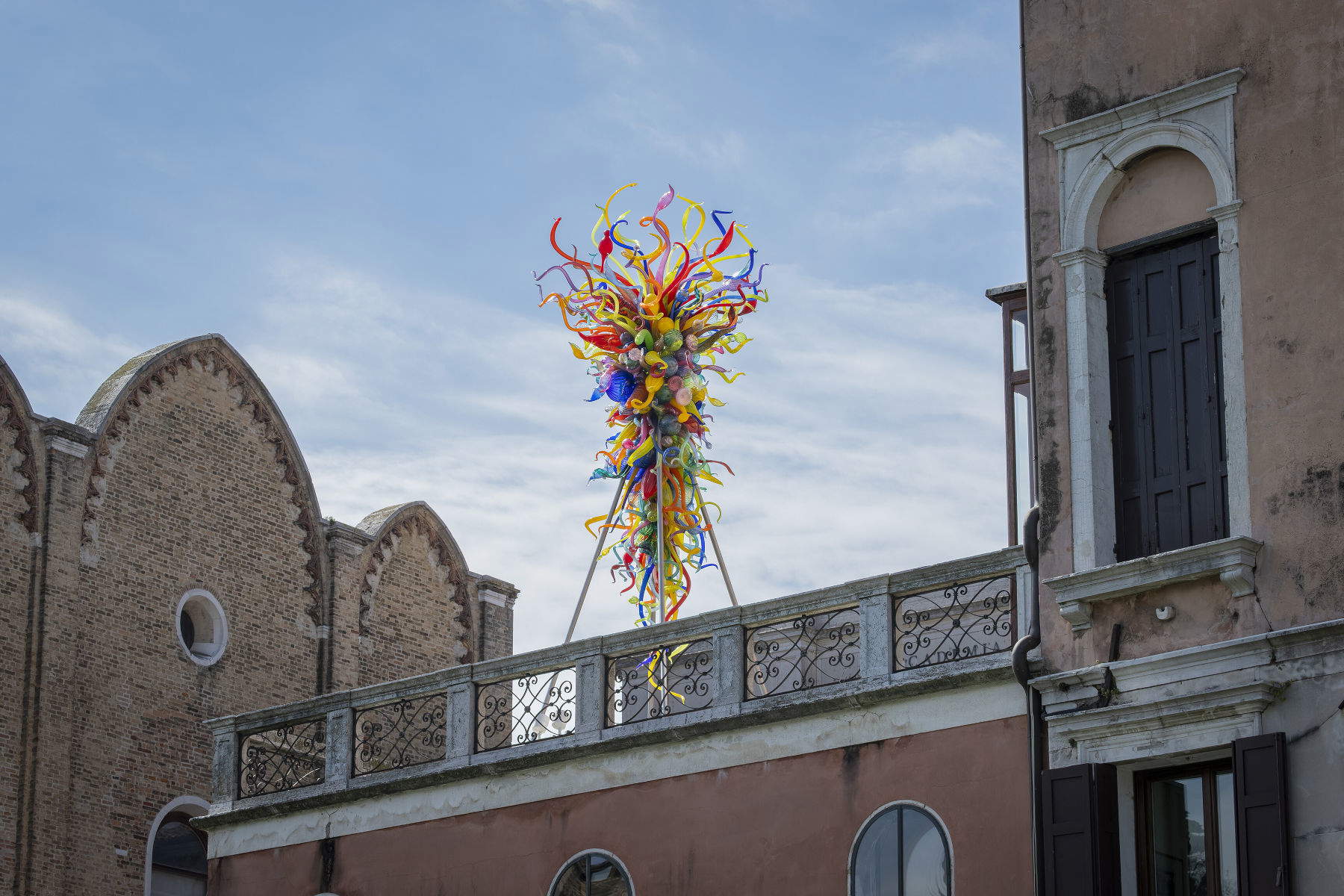
The third work in the project is 2025’s End of the Day Chandelier, which will be installed on the terrace of Palazzo Querini alla Carità, overlooking the Grand Canal, west of the Accademia Bridge. The work, 4.8 meters high, consists of a large suspended chandelier formed by hundreds of individually blown glass elements. Spirals, tendrils, bulbs and elongated shapes gather around a central axis, creating a composition kept in balance by the suspension. The color does not follow a harmonious order but is distributed in irregular groups of yellows, blues, reds and greens. The title is reminiscent of the traditional practice of glassblowing, which involves the reuse of leftovers at the end of the day.
Alongside the installations on the Grand Canal, CHIHULY: Venice 2026 will include a documentary and archival exhibition set up at Palazzo Loredan, home of the Istituto Veneto di Scienze, Lettere ed Arti, in Campo Santo Stefano. Curated by Suzanne Geiss, the exhibition will present materials related to Chihuly Over Venice along with documents tracing the author’s artistic activity more generally. Photographs, faxes, production notes and videos will reconstruct the creative and organizational process that made the 1996 project possible, from the international glassblowing sessions to the installation of chandeliers scattered throughout the city.
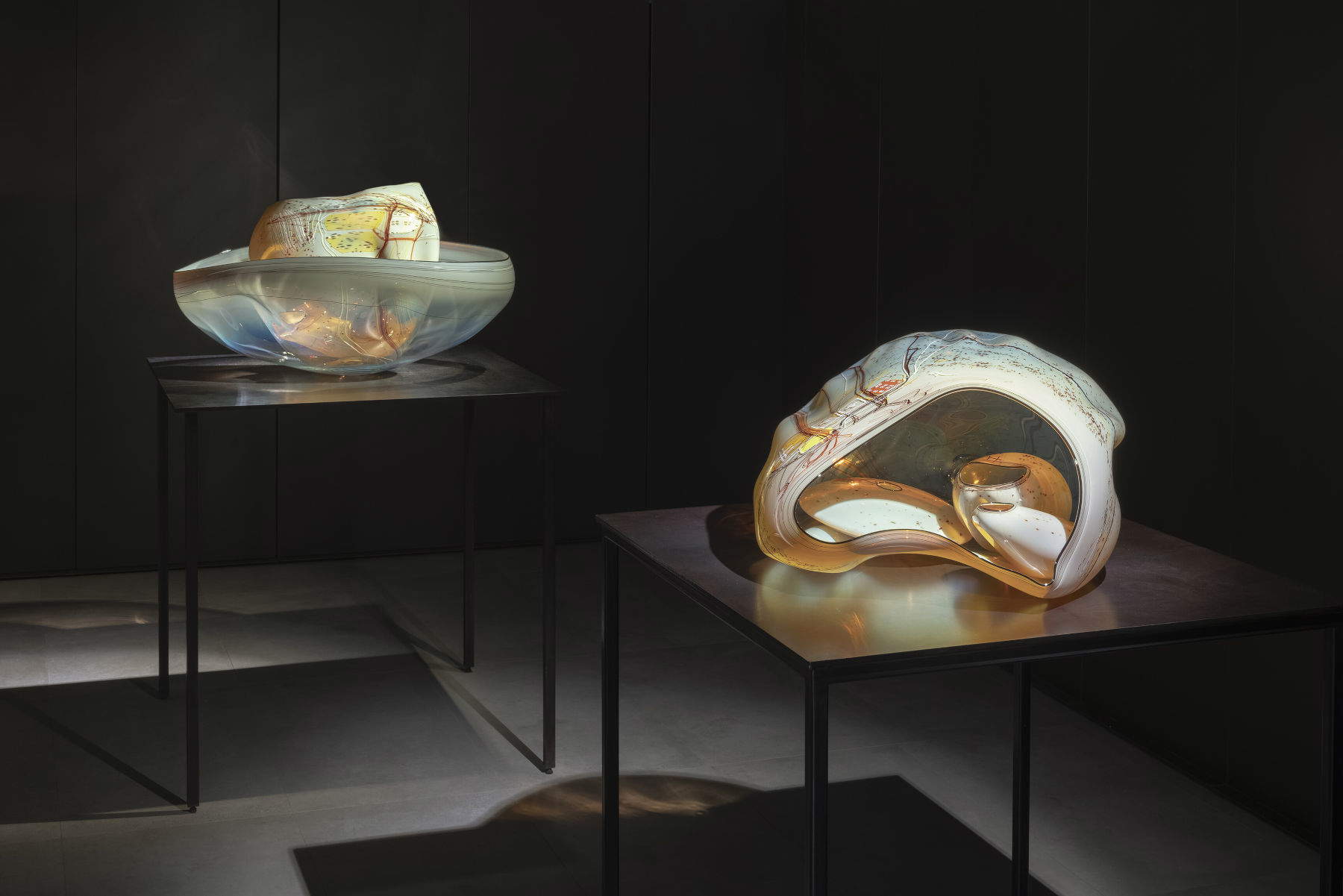
The exhibition will also give space to one of the series considered central to the artist’s research, the Golden Celadon Baskets, created in 2017 at Pilchuck Glass School on the occasion of the 40th anniversary of the Baskets series. The works, characterized by intentional deformations, asymmetries, and structural failure, stand in contrast to the technical tradition of Murano blowing based on formal precision. The exhibition will present these works as an example of the language developed by Chihuly in the context of American glass art culture.
A catalog edited by Suzanne Geiss will be published to accompany the project. The volume will contain prefaces by the initiators of the initiative, an introduction by Leslie Jackson Chihuly, and a new essay devoted to Venice’s influence on the artist’s production. The publication will also trace the history of Chihuly Over Venice and include images of new installations planned for 2026.
Sponsors of the initiative include the Pilchuck Glass School, an international center dedicated to art education in glass founded in Washington State. Located in Stanwood, in the foothills of the Cascade Mountains, the school holds annual courses and art residencies between May and September, involving students and artists from a variety of countries. Educational activities include intensive workshops on different glassmaking techniques and promote an approach based on experimentation and collective work.
The other project sponsor is the Frederik Meijer Gardens & Sculpture Park in Grand Rapids, Michigan, one of the leading botanical and sculpture parks in the United States. The institution houses an extensive permanent collection of works by international artists, including Magdalena Abakanowicz, El Anatsui, Louise Bourgeois, Alexander Calder, RichardSerra, Ai Weiwei, and Chihuly himself. In recent years, the complex has been named by USA TODAY as the best sculpture park in the United States in the “10 Best Readers’ Choice Awards.”
In parallel with the Venetian initiative, the Frederik Meijer Gardens & Sculpture Park opened a major exhibition dedicated to the artist, titled CHIHULY at Meijer Gardens, on May 2, 2026. It occupies both the outdoor spaces and indoor galleries of the complex and presents a selection spanning more than four decades of her work. The outdoor installations include large sculptures, the famous Reeds and other site-specific works set in the landscape of the park, while the indoor path brings together historical series such as Baskets, Macchia, Seaforms, Putti, Ikebana, Persians, Venetians, Cylinders and Rotolo, along with preparatory drawings documenting the artist’s creative process.
Statements
“These three new sculptures pay homage to Venice, from which I have drawn inspiration for 60 years now. It is an honor to return to this beautiful city that has had such a profound impact on my identity as an artist,” said Dale Chihuly.
“Is there perhaps a better time to return to Venice, a city that has transformed Dale’s life and career, than the 30th anniversary of Chihuly Over Venice?It will be an opportunity to reflect on his legacy, the impact he has had and the inspiration we have all drawn from this extraordinary city,” said Leslie Jackson Chihuly, president and CEO of Chihuly Studio and director of the Venice Project in 1996.
“Venice has long been a place of transformation for Chihuly, where his approach to creation has undergone a radical shift,” said Suzanne Geiss, curator of Chihuly’s exhibition at the Veneto Institute of Science, Letters and Arts at Palazzo Loredan. “CHIHULY: Venice 2026 returns to that moment with greater intensity, focusing on decades of experimentation. The sculptures on the Grand Canal amplify the ambition and research that characterized Chihuly Over Venice in 1996, while the exhibition at the Veneto Institute foregrounds the collaborative, process-oriented nature of his artistic production.”
“Pilchuck Glass School is thrilled to support Chihuly: Venice 2026,” said Donna Davies, Executive Director. “Pilchuck exists because of Dale and his indomitable generosity and vision. The inspiration and collaboration from his time in Venice paved the way for him to establish a school based on the principles of collaboration, experimentation and exploration. Since Pilchuck’s first summer workshop, held in 1971 under a tent in the hills, the meeting of artistic traditions from around the world has been a hallmark of the Pilchuck experience. It is now a globally acclaimed cutting-edge center, carrying on this global exchange of ideas in the wake of Dale’s vision, inspiration and international relevance.”
“From Grand Rapids to the Grand Canal, beginning in May, Meijer Gardens will celebrate the inimitable art of Dale Chihuly,” said Charles Burke, president and CEO of Frederik Meijer Gardens & Sculpture Park. “In Grand Rapids, we will trace the breadth and depth of artistic creation over the past 40 years. On the Grand Canal, we will pay tribute to the joy and beauty inherent in Dale, his work and his art.”
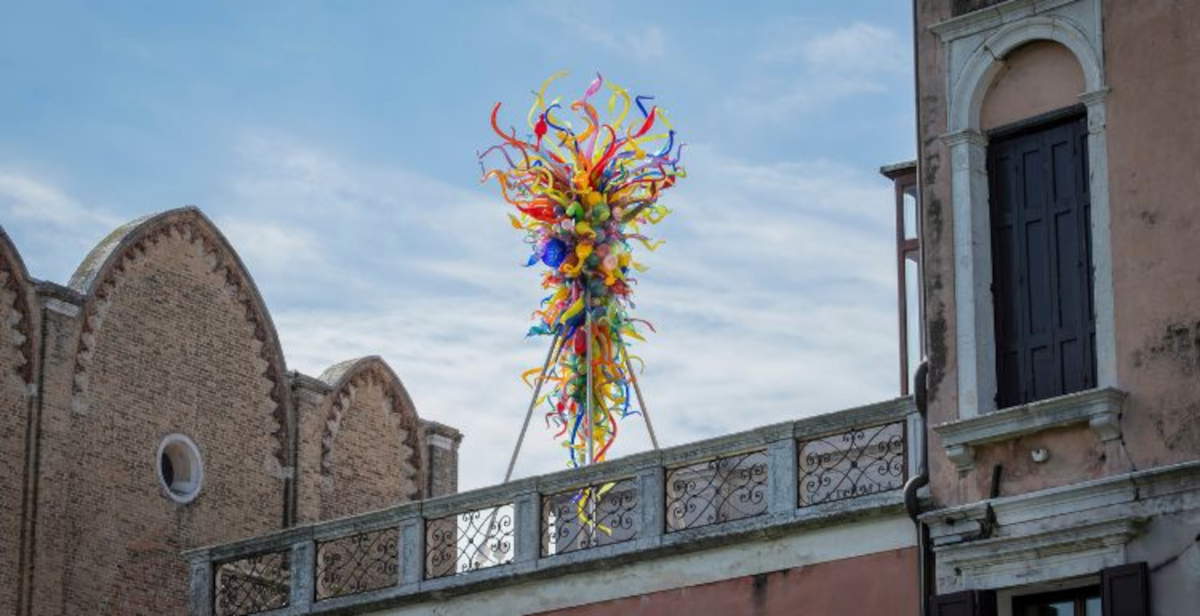 |
| Chihuly returns to Venice: three monumental installations on the Grand Canal in 2026 |
Warning: the translation into English of the original Italian article was created using automatic tools. We undertake to review all articles, but we do not guarantee the total absence of inaccuracies in the translation due to the program. You can find the original by clicking on the ITA button. If you find any mistake,please contact us.