




In Florence, in the spaces of the Sala delle Esposizioni of theAccademia delle Arti del Disegno at Via Ricasoli 68, the exhibition PANE by Armenian-born artist Narine Arakelian is on view to the public until May 30. The exhibition project, curated by Inna Khegay, proposes an investigation into the meaning of nourishment in contemporary times, interweaving references to cultural memory, the spiritual dimension and digital and financial languages.
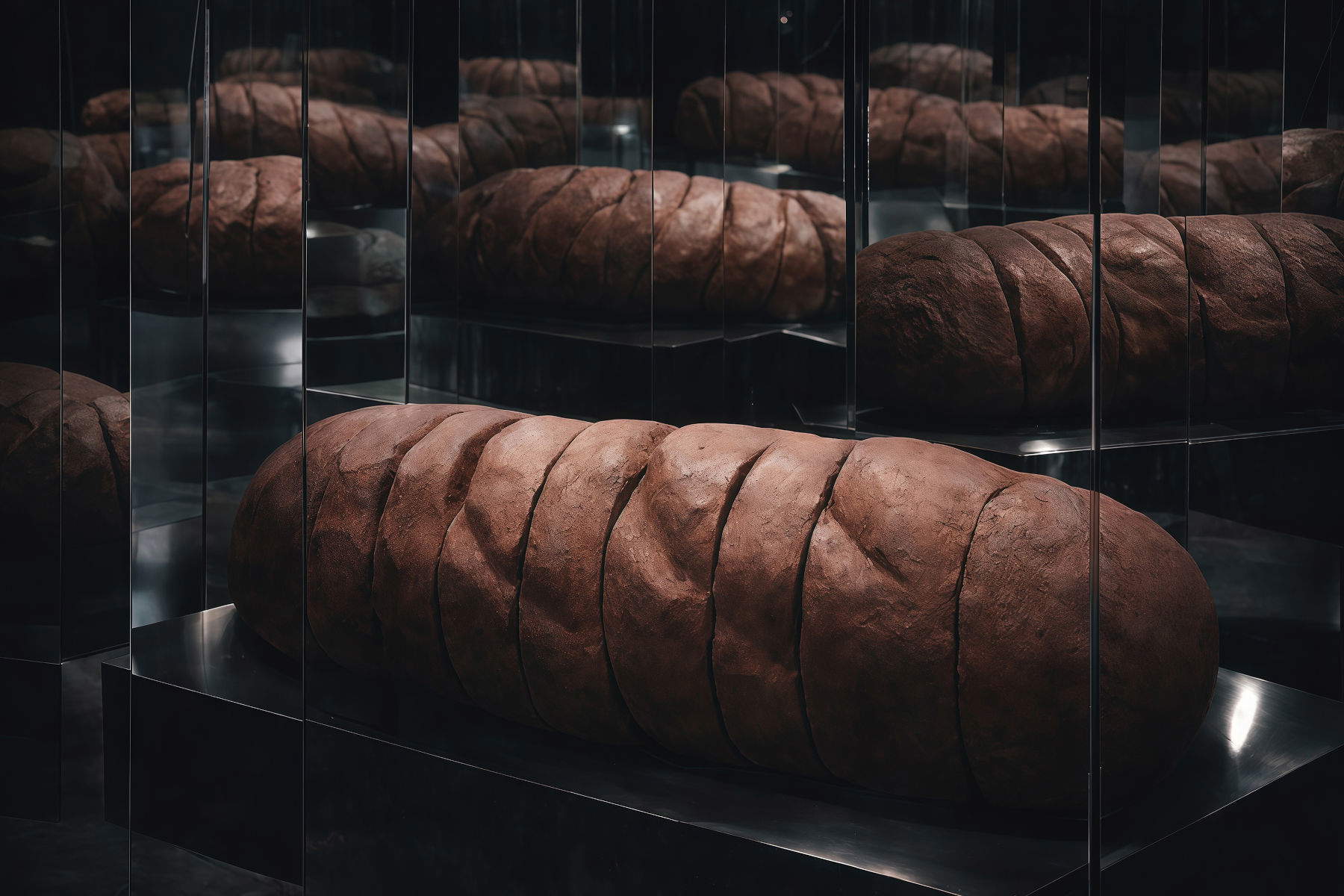
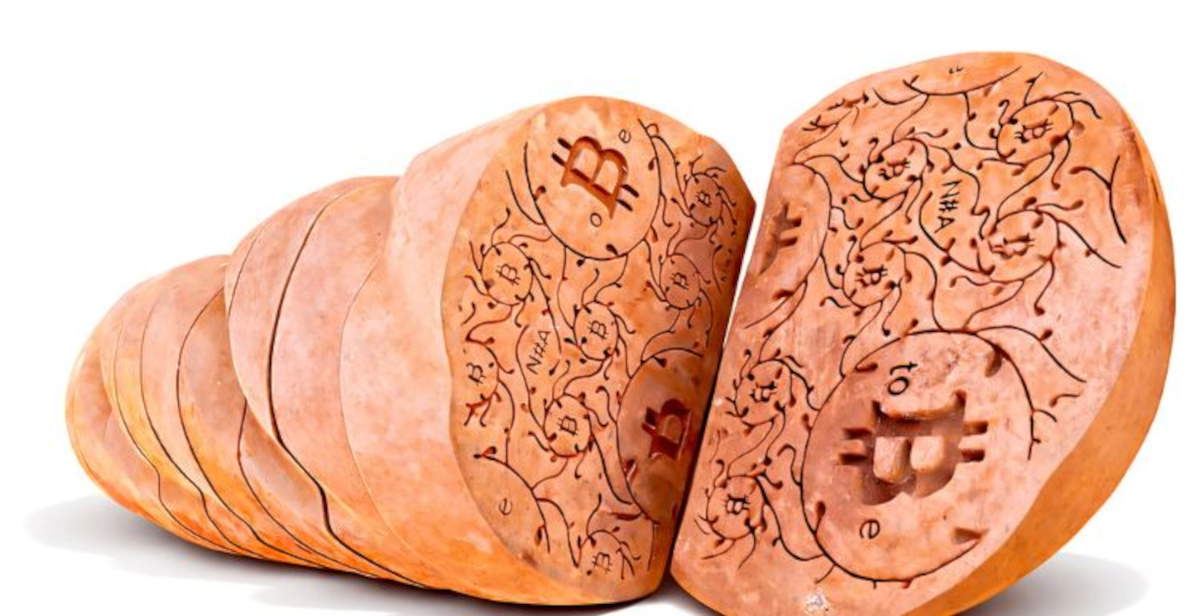
Central to the exhibition is the question of what “daily bread” represents today in a context in which material resources overlap with immaterial and speculative economies. The main work, also titled BREAD, takes the form of a large pink tufa sculpture from Armenia, a land with an ancient Christian tradition. The work is divided into thirteen parts, yet hinting at the overall unity of the form, and explicitly recalls the tradition of the Last Supper and the ritual dimension of the Eucharist.
The sculpture takes the form of a “stone bread,” an inedible object that transforms food into symbol and nourishment into questioning. The broken stone is configured as a visual device that puts the categories of sacrifice and wholeness in tension, while its material inaccessibility becomes a central conceptual element. The work solicits a reflection on the possibility of recovering the value of symbolic versus purely material exchange, insisting on the rift between real need and contemporary abstract systems of compensation. Engraved on the surface of the sculpture are signs and patterns that refer to codes of digital culture and references traceable to the imagery of cryptocurrencies, including the Bitcoin symbol. Textual quotations, including “to be or not to be,” appear alongside these elements, contributing to the construction of a layered visual lexicon.
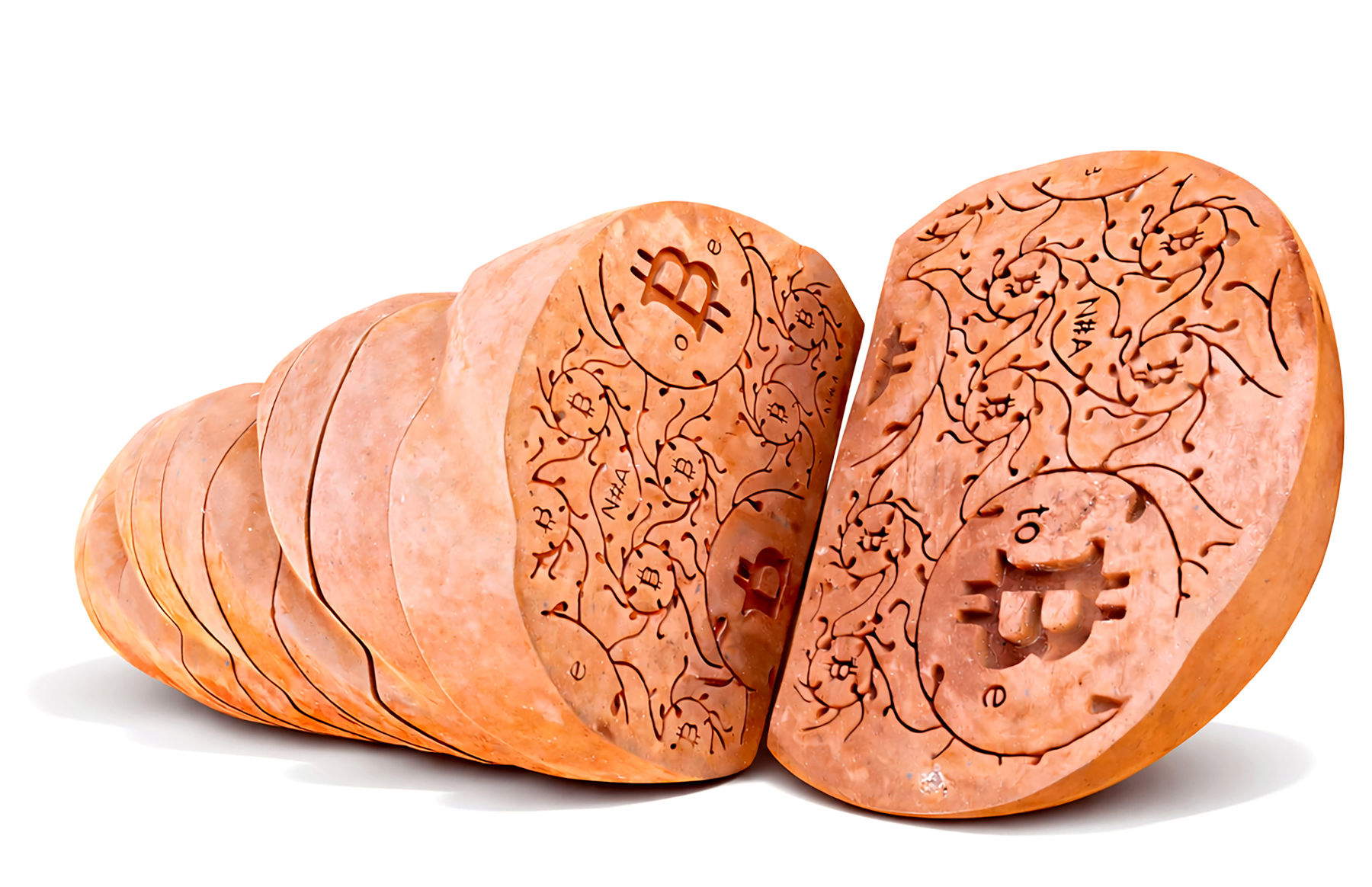
“They do not have a decorative function but construct a language capable of revealing a contemporary rupture: Bitcoin in my work is not a subject in itself,” says the artist. It functions as a sign of a belief in abstract systems that promise security and freedom but remain disconnected from the material conditions of life. Bread is transformed into a stone relic carved from Armenian tuff, a volcanic material historically linked to sacred architecture, collective memory and resistance. Through this work, I connect the excavated spaces of Matera to Armenian stone traditions, reflecting on value systems, survival and shared responsibility."
The exhibition project is part of a research that Arakelian has been pursuing for years on issues of social justice, identity and cultural memory, through a language that spans sculpture, installation, video and digital technologies, including experiments related to artificial intelligence. His artistic practice reinterprets symbols and archetypes of human history while observing the cultural and technological transformations of the present. Previous interventions include the performance made during the 2018 “Velvet Revolution,” which was presented as part of the 2019 Venice Biennale, where the artist was present at both the Armenian Pavilion and Palazzo Contarini del Bovolo, and in which he had created a sound performance along the Venetian canals using pots and pans.
A further level of interpretation of the exhibition concerns the origin of the project, which is rooted in a comparison between Armenian stone architecture and the excavated architecture of Matera. The artist identifies in both experiences a common principle concerning the construction of space through subtraction rather than addition. The rock dwellings and sacred spaces of Matera thus become a reference for a reflection on the transformation of absence into active form, in which emptiness takes on generative value. Matera, in particular, represents a place of in-depth study for Arakelian, especially because of the community dimension related to the production of bread in public ovens and its circulation among the inhabitants of the Sassi. In this context, bread assumed a value that went beyond its food function, configuring itself as an element of survival and social cohesion.
The exhibition also establishes a direct dialogue with the city of Florence and its history. As historian Zeffiro Ciuffoletti points out, bread represents a central element in the city’s civic and cultural memory. In medieval times, institutions such as Orsanmichele performed the function of market and public granary, guaranteeing the supply of grain in situations of food crisis. Bread, in this context, was not only nourishment, but also an instrument of social stability and collective protection.
The symbolic dimension of bread also emerges in the pictorial cycles of the Florentine cenacles, such as the Cenacle of Saint Apollonia and the Cenacle of All Saints, where the gesture of sharing takes on spiritual and communal value. In such depictions of the Last Supper, as well as in the tradition of welcoming the poor and pilgrims, bread becomes a sign of mercy and relationship. The Arakelian exhibition thus fits into this historical layering, activating a confrontation between local memory and global reflection.
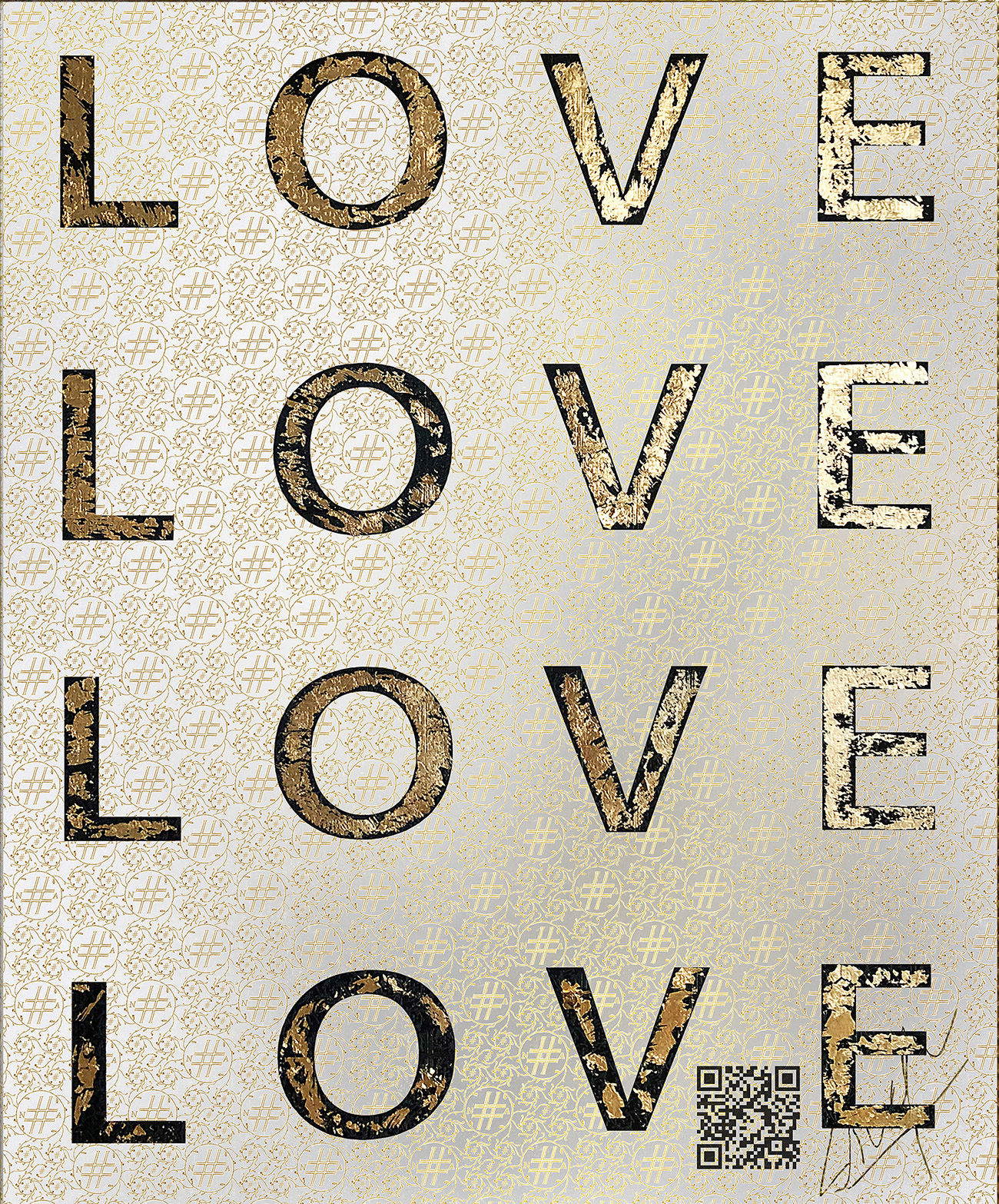
The exhibition also includes a selection of recent works. These include the video Subconscious Rebirth from 2019, along with works presented in 2024 at the Yerevan Museum of Modern Art. Among the works on display are the polyptych Letters, the triptych LOVE CORE HOPE, and the diptych Aphrodite. In these productions the TO ₿E sign recurs, linking existential dimensions and digital languages, maintaining a continuity with the research on the overlap between symbol and economic system.
“Arakelian’s artistic manifestations communicate apprehension, but also confidence in the resilience of humanity, to which art can and should make a decisive contribution. A tension that runs through the entire project, suspended between critical awareness and openness to transformation,” says Cristina Acidini, president of the Accademia delle Arti del Disegno.
“The form of a bread divided into thirteen parts is an obvious reference to the Last Supper. It is a work that activates in the viewer a series of reflections and considerations on the ’daily bread’ (of today) for the body and the spirit. A must-see exhibition,” adds Luca Macchi, president Painting Class Accademia delle Arti del Disegno.
“The exhibition takes the form of a reflection on the meaning of ’daily bread’ in the 21st century, questioning the relationship between material resources and symbolic systems. In the ’Our Father,’ bread is both concrete nourishment and spiritual substance, and Arakelian’s project reactivates this ambivalence, posing an urgent question: what form of shared nourishment is still possible today?” emphasizes Inna Khegay, curator of the exhibition.
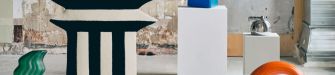
“The installation,” concludes Jan Bigazzi, curator of the exhibition, “accompanies the visitor into a dimension suspended between physical presence and symbolic reflection, where stone, light, and the mirrored surface of the bases amplify the perception of an image that is both fragile and ritualistic. The choice of minimal and rarefied light restores an almost sacral character to the space, transforming the fragmentation of bread into an experience of collective contemplation between memory, spirituality and tensions of the present.”
 |
| In Florence, Narine Arakelian investigates the contemporary meaning of nourishment |

Warning: the translation into English of the original Italian article was created using automatic tools. We undertake to review all articles, but we do not guarantee the total absence of inaccuracies in the translation due to the program. You can find the original by clicking on the ITA button. If you find any mistake,please contact us.



















 IT
IT FR
FR DE
DE ES
ES CN
CN


