



by Redazione 03/06/2026



Categories: Exhibitions / Disclaimer
From Oct. 29, 2026 to April 4, 2027 Castello di Rivoli, Fondazione Merz and GAM in Turin present Marisa Merz - The Dance of the Hours, a three-part exhibition tracing the artist's work on the centenary of her birth, with previously unseen works, historical reconstructions and restored works.
Castello di Rivoli Museo d’Arte Contemporanea, Fondazione Merz and GAM - Galleria Civica d’Arte Moderna e Contemporanea di Torino are collaborating on Marisa Merz - La danza delle ore, a three-act exhibition dedicated to the centenary of the birth of artist Marisa Merz. The exhibition, scheduled from Oct. 29, 2026 to April 4, 2027 and supported by the CRT Foundation, aims to offer an extended rereading of Marisa Merz’s production through a path distributed across the three city institutions.
Curated by Chiara Bertola, Sébastien Delot, Francesco Manacorda, Beatrice Merz, Chiara Parisi and Marianna Vecellio, the exhibition addresses different aspects of the artist’s practice.
Conceived to trace the work and legacy of the artist, who was born in Turin on May 23, 1926, the exhibition is presented as a wide-ranging retrospective that brings together a set of works from different contexts, including previously unpublished works. The aim is to restore the complexity of a research developed over decades. The three exhibition chapters delve into the relationship with materials and the creative process, the role of daily time as a generative dimension, the home understood as a laboratory of transformation, and the notion of space as a reality at once physical and metaphysical. The whole project aims to highlight the open and changing character of Marisa Merz’s work, emphasizing its continuous evolution.


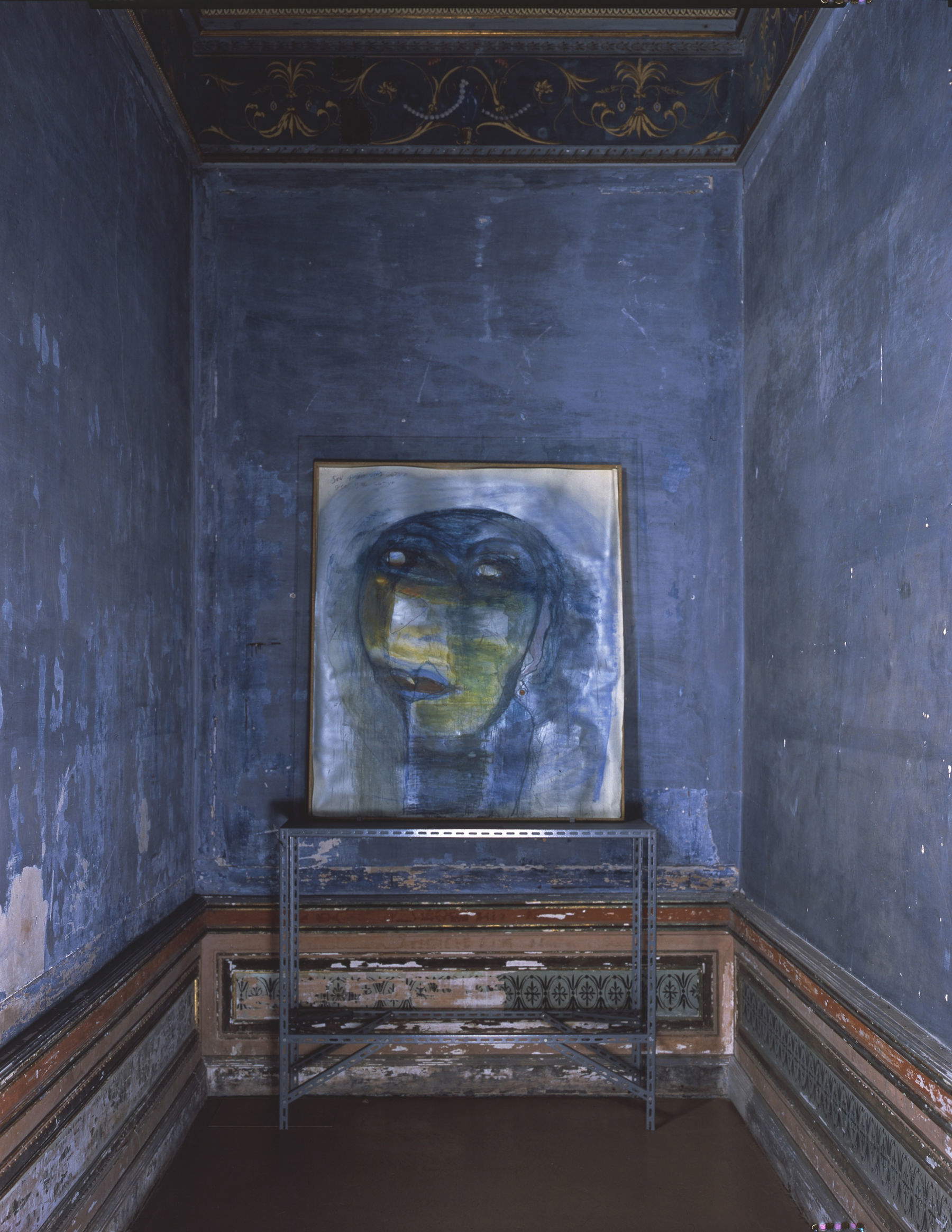
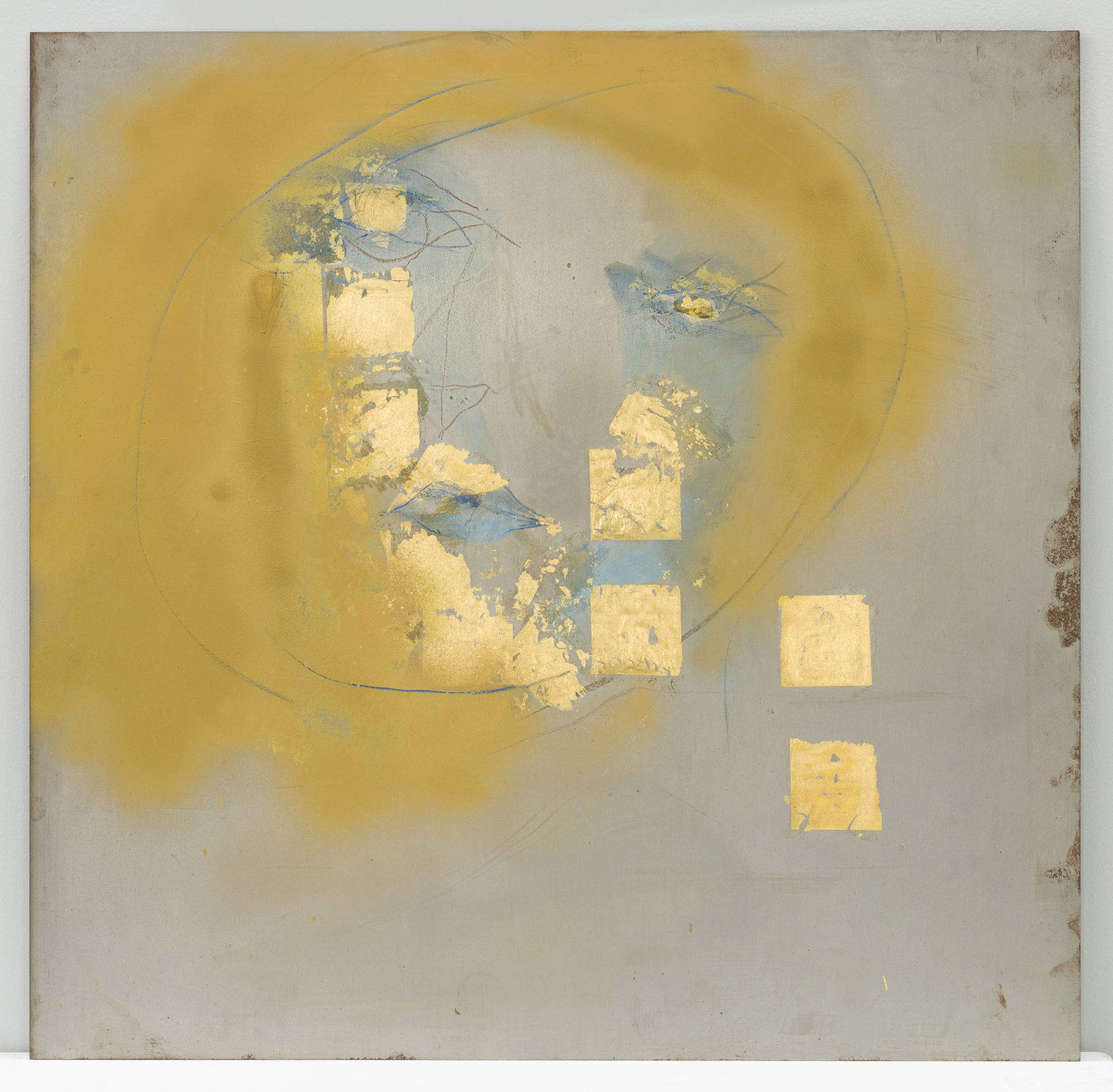
At the Castello di Rivoli, where the project is curated by Francesco Manacorda and Marianna Vecellio, the core of the exhibition will consist of the reconstruction of E il naufragar m’è dolce in questo mare, an installation first presented in 1980 at the Turin gallery Tucci Russo and later reproposed in the same year at the 39th Venice Visual Arts Biennale. The work will be located in the Manica Lunga on the third floor of the museum and will serve as a starting point for an investigation of some recurring themes in the artist’s research, such as the tension toward the manifestation of the invisible and the ability to give visual form to metaphysical dimensions that transcend the appearance of reality.
As part of what the curators call an augmented retrospective, Castello di Rivoli will also involve a group of contemporary women artists whose work presents elements of continuity with Marisa Merz’s practice and vision. Participating in the project are Leonor Antunes, Micol Assaël, Beatrice Bonino, Miriam Cahn, Tacita Dean, Thea Djordjadze, Lara Favaretto, Daiga Grantina, Armineh Negahdari, and Solange Pessoa.
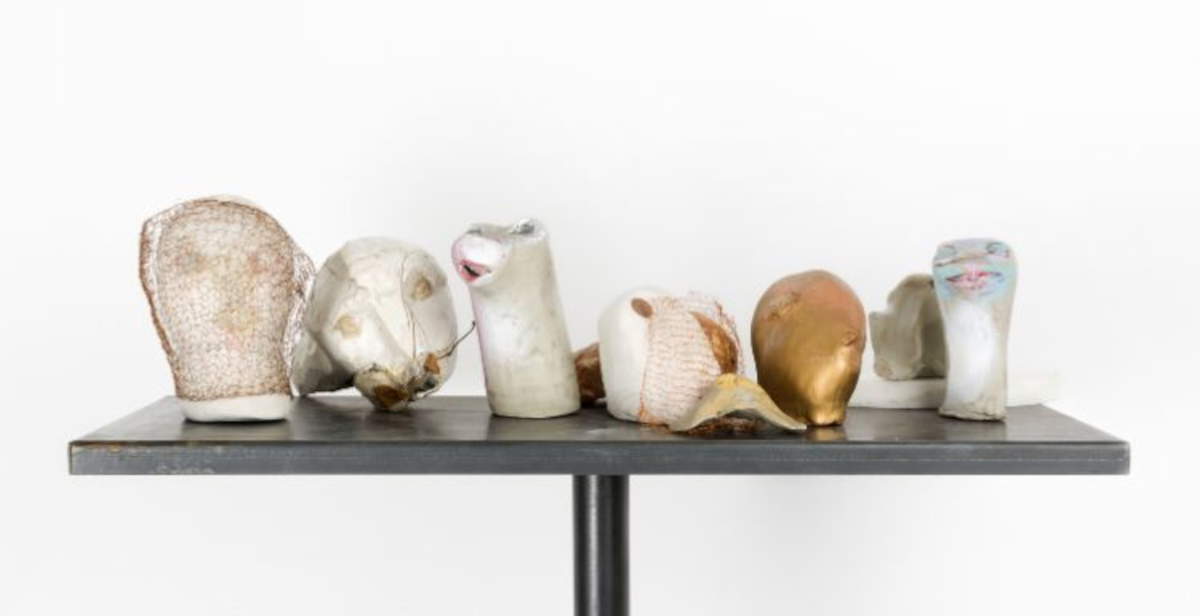
Instead, the Merz Foundation will host the chapter curated by Beatrice Merz and Sébastien Delot. It will be built around the concepts of process and transformation, focusing on the ways in which Marisa Merz selected, arranged and related materials and objects. Central to the reflection will be the particular balance that characterizes her works, often based on compositions that may appear unstable but reveal a precise internal organization. Through works sometimes perceived as ephemeral, the path will highlight the process of continuous variation and refinement that distinguishes her research.
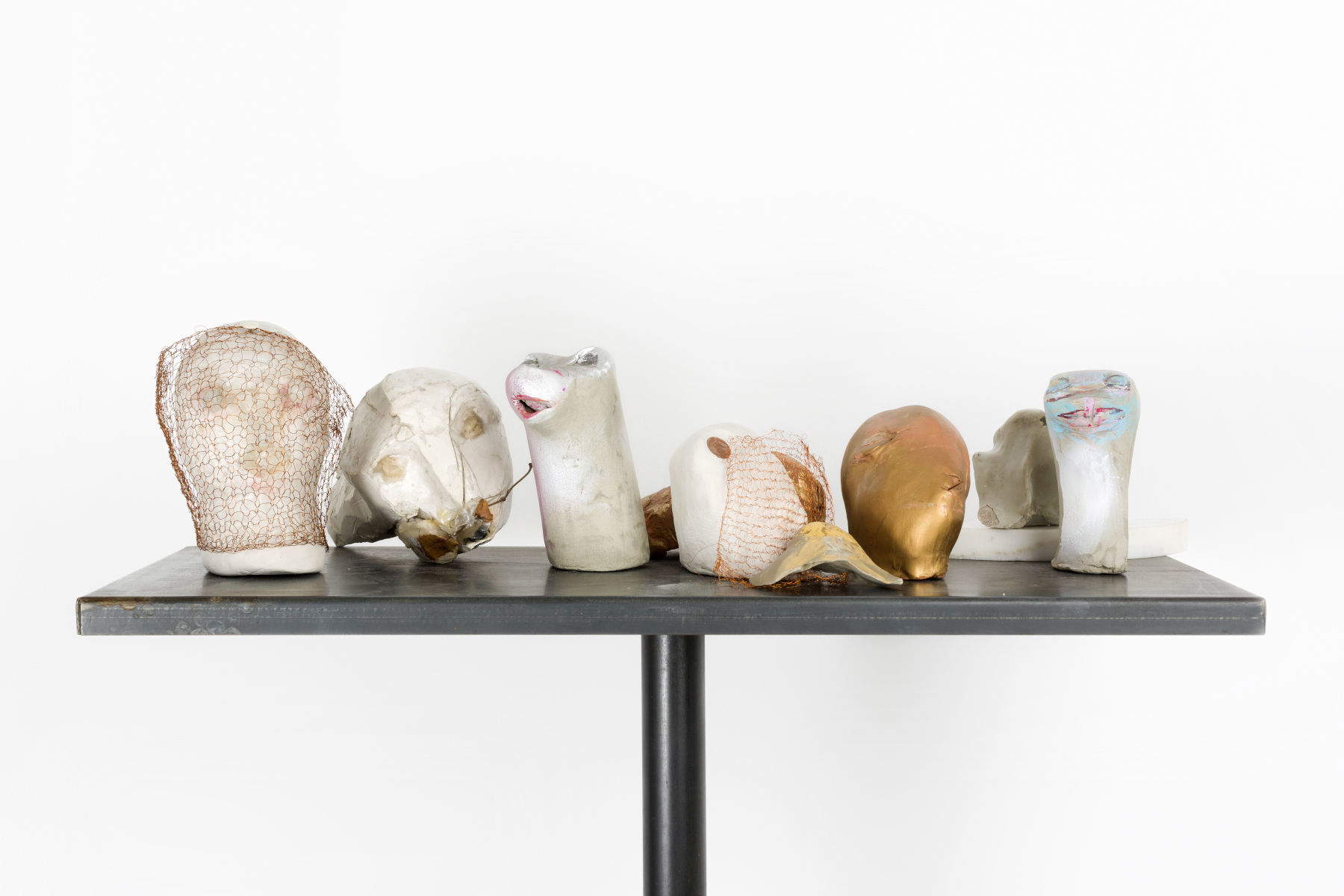
Finally, at GAM, Chiara Bertola and Chiara Parisi are curating a section devoted to the more intimate and everyday dimension of Marisa Merz’s work. The installation will start from the idea of the home-studio-workshop, a place in which artistic experience and daily life turn out to be closely intertwined. Living Sculpture of 1966, a work belonging to the GAM collections and recently undergoing a restoration conducted by the Venaria Conservation and Restoration Center, will also be returned to the public here. Accompanying the project will be a single catalog dedicated to the exhibition, the presentation of which will take place at a study conference dedicated to Marisa Merz.
Statements
“The exhibition at the Castello,” observe Francesco Manacorda and Marianna Vecellio, “emphasizes the environmental dimension of Marisa Merz’s practice, giving rise to a polyphonic tale that speaks of the sky and flight, of parallel universes and the lunar, spiritual, as well as feminine sphere.”
“The Fondazione Merz,” say Beatrice Merz and Sébastien Delot, “with this exhibition is configured as a privileged place dedicated to the unprecedented and to the pursuit of experimentation: a space in which the visitor can access the artist’s most hidden sphere, her germinal thoughts, intuitions and the silent dialogue that accompanies the birth of the works. What is revealed is a deeply personal expressive language, in which high and low, cultured and popular culture, artistic and everyday practices intertwine to give rise to surprising works marked by a subtle force.”
“The exhibition at GAM,” say Chiara Bertola and Chiara Parisi, “is configured as an intimate and welcoming space, capable of evoking the domestic dimension. Important historical works coexist with moments of recollection and introspection, visualizing open and evolving creative processes. The path thus becomes a metaphor for artistic making that is nourished by relationships and time, in which each element contributes to the creation of the work.”
“The centenary of the birth of Marisa Merz represents an extraordinary opportunity to celebrate one of the most influential figures in international contemporary art and, at the same time, to tell the story of Piedmont’s ability to create a system,” says Marina Chiarelli, Councillor for Culture of the Piedmont Region. “Castello di Rivoli, Fondazione Merz and GAM combine skills, heritage and vision in a cultural project of the highest profile that confirms Turin and Piedmont as a point of reference in the European art scene. Investing in culture means enhancing our identity, strengthening the attractiveness of the territory and creating new opportunities for growth, knowledge and participation for communities. Marisa Merz belongs to the history of world art, but her Turin roots represent a heritage that Piedmont has the duty and pride to preserve and promote.”
“This exhibition project testifies to the special collaborative spirit that animates Turin’s contemporary art institutions,” argues Rosanna Purchia, Councillor for Culture of the City of Turin. “This conjuncture is a real boost that allows the city to worthily celebrate in its centennial year a woman artist who had a radical impact on Italian and international art history. The city of Turin is also grateful to the foresight of the Fondazione CRT, which has embraced this project and this integrated system attitude.”
“We are particularly happy that three important cultural institutions in Turin have chosen Milan and the Museo del Novecento as the venue for this presentation, which underscores the profound cultural closeness between two cities that are protagonists of the Italian and European art scene,” says Tommaso Sacchi, Councillor for Culture of the City of Milan. "We are well aware of how deeply Marisa Merz’s work is linked to the city of Turin and to the Arte Povera season, but at the same time, we are pleased to recall how the Museo del Novecento also preserves important evidence of that artistic experience, the result of acquisitions made between the late 1970s and 1980s, works that the public can now admire within the museum itinerary. Next fall, the Museo del Novecento will host in the Archives space an exhibition produced as part of the Voci del Novecento cycle, dedicated to Tommaso Trini. A particularly significant choice, since Trini was among the first critics to intuit the innovative scope of what would later be called Arte Povera, but also one of the most attentive and sensitive observers of Marisa Merz’s work."
 |
| Marisa Merz, three Turin museums unite collections for centennial retrospective |
Warning: the translation into English of the original Italian article was created using automatic tools. We undertake to review all articles, but we do not guarantee the total absence of inaccuracies in the translation due to the program. You can find the original by clicking on the ITA button. If you find any mistake,please contact us.