




by Redazione 13/02/2026



Categories: Exhibitions / Disclaimer
The Glass Rooms in Venice dedicate a new exhibition to the period 1948-1958, central years for the presence of Murano glass at the Venice Biennale. More than 180 works reconstruct the dialogue between historic furnaces, new production realities and artists in the climate of postwar reconstruction.


The Glass Rooms, a project of the Giorgio Cini Foundation onlus and Pentagram Stiftung on theIsland of San Giorgio Maggiore in Venice, announce the exhibition 1948-1958 Murano Glass and the Venice Biennale, scheduled from April 19 to November 22, 2026. Curated by Marino Barovier, the exhibition constitutes the third chapter of the cycle dedicated to the presence of Murano glass at the Biennale and examines a decade considered crucial for the history of island production and its relationship with the main Venetian art review.
The path focuses on the years between 1948, when the Biennale resumed its activities after the interruption caused by World War II, and the late 1950s, spanning editions XXIV to XXIX. With the 1948 reopening, the appointment with decorative art exhibitions hosted in the Venice Pavilion was also renewed, which reserved ample space for glass and in 1952 was entirely devoted to the exhibition of Murano glass. According to the curatorial approach, the exhibitions of those years testified to Murano’s newfound vitality in a phase marked by the climate of reconstruction and the subsequent economic boom, as well as the rise of design culture. The decade was marked by intense experimental activity and a linguistic renewal that involved both the historic furnaces and more recent realities.


The exhibition brings together more than 180 works documenting the variety of research developed between the late 1940s and the end of the following decade. The itinerary highlights the coexistence of updated interpretations of ancient techniques, the introduction of new working processes and a focus on the color rendering of the object. One encounters transparent, heavy submerged or light blown glass, characterized by intense colors and rigorous shapes sometimes inspired by Nordic design, alongside specimens with soft, irregular lines. Other works, executed in solid wood, present a marked sculptural character and a marked plasticity.
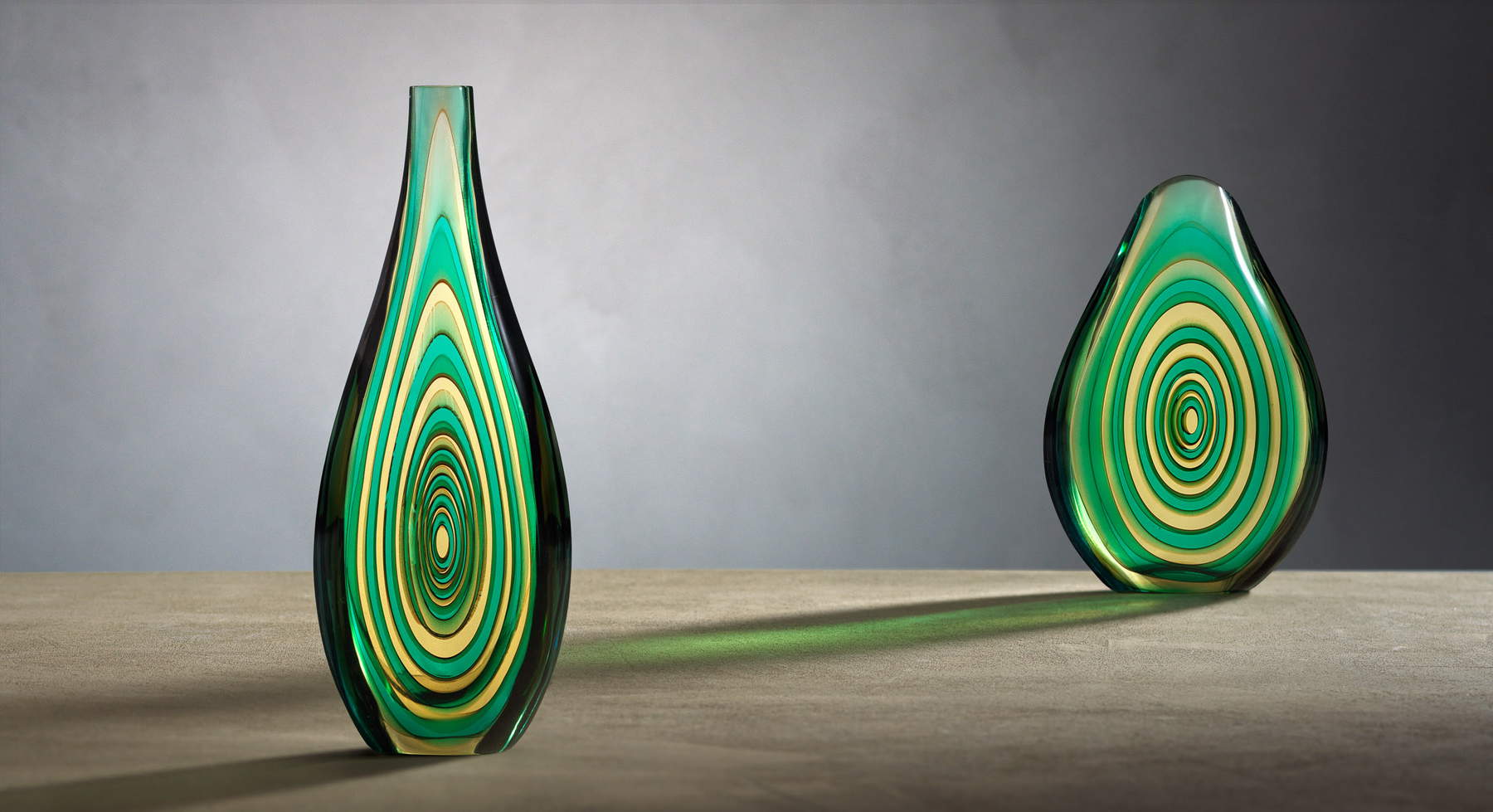
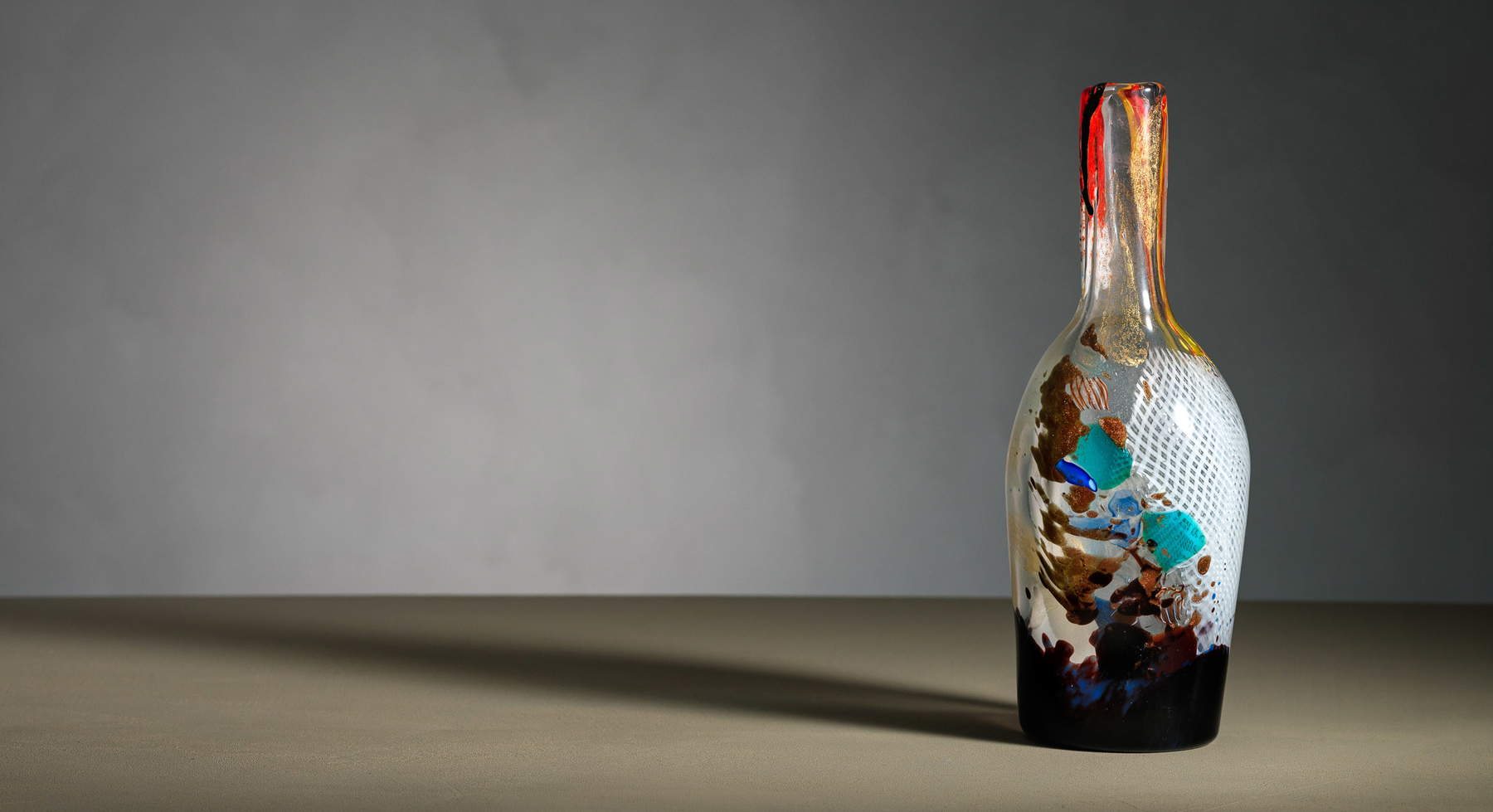
Among the protagonists are furnaces with a long tradition such as Venini, represented by works by Fulvio Bianconi and Paolo Venini, Barovier & Toso with glass by Ercole Barovier, Seguso Vetri d’Arte with Flavio Poli, Aureliano Toso with Dino Martens, Fratelli Toso with Ermanno Toso, and AVEM with research by Giulio Radi, Giorgio Ferro and Anzolo Fuga. The engraving firm S.A.L.I.R. The Venice Pavilion also exhibited more recently established glassworks such as Gino Cenedese and those founded by master glassmakers such as Alfredo Barbini and Archimede Seguso. At the same time, some artists developed a specific interest in vitreous material as a means of expression. These included Ezio Rizzetto, Anzolo Fuga and especially Vinicio Vianello, close to Spatialism, who identified glass as a field of experimentation consistent with contemporary research.
The exhibition is accompanied by a catalog edited by Marino Barovier and Carla Sonego, the result of bibliographic research and a survey conducted at the Biennale’s Historical Archives of Contemporary Arts, as well as in public and private archives. The volume reproduces period photographs, drawings and documentary materials related to the works exhibited at the Biennale during the period under consideration, offering an in-depth tool on the relationship between Murano and the Venetian event in the decade examined. Ahead of the opening, Le Stanze del Vetro reminds that the online bookshop is active at www.lestanzedelvetro.org, with a selection of specialized volumes devoted to glass. Dvds and catalogs of previously held exhibitions are also available at a special price. Updates on activities are disseminated through the social profiles @lestanzedelvetro and through the monthly newsletter available on the institutional website.
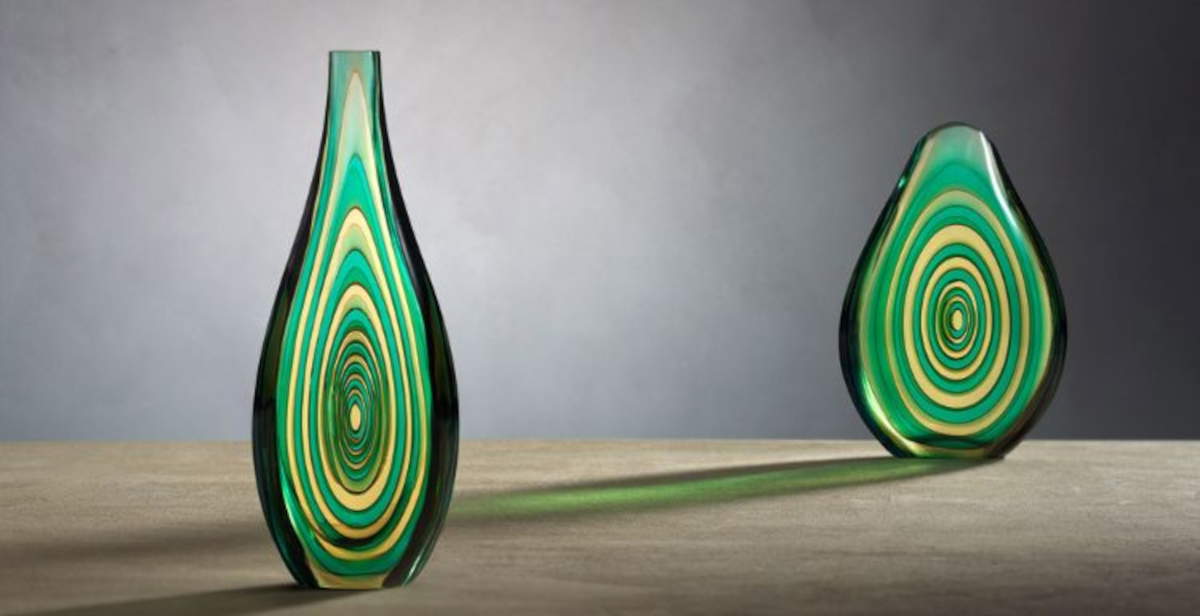 |
| Murano at the Biennale 1948-1958: the decade of rebirth on display in Venice |
Warning: the translation into English of the original Italian article was created using automatic tools. We undertake to review all articles, but we do not guarantee the total absence of inaccuracies in the translation due to the program. You can find the original by clicking on the ITA button. If you find any mistake,please contact us.