




by Redazione 21/06/2026



Categories: Exhibitions / Disclaimer
Starting June 20, 2026, Castel Sant’Angelo in Rome will open the “Panopliæ” exhibition, dedicated to historical weapons, and will reopen the Farnese Galleries with a new layout.
Starting June 20, 2026, Castel Sant’Angelo will enhance its visitor experience with two new additions: the exhibition *Panopliæ. Weapons, Ingenuity, and Power at Castel Sant’Angelo, dedicated to the museum’s collections of historical weapons, and the reopening of the Farnese Rooms, which have been redesigned to evoke the appearance and functions of a Renaissance papal apartment.
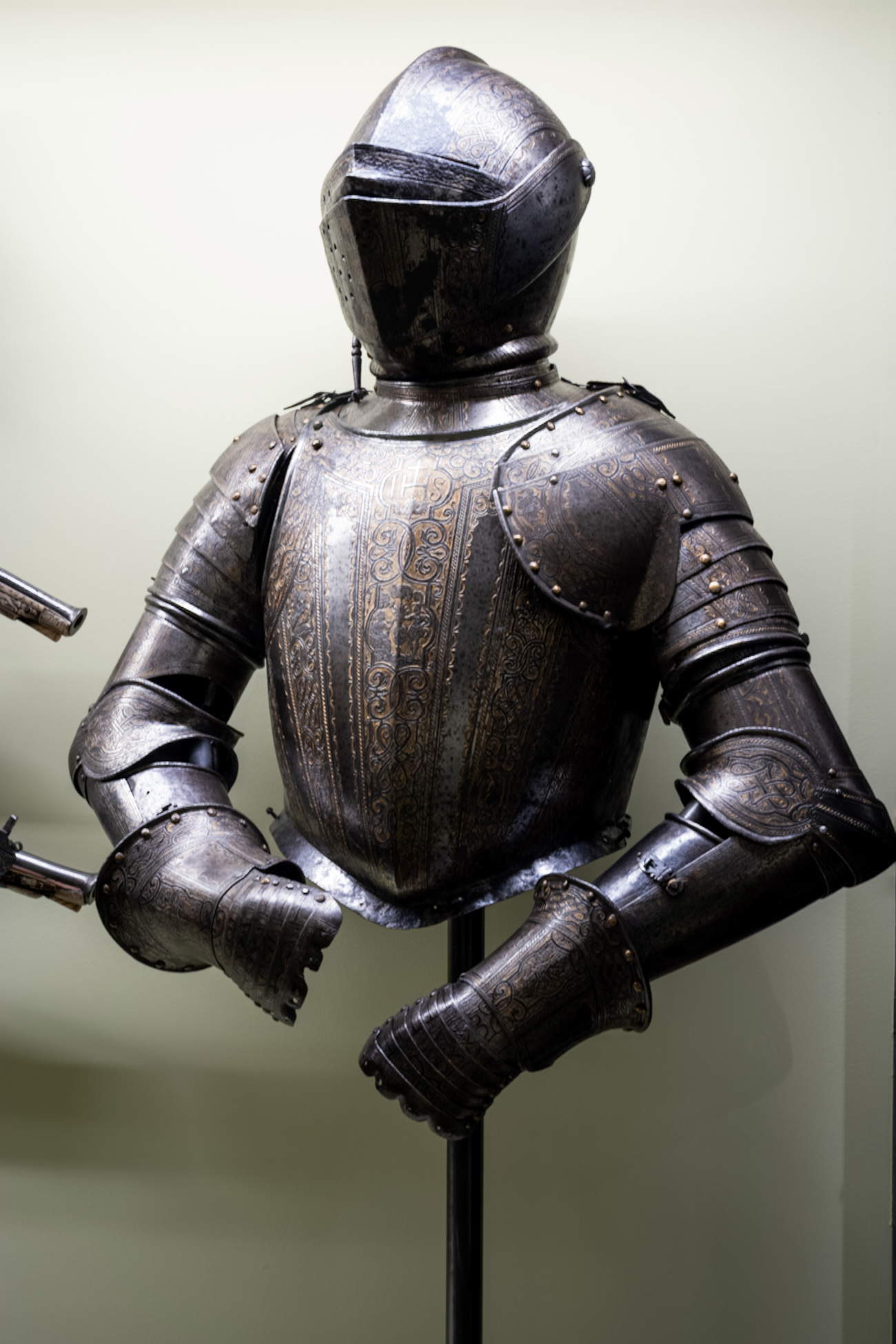
The exhibition “Panopliæ: Weapons, Ingenuity, and Power at Castel Sant’Angelo, curated by Luca Mercuri, director of the institute, and Mario Scalini, an expert in ancient weapons and former official at the Ministry of Culture, was created with the aim of bringing to the public’s attention a significant portion of the collections that had long remained in the museum’s storage. Following extensive survey, study, and restoration work, a selection of historical artifacts has once again been made accessible to visitors. The initiative also represents a symbolic return to its origins: the weapons are, in fact, being displayed once again in the spaces that, in the early days of the National Museum of Castel Sant’Angelo, housed the Armory, thereby restoring a function closely linked to the history of the Castle and its collections.


Originally conceived as a mausoleum for Emperor Hadrian, the monument has undergone numerous transformations over the centuries, becoming a fortress, a papal residence, a state prison, and a military garrison, until its conversion into a National Museum in 1925. The armory collections were assembled in the 20th century through donations, acquisitions, and transfers from other institutions. Among the most significant contributions are the collection of the collector Umberto Zanvettori, acquired in 1927, items from Remo Fedi in the 1930s and 1940s, and numerous objects from Palazzo Venezia, the Bargello National Museum, the Museum of Industrial Arts in Rome, and the Capodimonte Museum.
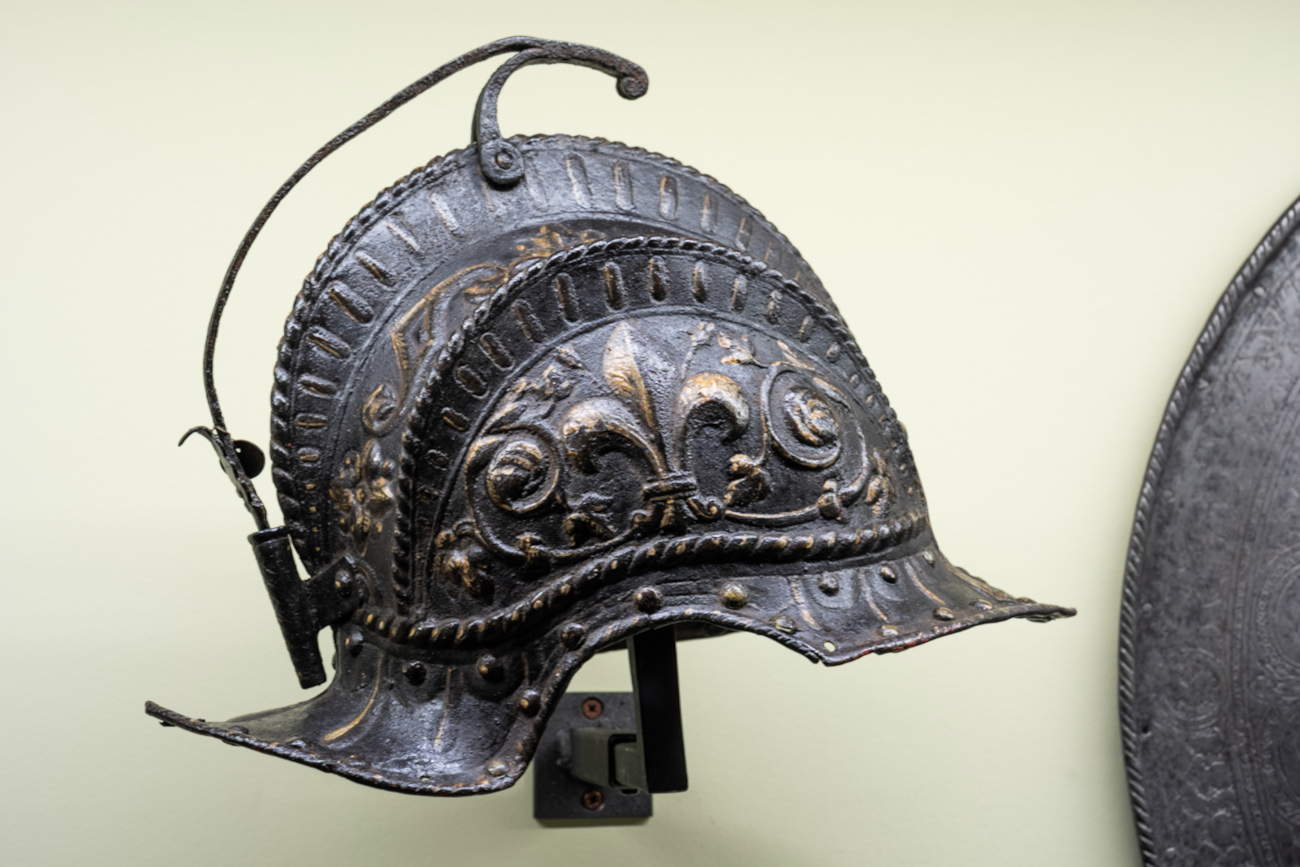
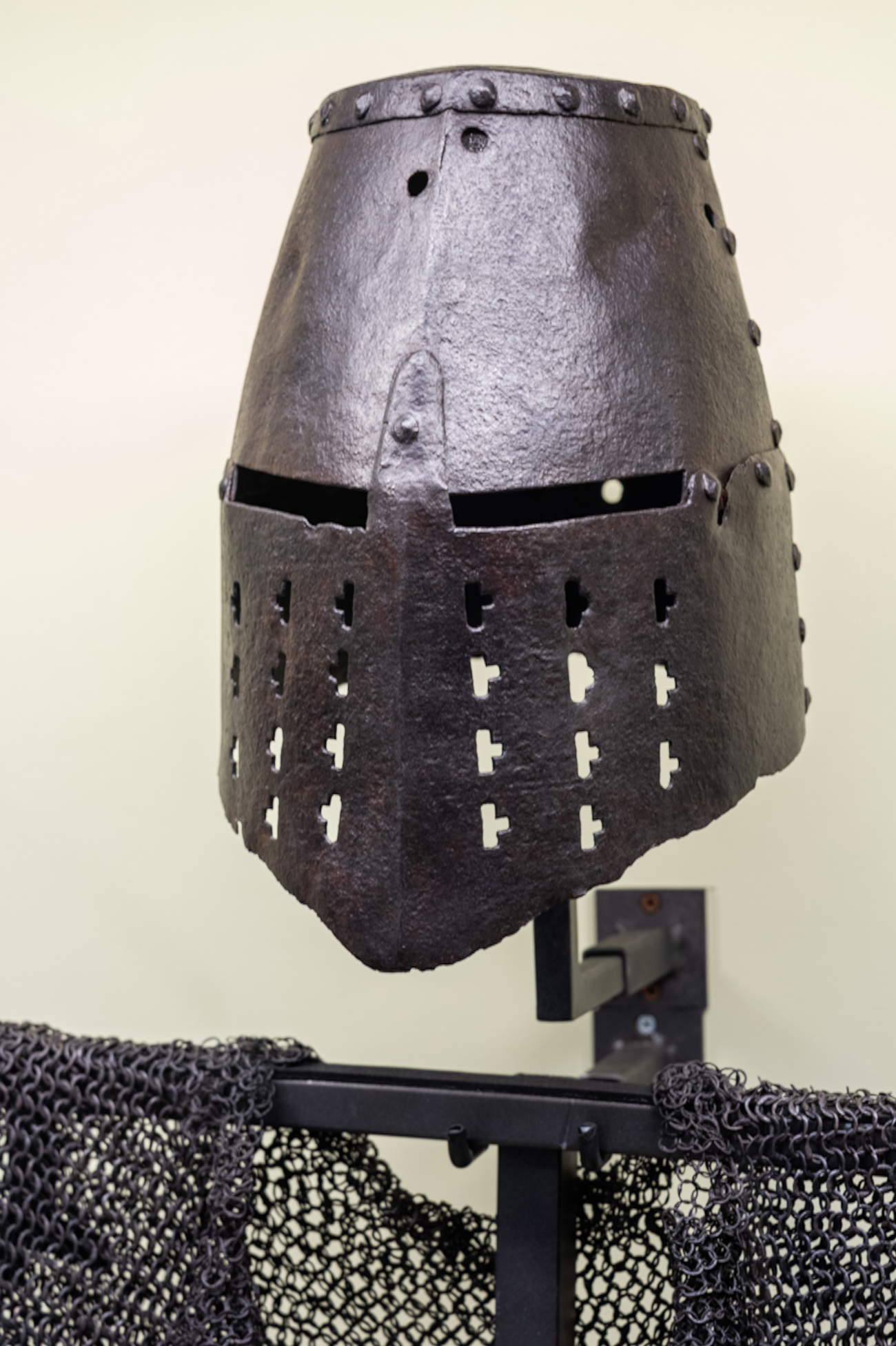
The exhibition is organized into six galleries and traces over a thousand years of history through a narrative structured by historical periods and themes: from the medieval era and its chivalric imagery to the great patrons of the Renaissance, from the courts and fleets of the 17th century to the rise of firearms.
Among the most significant pieces are the Corinthian helmets from the 6th and 5th centuries B.C., the oldest artifacts in the exhibition; a helmet with a fan-shaped visor attributed to Roberto Sanseverino, a commander in the service of the Republic of Venice who died in the Battle of Calliano in 1487, displayed alongside a reproduction of his tombstone preserved in Trento Cathedral; a rare German Hakenbüchse from the early 16th century, evidence of the earliest innovations in the field of firearms, and numerous suits of armor associated with the great Italian families, including Cardinal Odoardo Farnese’s barrier-style breastplate, attributed to the armorer Pompeo della Cesa, and the morion belonging to Pierluigi Farnese’s personal guard.
Also of particular significance is the section dedicated to the Medici family, where—thanks to a loan from the Bargello National Museum—it has been possible to reunite a breastplate decorated with the Maltese cross and two gauntlets from the Castel Sant’Angelo collection. Research and restoration work have confirmed that these three elements belonged to a single suit of armor made for Giovan Carlo de’ Medici (1611–1663). The suit is displayed alongside a portrait of the young man from the collections of the Uffizi Galleries. The exhibition also features weapons used by the papal militias and artifacts linked to the military traditions of Milan, Venice, and Naples. Among the most intriguing objects is the holster for the revolver given to Giuseppe Garibaldi in 1864 by the English writer Caroline Giffard Phillipson, a symbol of the great admiration the “Hero of Two Worlds” enjoyed in Anglo-Saxon countries.
The restoration work, carried out by Merj Nesi for this occasion and, previously, by Antonio Mignemi, Nicola Salvioli, and Mari Yanagashita, has made it possible to recover items of great value, whose provenance has been reconstructed.
“Panopliæ,” comments Luca Mercuri, Director of the Pantheon and Castel Sant’Angelo—National Museums of the City of Rome, “stems from the desire to restore to Castel Sant’Angelo one of the functions that have characterized its history as a museum: the weapons are, in fact, returning to the Armory, reestablishing the connection between the collections and the monument that houses them. The exhibition is the result of extensive study, research, and restoration of the collections preserved in storage, which are now once again accessible to the public. Castel Sant’Angelo, a fortress and military garrison at the center of pivotal events such as the Sack of Rome in 1527, provides the ideal setting to explore the world of courts, dynasties, and conflicts to which many of the exhibited objects refer. The reopening of the Farnese Galleries completes this journey, restoring spaces that once again tell their own stories through the interplay of architecture, furnishings, and works of art.”
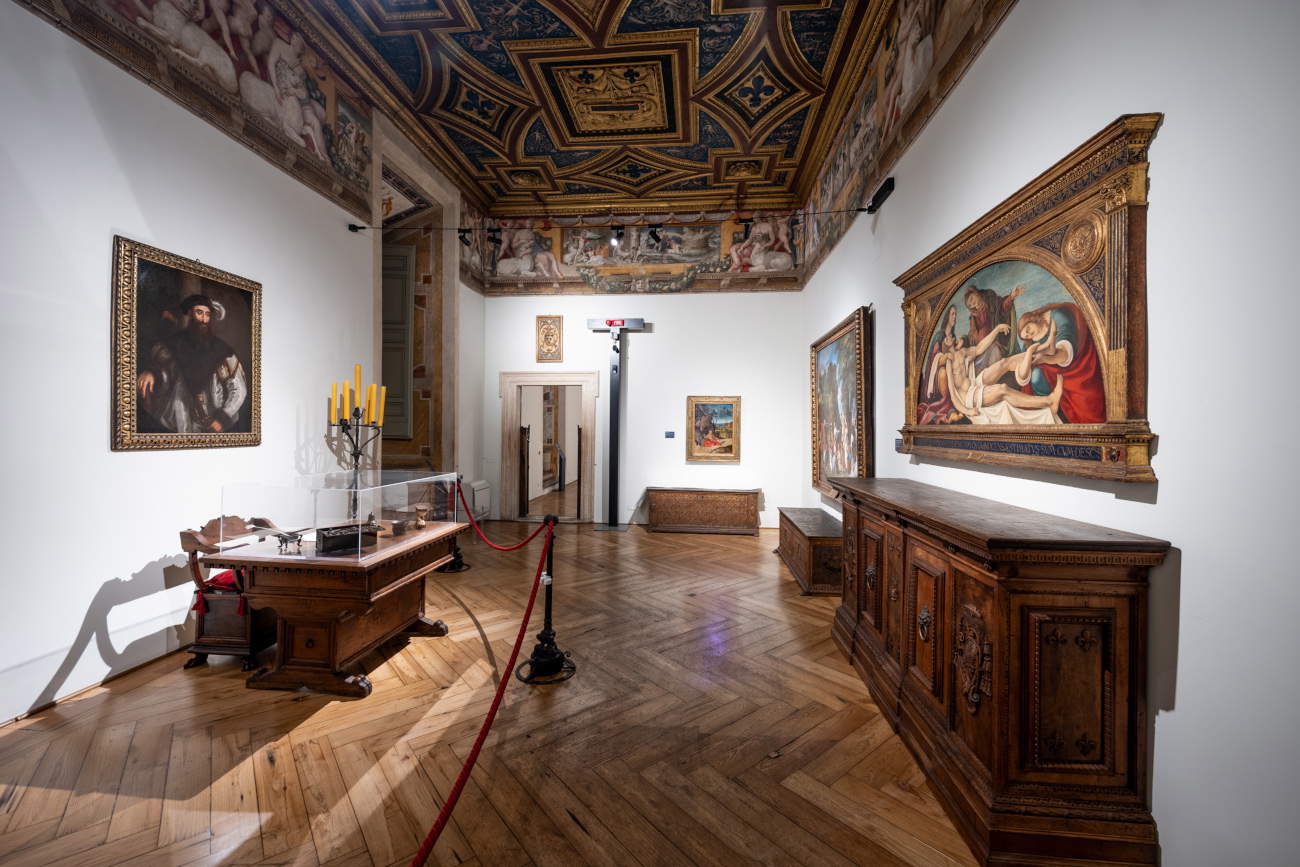
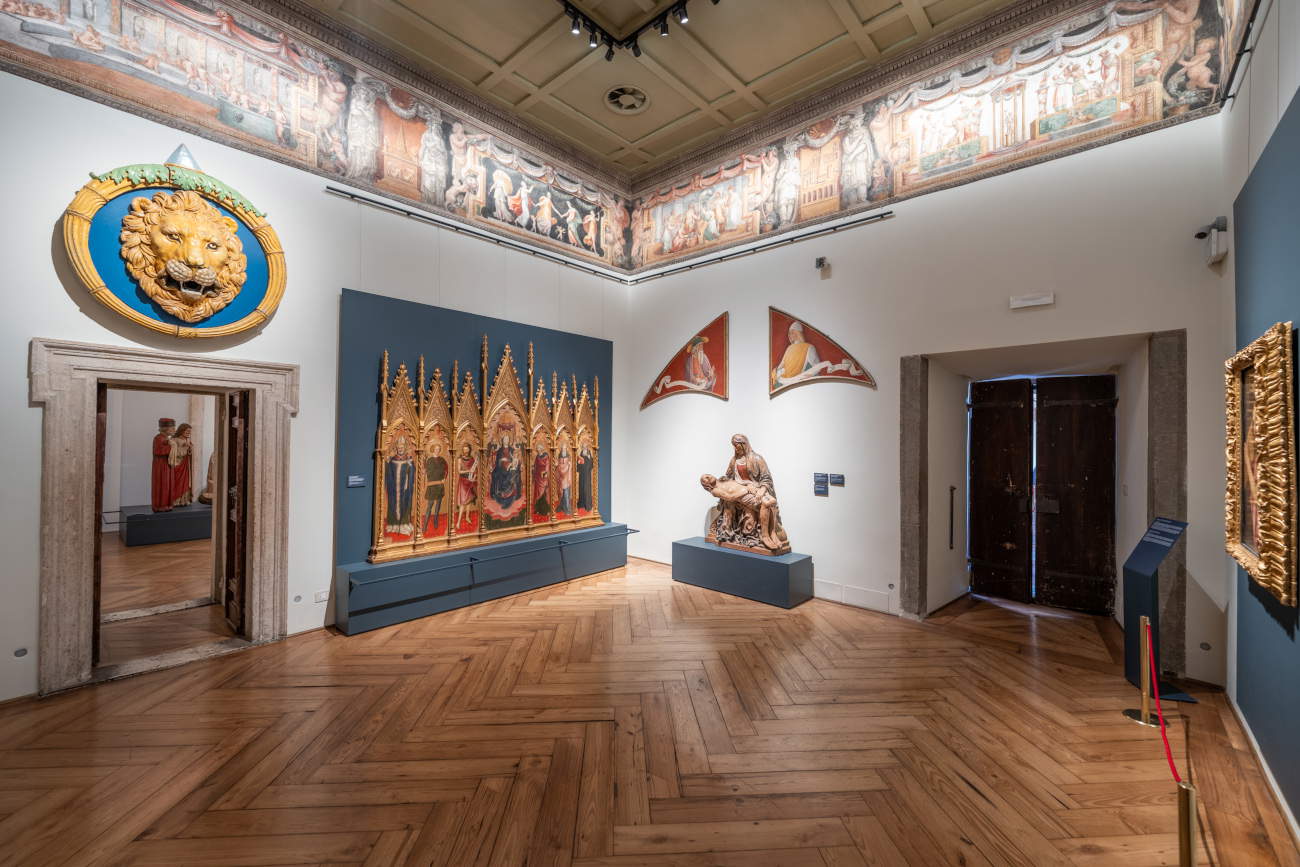
Coinciding with the opening of the exhibition, the Farnese Rooms—part of the apartment commissioned by Pope Paul III Farnese in the 1540s—are once again open to the public. The rooms have undergone conservation work, repainting, and a redesign aimed at restoring them to their original function.
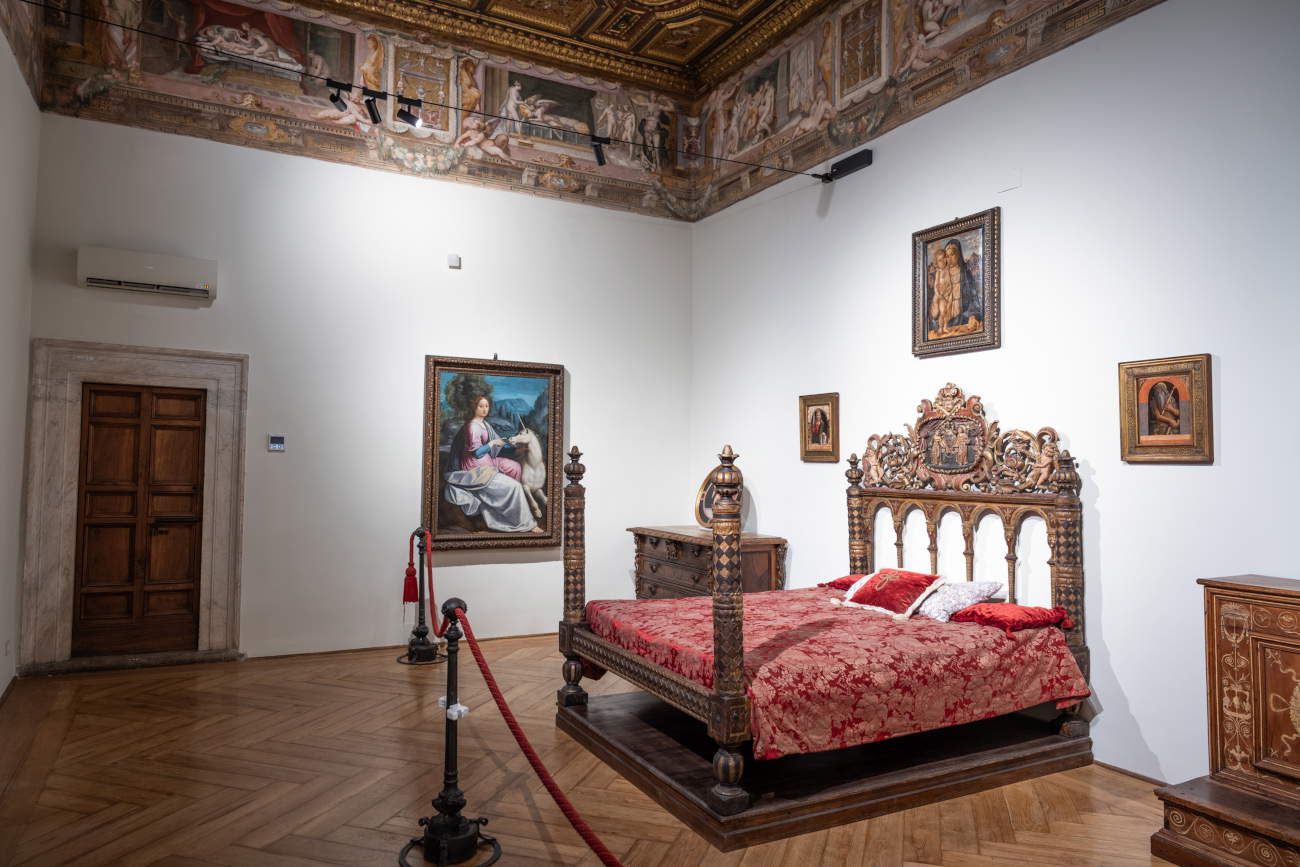
In the Rooms of Cupid and Psyche and of Perseus, located next to the Pauline Hall, the atmosphere of a Renaissance papal residence has been recreated. Furniture, paintings, and historical objects offer a better understanding of daily life within the apartment, presenting the spaces as period rooms in accordance with the most up-to-date museum standards.
The Hall of Cupid and Psyche, traditionally identified as the pope’s private chamber, has been arranged as an elegant Renaissance bedroom. At the center of the room stands a monumental ceremonial bed made of Roman-crafted walnut and decorated with the Farnese coat of arms. The furnishings are complemented by a kneeler for private devotion, a lectern, a tabernacle with a crucifix, and a chest of drawers made of walnut burl. On the walls hang works of considerable value, including *Il Bagno* by Dosso Dossi and *Young Woman with a Unicorn* by Luca Longhi—a portrait in which many scholars recognize Giulia Farnese, known as “Giulia la Bella,” the sister of Paul III.
The Perseus Room, likely used as the pope’s private study, is instead dedicated to scholarship and the exercise of power. A copy of the portrait of Pierluigi Farnese dominates the room above a desk adorned with period instruments and objects, including a four-hourglass clock, an inkwell, a mortar, a bell, and an iron casket. The furnishings also include carved Sienese chests, a sacristy cabinet, and a painted Emilian spinet dating from around 1540. Further enhancing the room is Lorenzo Lotto’s *Saint Jerome in the Forest*, one of the museum’s masterpieces.
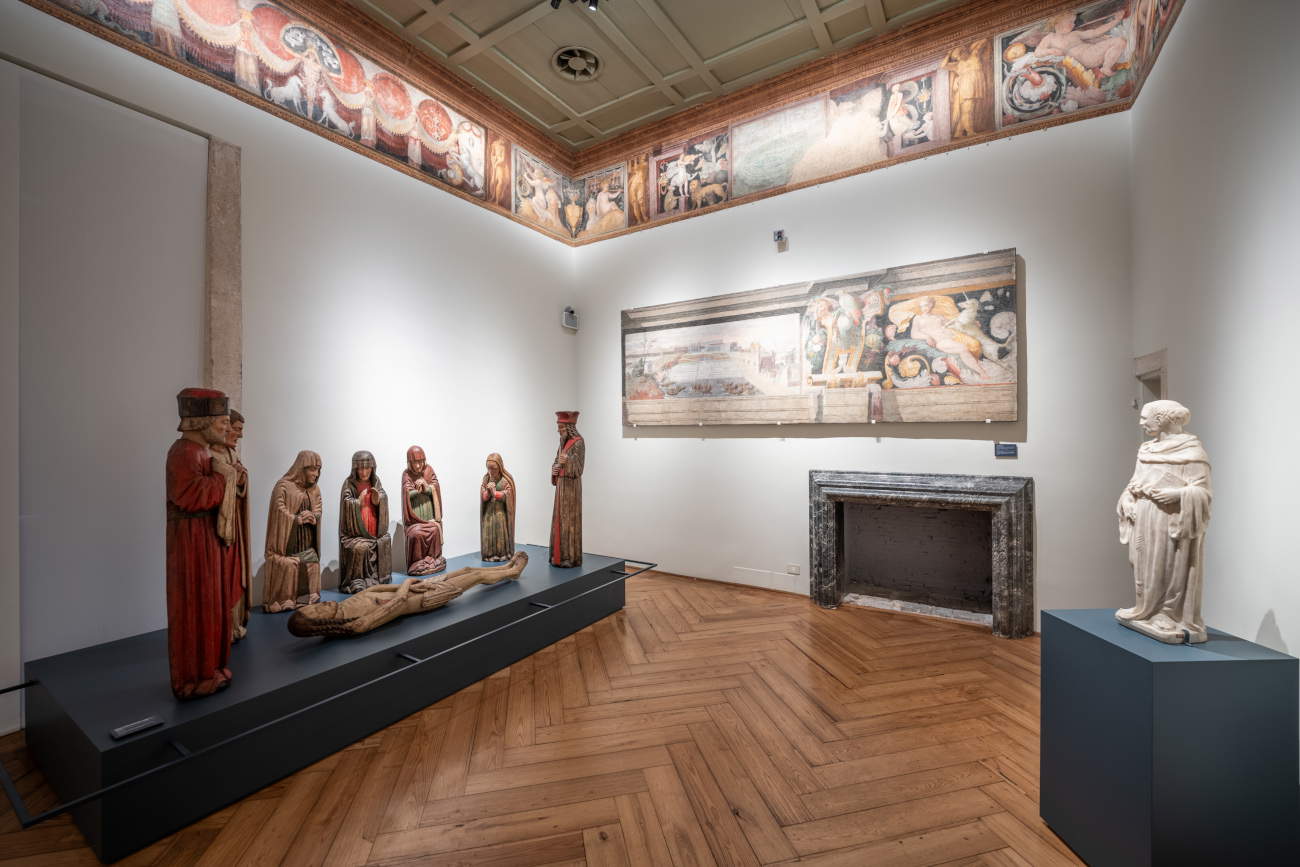
The other two rooms reopened to the public—the Sala dell’Adrianeo and the Sala dei Festoni, which were used as papal prisons in the 19th century and later restored—house some of the most significant works in the permanent collection. These include an altarpiece by Luca Signorelli, the Polyptych from the Zavattari workshop, devotional sculptures, and detached frescoes from historic Roman buildings that have since disappeared or been radically altered.
Numerous furnishings and objects in the galleries stem from major donations by Mario Menotti, who in 1916 played a decisive role in establishing the Castle’s collections, and from those made in 1928 by the Contini Bonacossi family, renowned for their activity in the art market.
|
| Rome: Castel Sant’Angelo Hosts an Exhibition of Historical Weapons and Reopens the Farnese Galleries |
Warning: the translation into English of the original Italian article was created using automatic tools. We undertake to review all articles, but we do not guarantee the total absence of inaccuracies in the translation due to the program. You can find the original by clicking on the ITA button. If you find any mistake,please contact us.