





An exhibition dedicated to Corrado Cagli (Ancona, 1910 – Rome, 1976), one of the most original and internationally renowned artists of 20th-century Italian art, who had deep ties to the Sicilian city: from September 10 to October 20, 2026, Palazzo Corvaja will host “Corrado Cagli: Nostoi. Rome New York Taormina, curated by Raffaele Bedarida and under the artistic direction of Franco Baldasso. The exhibition is presented by Babilonia Center for Italian Language and Culture in collaboration with the Corrado Cagli Archive in Rome, the Taormina Foundation, the Municipality of Taormina, the Federico II Foundation, the R. H. Kitson Casa Cuseni Foundation, Bard College in New York, and Sapienza University of Rome.
The project stems from a renewed international interest in Cagli’s work, which culminated in 2023 with the exhibition curated by Raffaele Bedarida at the Center for Italian Modern Art in New York. That exhibition traced the artist’s journey between Rome and the United States, from exile through the war to his controversial return to Italy in 1948. During World War II, Cagli enlisted in the U.S. Army and participated in the European campaign; in New York, he shared the experience of European exiles, becoming involved with the emerging modern ballet movement and working as a set and costume designer. The New York exhibition had focused on the theme of memory, understood as a strategy for navigating complexity and as a form of resistance to prevailing narratives. The exhibition concluded with his return to Italy in 1948, when Cagli refused to subscribe to the dominant rhetoric of the reconstruction period.
The exhibition in Taormina aims to broaden that perspective by more prominently highlighting the artist’s relationship with Sicily. The title evokes the nostos ( “return”) of the Homeric tradition—Ulysses’s return home—but for Cagli, this return cannot simply coincide with nostalgia for a lost place: it is rather a continuous redefinition of one’s own identity. Rome, New York, and Taormina thus become the three main settings of his artistic and personal journey: Fascist Rome and postwar Rome, the New York of exile and rebirth, and finally the Taormina of the 1960s, then an international crossroads for artists and intellectuals. The three cities simultaneously take on geographical, cultural, and identity-defining significance.
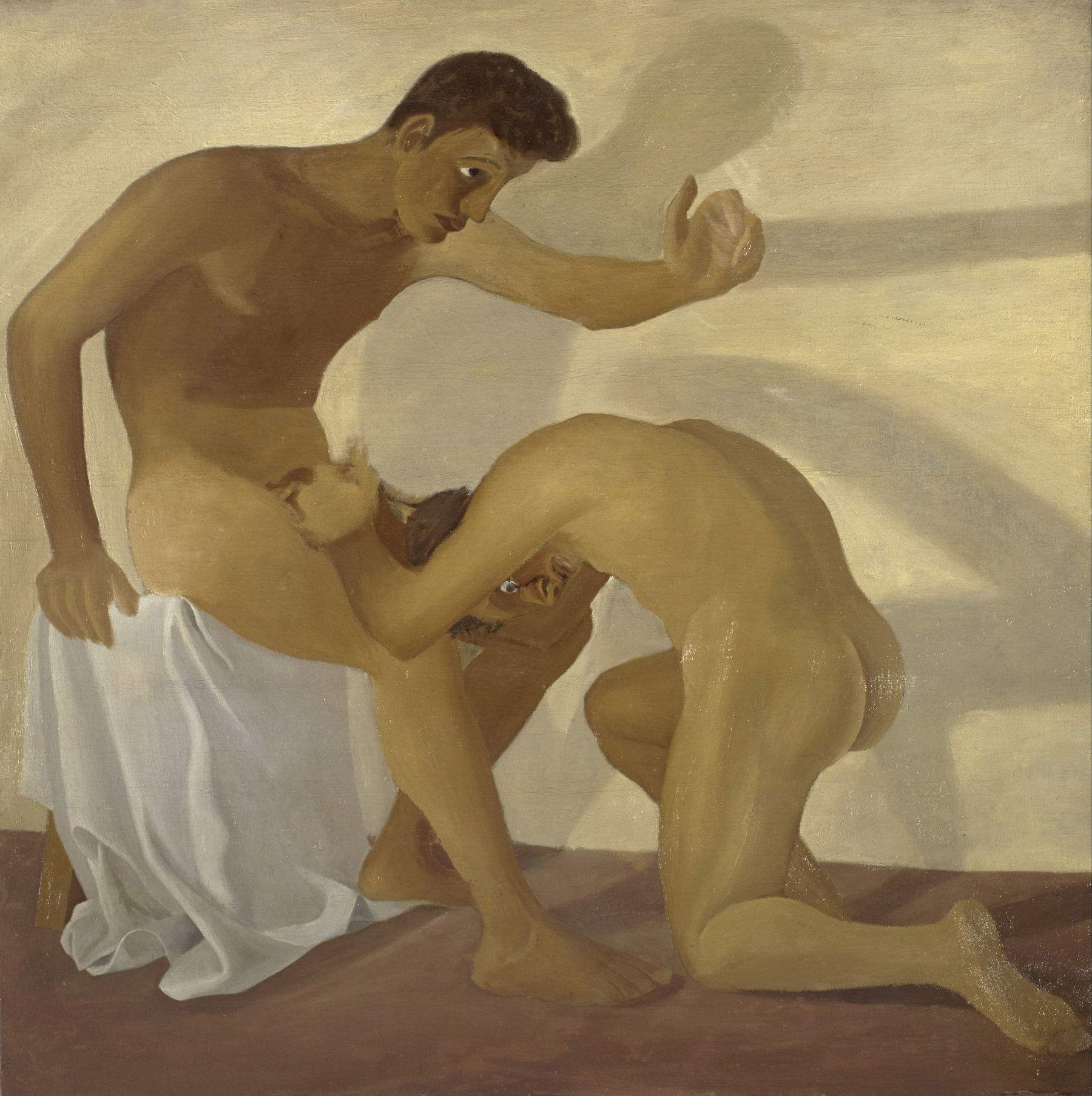
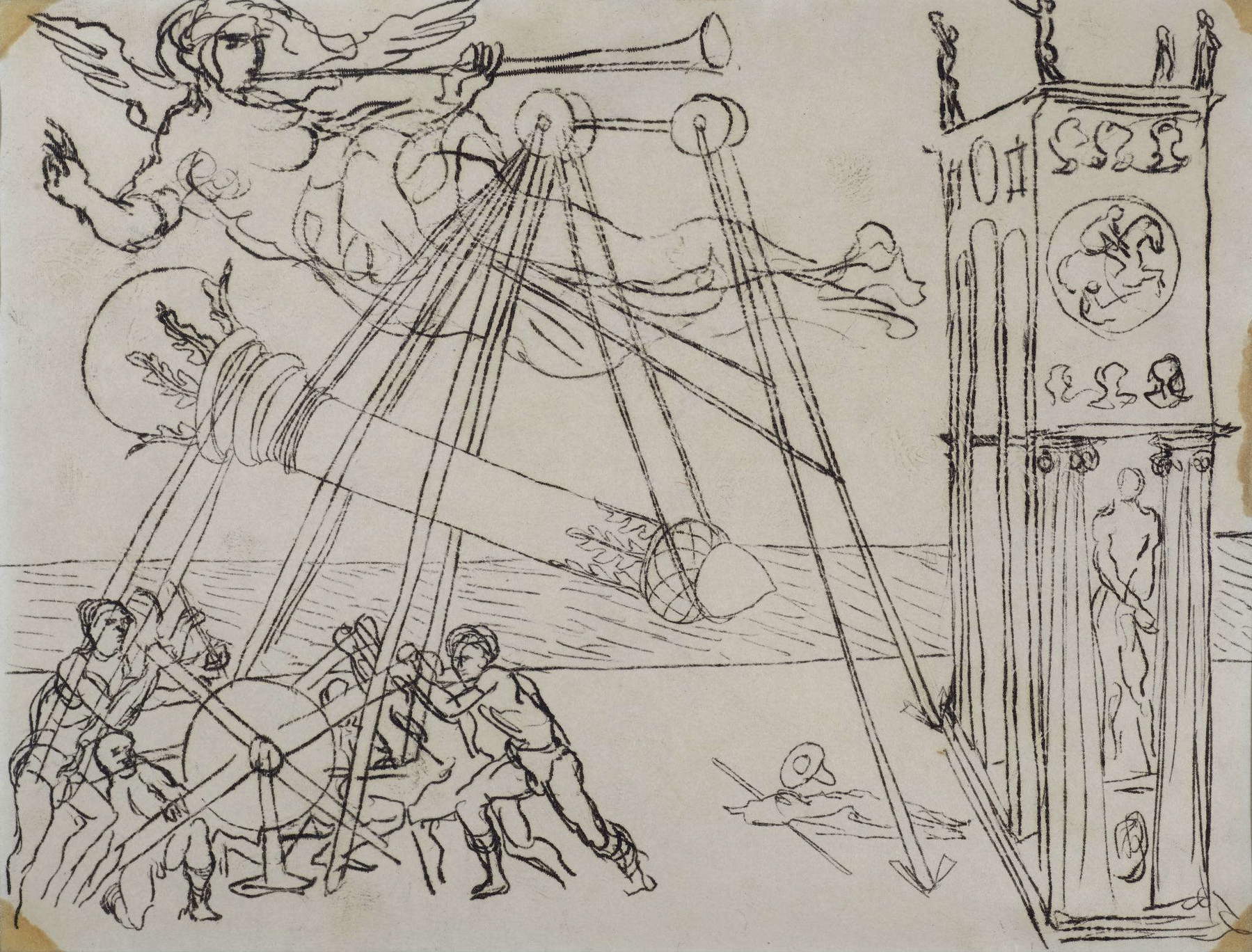
One of the lesser-known aspects of Cagli’s work that the exhibition brings to the forefront is his relationship with soccer, which the artist viewed as a collective ritual and a form of physical expression. In Sicily, Cagli founded and financially supported the Robur di Letojanni soccer club and even designed the Palermo jersey. In Taormina, he mingled just as naturally with intellectuals such as Giuseppe Ungaretti and Danilo Dolci as he did with young soccer players and champions like José Altafini, and for this reason as well, he left behind a lasting legacy in the city.
A key section of the exhibition focuses on the international network of collaborations and relationships that Cagli built over the course of his life. Figures such as Charles Olson, Igor Stravinsky, Danilo Dolci, and George Balanchine attest to the breadth of the cultural circles the artist moved in: works donated by friends and collaborators also allow us to reconstruct lesser-known aspects of the community of intellectuals in exile in the United States and the relationships that Cagli continued to maintain between Rome and Taormina with figures such as Saul Steinberg, Eugene Berman, Henri Cartier-Bresson, and Victor Brauner.
The exhibition also traces the cosmopolitan character that Taormina took on in the post-World War II period, focusing in particular on Casa Cuseni, which at the time was the center of the city’s cultural life and a meeting place for artists, activists, and civil libertarians. On display here will be *Piccolo Processo*, a work dedicated to the magistrate Giuseppe Navarra and inspired by the difficulties faced by the judiciary in combating the Mafia following the 1969 Viale Lazio massacre. The work is part of the spirit of civic engagement shared by figures such as Danilo Dolci and Girolamo Li Causi in the defense of the rule of law and democracy.
Among the themes addressed by the exhibition is also the question of Cagli’s Jewish identity. Born into a family of Italian Jews, until the mid-1930s the artist was one of the leading figures in the official culture of Fascism, the creator of important public commissions, and a participant in the construction of a national identity promoted by the regime. As racist propaganda gradually intensified—beginning with the 1935–36 war in Ethiopia and especially with the approach of the racial laws of 1938— Cagli was forced to confront his Jewish identity more and more directly, as well as an anti-Semitism that was taking on increasingly aggressive forms. The boycott of his works and his gradual exclusion from the public sphere resulted in a violent expulsion from the national community that the artist had helped to represent through his work.
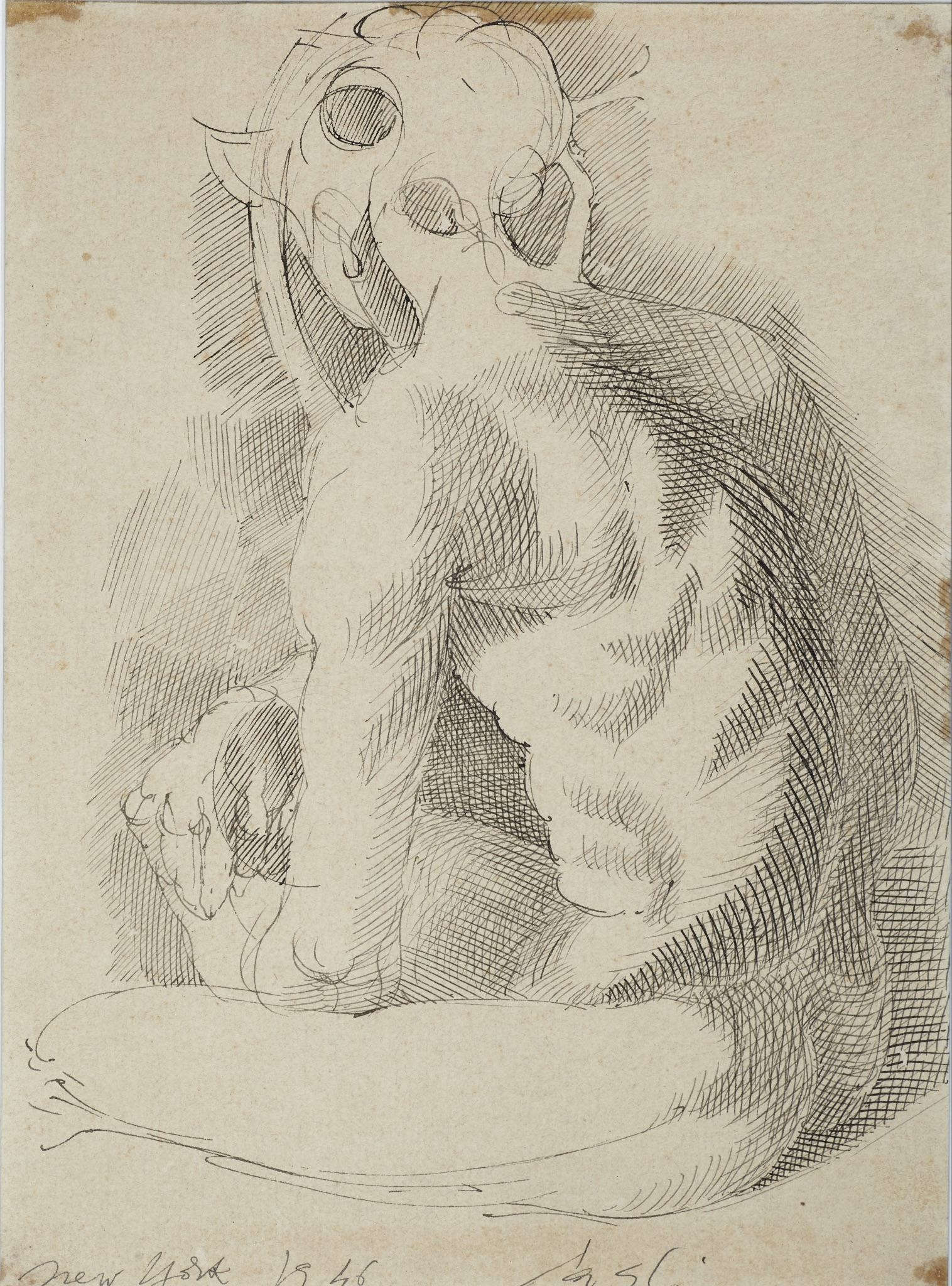
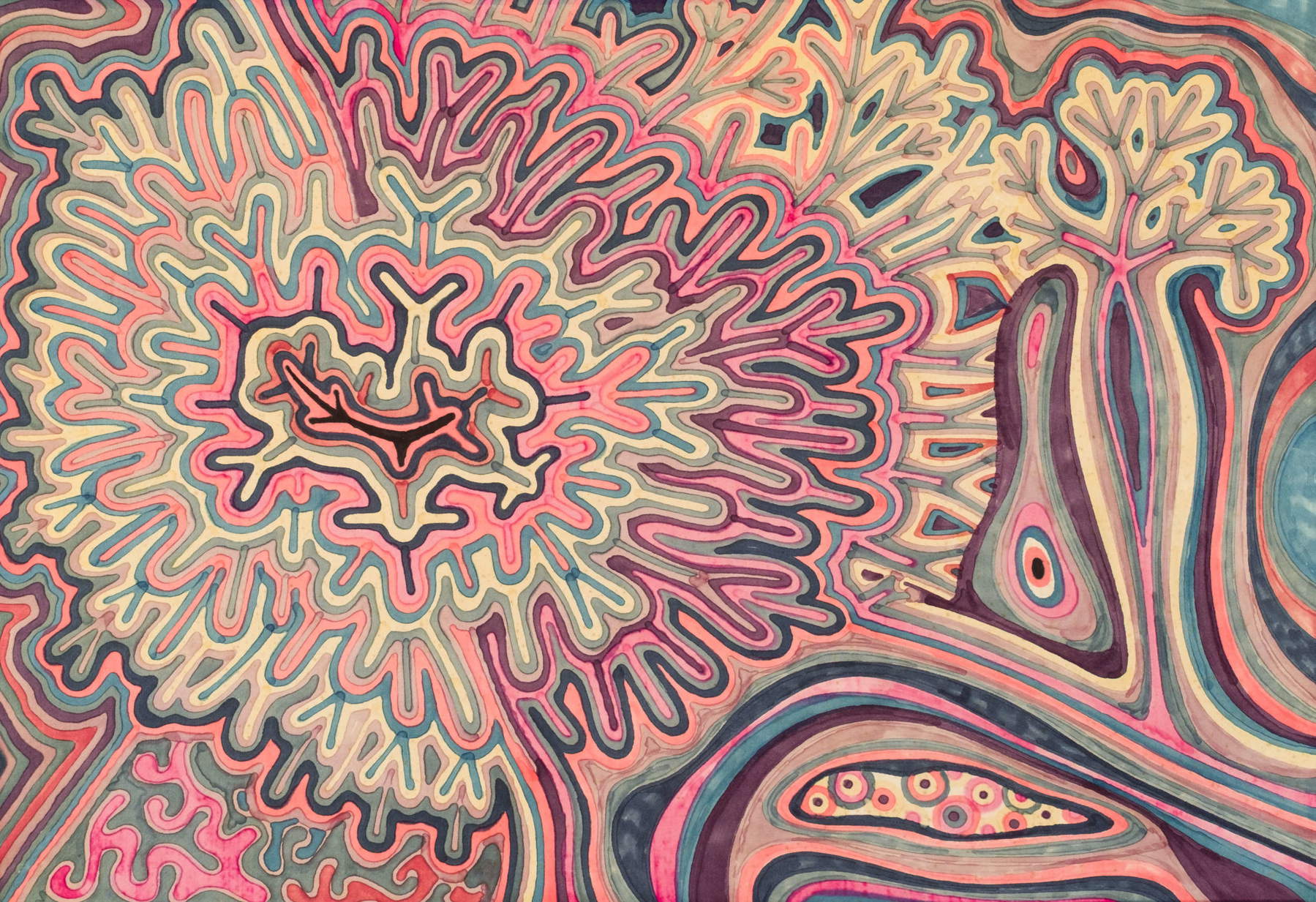
During these years, Cagli returned repeatedly to the theme of David and Goliath. The figure of David took on a dual significance: on the one hand, he concretely represented the Jewish presence in the Italian humanist tradition—of which Fascism proclaimed itself the heir and defender; one need only consider the popularity of the subject in Renaissance art; on the other, he became a symbol of exclusion through the Star of David, used as a mark of infamy by the anti-Semitic press and journalism. The Jewish perspective would later become an essential component of Cagli’s perspective as an exile and of his strategy of memory—as expressed in his drawings dedicated to Buchenwald—as well as of his civil rights activism.
Another central theme concernshomoeroticism and queer strategies. Cagli, who was openly bisexual even during the twenty years of Fascist rule, systematically depicted homoerotic scenes, situating them within the humanist tradition—of which Fascist Italy selected and celebrated only certain aspects. During his exile, homoeroticism also became an ironic tool for deconstructing fascist rhetoric. In the “Allegories” series, Cagli destabilizes—in ways that today can be defined as queer—the idea of continuity between fascism and the classical past: masculine images inspired by classical statuary are eroticized and transformed into figures of Saint Sebastian, while symbols of imperial triumph such as obelisks and triumphal arches take on sexual connotations.
Even the drawings dedicated to military training and war depict young comrades in situations of intimacy, exhaustion, and languor—in stark contrast to the heroic and virile image of the soldier imposed by war propaganda. The same interest in soccer and dance, which runs throughout the entire exhibition, is interpreted as part of a broader process of destabilizing dominant models of masculinity. Furthermore, in the numerous collaborations highlighted by the exhibition, the intellectual and personal dimensions are often inseparable: cultural affinity intertwines with intimacy, and the individual relationship with the communal one, within a historical period preceding Stonewall and significant for the subsequent assertion of LGBTQ+ rights and identity expression .
Another major theme is the memory of fascism and its complex cultural legacy. Cagli’s visual and critical work, along with his ongoing dialogue with some of the leading figures of 20th-century Italian and international culture, trace a narrative that spans the violence of the last century—from fascism to World War II to the cultures of the diaspora. His journey features figures such as Massimo Bontempelli and Giuseppe Ungaretti, the exiled Spanish poet Rafael Alberti, and numerous exiled artists he met in New York.
Cagli’s story also serves as a counter-narrative to the simplifications with which the 20th century is still recounted today. His work challenges a collective memory that tends to erase the regime’s responsibilities and the most tragic aspects from our shared past: in the 1930s, Cagli was in fact one of the leading artists of Fascism and presented his work internationally as the official expression of the new culture the regime intended to showcase to the world. His own interest in Roman culture, evident in his murals and other public commissions, ultimately came into conflict with the most intransigent elements of Fascism, who turned his Jewish identity into a reason for attack, scandal, and exclusion.
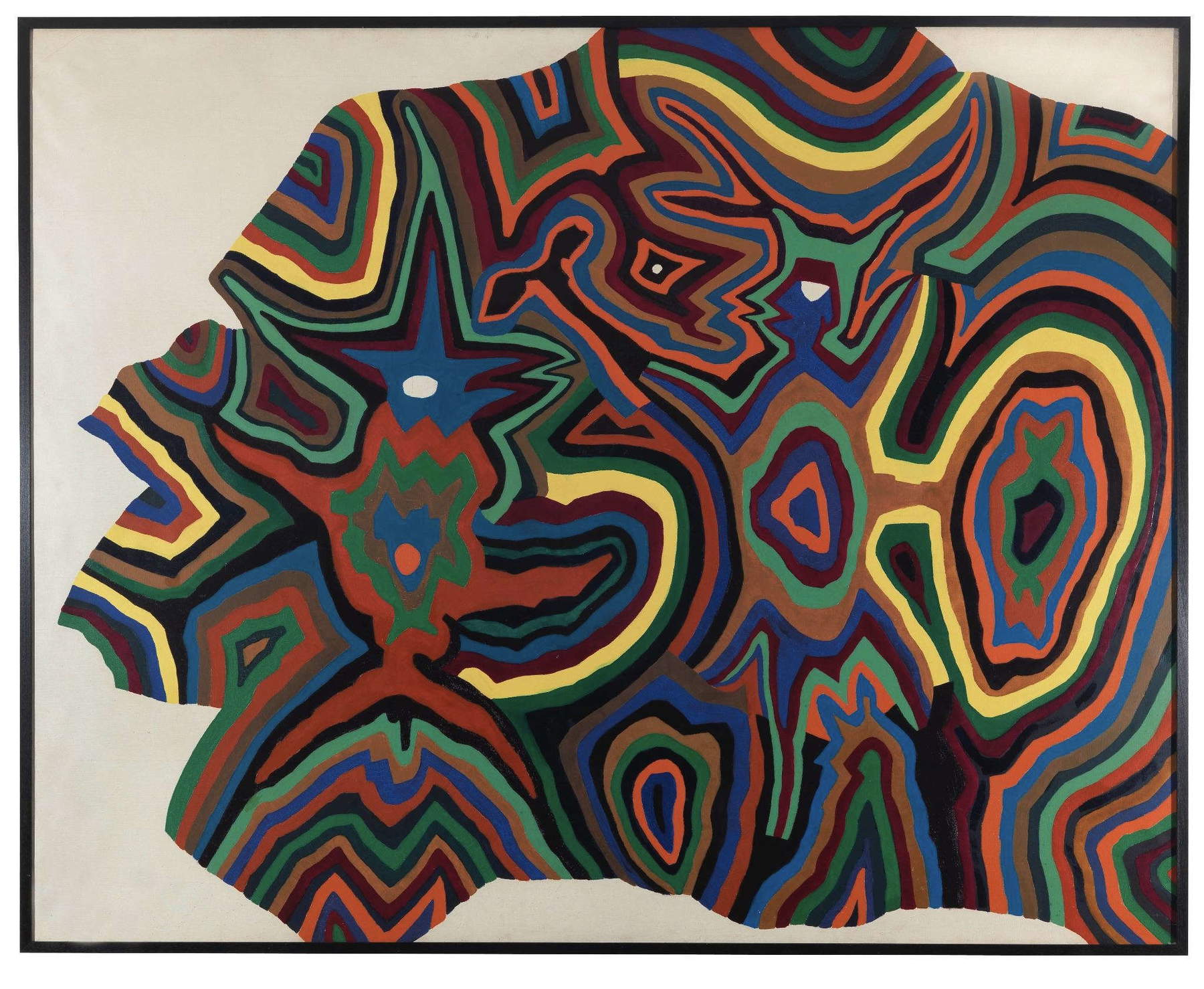
After 1938 and the enactment of anti-Semitic laws, the world Cagli had built crumbled, and the artist—who until then had enjoyed extraordinary success—was forced into exile, first to France and later to the United States. The trauma of exile became an opportunity to critically reexamine his own fascist past. His decision to enlist in the U.S. Army and fight for the liberation of Europe can be seen today as the culmination of a long journey through fascism. However, upon his return to Italy, his participation in the war against Nazi-Fascism was not enough to erase the artist’s past in the eyes of a country that continued to level accusations and suspicions against him.
Anti-Semitic insinuations, accompanied by increasingly overt references to his homosexuality, in fact continued even after the war, while Italy sought to repress its collective involvement in the atrocities of fascism. The difficulty of his return thus becomes one of the central elements of Cagli’s story: a deeply nonconformist artist found himself returning to a country emerging from a totalitarian dictatorship and the devastation of war, yet one that was ill-disposed to welcome a figure who did not fit into the dominant narratives of national redemption.
For Babilonia, the exhibition marks the launch of a two-year program of cultural events. As part of the project , MID—Mediterranean Innovation District—will also be presented to the public; this new hub, based in Taormina, is designed to serve both a local and global community. MID is conceived as an international ecosystem where education, research, culture, artificial intelligence, and entrepreneurship converge into a single project, connecting students, universities, experts, companies, and investors, and guiding people from the initial discovery phase through to the concrete realization of an idea, a project, or a business. The presentation of MID marks the culmination of over thirty years of Babilonia’s work. The exhibition itinerary also includes Casa Cuseni: the admission ticket to Palazzo Corvaja will, in fact, allow visitors to tour the house, where *Piccolo Processo* will be on display.
Accompanying the exhibition will be a catalog published by Dario Cimorelli Editore, featuring scholarly essays by Franco Baldasso, Raffaele Bedarida, John Champagne, and Yasmin Riyahi. The volume will explore Cagli’s relationship with Sicily, the dialogue between his art and literature, queer strategies and homoerotic iconography, as well as the artist’s interest in soccer, sports, and popular culture. The catalog will also feature numerous previously unpublished images and documents.
|
| Corrado Cagli returns to Taormina with “Nostoi,” set in Rome, New York, and Sicily |

Warning: the translation into English of the original Italian article was created using automatic tools. We undertake to review all articles, but we do not guarantee the total absence of inaccuracies in the translation due to the program. You can find the original by clicking on the ITA button. If you find any mistake,please contact us.

























 IT
IT FR
FR DE
DE ES
ES CN
CN


