




by Redazione 09/04/2026



Categories: Museums / Disclaimer
It is the Japanese firm Kengo Kuma and Associates that has won, in collaboration with BDP and MICA, the international competition to design the new wing of the National Gallery in London.


It is the Japanese firm Kengo Kuma and Associates, founded in Tokyo in 1990 by Kengo Kuma and active in the field of architecture and design, that won, in collaboration with BDP and MICA, the international competition to design the new wing of the National Gallery in London. The intervention is part of the so-called Project Tomorrow, an ambitious development plan worth a total of £750 million.

This project represents the largest and most significant transformation of the museum since its founding nearly two centuries ago. Key goals includeextending the collection beyond 1900, with the intention of making the National Gallery the only museum in the world devoted exclusively to painting, capable of offering a comprehensive view of the evolution of the Western painting tradition.
In September 2025, the institution launched an international architectural competition to build the new wing to accommodate the expansion of the collection. Sixty-five proposals were submitted, from which six finalist studies were selected and admitted to the design phase.


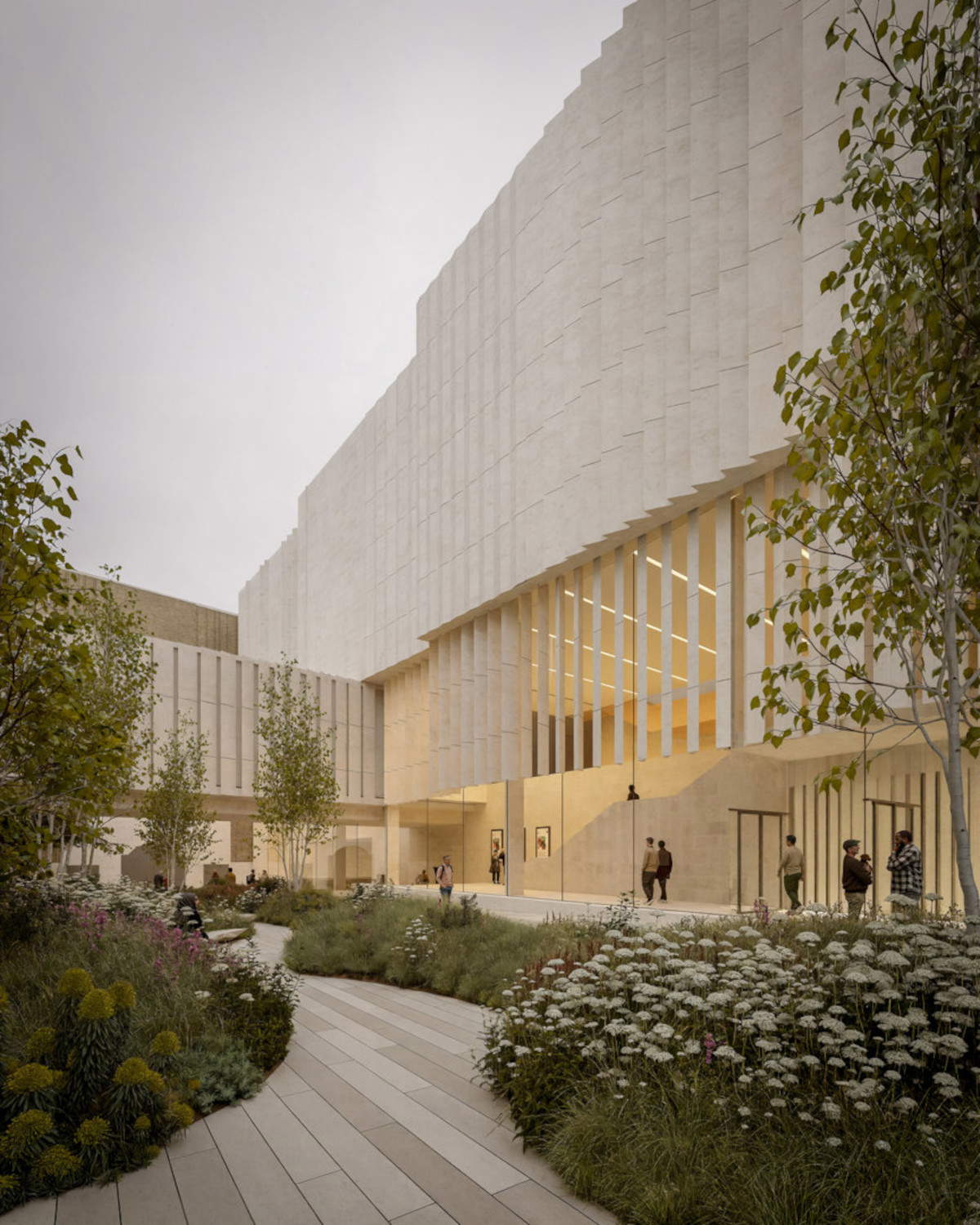
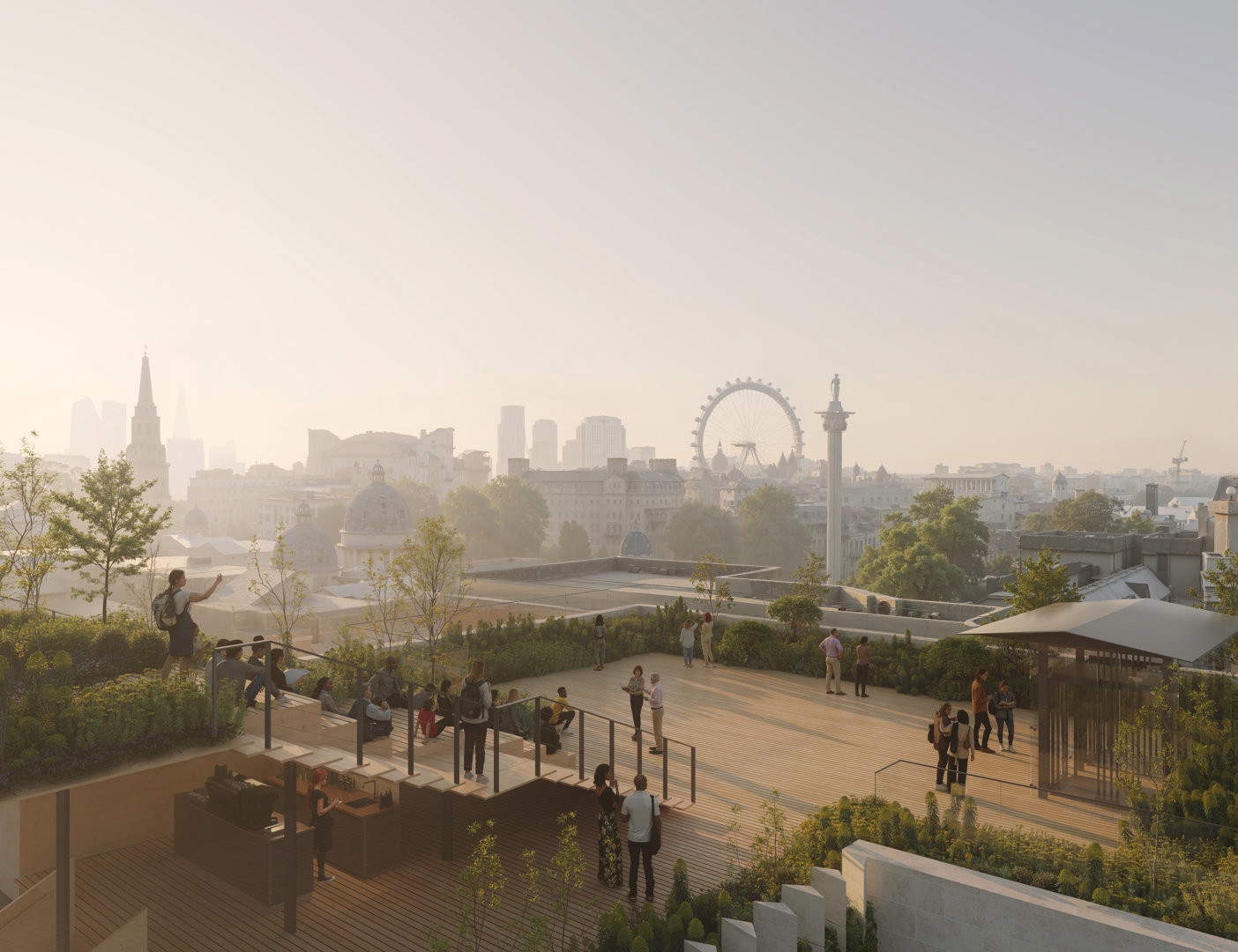
The proposal developed by Kengo Kuma and Associates together with BDP and MICA was judged by the jury to be “exemplary.” “The design is both innovative and splendid, and meets the ambition and sensitivity required for an international gallery commission. It is respectful of the galleries of the Sainsbury wing...and the approach to public space and the roof garden creates a generous presence, enhanced by trees and vegetation. The careful design of the exterior spaces, with links to Leicester Square, evokes an open welcome to visitors, further accentuated by the use of Portland stone and stepped massing, which demonstrates sensitivity to the surrounding streets and allows natural light to penetrate the building,” the jury commented.


Regarding the interiors of the new wing, the jury said that “the style of the galleries is very simple and clean, with a contrast between the ground floor, which is characterized by vaults and arches, and the upper floor, which features a more geometric design. As a result, the ground floor of the galleries creates continuity with the Sainsbury wing and the north galleries, while the upper floor has its own style, which adds variety and a change of design rhythm to the whole project.” On social value, “a robust and measurable social value delivery plan is defined, reinforced by the inclusion of the specific framework for climate and social action design. The approach to sustainability is also defined, along with a clear strategy for considering and applying social value principles throughout the project life cycle.”
“This is an exemplary proposal,” the jury concluded, “demonstrating both a solid understanding of the importance of social value to this project and how social value could be integrated into existing National Gallery initiatives and future National Gallery projects.”
The Tomorrow Project is not limited to the construction of new exhibition spaces, but also envisions the creation of a fund for the acquisition of modern works and the strengthening of the National Gallery’s long-term economic sustainability through strong financial assets.
The new wing will be built on the site of St Vincent House, the last remaining part of the National Gallery’s current campus, which was acquired nearly 30 years ago with the aim of expanding the museum’s space. Today it houses a hotel and offices.
Financially, the project has already raised 375 million pounds. This includes two of the largest donations ever earmarked for a museum globally: 150 million pounds pledged by Crankstart, the philanthropic foundation of Sir Michael Moritz KBE and Harriet Heyman, and another 150 million pledged by the Julia Rausing Trust. These are joined by an additional 75 million from the National Gallery Trust, National Gallery board chairman John Booth, and other supporters who have chosen to remain anonymous. An overall contribution critical to securing the institution’s future.
“Kengo Kuma’s professional career as an architect demonstrates exceptional elegance in design, a deep sensitivity to context and history, and supremely beautiful handling of light and materials,” commented National Gallery Director Gabriele Finaldi. “The new building will complement the National Gallery complex, adding further prestige to some already distinguished buildings. We are thrilled to be working with Kengo Kuma and his design partners, BDP and MICA, on this exciting new project for the National Gallery and central London.”
“The jury’s stimulating and challenging task was to evaluate the projects submitted by six of the world’s best architects and their partners. All six projects were good and well thought out, but in the end Kengo Kuma’s proposal was our unanimous choice,” said National Gallery board chairman and jury chair John Booth. “A stunning design both inside and out, respectful of our existing facades, protected as Grade 1 listed buildings, and distinctive exhibition spaces, the new building will also help unite two of London’s most important outdoor spaces-Leicester Square and Trafalgar Square-creating an attractive new public space between them.”
“It is a privilege to join the National Gallery in this historic project,” said Kengo Kuma. “The National Gallery’s collection is a treasure trove of humanity, and the commission to create the extension that will house these masterpieces is a responsibility we carry forward with the utmost care and humility.”
|
| It will be Kengo Kuma's Japanese studio that will expand the National Gallery in London |
Warning: the translation into English of the original Italian article was created using automatic tools. We undertake to review all articles, but we do not guarantee the total absence of inaccuracies in the translation due to the program. You can find the original by clicking on the ITA button. If you find any mistake,please contact us.