





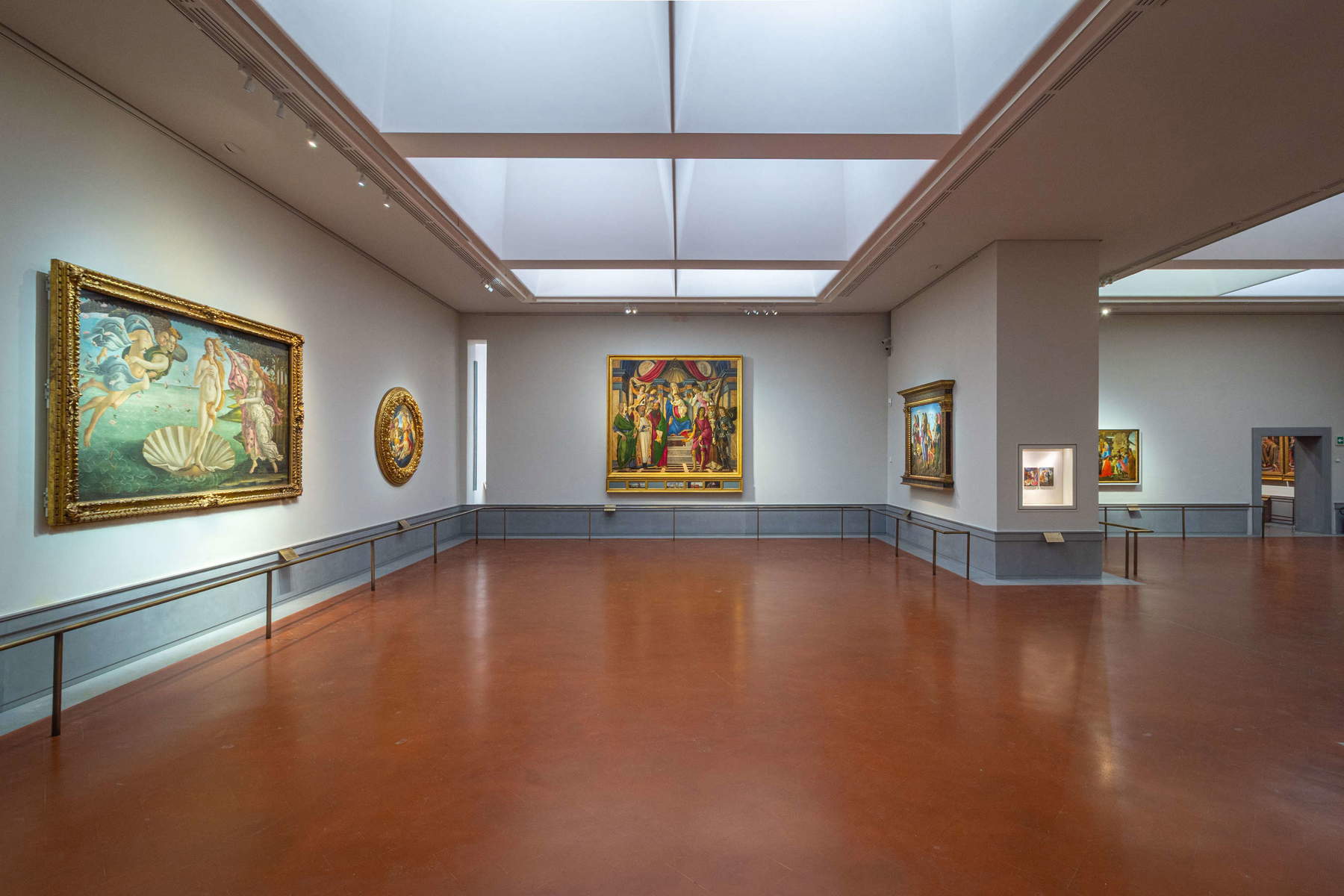
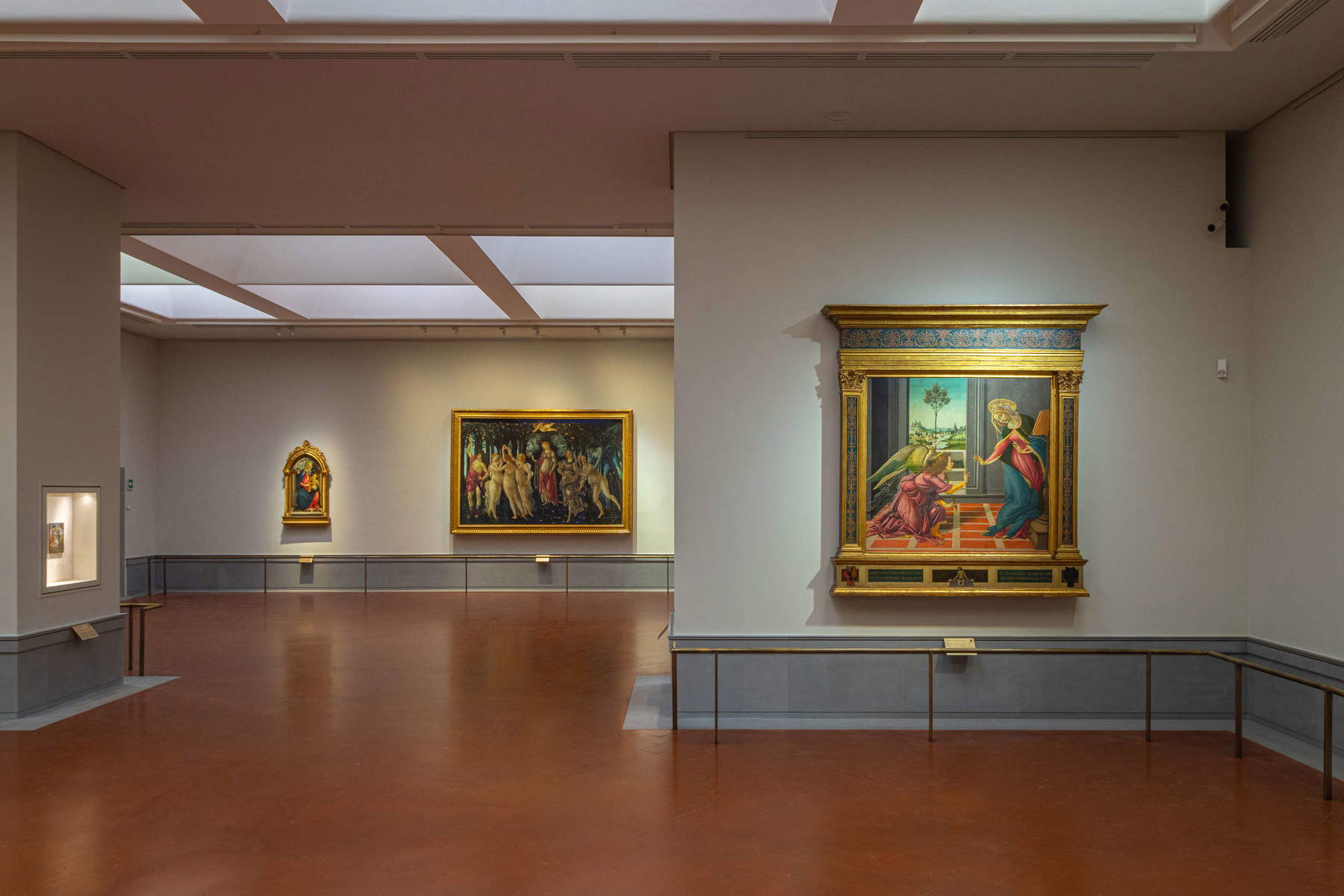
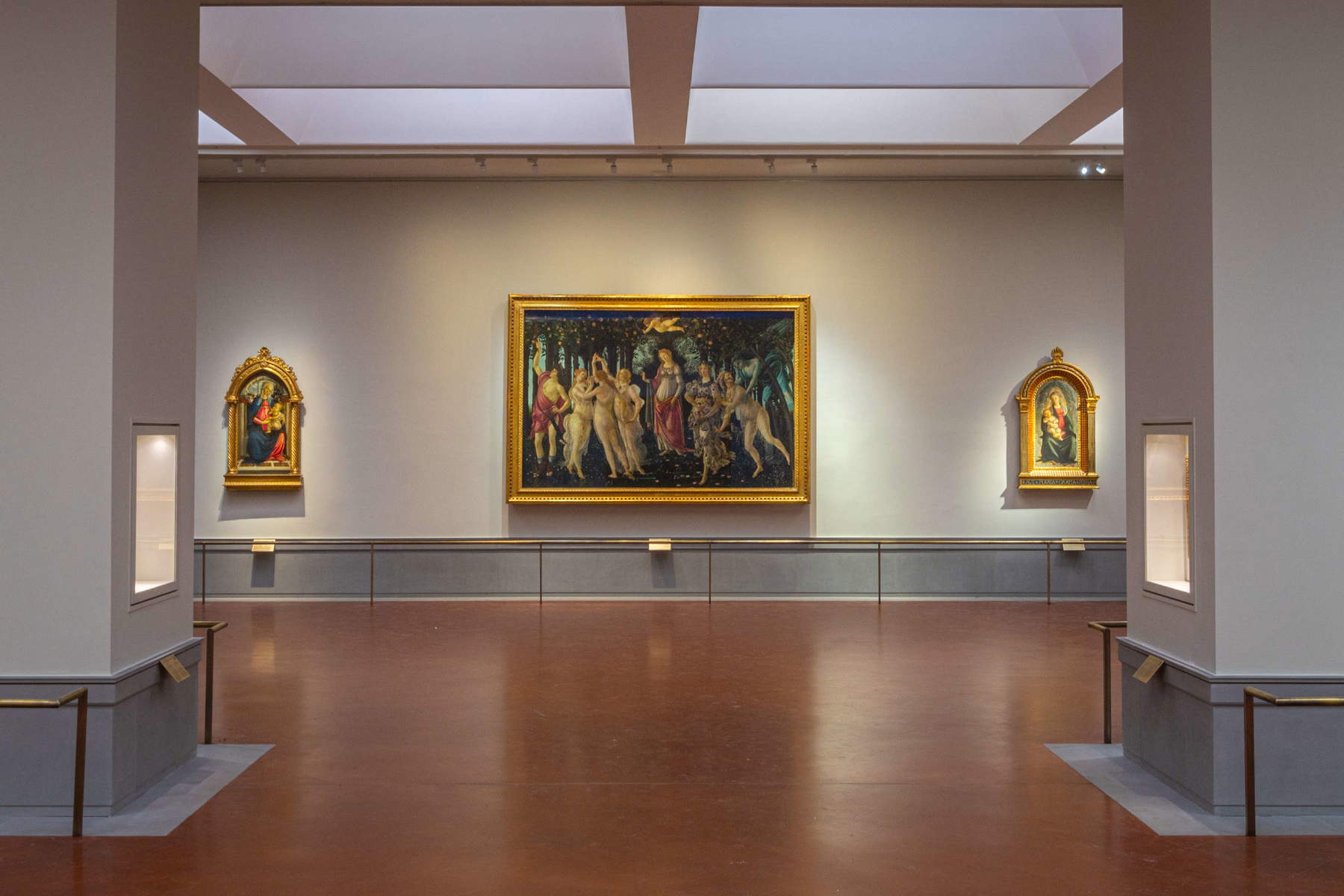
The two iconic masterpieces of Renaissance painting by Sandro Botticelli ( Florence, 1445–1510), Venus and Spring, can now be viewed at the Uffizi Galleries in a completely revamped exhibition layout that places them face to face for the first time, with the aim of establishing a direct and unprecedented visual dialogue between the master’s iconic 15th-century works. The new exhibition layout encompasses the entire section of galleries dedicated to Botticelli and is part of the broader renovation program of the Florentine museum.
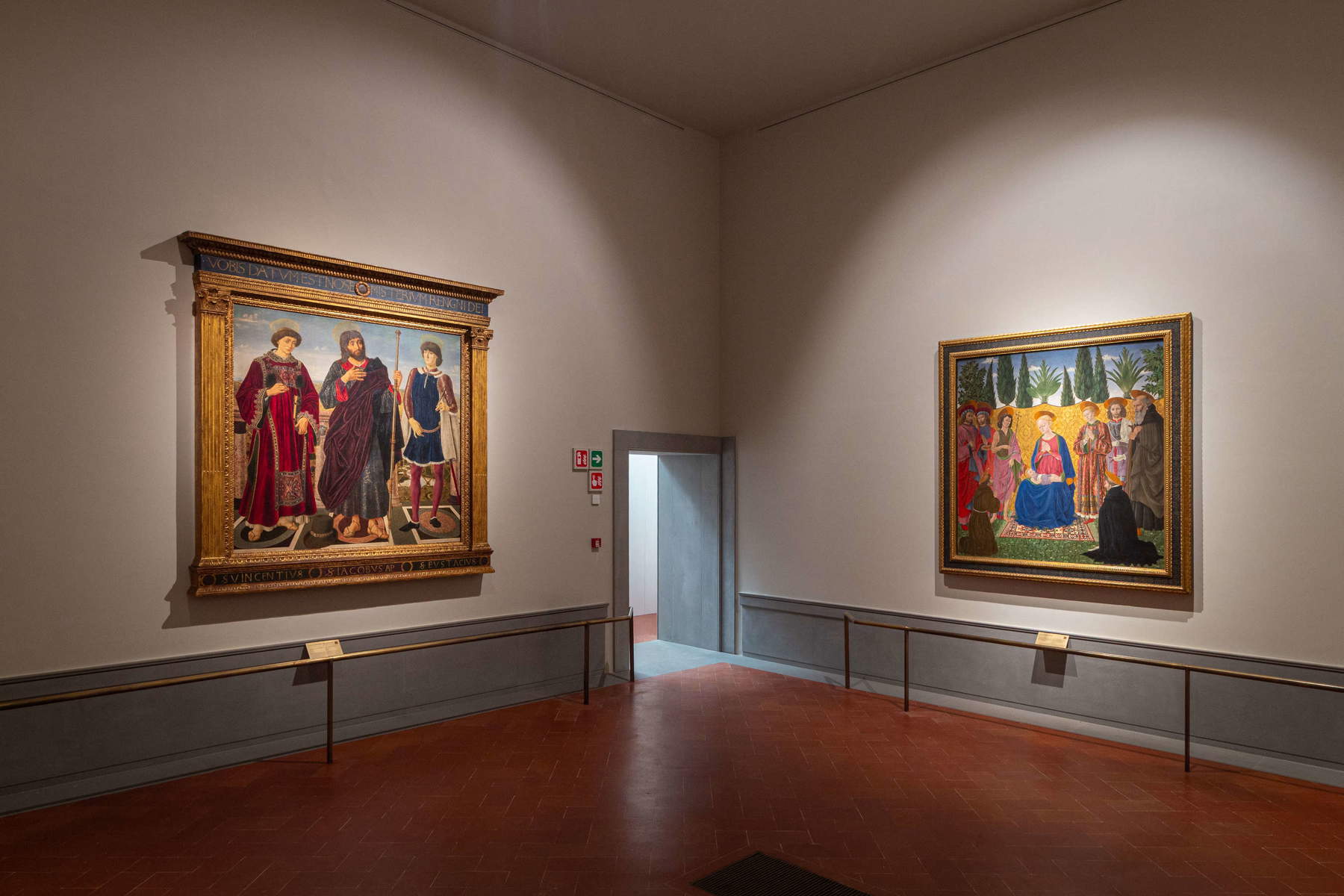
The two works are now housed in airtight display cases designed to ensure optimal conditions for conservation and security: the large external glass panels that previously interfered with the perception of the works as monumental paintings hanging on the walls have thus been removed. The intervention aims to restore a more direct and unobstructed view of the masterpieces, reducing the barriers between the work and the viewer and enhancing the overall visual impact.
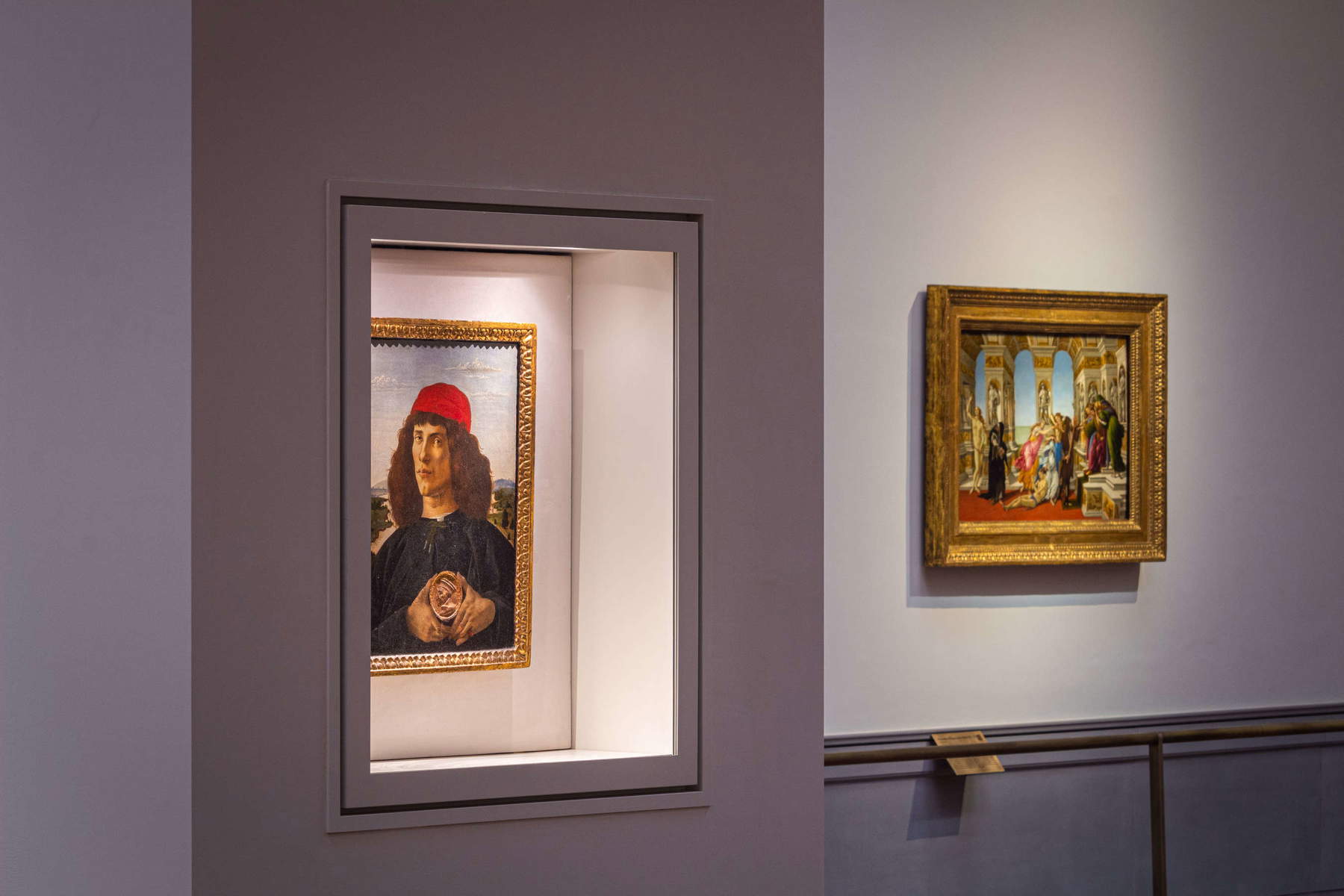
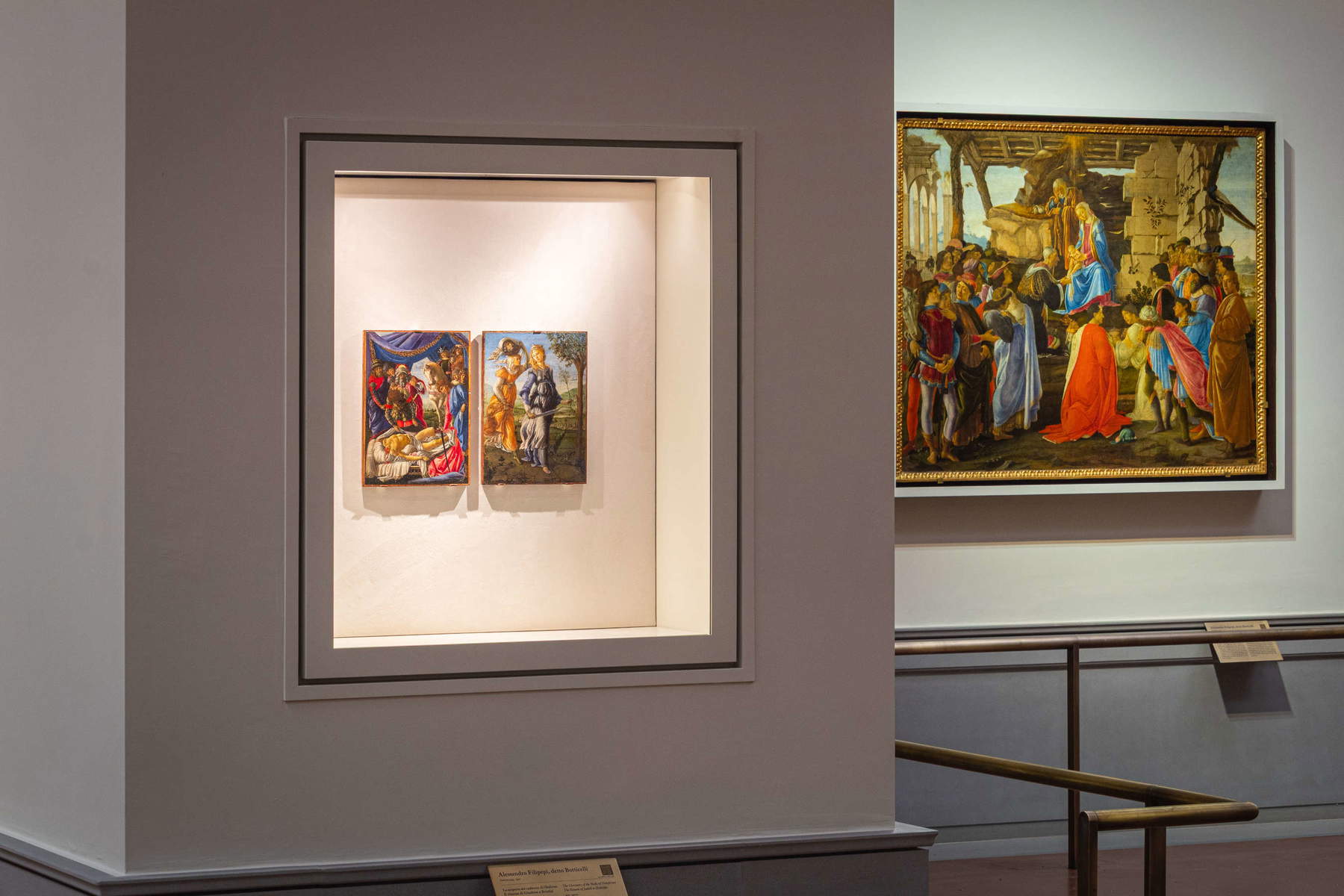
The renovation of the galleries is not limited to the two most famous works but, as mentioned, encompasses the entire section dedicated to Botticelli. It begins with the large detached frescoof the Annunciation, reimagined through a new installation that restores its original appearance, making it appear as an integral part of the wall, in continuity with its original placement in the Florentine church of San Martino. Even the smaller-scale works of great historical significance, such as the Stories of Judith andthe Man with a Medal by Cosimo the Elder, have been highlighted with new display cases and placed in the expanded passageway between the two main rooms dedicated to the Primavera and Venus.
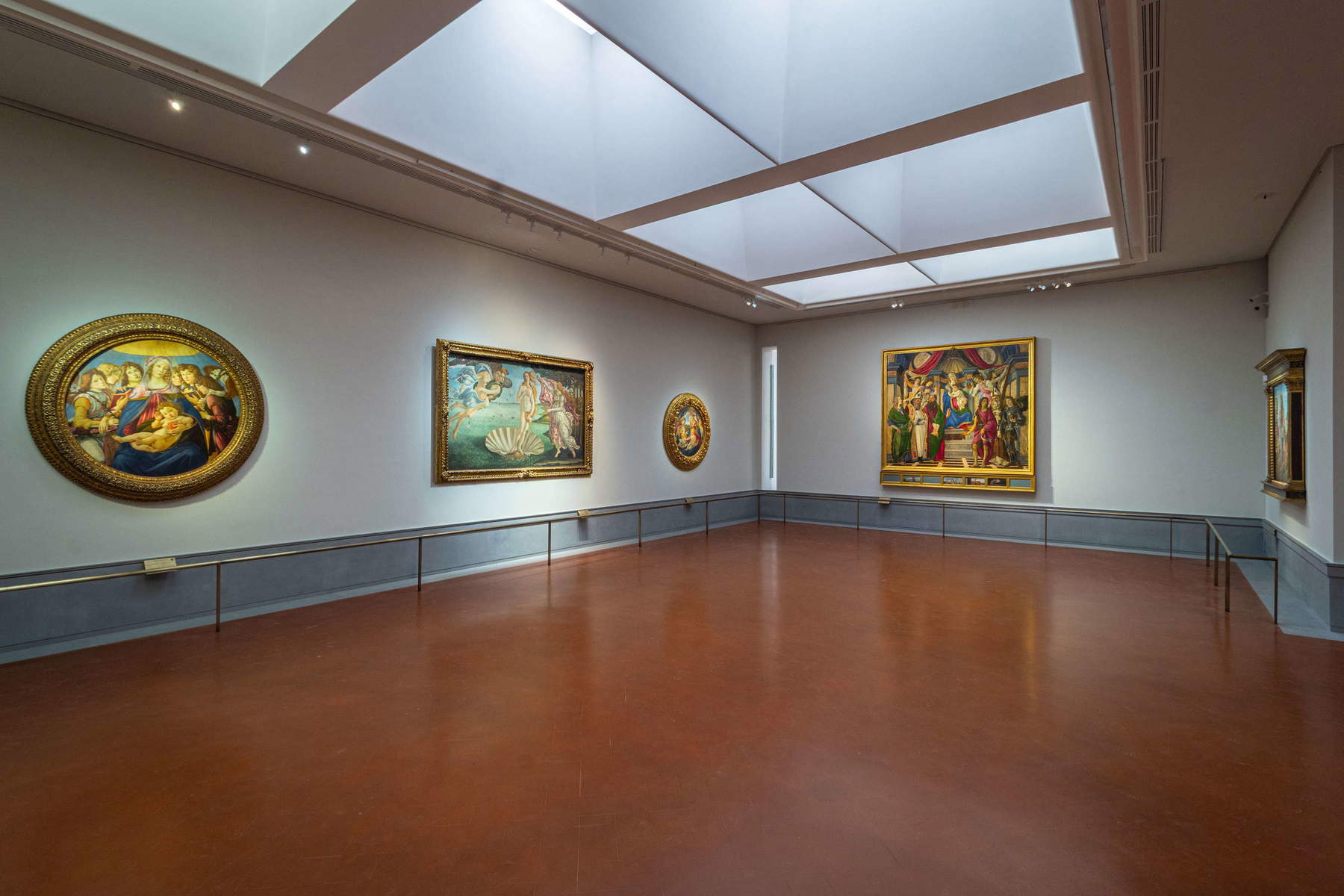
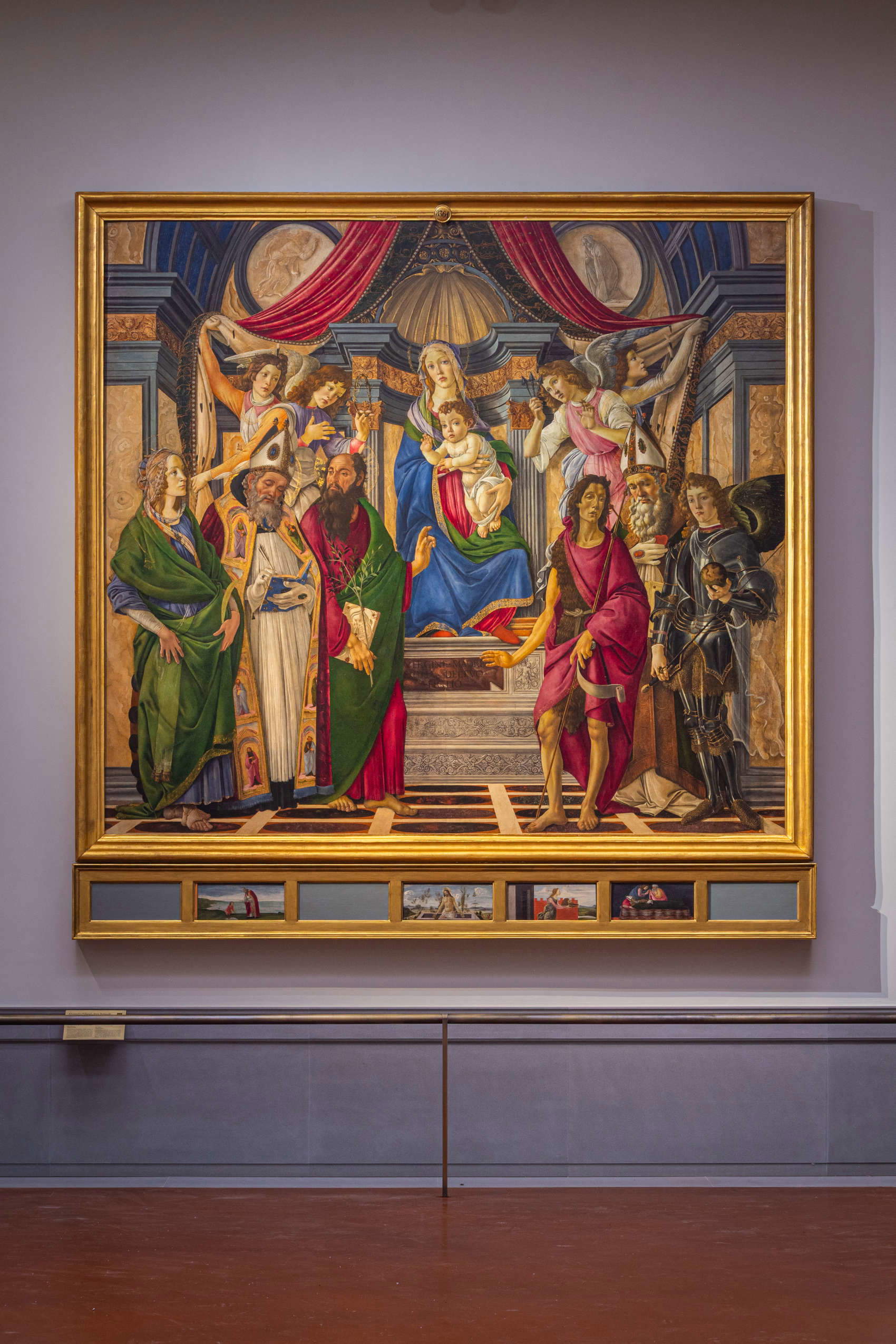
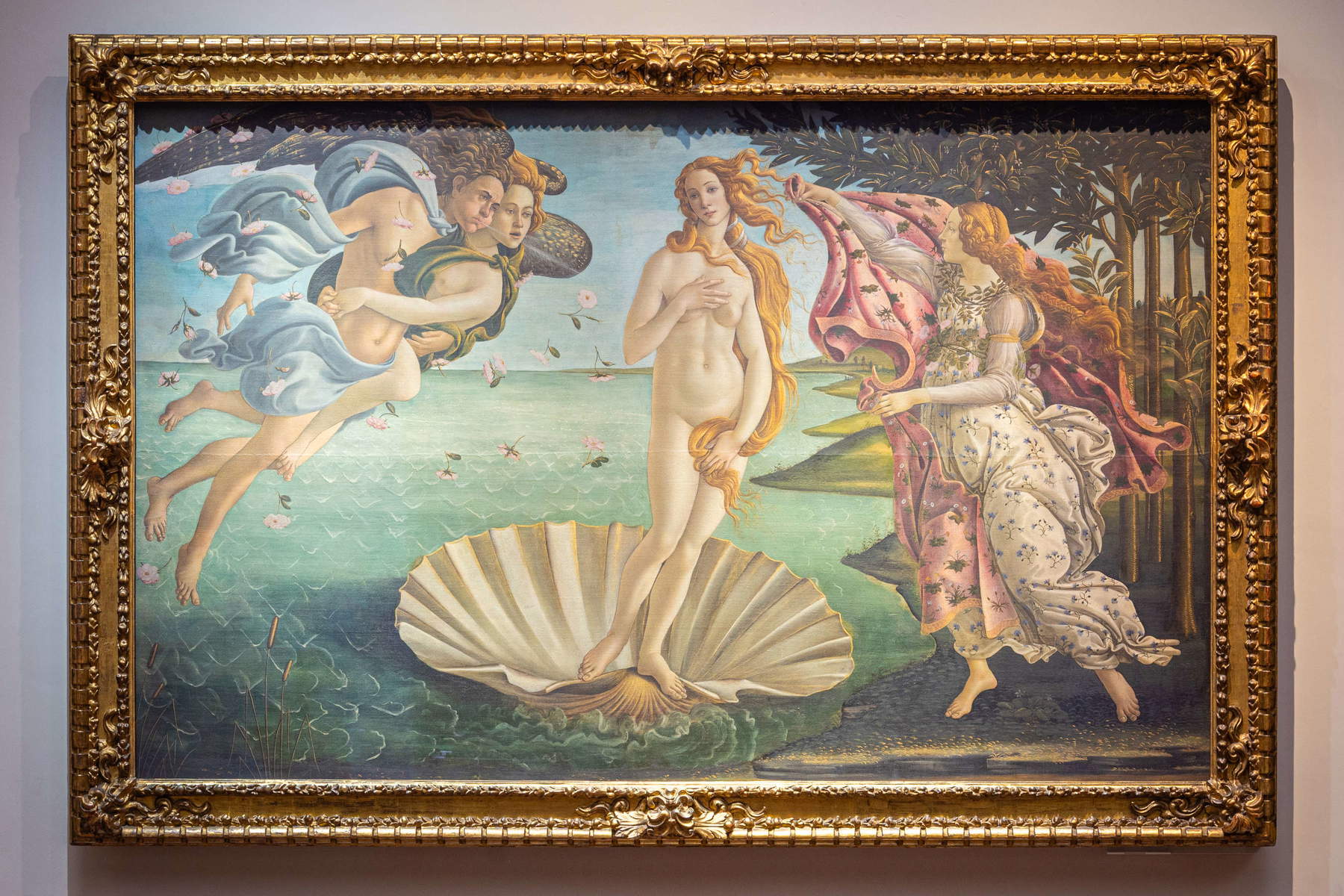
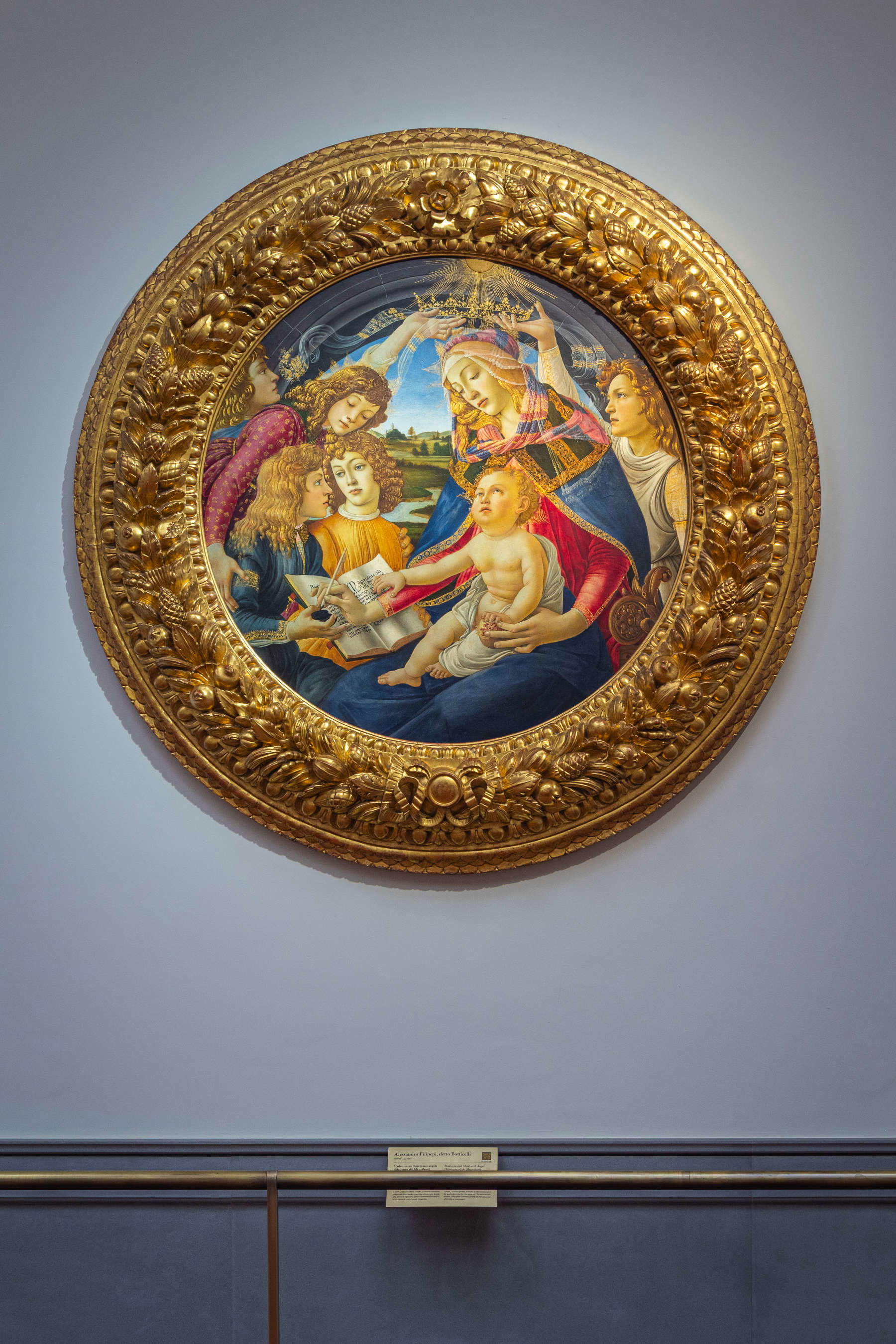
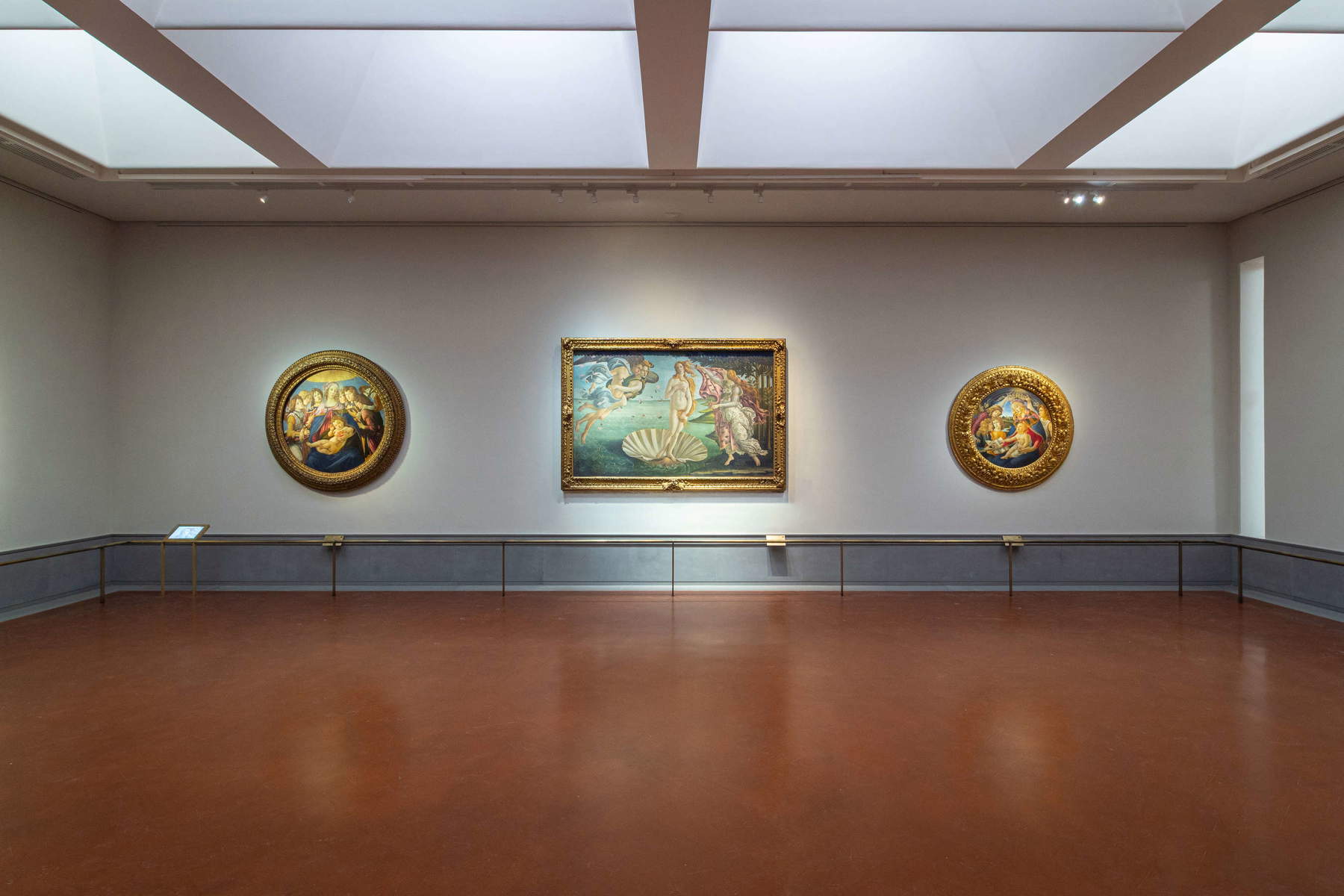
Flanking the Venus are now the tondos of the Madonna del Magnificat and the Madonna della Melagrana: the idea was to create a narrative that connects sacred and mythological iconography. Through the extraordinary resemblance of the faces of the Virgin and the goddess, the three works evoke the doctrine of prisca theologia developed by Marsilio Ficino within the Neoplatonic Academy promoted by the Medici. This concept, central to the figurative culture of the time, held that the ancient world had anticipated the truths of Christianity and that pagan deities could be interpreted as prefigurations of sacred figures, particularly in the parallel between Venus and Mary. With a similar symmetry, in the room facing *Primavera*, it is flanked by two additional Marian depictions, the *Madonna del Roseto* and the *Madonna dei Cherubini*, in order to reinforce the dialogue between classical imagery and Christian iconography that runs through Botticelli’s entire oeuvre.
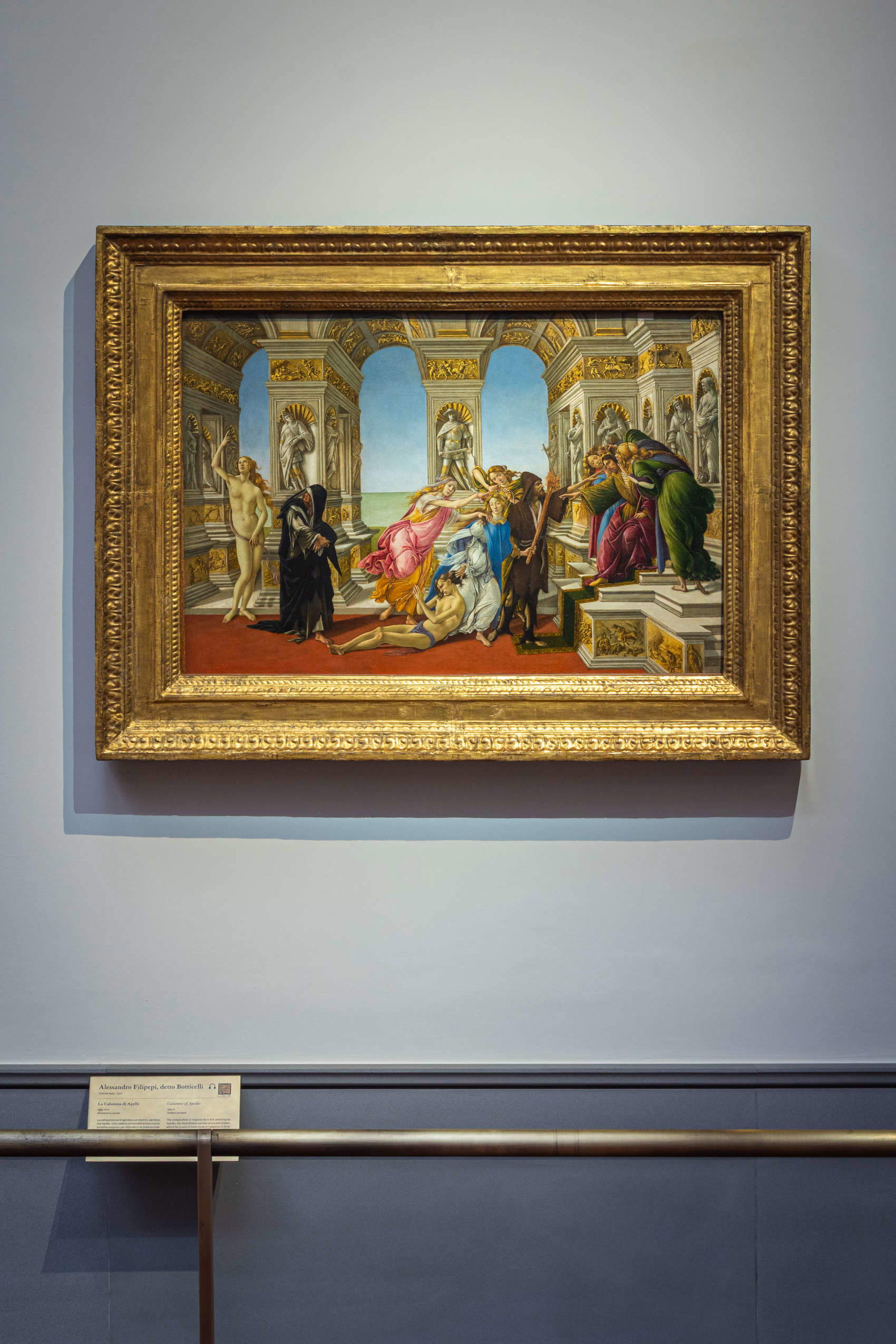
The exhibition itinerary dedicated to the artist is also structured from a historical-critical perspective.The Adoration of the Magi from the Chapel of Gaspare di Zanobi del Lama opens the sequence as a choral portrait of 15th-century Medici society, with a clear reference to the artist’s self-portrait. The exhibition concludes with Apelles’ Calumny, a work dated 1495, which marks the transition to the turbulent years of Savonarola’s Florence and reflects the spiritual crisis attributed to Botticelli’s mature phase.
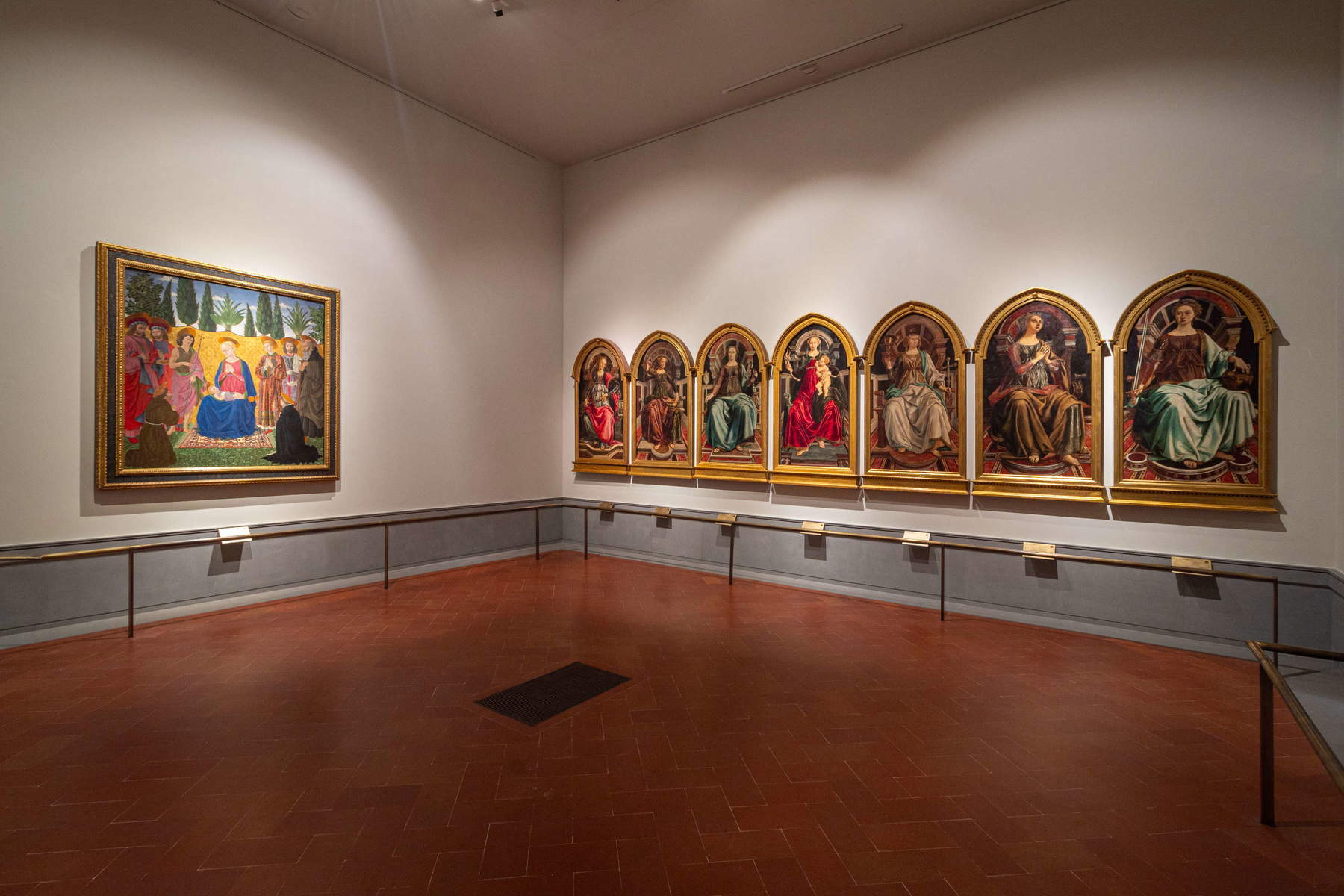
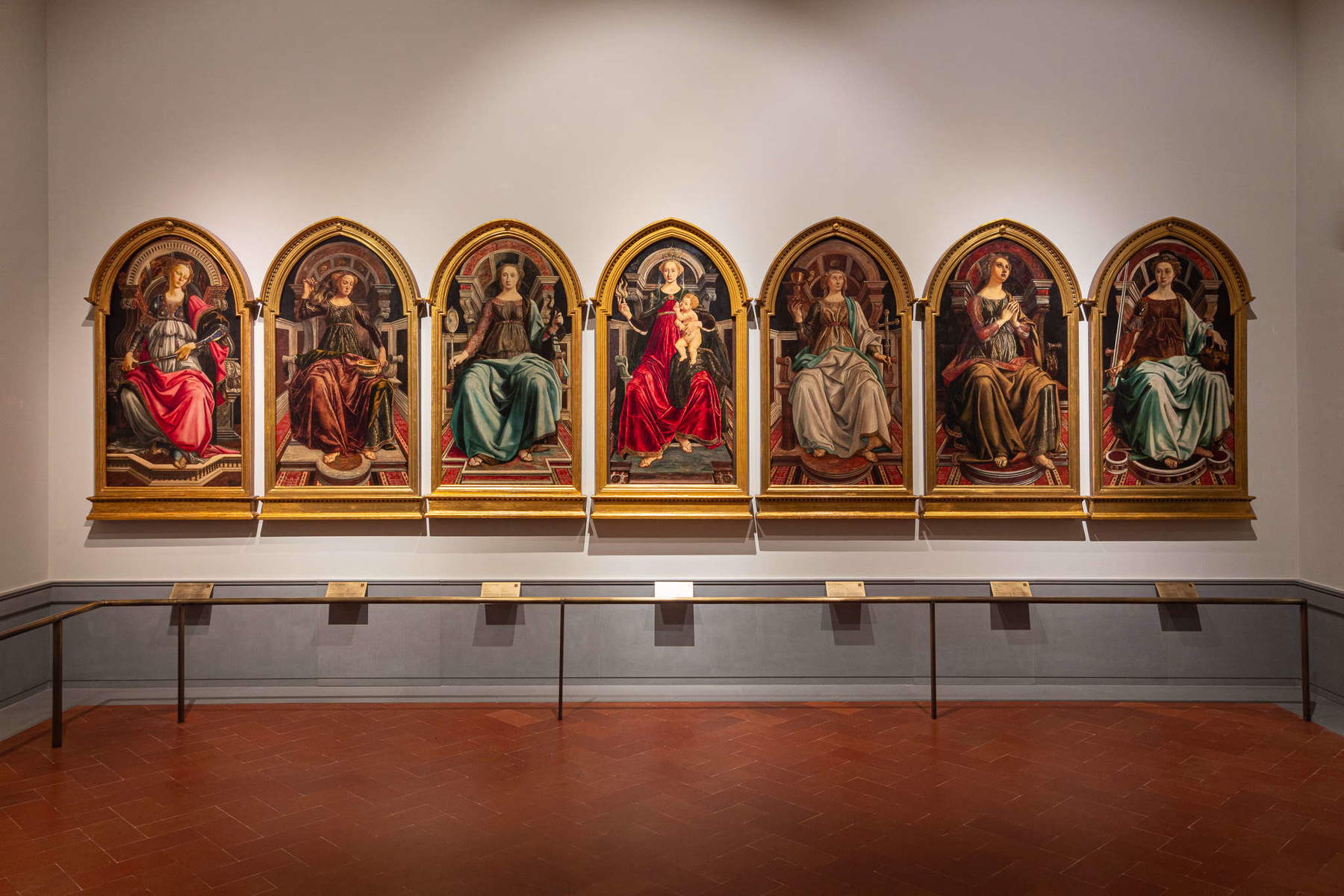
At the same time, significant changes have also been made to the room dedicated to Piero and Antonio del Pollaiolo, contemporaries of the young Botticelli. An entire wall has been redesigned to accommodate the famous Virtues, returned to their 19th-century gilded frames, with particular emphasis on Fortitude, considered Botticelli’s first documented work, dated 1470 and commissioned by Tommaso Soderini. The artistic context of Florence at the time is further reconstructed through the presence of Pollaiolo’s Altarpiece of the Cardinal of Portugal and Alesso Baldovinetti’s Cafaggiolo Altarpiece , bearing witness to the collaborations and relationships among the artists active in the Medici circle. The rooms have also been redefined through a new color scheme, a gray dubbed “Renaissance, ” designed to enhance the color rendering of the works by Botticelli and his contemporaries.
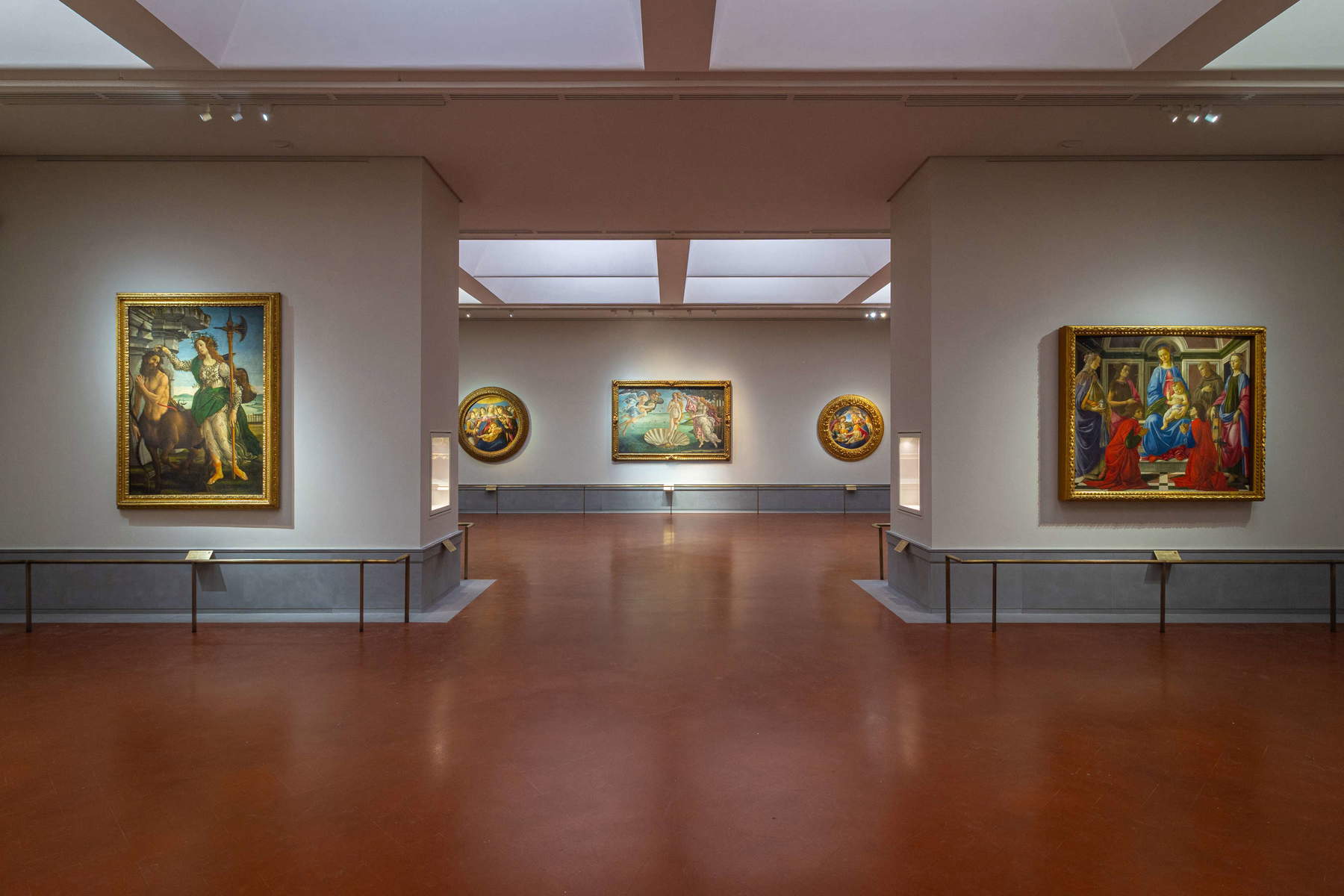
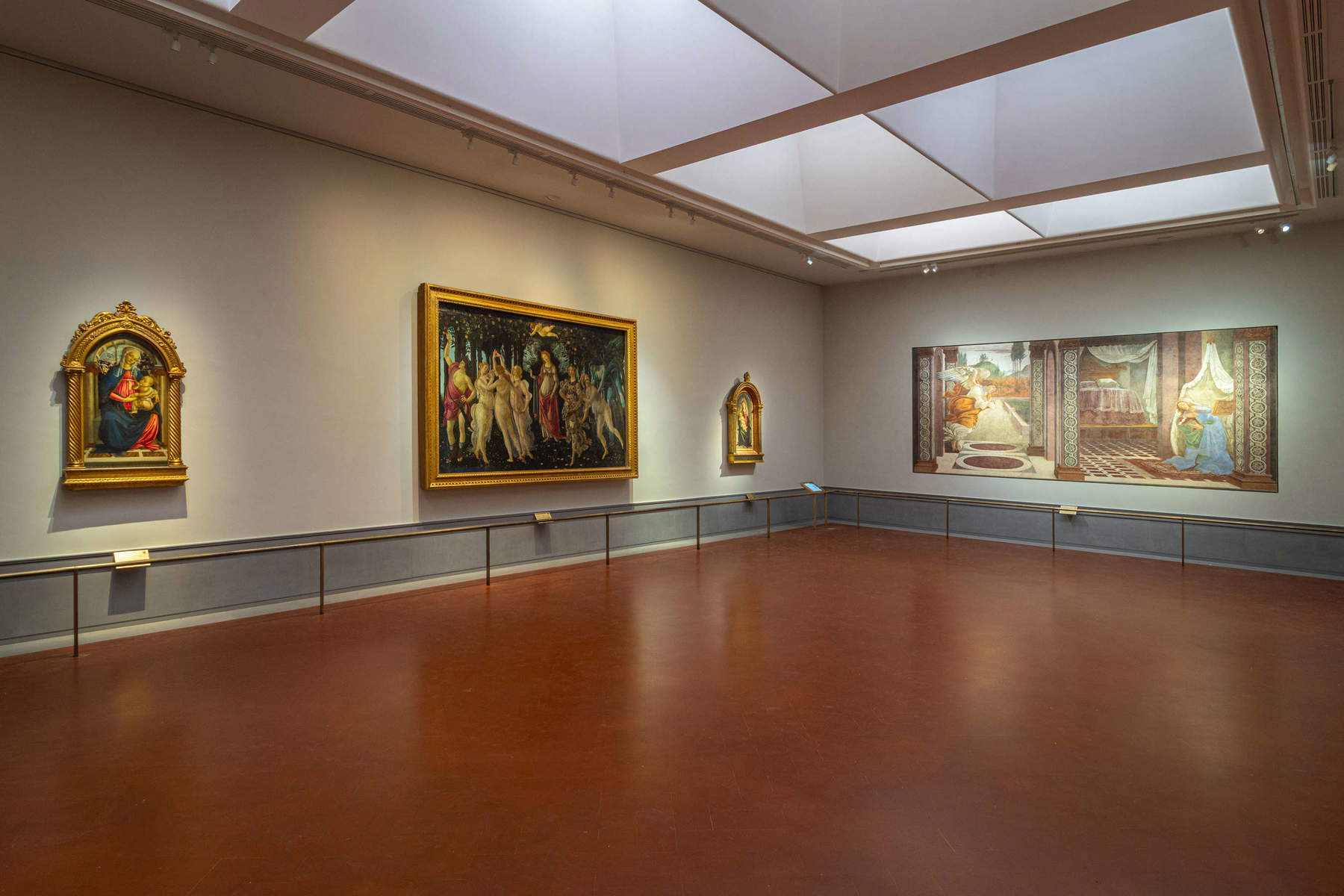
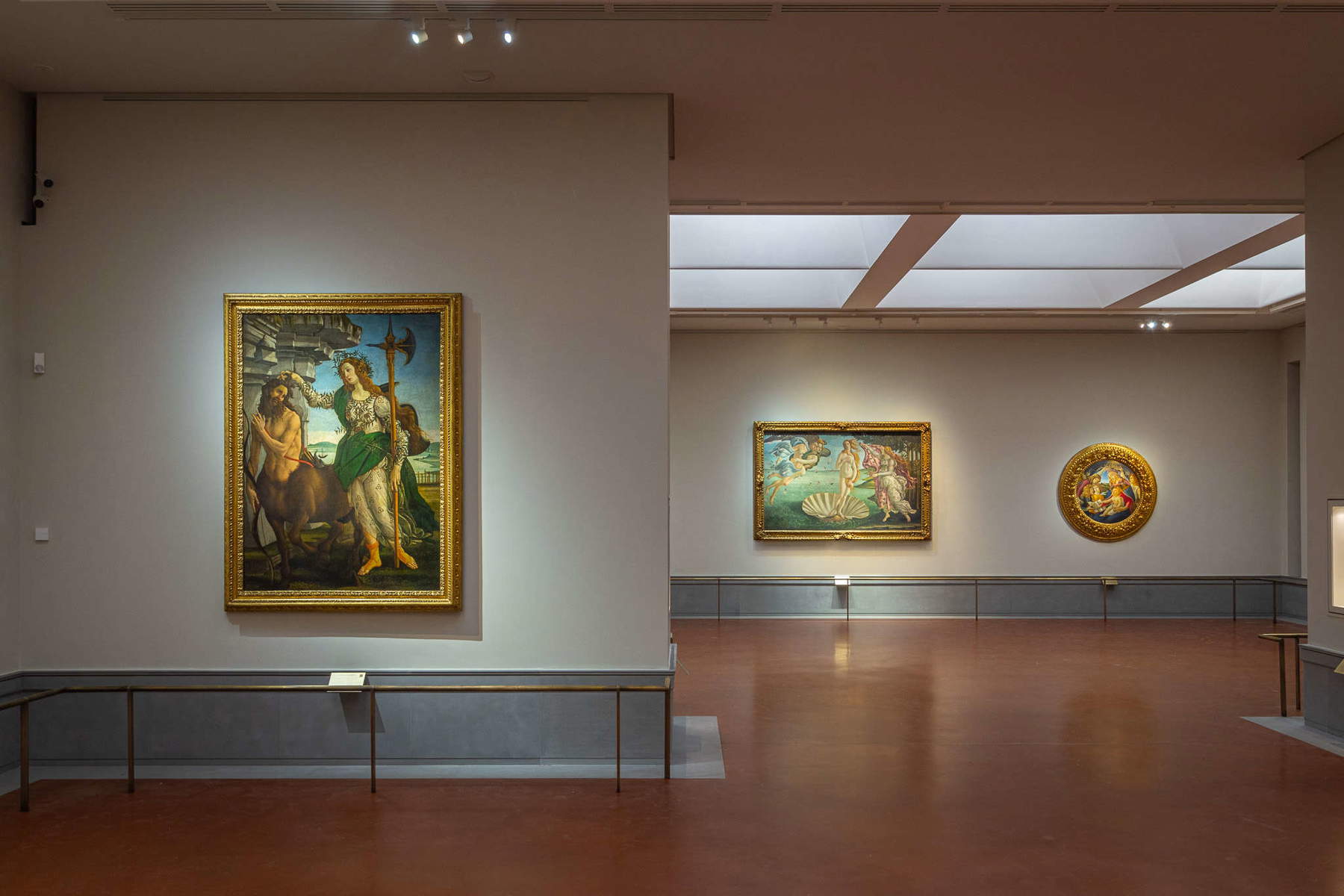
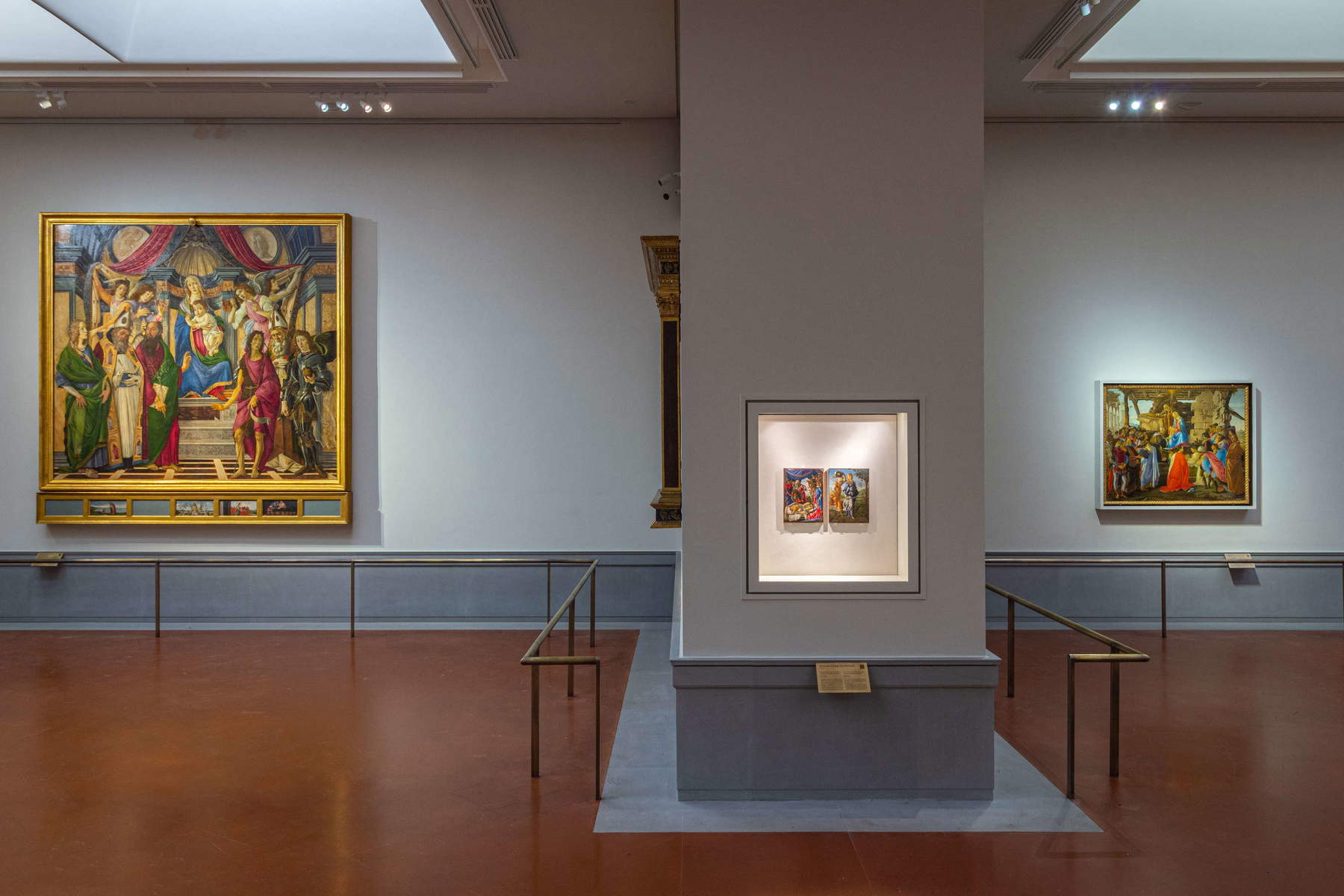
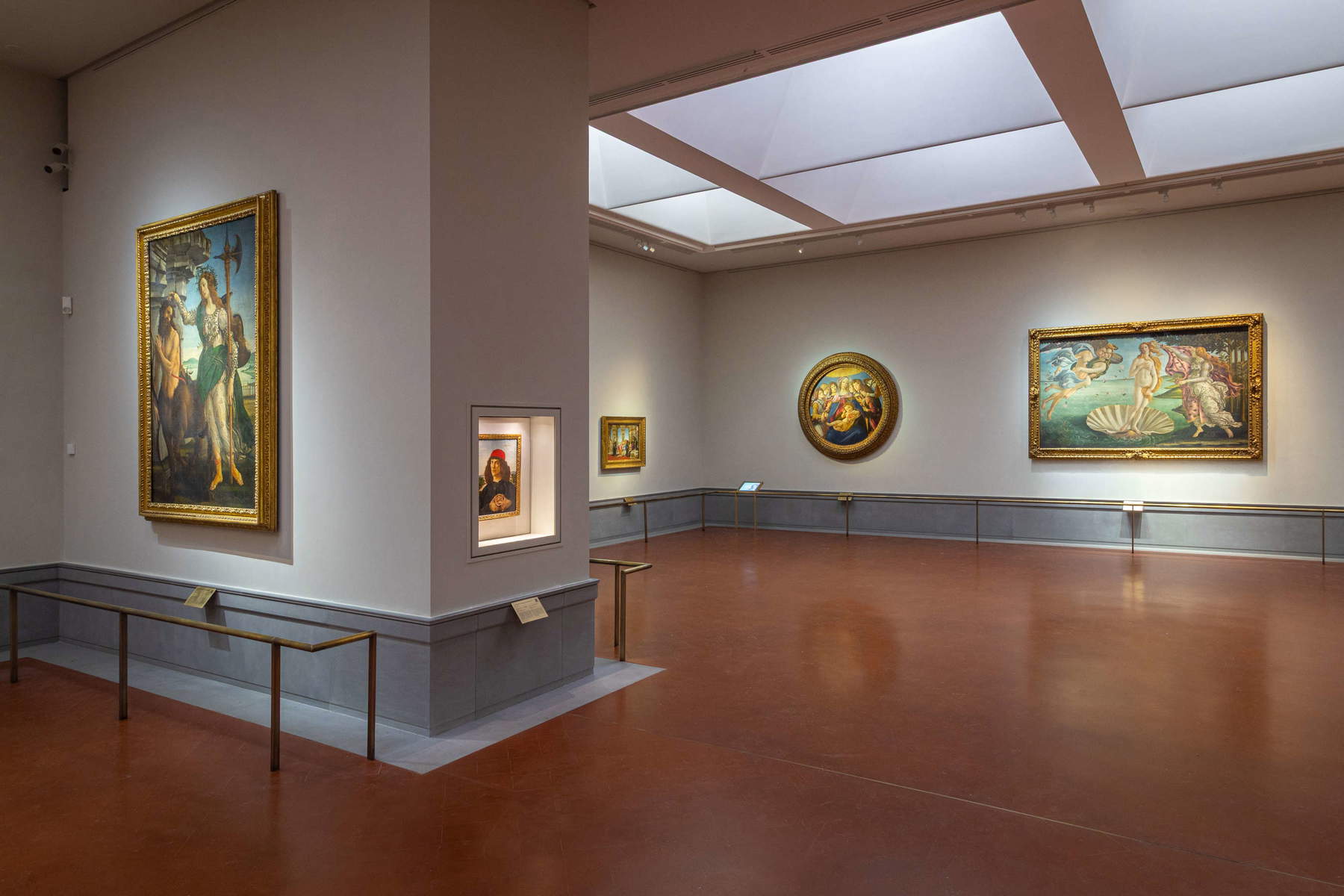
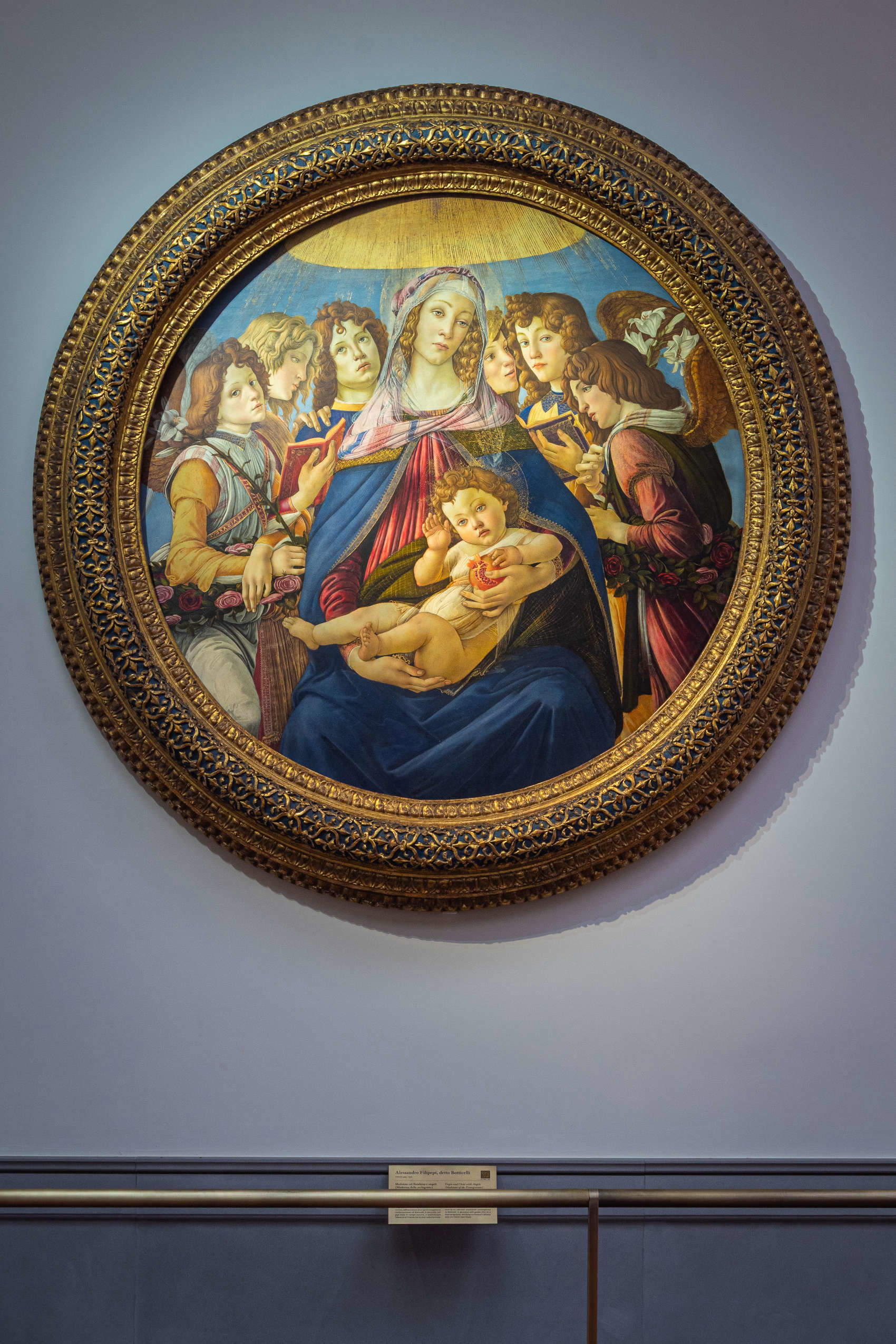
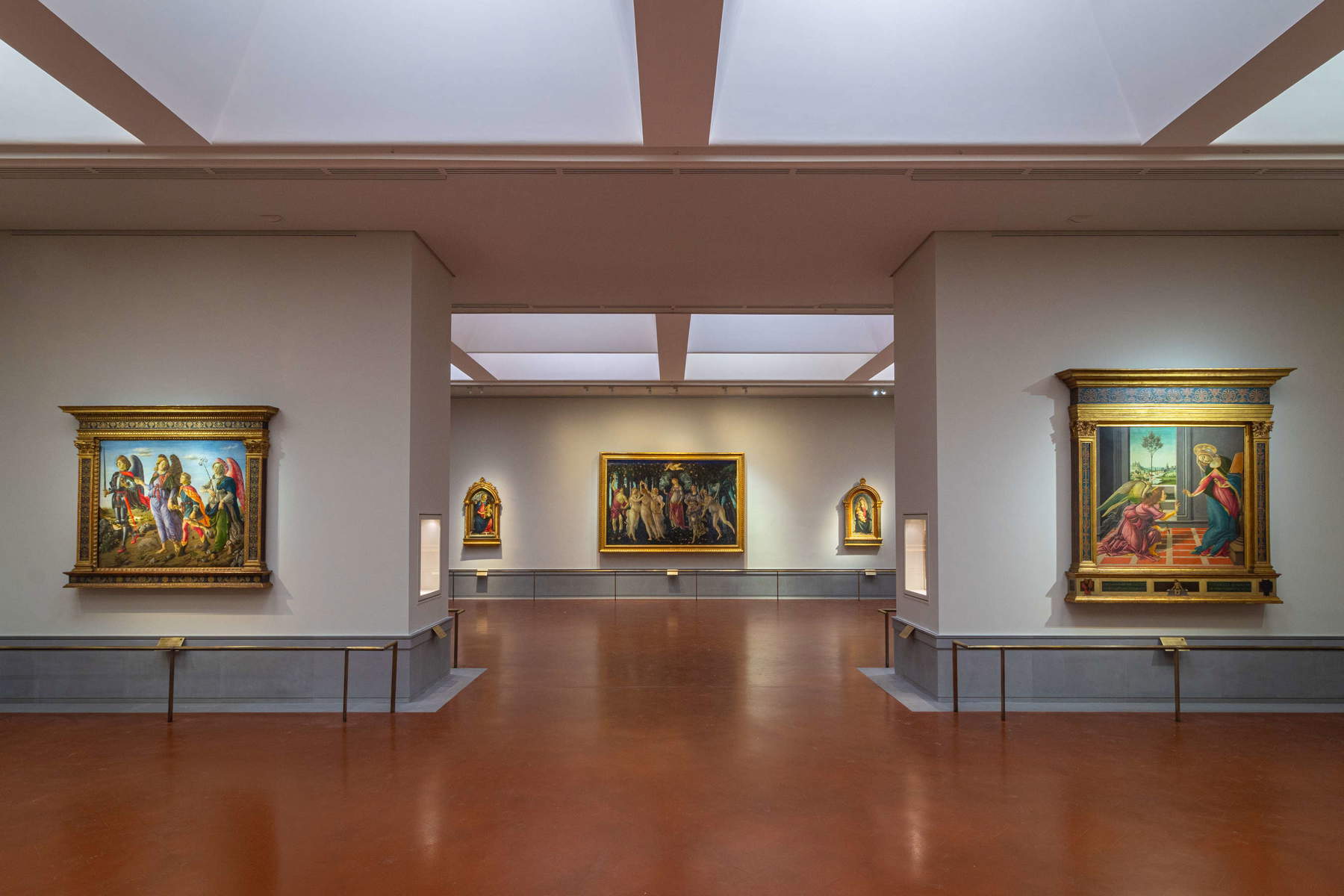
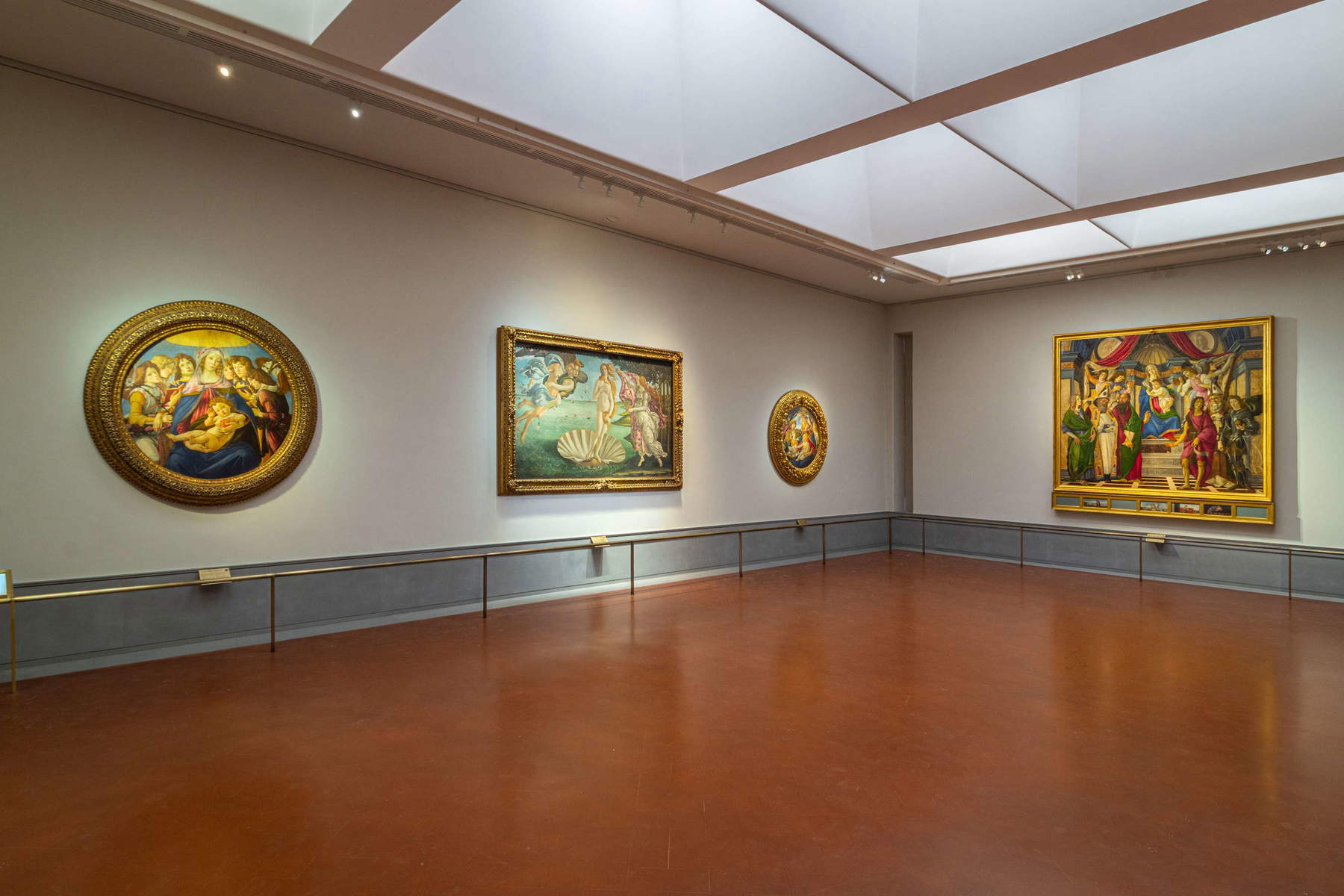
The architectural redesign also includes a new base inspired by the Galleries’ historic wood paneling, a revamped lighting system, and a completely redesigned signage system, which for the first time incorporates video displays and QR codes for access to in-depth digital content. Information about the works is now also available via mobile devices, through a digital mediation system that complements the traditional museum captions.
The project was carried out in collaboration with the relevant Superintendents of Pisa and Parma, with technical and administrative coordination entrusted to Valerio Tesi as Sole Project Manager and with the support of architect Emanuela Rossi. The project represents the concrete implementation of a reinstallation program announced in 2024 and aimed at a comprehensive reimagining of the Uffizi Galleries’ museum identity.
According to the director of the Galleries, Simone Verde, “today marks an important new milestone—certainly not the last—in the comprehensive reorganization of the Galleries announced in 2024, which has already enabled the opening of numerous completely renovated spaces, including the Cabinet of Ancient Marbles, the Sala della Niobe, and the Gabinetto delle Matematiche. The goal of this project—which is at once philological, aesthetic, and art-historical—is to reconstitute the vast and invaluable monumental and collection heritage of the Medici so that the Galleries, while renewing themselves without betraying their identity, may continue to be what they have always been: the most beautiful museum in the world.”
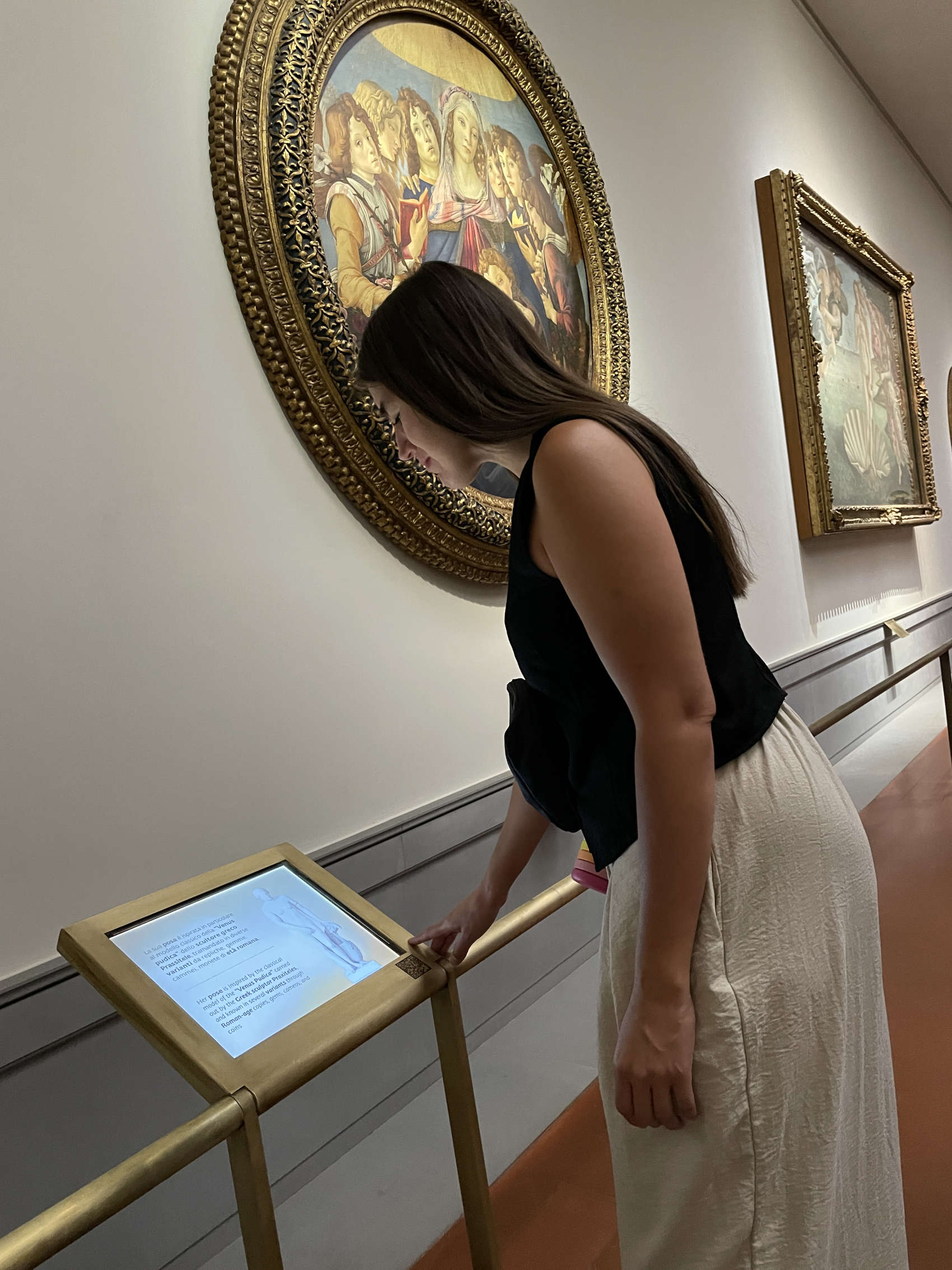
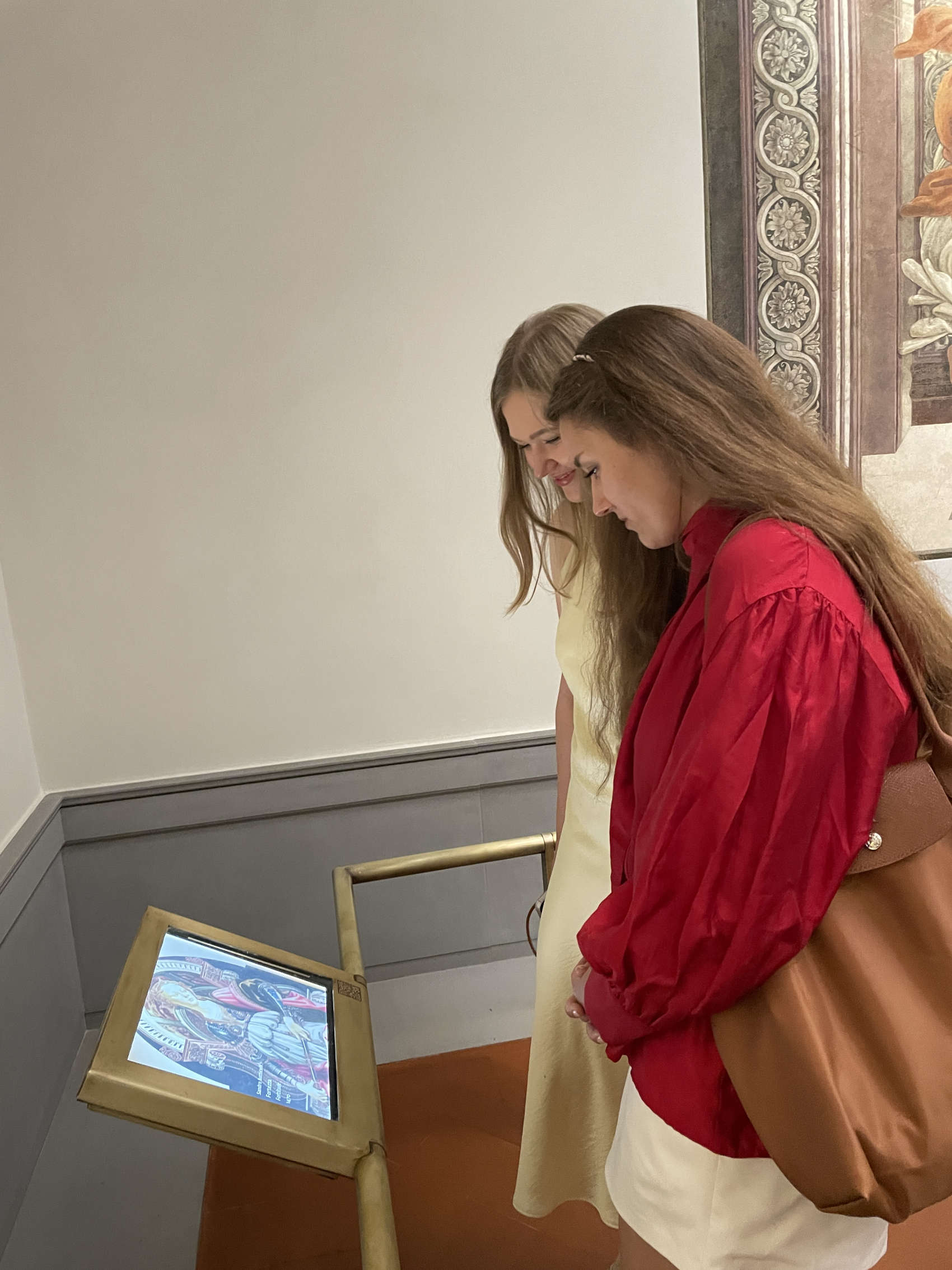
The redesign is now continuing to include the areas outside the exhibition halls. Solid wood seating inspired by Vasari’s designs has been installed in the second-floor corridors, while the signage is being replaced with highly legible bronze panels. The protective devices for the artworks have also been redesigned to be more discreet and consistent with the building’s Renaissance architecture.
Overall, the new layout of the Botticelli Galleries is part of a broader strategy to renovate the Uffizi Galleries, launched in 2023 and progressively extended to various areas of the museum. The project aims to offer a new perspective on the Medici heritage through exhibition solutions that combine conservation, accessibility, and a critical reinterpretation of the collections.
|
| Uffizi: Venus vs. Spring—the two works face each other in the redesigned Botticelli galleries |

Warning: the translation into English of the original Italian article was created using automatic tools. We undertake to review all articles, but we do not guarantee the total absence of inaccuracies in the translation due to the program. You can find the original by clicking on the ITA button. If you find any mistake,please contact us.




























 IT
IT FR
FR DE
DE ES
ES CN
CN


