





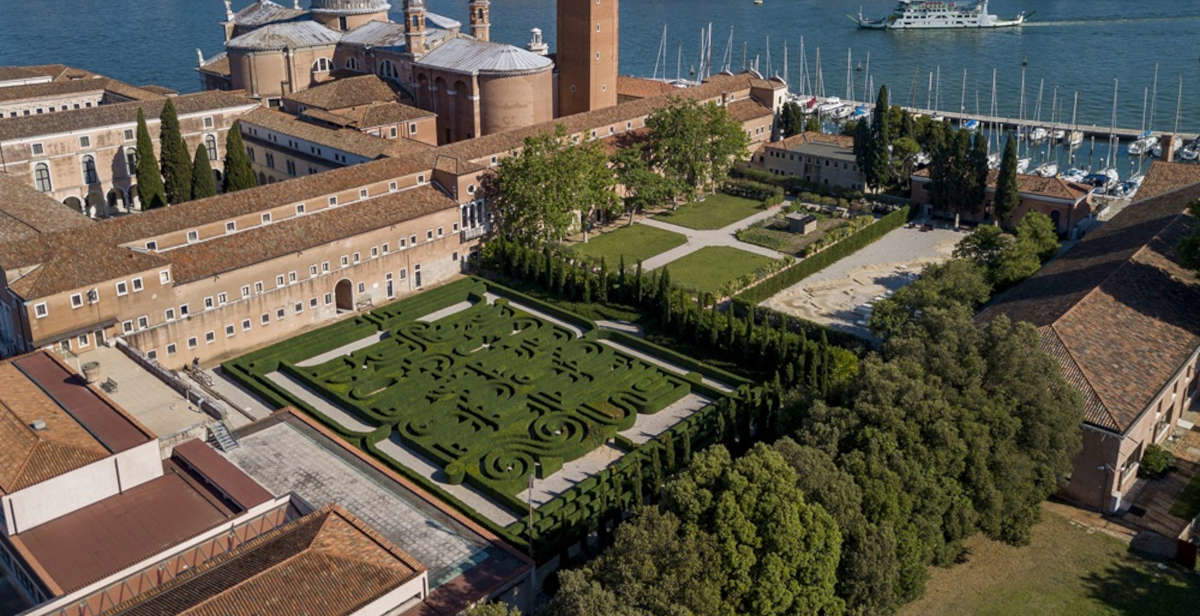
The Borges Labyrinthon the island of San Giorgio Maggiore in Venice is preparing to reopen to the public following a major conservation restoration project sponsored by the Giorgio Cini Foundation and supported by PwC Italy. One of the most fascinating sites on the Venetian cultural scene (read more here) will be open to visitors again starting July 10, while the official press presentation is scheduled for July 9 at 11:30 a.m. The restoration project concerns a work that over the years has become one of the most beloved attractions on the island of San Giorgio Maggiore and one of the most evocative labyrinths in Italy. Dedicated to the Argentine writer Jorge Luis Borges, whose 40th anniversary of his passing falls this year, the labyrinth represents a meeting point between architecture, literature, landscape, and contemporary art.
The work was made possible thanks to the support of PwC Italia, which served as the project’s main sponsor as part of the “PwC for Culture” initiative. Through this initiative, the organization—which provides professional services to businesses—has for years been carrying out activities dedicated to promoting Italy’s cultural heritage, with the aim of fostering the country’s socio-cultural growth and creating opportunities to share the nation’s artistic wealth both within its professional community and in the regions where it operates.
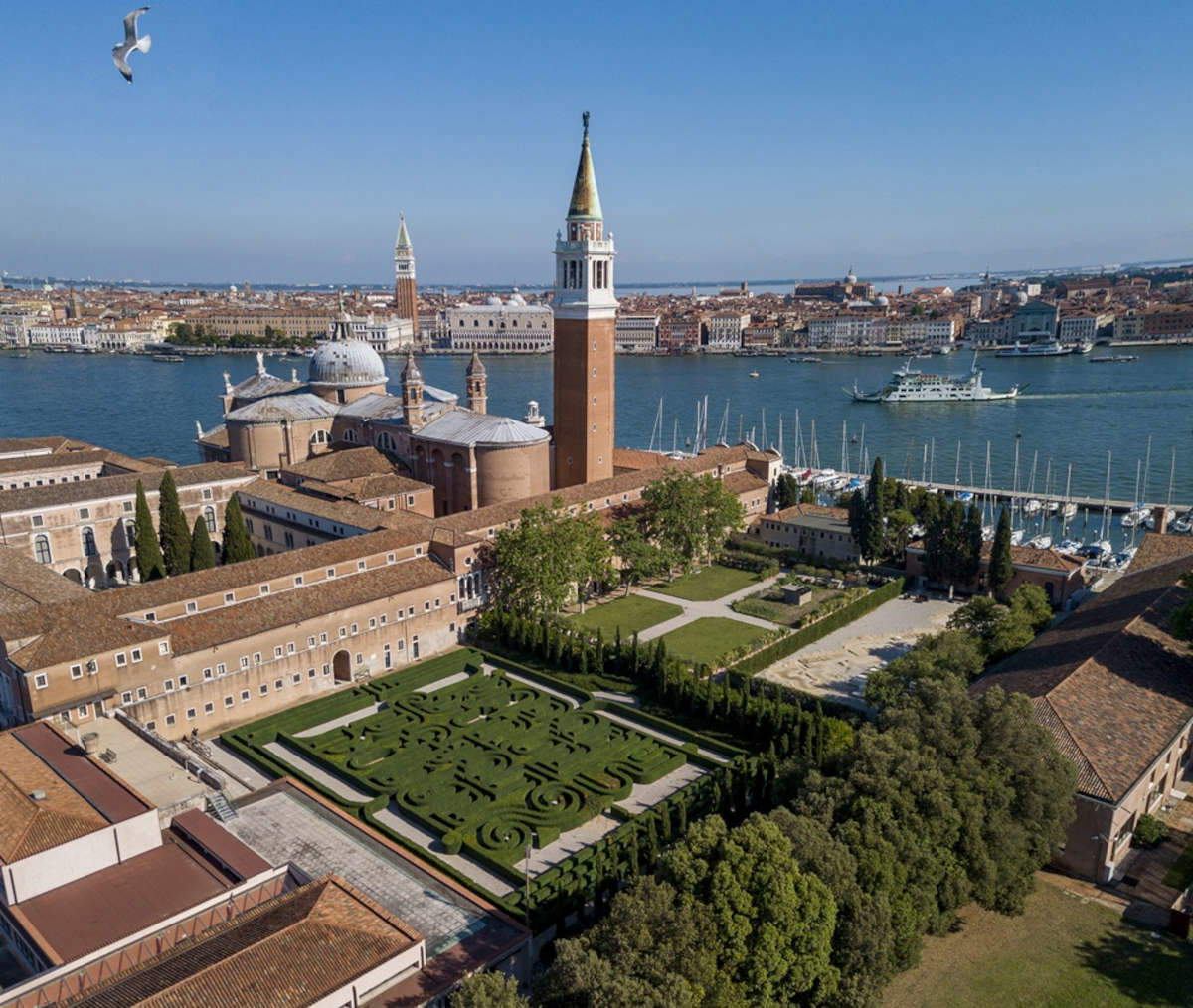
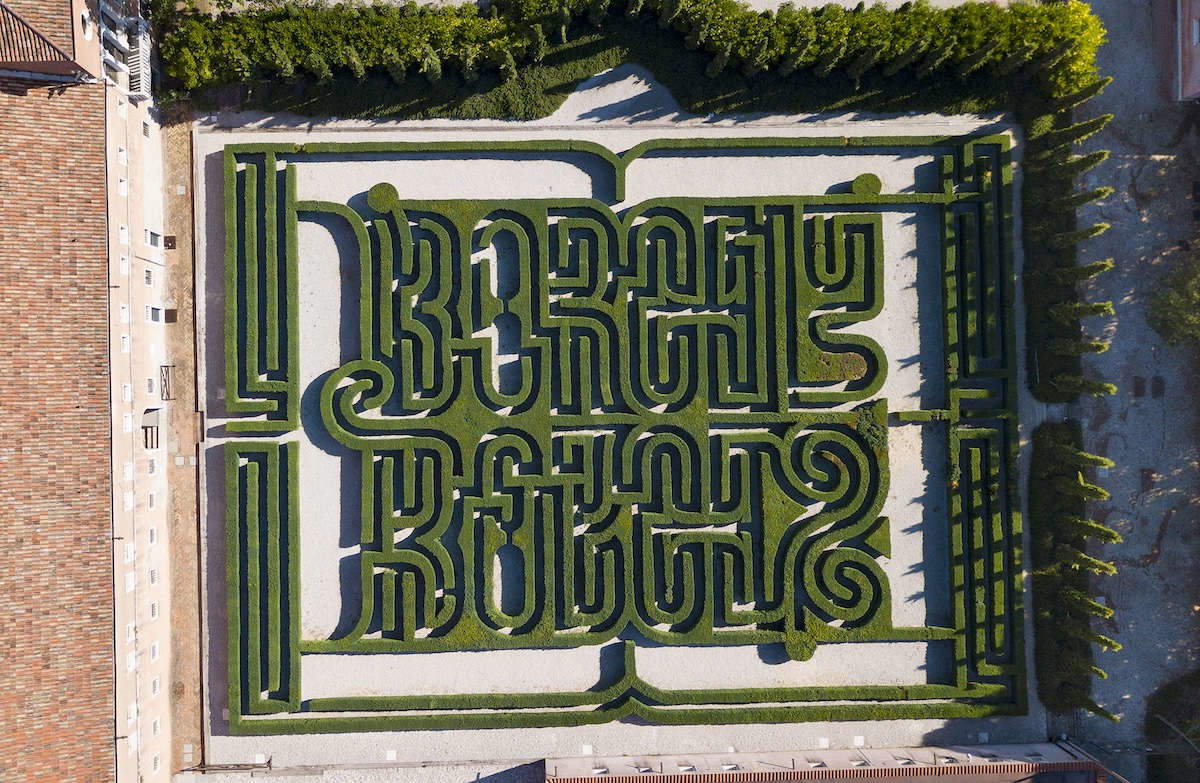
The Borges Labyrinth was designed by British architect and diplomat Randoll Coate and built in 2011 to mark the twenty-fifth anniversary of Jorge Luis Borges’s death. The work stems from the deep friendship that bound Coate to the Argentine writer and their shared fascination with the theme of the labyrinth, a central element in Borges’s literary imagination. Borges, who had a particular passion for Venice, considered the lagoon city a sort of living labyrinth—a web of paths, alleys, bridges, and canals where visitors are constantly invited to lose themselves and find themselves again. From this inspiration emerged a work that translates many of the themes present in the writer’s oeuvre into landscape and architectural form, ranging from the relationship between memory and infinity to reflections on time, knowledge, and destiny.
Fifteen years after its creation, the labyrinth required conservation work capable of preserving its aesthetic and functional integrity. The boxwood hedges, belonging to the species Buxus sempervirens of the Buxaceae family and used to define the path, in fact required careful maintenance aimed at restoring the uniformity of the vegetation and fully restoring the legibility of the original design conceived by Coate.
The work covered the entire length of the path, which extends for approximately 1,150 meters within the plant structure. The main objective was to restore the complex to its original configuration, ensuring a clear and coherent interpretation of the design and once again enhancing the visitor experience. The reopening represents a significant moment not only for the Giorgio Cini Foundation but also for Venice’s cultural heritage. Over the years, the Borges Labyrinth has become one of the most popular destinations for visitors to the island of San Giorgio Maggiore, attracting literature enthusiasts, landscape scholars, architects, and tourists from around the world every day.
According to Renata Codello, Secretary General of the Giorgio Cini Foundation, “the Borges Labyrinth is one of the most beloved places on the Island of San Giorgio Maggiore. A magnificent presence that unites the ancient with the contemporary, architecture with literature and the landscape. The Foundation thanks PwC Italia for sharing this initiative to preserve beauty and the many meanings it represents. It is an excellent contribution to a broader project of restoration and ongoing care for the island and its cultural heritage.”
The work on the Borges Labyrinth is part of a broader strategy dedicated to the conservation and enhancement of the historic and monumental spaces of San Giorgio Maggiore, one of Venice’s major cultural hubs. The Giorgio Cini Foundation has been committed for years to protecting the island’s artistic, architectural, and landscape heritage, promoting initiatives that combine conservation, research, and public access.
For PwC Italy, supporting the work on the labyrinth represents another step in a well-established commitment to cultural enhancement. In recent years, the organization has in fact contributed to various restoration and renovation projects at some of Italy’s most important cultural institutions. Among these is its support for the work carried out between 2023 and 2024 in the Gardens of the Accademia Carrara in Bergamo, now known as the PwC Gardens. In 2025, PwC Italy also participated in the restoration of the painting “The Last Supper” by the Flemish painter Pieter Paul Rubens, part of the permanent collection of the Pinacoteca di Brera in Milan. In the same year, it contributed to the completion of the restoration of the famous paper nativity scene created by Francesco Londonio, which is traditionally displayed during the Christmas season at the Diocesan Museum in Milan.
Giovanni Andrea Toselli, Chairman and CEO of PwC Italy, also highlighted the significance of the initiative. “We chose with great conviction,” he states, “to support the restoration of the Borges Labyrinth on the island of San Giorgio Maggiore in Venice, a city that represents an absolute cultural landmark for Italy and the world and which, together with the entire Northeast, constitutes an important hub for PwC Italy. Being able to breathe new life into such a beloved and symbolic place is a source of particular pride for us. Our collaboration with the Giorgio Cini Foundation gives us the opportunity, once again, to pursue our goal of promoting our country’s artistic and cultural heritage and making it increasingly accessible.”
Starting July 10, visitors will once again be able to walk the 1,150 meters of paths through the labyrinth, rediscovering a work that continues to represent one of the most fascinating international tributes to Jorge Luis Borges and one of the most evocative cultural spaces in contemporary Venice.
 |
| Venice: The Borges Labyrinth reopens to the public on July 10 following maintenance work |

Warning: the translation into English of the original Italian article was created using automatic tools. We undertake to review all articles, but we do not guarantee the total absence of inaccuracies in the translation due to the program. You can find the original by clicking on the ITA button. If you find any mistake,please contact us.





























 IT
IT FR
FR DE
DE ES
ES CN
CN


