





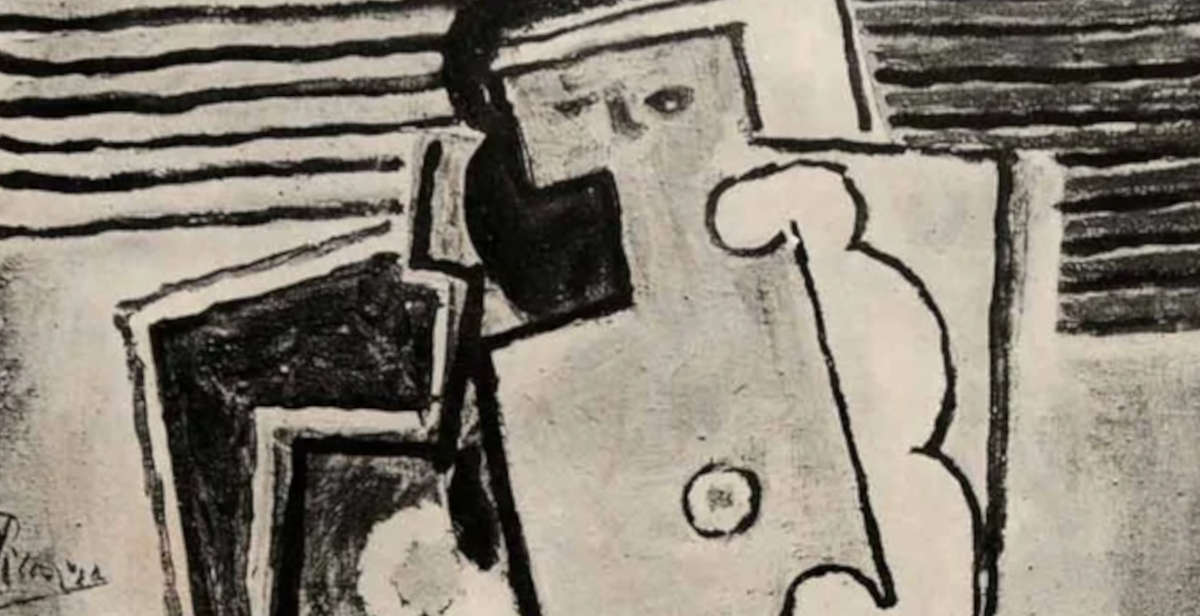
A painting by Pablo Picasso stolen more than sixty years ago has been recovered, and now the Guggenheim Museum in New York wants it back. The Solomon R. Guggenheim Foundation has filed a lawsuit in the New York State Supreme Court to secure the return of the painting, titled *Femme dans un fauteuil* (“Woman in an Armchair”), an oil-on-canvas painting created in 1918 that had disappeared without a trace from the University of Pittsburgh, while it was on loan from the Guggenheim. The legal case involves two Massachusetts residents, whom the museum accuses of unlawfully retaining the painting, disregarding the institution’s property rights, and deriving unjust profit from the possession of stolen property.
The theft dates back to the morning of February 6, 1961, when a University of Pittsburgh student reported the painting’s disappearance from the Students Union building. The small painting, measuring 34.3 by 26.6 centimeters, had been loaned by the Guggenheim for an exhibition organized for the fall semester, and its return to the museum was scheduled for the end of that same month. The university immediately reported the crime to the Pittsburgh Police Department, and the FBI quickly joined the investigation. Despite a series of newspaper articles, alerts circulated to institutions across North America, and the offer of a reward for useful information, the case quickly stalled and eventually faded into obscurity for decades.
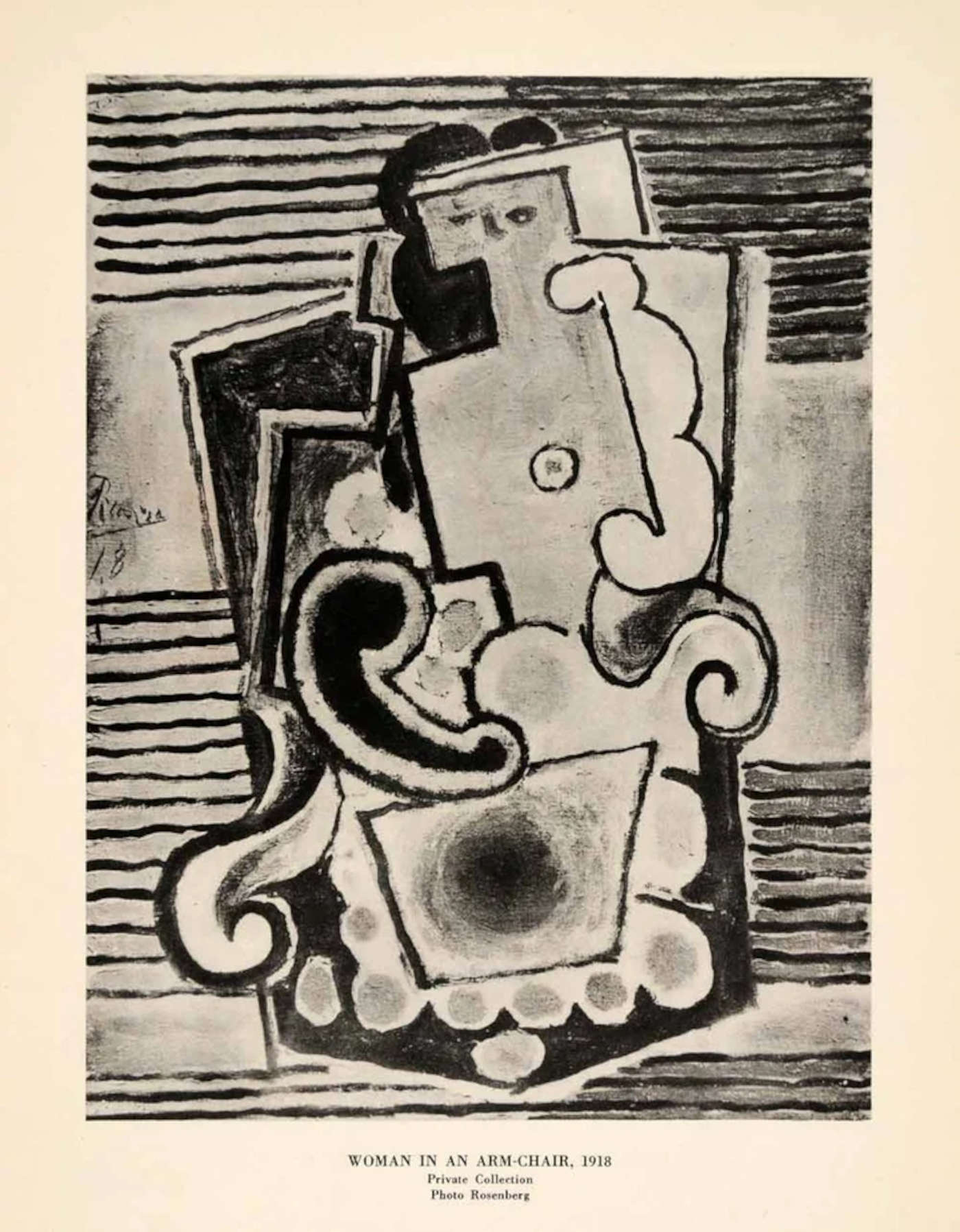
The breakthrough came more than sixty years later, when the painting was repurchased on the open market by Lawrence Jay Handler and his wife, Wendy Cohen Handler, and came to the attention of the Guggenheim. As the magazine Hyperallergic reported, according to court documents, the couple currently in possession of the painting had purchased *Femme dans un fauteuil* from the Beadleston Fine Art gallery in Manhattan in 1999, nearly forty years after its disappearance in Pittsburgh. However, the New York museum only learned of the work’s reappearance in July 2023, when a researcher at Christie’s—who was analyzing the work in preparation for a private sale on behalf of a third party—informed the foundation. The name of the famous collector and mining magnate Solomon R. Guggenheim, founder of the institution bearing his name, was in fact listed in the work’s provenance entry in the Picasso catalog raisonné edited by Christian Zervos in 1949.
Pablo Picasso had painted this abstract composition during his honeymoon with his first wife, the Russian ballerina Olga Khokhlova, near Biarritz. Guggenheim had subsequently purchased the work from the London gallery Zwemmer in 1936. It remains unclear how the painting came to be at the now-closed Beadleston Gallery on Fifth Avenue, where the couple presumably purchased it. The case file does not specify whether the buyers or the gallery were aware of the artwork’s illicit provenance at the time of the transaction.
As soon as it was informed of the painting’s location, the Guggenheim acted promptly, sending the owners a formal letter requesting its return in August 2023. This request was promptly rejected by the painting’s owners, a situation that has consequently left the work in limbo at Christie’s auction house. A Guggenheim spokesperson told Hyperallergic that the foundation has long attempted to resolve the matter amicably with the individuals holding the artwork, emphasizing that the museum has always been and remains the rightful owner of the painting and hoping for its full recovery.
The Handlers’ attorneys were contacted through the firm Withers Art and Advisory. In the court documents, Lawrence Jay Handler is listed as a physician specializing in internal medicine, while Wendy Cohen Handler is listed as the owner of the private art and jewelry brokerage Estate Treasures. The lawsuit also lists two anonymous parties, identified as John Doe and Jane Doe (names used in Anglo-Saxon countries to denote a generic identification, somewhat like our “Tizio” and “So-and-so”), included to represent any other parties who might assert a claim to the painting.
The painting’s value was estimated at between $10,000 and $60,000 at the time of the 1961 theft, according to court documents, while today it is believed to be worth several million dollars. In the formal claims filed in court, the museum sought compensatory damages estimated at between three and a half million and five million dollars, excluding legal fees. Another aspect of the case concerns insurance coverage: following the 1961 theft, the insurance company Chubb had compensated the Guggenheim with $7,000. Once the artwork resurfaced, the museum returned the sum to the insurer at the end of 2023, receiving confirmation from Chubb that full title to the work had been restored to the foundation.
The dispute recalls a legal precedent in which the Guggenheim was directly involved in a similar case in the late 1980s: at the time, the museum had filed a lawsuit to recover a gouache by Marc Chagall that had been stolen from the museum’s premises by an employee in the mailroom about two decades earlier. The painting had ended up in a Madison Avenue gallery, where it had been sold to a couple who had displayed it in their living room for years. When the Guggenheim demanded its return, the defendants argued that they had purchased the work in good faith, with no reason to suspect it had been stolen, and further accused the museum of waiting too long before reporting its disappearance.
The court then ruled that the lawsuit could proceed, thereby establishing New York State’s jurisdiction as a framework designed to protect the rightful owner of a work of art even when ownership is subsequently acquired by a buyer in good faith. The dispute was ultimately settled through a settlement agreement between the parties in 1993. The current litigation is therefore part of a series of attempts at out-of-court resolution that lasted nearly three years, from August 2023 through July of this year, including an on-site inspection of the painting conducted by a museum representative and a Picasso expert at Christie’s headquarters in February 2024, before the case was finally brought before the commercial court in the New York division.
 |
| A Picasso painting stolen in 1961 has resurfaced, and now the Guggenheim wants it back |

Warning: the translation into English of the original Italian article was created using automatic tools. We undertake to review all articles, but we do not guarantee the total absence of inaccuracies in the translation due to the program. You can find the original by clicking on the ITA button. If you find any mistake,please contact us.


























 IT
IT FR
FR DE
DE ES
ES CN
CN


