





Having concluded the restoration of the Holy Face of Lucca, the famous polychrome wooden crucifix dating back to the 9th century and kept for more than a thousand years in the Cathedral of San Martino, attention has shifted to the small temple that has housed it since 1484, created by the sculptor and architect Matteo Civitali (Lucca, 1436 - 1501).
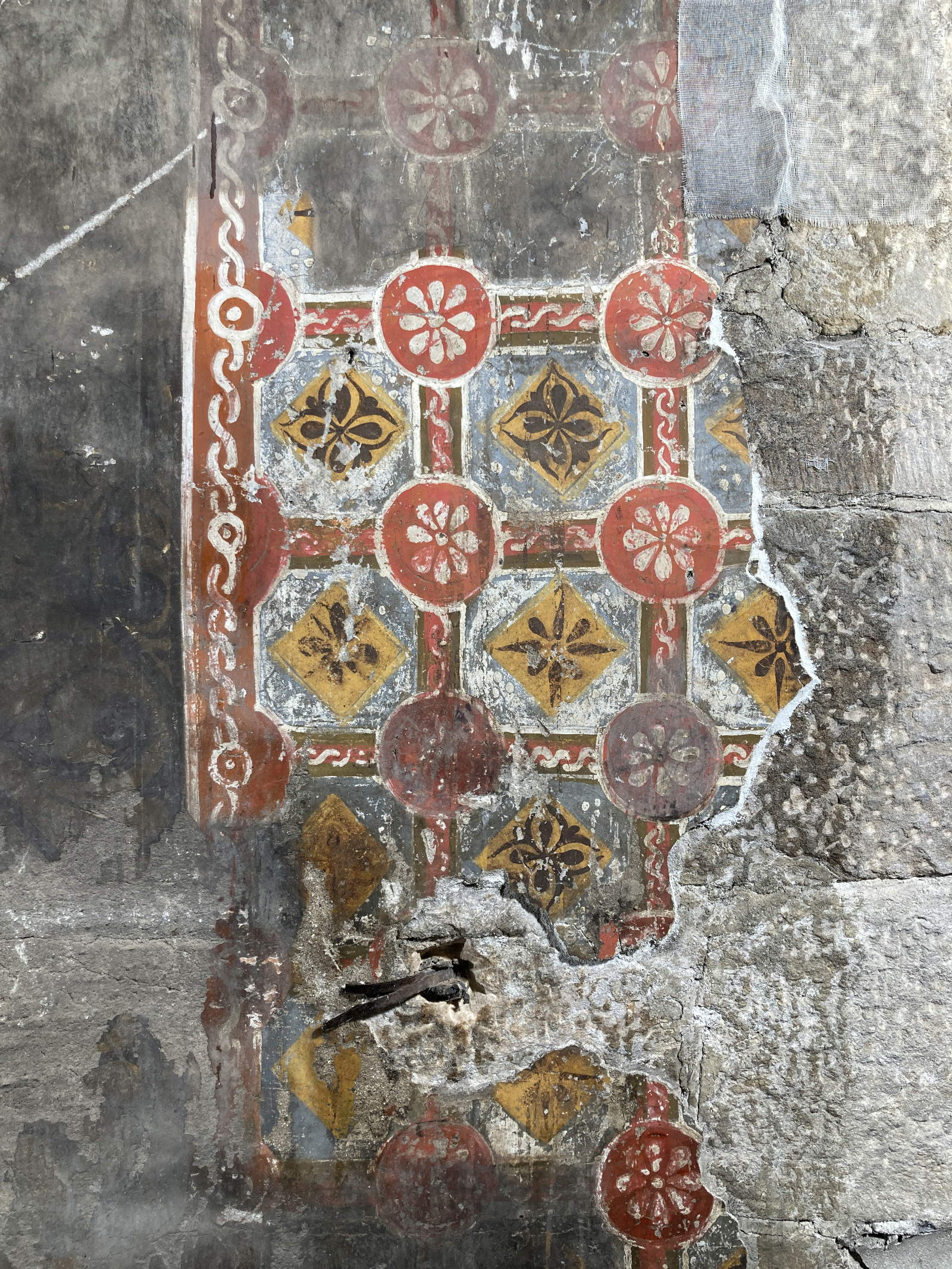
The intervention, which focused on the interior of the tempietto after the external restoration carried out between 2010 and 2016, led to major results. Indeed, the existence of an earlier medieval chapel, hitherto known only through written and iconographic sources, was confirmed. The restoration brought to light a wall painting placed on the original stone support, along with traces of Renaissance decoration. These are elements belonging to the medieval chapel, which Civitali had incorporated and preserved within the Renaissance temple.
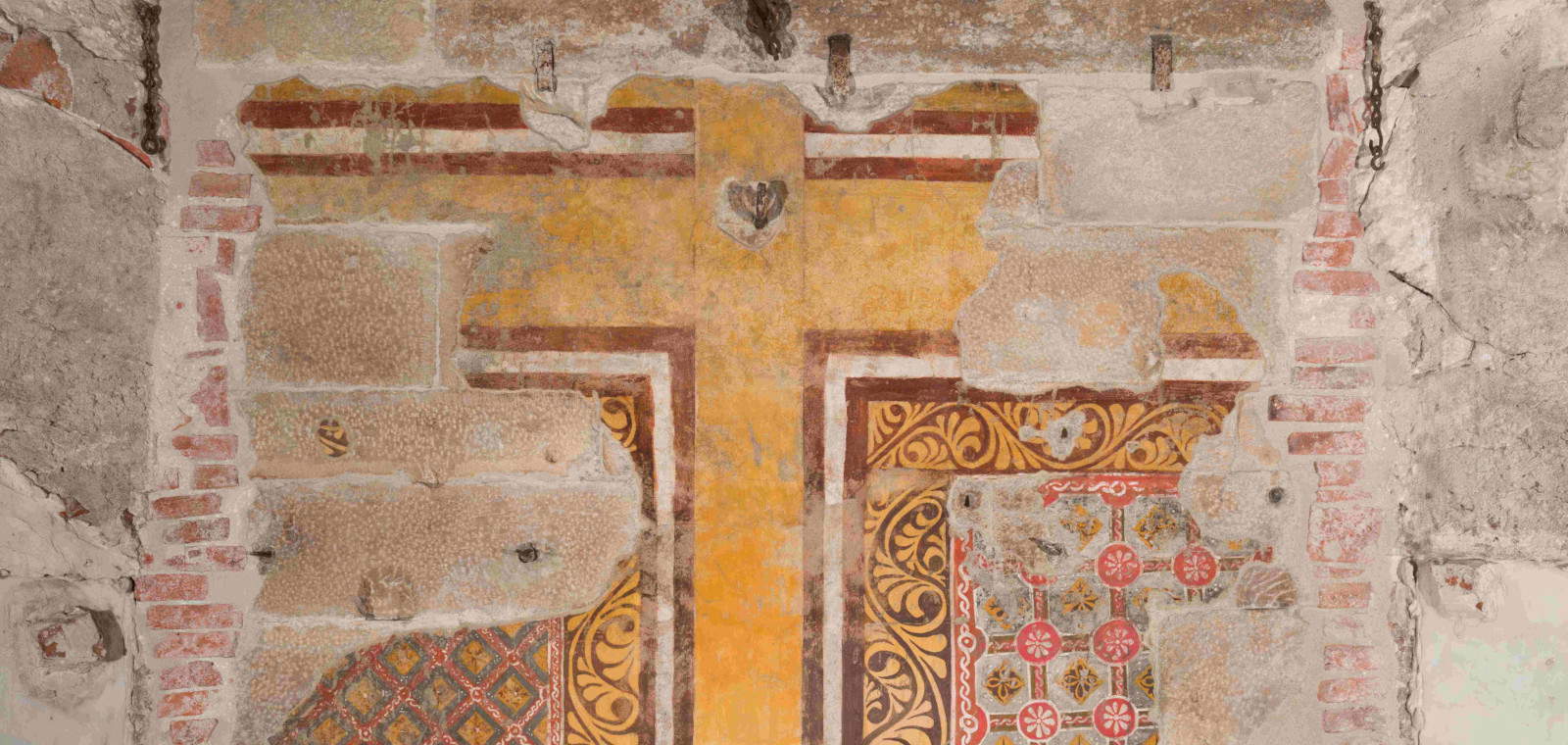
In particular, once the back wall was cleared, remnants of a hitherto unknown wall painting emerged, long hidden by deposits of dust and settled materials. Visible today is a cross painted in ochre tones, made in fresco with dry finish, framed by yellow-brown plant motifs and an asymmetrical decoration traceable to patterns typical of medieval Lucca silk production. This cross, chronologically preceding Civitali’s Renaissance tempietto, was conceived as a backdrop for the Holy Face and has dimensions compatible with those of the wooden crucifix.
Exceptionally, the interior of the tempietto, currently without the Holy Face, which is still on display at the restoration site until May 3, will be visible to the public from March 28 to April 19, 2026. Given the importance of the discoveries, the Cathedral Church Authority is considering solutions to make them visible even after the crucifix is relocated. Beginning on May 4, handling and final relocation of the Holy Face will begin, with completion expected by June 2026.
The restoration is being promoted by the Ente Chiesa Cattedrale di San Martino, with co-financing from the Fondazione Cassa di Risparmio di Lucca and the Opera del Duomo di Lucca, under the high supervision of the Soprintendenza Archeologia, Belle Arti e Paesaggio for the provinces of Lucca, Massa Carrara and Pistoia and with the scientific direction, as far as the painted surfaces are concerned, of the Opificio delle Pietre Dure of Florence.
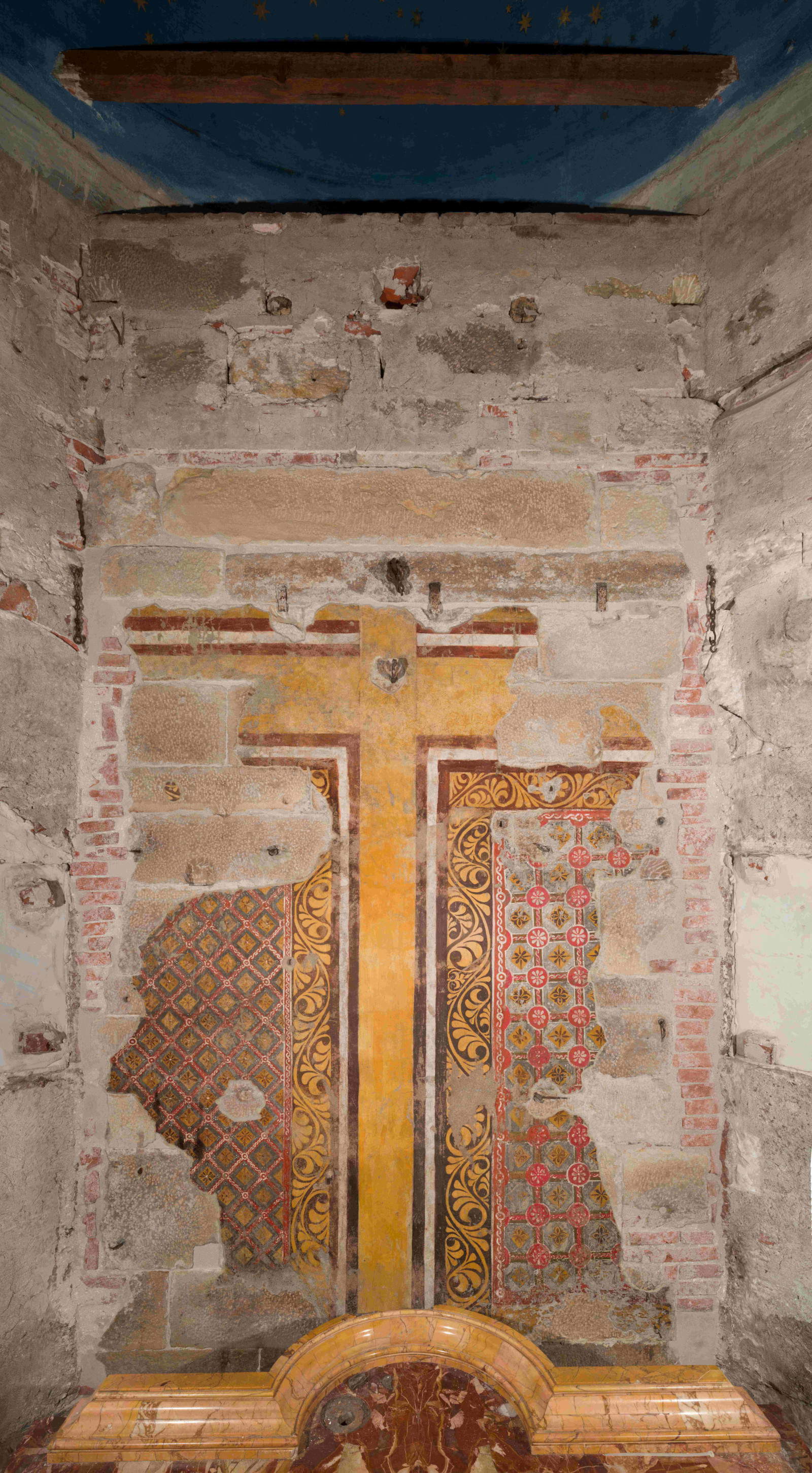
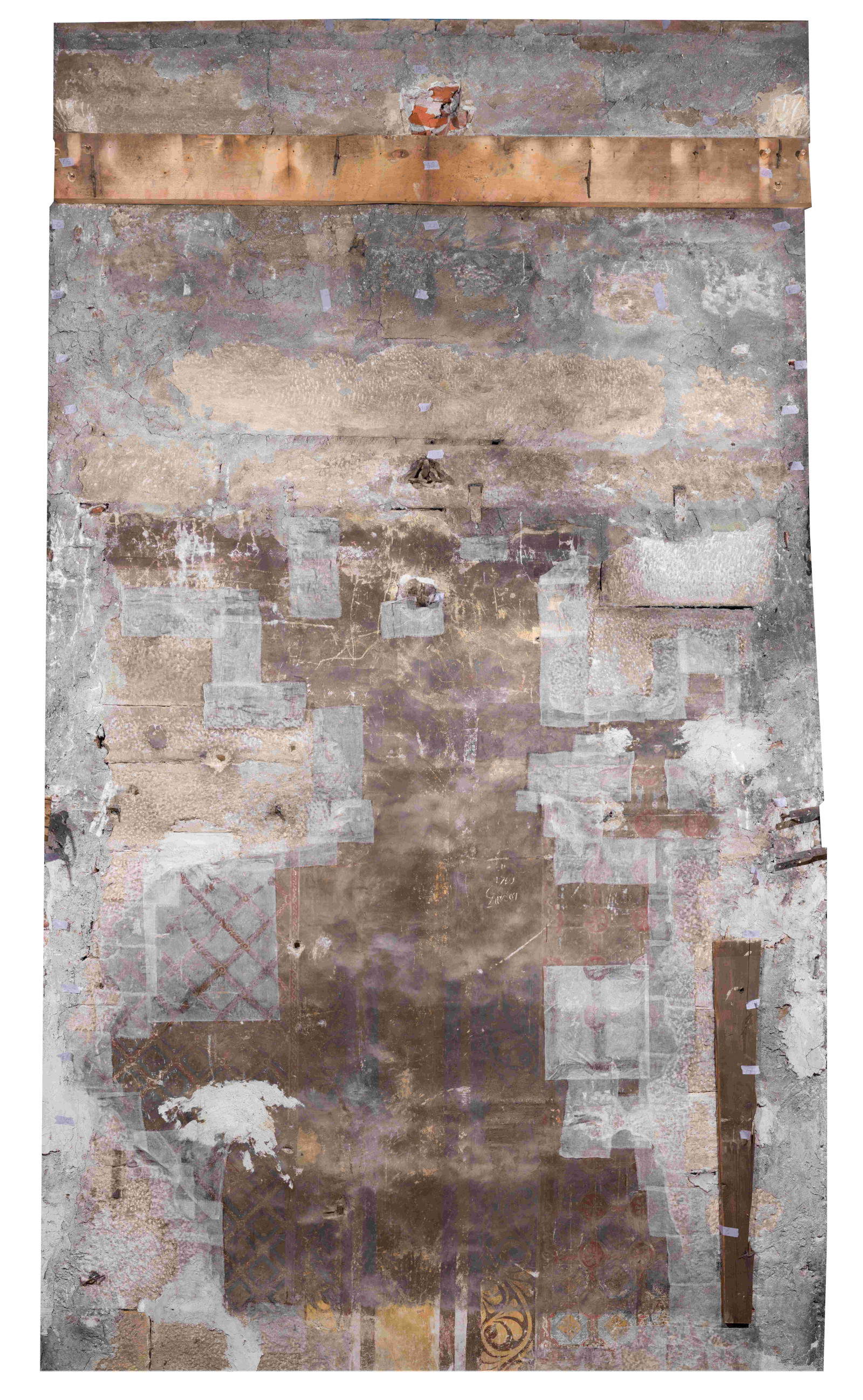
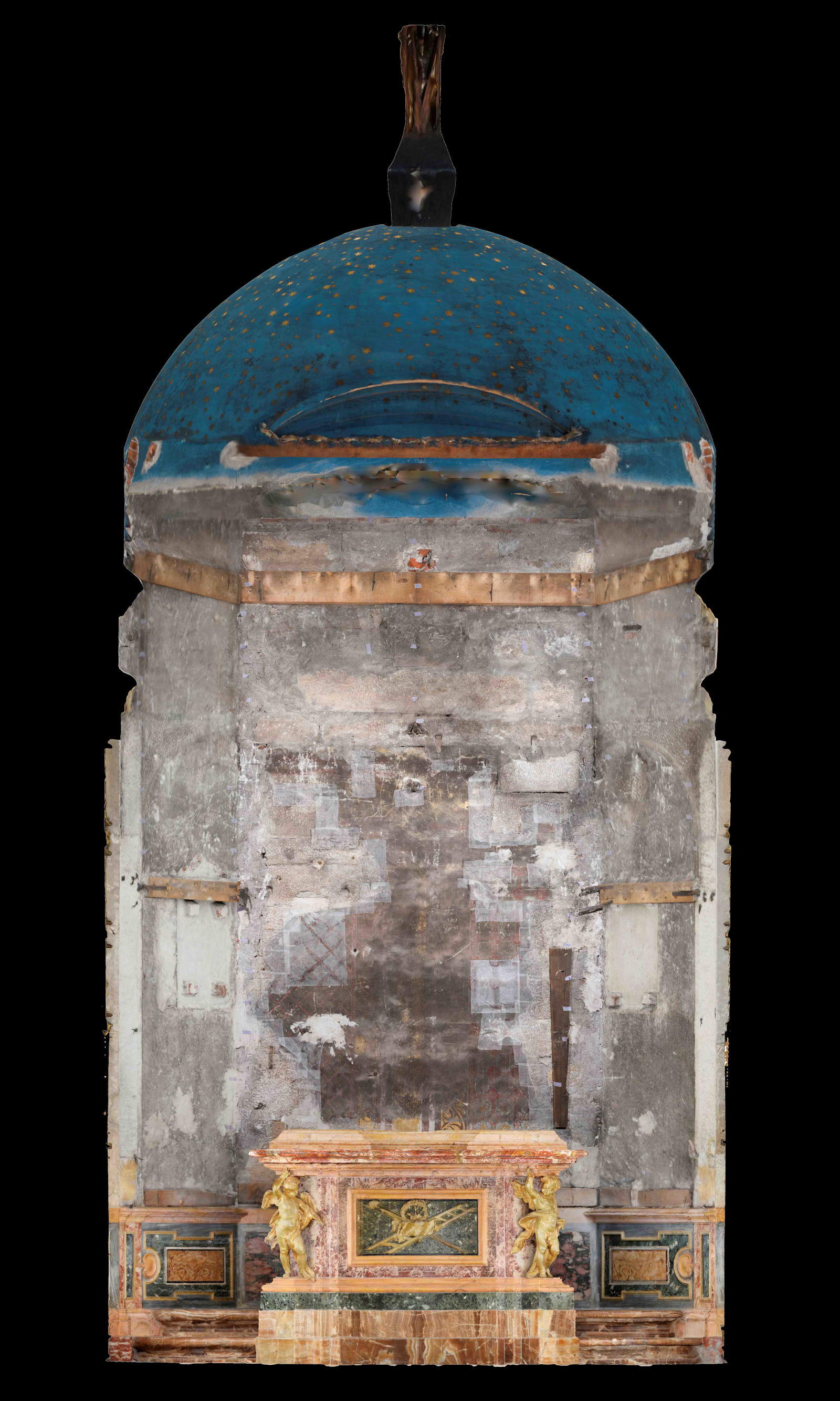
A decisive moment for the investigation was December 1, 2022, when the Holy Face was temporarily removed for restoration. For the first time, probably since Civitali’s time, the small temple was left without the crucifix, allowing direct and in-depth analysis of the architecture and interior surfaces. Thanks to up-to-date diagnostic methodologies, it was possible to identify hitherto unknown decorations.
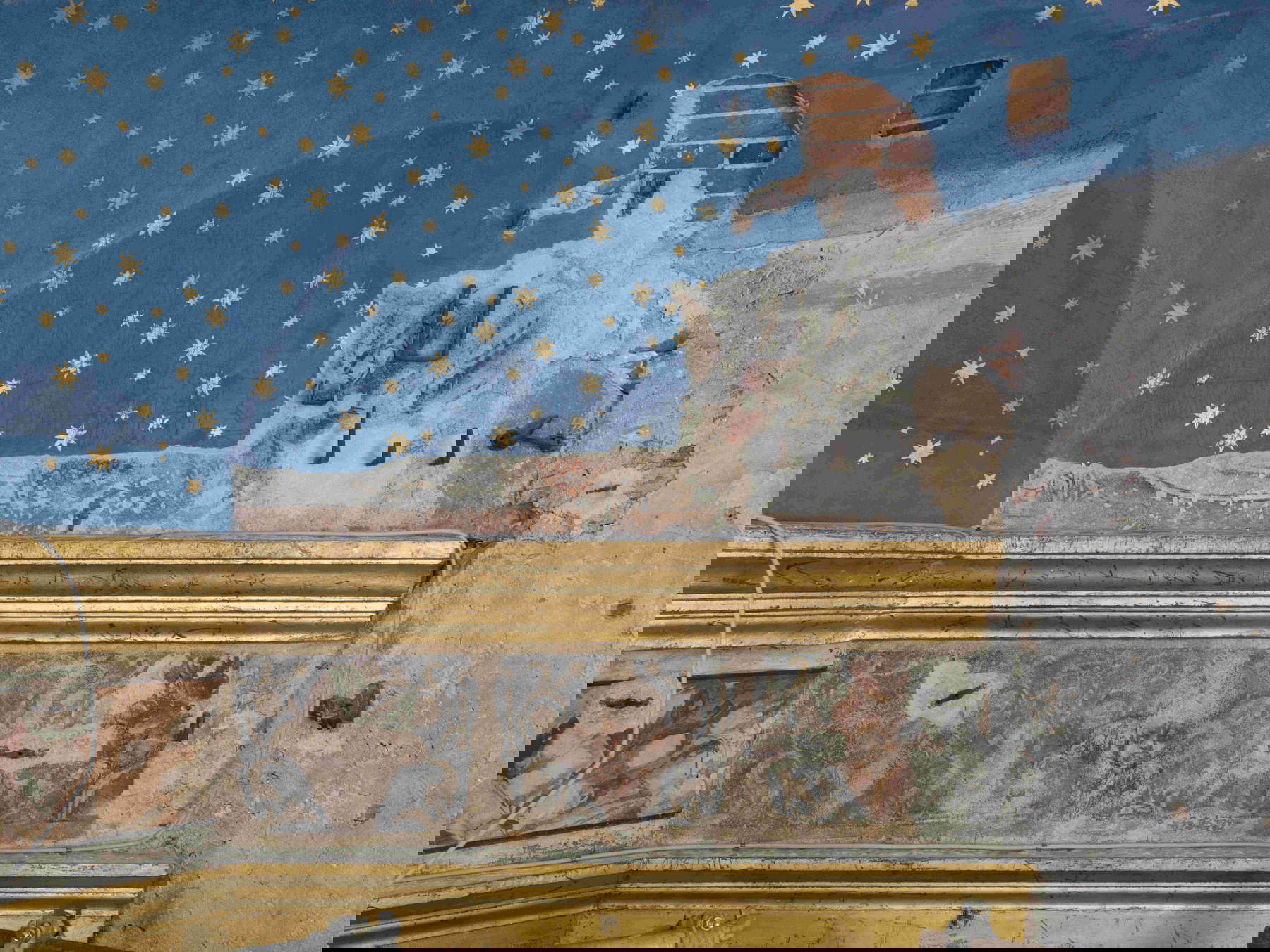
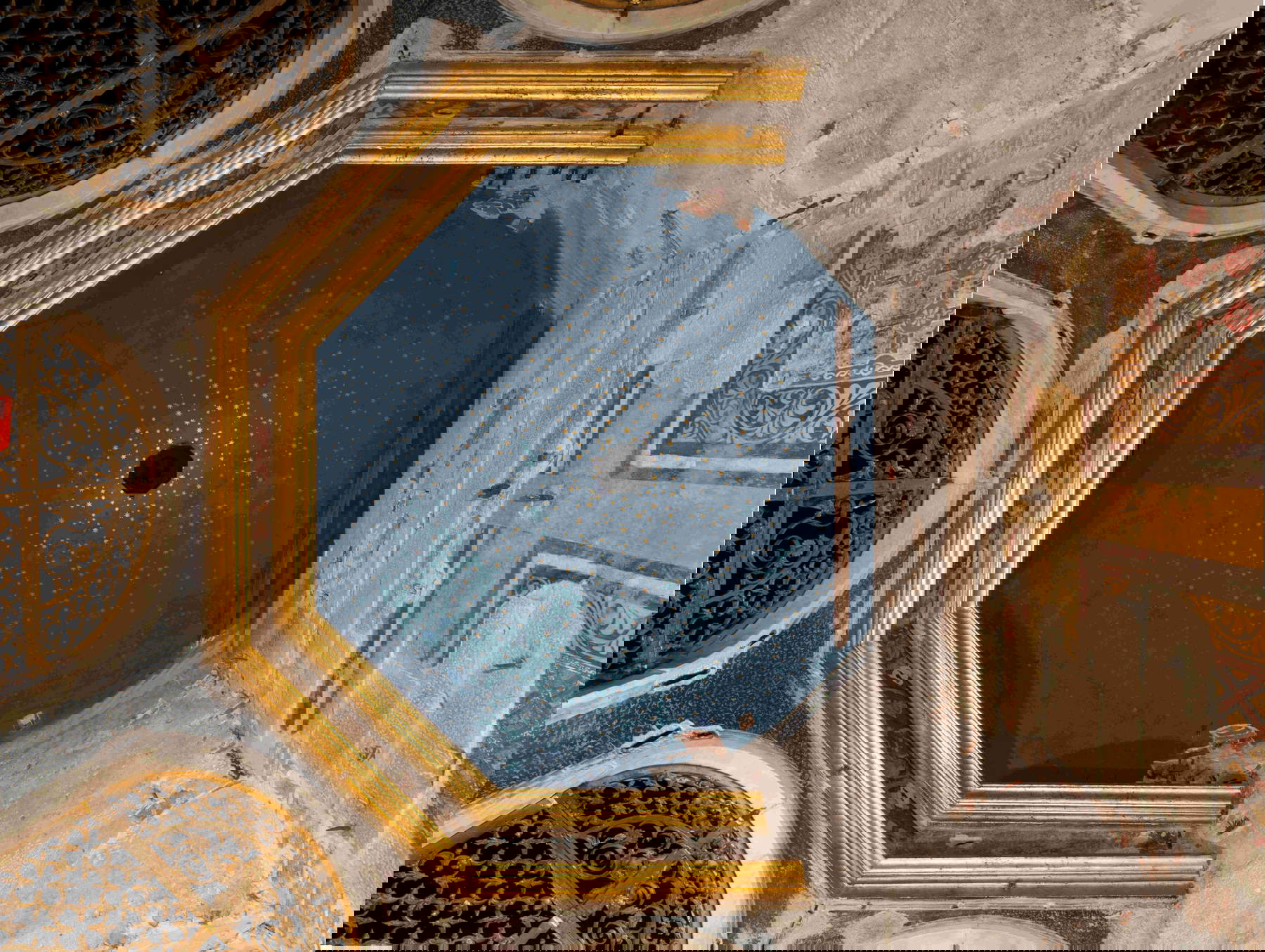
The removal of elements added at a later period, such as pilasters, pilaster strips, and velvet coverings, revealed new portions of the wall surface. In addition to the painted cross, fragments of the original, largely lost Renaissance decoration emerged on the lunettes, which had been covered by a more recent repainting depicting a starry sky. Among these can be recognized draperies and hands holding scrolls, on which the names of Old Testament figures, probably kings or prophets, are still partially legible.
The interventions also affected the drum of the dome, where, under a faux marble decoration dating to a later phase (1482-1484), cleaning brought to light an earlier pictorial cycle, made shortly after the construction of the small temple by an artist close to Civitali’s circle. The decoration presents a sequence of candelabras and cherubs enriched by golden highlights applied dry, which give particular luminosity to the figures. Architecturally, the exterior of the tempietto substantially retains the original appearance intended by Civitali, while the interior, until this recent restoration, mainly reflected an 18th-century arrangement, characterized by the imposing altar designed by Filippo Juvarra and the introduction of polychrome marble facings and carved and gilded wooden pilasters. The starry sky decoration of the vault, on the other hand, is more recent, dating from between the 19th and 20th centuries.
 |
| Lucca's Holy Face temple restored: remains of medieval chapel and polychrome painting discovered |

Warning: the translation into English of the original Italian article was created using automatic tools. We undertake to review all articles, but we do not guarantee the total absence of inaccuracies in the translation due to the program. You can find the original by clicking on the ITA button. If you find any mistake,please contact us.




























 IT
IT FR
FR DE
DE ES
ES CN
CN


