





Thanks to a ministerial grant obtained by the Superintendence in 2025, planning has officially begun for the restoration of the church of San Lazzaro in Viterbo, located in the center of the monumental cemetery of the same name. The project begins with a scientific study of the building’s decorative apparatus, which has long been compromised by persistent rainwater infiltration that has been causing damage for decades without a definitive solution being found. The infiltrations have affected not only the architectural structure designed by Virginio Vespignani, but especially the large Art Nouveau pictorial cycle created by Viterbo painter Pietro Vanni between 1890 and 1895, which have caused the detachment of portions of plaster, the deterioration of the pictorial film and the widespread formation of salt efflorescence, seriously jeopardizing the preservation of the decorations.
For the definition of the project, under the responsibility of Superintendent Margherita Eichberg as RUP and with the coordination of art historian Saverio Ricci, architect Damiano Amatore was commissioned. At the same time, a scientific collaboration was started with the Restoration Laboratory of the University of Tuscia, directed by Maria Ida Catalano and Paola Pogliani, with the aim of deepening the knowledge of the execution techniques and the conservation conditions of the wall paintings. The investigations will make it possible to reconstruct the painting method adopted by Pietro Vanni, identifying the composition and distribution of original pigments and binders used by the artist. In addition, they will make it possible to verify the presence of any retouches or repainting, a hypothesis considered very likely, and to identify chromatic alterations due both to natural processes of deterioration and to previous restoration work.
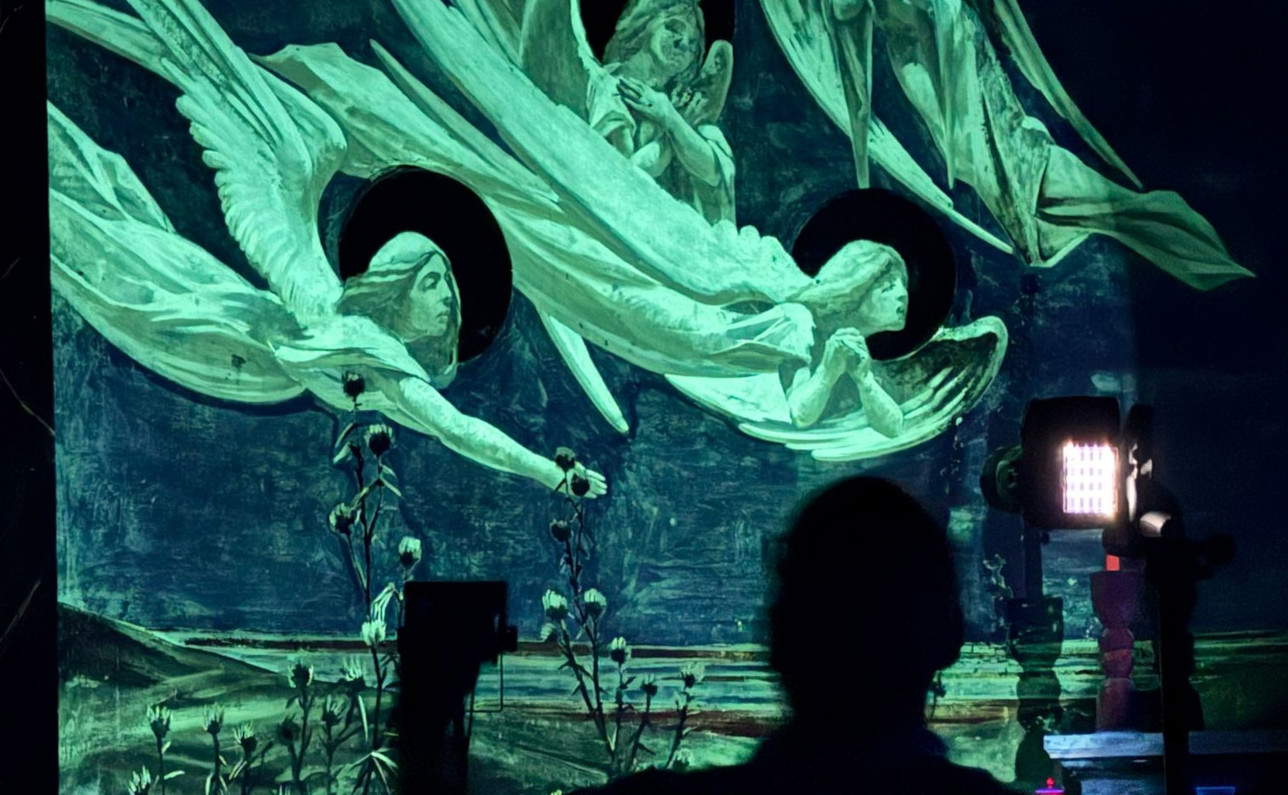
On the evening of June 10, thanks to the extraordinary access granted by the Municipality of Viterbo, restorers and diagnosticians from the University of Tuscia (Valeria Valentini, Claudia Pelosi and Luca Lanteri) carried out the first analyses ever conducted on these wall paintings. These took place behind closed doors and in the absence of natural light, an indispensable condition to avoid interference during the surveys. Among the techniques employed was fluorescence induced by ultraviolet radiation, the suggestive results of which are documented in the photographs taken during the night session.
Thanks to the financial and organizational efforts of the Superintendency, the church of San Lazzaro will soon be equipped with a new roof and an efficient rainwater collection and disposal system, interventions that will ensure the complete waterproofing of the walls. The first batch of works is expected to be contracted and carried out between September and December this year. Once the multispectral investigations and analysis of the microsamples taken have been completed, theUniversity of Tuscia will prepare a technical document guiding the restoration of the wall paintings by Pietro Vanni. These are works to which the artist was deeply attached, so much so that he faced considerable financial sacrifices and physical exertion in order to bring them to completion.
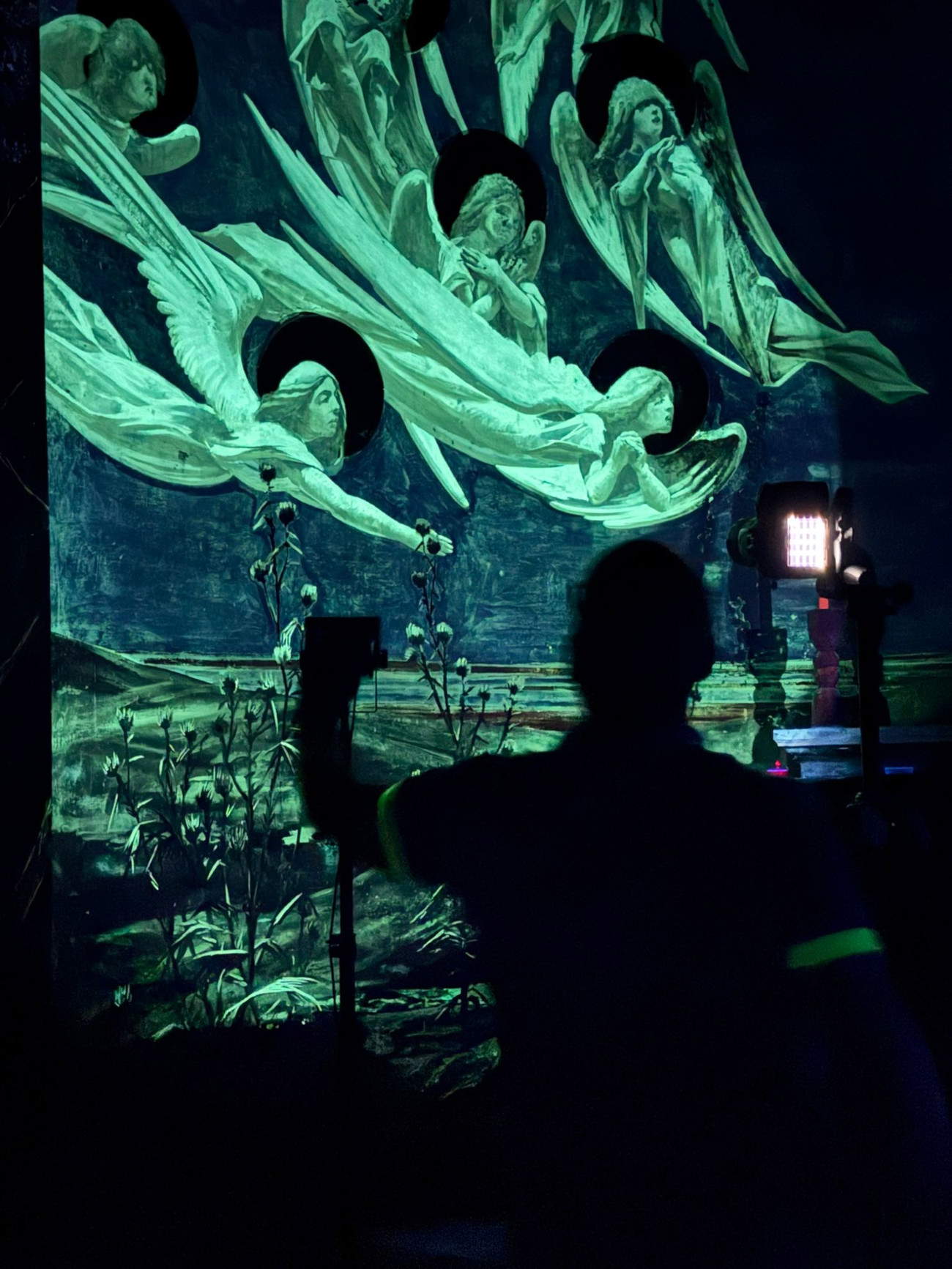
“In the coming weeks, multispectral investigations will continue, an absolutely noninvasive methodology based on the acquisition and processing of photographic footage in different ranges of the electromagnetic spectrum that allows us to observe details not perceptible to the naked eye, such as preparatory drawings, repentations, repainting and overlapping of incompatible materials. Then samples will be taken, which will then be analyzed in the laboratory, of microscopic portions of the pictorial layers and salts that have leaked from the walls and emerged on the surface in recent years, causing the conspicuous effect of whitening of the paintings, which is very evident in the apsidal area,” said Design Coordinator Saverio Ricci. “Finally, thermographs will be taken at several points that, by mapping the different surface temperatures, will help us detect hidden defects such as plaster detachments and internal moisture, taking advantage of the differential thermal behavior of the constituent materials.”
“The Superintendence,” commented architect Margherita Eichberg, “is aware of the historical importance of this monument for the citizens of Viterbo and for this reason is ready to take charge of the request for additional ministerial funding, so that these precious paintings finally return to shine and surprise, planning to conclude the project with an intervention to complete the restorations, which hopefully can be scheduled as early as the 2027 fiscal year.”
 |
| Project to restore the Art Nouveau decorative apparatus of the church of San Lazzaro in Viterbo gets under way |

Warning: the translation into English of the original Italian article was created using automatic tools. We undertake to review all articles, but we do not guarantee the total absence of inaccuracies in the translation due to the program. You can find the original by clicking on the ITA button. If you find any mistake,please contact us.




























 IT
IT FR
FR DE
DE ES
ES CN
CN


