



by Luca Bochicchio 29/05/2026



Categories: Opinions / Disclaimer
The Venice Biennale reveals all the cracks and contradictions of the present: geopolitics, the market, activism and art coexist in an increasingly unstable balance. And meanwhile, it is vital that the voice of dissent explodes in its most creative forms. A report by Luca Bochicchio from the 61st Biennale.

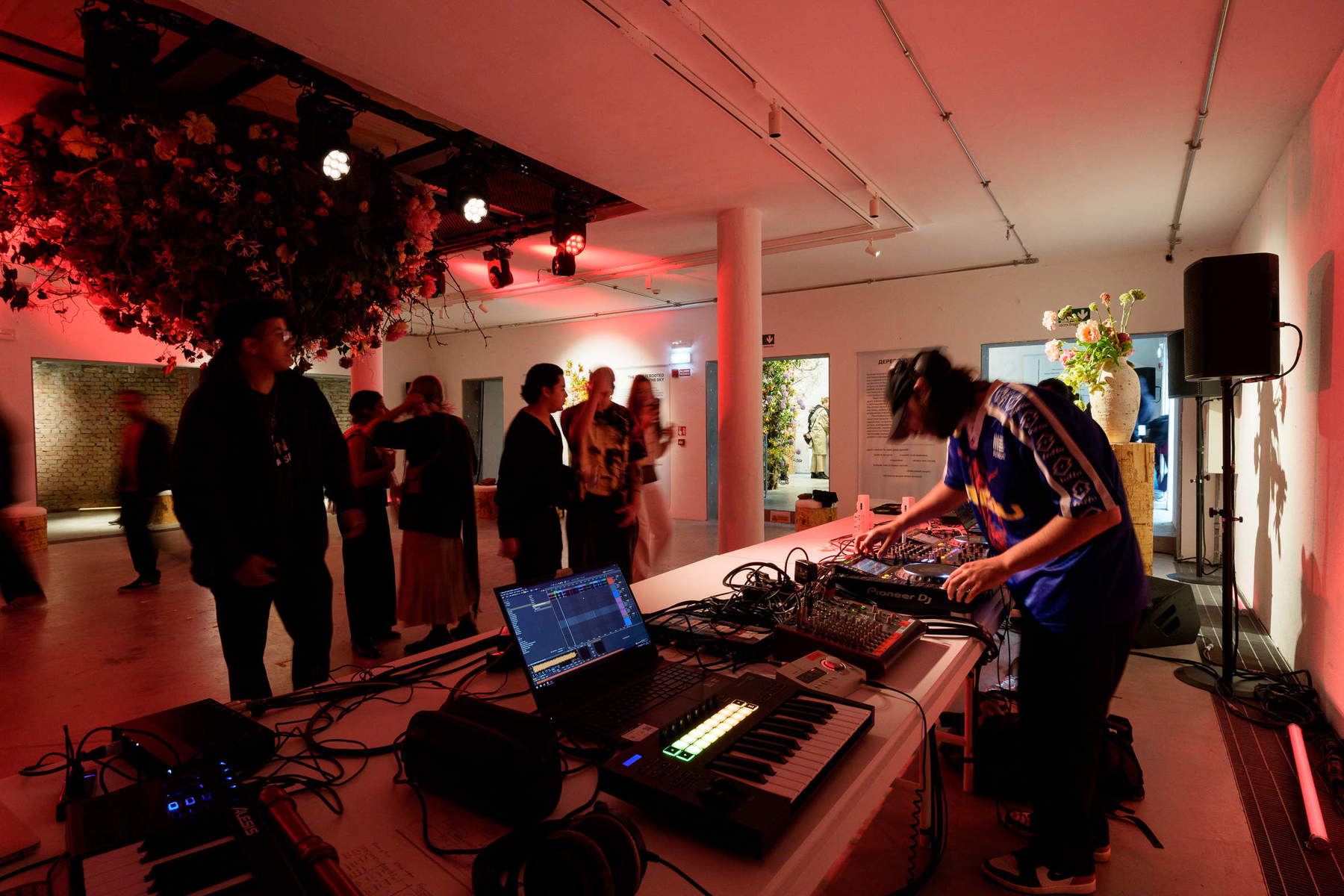
The West’s priorities vis-à-vis Russia are clear: whether it is gas or vodka tonic, such as the one served from the morning of the first day in the rediscovered national pavilion, we are always open to dialogue, as long as there is ice. The fact that, when we don’t know how to end the journey in the large rooms assigned to the artists, we throw in a DJ set and strobe lights is not new this year, nor is it a prerogative of the flimsy Russian exhibition (so much for Culture).
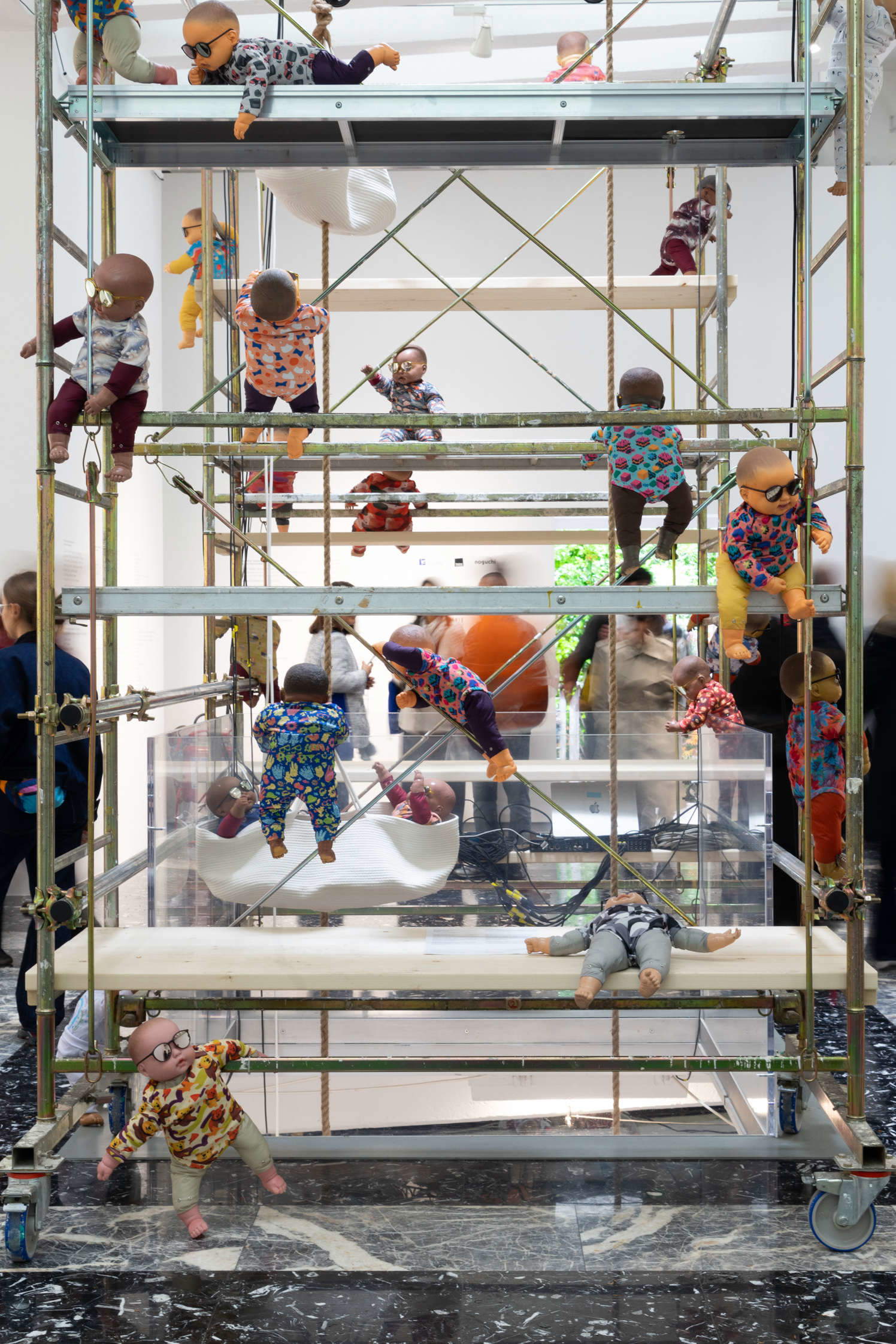
With its baby dolls, Japan unleashed a kind of widespread performance, whereby every infant in its mother’s arms during preview days was given a strange look. As happens every day in our cities, for that matter. Gotcha Ei Arakawa Nash! The rickety stroller purchased at the flea market for our five-year-old daughter, although out of size by now, still saved us in the long marathon of the openings, but it was also mistaken for one of those parked at the conclusion of the Japanese pavilion, and we had to stand up for our rights to get it back. And still, I am struck by the dexterity with which a five-year-old woman can at first glance judge and discern the good from the shoddy, the weak from the strong; I am talking about works of art but also about disco music: it’s not like she danced to everything, she did.


If one really wanted to draw geopolitical conclusions from national participations, the current conjuncture and challenge between empires could not appear more clear and didactic: to the identity formalism (?) of the U.S., China responds with the vastness of “everything,” literally: the fantastic sculpture and 3D gaming, the ancient calligraphy and the robot that paints it, the traditional prints and the miniature diorama, in a labyrinth that converges on the very tall column in light design, etc. etc. Okay. By this metric, Italy’s flowery and intimate melancholy is also consistent with the historical moment.
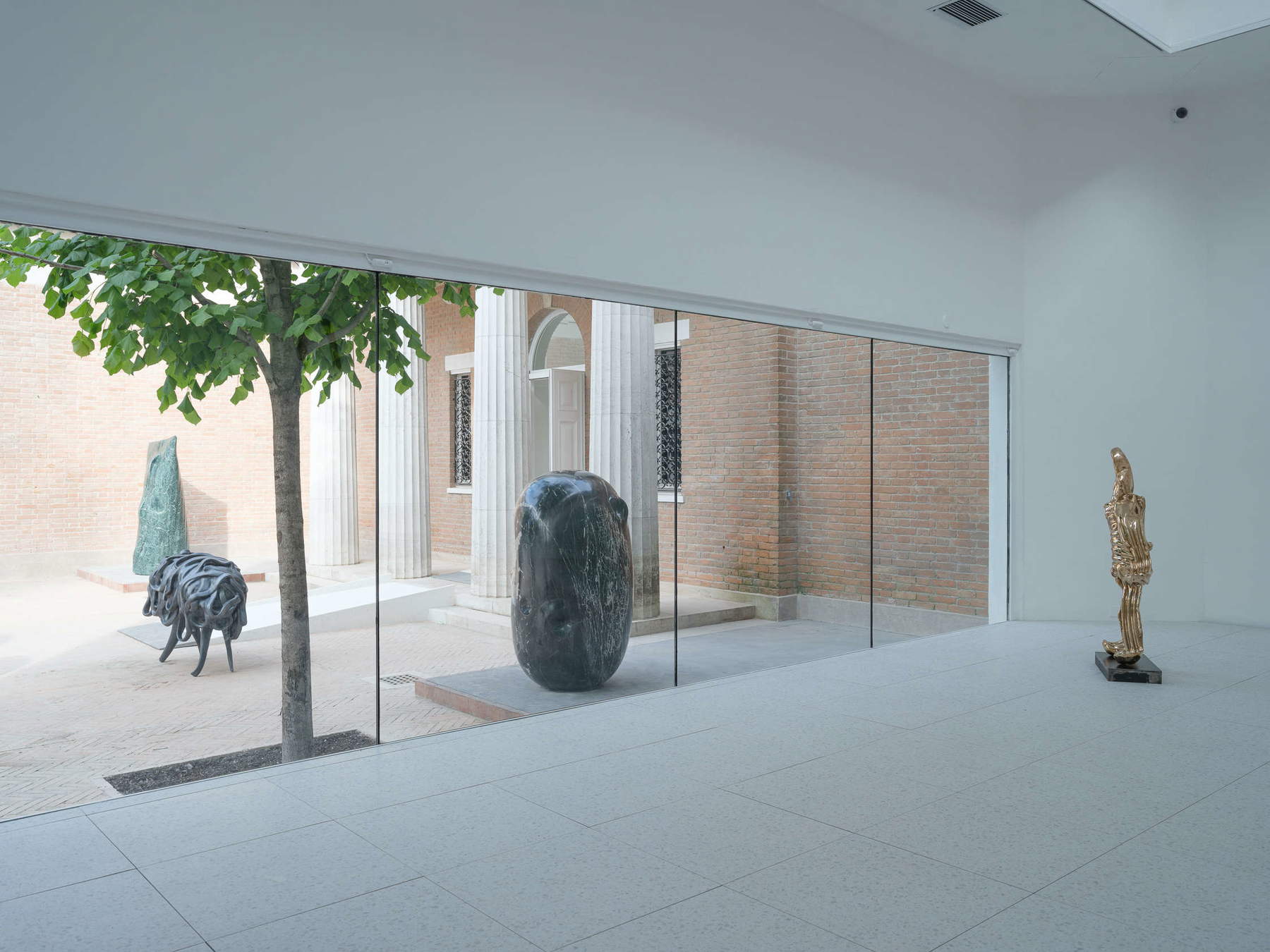
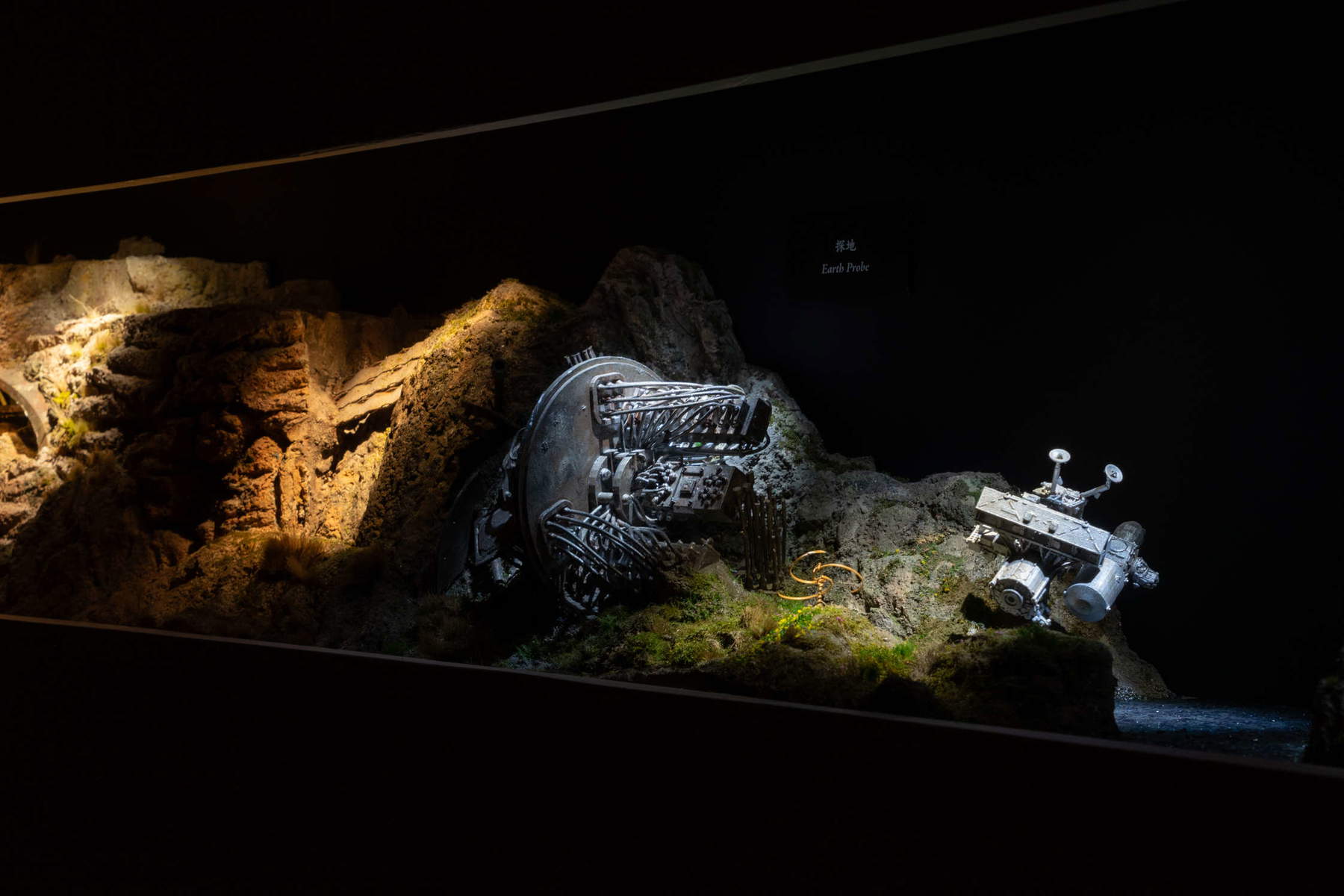
India reconstructs four architectural environments with poetry, grandeur, and natural materials, and the guy overseeing welcomes us with a proud and very chill air-“welcome to our home”-before slinging out into the sun to devour a poke.
Willem Dafoe leaves with an expression that says it all, while a longtime Italian critic sensibly accuses the blow of a rather gratuitous “Fuck Duchamp,” which we all noticed at the beginning of the exhibition in the Central Pavilion. And from comments about “when African art was valid because it really inspired Picasso and the Surrealists” (again?), or about “why do we have to come all the way here to see certain things” (we’ve been hearing this whispered refrain in the halls since at least 2015), to “sorry to say it but if Sandretto and Pinault weren’t here, you wouldn’t see contemporary art in Venice,” we’re at their versus ours. Let us make peace with ourselves (and the world).
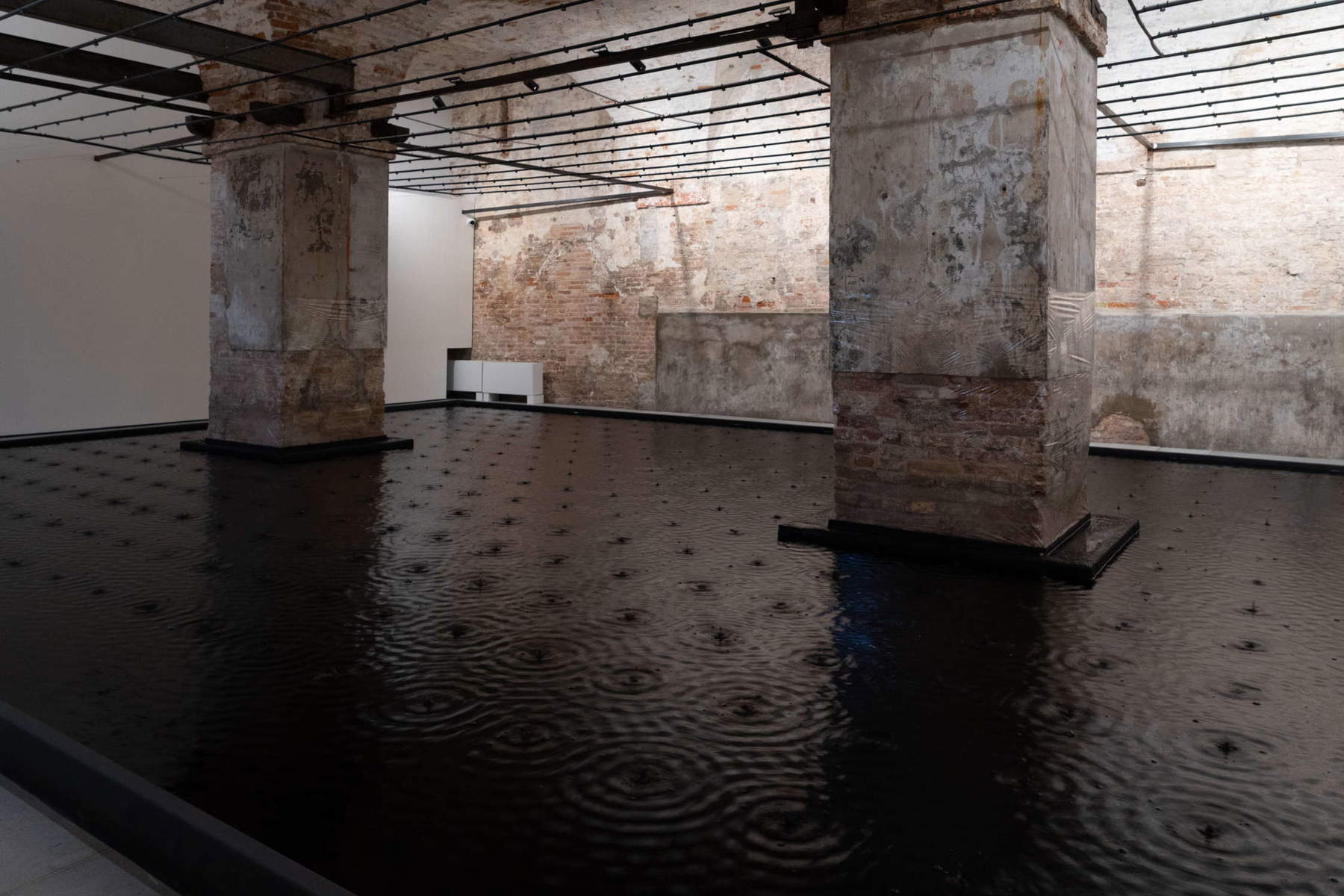
When the pro-Pal march hasn’t started yet, and the security service is at rest in front of the Israeli pavilion (this year, more consistent with national policy, moved location to theArsenal), I walk in and think that Belu-Simion Fainaru has paid homage to Gino De Dominicis, and that someone else like me will be secretly scrutinizing the circles in the water to catch that square variable, unlikely but not impossible. Yes, I believe.
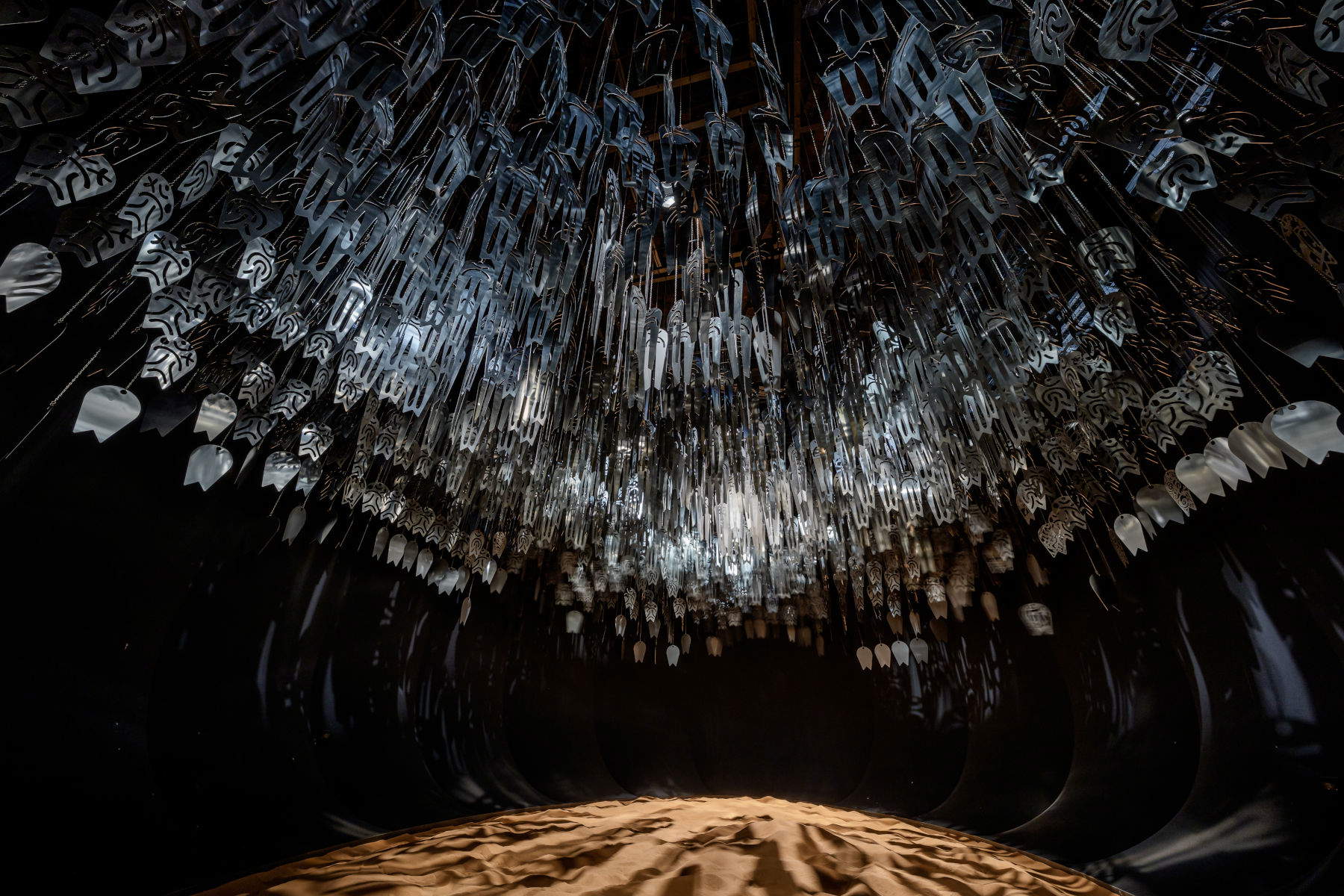
My daughter loved the sand of Oman. Thank you Biennial and Globalism: let’s keep our straits and minds open, mind you.
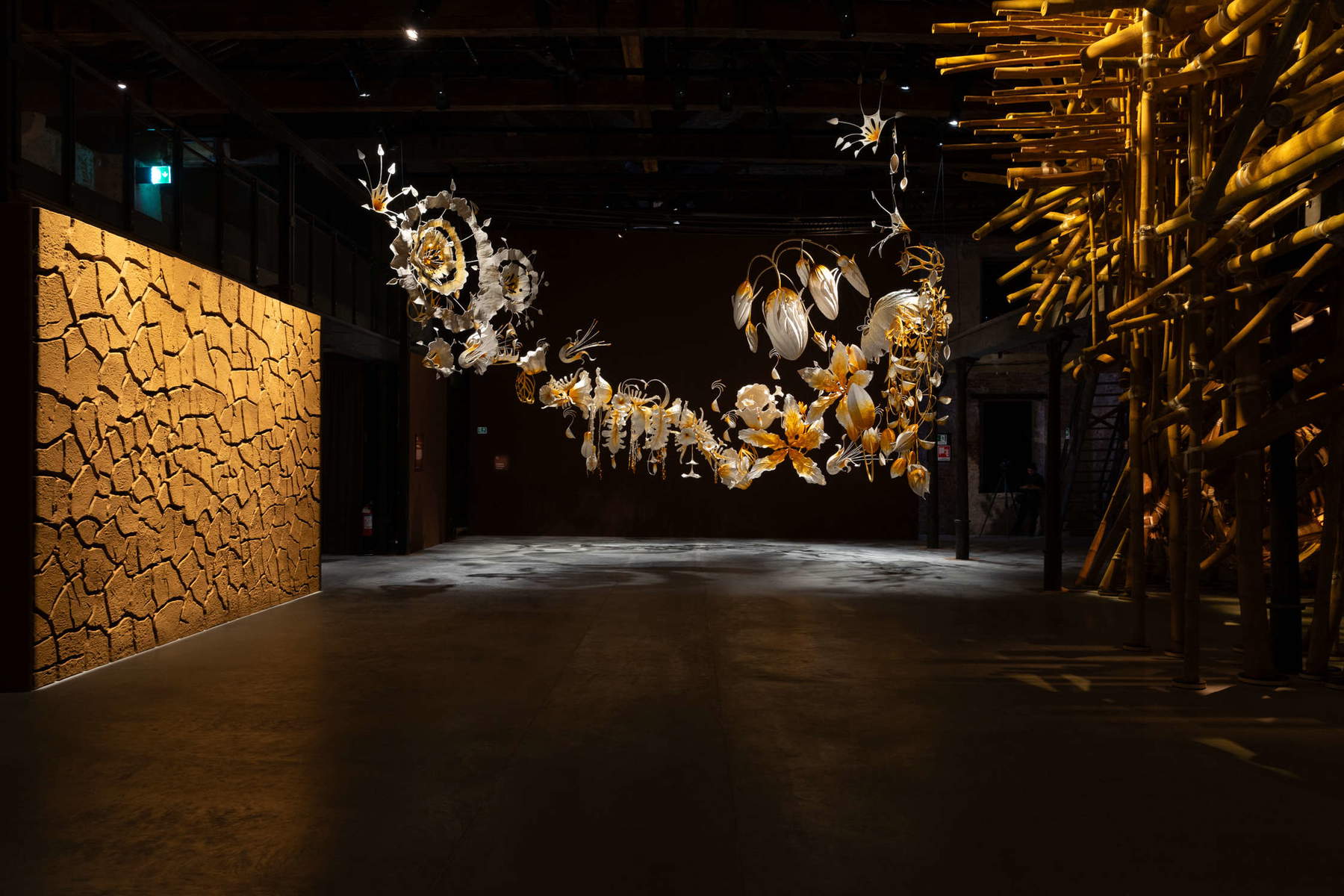
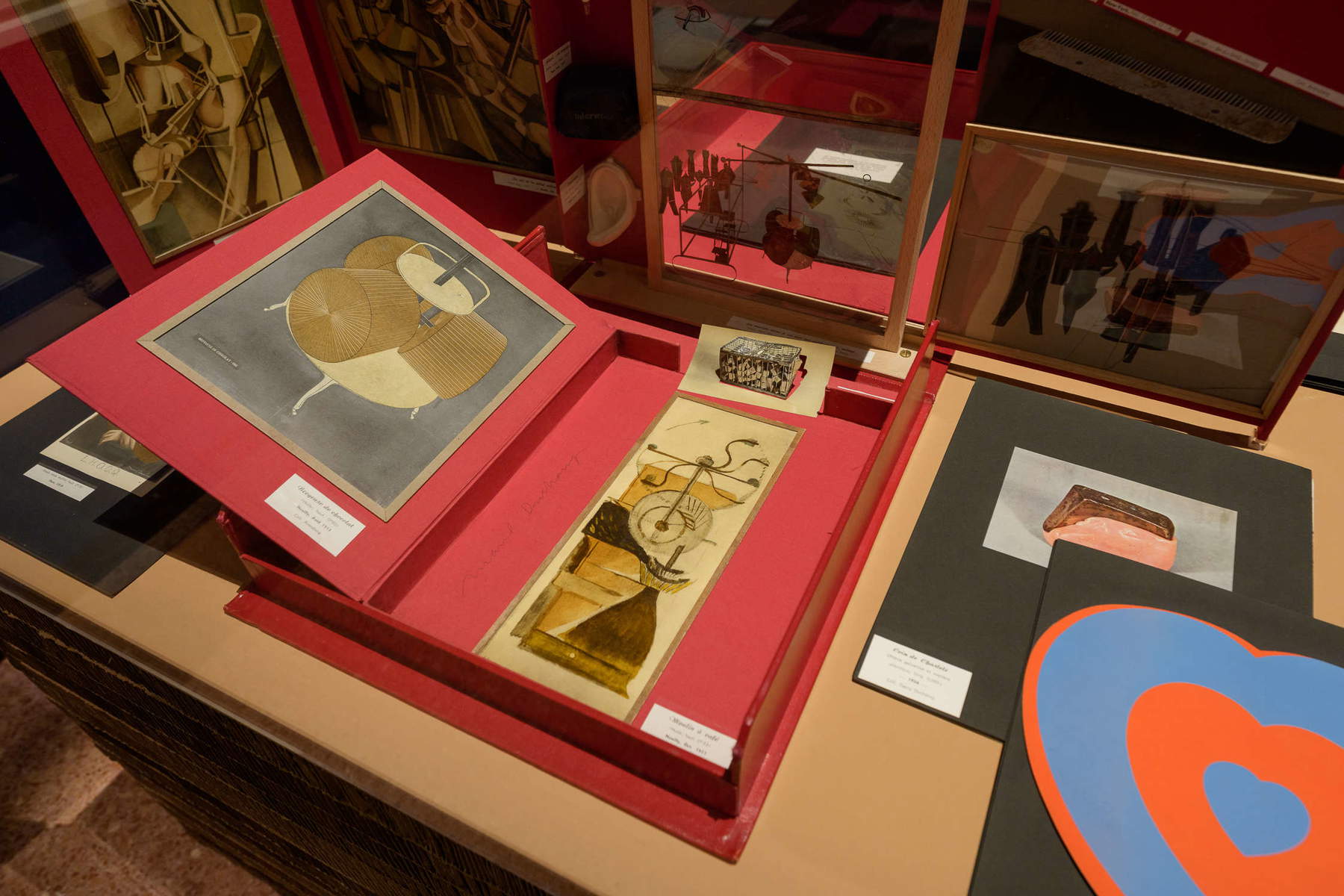
The very long queues at the gates during the first two days, also fueled by rumors of exhibitor strikes announced for Friday, were accentuated as well by the widely perceived need for those entering to question the staff at the entrance about permission to check ID. Don’t let your guard down, ever, even toward those who work but may be hiding something else.
The closed Venezuela headquarters is “soon to be reborn,” it says, and a curious cordon of law enforcement is scrambling in an attempt to keep the public from passing in front of it, keeping a small, incomprehensibly empty semicircle area clear. I can’t resist and ask the plainclothes leader, “Excuse me, but what are you protecting?”-“But no nothing, we keep people safe from the construction site.” I picture those officers in the preliminary operations meeting, “If some pain in the ass asks you what you are guarding, you say you are there to keep the Venezuela construction site safe.” And good thing they had prepared their answer.
They are right next door to the Russian pavilion, though, and just in case someone gets a little more frisky over there, well they would be right on the doorstep, just in case. You want to put the convenience. But it’s not like they’re guarding that, let alone. By the way, you can see that Pussy Riot before they left managed to secure the Venezuela construction site. Great ones, too.
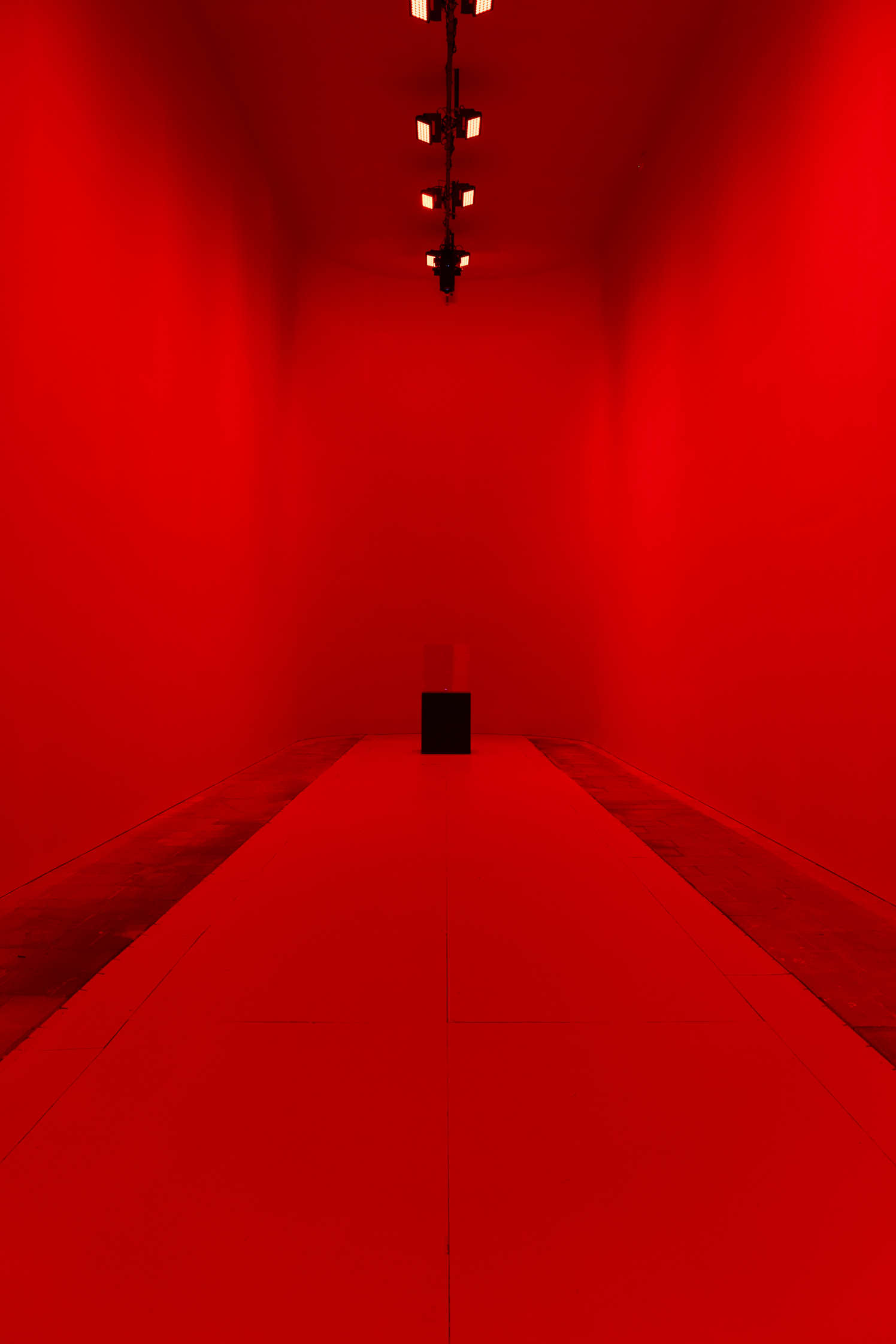
I, for one, conclude that I can’t make it, and limited as I am in critical judgment, in the exhibition In Minor Keys vote Alfredo Jaar, who with four plastic elements (space, light, matter, object) managed to trigger a psychological and emotional drama around the lust for rare earths. A plunge into the red heart of the real. Aesthetic and not rhetorical. Damn codes.
As I circumvented the long queue at the main entrance to the Arsenale, heading for the Giardino delle Vergini, I was moments away from jumping into a fisherman’s warehouse, open on the Fondamenta de la Tana, there was this grandfather clock with lots of other wonderfully set up stuff; my daughter is surely smarter than I am.
The trade media at one point agreed that this edition showed all the limitations of the nineteenth-century model on which the Venice Biennale is based. We refer to the system of national pavilions, devoted to exclusion and inclusion by its very political nature linked to states. Yet, studying minimally the choices of different countries for their own exhibitions, one discovers lines of continuity and knots of cross-relationships. Poetic common references between artists who establish collaborative agreements with commissioning countries not necessarily based on nationality and identity.
Let’s remember that the “reformed Biennale” was not just the label by which the post-’68 editions were called: reform had indeed taken place, and even then the system by nations was judged outdated. The Venice Biennale is a capitalist cultural platform, born and bred in the Western canon, but in perpetual motion and change, ever since and even more so since the 1970s. The market, ecological issues, awards, countries at war, democracy (“and who’s got it,” cit.), young people, Italian artists, and Venetian artists, dialogue spaces and urbanism have always been the issues around which have been discussed and fought for, even hard, but with politics, not guns. That we are in the midst of a long and who knows how slow process of transformation (it matters little), certainly triggered by the 2015 Biennale curated by Okwui Enwezor, is evident if one looks at it from a broad perspective; between “gender gaps,” “foreigners,” minorities and suburbs, every two years new exhibitions come to lay down their contribution, their vision, and then go from there. And in the short history of the contemporary biennale, there have already been violent forms of protest, radical disagreements and more than just verbal clashes.
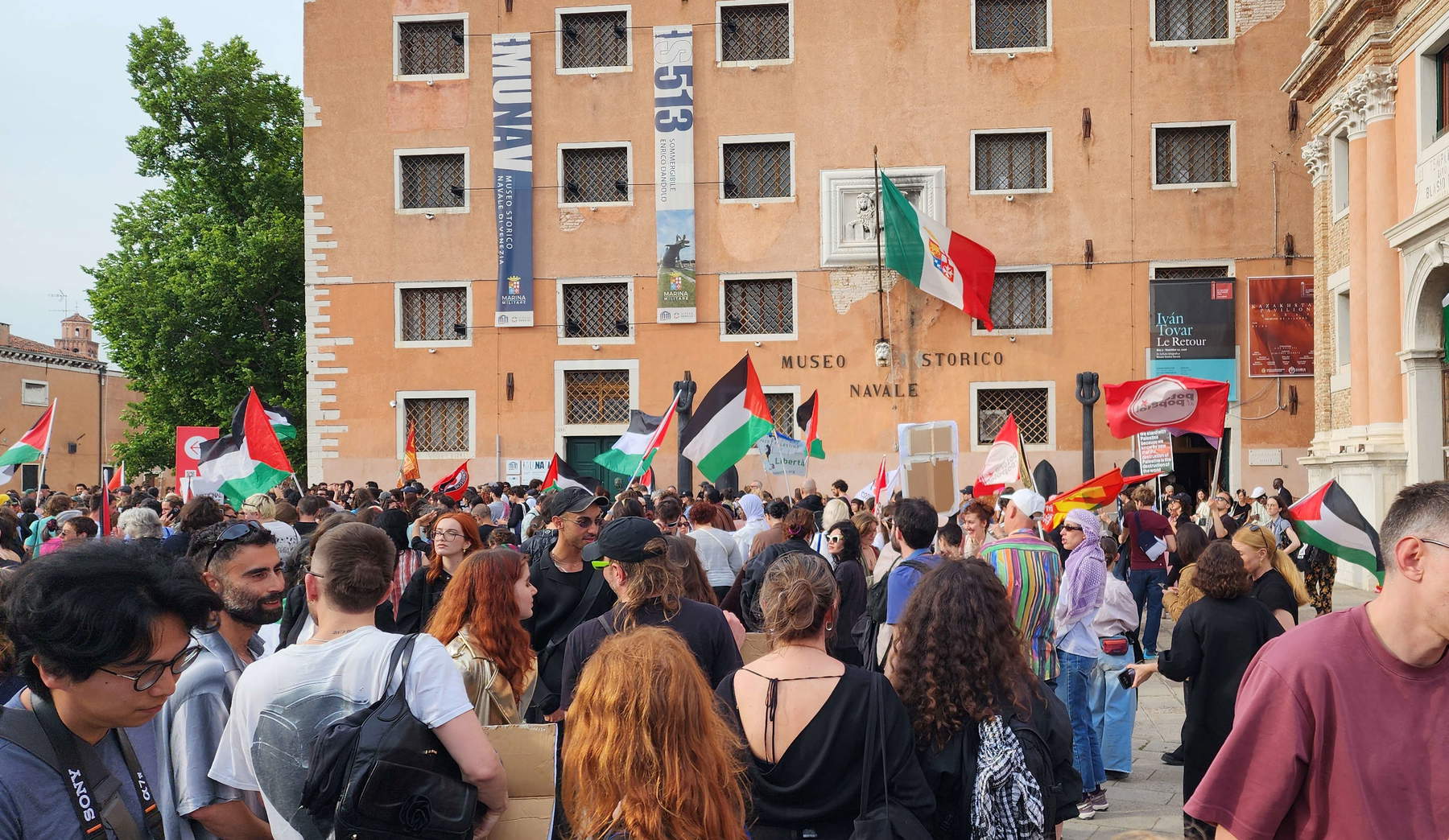
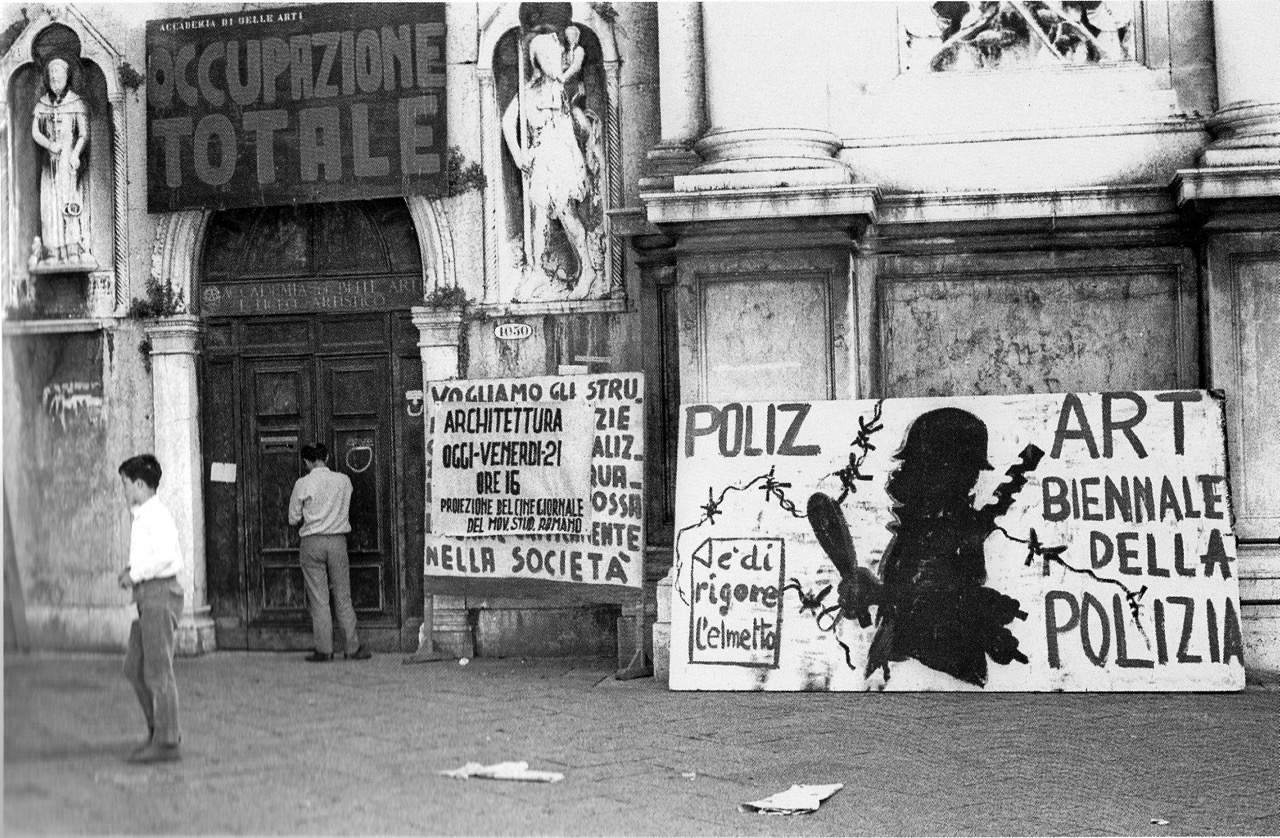
Between the scuffles in St. Mark’s Square and the militarization of the gardens in ’68, both of which were downplayed and somewhat even ridiculed in the national press by Bandinelli and Buzzati - but such that that edition went down in History as the “Police Biennale.edition as the ”Policeman’s Biennale" - and the clash between the heads of the two sides on Friday, May 8 - the pro-Pal procession on one side and the cordon of law enforcement on the other - what difference does it make? Between the closed exhibitions and works covered up by artists in ’68 to protest against the repression of the youth in the square, and the closed pavilions, this year, to affirm dissent against the criminal actions of the Israeli government and settlers toward the Palestinian civilian population, is there anything in common? Is there an evolution? Can we identify a path, one that helps us find an order of values to pursue today, without becoming overwhelmed by the ever-increasing flows of information (but of what quality?) that make reflection almost impossible? The excitement and overlapping of political events during the opening certainly challenged the concept of Koyo Kouoh’s Biennial (perhaps the best of the last four editions, in my opinion, with which it has obvious points of continuity in any case), which instead urges us to breathe, slow down the pace and tune in to the minor tones of care and calm, but they were also a living, tangible sign of the refusal to make the values of life, dignity and freedom negotiable.
In ’68, the challenges were primarily generational, cultural political and national in scope. The protests were essentially aimed at the educational and cultural institutional systems, from universities to the Academies, from the Triennale to the Biennale, to finally attack the repressive state and the Ministry of the Interior, guilty of responding with the armed arm of the police to legitimate and widely shared demands.
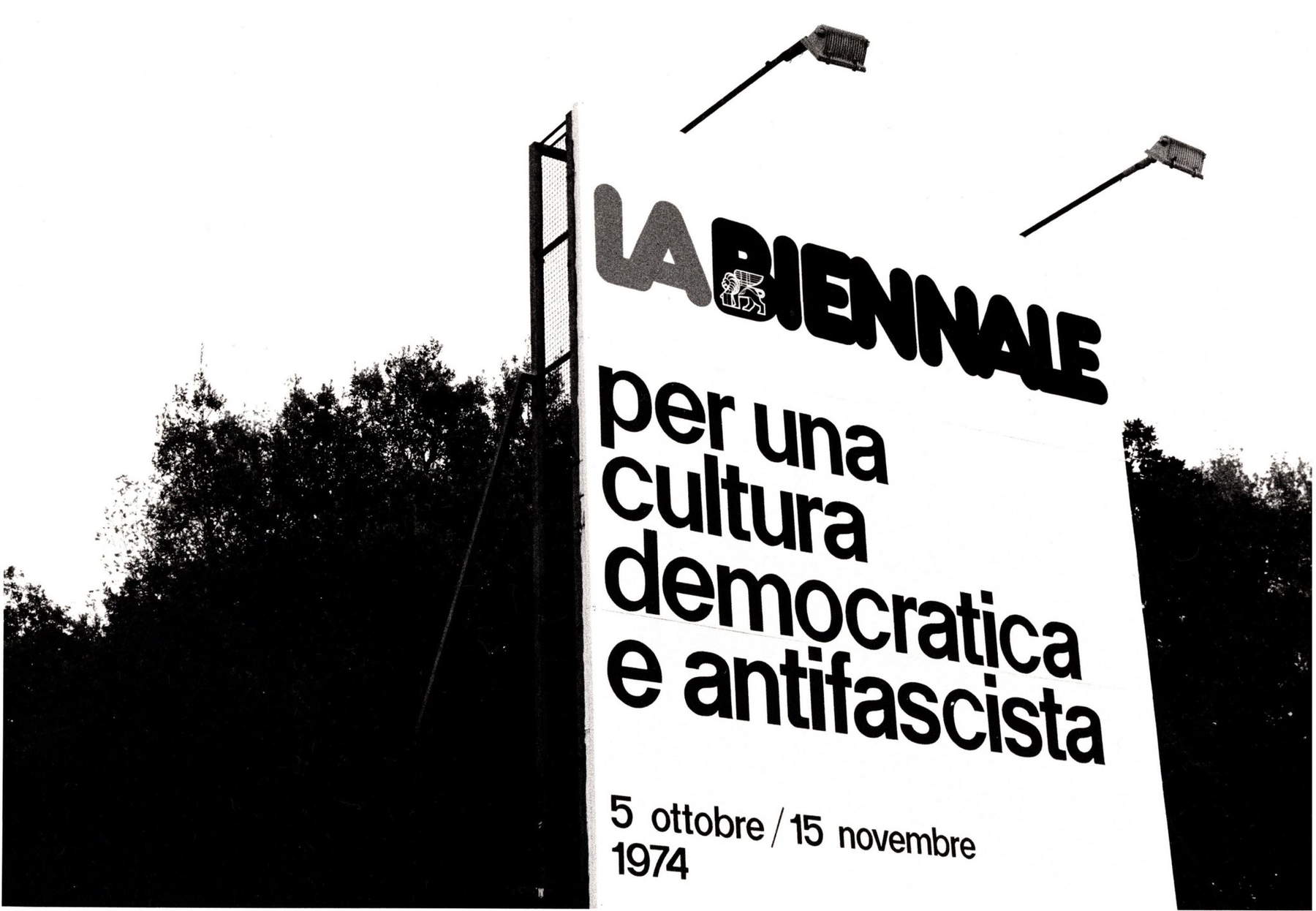
But in the 1974 “unnumbered” Biennale, entitled For a Democratic and Antifascist Culture, the opening was held in the presence of Hortensia Allende, widow of Chilean democratic president Salvador Allende, who was assassinated during the CIA-backed Pinochet coup. Throughout the duration of the event there were artistic actions, performances, readings and theatrical performances, by artists not only from Chile. Even then, there were dismayed government representatives, such as the United States, also explicitly accused by Roberto Sebastián Matta with his mural in Campo San Polo entitled La vergüenza militar después de Auschwitz-PinoCIA. Then there was Venice Patriarch Luciano Albini’s harsh polemic against the “morally ugly” art of women’s collectives (not even so implicitly aimed at the anti-abortion movement), and pressure from Chinese authorities to prevent the screening of Antonioni’s film Chung Kuo. China.
One need only reread Stefania Portinari’s fine book, Anni Settanta. La Biennale di Venezia, to rediscover the roots of the tensions that invest, cyclically, this event, which, let us not forget, has the virtue of condensing in the lagoon city from the Situationist architecture major international interventions, inside and outside the Biennale, that can be physically experienced as a direct experience and not mediated by images. Because certainly not everyone, indeed very few, among those involved in visual art have the opportunity to spend a good part of the year traveling to see live the most interesting works presented to the public. And this is an old fixation of mine, envious yes, but also methodological in terms of international accessibility, vis-à-vis those who work instead on film or literature, media that instead have the gift of ubiquity.
The book on the Biennales of the 1910s and 1920s of this century someone will write, perhaps, and maybe we will have a conference on it to discuss how to reform the Venice Biennale. In the meantime, many artists are pulling out of the “vote from home” or “audience vote” competition, in solidarity with the international jury that resigned shortly before the opening (for frankly embarrassing reasons, for the jury itself, unfortunately). The Russian Federation changed the air at its own national pavilion, just as Israel returned to mark its participation (two years ago it was artists and curators who boycotted their own venue, leaving the doors closed and the public outside), Pussy Riot had their say by engaging the public, just as many, many other people demonstrated with placards, posters, banners and latches their, our solidarity with the Palestinian people.
And while it is right that there should always be spaces for dialogue between states in this world (otherwise, let’s abolish even the benches at the United Nations and eliminate all alternative venues for meeting on the battlefields, which seems to me to be a very good diplomatic solution), it is sacrosanct that the voice of dissent should explode in the most creative, conspicuous, noisy and perhaps even incisive forms. The fact is that even the recent History of the Venetian biennials teaches that, on this ground, we must not give an inch.
We must do politics by doing our work well, Enrico Crispolti used to repeat, who at the end of the 1970s jotted down with a typewriter this reflection, which I take from an excerpt from his archive that he made available to me ten years ago: “It is by now an obvious statement that of the crisis of the statutes of culture and the related apparatuses. The space of art is also fully invested by the crisis and the restorative attempt. [...] To still delude oneself about the real possibilities of a freely creative art and of an immaculate artist in the face of the processes of structural changes that have occurred is a dream of candid souls that triumphant neoliberalism, the culture industry and the commodification of art allow to survive because, precisely, they do not touch the real and concrete processes. Even the most interesting experiences - or hopes -, [...] beyond intentions, have turned out to be an accelerator of the crisis, in the sense that they have developed the integration of the private into the public to the disadvantage of the latter, reduced to performing mere welfare functions. The results of this, evident today to the eyes of any minimally attentive observer, are: 1) the inability of the political-administrative forces to set up and manage a line of innovative cultural policy; 2) a further subjugation, to the market and the logic of party allotment, of a large part of the critics, organizers not only of private galleries but also consultants-managers of public initiatives and instrumental managers of the media; 3) the acquiescence of the producer-artists to this state of affairs or their individual and somewhat moralistic rejection of it, which does not affect the given situation; 4) the waste of the enormous potential represented by the ever-growing artistic demand both as fruition and as non-professional production.”
Warning: the translation into English of the original Italian article was created using automatic tools. We undertake to review all articles, but we do not guarantee the total absence of inaccuracies in the translation due to the program. You can find the original by clicking on the ITA button. If you find any mistake,please contact us.